


Key Takeaways:
Building a YouTube Music-like app requires careful planning, from defining your target audience to handling music licensing, choosing the right technology, developing core features, testing the platform, and optimizing it after launch.
Essential features such as music streaming, playlists, offline listening, AI recommendations, music discovery, and more can help create a competitive user experience.
YouTube Music-like app development can cost $25,000 to $150,000+, depending on features, platforms, technology, development complexity, and team location.
Multiple revenue models can support your music streaming app, including subscriptions, advertising, sponsored content, live event streaming, and affiliate partnerships.
Major development challenges include music licensing, high development costs, scalability, data security, privacy, and competition from established music streaming platforms.
YouTube Music now has over 100 million paid subscribers. That did not happen by chance. It happened because the app got the basics right: smart recommendations, smooth streaming, and a licensing model built to grow.
If you are a founder or CTO planning to build an app like YouTube Music, you are entering a market set to cross $158.1 billion by 2033.
That growth means real opportunity, but only if you build with the right plan from day one.
In this blog, we will discuss everything from must-have features to real development costs, and the exact steps to launch and scale your app.
Whether you want a simple MVP or a full-featured platform, this guide gives you a clear path forward.
YouTube Music: Overview of the App
YouTube Music is a music streaming app that lets users play songs, music videos, and live performances from one library. It offers both free, ad-supported access and a paid premium tier. The app has crossed 5B downloads on the Play Store, and it holds a 4.8-star rating based on 1.5 million reviews on the App Store.
Here is how the app works, step by step:
-
Users download the app from the Play Store or App Store and sign in with a Google account.
-
The home screen shows curated playlists, mixes, and recommendations based on listening history.
-
A search bar lets users find songs, artists, albums, or even lyrics.
-
Users can create custom playlists or save songs to their personal library.
-
The app suggests new music through AI-based recommendations that update as listening habits change.
-
Free users hear occasional ads and cannot play music in the background.
-
Premium subscribers get ad-free playback, offline downloads, and background play while using other apps.
-
Songs sync automatically across devices, so a playlist started on mobile continues on web or smart TV.
This mix of a massive library, smart personalization, and flexible access is what keeps users coming back daily, and it's the same formula founders study when they plan to create an app like YouTube Music for their own audience.
Why Invest in an App Like YouTube Music?
The growing demand for music streaming creates a strong opportunity for businesses to build a music app like YouTube Music.
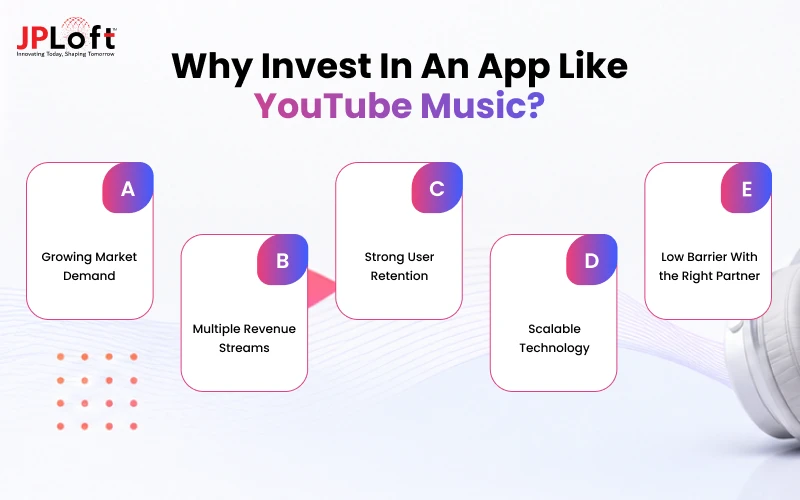
Let us discuss what makes investing in such a platform profitable.
1. Growing Market Demand
Music streaming keeps climbing every year. More users are shifting from downloads to subscriptions, giving new apps a steady stream of potential paying customers.
2. Multiple Revenue Streams
A music app can earn through subscriptions, ads, sponsored playlists, and live event tickets. This mix keeps income stable even when one stream slows down.
3. Strong User Retention
Personalized playlists and smart recommendations keep users engaged daily. Higher engagement means longer subscriptions and lower churn, which protects long-term revenue.
4. Scalable Technology
Cloud infrastructure lets a music app grow from a few thousand users to millions without a full rebuild. This keeps early investment costs manageable.
5. Low Barrier With the Right Partner
Licensing and infrastructure once made music apps costly to launch. Working with an experienced development partner brings that cost and complexity down significantly.
Features to Include in a YouTube Music-Like App
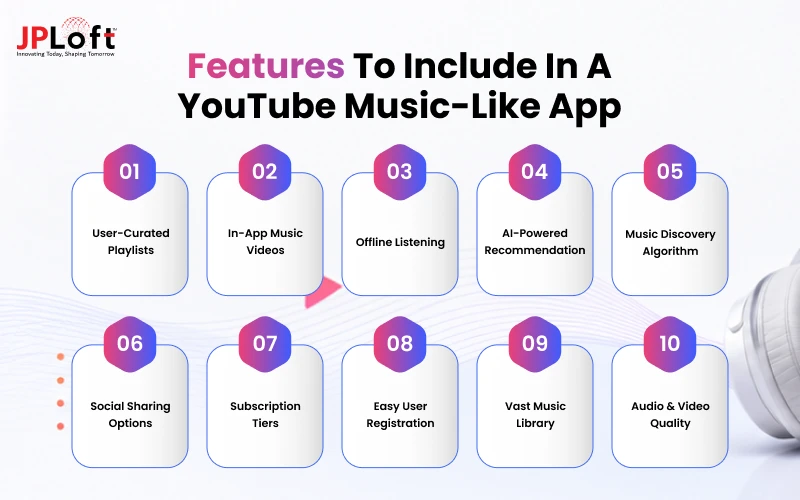
The right music app features decide whether users stay or leave within the first week. Before you develop a music app like YouTube Music, make sure these ten features are part of your plan.
1. User-Curated Playlists
Let users build, edit, and share their own playlists. This gives them a reason to return daily and keeps the app personal to their taste.
2. In-App Music Videos
Pairing songs with official videos adds a visual layer that plain audio apps cannot match, keeping users engaged for longer sessions.
3. Offline Listening
Downloadable songs and playlists matter most for users with limited data or patchy connections. It is a top reason people upgrade to premium.
4. AI-Powered Recommendation
Smart suggestions based on listening habits keep the experience fresh. AI features for a music app are the core piece of any plan to build an app like YouTube Music that competes today.
5. Music Discovery Algorithm
Beyond simple recommendations, a discovery engine introduces users to new artists and genres, growing their library and their time in the app.
6. Social Sharing Options
Letting users share songs and playlists on social media drives free, organic growth with almost no extra marketing spend.
7. Subscription Tiers
A free ad-supported tier alongside a paid ad-free plan gives users choice while creating a steady, predictable revenue base.
8. Easy User Registration
Sign-up through phone, email, or social accounts removes friction and gets new users listening within seconds.
9. Vast Music Library
A large, well-organized catalog keeps users from ever needing to look elsewhere for the songs they want.
10. Audio & Video Quality
High-quality streaming across formats and bitrates is non-negotiable. Poor sound quality is one of the fastest ways to lose users for good.
How to Build an App Like YouTube Music?
Turning an idea into a working app takes careful planning.
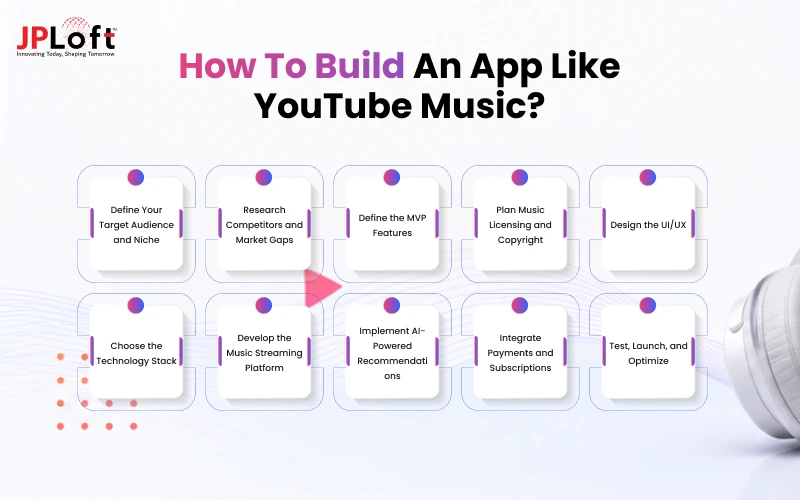
Here are the ten steps founders follow when they want to build a music streaming app successfully like YouTube Music.
Step 1: Define Your Target Audience and Niche
Start by identifying who will use your app daily.
-
Study age groups, music preferences, and listening habits
-
Pick a niche that separates you from big players
-
Use audience data to guide every later decision
A clear, well-defined audience saves real time, money, and much effort down the road. This groundwork also shapes your marketing message and app positioning long before development begins, so treat this step seriously.
Step 2: Research Competitors and Market Gaps
Look closely at what music apps like Spotify, Apple Music, and YouTube Music already offer.
-
List features competitors are missing or doing poorly
-
Read reviews to spot common user complaints
-
Identify pricing gaps you could fill with a smarter plan
This research shapes your unique value before you build a single screen. Understanding these gaps early helps you avoid copying competitors and build something users find missing from other apps.
Step 3: Define the MVP Features
Decide which app features matter most for launch and skip the rest for now.
-
Prioritize playlists, search, streaming, and basic recommendations
-
Save advanced AI features for a later update
-
Keep the MVP simple but fully functional
A focused MVP gets real user feedback faster than a bloated first version. Launching lean also protects your budget, giving you room to adjust the roadmap based on what users actually want most.
Step 4: Plan Music Licensing and Copyright
Licensing is one of the most complex parts of building a music streaming app, so handle it early on.
-
Contact record labels, publishers, and distributors directly
-
Or partner with a licensing aggregator for faster access
-
Understand music app compliance differences across countries before expanding
Skipping this step can shut your app down before launch. Getting licensing right protects you legally and builds real trust with labels you depend on.
Step 5: Design the UI/UX
A clean, simple interface keeps users engaged and coming back daily.
-
Design intuitive search and playlist creation flows
-
Keep playback controls simple and always visible
-
Test designs with real users before development begins
Good music app design reduces drop-off and builds habits that keep people coming back. A well-tested interface also lowers support costs later, since users rarely need help navigating something that feels easy and familiar to them.
Step 6: Choose the Technology Stack
Your music app tech stack determines speed, scalability, and long-term development cost.
-
Use React Native or Flutter for cross-platform apps
-
Choose cloud storage built for audio and video streaming
-
Add a CDN to reduce buffering worldwide
The right stack today prevents costly rebuilds as your user base grows. Choosing proven, well-supported tools also makes it easier to hire developers and maintain the app without major technical debt building up.
Step 7: Develop the Music Streaming Platform
This is where the app comes to life through the real app development process.
-
Build backend systems for user accounts and libraries
-
Set up adaptive streaming for different network speeds
-
Integrate with your chosen licensing and content sources
Regular testing during this phase catches bugs before they reach real users. Breaking development into clear phases also makes it easier to track progress and adjust priorities without derailing the timeline.
Step 8: Implement AI-Powered Recommendations
Smart recommendations keep users engaged far longer than a static music library alone.
-
Track listening history and skip patterns closely
-
Build playlists based on mood, time, and activity
-
Continuously refine suggestions using real usage data
This feature often separates a forgettable app from one users open daily. Strong recommendations also increase session length and ad revenue, making this one of the highest-value features to invest in early.
Step 9: Integrate Payments and Subscriptions
A smooth payment system is essential once you add a premium subscription tier here.
-
Support multiple payment methods and currencies
-
Offer monthly and yearly subscription options
-
Ensure secure, PCI-compliant payment processing throughout
Friction at checkout is one of the fastest ways to lose paying users. A simple, trustworthy payment flow also reduces failed transactions and support tickets, protecting revenue you have already worked so hard to earn.
Step 10: Test, Launch, and Optimize
Before launch, test the mobile app under real conditions with real devices and users.
-
Run beta tests with a small user group first
-
Monitor crash reports and streaming quality closely
-
Update features based on reviews and usage data
Launch is the beginning, not the finish line, of a successful app. Treating post-launch maintenance services as an ongoing process keeps the app improving instead of stalling after the launch excitement fades.
How Much Does It Cost to Make an App Like YouTube Music?
The cost to develop an app like YouTube Music ranges from $25,000 to $150,000+, depending on features, platforms, and team location. A simple MVP sits at the lower end, while a full-featured platform with AI recommendations and video streaming pushes costs higher.
Here is a quick breakdown of music app development cost by its complexity:
|
App Complexity |
Estimated Cost |
Features Included |
|
Basic MVP |
$25,000 – $60,000 |
Core streaming, playlists, basic search |
|
Mid-Level App |
$60,000 – $90,000 |
Offline mode, recommendations, subscriptions |
|
Advanced Platform |
$90,000 – $150,000+ |
AI-powered discovery, video, multi-platform |
Factors Affecting YouTube Music-Like App Development Cost
Several elements affect the mobile app development cost. Understanding these factors helps you plan a realistic budget before you build a music streaming app like YouTube Music.
-
Platform Choice: Building for both iOS and Android costs more than a single platform. However, this costs more than cross-platform frameworks, though it often delivers better performance.
-
Team Location: The cost to hire app developers varies widely by region. Teams in the US and UK charge more per hour than teams based in Asia or Eastern Europe.
-
Licensing and Content: Music licensing fees depend on territory, catalog size, and the number of labels involved. Ongoing royalty payments also add to the long-term cost.
-
Backend Infrastructure: Cloud storage, CDN usage, and server capacity all affect pricing. Apps built to handle heavy streaming traffic at scale cost more to set up properly.
-
Post-Launch Maintenance: Regular updates, bug fixes, and new features add ongoing cost after launch. Server and support expenses continue well beyond the initial release.
How Does a YouTube Music-Like App Make Money?
A strong revenue plan is just as important as great features. Anyone who wants to create a music streaming app like YouTube Music needs multiple income streams working together, not just one.
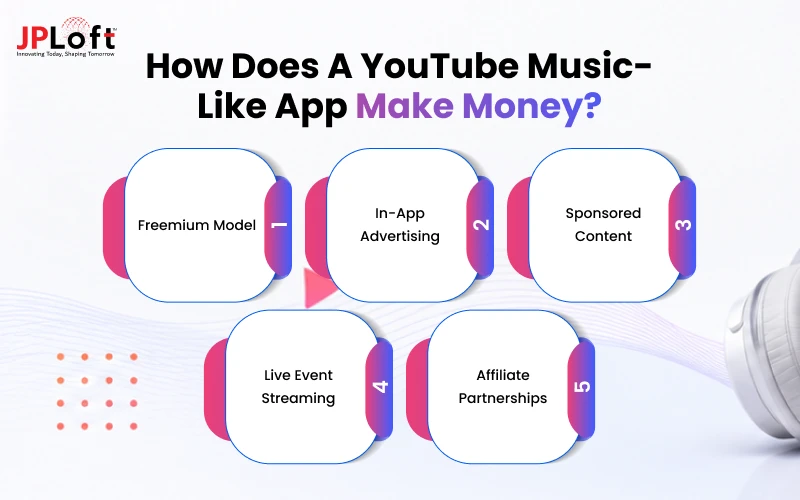
Below are the top music app monetization models to have a look at:
1. Freemium Model
A freemium plan works well here. Free users get ads, while premium subscribers pay monthly or yearly for an ad-free experience.
This creates predictable, recurring revenue. Subscriptions also unlock offline downloads and background play, giving users a strong reason to upgrade.
2. In-App Advertising
Free-tier users hear or see ads between songs. This includes audio ads, video ads, and banner placements within the app.
Revenue comes when users click on the ad or make a transaction through it. Advertising works best alongside subscriptions, covering costs for users who never upgrade.
3. Sponsored Content
Record labels and artists can pay to feature songs in search results or curated playlists. This creates direct B2B revenue.
It also helps emerging artists gain visibility. Sponsored placements should stay clearly marked so users trust the recommendations they see.
4. Live Event Streaming
Exclusive concerts and virtual events give users a reason to pay extra. Event passes or VIP access unlock premium experiences.
This model builds loyalty beyond regular streaming. It also strengthens artist partnerships, since live events benefit both the platform and performers.
5. Affiliate Partnerships
Partnering with headphone brands or ticketing platforms creates commission-based income. These partnerships work through in-app promotions and referral links.
This adds revenue without charging users directly. It also keeps the app relevant to listeners already interested in music-related products.
Challenges to Build a Music Streaming App like YouTube Music
Building a music app is not just about design and features. Founders who develop a music streaming app like YouTube Music face technical, legal, and financial hurdles along the way.
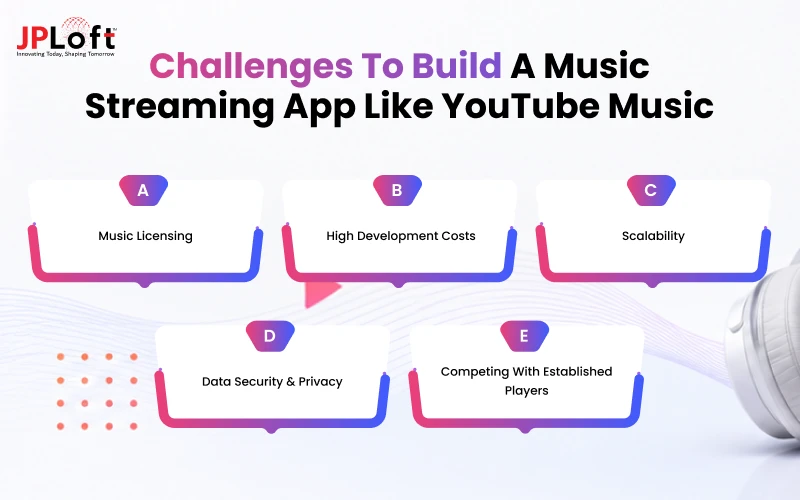
Let's discuss the common music app development challenges in detail.
Challenge 1: Music Licensing
Securing licensing rights from record labels and publishers is complex and expensive. Rights vary by country, artist, and platform, making it one of the toughest hurdles when you build an app like YouTube Music from scratch.
Solution: Partner with an app development company in Dubai experienced in music licensing agreements, or work directly with distributors who already hold multi-territory rights.
Challenge 2: High Development Costs
Building a feature-rich app with streaming infrastructure, AI recommendations, and cross-platform support demands significant upfront investment. Many startups underestimate the total cost involved, which can strain budgets early and force tough trade-offs on core features.
Solution: Start with a lean MVP focused on core features, then scale gradually as revenue grows and user demand increases over time.
Challenge 3: Scalability
As the user base grows from thousands to millions, the app must handle heavy streaming traffic without lag or downtime. Poor scalability planning early on can break the experience during peak growth phases, frustrating users right when adoption matters most.
Solution: Hire dedicated developers to build a cloud-based infrastructure with auto-scaling and load balancing in place, so the app performs smoothly regardless of sudden traffic spikes.
Challenge 4: Data Security & Privacy
Music apps store sensitive user data, including payment details, listening history, and personal information. A single data breach can damage user trust permanently and expose the business to serious legal and financial penalties over time.
Solution: Use end-to-end encryption, secure payment gateways, and regular app security audits to protect user data at every single stage of storage.
Challenge 5: Competing With Established Players
Spotify, Apple Music, and YouTube Music already dominate the market with huge libraries and loyal users. Standing out as a new app like YouTube Music requires a clear point of difference from day one, not months after launch.
Solution: Focus on a niche audience, unique content like exclusive remixes or local artists, or superior recommendation technology to stand apart.
Why Choose JPLoft to Build a YouTube Music-Like App?
Choosing the right partner matters as much as the plan itself. JPLoft is a music app development company with immersive experience, giving our teams a practical understanding of what real users expect from a streaming app.
Our developers work with proven tools and cloud-based streaming infrastructure, so your app is built to handle growth from day one. We also help founders navigate music licensing decisions early, avoiding delays that push back launch timelines.
With offices in multiple locations, we support clients across different time zones and markets without communication gaps. Every project follows a clear process: research, design, development, testing, and support after launch.
If you want a music streaming app like YouTube Music built on a solid foundation, our team is ready to help you plan the right approach from the start.
Conclusion
Building an app like YouTube Music can be a strong business opportunity when planned carefully. From choosing the right features, a clear cost plan, and a team that understands YouTube Music app development from the ground up, every step can affect the app’s success.
A focused MVP helps control development costs while allowing you to test the idea with real users. Music licensing, secure payments, smooth streaming, and data protection should also be planned from the start.
AI-powered recommendations, offline listening, playlists, and personalized discovery can help improve user engagement and retention. The total development cost depends on the app’s features, platforms, technology, and team location. h
With the right strategy, technology, and development partner, you can build a reliable music streaming platform and scale it as your audience and business grow.
FAQs
Start by defining your audience, researching competitors, planning MVP features, handling music licensing, designing the UI, choosing technology, developing, testing, launching, and optimizing the app.
Essential features include playlists, music videos, offline listening, AI recommendations, music discovery, social sharing, subscriptions, easy registration, a vast music library, and quality streaming.
A music streaming app like YouTube Music can cost $25,000 to $150,000+, depending on features, platforms, technology, development complexity, and team location.
A YouTube Music-like app can generate revenue through subscriptions, in-app advertising, sponsored content, live event streaming, and affiliate partnerships with music-related brands and platforms.
Key challenges include music licensing, high development costs, scalability, data security, privacy, and competition from established platforms with large libraries and loyal user bases.

Conor has 10+ years of experience in software development, application engineering, solution design, and UX/UI. He has worked across digital products in restaurant technology, food and grocery delivery, healthcare, media, streaming, and social platforms, bringing both technical and user-experience perspectives to product development. His experience working with large organizations and growth-focused digital products helps businesses translate complex requirements into practical, user-focused solutions.


Share this blog