


Key Takeaways:
Building a successful music website starts with clear planning, the right niche, and reliable infrastructure.
Proper music licensing is mandatory before streaming any copyrighted content.
DRM and encrypted streaming protect your platform from unauthorized downloads.
Search, playlists, and AI-powered personalization are essential for user engagement.
Subscriptions, ads, and freemium models are the most common ways to generate revenue.
Music is no longer limited to apps. A well-built website can become a complete music destination.
Artists, listeners, labels, and businesses can connect through one platform. With the right features, a music website can offer streaming, discovery, playlists, artist profiles, subscriptions, and more.
However, creating such a platform takes more than choosing a design template. You need a strong business model, streaming technology, secure content delivery, and proper music rights.
If you are exploring how to create a music website in 2026, planning should start with the product rather than design. You must understand your audience, music catalog, revenue model, needs, and growth plans.
This guide explains the process in simple terms. It covers features, development steps, licensing, security, AI opportunities, costs, and more.
By the end, you will understand what it takes to turn a music website idea into a scalable platform.
Why Build a Music Streaming Website in 2026?
The music industry keeps moving online every year. Understanding why 2026 favors dedicated platforms helps artists, labels, and founders make smarter decisions before they invest time and resources into building one.
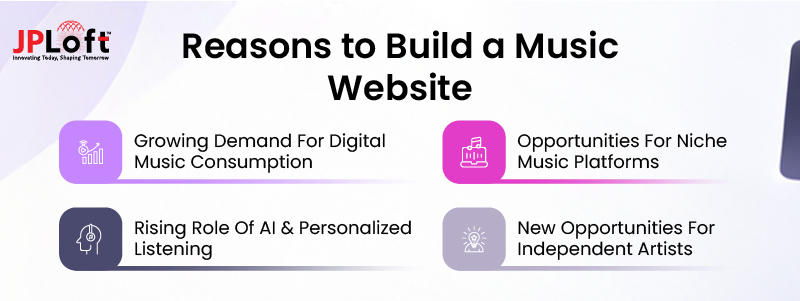
→ Growing Demand For Digital Music Consumption
Listeners now expect instant access to music from any device, anywhere. Streaming has become the default way people discover and enjoy songs.
A dedicated website lets you meet this demand directly, without relying on third-party apps or losing control over how your audience experiences your content.
→ Opportunities For Niche Music Platforms
Mainstream platforms often overlook specific genres, regional artists, and community-driven audiences. This gap creates real opportunities to create a website for music that serves a focused niche well.
A targeted platform builds loyal listeners faster than competing broadly against giants like Spotify or Apple Music.
→ Rising Role Of AI & Personalized Listening
AI now shapes how people discover music, from smart recommendations to mood-based playlists. Building this intelligence into your website keeps listeners engaged longer.
Personalization is no longer optional in 2026; it is what separates forgettable platforms from ones people return to daily.
→ New Opportunities For Independent Artists
Independent artists no longer need label backing to reach global audiences.
If you want to make your own music website, you gain full control over royalties, branding, and fan relationships. This independence is reshaping how new artists build sustainable careers today.
Types of Music Streaming Website You Can Build
Not every music website looks the same. Your choice depends on your goals, audience, and revenue model. Understanding these types helps you plan a platform that fits your vision from day one.
|
Type |
Description |
|
Independent artist streaming platform |
Built by and for solo artists to sell music and connect directly with fans. |
|
Genre-specific music streaming website |
Focuses on one genre or niche audience, standing out from broad, general platforms. |
|
Music platform for businesses and creators |
Offers licensing, royalty tools, and content management built for commercial or creator use. |
|
AI-powered music discovery platform |
Uses smart algorithms to recommend tracks based on listening habits and user behavior. |
What Features Should a Music Streaming Website Have?
The right custom software features determine how smoothly your platform runs and how long listeners stay engaged. Before development begins, it helps to understand how to make a music website that actually works well.
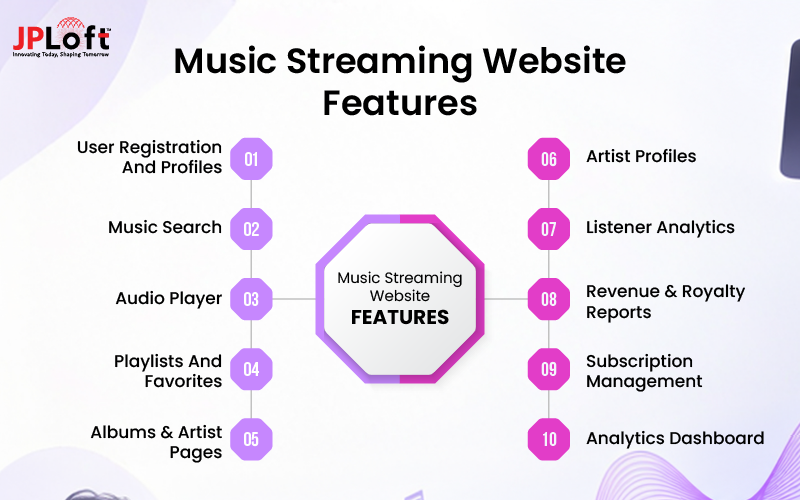
1. User Registration And Profiles
Lets listeners create accounts and save their preferences easily. This keeps their experience personalized across every device and session.
2. Music Search
A fast, accurate search bar helps users find content quickly. Poor search functionality often leads to frustrated, disengaged listeners.
3. Audio Player
This is the core feature of any streaming platform. It must stream smoothly and work well across all browsers.
4. Playlists And Favorites
Allows users to save tracks and build custom playlists. This feature encourages repeat visits and longer listening sessions.
5. Albums And Artist Pages
Organizes content clearly for easy browsing and discovery. Listeners can explore full discographies and related releases quickly.
6. Artist Profiles
Artist profiles are important when you understand how to make a music artist website. These profiles showcase artist bios, releases, and social links clearly.
7. Listener Analytics
Tracks plays, skips, and overall listening habits accurately. This data helps you understand audience behavior and preferences better.
8. Revenue And Royalty Reports
Gives artists and labels clear visibility into their earnings. Reports show payouts and how revenue is calculated fairly.
9. Subscription Management
Handles billing, upgrades, and cancellations without any friction. A smooth payment experience keeps users satisfied and retained.
10. Analytics Dashboard
Gives admins a central view of platform performance instantly. It highlights user growth and content trends at a glance.
How to Build a Music Streaming Website Step by Step
Building a streaming website involves more than design and coding. It requires careful planning across business strategy, licensing, technology, and user experience to succeed in 2026.
Below we will discuss what it takes to build a website from scratch.
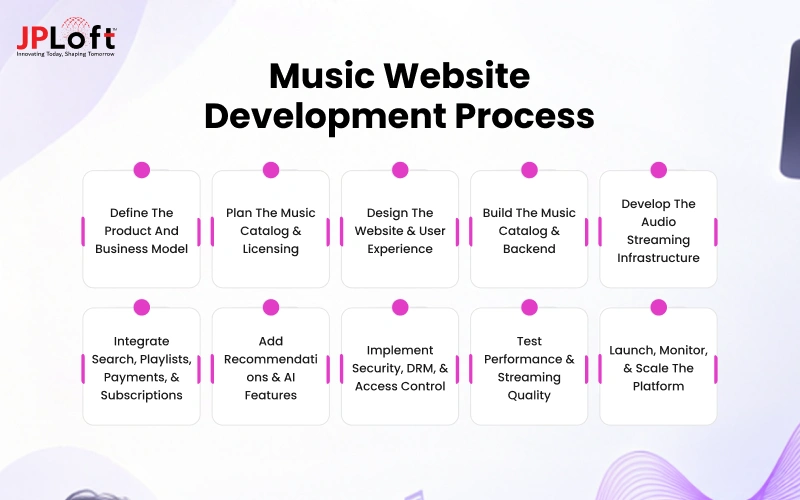
Step 1: Define The Product And Business Model
Start by deciding what kind of platform you want to build. Choose your target audience, niche, and revenue model early. This decision shapes every choice that follows, from features to technology. Ask yourself these key questions first:
-
Who is your core audience?
-
Will you charge subscriptions, run ads, or use both?
-
What makes your platform different from existing ones?
A clear answer here saves time, money, and confusion later during actual development and design work.
Step 2: Plan The Music Catalog & Licensing
Decide what music you will offer and how you will obtain rights to it. This step protects your business legally and financially. Consider these licensing routes:
-
Direct deals with independent artists or labels
-
Partnerships with music licensing aggregators
-
Performance rights organization agreements for public playback
Skipping proper licensing can lead to takedowns, fines, or lawsuits down the line. Get this right before writing any code, since it shapes your entire catalog strategy carefully and thoroughly.
Step 3: Design The Website & User Experience
Good design keeps listeners engaged and reduces confusion. This stage covers wireframes, layout, and visual identity. When you plan how to develop a music website, prioritize simplicity over flashy design choices. Focus on:
-
Clean navigation between search, playlists, and player controls
-
Mobile-responsive layouts for smaller screens
-
Fast load times across all pages
A cluttered interface drives users away quickly, so every screen should serve a clear, obvious purpose that builds long-term user trust and loyalty.
Step 4: Build The Music Catalog & Backend
This step involves setting up your database, content management system, and file storage. Your backend organizes songs, albums, artists, and metadata efficiently. Key components include:
-
A structured database for tracks and metadata
-
Secure cloud storage for audio files
-
An admin panel for uploading and managing content
A well-organized backend makes future scaling easier and prevents performance issues as your catalog grows larger over time. This structure also supports faster updates and smoother long-term platform maintenance.
Step 5: Develop The Audio Streaming Infrastructure
Streaming requires specialized technology beyond standard web hosting. This is where you figure out how to make a music streaming website perform smoothly at scale. Core elements include:
-
Adaptive bitrate streaming for varying internet speeds
-
A content delivery network for fast global playback
-
Reliable streaming protocols like HLS or DASH
Poor infrastructure causes buffering and lag, which frustrates listeners and increases drop-off rates significantly across your platform, especially during high-traffic listening hours and peak times.
Step 6: Integrate Search, Playlists, Payments, & Subscriptions
These features turn a basic player into a functional platform. Search must return accurate results instantly. Payments must be processed securely across regions. Focus areas include:
-
Search indexing for fast, relevant results
-
Playlist creation and saving functionality
-
Payment gateway integration for subscriptions
-
Automated billing and renewal systems
Together, these features create the core experience users expect from any modern streaming service. This combination keeps users engaged while making payments and subscription management effortless for everyone involved.
Step 7: Add Recommendations & AI Features
Personalization keeps listeners coming back regularly. AI-driven recommendations analyze listening habits to suggest relevant tracks. Many teams researching how to make a music website now treat this as a core requirement, not an add-on. Consider building:
-
Mood-based and genre-based playlists
-
Personalized homepage recommendations
-
Similar artist suggestions
This technology increases engagement significantly and helps your platform compete with established streaming giants already using it. This kind of intelligent personalization is also quickly becoming today's standard expectation.
Step 8: Implement Security, DRM, & Access Control
Protecting content from piracy is essential for any streaming business. Digital rights management restricts unauthorized downloads and sharing. Important measures include:
-
Token-based access to prevent unauthorized streaming links
-
Encrypted audio delivery
-
Role-based access controls for admins and artists
Without these protections, your content and revenue remain vulnerable. Security should never be treated as an afterthought during development. Investing in strong security early builds long-term trust with artists, labels, and listeners across every region equally well.
Step 9: Test Performance & Streaming Quality
Before launch, testing ensures your platform performs reliably under real conditions. This stage matters as much as development itself for any guide on making a music website that actually works. Focus your testing on:
-
Streaming quality across different internet speeds
-
Cross-browser and cross-device compatibility
-
Load testing under high user traffic
Skipping thorough testing often leads to poor first impressions and lost users right after launch. Careful testing here prevents costly fixes once users are active.
Step 10: Launch, Monitor, & Scale The Platform
Launch is only the beginning of your platform's journey. Monitor performance, gather user feedback, and fix issues quickly. This final stage of any solid music website development guide focuses on long-term growth. Prioritize:
-
Real-time monitoring for uptime and errors
-
Regular content and feature updates
-
Infrastructure scaling as your user base grows
Continuous improvement keeps your platform competitive and relevant well beyond its initial launch. This ongoing effort separates lasting platforms from ones that fade quickly.
Cost to Develop a Music Streaming Website
The cost to build a music streaming website depends heavily on features, complexity, and scale. A basic platform with core streaming functionality can start around $5,000. This suits small artists or niche projects with limited catalogs.
Mid-range platforms with search, playlists, payments, and analytics typically range between $20,000 and $60,000. Enterprise-level platforms with AI recommendations, DRM security, and global CDN infrastructure can exceed $130,000+.
Additional website development cost comes from licensing fees, ongoing maintenance, and hosting. Your final budget should reflect your business goals, expected user base, and long-term scalability needs rather than upfront savings alone.
How Can AI Improve a Music Streaming Website in 2026?
AI has moved from a nice-to-have to a core requirement for streaming platforms. Understanding where it fits helps you build a smarter, more engaging listening experience for every user.
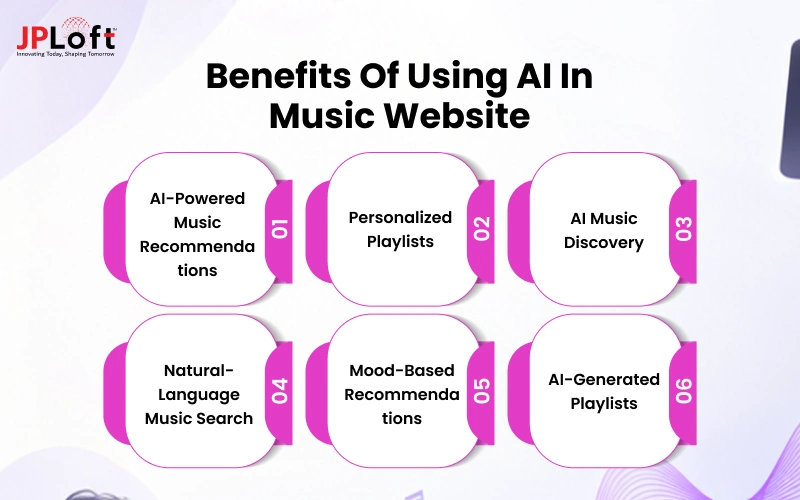
i) AI-Powered Music Recommendations
AI analyzes listening patterns to suggest tracks users are likely to enjoy. Hire AI developers to keep sessions longer and reduce the effort listeners spend searching for new music.
ii) Personalized Playlists
Instead of generic playlists, AI builds custom collections based on individual taste, listening history, and time of day, making every playlist feel tailored to the user.
iii) AI Music Discovery
AI helps surface lesser-known artists and tracks that match a listener's preferences. This benefits independent artists while keeping the platform's content feel fresh and diverse.
iv) Natural-Language Music Search
Users can search using phrases like "upbeat songs for a morning run" instead of exact titles. This makes discovery faster and more intuitive for casual listeners.
v) Mood-Based Recommendations
AI detects listening context and mood, suggesting music that fits how a user feels in the moment, whether relaxed, energetic, or focused on work.
vi) AI-Generated Playlists
Some platforms now let AI generate entirely new playlists on demand, based on simple prompts, giving users a quick, effortless way to explore music.
Challenges in Building a Music Website
Businesses face several obstacles beyond design and coding when building a music streaming platform. Knowing these software development challenges early helps you plan better and avoid costly mistakes during development.
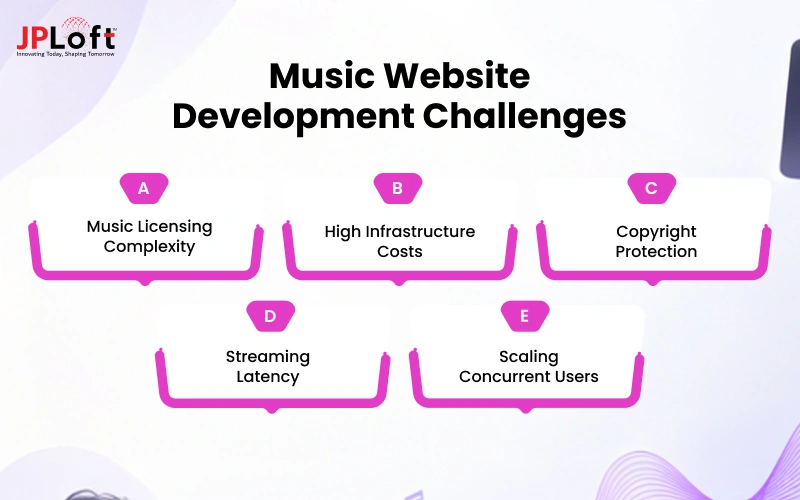
Challenge 1: Music Licensing Complexity
Securing proper rights across artists, labels, and regions is time-consuming and legally complex. Licensing terms vary widely, making it difficult to build a compliant catalog quickly.
Solution: Partner with licensing aggregators or legal experts early to simplify rights management.
Challenge 2: High Infrastructure Costs
Streaming audio at scale demands significant investment in servers, storage, and content delivery networks. Costs grow quickly as your user base and catalog expand over time.
Solution: Use cloud-based, pay-as-you-grow infrastructure to control costs during early stages.
Challenge 3: Copyright Protection
Unauthorized downloads and content sharing threaten both revenue and artist trust. Without proper safeguards, platforms risk legal exposure and damaged relationships with content owners.
Solution: Implement DRM, encrypted streaming, and token-based access to prevent unauthorized use.
Challenge 4: Streaming Latency
Delays in audio playback frustrate users and increase drop-off rates. Latency issues often worsen during peak hours or when serving users across distant regions.
Solution: Hire software developers to use adaptive bitrate streaming and a global CDN to reduce delays.
Challenge 5: Scaling Concurrent Users
As your platform grows, handling thousands of simultaneous streams without slowdowns becomes difficult. Poor scaling leads to buffering, crashes, and a frustrating listening experience overall.
Solution: Design backend architecture for horizontal scaling and load balancing from day one.

Why Choose JPLoft to Create a Music Website?
To build an immersive music website, you need more than technical skill. It demands a team that understands licensing, scalability, and user experience together.
JPLoft brings years of experience as a trusted music platform development company, helping artists, labels, and startups turn ideas into fully functional platforms. Our team handles everything from initial planning to post-launch support, so you never have to manage multiple vendors or piece together a solution on your own.
We prioritize clean design, secure streaming infrastructure, and features that keep listeners engaged long after launch. Whether you need a niche platform for independent artists or a full-scale streaming service, JPLoft tailors every build to your specific goals and budget.
With proven expertise across the music and entertainment space, we help you avoid common pitfalls and launch a platform built to grow with your audience for years to come.
Conclusion
For a successful music website, you need clear planning, the right licensing strategy, solid technology, and features that keep listeners coming back.
This guide has walked you through everything, from choosing a business model to handling AI personalization, security, and scaling challenges. Whether you are an independent artist or a growing startup, understanding how to create a music website the right way saves time, money, and frustration down the line.
Costs vary depending on complexity, but the investment pays off when you own a platform built entirely around your audience.
With the right approach and the right development partner, you can launch a streaming website that stands out, grows steadily, and gives you full control over your music and your future.
FAQs
Start with clear planning, define your niche, secure proper licensing, then build with reliable streaming infrastructure. Focus on user experience, security, and scalability from day one for lasting success.
Yes, licensing is mandatory. You need rights from artists, labels, or licensing organizations before streaming any copyrighted music. Skipping this step risks takedowns, fines, and serious legal complications down the line.
Use digital rights management, encrypted streaming, and token-based access controls. These measures prevent unauthorized downloads and sharing, keeping your content secure while protecting artist royalties and platform revenue effectively.
Essential features include search, playlists, a reliable audio player, subscription management, and analytics. AI-powered recommendations and personalized playlists also help keep listeners engaged and returning regularly to your platform.
Common models include subscriptions, ad-supported streaming, and freemium plans. Many platforms combine these approaches, generating revenue while offering flexible access options that suit different types of listeners and budgets.

Conor has more than 10 years of experience in software development, app creation, solution engineering, and UX/UI design. With an impressive track record of high retention and growth working with Fortune 500 companies, he brings the technical depth and strategic perspective needed to help businesses build impactful, user-focused digital solutions.



Share this blog