



Key Takeaway:
App developers transform business ideas into functional apps using technical skills, platform expertise, and collaborative development.
Hiring professional developers ensures quality development, faster delivery, stronger security, and long-term technical stability.
Key factors affecting average cost to hire app developers are experience, location, hiring model, complexity, and tech stack.
Hidden cost factors include overlooked elements like onboarding, revisions, infrastructure, and compliance, increasing total expenses.
Cost to hire mobile app developers ranges between USD 20 to USD 120+ per hour, depending on region, expertise, and project scope.
Partnering with JPLoft ensures you hire developers who deliver scalable, secure, and focused solutions with regular maintenance.
Hiring the right developer is one of the most important decisions for any business planning to launch a mobile app. But one of the first questions every business asks is: How much does it cost to hire an app developer?
The answer depends on many factors, such as the developer’s location, experience level, hiring model, and the complexity of your app. Knowing the cost to hire an app developer helps you plan your budget with confidence.
Prices range between USD 20 to USD 120+ per hour. Without clear insights, businesses often overspend or choose the wrong hiring approach. Knowing what affects development costs is essential before you begin the hiring process.
In this blog, we will break down the key cost factors, compare different hiring options, and help you understand how to make a smart investment for your next project.
Who Are App Developers?
App developers are skilled technology professionals who design, build, test, and maintain mobile apps. They turn business ideas into functional digital products that users can access on their smart devices. Their main goal is to create apps that are easy to use, secure, and aligned with business objectives.
There are different types of app developers based on platforms and technologies. Mobile app developers create mobile apps for platforms like Android or iOS. Some specialize in native development, while others work with cross-platforms to create apps that run on multiple systems.
App developers work with programming languages like Java, Kotlin, Swift, JavaScript, and more. Beyond coding, they also collaborate with designers, project managers, and quality analysts. This ensures the final product meets performance and user experience standards.
From startups to large enterprises, rely on app developers to build digital solutions that drive growth, improve customer engagement, and streamline operations.
Now that you understand who app developers are and what they do. The next important step is to explore why hiring them can be a strategic investment for your business growth and digital success.
Why Hire App Developers?
Building a super app that is successful requires the right skills, strategy, and technical expertise. Hiring professional app developers can make a significant difference in your project’s quality, speed, and long-term success.
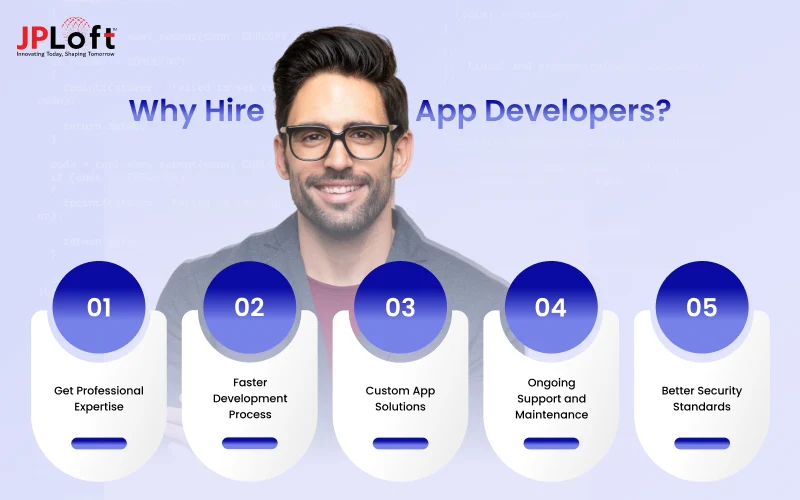
Below, we have listed the major reasons to invest while hiring app developers:
1. Get Professional Expertise
Hiring app developers gives you access to specialized technical knowledge and hands-on experience. They understand the programming languages, frameworks, and tools required for building scalable applications. Their expertise ensures clean code, fewer errors, better performance, and long-term stability.
2. Faster Development Process
Experienced developers follow structured workflows and proven development practices. They can plan, design, and execute tasks efficiently without unnecessary delays. This speeds up the overall process, helping businesses launch their apps on time and stay competitive.
3. Custom App Solutions
Professional app developers build applications tailored to your specific business needs. Instead of using generic templates, they create customized features, user flows, and integrations. This ensures your app aligns with your goals and delivers a unique user experience.
4. Ongoing Support and Maintenance
App development does not end after launch. Developers provide regular updates, fix bugs, improve security, and optimize performance. Continuous app maintenance service keeps your app functional, secure, and compatible with new devices and operating system updates.
5. Better Security Standards
Mobile app security is critical for any application handling user data. Skilled developers implement strong encryption methods, secure APIs, and data protection measures. Their technical approach reduces risks, prevents breaches, and builds trust among your users.
Hiring the right app developers ensures quality, efficiency, security, and long-term success for your digital product and business growth. Let us explore how much should it cost to hire an app developer, varying by location, experience, hiring models, and project complexity.

What is the Cost to Hire App Developers?
The cost to hire app developers varies between USD 20 and USD 120+. The cost depends on multiple factors, such as experience level, location, hiring model, and project complexity. This cost further decides the final mobile app development cost.
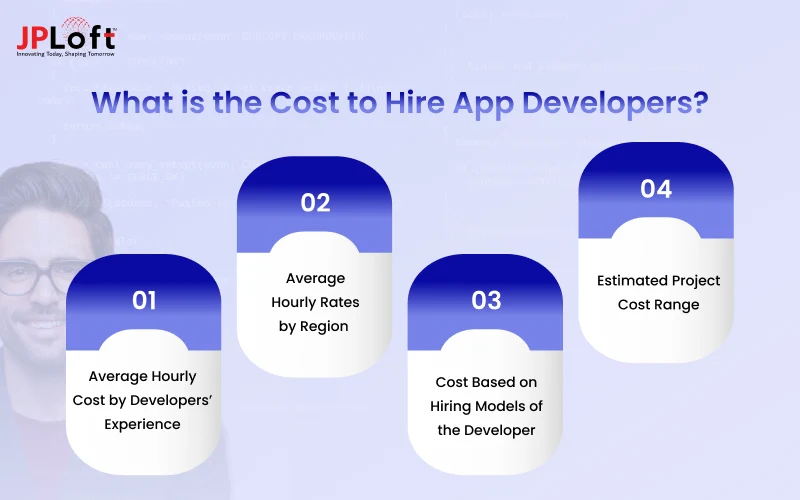
Let's see how much does it costs to hire mobile app developers:
► Average Hourly Cost by Developers’ Experience
-
Junior Developers (in USD): $20 to $40 per hour
-
Mid-Level Developers (in USD): $40 to $80 per hour
-
Senior Developers (in USD): $80 to $120+ per hour
Senior professionals charge more because they handle complex architecture, advanced integrations, and strategic technical decisions.
► Average Hourly Rates by Region
-
United States and Canada (in USD): $80 to $150+ per hour
-
United Kingdom and Australia (in USD): $70 to $120 per hour
-
Eastern Europe (in USD): $40 to $80 per hour
-
Asia (in USD): $20 to $50 per hour
Regional cost differences are mainly influenced by local salary standards and market demand.
► Cost Based on Hiring Models of the Developer
-
Freelancers (in USD): $1,000 to $10,000+ per project, depending on scope
-
In-House Developers (in USD): $60,000 to $120,000+ annual salary
-
Dedicated Development Team (in USD): $5,000 to $25,000+ per month
► Estimated Project Cost Range
-
Basic App (in USD): $10,000 to $25,000
-
Medium Complexity App (in USD): $25,000 to $60,000
-
Advanced App (in USD): $60,000 to $150,000+
There is no fixed mobile app developer hourly rate because rates vary widely across regions and engagement types.
A clear project scope and well-defined requirements help control overall hiring expenses. Now it is important to explore what actually drives these numbers. Let us break down the key factors that influence the cost of hiring an app developer in detail.
What Factors Influence the Cost of Hiring an App Developer?
Several factors directly impact the average cost to hire an app developer. Understanding these elements helps you set a realistic budget and choose the right hiring model for your project.
.webp)
Here are the key factors that affect the overall cost of hiring an app developer:
1. Developer Experience Level
The experience level of an app developer directly impacts the average cost to hire app developers. Junior developers usually charge less but may require guidance and supervision. Mid-level developers offer balanced pricing and efficiency. Senior developers demand higher rates due to their deep technical knowledge, problem-solving skills, and ability to handle complex architectures independently.
|
Experience Level |
Estimated Hourly Cost (in USD) |
|
Junior Developer |
$20 – $40 |
|
Mid-Level Developer |
$40 – $80 |
|
Senior Developer |
$80 – $150+ |
2. Developer Location
Geographic location plays a major role in pricing differences. Developers in countries like the United States, the United Kingdom, or Australia typically charge higher hourly rates compared to professionals in Asia or Eastern Europe. This variation in cost to hire an app developer depends on local living costs, market demand, and regional salary standards across different countries.
|
Region |
Estimated Hourly Cost (in USD) |
|
North America |
$100 – $200 |
|
Western Europe |
$80 – $150 |
|
Australia |
$90 – $170 |
|
Eastern Europe |
$40 – $80 |
|
Asia |
$20 – $50 |
3. Hiring Model
The hiring model you choose significantly affects the overall cost. Freelancers often charge hourly or per project and are suitable for small tasks. The average cost to hire an app developer with an in-house model requires salaries and benefits. Dedicated development teams or agencies provide structured services but come with higher overall engagement costs.
|
Hiring Model |
Estimated Cost Structure (in USD) |
|
Freelancer |
$20 – $100 per hour |
|
In-House Developer |
$60,000 – $150,000 per year |
|
Dedicated Team |
$5,000 – $25,000 per month |
|
Development Agency |
$10,000 – $100,000+ per project |
4. Project Complexity
Project complexity plays a major role in determining the cost of hiring developers. Applications with simple workflows and limited logic require less development time and fewer resources. However, complex projects involving advanced algorithms, large data processing, multiple user roles, or real-time features demand experienced developers, longer timelines, and more testing. Ultimately, increasing overall development costs.
|
Complexity Level |
Estimated Hiring Cost Impact |
|
Simple App (Basic functionality such as login, user profile, and simple data display) |
Low cost. Requires fewer developers and shorter development time |
|
Medium Complexity App (Includes features like payments, APIs, notifications, and moderate database usage) |
Moderate cost due to increased development effort and testing |
|
Complex App (Advanced logic, real-time data processing, AI features, or large-scale architecture) |
High cost due to longer timelines and need for senior developers |
5. App Platform (Android, iOS, Cross Platform)
The platform you choose for your application also affects developer hiring costs. Building apps for a single platform, such as Android, iOS, or cross-platform, generally requires less effort from the developers than developing for multiple platforms. The cost to hire Android app developers differs from that of iOS and cross-platform developers.
|
Platform Type |
Estimated Hiring Cost Impact |
|
Single Platform (Android or iOS) |
Lower cost due to limited development scope |
|
Cross Platforms (One codebase used for multiple platforms) |
Moderate cost but may require optimization |
|
Native for Multiple Platforms (Separate apps for Android and iOS) |
Higher cost because two development processes are required |
6. Development Technology Stack
The app tech stack used by developers directly influences the cost of hiring developers. Popular technologies with a large talent pool may be more affordable. Niche or advanced app frameworks often require highly skilled specialists who charge higher rates. Additionally, modern stacks that support scalability and performance may require more experienced developers, thus increasing development costs.
|
Tech Stack Level |
Estimated Hiring Cost Impact |
|
Standard Stack (Common programming languages and frameworks) |
Lower cost because developers are widely available |
|
Modern Frameworks (Advanced frameworks and cloud-based technologies) |
Moderate cost due to specialized development skills |
|
Specialized Technologies (AI, machine learning, blockchain, or advanced backend systems) |
Higher cost due to need for highly experienced developers |
7. App Features and Functionalities
The number and complexity of app features you want in your app significantly impact the hiring costs of the app developers. Basic features, such as user login or simple dashboards, are relatively inexpensive and easier to implement for the developers. However, advanced functionalities like real-time chat, AI-powered recommendations, payment gateways, geolocation, and data analytics require more specialized expertise from developers.
|
Feature Level |
Estimated Cost (in USD) |
|
Basic Features (Login, user profile, basic navigation) |
Lower development cost |
|
Intermediate Features (Push notifications, payment gateway, analytics) |
Moderate cost due to additional development effort |
|
Advanced Features (Real-time chat, video streaming, AI recommendations) |
Higher cost due to complex implementation |
8. UI and UX Requirements
High-quality mobile app design can greatly enhance user engagement, but it also adds to development costs. Apps with simple interfaces require minimal design effort. On the other hand, applications that demand custom animations, interactive elements, personalized user experiences, and extensive usability testing require highly skilled designers and developers, increasing the overall project budget.
|
Design Level |
Estimated Hiring Cost Impact |
|
Basic UI (Standard templates with minimal customization) |
Lower cost |
|
Custom UI (Custom layouts and improved user experience) |
Moderate cost |
|
Advanced UI/UX (Interactive design, animations, and advanced user flows) |
Higher cost due to additional design and development work |
9. Project Timeline
Shorter deadlines often increase costs. The duration of how long it takes to build a mobile app decides the major part of the developers’ hiring cost. Developers may need to work extended hours or allocate additional resources to meet tight schedules. A flexible timeline allows better planning and resource management, which can help control overall expenses without compromising quality.
|
Timeline Type |
Estimated Cost Impact |
|
Flexible Timeline |
Standard Cost |
|
Moderate Deadline |
+10% – 20% Increase |
|
Urgent Deadline |
+25% – 50% Increase |
10. Team Size
Larger projects require multiple developers, designers, testers, and project managers. A bigger team increases coordination and management costs. Smaller projects may only need one or two developers. The overall cost depends on how many professionals are involved and how long they work on the project.
|
Team Size |
Estimated Monthly Cost (USD) |
|
1–2 Developers |
$3,000 – $10,000 |
|
3–5 Members |
$10,000 – $30,000 |
|
6+ Members |
$30,000 – $80,000+ |
11. Security Requirements
App security requirements are a critical factor influencing development costs. Applications handling sensitive user data, financial transactions, or confidential information require strong security measures such as encryption, secure authentication, compliance standards, and regular security testing. Implementing these protections often requires experienced developers and additional development time, raising the overall cost.
|
Security Level |
Estimated Hiring Cost Impact |
|
Basic Security (Standard authentication and basic data protection) |
Lower Cost |
|
Enhanced Security (Secure APIs, encrypted data storage, and user verification) |
Moderate cost |
|
High Level Security (Advanced encryption, regulatory compliance, and enterprise-grade protection) |
Higher cost due to specialized development expertise |
12. Maintenance and Support Scope
Post-launch mobile app maintenance affects the total investment. Regular updates, bug fixes, performance monitoring, and feature enhancements require ongoing developer involvement. Some businesses choose annual maintenance contracts, while others hire developers on demand, which affects long-term costs differently.
|
Maintenance Type |
Estimated Cost (in USD) |
|
Basic Support |
10% – 15% of the project cost annually |
|
Ongoing Maintenance |
15% – 25% of the project cost annually |
|
Dedicated Support Team |
$2,000 – $10,000 per month |
13. Industry Type
Certain industries demand specialized compliance and feature requirements. For example, healthcare apps require strict data protection standards, while fintech apps need secure payment systems. Industry-specific regulations and technical demands increase complexity, which ultimately raises the hiring cost.
|
Industry Type |
Estimated Cost Impact (in USD) |
|
Standard Industry App |
Base Cost |
|
Healthcare / Fintech |
+20% – 40% Increase |
|
Enterprise Industry |
+30% – 50% Increase |
14. Communication and Collaboration Tools
Efficient communication tools and project management systems add to operational costs. Agencies may include collaboration platforms, tracking software, and reporting systems in their pricing. Clear communication improves project success, but the tools and coordination efforts contribute to overall hiring expenses.
|
Tool Requirement Level |
Estimated Cost (in USD) |
|
Basic Tools |
$0 – $500 per month |
|
Advanced Project Management Tools |
$500 – $2,000 per month |
|
Enterprise Collaboration Systems |
$2,000 – $5,000+ per month |
Understanding these key factors affecting app developers cost helps you plan widely and choose the right app developer within your budget confidently. Now that you understand the main factors that directly impact the cost to hire iOS app developers, it is equally important to look at the hidden cost factors.
Hidden Costs to Consider When Hiring an App Developer
When planning your app development budget, visible costs are only part of the picture. Several hidden factors can quietly increase your total investment. Knowing about these overlooked elements that impact how much should it cost to hire an app developer helps you avoid surprises, manage resources better, and make smarter hiring decisions from the start.
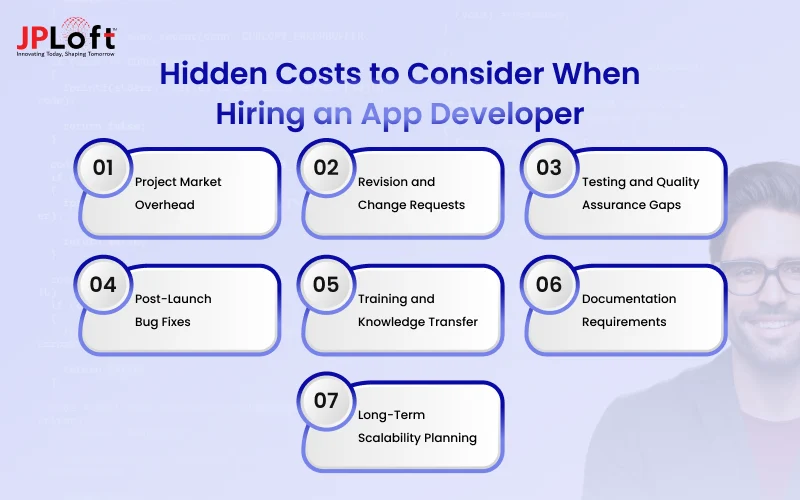
1. Project Market Overhead
Project management activities such as planning, meetings, reporting, and coordination increase overall costs. Even if not visible in hourly rates, agencies often include management charges. Effective supervision ensures smooth execution, but it adds a financial layer to development budgets.
2. Revision and Change Requests
Frequent revisions or feature modifications after development begins can increase costs significantly. Each change may require redesign, recoding, and additional testing. Without a clearly defined scope, businesses often spend more than expected due to repeated adjustments and updates.
3. Testing and Quality Assurance Gaps
Insufficient app testing during development can lead to post-launch issues. Fixing bugs after release is often more expensive than resolving them earlier. Additional testing cycles, performance checks, and security audits may increase the total project investment.
4. Post-Launch Bug Fixes
Unexpected bugs may appear after deployment due to device compatibility or user behavior variations. Fixing these issues requires additional developer time. If not covered under maintenance agreements, businesses must pay extra for corrections.
5. Training and Knowledge Transfer
Some projects require developers to learn new tools, systems, or industry standards. Training time reduces billable productivity. Additionally, documentation and knowledge transfer sessions demand extra effort, which indirectly increases the overall hiring cost.
6. Documentation Requirements
Detailed technical documentation, user manuals, and system guides require dedicated effort. While often overlooked, documentation takes time to prepare and review. Comprehensive documentation improves long-term maintenance but increases upfront development costs.
7. Long-Term Scalability Planning
Planning for future growth requires scalable architecture and flexible infrastructure. Developers may design systems that handle high traffic and feature expansion. Although beneficial in the long term, this planning increases initial development time and cost.
Accounting for these hidden factors helps you plan your budget for hiring developers more accurately and avoid unexpected expenses. When you consider both primary and indirect costs, you can make smarter hiring decisions, reduce financial risks, and ensure your app development investment delivers long-term value.

Why Choose JPLoft to Hire Skilled App Developers?
When you plan the cost to hire app developers, choosing the right technology partner becomes just as important as setting the budget. JPLoft offers a reliable and cost-effective approach to hiring skilled app developers who align with your business goals.
At JPLoft, you can hire app developers who specialize in building scalable and secure applications. Whether you need a single developer or a dedicated development team, flexible hiring models allow you to control costs without compromising quality.
We follow a transparent pricing structure, a clear communication process, and an agile development methodology. This ensures faster delivery, reduced risk, and better project visibility at every stage. From idea validation to post-launch maintenance, JPLoft provides complete development support.
With strong expertise across industries, modern technology stacks, and user-focused design practices, JPLoft helps businesses build high-performance apps that drive measurable growth. If you want skilled professionals who deliver value within your budget, our company stands as a trusted technology partner.
Conclusion
Knowing the cost to hire mobile app developers is a strategic investment that directly impacts your product quality and business growth. The overall cost depends on several visible and hidden factors, including experience level, location, hiring model, project scope, and long-term maintenance needs.
Understanding these elements helps you set a realistic budget and avoid unexpected expenses during development. Instead of focusing only on hourly rates, businesses should evaluate technical expertise, communication skills, and the ability to deliver scalable solutions.
A lower upfront cost may not always guarantee better results, while skilled developers can save money in the long run through efficient coding and fewer revisions. Careful planning, clear requirements, and the right hiring approach can optimize both cost and performance.
When you align your budget with your project goals, you increase the chances of building a successful, secure, and high-performing application that delivers real value to your users.
FAQs
The cost to hire app developers typically ranges from USD 20 to USD 150 per hour, depending on experience, region, and hiring model. A basic app may cost USD 10,000, while complex applications with advanced features can exceed USD 100,000+ in total development expenses.
Investing in professional app developers ensures technical expertise, secure coding, scalable architecture, and efficient project execution. Skilled developers reduce errors, improve user experience, and deliver reliable applications that support long-term business growth and a stronger digital presence.
Key factors include developer experience, geographic location, hiring model, project complexity, platform choice, technology stack, feature requirements, UI and UX design, security needs, team size, and project timeline. Each element directly influences the overall development effort and pricing structure.
Hidden factors include onboarding time, project management overhead, scope creep, revision requests, testing gaps, infrastructure expenses, licensing fees, compliance requirements, developer replacement risk, and post-launch bug fixes. These indirect costs can significantly increase the total project budget.
Businesses can reduce costs by defining clear requirements, choosing the right hiring model, prioritizing essential features, avoiding scope creep, setting realistic timelines, and considering offshore development. Proper planning and transparent communication help control unexpected expenses and improve budget efficiency.

Rahul Sukhwal is the CEO and Founder of JPLoft, a visionary technologist with 18+ years at the forefront of emerging tech innovation and software engineering. He channels deep software engineering and AI expertise into building smarter, scalable solutions that shape how forward-thinking businesses worldwide harness the true power of AI.





Share this blog