



Key Takeaways
Maintain your mobile app regularly by fixing bugs, updating features, and optimizing performance to keep users engaged and satisfied.
Regular app maintenance reduces long-term costs by preventing expensive emergency fixes, crashes, or complete redevelopments.
Essential maintenance includes bug fixes, performance optimization, security updates, OS/device compatibility, and feature enhancements.
Use scalable backend systems, automated testing tools, and cloud infrastructure to ensure smooth, reliable, and secure app performance.
Focus on AI-driven monitoring, automated testing, scalability improvements, and proactive updates to stay ahead in a competitive market.
JPLoft provides expert app maintenance services, ensuring your app remains secure, fast, compatible, and feature-rich throughout its lifecycle.
Imagine spending months building a stunning mobile app, but users are uninstalling it after a few weeks. Frustrating, right?
That’s where understanding reasons to maintain a mobile app becomes a game-changer. Your app isn’t just a one-time project, it’s an ongoing experience for your users.
Regular maintenance keeps your app running smoothly, prevents crashes, ensures top-notch security, and keeps users coming back for more.
From fixing bugs and optimizing performance to adding new features and staying compatible with the latest devices, maintenance is what separates a successful app from a forgotten one.
In this blog, we’ll dive deep into the reason why maintaining a mobile app is crucial, what can go wrong without it, and how to ensure your app continues to delight users long after launch.
What is Mobile App Maintenance?
Mobile app maintenance is the continuous process of keeping your app updated, secure, and running smoothly long after its launch. It involves fixing unexpected bugs, improving performance, updating features, and ensuring the app stays compatible with new devices and operating system versions.
Just like any digital product, an app needs regular care to stay relevant and functional. Whether it’s enhancing security, optimizing loading speed, refining the UI, or adding new capabilities based on user feedback, maintenance ensures your app always delivers a seamless experience.
Keeping an app stable, secure, and user-friendly requires regular upkeep. In this case, the guide to mobile app maintenance can show you exactly how to achieve that.
However, neglecting maintenance can harm app performance, user experience, and your brand reputation. So, let’s take a look at some common issues of avoiding it.
Common Consequences of Neglecting App Maintenance
Skipping regular updates can slowly harm your app in ways that may not be visible at first, but eventually impact performance, security, user satisfaction, and business growth.
Understanding the mobile app maintenance importance helps you clearly see the app maintenance mistakes to avoid before they become costly issues.
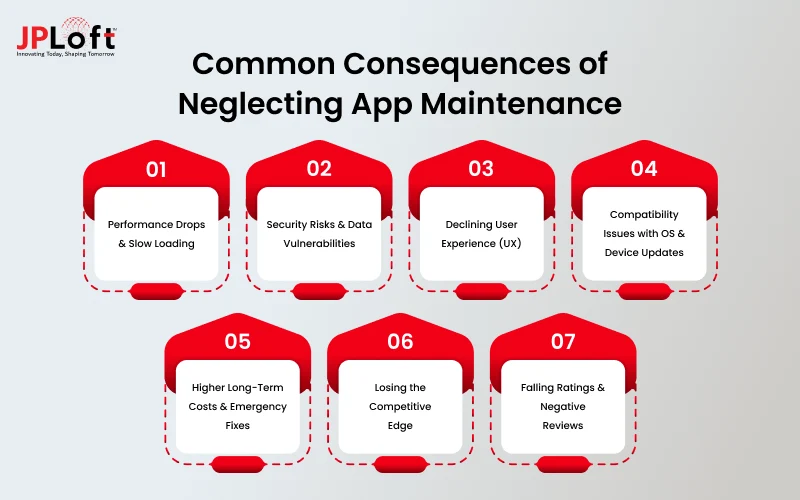
Below are the major consequences of neglecting your app's upkeep:
1] Performance Drops & Slow Loading
When you don’t update your app regularly, it begins to lag, freeze, or crash frequently. Over time, outdated code and unoptimized features make the app slow, affecting user engagement and pushing people toward faster competitors.
2] Security Risks & Data Vulnerabilities
Outdated apps are more vulnerable to malware, hacking, and data breaches. This is a key reason why you maintain a mobile app regularly, ensuring security updates and protecting user data.
3] Declining User Experience (UX)
As the app ages, bugs accumulate, design elements become outdated, and features stop working smoothly. This frustrates users, reduces trust, and results in poor retention rates, even if your app initially gained positive traction.
4] Compatibility Issues with OS & Device Updates
Android and iOS release frequent software updates. Without aligning your app to these versions, many features may stop functioning properly, leading to errors, crashes, and reduced visibility in app stores.
5] Higher Long-Term Costs & Emergency Fixes
Small issues grow into bigger technical problems when ignored. In fact, regular app maintenance saves money by preventing expensive emergency fixes, unexpected downtime, or full-scale redevelopment later.
6] Losing the Competitive Edge
Users prefer apps that feel modern, updated, and aligned with the latest trends. When your app fails to keep up, competitors who offer smoother, updated experiences easily take over your market share.
7] Falling Ratings & Negative Reviews
Poor performance, slow speed, and recurring bugs quickly translate into low star ratings. These negative reviews discourage new users from downloading your app and directly impact your brand reputation.
These consequences clearly highlight why mobile app maintenance is crucial and why staying consistent with updates ensures better stability, stronger security, and higher customer satisfaction.

10 Reasons on Why is Mobile App Maintenance Important?
When it comes to keeping your mobile app alive, relevant, and high-performing, maintenance isn’t optional, it’s essential. Many businesses launch their app with excitement but forget the most important part: keeping it updated.
That’s exactly where the mobile app maintenance importance comes in. Regular updates not only help you fix issues but also help you stay ahead of market changes, user expectations, and security challenges.
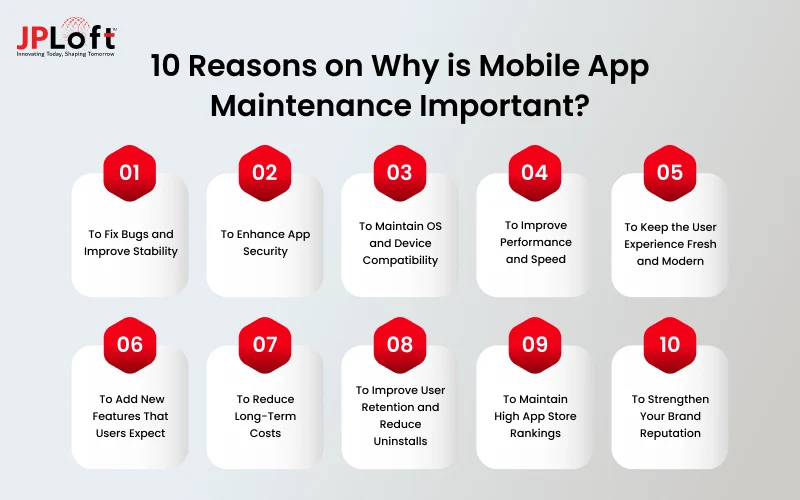
Below are the top 10 reasons on why maintain a mobile app and how it directly impacts your app’s long-term success.
1. To Fix Bugs and Improve Stability
Even the most well-built apps can run into unexpected bugs after launch. These bugs can cause slow loading, glitches, or even complete crashes. One of the biggest reasons to maintain a mobile app is to ensure these issues are quickly fixed before they frustrate users.
When your app remains stable, users feel confident using it daily, which boosts retention. This is a core importance of mobile app maintenance, as stability directly impacts user satisfaction and app ratings.
2. To Enhance App Security
Mobile app security threats evolve constantly, making app maintenance more important than ever. Cyberattacks, data leaks, and hacking attempts can destroy user trust instantly.
Regular maintenance allows you to update security protocols, fix vulnerabilities, and protect user data. This is one of the strongest answers to “Why is mobile app maintenance important?” because without proper security updates, your app, and brand reputation, are at serious risk.
3. To Maintain OS and Device Compatibility
Both Android and iOS release new updates throughout the year. If your app doesn’t stay compatible with these changes, it may start malfunctioning.
One of the biggest reasons to maintain your app, especially when you need to maintain your iOS app, is to ensure it continues functioning smoothly across newly launched devices and operating system versions.
4. To Improve Performance and Speed
No one likes slow apps. A delay of even a few seconds can push users to abandon your app permanently.Maintenance includes performance monitoring, code optimization, reducing load times, and improving navigation flow.
This is one of the most crucial reasons for why maintain a mobile app, because performance issues directly impact user engagement, conversion rates, and rankings in the app stores.
5. To Keep the User Experience Fresh and Modern
User preferences change over time. What looked trendy last year may feel outdated today. Regular updates help you refine UI/UX elements, modernize the app layout, enhance visuals, and add smoother interactions. This is an important reason to maintain a mobile app.
Many businesses also use a professional UI/UX design service during maintenance to ensure their app stays visually appealing and user-friendly. This highlights how refreshed user experiences keep your app competitive in a world where users quickly switch to better alternatives.
6. To Add New Features That Users Expect
Users need change, and outdated apps may fail to meet them. Competitors launch new features and change their trends. App maintenance allows you to keep up by adding relevant features that make your app more useful and enjoyable.
This is one of the key reasons why mobile app maintenance is important. An outdated app without new features slowly loses relevance, leading to lower downloads and engagement.
7. To Reduce Long-Term Costs
Many businesses fear app maintenance because of the cost. But ignoring maintenance leads to bigger expenses later, major breakdowns, large bug fixes, security breaches, or even complete redevelopment.
When you understand the actual mobile app maintenance cost, it becomes clear that regular upkeep is far more affordable than fixing severe issues after they occur. Regular maintenance prevents these expensive problems, making it a smart financial decision.
8. To Improve User Retention and Reduce Uninstalls
Apps with outdated content, poor performance, or frequent crashes get uninstalled quickly. Even if you create an app with great features, users won’t stick around if it isn’t maintained regularly.
By focusing on consistent updates, you show users that you're committed to offering a better experience. This directly improves satisfaction and retention. This clearly supports the importance of app maintenance, as users tend to stay loyal when they see new features, and smooth navigation.
9. To Maintain High App Store Rankings
App Store and Google Play ranking algorithms reward apps that are updated regularly. They view consistent updates as a sign of active development and high quality. Many companies now use automation in app maintenance to streamline updates, bug fixes, and performance enhancements.
Regular improvements not only maintain but can also boost your app’s ranking, increasing visibility and organic downloads. This is one of the significant reasons why mobile app maintenance is crucial for your project, especially if you want consistent traffic without spending too much on ads.
10. To Strengthen Your Brand Reputation
Your mobile app is a direct reflection of your brand. An outdated, buggy, or broken app gives users a negative impression and damages trust. On the other hand, a well-maintained app builds reliability, professionalism, and user confidence.
This highlights the overall importance of mobile app maintenance, it ensures your brand remains credible, competitive, and user-focused.
So, app maintenance plays a major role in your app’s success, performance, security, user experience, compatibility, rankings, and long-term growth.
Ignoring maintenance is like ignoring your customers. But when you prioritize it, your app stays relevant, competitive, and impactful in the long run.
Key Strategies for Effective Mobile App Maintenance
If you want your app to perform consistently and deliver a great user experience, a solid maintenance plan is essential. Proper maintenance keeps your app future-ready, reduces downtime, and ensures your users always enjoy a smooth and secure journey.
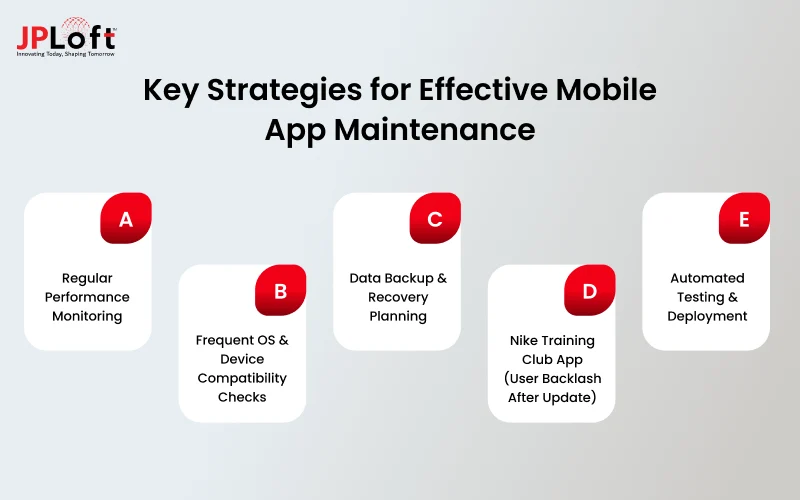
Here are the top strategies that ensure long-term success.
A] Regular Performance Monitoring
Performance is one of the first things users notice. Consistently track loading speed, crashes, downtime, API response times, and user behavior patterns. With continuous monitoring, you can quickly detect performance drops, memory leaks, or slow screens.
It allows you to fix issues before users even notice them. This proactive approach prevents bad reviews, boosts engagement, and ensures your app always runs at its best.
B] Frequent OS & Device Compatibility Checks
iOS and Android release multiple updates every year, and new devices enter the market constantly. Ensuring your app remains compatible with the latest OS versions, screen sizes, and device configurations is crucial.
With routine testing and optimization, your app stays stable, glitch-free, and ready for modern users, no matter what device they use.
C] Data Backup & Recovery Planning
Data loss can be disastrous for users and businesses. Implementing regular data backups ensures you always have a secure copy of essential information. By working with a reliable team or choosing to hire dedicated developers, you can create a strong recovery plan.
It will prepare your app for unexpected failures, cyberattacks, or server crashes. This prevents downtime, protects sensitive data, and keeps users confident in your app’s reliability.
D] Scalability Updates for Increasing Users
As your user base grows, your backend must grow with it. Scalability updates ensure your app handles rising traffic without slowing down or crashing.
Optimizing servers, upgrading APIs, improving database performance, and preparing your infrastructure for peak usage helps maintain seamless functionality even during traffic spikes.
E] Automated Testing & Deployment
Automation has become a game-changer in maintenance. Automated mobile app testing helps identify bugs faster, reduces manual errors, and speeds up release cycles.
Automated deployment ensures updates roll out smoothly to users without delays or inconsistencies. Together, these practices save time, reduce human effort, and improve overall app quality.
With the right maintenance practices in place, your app not only stays secure and fast but also continues to satisfy users for years to come. Consistent updates show your commitment to quality and help your app stay competitive in a rapidly evolving digital world.

Keep Your App Ahead with JPLoft’s Expert Maintenance Services
Nowadays, your app needs more than just great development, it needs consistent care, timely updates, and ongoing optimization. That’s exactly what JPLoft delivers through its comprehensive mobile app maintenance service.
Our expert team ensures your app stays secure, fast, compatible, and feature-rich throughout its lifecycle. From fixing bugs to improving performance, updating UI/UX, monitoring user behavior, and ensuring OS compatibility, we take care of everything that keeps your app running smoothly.
With proactive monitoring, dedicated support, and a strategic approach to continuous improvement, JPLoft helps your app stay ahead of competitors and deliver a seamless experience to every user, every time.
Final Wrap-Up
Effective mobile app maintenance is the backbone of long-term app success. It improves performance, boosts security, enhances user experience, and keeps your app relevant in a competitive market where user expectations evolve rapidly.
Without consistent updates and optimization, even the most feature-rich apps can quickly fall behind. By understanding why maintain a mobile app, you now have a clear picture of why regular monitoring, performance checks, bug fixes, and strategic improvements are essential.
Maintenance isn’t just a post-launch task, it’s an ongoing process that ensures your app stays smooth, stable, and capable of handling new challenges. Whether you’re scaling your user base, introducing new features, or preparing for future OS updates, maintenance ensures stability, reliability, and long-term growth.
FAQs
Mobile app maintenance ensures smooth performance, prevents crashes, enhances security, and keeps your app compatible with new OS updates and devices.
Most apps require updates every 4–6 weeks, depending on user feedback, security needs, performance improvements, and new feature additions.
It typically includes bug fixes, OS compatibility checks, performance optimization, security updates, UI/UX improvements, monitoring, and feature enhancements.
Costs vary based on app size, complexity, features, and update frequency. On average, maintenance can range from 15% to 25% of the initial development cost annually.
Yes. App Store and Google Play reward apps that are frequently updated and well-maintained, which increases visibility and organic downloads.

Meet Yashwant, the CTO of JPLoft. With 18+ years of industry experience, he brings deep technical expertise and visionary leadership to complex digital challenges. From scalable software architectures to emerging technology implementations, Yashwant drives innovation that empowers businesses across diverse industries to build future-ready, secure, and high-performing digital solutions.



Share this blog