


Key Takeaways:
The average time to develop an app ranges from 3 to 9 months, which varies depending on several factors.
The factors affecting app development time include the app features, platform choices, third-party integration, custom design, team structure, and more.
The time required to build a cross-platform app is less compared to native app development for Android and iOS.
The MVP development time is anywhere between 6–12 weeks, whereas an enterprise-grade app can take up to 9-12 months or more.
Choosing cross-platform development, defining key requirements, using ready-made templates, and more can help control app development time estimation.
Partnering with experts at JPLoft can help control the time required to build an app without impacting the app quality and performance.
Mobile Apps are no longer just an optional upgrade for a brand in the modern market. But these apps are the digital tools that help the app to communicate and interact with its users and stakeholders.
A mobile app serves diverse purposes, from ensuring smooth and real-time communication, product/service marketing, and brand positioning in the global marketplace. But having a mobile app for your brand requires thorough planning and execution.
Such a plan also includes deciding on the app development timeline. The timeline indicates the average time required to build a mobile app, the key stages involved, and when you can expect a fully-functional app for your brand.
On average, a mobile app can be ready within a time span of 3–9 months, but it can vary depending on several factors.
In this blog, we will discuss in depth “How long does it take to develop an app?”, the factors impacting the timeline, and how you can accelerate the overall process with ease.
How Long Does It Take to Make An App?
The timeline to develop a mobile app is rarely a one-size-fits-all process. On average, most apps take 3 to 9 months to move from concept to launch, depending on complexity, features, platform choice, and feedback cycles.
Basic MVP development time is around 6 to 12 weeks, while enterprise-grade solutions with integrations, analytics, and custom UI may extend beyond 12 months.
Further, following the industry trends can result in an increased timeline, as adding more features or aligning with users’ shifting interests demands a higher timeline for Android app development or for iOS app development.
To manage this timeline, startups and enterprises are embracing agile sprints, low-code accelerators, and ready-made feature modules to reduce time to market without compromising quality.
However, factors like third-party API dependencies, compliance requirements, and continuous iterations still influence actual timelines.
Here’s an overview of how long does it take to make a mobile app:
|
App Type |
Common Features |
Approx Timeline |
|
Simple MVP App |
Basic screens, login, static content |
2 to 3 months |
|
Mid-Complexity App |
Payments, chat, user profiles, dashboards |
4 to 6 months |
|
Complex or Enterprise App |
Custom workflows, integrations, and multirole access |
9 to 12 months or more |
3 Core Phases of App Development That Shape The Timeline
Building an app follows a set process and is not an overnight thing. You start with an idea, turn it into a plan, develop the structure, and then hand it over to users while keeping it maintained. These phases helps decide “How long does it take to build an app?”
Every app follows three main phases. If you understand these stages, you can plan better, make smarter choices, and stay realistic about timelines.
Phase 1: Pre-Development Phase
The app development starts with the pre-development phase, where you define your app expectations and goals. The time estimate for this phase is four to eight weeks.
► Ideation and Discovery
Here, you define the main problem your app aims to solve and the user base. Based on this, further features of the app and the development process are defined.
Timeline: 1 to 2 weeks
► Wireframing and UX Design
This step is app wireframing, which includes creating simple screen layouts to show how people will move through the app. It allows you to understand your app flow and the convenience when a user uses your app.
Timeline: 2 to 3 weeks
► Visual UI Design
The next step is focusing on the app visuals, which include adding colors, icons, styles, and layouts. At this stage, you get a full design preview of the app.
Timeline: 1 to 3 weeks
Phase 2: Core Technical Development and Testing
The next phase, defining “how long does it take to create a mobile app,” is the coding or app development, and testing.
Such a phase ensures that the app is built to fit the set expectations and guidelines. This stage consumes most of the time and can last from 8 weeks to 24 weeks or even more, depending on project complexity.
► Backend Setup
This stage involves setting up servers, ensuring a solid app tech stack, building or integrating APIs, and preparing the database. All these activities act as a backbone of the mobile app that supports login, payments, and other features.
Timeline: 2 to 6 weeks based on complexity
► Frontend Development
Another aspect to focus on when deciding how long does it take to build an app is the frontend development, which involves converting your planned designs and visuals into working screens on Android, iOS, or both. Features connect to the backend to make the app functional.
Timeline: 4 to 16 weeks, depending on scope and platform
► Quality Assurance and Testing
The development phase also includes conducting a thorough test. QA teams test screens, flows, and performance. They find bugs early and make sure the app works well across devices.
Timeline: 3 to 8 weeks, often overlapping with development
Phase 3: Deployment, Launch, and Maintenance
Developing the app is not the final stage, but after development, it needs to be launched and further maintained to ensure that it stays fully functional and aligned with the trends. This phase can take up to the time of 1–3 weeks.
► Store Submission and Approval
Once the app is finalized, the team prepares listings, screenshots, and compliance details. Then they check for the relevant guidelines and submit the app to the Google Play Store or publish the app to the Apple App Store.
Timeline: 1 to 3 weeks
► Post Launch Monitoring and Updates
Post launch, the teams are required to focus on app maintenance services to track crashes, feedback, and performance. Updates are released to improve stability and add features.
Timeline: Ongoing, based on market needs and user growth

Critical Factors That Impact The App Development Timeline
Most founders have a common question: “How long does it take to develop a mobile app?” But answering this question is not simple, as no two apps follow the same pace.
The actual answer to this lies in the choices made by the entrepreneur or the developer. These choices decide your app complexity, the efforts involved, and hence the timeline.
Here are some of the key factors affecting app development time that explain why some apps are released fast, and others take months.
1. App Feature List: Simple, Medium, or High?
The selected features for your app justify how long does it takes to build a mobile app.
A basic app with limited features takes less planning and testing. But, more complex apps need deeper logic, more screens, higher mobile app security, and longer debugging, so time grows.
Hence, finalizing the app features is important so that you can get a reliable time estimate for your mobile app.
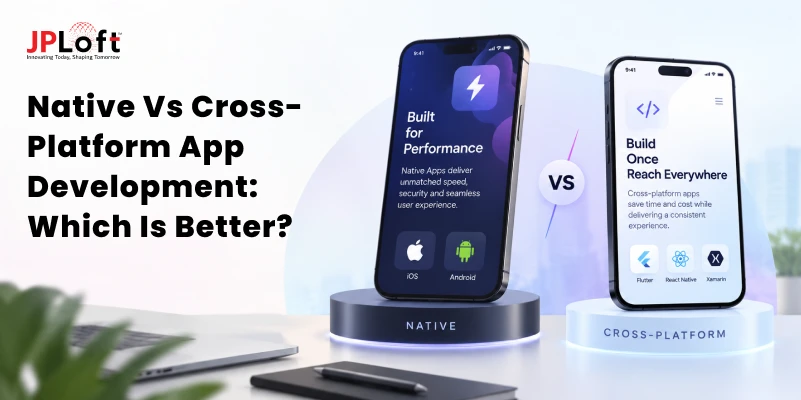
2. Platform Choice: Native vs. Cross-Platform
Another factor that has a significant impact on the time required to build an app is the choice of platform.
Native apps require separate builds for Android and iOS, which doubles the work, but can be less if you are targeting a single platform.
On the other hand, cross-platform tools allow shared code, so teams deliver faster. Still, if you need deep device-level features, native builds may be the better choice even if the average time to develop an app increases.
3. Third Party Integrations
The modern-day apps need to prioritize user experience and, hence, need to offer features that are costly or not possible to build.
Hence, in such cases, they rely on third-party or API integrations. Payment gateways, location tools, messaging services, and CRMs are some integrations that need to be planned, and they all affect timelines.
These integrations need setup, testing, or approval, which slows delivery. Further, when an API changes or fails, the mobile app development timeline gets extended.
4. Custom Design vs. Templates
The time required to build a mobile app also depends on the design of the app or the app's style. A custom UI provides your app a unique feel, but takes more time because screens must be drawn, reviewed, and recreated if feedback changes.
Templates move faster but may not suit every app design or layout. Hence, this choice becomes the key when planning app development time estimation, especially for visually heavy apps like shopping or wellness platforms.
5. Team Structure and Experience
The selection of the development team is also among the factors affecting app development time. A team with skilled and well-coordinated developers builds smoother products within the set timeline. They spot problems early and reduce mistakes.
Further, a weaker team delays work because of the communication issues or limited experience, which leads to rework. Hence, it is important to select a better team rather than just focusing on the cost to hire developers.
6. Mid-Project Changes
Another aspect impacting how much time to develop an app is the mid-project changes. Such happens when new ideas show up mid-project. Even small changes lead to redesign, code changes, and new tests.
This is one of the biggest factors affecting mobile app development timeline, so locking features early and using change control helps protect delivery speeds.
But to avoid this, you should not make your development project rigid; otherwise, you might end up losing out on the emerging trends.
7. Feedback and Approval Cycles
The feedback or the design approval further impacts the mobile app development timeline. Even the skilled and fastest team slows down if there is a lack of timely feedback.
Slow responses pause development and add weeks to the average time to develop an app. On-time approvals, clear communication, and shared responsibility help keep releases on track.
Hence, it is recommended to follow a proper communication pattern with the developers and provide them with on-time updates to maintain the pace.
Estimated Timelines by App Type and Feature Set
The time required to bring a mobile app to life also varies based on the app type and the features planned for the app. Hence, the question, “How to estimate your time to develop an app?” has its significance.
It can simply be said that the timeline depends on what the app does, who will use it, and how detailed the features are. Here is a simple look at how long different apps may take and why.
A] MVP Apps
Planning for the MVP development time is the quickest way to launch an idea. This version of the app includes only the must-have features that are important for early launch. These apps learn from real users, gather feedback, and grow step by step. This approach controls risk and lets you test before investing more time.
Estimated Build Time: 6 to 10 weeks
B] Medium Complexity Apps
Another app type to focus on is the medium complexity apps. These apps include features that are essential for everyday use, along with some advanced features, including booking, chat, payments, and notifications.
The examples of these app types are fitness apps, delivery apps, and learning platforms. They need stronger design planning and more testing because people interact with them in many ways.
Estimated Build Time: 4 to 6 months
C] High-Complexity Apps
These apps support large groups or are for enterprise use. Potential examples of these apps include ride-hailing apps, banking apps, health management platforms, or corporate tools.
Developing these apps is not just based on the coding aspects, but they also include automation, role-based access, tracking, data handling, and advanced security. Since many parts must work together, these apps take the longest time to build an app.
Estimated Build Time: 9 to 12+ months
D] Cross-Platform Apps
Along with all, an app type that is becoming popular among the audience is cross-platform development. You can hire mobile app developers to create an app that works for both Android and iOS with a common code base.
Using tools like Flutter or React Native, teams write one code base for Android and iOS. This helps you launch faster and control the individual timelines for Android app development and iOS app development.
Estimated Build Time: 20 to 40 percent faster compared to native builds
|
App Type |
Common Features |
Typical Timeline |
|
MVP App |
Core functions, simple UI |
6–10 weeks |
|
Medium Complexity App |
Payments, chat, dashboards, push alerts |
4–6 months |
|
High-Complexity App |
Tracking, automation, custom logic, integrations |
9–12+ months |
|
Cross-Platform App |
Shared code for Android and iOS |
20–40% faster |
Best Practices To Control The Development Time
If you are wondering how to reduce the app development timeline, don’t focus on skipping processes. The goal of app development should not be to rush code, but to plan smartly and work in a structured way.
Here are some of the key strategies that can help reduce the development time without reducing or impacting the app quality.
1. Start With an MVP
The smarter way to save on your development time is by investing in MVP or app prototyping. Many businesses waste months building everything at once. Starting with an MVP lets you launch faster because you focus on the core features first.
Such an MVP launch also helps you get real user feedback early, which guides future updates rather than making assumptions. This approach often cuts months from the average time to develop an app.
2. Choose Cross-Platform Development When Suitable
If your app does not depend on platform-specific features, cross-platform tools like React Native or Flutter help you with cross-platform development. This ensures having a common app for Android and iOS at the same time.
This avoids separate coding tracks and shortens the average timeline for iOS app development or a native Android app while keeping the experience consistent.
3. Define Requirements Clearly Before Development
If you want to have precise information about “How long does it take to develop a mobile app?”, then you should focus on having a clear scope. When there is a change in the planned features in the middle of the development process, teams need to revise the work already done. Hence, this results in impacting the timeline.
Hence, it is recommended to start with clear wireframes, user flows, and feature lists. The more clarity you ensure upfront, the easier it becomes to estimate the app development timeline and stay on track.
4. Keep Design Practical in the Early Stage
Fancy mobile app design and custom visuals add to the app development time estimation. Hence, it is recommended to start with basic, simplistic, and minimal screens.
Simple, clean layouts not only improve usability but also speed up development. With such an approach, you always have the option to enhance design even after the app launch. Such an upgrade can also be made based on what your targeted users want.
5. Use Ready-Made Tools and Modules
Another way to manage the time required to build an app is by looking for ready-made tools and modules.
It is recommended not to build everything from scratch. Many features like authentication, analytics, chat, and maps exist as reliable modules. Using these pre-developed modules instead of custom builds reduces effort and testing cycles, hence early development.
6. Work With an Experienced Team
The team of developers you are hiring plays a significant role in deciding, “How long does it take to create a mobile app?”
A skilled team has expertise in building apps and knows how to avoid common mistakes; as a result, they can make faster decisions and streamline work.
Experience helps predict risks, create better processes, and manage the app development time without extra stress.
7. Test Continuously Instead of Leaving It for Last
Rather than leaving the mobile app testing to happen in the last stage, ensure that the app is being tested continuously at every stage of development.
Testing alongside the development helps identify development issues early, and hence they can be eliminated before they worsen. Continuous QA leads to smoother delivery and reduces launch delays.
How JPLoft Helps Keep Your Project On Track?
Mobile apps are not just about having digital tools; they are also the digital representation of your brand. Hence, it is important to have the right guidance when developing a mobile app. As a trusted mobile app development company, JPLoft supports you through every stage of your journey, from idea to launch.
The team at JPLoft helps shape your concept, refine features, and set clear timelines, so you know what to expect. Our designers craft clean, user-friendly screens while our developers build secure, stable apps for Android, iOS, or both.
Whether you need an MVP for early launch or a full-scale business app, we match your goals with the right tools and team. Our sprint-based approach keeps progress visible so you stay informed at all times.
The support does not end after release. We monitor performance, apply updates, and enhance features as your user base grows. With JPLoft, you get more than a product. You get a mobile app development company that cares about long-term results and works with you as a partner.
If you are ready to move forward, our team is here to make the process smooth, simple, and rewarding.
Conclusion
Building a mobile app is not just about writing code. It is about planning well, choosing the right features, and staying realistic about the app development time estimation for each stage. When you understand what drives timelines, you make smarter decisions and avoid delays that slow many projects down.
So, now you know the key aspects and approaches that define “How long does it take to make a mobile app?’ Starting with a simple version, responding quickly during development, and working with an experienced team can cut weeks or even months from your schedule. The goal is not to rush, but to build with clarity, so your app reaches users on time and grows smoothly.
This blog has covered how to estimate your time to develop an app in detail, so that you can plan your entrepreneurial journey with confidence. Further, with the right support and approach, your idea can become a working product that users enjoy. When planning is strong and execution is steady, launch day feels less stressful and far more rewarding.
FAQs
A basic app can take 6 to 10 weeks. Apps with payments, chat, or dashboards often need 4 to 6 months. Large enterprise apps with custom workflows may take 9 to 12 months or more.
The average time to develop an app depends on app complexity, platform choice, design needs, team skill, third-party tools, and how fast feedback is shared with the developers.
Yes, you can speed up the process by starting with an MVP, using cross-platform tools, planning clearly, and testing early helps reduce delays while keeping quality strong. But before that, you need to be aware of how long does it takes to make an app, so that you can plan accordingly.
Usually yes. Cross-platform frameworks like Flutter or React Native let you build for Android and iOS at the same time, which can cut your timeline for iOS app development or Android development by 20 to 40 percent.
If you want to know how long does it takes to build a mobile app, then start by sharing your features, budget, and goals with a development team. After reviewing the scope and complexity, the developers can provide you with an estimate of how long your project may take and help you plan deadlines.

Priyanka Sukhwal is the Managing Director and Business Head of JPLoft, a results-driven leader with 10+ years of experience steering technology ventures and business growth. Her strategic acumen and deep understanding of digital markets and on-demand solutions have consistently translated into innovations that help businesses scale, evolve, and lead in competitive landscapes.




Share this blog