


Key Takeaways
To create an app like Boomplay, you require proper market research, the right feature set, scalable technology, and a clear development strategy.
The cost to develop a music app like Boomplay can range from $30,000 to $120,000+, depending on features, technology stack, and development scope.
Features such as music streaming, offline listening, playlists, and personalized recommendations help improve user engagement and retention.
Integrating AI recommendations, cloud infrastructure, and advanced analytics helps create scalable and high-performing music streaming apps.
Implementing monetization models such as subscriptions, in-app ads, freemium plans, and artist promotions helps generate sustainable revenue.
Partnering with a trusted app development company like JPLoft helps businesses build scalable, secure, and feature-rich music streaming platforms.
The global music streaming industry is growing at an incredible pace, creating massive opportunities for new platforms.
In fact, the global music streaming market generated over $25 billion in revenue last year, with more than 616 million paid subscribers worldwide, showing how rapidly users are shifting to digital music platforms.
With platforms like Boomplay gaining popularity in emerging markets, many entrepreneurs and businesses are now trying to build similar music streaming solutions.
So, the question is “How to develop an app like Boomplay that users can’t stop using?”
The answer lies in combining the right technology stack, engaging features such as personalized playlists and offline listening, and a scalable infrastructure that can handle millions of users.
However, there are several other key elements that make an app like Boomplay truly successful. In this guide, we will explore key steps, essential features, and the development process to build an app like Boomplay.
What is the Boomplay App?
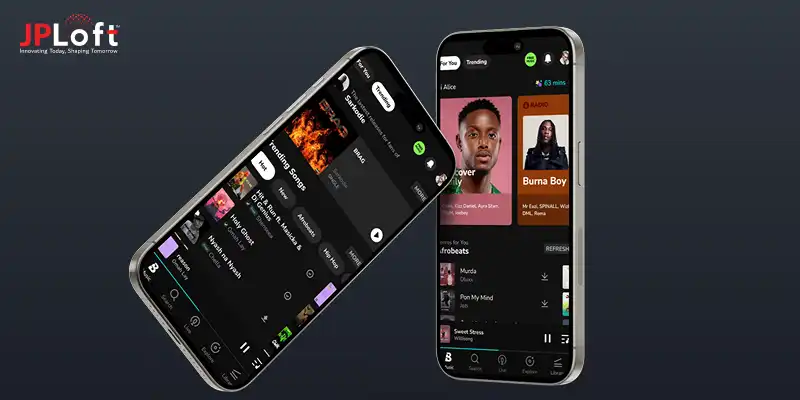
Boomplay is one of the fastest-growing music streaming platforms, especially popular across Africa and emerging markets. The app allows users to discover, stream, and download millions of songs from various genres, artists, and languages.
From trending hits to curated playlists, Boomplay provides a personalized listening experience for music lovers. Currently, the Boomplay app has 100 million+ downloads on the Google Play Store with an average rating of around 4.3 stars from nearly one million user reviews, showing its strong global popularity.
Because of its massive user base across Africa, Boomplay is often referred to as the “Spotify of Nigeria,” as it plays a similar role in the African music streaming market by supporting local artists and regional music content.
The platform also supports features such as offline listening, music recommendations, artist promotion, and user-created playlists.
These features make the app engaging and easy to use for both casual listeners and dedicated music fans. For businesses planning to build a music streaming app, understanding how the platform works is an important first step.
Boomplay works by hosting a large digital music library on cloud servers, allowing users to stream songs online or download them for offline listening through a subscription or ad-supported model.
Why Should You Invest in an App Like Boomplay?
As digital entertainment grows, music streaming platforms are becoming more popular among users as they are moving from traditional downloads to online streaming.
Many businesses are now exploring opportunities to develop an app like Boomplay and enter the growing music streaming industry.
Several key factors explain why entrepreneurs and startups are eager to start a music streaming business today.
-
Rising Demand for Music Streaming: People now prefer streaming music anytime and anywhere rather than purchasing individual tracks. This growing user behavior creates a strong opportunity for businesses to launch their own music platforms.
-
Growing Smartphone and Internet Usage: With smartphones and high-speed internet becoming more accessible worldwide, users can easily stream music on the go. This digital shift makes it easier for companies to build scalable streaming apps.
-
Personalized Music Experience: Modern users expect personalized playlists, recommendations, and curated content. Apps like Boomplay offer these features, making them highly engaging and encouraging more businesses to develop similar platforms.
-
Multiple Monetization Opportunities: Music streaming apps can generate revenue through subscriptions, in-app ads, premium features, and artist promotions. These diverse revenue streams motivate many entrepreneurs to start a music streaming business.
-
Expanding Global Music Audience: The global audience for digital music continues to grow every year. This expanding market gives startups and companies a chance to build innovative music platforms and compete in a fast-growing industry.
As the music streaming industry continues to evolve, launching a feature-rich platform can help businesses tap into a large and loyal audience.
With the right strategy and technology, companies can successfully build an app like Boomplay and enter the market with a competitive music streaming platform.
Key Features of an App Like Boomplay
When planning to make an app like Boomplay, features play a crucial role in defining the user experience. The right functionality not only attracts users but also keeps them engaged for a longer time.
If you want to develop a successful platform, focusing on the top music app features is one of the most important steps.
Below are some of the essential features commonly found in apps like Boomplay:
|
Feature |
Description |
|
User Registration & Profiles |
Allows users to create accounts using email, phone number, or social media for a personalized music experience. |
|
Music Streaming |
Enables users to stream songs instantly from a vast digital music library with minimal buffering. |
|
Offline Listening |
Allows users to download songs and listen to them without an internet connection. |
|
Personalized Recommendations |
Suggests songs, albums, and playlists based on user listening behavior and preferences. |
|
Search & Discovery |
Helps users quickly find songs, artists, albums, or playlists through advanced search options. |
|
Curated Playlists |
Provides professionally curated playlists for different moods, genres, and occasions. |
|
User-Created Playlists |
Let users create and manage their own playlists for a customized listening experience. |
|
Social Sharing |
Allows users to share their favorite tracks or playlists with friends through social media. |
|
Push Notifications |
Notifies users about new releases, trending music, or personalized recommendations. |
|
In-App Advertising & Subscriptions |
Supports monetization through ads, premium subscriptions, and exclusive content access. |
By integrating these app features, businesses can create a dynamic and user-friendly streaming platform. A feature-rich application not only enhances user engagement but also helps your music streaming app stay competitive in the growing digital music market.
How to Create an App Like Boomplay: Step-by-Step Process
So, how to build an app like Boomplay that can attract thousands or even millions of users?
To develop such apps, businesses must follow a structured development process that ensures scalability, performance, and an engaging user experience.
Before diving into the detailed explanation, here is a quick overview of the steps to create an app like Boomplay:
-
Market Research & Idea Validation
-
Defining Core Features & App Strategy
-
UI/UX Design for the Music App
-
Choosing the Right Technology Stack
-
Development of the App (Frontend & Backend)
-
Integrating AI & Smart Features
-
Ensuring Security & Compliance
-
Testing and Quality Assurance
-
Launch and Post-Launch Maintenance
Now, let’s explore the complete process to develop a music streaming app like Boomplay step by step:
Step 1: Market Research & Idea Validation
The first step to develop a music streaming app like Boomplay is understanding the market and identifying the opportunities available in the industry.
The music streaming ecosystem is highly competitive, with several best music streaming apps dominating global markets.
Therefore, proper research helps businesses discover gaps and opportunities for innovation.
During this stage, companies analyze user behavior, study competitor platforms, identify target audiences, and explore emerging app ideas that can differentiate the platform.
Market research also helps determine the type of monetization model to implement, such as subscriptions, advertisements, or premium memberships.
Step 2: Defining Core Features & App Strategy
Once the idea is validated, the next step is to identify the essential features required to create an app like Boomplay. The success of a streaming platform largely depends on the functionality it offers to users.
Some of the key features typically include music streaming, personalized playlists, offline downloads, user profiles, search and discovery tools, and curated recommendations.
Businesses must also decide whether they want to integrate social features, podcasts, or artist promotion tools.
At this stage, companies also decide the overall product strategy and roadmap for the Boomplay-like app development. This helps define the minimum functionality required for the first version of the app.
Step 3: UI/UX Design for the Music App
User experience plays a crucial role when trying to create a music app like Boomplay. If the interface is confusing or slow, users may quickly switch to competing platforms.
Designers focus on creating an intuitive layout that allows users to easily browse songs, search artists, and manage playlists.
Smooth navigation, clean interface design, and visually appealing elements significantly enhance the overall experience when businesses design a music app for modern users.
Many businesses also rely on professional UI/UX design services to ensure the app interface is engaging, user-friendly, and optimized for seamless interaction. A well-designed app encourages users to spend more time exploring music and discovering new content.
Step 4: Choosing the Right Technology Stack
The next important step in app development is selecting the right technologies. The performance and scalability of the platform depend heavily on the development tools and frameworks used.
A typical music streaming app tech stack includes frontend frameworks such as React Native or Flutter for mobile development.
Backend technologies like Node.js or Django, and cloud services such as AWS or Google Cloud for storage and streaming capabilities.
Streaming apps also require strong database systems, content delivery networks (CDNs), and audio processing tools to ensure smooth playback and minimal buffering.
Selecting the right technology stack ensures the platform can support a growing user base without performance issues.
Step 5: Development of the App (Frontend & Backend)
After planning and design, the actual development phase begins.
This stage involves building the user interface, backend architecture, and core functionalities required to develop a music app like Boomplay.
Frontend developers focus on creating the visual interface, while backend developers build the server infrastructure, APIs, and streaming systems that power the platform.
This phase also includes implementing user authentication, music libraries, playlist management, and search algorithms.
Many startups initially build an MVP for a music app to test the platform in the market before investing heavily in advanced features.
An MVP allows businesses to gather user feedback and improve the product based on real usage data.
Step 6: Integrating AI & Smart Features
Modern streaming platforms are increasingly using artificial intelligence to enhance user experience.
Integrating AI in music apps helps these platforms deliver highly personalized recommendations and smarter music discovery.
For example, AI algorithms can analyze listening habits and suggest new songs, artists, or playlists based on user preferences. Other AI features for music streaming apps include mood-based playlists, voice search capabilities, and predictive recommendations.
When companies develop a music streaming app like Boomplay, integrating AI can significantly improve user engagement and retention.
Step 7: Ensuring Security & Compliance
Music app security is a critical factor when building digital platforms. Music streaming apps handle user data, subscription payments, and copyrighted content, which makes strong security systems essential.
Developers must implement strong app security measures such as secure login authentication, encrypted payment systems, and protection against data breaches.
Additionally, apps must comply with international music streaming app compliance regulations related to copyright laws, music licensing, and data protection.
Ensuring legal compliance helps businesses avoid penalties and maintain trust with both users and music artists.
Step 8: Testing and Quality Assurance
Before launching the platform, developers must thoroughly test every feature of the application. Mobile app testing ensures that the platform performs smoothly under different conditions and devices.
During this stage, QA teams evaluate performance, identify bugs, test streaming quality, and verify the overall user experience.
Load testing is particularly important for music streaming apps because large numbers of users may stream songs simultaneously.
Thorough testing ensures that businesses can confidently make a custom music streaming app like Boomplay that delivers reliable performance and high-quality streaming.
Step 9: Launch and Deployment
The final stage of development is launching the application and making it available to users. Once businesses create a music streaming app like Boomplay, the app must be prepared for release on major platforms.
This includes optimizing the app for store guidelines, preparing app descriptions, screenshots, and completing the required documentation.
At this stage, developers submit an iOS app to the App Store and publish an app to the Google Play Store so users can download and start using the platform.
A smooth deployment process ensures the app reaches the target audience efficiently and begins gaining traction in the market.
How Much Does It Cost to Develop a Music App Like Boomplay?
The cost to make an app like Boomplay typically ranges between $30,000 and $120,000+, depending on several factors such as app complexity, features, technology stack, and the development team you hire.
A basic music streaming app with limited features may fall on the lower end of the range, while a fully featured platform with AI recommendations, offline downloads, and personalized playlists can significantly increase the overall cost.
Other elements, such as UI/UX design, backend infrastructure, cloud storage, licensing, and testing, also play an important role in determining the final development budget.
Here’s a quick cost breakdown:
|
Development Stage |
Estimated Cost |
|
Market Research & Planning |
$2,000 – $5,000 |
|
UI/UX Design |
$4,000 – $10,000 |
|
Frontend Development |
$8,000 – $25,000 |
|
Backend Development |
$10,000 – $30,000 |
|
AI & Advanced Features |
$3,000 – $15,000 |
|
Testing & Quality Assurance |
$2,000 – $8,000 |
|
Deployment & Launch |
$1,000 – $5,000 |
|
Total Estimated Cost |
$30,000 – $120,000+ |
Overall, the final investment depends on the functionality, scalability, and customization level you want for your platform.
By planning the features strategically and partnering with the top-rated mobile app development company, businesses can optimize the budget while still building a high-quality music streaming application.
Mistakes to Avoid While Developing an App Like Boomplay
A successful music streaming platform is built through careful planning, powerful technology, and a strong focus on user experience.
However, many startups and businesses face several music app development challenges during the process, which can negatively impact the success of the platform.
[1] Ignoring Market Research
Launching an app without studying user preferences, competitors, and industry trends can lead to poor product-market fit. Proper research helps identify what users actually want in a music streaming platform.
Solution: Conduct thorough market research, analyze competitor platforms, and gather user insights before development to build a product that truly meets audience needs.
[2] Overloading the App with Too Many Features
Adding too many features in the first version can make the app slow and complicated. It is often better to start with essential features and gradually expand based on user feedback.
Solution: Start with a Minimum Viable Product (MVP) that includes only core features, then introduce advanced functionalities based on user demand and platform growth.
[3] Poor User Experience (UI/UX)
A confusing interface, slow navigation, or complicated music discovery can quickly frustrate users. A clean, simple, and intuitive design is essential for user retention.
Solution: Focus on user-friendly design, smooth navigation, and personalized music discovery to ensure a seamless listening experience.
[4] Weak Music Licensing Strategy
Music streaming apps rely heavily on licensing agreements with artists, labels, and distributors. Ignoring legal licensing requirements can cause serious legal and operational issues.
Solution: Secure proper licensing agreements with music labels and distributors to legally stream content and avoid copyright issues.
[5] Ignoring App Performance and Scalability
Streaming platforms must handle large amounts of data and simultaneous users. Poor backend infrastructure can lead to buffering, crashes, and a bad user experience.
Solution: Build a scalable backend and use reliable cloud services to ensure smooth streaming when learning how to create an app like Boomplay.
[6] Lack of Monetization Strategy
Without a clear revenue model, such as subscriptions, ads, or premium features, it becomes difficult for the platform to sustain long-term growth.
Solution: Implement a well-defined monetization strategy, such as subscription plans, advertisements, or premium content access, to generate consistent revenue.
Understanding these common mistakes can also help you know why music apps fail in such a competitive market.
Recent Technologies to Make Your App Like Boomplay Future Proof
The music streaming industry is evolving rapidly with new innovations shaping the future of digital entertainment.
To develop an app like Boomplay that remains competitive in the long run, businesses must adopt modern technologies and stay updated with the latest music streaming app trends.
Integrating advanced technologies can improve user experience, scalability, and platform performance.
[A] Artificial Intelligence & Smart Recommendations
Artificial intelligence helps streaming platforms analyze listening behavior and recommend songs based on user preferences.
Many companies also rely on professional AI app development services to integrate smart recommendation engines and personalized user experiences.
AI-powered recommendation engines are one of the biggest app trends, helping apps deliver personalized playlists, mood-based suggestions, and smarter music discovery.
[B] Cloud-Based Streaming Infrastructure
Modern streaming apps rely heavily on cloud technology to manage large music libraries and handle millions of users simultaneously.
Implementing a cloud-based audio streaming solution like Boomplay allows businesses to ensure faster streaming, secure storage, and better scalability.
[C] Social Sharing & Community Features
Music streaming is becoming more social, allowing users to share playlists, songs, and listening activity with friends.
Integrating social features plays an important role in music-sharing app development like Boomplay, helping platforms increase user engagement and community interaction.
[D] Advanced Data Analytics
Data analytics tools help developers understand user behavior, track engagement, and improve the platform continuously.
These insights allow businesses to refine features and optimize their strategy when they make an app like Boomplay.
[E] High-Quality Audio Streaming & Adaptive Bitrate
Delivering high-quality audio is essential for creating a great user experience in music streaming platforms.
Modern apps use adaptive bitrate streaming technology to automatically adjust audio quality based on the user’s internet speed. This ensures smooth playback without buffering, even on slower networks.
By leveraging these technologies, companies can build a scalable and innovative music streaming platform that stays competitive in the fast-changing digital music industry.
Monetization Models for Apps Like Boomplay
To sustain growth and generate profits, businesses must implement effective ways to monetize music streaming apps.
Platforms such as an audio streaming app like Boomplay use multiple monetization methods to maximize revenue while maintaining a good user experience.
Here are some of the ways your app can make money:
1. Subscription-Based Model
One of the most popular monetization strategies is offering premium subscription plans.
In this model, users pay a monthly or yearly fee to unlock advanced features such as ad-free streaming, offline downloads, unlimited skips, and high-quality audio.
Many successful platforms, including an audio streaming app like Boomplay, use this model to generate stable and recurring revenue.
Subscription tiers can also be designed for individuals, families, or students, allowing businesses to attract different types of users while maximizing profitability.
2. In-App Advertising
In-app advertising is another effective way to generate revenue, especially from users who prefer free access to the platform.
Free users can stream music while listening to short advertisements between songs, playlists, or within the app interface.
These ads may include audio ads, banner ads, or video promotions from brands.
This approach helps companies monetize apps without requiring users to pay upfront while still maintaining a steady revenue stream through advertisers.
3. Freemium Model
The freemium model combines both free and paid experiences.
Users can access the basic features of the platform for free, but premium features such as offline downloads, exclusive content, or advanced recommendations require a paid upgrade.
This strategy works well because users can first experience the value of the app before deciding to subscribe.
Many successful streaming platforms use this model to convert free users into paying customers over time.
4. Artist Promotions & Sponsored Content
Music streaming apps can also collaborate with artists, music labels, and entertainment companies to promote new songs, albums, or playlists.
Sponsored playlists, featured artists, and promoted tracks allow artists to gain visibility while the platform earns additional revenue.
This method not only creates new income opportunities but also helps users discover trending music and emerging artists within the platform.
5. Affiliate Partnerships & Merchandise Sales
Another growing revenue strategy is partnering with brands and artists to promote merchandise, concert tickets, and exclusive music-related products.
Streaming platforms can integrate affiliate links within the app to direct users to external platforms where they can purchase these items.
Every successful purchase generates commission for the app, creating an additional income stream beyond subscriptions and advertisements.
By combining multiple revenue strategies, businesses can effectively monetize a music streaming platform while providing value to users and artists.
Why Choose JPLoft to Build an App Like Boomplay?
Choosing an experienced technology partner is an important step in creating a successful music streaming platform.
JPLoft is a trusted music streaming app development company that helps startups and enterprises turn their ideas into high-performing digital platforms.
With a strong team of experienced developers, designers, and technology experts, JPLoft focuses on building scalable and user-friendly music streaming applications.
From UI/UX design and backend development to cloud integration and AI-powered recommendations, the company provides end-to-end development solutions tailored to business needs.
JPLoft also ensures high performance, secure architecture, and seamless streaming experiences for users.
If you want to launch a new music platform or upgrade an existing one, their expert team can help you build a feature-rich and competitive music streaming application.
Final Wrap-Up
The music streaming industry continues to grow rapidly as more users shift toward digital platforms for entertainment.
Businesses that understand market trends, implement the right features, and use modern technologies can successfully enter this competitive space.
If you are planning to develop an app like Boomplay, focusing on user experience, scalable technology, and a strong monetization strategy is essential.
By following the right development process and avoiding common mistakes, companies can build a powerful music streaming platform that attracts users and generates long-term revenue.
FAQs
To develop an app like Boomplay, businesses need to conduct market research, define key features, choose the right tech stack, build the app, and launch it with proper testing and updates.
Key features include music streaming, offline listening, personalized recommendations, playlist creation, search functionality, social sharing, and subscription management.
The average development cost typically ranges between $30,000 and $120,000+, depending on the features, technology stack, and development approach.
Music streaming apps generally use technologies such as cloud infrastructure, AI-based recommendation systems, streaming servers, and secure payment integrations.
These platforms generate revenue through subscriptions, in-app advertisements, freemium models, artist promotions, and affiliate partnerships.

Conor has more than 10 years of experience in software development, app creation, solution engineering, and UX/UI design. With an impressive track record of high retention and growth working with Fortune 500 companies, he brings the technical depth and strategic perspective needed to help businesses build impactful, user-focused digital solutions.


Share this blog