


Key Takeaway
To develop an app like SiriusXM requires structured planning, the right tech stack, and scalable cloud streaming to deliver seamless audio experiences.
The cost to develop a SiriusXM-like app typically ranges from $20,000 to $100,000+, depending on features, platforms, AI integration, and scalability needs.
Essential features include live radio streaming, on-demand content, offline listening, multi-device support, and secure subscription management.
Apps like SiriusXM generate revenue through subscription plans, ad-supported free access, in-app purchases, and brand partnerships for sustainable growth.
AI-driven personalization, voice integration, interactive live audio, hybrid monetization models, and immersive sound technologies will shape future streaming platforms.
JPLoft helps businesses build scalable, secure, and feature-rich SiriusXM-like apps using modern tech stacks and end-to-end development expertise.
Music streaming has transformed how users discover, enjoy, and stay connected with audio content, from live radio to personalized playlists and podcasts.
Apps like SiriusXM have set a strong benchmark by combining premium content, seamless streaming, and smart personalization in one platform. If you’re a business or startup exploring this space, the big question is- How to develop an app like SiriusXM?
The answer lies in combining the right features, robust technology stack, and a scalable development approach tailored to user listening behavior. Today, many brands aim to build a music app like SiriusXM to tap into the growing demand for subscription-based audio streaming.
So, in this blog, we will break down the development process, essential features, technology requirements, costs, and key challenges involved in creating a successful SiriusXM-like music streaming app.
What is the SiriusXM App?
SiriusXM is a premium audio streaming platform that offers a rich mix of live radio channels, music, sports, news, talk shows, and podcasts, all in one place. Unlike basic music apps, it delivers exclusive content, curated stations, and ad-free listening experiences across devices.
This makes it a strong inspiration for businesses looking to build a music streaming app with long-term user engagement. The app streams content through cloud-based servers, allowing users to access live and on-demand audio anytime, anywhere.
Users can browse channels, search for shows, create personalized listening experiences, and stream seamlessly across mobile, web, and smart devices, making SiriusXM a powerful model for modern audio streaming apps.
Why Build an App Like SiriusXM?
The audio streaming industry is evolving rapidly, and platforms like SiriusXM prove how powerful a well-built music and radio app can be. For businesses and startups, this model opens multiple growth opportunities.
Let’s dive into it.
-
Enter a high-demand digital market: When you develop an app like SiriusXM, you step into an industry where users actively seek music, podcasts, live radio, and exclusive audio content.
-
Deliver exclusive, premium experiences: Choosing to make an app like SiriusXM helps you stand out by offering curated stations, celebrity shows, and ad-free listening options.
-
Create multiple revenue streams: If you create a music streaming app like SiriusXM, you can earn through subscriptions, ads, and premium plans, making it ideal to start a music streaming business.
-
Expand reach across platforms: Understanding how to build an app like SiriusXM allows you to launch seamlessly on mobile, web, car systems, and smart devices.
-
Attract users with free access: A free radio app like SiriusXM model helps onboard users easily and convert them into paid subscribers over time.
-
Leverage data-driven personalization: SiriusXM-like apps use listener data to recommend channels and shows, improving engagement and retention.
-
Build a future-ready digital brand: Investing in a SiriusXM-style app positions your brand as a modern, tech-driven audio platform with long-term scalability.
In short, if you want to build a clone like SiriusXM, it is not just about streaming audio, it’s about creating a connected, personalized, and profitable digital listening experience.
Key Features of a Music App Like SiriusXM
Features are the backbone of any successful music streaming platform. They define how users interact with your app, how long they stay engaged, and whether they choose to upgrade to premium plans.
When you aim to build a SiriusXM-like platform, selecting the right mix of functionality is not optional, it’s essential. The right features not only enhance user experience but also differentiate your app in a competitive audio market.
In short, top music app features play a major role in shaping performance, retention, and revenue.
|
Feature |
Description |
|
User Registration & Profiles |
Allows users to sign up, manage preferences, and personalize their listening experience. |
|
Live Radio Streaming |
Enables real-time streaming of radio channels, sports, news, and talk shows. |
|
On-Demand Audio Content |
Offers access to music tracks, podcasts, and recorded shows anytime. |
|
Personalized Recommendations |
Uses AI and user behavior to suggest channels, shows, and playlists. |
|
Offline Listening |
Lets users download content and listen without an internet connection. |
|
Search & Smart Filters |
Helps users quickly find songs, artists, channels, or genres. |
|
Multi-Device Compatibility |
Supports seamless streaming across mobile, web, car systems, and smart devices. |
|
Subscription & Payment Integration |
Enables secure payments for premium plans and add-ons. |
|
Ad Management System |
Displays ads for free users while offering ad-free experiences for subscribers. |
|
Push Notifications |
Keeps users engaged with updates, new releases, and personalized alerts. |
When these app features work together, they create a smooth and immersive listening experience. A well-planned feature set not only improves user satisfaction but also lays the foundation for scalability and long-term success.
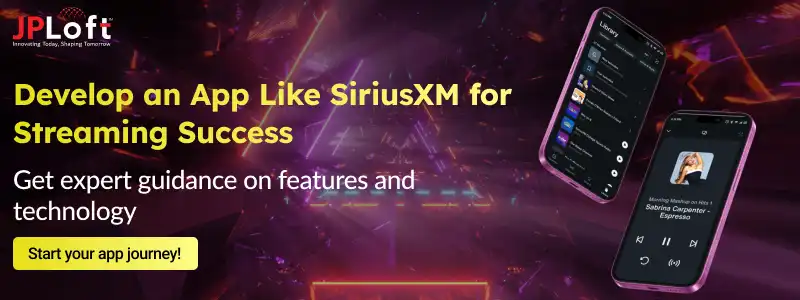
Step-by-Step Process on How to Develop an App Like SiriusXM
So, you might be wondering, how to develop an app like SiriusXM that delivers seamless audio streaming, premium content, and long-term user engagement?
The answer lies in following a structured, well-planned development approach that balances user experience, technology, and scalability.
Before diving deep, here’s a quick look at the steps to create an audio streaming app like SiriusXM:
-
Market research & idea validation
-
Feature planning & MVP development
-
UI/UX design
-
Tech stack selection
-
App development
-
Cloud integration & streaming setup
-
Testing & quality assurance
-
App launch & post-launch support
Now, let’s walk through the complete process to develop a music streaming app like SiriusXM, step by step.
Step 1: Market Research & Concept Validation
The first step to develop an app like SiriusXM is understanding the market. Analyze user expectations, subscription models, content types, and competitors, including the best music streaming apps already dominating the space. This phase helps you refine your idea, identify gaps, and validate whether your app concept can stand out.
You should also define your target audience, are you building for casual listeners, podcast lovers, or premium radio users? Solid research ensures you don’t just create a clone like SiriusXM, but build something valuable and differentiated.
Step 2: Feature Planning & MVP Strategy
Once the concept is clear, the next step is deciding what your app will offer. Instead of launching with everything at once, it’s smarter to build an MVP for a music app with essential features like live streaming, user profiles, search, and subscriptions.
This approach helps you test the market quickly while saving costs. If you want to make a custom music streaming app like SiriusXM, starting small allows room for improvements based on real user feedback.
Step 3: UI/UX Design for Seamless Listening
Design plays a crucial role in user retention. At this stage, focus on creating intuitive navigation, easy content discovery, and visually appealing layouts. The goal is to design a music streaming app that feels effortless to use, even for first-time users.
A clean interface with well-organized categories, smart search, and minimal friction enhances engagement, especially important if you want users to keep returning to your audio streaming app like SiriusXM.
Step 4: Selecting the Right Tech Stack
Choosing the right technology is the backbone of successful SiriusXM-like app development. Your music streaming app tech stack should support high-quality audio streaming, real-time performance, scalability, and security.
This often includes cloud servers, streaming protocols, databases, and APIs. A strong cloud-based audio streaming solution like SiriusXM ensures uninterrupted playback and smooth performance, even during peak usage.
Step 5: App Development & Core Functionality
This is where your idea turns into reality. Developers start coding the frontend and backend, integrating features like live radio, on-demand content, subscriptions, and personalization. If you plan to build a music app like SiriusXM with unique offerings, this phase requires close collaboration between developers, designers, and product managers.
At this stage, you may also integrate AI features for music streaming apps such as smart recommendations, listening behavior analysis, and personalized content suggestions.
Step 6: Content Management & Licensing Setup
No music app can succeed without proper content handling. You’ll need a system to manage audio files, playlists, podcasts, and live channels efficiently. At the same time, securing content licensing is crucial, especially if you want to offer premium music or a free radio app like SiriusXM model with both free and paid tiers.
This step ensures your platform is legally compliant and ready for long-term growth.
Step 7: Security & Data Protection
User trust is non-negotiable. Implement strong music app security measures such as encrypted data transmission, secure authentication, and protected payment gateways. This is especially important when users subscribe or store personal data.
A secure system not only protects users but also strengthens your brand credibility when you make an app like SiriusXM for a competitive market.
Step 8: Testing & Quality Assurance
Before launch, rigorous mobile app testing is essential. This includes performance testing, usability testing, and security checks to ensure smooth audio playback and bug-free navigation.
Testing helps identify issues early, ensuring your app performs well across devices and networks. This step is critical whether you aim to develop a clone like SiriusXM with customized features.
Step 9: App Launch & Market Entry
Submit an iOS app to App Store requirements and guidelines must be carefully followed to ensure a smooth approval process. At the same time, you should also prepare to publish an app to Google Play Store, as launching on both platforms helps you reach a wider audience.
After successful testing, it’s time to officially launch your app on app stores. A well-planned launch strategy, combined with pre-launch marketing, app store optimization (ASO), and smooth user onboarding, can significantly impact early adoption.
Step 10: Post-Launch Support & Scaling
Launching is just the beginning. Continuous monitoring, updates, app maintenance service, and feature enhancements are essential to stay competitive. Collect user feedback, optimize performance, and add advanced features as your user base grows.
With the right roadmap, you can make a clone like SiriusXM, or even go beyond by building a more innovative platform over time.
In summary, following these structured steps helps you create an app like SiriusXM that is scalable, secure, and user-focused.
Tech Stack for Developing an App Like SiriusXM
Choosing the right technology is one of the most critical decisions when building a high-performance audio platform. A well-planned mobile app tech stack ensures smooth streaming, fast load times, scalability, and long-term stability.
Whether you aim to develop an app like SiriusXM or build a feature-rich audio streaming platform from scratch, your tech stack directly impacts user experience and operational efficiency.
From frontend frameworks to cloud infrastructure, every component must work together seamlessly to support real-time audio streaming. Lrt’s take a glance on it.
|
App Layer |
Technologies Used |
|
Mobile App Development |
Swift (iOS), Kotlin (Android), React Native / Flutter |
|
Frontend (Web App) |
React.js, Angular, Vue.js |
|
Backend Development |
Node.js, Python, Java |
|
Database |
PostgreSQL, MongoDB, MySQL |
|
Audio Streaming |
HLS, MPEG-DASH |
|
Cloud Infrastructure |
AWS, Google Cloud, Microsoft Azure |
|
Content Delivery Network (CDN) |
CloudFront, Cloudflare |
|
AI & Analytics |
TensorFlow, Firebase Analytics |
|
Payment Gateway |
Stripe, PayPal, Apple Pay, Google Pay |
|
Security |
SSL Encryption, OAuth 2.0 |
A robust tech stack ensures high-quality audio delivery and uninterrupted performance. By selecting scalable and secure technologies, you can confidently build an app like SiriusXM that grows with your audience and adapts to future innovations in audio streaming.
Cost to Develop a Music Streaming App Like SiriusXM
The cost to develop a music streaming app like SiriusXM typically ranges between $20,000 – $100,000+.
This wide range often raises an important question for businesses: what exactly influences the music streaming app development cost when building a platform like SiriusXM?
The overall cost depends on several factors, including app complexity, features, technology stack, platform selection, and development team location.
A basic version with essential streaming features will cost less, while advanced functionalities such as AI-based recommendations, offline listening, and multi-device support increase the budget. Let’s break it down in detail.
|
Cost Factor |
Estimated Cost Range |
|
UI/UX Design |
$3,000 – $8,000 |
|
App Development |
$10,000 – $45,000 |
|
Backend & API Development |
$5,000 – $20,000 |
|
Cloud & Streaming Infrastructure |
$2,000 – $15,000 |
|
Testing & Quality Assurance |
$2,000 – $7,000 |
|
Maintenance & Updates |
Ongoing |
While costs may vary, strategic planning and phased development can help optimize your budget. Investing wisely ensures better performance, scalability, and long-term success for your streaming app.
Monetization Models for Apps Like SiriusXM
Monetization plays a critical role in the long-term success of any audio platform. If you plan to monetize a music streaming app, choosing the right revenue model can help you balance user experience with profitability.
Apps like SiriusXM use a mix of strategies to generate consistent revenue while keeping users engaged.
1] Subscription-Based Model
This is the most popular approach used by premium streaming platforms. Users pay a monthly or yearly fee to access ad-free music, exclusive channels, offline listening, and premium content. Tiered subscription plans (basic, premium, family) allow flexibility and higher conversions.
2] Ad-Supported Free Model
Offering free access with ads is a great way to attract new users. This model works well when combined with premium upgrades, allowing users to experience the app before subscribing. It’s especially effective if you’re launching a free radio-style platform.
3] In-App Purchases & Add-Ons
You can offer paid add-ons such as exclusive shows, early access to content, special playlists, or enhanced personalization features. This helps increase average revenue per user without forcing subscriptions.
4] Brand Partnerships & Sponsored Content
Collaborating with brands for sponsored channels, podcasts, or playlists opens an additional revenue stream. This model works well for platforms with a strong and engaged listener base.
5] Data & Analytics Insights (Ethical Use)
Aggregated and anonymized user insights can help advertisers and partners understand listening trends, creating indirect monetization opportunities while maintaining user privacy.
A combination of these models helps you build a sustainable and scalable revenue ecosystem.
Challenges in Developing a Music Streaming App Like SiriusXM
Building a high-quality audio platform comes with several music app development challenges.
A common question businesses ask is: What are the biggest challenges when developing an app like SiriusXM and how can they be managed?
The answer lies in understanding and planning for these hurdles early.
-
Content Licensing & Legal Compliance: Securing music, radio, and podcast rights is complex and expensive. Without proper licensing, apps risk legal issues and limited content availability.
-
High Streaming Performance: Delivering uninterrupted audio to thousands of users simultaneously requires a robust cloud-based infrastructure and efficient data handling.
-
Scalability Issues: As users grow, maintaining performance becomes challenging. Apps must be built to scale without crashes or delays.
-
Personalization Complexity: Implementing smart recommendations and curated content requires advanced algorithms and user data processing.
-
Security & Data Privacy: Protecting user data, subscriptions, and payments is critical, especially for premium platforms.
-
Monetization Balance: Too many ads can hurt user experience, while premium pricing may reduce adoption.
Addressing these challenges with the right technology, planning, and expertise helps ensure a stable and competitive streaming platform.
What are the Future Trends to Create an App Like SiriusXM?
The audio industry is evolving rapidly, and keeping up with music streaming app trends is essential for businesses that want to stay competitive in a crowded market.
User expectations are no longer limited to basic music playback, they now demand personalization, accessibility, and immersive listening experiences.
If you’re planning to build a future-ready platform, these emerging trends will shape the next generation of streaming apps and define long-term success.
A] Voice & Smart Device Integration
Integration with voice assistants, smart cars, wearables, and IoT devices will become standard. Users expect hands-free and seamless audio access across environments, whether driving, working, or relaxing at home.
B] Interactive & Live Audio Experiences
Live shows, real-time chats, audience polls, and interactive sessions will enhance engagement and build stronger communities around audio content, especially for podcasts and talk shows.
C] AI-Driven Personalization
Advanced AI enables smarter recommendations and mood-based playlists using user behavior and listening data. With an AI app development service, apps can deliver highly personalized and engaging listening experiences.
D] Hybrid Free + Premium Models
More platforms will adopt flexible monetization strategies, offering freemium access, micro-subscriptions, and exclusive premium content to attract and convert a wider audience.
E] Enhanced Audio Quality & Immersive Sound
High-definition audio, spatial sound, and immersive listening technologies will gain popularity, delivering richer and more engaging sound experiences.
By aligning your strategy with these trends, you can create an app that not only matches SiriusXM’s success but also stays innovative and relevant in the evolving audio ecosystem.
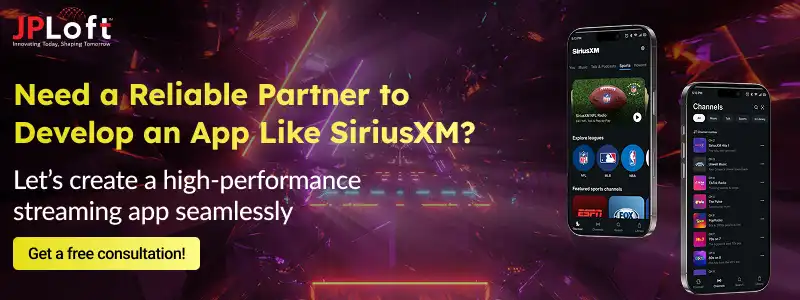
Why Choose JPLoft for SiriusXM-Like App Development?
Building a successful music streaming app requires deep technical expertise, industry knowledge, and a clear understanding of user listening behavior. JPLoft is a trusted music streaming app development company helping startups and enterprises build scalable, feature-rich audio platforms.
With deep expertise in mobile and cloud technologies, JPLoft delivers end-to-end solutions, from idea validation and UI/UX design to development, testing, and post-launch support.
Whether you want to build a SiriusXM-like platform, a free radio app, or a custom music streaming solution, JPLoft focuses on performance, security, and user engagement. The team leverages modern tech stacks, cloud-based streaming infrastructure, and AI-driven personalization to create seamless listening experiences.
With a client-centric approach and proven delivery model, JPLoft ensures your app is future-ready, scalable, and aligned with your business goals, helping you launch confidently in a competitive audio streaming market.
Final Wrap-Up
Building a successful music streaming platform requires more than just great content, it demands the right strategy, feature planning, technology stack, and flawless execution. From idea validation and intuitive design to monetization models and future-ready innovations, every stage plays a crucial role in shaping long-term success.
If you’re planning to develop an app like SiriusXM, following a structured development process ensures better performance, scalability, and user engagement. By focusing on personalization, secure streaming, and seamless cross-device experiences, you can meet evolving user expectations.
Partnering with experienced app development experts further helps reduce risks, optimize costs, and transform your vision into a reliable, competitive audio streaming platform that stands out in today’s dynamic streaming landscape.
FAQs
To develop an app like SiriusXM, you need lyric licensing, real-time sync technology, music recognition, a scalable backend, and integrations with music streaming platforms.
The cost usually falls between $20,000 and $100,000+, based on features, tech stack, and scalability requirements.
Key features include live radio streaming, on-demand audio, personalized recommendations, offline listening, multi-device support, secure subscriptions, and smart search functionality.
You can monetize a music streaming app through subscriptions, ad-supported free access, in-app purchases, sponsored content, and premium feature upgrades.
Future trends include AI-driven personalization, voice assistant integration, immersive audio experiences, hybrid freemium models, and smart device connectivity.

Conor has more than 10 years of experience in software development, app creation, solution engineering, and UX/UI design. With an impressive track record of high retention and growth working with Fortune 500 companies, he brings the technical depth and strategic perspective needed to help businesses build impactful, user-focused digital solutions.


Share this blog