


Key Takeaways:
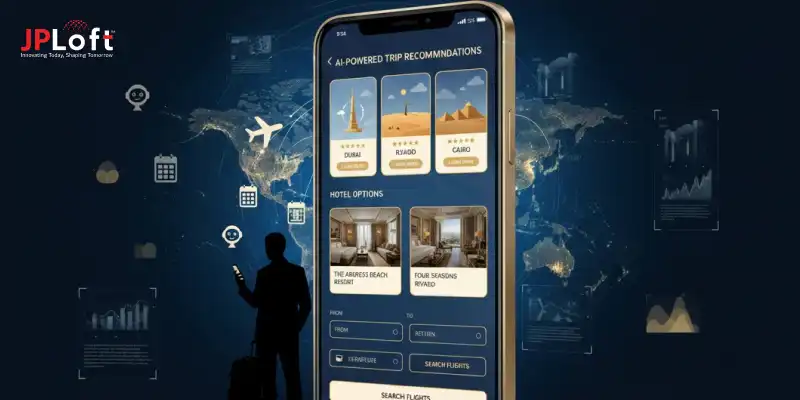
Building an app like Almosafer requires smart planning, feature-rich design, and AI-driven personalization.
Core features should include flights, hotels, itinerary management, secure payments, and user profiles.
Advanced technologies like AI, AR/VR, and blockchain enhance user experience and engagement.
Monetization strategies can include commissions, subscriptions, sponsored listings, and affiliate partnerships.
The cost to build an Almosafer-style app ranges from $20,000 to $120,000+ depending on features and tech complexity.
Testing, security, and scalability are critical to ensure a reliable and smooth app experience.
Partnering with a skilled development team like JPLoft ensures timely delivery and high-quality, future-ready travel apps.
Almosafer has become a leading travel platform by providing users with a seamless way to book flights, hotels, and complete travel packages. Its intuitive interface, smart recommendations, and reliable services make it a favorite among travelers looking for convenience and efficiency.
Understanding how to build an app like Almosafer can help entrepreneurs replicate this success by combining essential features with advanced technologies. By learning how to make an app like Almosafer, businesses can offer a comprehensive travel solution that caters to diverse user needs while standing out in a competitive market.
With careful planning and execution, it is possible to create an app like Almosafer that delivers both functionality and an exceptional user experience.
All About Almosafer App: Flights & Stays
Almosafer is a leading travel app that simplifies booking flights, hotels, and travel packages in one seamless platform. With a user-friendly interface and smart recommendations, it caters to both first-time travelers and frequent users.
Businesses aiming to replicate this success can gain insights by studying the best travel apps, which highlight the features and functionalities that keep users engaged.
Some key statistics that showcase Almosafer’s impact:
-
Over 1 million monthly active users rely on the app for travel planning.
-
The platform partners with 200+ airlines and 50,000+ hotels worldwide.
-
Average booking time has been reduced by 30% compared to traditional travel websites.
-
Customer satisfaction rates exceed 90%, reflecting its intuitive design and service reliability.
The app integrates secure payments, real-time price comparisons, and personalized suggestions to ensure a smooth experience.
To implement similar capabilities, understanding how to create a travel app is crucial. This includes multi-platform support, instant notifications, and tailored user experiences that keep travelers coming back.
The Working Process of Almosafer App
Almosafer’s design focuses on providing travelers with a smooth, intuitive experience. Every step, from searching to booking, is crafted to reduce friction and enhance convenience.
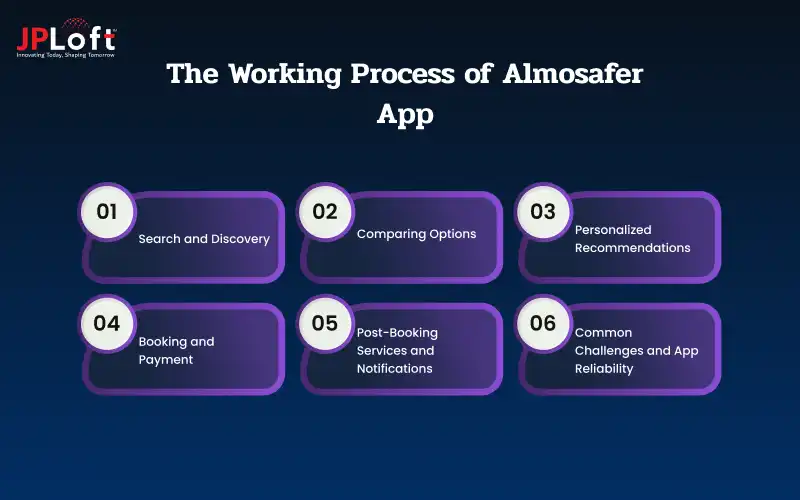
Here’s a detailed look at how users interact with the app:
1. Search and Discovery
Users start by entering their travel details, such as destination, dates, and budget. Advanced filters allow sorting by airlines, hotel ratings, amenities, and trip packages.
Real-time updates ensure users see accurate availability and pricing, making the search process fast and reliable.
By observing these methods, businesses can understand top travel app ideas to enhance user engagement.
2. Comparing Options
Once search results appear, travelers can compare flights or hotels side by side. Sorting options like price, duration, and user reviews help in making informed decisions.
Users also benefit from interactive maps and detailed property descriptions, which simplify the selection process.
3. Personalized Recommendations
Almosafer leverages smart algorithms to suggest options based on user history, preferences, and travel trends.
Personalization improves the experience by showing relevant flights, packages, or hotel deals without requiring extensive searches.
4. Booking and Payment
After choosing the preferred option, users can complete bookings through secure payment gateways supporting multiple options.
Smooth checkout and instant confirmation emails ensure trust and convenience. Observing these steps helps understand how to create a flight booking app with robust payment and booking workflows.
5. Post-Booking Services and Notifications
Travelers receive timely reminders, itinerary updates, and check-in notifications to stay organized throughout their trip.
Additional services like hotel directions, local guides, and personalized travel tips ensure a smooth and hassle-free experience, enhancing overall satisfaction.
6. Common Challenges and App Reliability
Poorly designed travel apps often fail due to slow search results, lack of real-time updates, or cumbersome booking flows.
Understanding why online travel apps fail allows developers to avoid these pitfalls and deliver a seamless user experience similar to Almosafer.
Reasons to Create an App like Almosafer
Creating a travel app similar to Almosafer can bring numerous benefits for entrepreneurs and travel businesses. Here’s why developing such a platform makes sense:
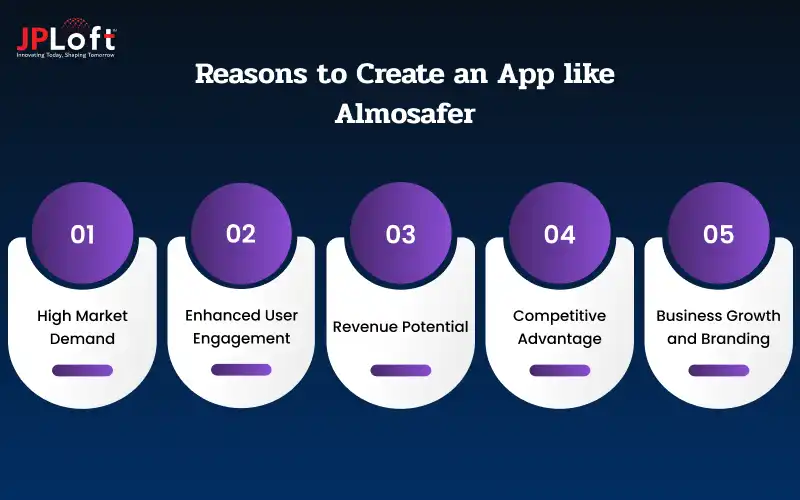
1] High Market Demand
Travelers are increasingly shifting from traditional agents to digital platforms. About 75% of travelers worldwide now prefer using digital channels for bookings rather than traditional agents.
Understanding this travel app development trend makes investing in a unified travel‑platform attractive, especially as online bookings and travel searches continue to grow.
2] Enhanced User Engagement
Many modern travelers rely on mobile apps: roughly 65% of travelers use mobile devices to plan and book their trips.
By leveraging AI in hospitality, a travel app can deliver personalized recommendations, timely notifications, and smooth user interactions, all of which boost engagement and loyalty.
3] Revenue Potential
The global travel‑app market is expanding rapidly: the overall travel application market size is forecast to grow from USD 14.04 billion in 2025 to USD 63.87 billion by 2035.
That growth, combined with multiple monetization channels like commissions, partnerships, and premium services, underscores strong long‑term revenue potential for a well-built travel platform.
4] Competitive Advantage
App‑based bookings are becoming dominant: in 2024, app‑based bookings made up about 45% of all bookings within the online travel agency (OTA) segment.
By delivering a superior user experience, smooth UX, and advanced features, a new travel app can stand out and compete effectively even against established players.
5] Business Growth and Branding
Over 850 million people used a travel app in 2023 globally.
Launching an app allows a business to build brand visibility in a large market, establishing itself as a trusted travel‑tech provider, which can help drive long-term user loyalty and industry credibility.
Features to Include in an Almosafer App
To develop a successful Almosafer-like app, including the right features is essential. These features enhance user experience, streamline travel planning, and make the platform competitive. Here are the key features to consider:
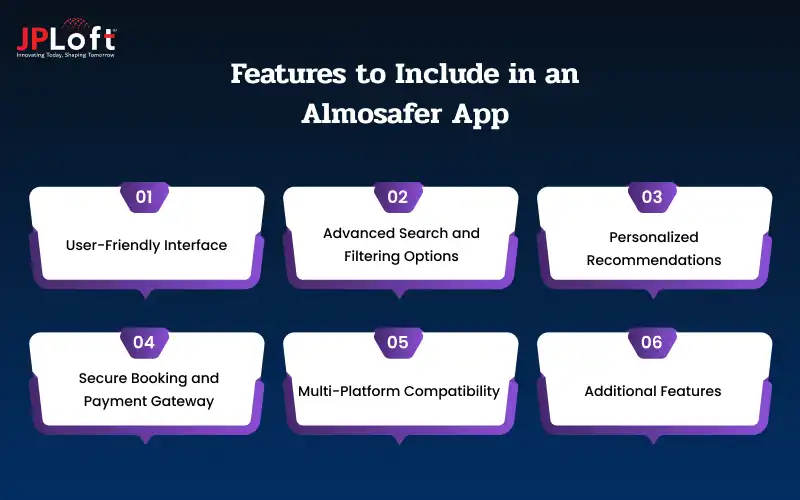
1. User-Friendly Interface
A smooth and intuitive interface is the foundation of any travel app. Users should be able to navigate flights, hotels, and packages effortlessly.
Understanding how to design a travel app helps ensure that the layout, color scheme, and flow keep users engaged from the first tap.
2. Advanced Search and Filtering Options
Provide robust search functionalities, allowing users to filter by price, ratings, amenities, and more.
Real-time availability and price comparisons make decision-making faster and more accurate.
3. Personalized Recommendations
Use AI-driven insights to deliver tailored suggestions based on users’ previous searches, interests, and emerging travel trends.
This level of personalization enhances the overall experience, improves retention, and encourages users to book more frequently with the app.
4. Secure Booking and Payment Gateway
Offer a seamless and secure booking flow supported by multiple trusted payment options.
Ensuring strong encryption, fraud prevention, and smooth transaction steps builds user confidence and reduces friction during checkout.
5. Multi-Platform Compatibility
Ensure the app delivers a consistent, high-quality experience across both iOS and Android devices.
Multi-platform compatibility expands your reach and allows users to enjoy smooth navigation, fast loading, and reliable performance on any device they prefer.
6. Additional Features
Consider features like loyalty programs, push notifications, travel guides, and real-time customer support to enhance engagement and provide value.
Implementing these effectively can guide top travel app features that make your app stand out.
Developers aiming to develop a travel app like Almosafer should focus on combining essential features with streamlined workflows.
By following a well-structured development process from ideation to launch, they can ensure smooth execution at every stage.
With careful planning and attention to user experience, the final product can stand out in the competitive travel app market and effectively meet modern traveler expectations.
Steps to Make an App like Almosafer
Building a feature-rich travel platform requires a clear roadmap. These steps help define the process to build an app like Almosafer, ensuring smooth execution from planning to deployment in a competitive marketplace.
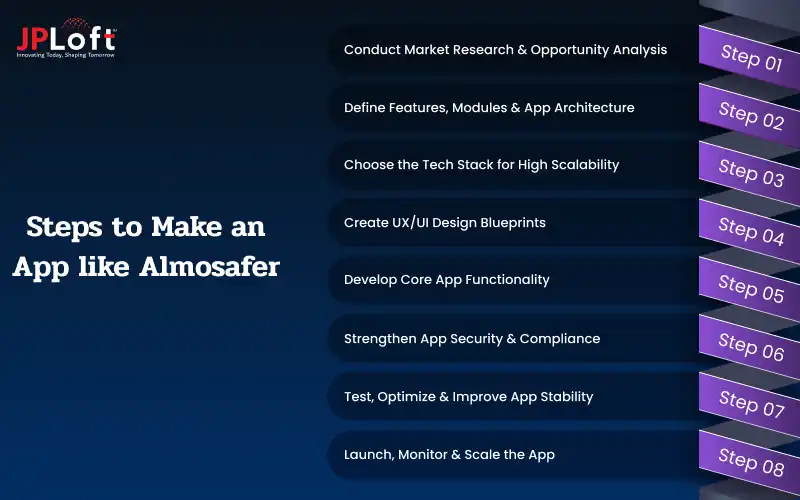
Step 1: Conduct Market Research & Opportunity Analysis
Before you make an app like Almosafer, you must validate demand, analyze competitors, and understand user needs. This foundation ensures the product aligns with your target audience.
► Study Competitor Benchmarks
Analyze apps like Almosafer and Booking.com to identify UX gaps, pricing models, and user flows. This helps refine your value proposition.
► Identify Core User Personas
Segment your potential users into travelers, agents, corporate travelers, etc. Their behavior and preferences shape your entire product design.
► Validate Product-Market Fit
Use surveys, trend reports, and behavior data to confirm if your proposed idea solves real travel pain points.
Step 2: Define Features, Modules & App Architecture
A strong feature list and technical blueprint are essential when you create an AI-powered travel app like Almosafer to ensure scalability, personalization, and performance.
► Map User Journeys
Define every flow, from login to booking, to ensure clarity on screens, interactions, and required backend processes.
► Finalize Required Modules
List modules like flight/hotel search, booking engines, payments, profiles, AI recommendations, and alerts.
► Choose the Right App Architecture
Select an approach such as microservices or modular architecture for scalability and efficient deployment.
Step 3: Choose the Tech Stack for High Scalability
Selecting the right technologies ensures fast performance, strong security, and a seamless experience across platforms.
A well-structured mobile app tech stack also supports future scaling, smoother API integrations, and stable feature expansion as your Almosafer-like app grows.
► Choose Frontend Technologies
React Native, Flutter, or Swift/Kotlin for building intuitive mobile interfaces.
► Select Backend Frameworks
Node.js, Python (Django/FastAPI), or Java/Kotlin for handling traffic-heavy travel operations.
► Integrate Third-Party APIs
Booking APIs, flight data APIs, hotel pricing engines, and location services must work flawlessly alongside your travel app tech stack.
Step 4: Create UX/UI Design Blueprints
When you build a clone app like Almosafer, design becomes a critical differentiator. Use wireframes and prototypes to define smooth navigation and a visually appealing interface.
► Start With Low-Fidelity Wireframes
Map core screens such as search, bookings, itineraries, and checkout with simple layouts.
► Build Interactive Prototypes
Clickable prototypes help refine interactions and test user experience flows early.
► Apply Visual Guidelines
Create a design system that defines colors, typography, spacing, iconography, and layout patterns to deliver a premium travel experience.
When you design a mobile app with consistent visual rules, it strengthens brand identity and improves usability across all screens.
Step 5: Develop Core App Functionality
Development begins by building all primary modules with seamless integrations, ensuring everything functions harmoniously and reliably.
► Implement Search & Booking Engine
Integrate global distribution systems (GDS) and travel APIs for hotels, flights, and rentals.
► Build User Profiles & Preferences
Enable saved searches, past bookings, itineraries, and personalization layers.
► Add AI Features & Automation
Smart itinerary suggestions, pricing predictions, chatbots, and voice assistance align with current AI travel trends.
Step 6: Strengthen App Security & Compliance
Travel apps handle sensitive data, making compliance and security a top priority.
Strong travel app security measures ensure encrypted transactions, protect user information, and prevent fraud or unauthorized access across all stages of the booking process.
► Implement Strong Authentication
Use OTP, biometrics, and encryption to ensure secure user sessions.
► Secure Payment Gateways
Protect financial information by meeting PCI-DSS standards and using tokenization.
► Protect APIs & Databases
Apply rate-limiting, hashing, and multi-layer security strategies to protect and safeguard your travel app.
Step 7: Test, Optimize & Improve App Stability
Testing ensures flawless functionality, speed, and reliability before launch. Comprehensive travel app testing helps identify bugs, improve performance, and ensure every feature works smoothly across devices and platforms.
► Conduct Functional & Usability Tests
Test every booking flow, filter, search, screen, and feature for bugs.
► Run Performance & Load Tests
Ensure the app performs well during traffic surges, seasonal spikes, and peak booking hours.
► Implement Compatibility & Regression Testing
Continuous testing ensures updates don’t break existing features but instead strengthen them to meet the latest performance and usability standards.
Step 8: Launch, Monitor & Scale the App
After building the MVP, you deploy the application, monitor feedback, and start growing your user base. Businesses often collaborate with a mobile app development company in Denver or other regions for scaling support.
► Publish App on App Stores
Launch on Android and iOS with optimized ASO (App Store Optimization) and marketing assets.
► Analyze User Behavior Analytics
Track heatmaps, search patterns, drop-off points, and booking behavior.
► Plan Continuous Upgrades
Iterate based on feedback, add new integrations, and enhance performance regularly.
Use of Advanced Technologies in an App like Almosafer
Modern travel platforms need more than basic search and booking features. To stay competitive, brands must integrate advanced technologies that enhance personalization, boost automation, and elevate user engagement.
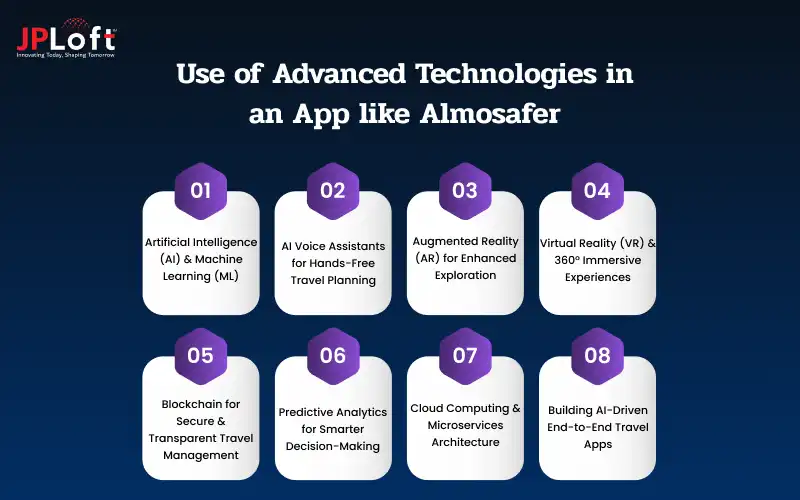
These innovations are essential when you want to create an AI-powered travel app like Almosafer that feels smart, fast, and future-ready.
1. Artificial Intelligence (AI) & Machine Learning (ML)
AI forms the brain of next-gen travel apps, powering recommendations, price predictions, and personalization. This directly supports anyone who wants to make a travel app like Almosafer with smarter user experiences.
Use Cases
- Predictive Pricing Models: ML analyzes historical fare data to forecast future price fluctuations, helping users book at the right time.
- Hyper-Personalized Travel Suggestions: AI identifies user interests, past bookings, and behavior to tailor destination and accommodation recommendations.
- Smart Chatbots & AI Assistants: Automate customer care, booking support, cancellations, and follow-ups through 24/7 AI-driven virtual assistants.
- AI-Powered Itinerary Generators: Modern travel apps use AI to create personalized, day-by-day travel plans based on user preferences, budgets, and real-time conditions.
Understanding how to build an AI itinerary app helps you integrate smart recommendations that make trip planning faster and more intuitive.
2. AI Voice Assistants for Hands-Free Travel Planning
Voice technology is rapidly becoming a key differentiator in travel apps. The role of AI voice assistants in travel apps includes simplifying travel planning, allowing users to search destinations, check prices, and manage bookings through spoken commands.
Use Cases
-
Hands-free search for flights, stays, or attractions
-
Voice-based navigation in-app
-
Voice-enabled booking confirmation and support
-
Personalized trip suggestions based on vocal queries
3. Augmented Reality (AR) for Enhanced Exploration
AR in travel apps transforms how travelers preview destinations, hotels, and attractions. When you plan to create a clone app like Almosafer, AR-driven visual experiences can significantly improve user decision-making.
Use Cases
-
Virtual hotel room previews
-
AR-based city guides with point-of-interest overlays
-
Interactive airport or station navigation
-
AR-powered landmark exploration
4. Virtual Reality (VR) & 360° Immersive Experiences
Immersive content helps users “experience before booking.” Travel companies increasingly develop a 360 VR app for tourism, enabling users to preview destinations and attractions in a realistic format.
Use Cases
-
360° destination previews
-
VR hotel and resort experiences
-
Immersive cultural tours
-
VR-powered travel planning in advance
5. Blockchain for Secure & Transparent Travel Management
When you aim to develop a clone app like Almosafer, blockchain in travel apps adds trust, security, and transparency to the ecosystem. Its decentralized nature strengthens sensitive travel transactions.
Use Cases
-
Tamper-proof transactions
-
Secure customer identity management
-
Fraud-free loyalty programs
-
Transparent cancellation and refund trails
6. Predictive Analytics for Smarter Decision-Making
Predictive models give travel apps a competitive advantage by providing accurate forecasts on pricing, demand surges, seasonal travel trends, and user behavior.
Use Cases
-
High-accuracy fare prediction
-
Demand forecasting for peak seasons
-
Destination trend analysis
-
Real-time travel advisory insights
7. Cloud Computing & Microservices Architecture
To scale efficiently, any team looking to make a travel app like Almosafer must utilize cloud-based environments and microservices for reliability, uptime, and fast updates.
Use Cases
-
Smooth high-traffic handling
-
Independent deployment of modules
-
Faster feature rollouts
-
Lower operational costs
8. Building AI-Driven End-to-End Travel Apps
From personalization to automation, AI enhances every stage of the booking journey. Knowing how to build an AI travel app helps you integrate smarter recommendations, faster decisions, and a more seamless user experience.
Use Cases
-
AI-led customer segmentation
-
Automated booking management
-
Intelligent travel alerts and updates
-
Autonomous content generation for destinations
Cost to Build an App like Almosafer
The cost to build an app like Almosafer typically ranges between $15,000 and $120,000, depending on features, AI integrations, platforms, and development approach.
Understanding How to develop an app like Almosafer? requires breaking down the core components that influence pricing. Key cost drivers include UI/UX design, multi-city flight search, hotel integrations, dynamic pricing engines, AR/VR modules, and AI personalization.
The complexity increases further when adding features similar to a hotel booking app, as real-time availability sync and secure payment gateways require robust infrastructure.
Teams planning to make an app like Almosafer should also consider scalability, performance optimization, and third-party API integrations. These factors directly contribute to rising budgets and are part of common travel app development challenges, especially when building an advanced marketplace.
If you want to develop an app like Almosafer with AI-driven recommendations, voice assistants, and immersive destination previews, the overall investment moves toward the higher end of the pricing spectrum.
Cost Breakdown Table
|
Component |
Estimated Cost Range |
|
UI/UX Design |
$3,000 – $12,000 |
|
Backend + APIs |
$6,000 – $30,000 |
|
Flight & Hotel Search Modules |
$5,000 – $20,000 |
|
AI/ML Features |
$4,000 – $25,000 |
|
AR/VR Modules |
$4,000 – $18,000 |
|
QA & Testing |
$2,000 – $10,000 |
|
Deployment & Maintenance |
$2,000 – $8,000 |
Monetization Strategies for an App like Almosafer
Monetizing a travel platform requires a balanced ecosystem of revenue streams that enhance user experience rather than disrupt it. Whether you plan to create a travel app like Almosafer for regional travelers or develop a global platform, choosing the right monetization mix is crucial for long-term profitability.
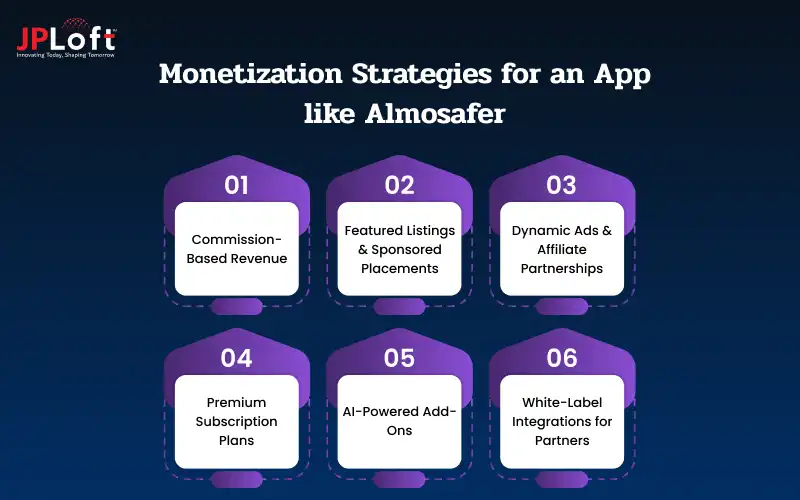
1. Commission-Based Revenue
Most travel apps rely on commissions from airlines, hotels, car rentals, and activity partners. This model works well for apps that follow similar travel app monetization strategies, offering predictable and scalable income.
2. Featured Listings & Sponsored Placements
Hotels and travel brands often pay to appear at the top of search results. These placements increase visibility and give businesses a competitive advantage without affecting user trust.
3. Dynamic Ads & Affiliate Partnerships
Smartly placed ads based on user preferences, search behavior, or trip plans can generate steady revenue. This approach is effective when combined with intelligent recommendation engines found in AI trip planner app platforms.
4. Premium Subscription Plans
Subscription models unlock value-added features such as fare alerts, exclusive deals, itinerary tools, and offline access, enhancing user loyalty while supporting recurring revenue.
5. AI-Powered Add-Ons
Advanced apps often integrate personalized travel insights, voice-based navigation, or predictive fare analysis. Integrating such upgrades aligns with creating an AI-powered travel app like Almosafer, enabling you to charge for enhanced AI-driven utilities.
6. White-Label Integrations for Partners
If you're outlining the steps to make an app like Almosafer, consider offering your search engine or booking modules as white-label solutions for hotels, agencies, and corporate travel companies.
Future of an App like Almosafer
The future of travel platforms is shifting toward hyper-personalization, automation, and immersive digital experiences. Businesses planning how to create an app like Almosafer? will need to embrace AI, predictive analytics, and intuitive user flows to stay competitive.
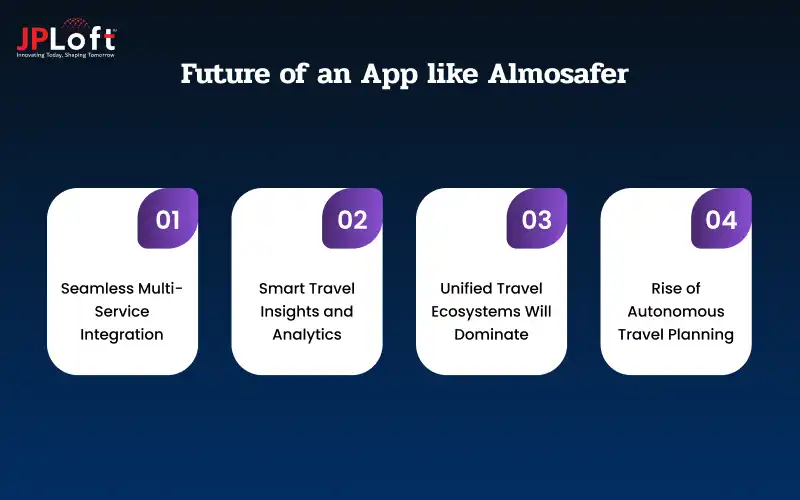
As Almosafer like app development evolves, apps will increasingly function as intelligent travel companions rather than simple booking tools.
► Seamless Multi-Service Integration
Future travel apps will combine flights, hotels, local transport, insurance, and visa services within a single platform. Streamlined workflows and unified booking processes will simplify travel planning for users.
► Smart Travel Insights and Analytics
Apps will provide travelers with predictive insights, personalized alerts, and data-driven recommendations to optimize their trips. Analytics will also help businesses improve offerings based on real-time user behavior.
► Unified Travel Ecosystems Will Dominate
Future apps will combine flights, hotels, experiences, local mobility, insurance, and visa services under one ecosystem powered by automation and secure digital identity management.
► Rise of Autonomous Travel Planning
From self-updating itineraries to AI-driven rebooking during disruptions, apps will take proactive control over the travel journey.
Partner with JPLoft and Make an App like Almosafer
Building a high-performing travel platform requires technical expertise, seamless UI/UX, and a scalable architecture, all areas where JPLoft, a leading travel app development company, excels. Our team specializes in creating AI-driven, multilingual, and feature-rich travel apps tailored to your business goals.
From real-time booking engines to secure payment systems, intelligent recommendations, and future-ready integrations, we deliver everything you need to bring your Almosafer-style app to life. Whether you're starting small or aiming for a global launch, we ensure smooth execution, transparent communication, and on-time delivery.
Partner with JPLoft today and turn your travel app idea into a powerful digital product that stands out in the market.
Conclusion
Creating a powerful travel platform inspired by Almosafer requires a strategic blend of smart features, intuitive design, and future-ready technologies.
As you plan how to create an app like Almosafer?, the focus should remain on personalization, seamless booking journeys, and intelligent automation.
Modern travelers expect convenience, transparency, and real-time assistance, all achievable through thoughtful Almosafer-like app development practices and scalable architectures.
Whether you aim to enhance user experience, enter new markets, or develop an app like Almosafer for long-term growth, the opportunity in the travel tech space is stronger than ever.
With the right partner and vision, your platform can evolve into a trusted digital travel companion for users worldwide.
FAQs
To build an app like Almosafer, conduct market research, choose the right tech stack, integrate booking APIs, design an intuitive UI/UX, implement AI personalization, secure payments, test thoroughly, and plan for scalability. Partnering with an experienced development team ensures smooth and high-quality delivery.
Almosafer is a leading Middle Eastern travel app that allows users to book flights, hotels, activities, and holiday packages in one place. Its popularity comes from an easy interface, competitive pricing, and strong customer support.
On average, creating an Almosafer-style travel app takes 4 to 9 months, depending on features, design complexity, technology stack, and team size.
You’ll need front-end and back-end frameworks, secure APIs, databases, AI/ML engines, cloud hosting, and third-party integrations like flights, hotels, and payment gateways.
Typically, the development cost ranges from $20,000 to $120,000+, based on features, location of developers, tech stack, and scalability needs.
Essential features include real-time flight and hotel search, filters, secure payments, booking management, notifications, reviews, profiles, itineraries, and 24/7 support.

Kris Jacobs brings 20+ years of experience solving complex digital product challenges through strategic thinking and user-centric design. With deep exposure to on-demand services, entertainment, travel, and interactive platforms, she collaborates across teams to shape scalable, engaging solutions that align business goals with intuitive user experiences across evolving digital landscapes.


Share this blog