


Key Takeaways:
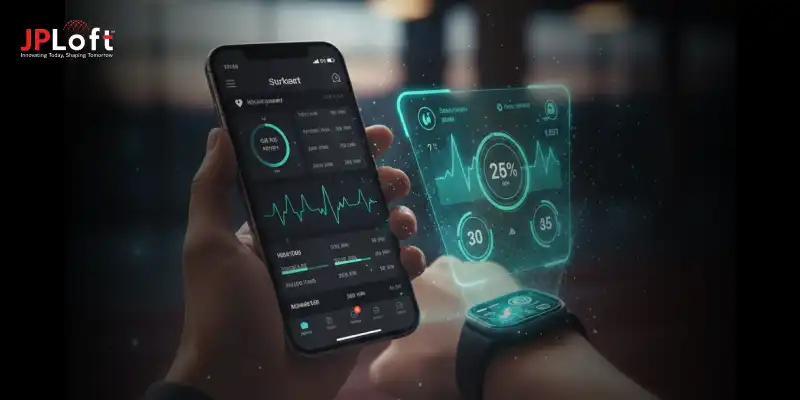
Fitness app trends like AI coaching, AR workouts, wearables, and holistic wellness are reshaping how users train and stay consistent.
AI-driven coaching adapts workouts in real time for safer, smarter progress.
AR and VR workouts boost engagement by giving clear visual guidance for every session.
Wearable integrations help users make better daily choices with accurate health insights.
Micro-workouts and habit reminders improve consistency for users with busy schedules.
These trends push fitness apps toward deeper personalization and better long-term engagement.
JPLoft builds future-ready fitness apps with AI features, smart integrations, and user-focused design.
The global fitness app market is scaling fast, crossing USD 10.59 billion in 2024 and projected to hit USD 33.58 billion by 2033.
With rising demand for smarter workouts and fully connected wellness tools, users expect more than basic tracking features.
Now, the core question is: what are the current fitness app trends?
They include AI coaching, AR workouts, wearable integrations, micro-routines, holistic wellness, and ultra-personalized training experiences shaping how people stay healthy today.
These trends show how fitness apps are evolving from simple exercise tools to full lifestyle companions. This guide helps to deal with everything you understand and use these trends effectively.
Let’s learn it all together.
Global Fitness App Market Overview
The current fitness market is booming. Let's check all about the fitness app market statistics below.
-
The global fitness app market is estimated at USD 10.59 billion in 2024, and it is projected to reach USD 33.58 billion by 2033, that is growing at a CAGR of 13.59% from 2025 to 2033.
-
The overall fitness market size was valued at USD 10.56 billion in 2024, and it is projected to grow from USD 12.02 billion in 2025 to USD 39.35 billion by 2034, exhibiting a CAGR of 14.1% during 2025-2034.
-
Additionally, the global fitness apps market size is estimated to be worth USD 6097.7 million, and this industry is exhibiting a growth of 10.2% in 2025.
To create a fitness app, it is essential to draft the current market. Along with this, you should be aware of the fitness app market trends.
Now, it's time to switch to the following section to learn them all.
What are the Top Fitness App Trends Today?
Fitness app trends leading the market include hyper-personalized AI coaching, adaptive workout plans, AR fitness, and wearable-integrated training.
Social fitness communities and holistic wellness features are also shaping the next wave of fitness apps.
Let’s learn them all in this section.
1. Hyper-Personalized AI Coaching
AI coaching has already started to shift from generic workouts to routines built around users' habits, fitness levels, and current injuries, goals, and training patterns.
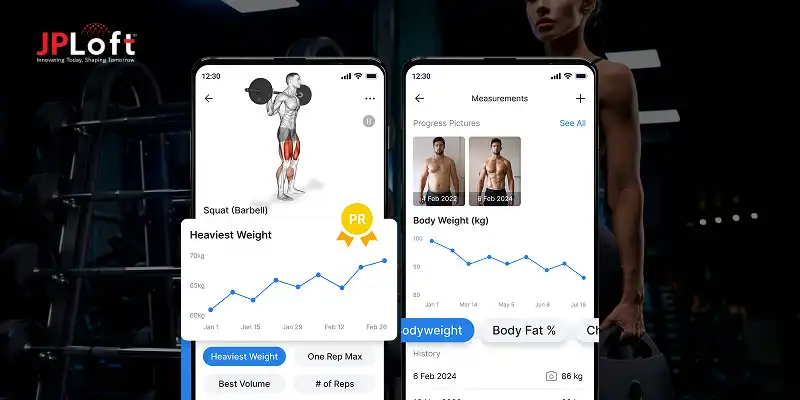
These apps learn from performance, heart rate, sleep, and user feedback-then automatically adjust the workouts. This level of personalization helps users maintain consistency, avoid burnout, and achieve actual progress.
Moreover, all this personalization makes fitness apps feel more like a real coach and less like a content library. Including AI in fitness apps can cost you high, however, it will help you in connecting with users well and identifying their changing needs.
2. Adaptive Workout Plans Based on Real-Time Feedback
Adaptive plans change right on the spot, depending on user effort, skipped sessions, mobility limits, and fatigue data.
If a person is tired, then the application offers easier sessions; if they are progressing fast, it demands more intensity. It is one of the top fitness app trends to include in the list when it comes to creating an app like Fitbit.
This flexible model builds trust because the app responds like a trainer who understands capacity, not some fixed template. It improves retention because users stop feeling overwhelmed when life gets busy.
3. AR-Enabled Fitness Experiences
Simple workouts at home are turning into guided, visually enhanced experiences with AR. One can see posture corrections, virtual markers, rep counters, and interactive objects in one's environment.
A trend that makes working out alone more fun, this takes all guesswork out and allows beginners to stay on target. The AR in fitness apps, do overlays the digital elements in your real-world environments, and creates engaging, interactive, and guided workouts.
Augmented reality reduces the intimidation factor for those individuals who avoid going to the gym, wanting an immersive and easy-to-follow training path using only their phone's camera.
4. Wearable-Integrated Training Ecosystems
Fitness apps now synchronize with watches, smart rings, heart rate straps, and connected equipment. This integration constructs a holistic health picture of sleep, steps, stress, recovery, and exertion.
Apps use this to personalize training and predict readiness. The more wearable data provided by the user, the more accurate their training experience will be.
This is why this trend increases user loyalty, since the ecosystem grows together with them. The wearable technology implementation can help you connect with the diversified audiences and help them have access to their health updates, such as heartbeat and steps, via other devices.
5. Social Fitness Communities and Gamified Challenges
People stay consistent when they feel part of something. Social features such as leaderboard challenges, friend groups, accountability partners, and community milestones keep motivation high.
This is one of the best fitness app trends, where gamification adds badges, streaks, XP levels, and reward goals that make progress fun. When you include gamification in the apps, it helps you to connect with the audience and engage them via the challenges.
Users also love the feeling of being connected with others, competing or collaborating with friends in particular, making the journey feel less lonely and more like a team sport.
6. Integration of Holistic Wellness
Fitness applications are going beyond workouts. In one place, people want to see sleep tracking, meditation, stress management routines, breathwork, and habit-building systems.
This is among the best fitness app trends, indicative of how wellness is turning into a complete lifestyle, rather than just an exercise change.
Applications that help users manage both mental and physical health together see better engagement because people feel supported in all areas, not just physical training. It builds user trust in the long run.
7. Micro-Workouts and Time-Efficient Routines
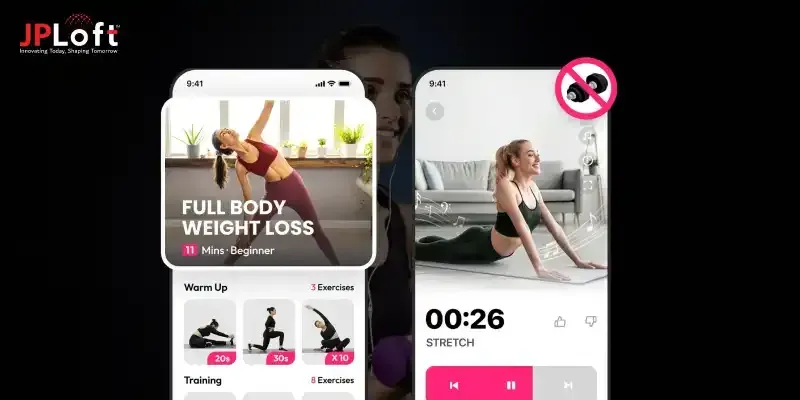
Short, effective workouts under 10–15 minutes are gaining popularity among users who cannot commit to long sessions. Such quick bursts fit into lunch breaks, traveling days, or busy routines.
Fitness applications make the decision-making process quite simple, offering short exercises that yield measurable results.
This fitness app trend works because it removes all excuses and gives users a feeling of achievement without a massive time investment.
8. AI Nutrition, Meal Planning, and Habit Coaching
Nutrition is now getting the same personalization as workouts. Fitness apps add in AI-driven meal plans, grocery suggestions, macro breakdowns, and habit-forming nudges.
The trend helps users build a complete approach to training plus eating right. Small behavioral prompts: drink water, log meals, avoid late snacking, and keep them consistent.
When apps guide lifestyle choices, they feel more valuable than single-function tools. This among the leading fitness app trends that should be implemented while considering the overall cost of fitness app development.
9. VR Fitness and Immersive Training Environments
VR is gamifying workouts, allowing users to box, climb, dance, and explore virtual worlds while burning calories. It's a trend that attracts people who are newbies and find regular exercise tedious.
It takes away all the anxiety from the gym and keeps your workout sessions interesting. You can include VR as one of the best fitness app development trends creates immersive, game-like environments to make exercise more engaging, fun, and accessible.
The immersive nature boosts energy levels, making people exercise longer without noticing the effort. It is changing home fitness by merging entertainment and training.
10. Recovery-Focused Apps and Mobility Training
Recovery is now just as important as workouts. Fitness apps add mobility routines, stretching flows, and foam-rolling guidance, while recovery scoring is becoming the norm.
It allows users to move without pain, improve posture, and avoid excessive stiffness from working long hours. The recovery-focused apps and mobility training are the trends in fitness apps that emphasize holistic workouts instead of just traditional workouts.
That's the trend helping people to train smarter, injury-free, and for longevity. Recovery-supporting apps earn trust because people feel their day-to-day lives are genuinely improving.
11. Corporate Wellness and Workplace Fitness Programs
Companies offer employees access to fitness apps that promote physical and mental well-being.
These programs include rewards for keeping them active, wellness challenges, and stress-relief tools. This is an upward trend since companies are focused on long-term productivity and the well-being of their employees.
Fitness apps benefit from this since it provides them with a large user base through B2B. It widens their reach quite far beyond the individual downloads.
12. Specialized Fitness Apps for Specific Needs
People want applications to cater to their lifestyles or conditions, such as running applications, yoga applications, postpartum fitness, senior fitness, rehabilitation, diabetes-friendly workouts, and mobility-focused plans.
Niche apps grow fast because they deliver targeted results rather than general workouts. The specialized fitness apps
This trend proves that personalization is not just about data; it's about serving a specific audience with depth and meaning.
13. Integration with Connected Home-Gym Equipment
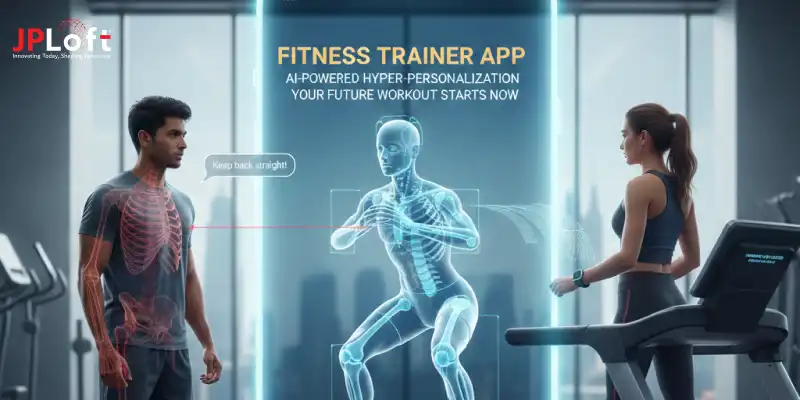
Smart bikes, treadmills, mirrors, and rowers are syncing directly with fitness apps that include real-time metrics, guided classes, and even AI form correction on large screens or mobile devices.
This studio-grade experience at home is a developing trend. The integration with the home-gym equipment is the leading fitness app trend to provide a single hub for all workout data, which enables personalized coaching, holistic health tracking, along real-time feedback.
With home-fitness options becoming increasingly affordable, the apps integrate to provide structured programs synced with equipment performance. It makes workouts more professional and intuitive.
14. Data-Driven Insights and Predictive Analytics
Fitness applications are moving to actionable analytics. Instead of showing raw numbers, they interpret data to tell users what to do next: work harder, rest, stretch, hydrate, or adjust nutrition.
The data-driven insights are significant fitness app trends that should be considered to prevent injuries by tracking fatigue and for forming patterns.
Predictive models estimate energy levels, readiness, and performance trends over time. This trend gives clarity desired by the user and helps him to understand his body with more confidence and less confusion.
15. Inclusive Fitness for All Body Types and Abilities
More workouts are being made for seniors, beginners, and people with disabilities, and different levels of mobility. Adjusted difficulties, visual cues, and alternative movements make fitness accessible to all.
It is an important fitness app trend that should be considered, as it is essential to serve the users as per their body types and abilities.
This trend is fast-growing because inclusivity drives much higher retention and user satisfaction. When people feel seen and supported, they are more likely to stay consistent and loyal to the app.
Bringing these innovative fitness trends to life requires technical expertise and industry knowledge, which a trusted mobile app development company in the UK can provide through end-to-end development, seamless integrations, and user-centric design.
Now, after considering the list of complete fitness app trends, let's switch to the following section.
How Do These Trends Shape the Future of Fitness Apps?
The fitness app trends shape the future of fitness apps through helping users connect with real personal coaches, building a full ecosystem, and providing smarter insights that enable users to train effectively.
Let’s evaluate how these trends shape the future of fitness apps below.
1. Apps Become Real Coaches
With the use of AI, adaptive plans, and habit tracking, apps know their users like a real trainer. It makes workouts feel guided and supportive from warm-up to cool-down.
In time, the app learns patterns and automatically changes its approach, giving users a feeling of progress with no constant need for manual input.
2. Wellness Becomes a Full Ecosystem
They want one app to bring together fitness, sleep, stress, nutrition, and recovery. Fitness app trends bring evolution, making fitness platforms a one-stop digital wellness destination.
It also helps users build healthier routines because everything is connected instead of being scattered across multiple apps.
3. Workouts Become Immersive
AR, VR, and gamification features make working out something people want to do, not something they must force themselves to do.
Guided posture cues remove the confusion with which beginners often feel overwhelmed, as do virtual studios. In sum, these tools make workouts fun, thus drastically reducing drop-off rates while sustaining user consistency.
4. Smarter Insights for Safer Training
Real-time data from wearables informs decisions on rest, intensity, hydration, and readiness. This reduces injuries and avoids the guesswork of planning.
Users become confident because they understand what their body is capable of each day, leading to smarter long-term training habits. You can overcome the fitness app development challenges by implementing the fitness app trends.
5. Personalization Drives Retention
Users want the routines, nutrition plans, and levels of difficulty to meet their exact goals and lifestyle. The fitness app trends do include integrating AI and wearables to collect and analyze user data for building customizations workouts and nutrition plans.
Future fitness apps adapt daily based on performance, sleep, and habits. This level of personalization makes users feel understood and increases the chances of them sticking with the app.
6. Communities Boost Motivation
Leaderboards, group challenges, and supportive social spaces create a feeling of belonging. When people can relate to others working toward similar goals, commitment becomes straightforward.
The social connections themselves become the strong driving force, making the path of fitness a journey with companions rather than a personal struggle.
Ready to Build Your Next Fitness App with JPLoft?
Here’s the thing. If you want to enter the fitness industry and develop your dream app that actually feels modern, smart, and built for real users, you need a team that understands how these trends come together.
JPLoft brings that mix of clarity, technical depth, and real-world product thinking.
As a fitness app development company, JPLoft knows how to turn raw data, AI coaching, wearables, and habit-tracking features into an app people actually enjoy using. We don’t just ship screens; we shape experiences, users adapt, keep them engaged, and grow with time.
You get help with everything from refining your idea, building the right AI features, planning the user flow, and creating a clean, friendly interface that doesn’t overwhelm beginners.
JPLoft focuses on performance, retention, and long-term scalability so your app isn’t outdated in a year. If you want to build something future-ready, this is the team that helps you make it happen.
Conclusion
The fitness app industry is moving toward a smarter, more connected future, shaped by AI coaching, AR experiences, wearables, and complete wellness ecosystems. These trends are transforming how people train, track progress, and stay consistent.
Users now expect personalized guidance, interactive workouts, real-time insights, and inclusive fitness support that fits their lifestyle. For businesses, this shift opens opportunities to create deeper engagement and long-term loyalty.
FAQs
The leading trends include AI-driven coaching, AR-based workouts, wearable integrations, personalized nutrition plans, micro-workouts, and recovery-focused tools. These features help users train smarter and stay consistent with routines that fit real-life schedules. Most importantly, they turn fitness apps into complete wellness companions instead of simple workout libraries.
AI analyzes user data such as performance, heart rate, sleep, and workout history to create personalized routines that evolve daily. It removes guesswork by suggesting intensity levels, rest days, and corrective actions. This helps users stay motivated, avoid injury, and follow a plan that adjusts as their lifestyle changes.
AR and VR make workouts more engaging by offering guided visuals, posture correction, virtual studios, and interactive challenges. These features reduce confusion for beginners and make workouts feel fun rather than intimidating. They also help users exercise longer because sessions feel immersive and game-like instead of repetitive.
Wearables provide real-time insights into steps, heart rate, sleep quality, stress levels, and activity patterns. Fitness apps use this data to personalize training, track progress, predict readiness, and prevent overtraining. This combination creates a complete picture of health, helping users make better choices each day.
Micro-workouts offer effective 10–15-minute sessions that fit easily into busy days. Users get measurable results without committing to long routines. These short workouts remove excuses, reduce drop-off rates, and make fitness more accessible for people balancing work, travel, and personal responsibilities.
Community-driven tools like group challenges, leaderboards, and friend circles create a sense of accountability. Users stay motivated when they can track progress with others, celebrate milestones, and share goals. This social support transforms fitness from a solo habit into a shared, rewarding experience.

Meet Yashwant, the CTO of JPLoft. With 18+ years of industry experience, he brings deep technical expertise and visionary leadership to complex digital challenges. From scalable software architectures to emerging technology implementations, Yashwant drives innovation that empowers businesses across diverse industries to build future-ready, secure, and high-performing digital solutions.


Share this blog