


Key Takeaways
To develop an airplane app like Ryanair, one requires careful planning, understanding market trends, and implementing user-centric features for maximum engagement.
Incorporating AI, ML, NLP, and AR technologies can significantly enhance user experience and operational efficiency in a Ryanair-like app.
To create a travel app like Ryanair, the cost ranges from $20,000 to $120,000+ (≈ €18,500 to €112,000+), depending on features, platform, region, maintenance & updates.
Identifying challenges like complex booking integrations, payment security, and high traffic handling early helps reduce development delays and incurred costs.
Businesses can leverage expert guidance to build a travel app like Ryanair efficiently, ensuring seamless booking, payment, and user-friendly functionality.
Strategic insights into trends, features, and technology adoption help create a competitive, innovative, and scalable airline application.
Partnering with an experienced app development team ensures a smooth end-to-end process, from planning and development to post-launch support and updates.
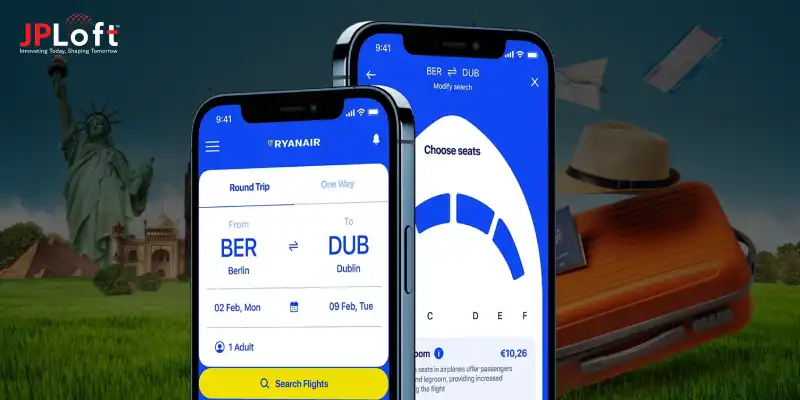
The travel industry has undergone a massive digital shift, and airlines today are no longer just selling seats, they’re delivering complete travel experiences through mobile technology. Ryanair stands out as one of the strongest examples of how a low-cost airline can scale globally by combining smart pricing, seamless bookings, and a user-friendly mobile app.
For startups and travel businesses, the opportunity to create an app like Ryanair is bigger than ever. With travelers increasingly relying on mobile apps to search flights, manage bookings, and receive real-time updates, investing in Ryanair like app development can open doors to high-volume transactions and long-term customer loyalty.
If you’re planning to develop an app like Ryanair, this guide will walk you through the strategy, features, development process, cost considerations, and emerging technologies you need to build a competitive and future-ready travel app.
Ryanair Overview & Current Market Stats
Ryanair is Europe’s largest low-cost airline, carrying over 200 million passengers annually and operating one of the most advanced digital airline platforms. Its mobile-first strategy has transformed how travelers search, book, and manage flights at scale.
For businesses planning to make an app like Ryanair, the airline’s success highlights the importance of performance-driven UX, real-time updates, and scalable infrastructure.
Ryanair’s ability to handle millions of users simultaneously makes it a strong benchmark for startups looking to create a travel app that performs reliably under heavy demand.
Key Data Stats & Market Insights
- 200+ million passengers in 2025, marking a 9% year-over-year increase, reinforcing strong demand for budget air travel.
- 19.9 million passengers in June 2025 with a 95% load factor, indicating peak operational efficiency.
- Load factors consistently above 90%, even during off-peak periods, proving traffic stability.
- Ryanair serves around 230 airports with 3,500+ daily short‑haul flights, maintaining extensive coverage across Europe and nearby regions in 2025.
These metrics show why Ryanair’s digital ecosystem continues to inspire travel startups. Understanding this scale is also essential when estimating the cost to create a travel app capable of supporting high traffic, real-time operations, and long-term growth.
Why You Should Invest in a Ryanair-Like App?
Investing in a Ryanair-like app means tapping into a proven digital-first airline model built for scale, speed, and recurring revenue. As mobile bookings dominate travel decisions, this approach offers strong demand, predictable growth, and long-term business sustainability.
1. Strong Demand for Mobile-First Travel Experiences
Modern travelers expect everything, from flight search to boarding passes, on their phones. This demand creates a clear opportunity to create an app like Ryanair that delivers fast, reliable, and intuitive journeys. Among scalable mobile app ideas, airline apps continue to attract consistent traffic across markets.
2. A Scalable, Cost-Efficient Business Model
Ryanair’s success proves that lean operations combined with smart digital infrastructure can support massive volumes. When you build an app like Ryanair, you’re investing in a system designed to handle high user traffic, quick checkouts, and repeat bookings without operational complexity.
3. Diverse and Sustainable Revenue Opportunities
Beyond ticket sales, airline apps generate income through add-ons, ads, and partnerships. Smart mobile app monetization strategies allow businesses to develop a travel app like Ryanair in Europe that earns from multiple touchpoints, improving profitability and reducing dependency on flight margins alone.
4. Long-Term User Retention and Brand Loyalty
A well-optimized travel app becomes a frequent companion for users. By offering consistent value and seamless experiences, businesses that build a travel app like Ryanair can drive repeat usage, strengthen brand recall, and build loyalty that lasts beyond individual trips.
Once the investment potential is clear, the next step is understanding execution. In the upcoming section, we’ll break down how to create an app like Ryanair, covering the development approach, technology decisions, and planning required to turn this idea into a working product.
How to Develop an App like Ryanair?
To understand how to create an app like Ryanair?, you need a structured, phase-wise approach that balances user experience, technical scalability, and business goals. This process focuses on careful planning, iterative development, and long-term optimization to build a reliable, high-performing airline application.
Phase 1: Strategic Planning & Product Discovery
This phase lays the foundation for success. Clear business goals, target markets, and user expectations are defined here. When you develop an app like Ryanair, early planning ensures the product aligns with airline workflows, customer needs, and operational efficiency from day one.
► Market & Competitor Analysis
Analyze airline apps, booking behaviors, and pricing strategies across regions. This research helps you create a travel app like Ryanair in Europe that matches real user expectations while identifying gaps competitors fail to address effectively.
► User Personas & Journey Mapping
Define traveler personas and map their booking journeys. Understanding how users search, compare, and book flights improves conversion rates and ensures frictionless navigation across every interaction point.
► Business Model & Compliance Planning
Early planning of how to build an app like Ryanair must include revenue streams and regulatory requirements. Airline apps must comply with aviation, data protection, and payment regulations, making this step critical for long-term sustainability.
Phase 2: UX Design & Experience Structuring
User experience directly impacts retention and bookings. This phase transforms ideas into intuitive flows that make complex airline operations feel simple for users across devices.
► User Flow Design & App Wireframe
Creating an app Wireframe helps visualize layouts, navigation paths, and interactions. This ensures users can search flights, manage bookings, and access updates without confusion or unnecessary steps.
► Design Consistency & Accessibility
Design consistency builds trust. Clean layouts, readable typography, and accessible design ensure usability for diverse travelers, including frequent flyers and first-time users.
► Usability Testing & Refinement
Early usability testing identifies friction points. Refining layouts at this stage reduces development rework and ensures smoother user adoption after launch.
Phase 3: MVP Development & Validation
This phase focuses on building a functional product quickly. The goal is to validate assumptions and gather real user feedback before investing in full-scale development.
► Core Functionality Development
Focus on booking, flight search, payments, and account management. Prioritizing essentials resolves teams’ how to build an app like Ryanair without unnecessary complexity in the initial release.
► App Prototype & Stakeholder Feedback
An interactive app prototype enables real-world testing. Feedback from stakeholders and early users improves UX decisions and validates whether the app meets traveler expectations.
► Iterative Improvements & Feature Tuning
Based on feedback, teams refine flows, fix usability gaps, and enhance performance. Iterative updates ensure the MVP evolves into a stable, user-approved product.
Phase 4: Full-Scale Development & Integration
Once validated, the app is expanded into a production-ready system. This phase focuses on robustness, integrations, and scalability.
► Backend & API Integration
Airline apps rely on real-time data. Secure APIs for pricing, availability, and payments ensure accuracy and seamless transactions under high traffic conditions.
► Third-Party Service Integration
Integrations with payment gateways, notifications, and analytics tools strengthen reliability and enhance the overall user experience.
► Partnering with a Mobile App Development Company
Collaborating with an experienced mobile app development company ensures technical precision, compliance readiness, and faster execution using proven development frameworks.
Phase 5: Launch, Scaling & Post-Launch Optimization
The final phase ensures long-term performance and growth. Launching is only the beginning of the app’s lifecycle.
► Phased Deployment & Market Rollout
Rolling out the app in stages helps monitor performance and user behavior. Controlled launches enable faster issue resolution, especially when submitting the app to the app store or publishing the app to the Play Store.
► Performance Optimization & Monitoring
Continuous monitoring improves speed, stability, and security. Data-driven optimization keeps the app responsive even during peak booking periods.
► Ongoing App Maintenance Services
Reliable app maintenance services support bug fixes, updates, and feature enhancements. Ongoing support ensures the app remains competitive, secure, and aligned with evolving airline and user needs.
Once it is clear how to develop an app like Ryanair?, the next step is deciding what makes the app valuable to users. In the upcoming section, we’ll explore the key features to integrate in a Ryanair-like app that drive bookings, engagement, and long-term retention.
Features to Integrate in a Ryanair-Like App
When building an airline app, certain core functionalities are crucial for success. Highlighting travel app features ensures your users enjoy a seamless, intuitive, and efficient experience, while your app remains scalable and competitive. From booking to notifications, each feature plays a strategic role in driving engagement and conversions.
1. Flight Search & Booking Module
Users should be able to quickly search for flights by destination, dates, and passenger count. Filters for price, airline, and timings enhance flexibility. A smooth booking flow with clear seat selection and payment options helps when you build an airplane app like Ryanair, improving conversions and user satisfaction.
2. Real-Time Pricing & Dynamic Offers
Dynamic pricing algorithms show accurate, real-time ticket costs. Personalized deals, last-minute discounts, and loyalty rewards enhance engagement. This feature ensures travelers get competitive options, making it essential when you make an app like Ryanair to attract price-conscious users consistently.
3. User Account Management & Profiles
Secure user accounts store booking history, personal details, payment methods, and preferences. Easy login via email or social accounts and password management improves retention, while allowing frequent flyers to manage trips efficiently, an indispensable aspect to create an airplane app like Ryanair.
4. Notifications & Real-Time Updates
Push notifications for flight status, delays, gate changes, and promotions keep travelers informed. Timely alerts reduce stress and enhance trust. Integrating geolocation-based updates and personalized messages ensures you build an Airplane app like Ryanair that delivers a reliable travel companion experience.
5. Multi-Payment & Wallet Integration
Offer multiple payment gateways, credit/debit card options, and mobile wallets. Secure transactions with encryption enhance user trust. Loyalty points or in-app wallets encourage repeat bookings, adding convenience and long-term engagement to your Ryanair-like app.
6. Multi-Language & Currency Support
Global travelers prefer apps in their native language and local currency. Supporting multiple languages, regions, and currencies increases adoption, reduces friction, and ensures your app can compete internationally. Especially when targeting the European market for a Ryanair clone app development.
7. Reviews, Ratings & Customer Support
Allow users to rate experiences, provide feedback, and reach customer support directly within the app. AI-powered chatbot development or integrated help centers can reduce response times, ensuring users feel heard and cared for, reinforcing brand loyalty.
Now that the essential features are clear, the next step is understanding how much it costs to develop an app like Ryanair. The upcoming section will break down development costs, key factors, and budget considerations to plan effectively.
How Much Does it Cost to Develop an App like Ryanair?
The cost to create an app like Ryanair typically ranges from $20,000 to $120,000+ (≈ €18,500 to €112,000+), depending on complexity, region, and chosen features.
Understanding these cost factors helps businesses plan budgets accurately while avoiding hidden expenses, especially when factoring in the cost to develop a mobile app infrastructure.
Estimated Cost Table for Ryanair-Like App Development
|
Development Phase |
Estimated Cost (USD) |
Estimated Cost (EUR) |
|
Basic MVP |
$20,000 – $40,000 |
€18,500 – €37,000 |
|
Advanced Features |
$40,000 – $80,000 |
€37,000 – €74,000 |
|
Full-Scale App |
$80,000 – $120,000+ |
€74,000 – €112,000+ |
|
Maintenance & Updates (Annual) |
$5,000 – $15,000 |
€4,600 – €14,000 |
Factors Influencing Cost
Several elements determine the overall budget of a Ryanair-like app. From feature complexity to platform choice and integrations, each factor directly impacts development time, resources, and final pricing. Have a look at these price-deciding factors below.
1] Feature Complexity
Apps with advanced features like real-time flight tracking, dynamic pricing, and AI-based recommendations require more development hours, increasing the budget. Basic booking and search functions are less costly but may limit competitiveness.
2] Platform Choice (iOS, Android, or Both)
Developing for both iOS and Android doubles testing, optimization, and maintenance needs. Cross-platform solutions may reduce initial costs but can affect performance, influencing the overall cost of Ryanair like app development.
3] Design and UX
Intuitive, visually appealing, and accessible designs demand top-notch UI/UX services. Custom animations, multi-language support, and consistent layouts impact development timelines, directly affecting pricing.
4] Third-Party Integrations & APIs
Integrating payment gateways, notifications, analytics, and airline data feeds requires technical expertise. Costs rise with the number of integrations and the complexity of API management.
5] Maintenance & Updates
Ongoing updates, bug fixes, and server support are necessary to sustain performance. The complete cost of Ryanair like app development should include post-launch maintenance to ensure security and reliability in the long term.
6] Regional Development Rates
Developer location affects hourly rates. North America and Western Europe, including a mobile app development company in the UK, have higher rates than Eastern Europe or Asia. Choosing a region strategically can optimize costs without compromising quality.
After understanding the cost to develop an app like Ryanair, it’s important to anticipate key challenges. The upcoming section will explore technical, operational, and business hurdles to plan more effectively and avoid delays or budget overruns.
Key Challenges While Developing an App like Ryanair
Building a Ryanair-like app involves multiple hurdles. Understanding potential obstacles ensures smoother development and timely delivery. Addressing these early minimizes risk and enhances scalability. Awareness of travel app development challenges allows teams to plan strategically, avoiding costly delays or operational bottlenecks.
Challenges 1: Complex Booking System Integration
Integrating multiple airlines, real-time availability, pricing, and seat selection is technically challenging. Ensuring accuracy while handling high traffic volumes demands robust architecture and skilled backend development, critical for any Ryanair like app development project to succeed.
Challenges 2: Payment Gateway & Security Compliance
Securing user transactions and complying with PCI DSS, GDPR, and regional regulations requires advanced encryption and secure APIs. This ensures safe payments and data protection, a common hurdle when businesses develop an app like Ryanair.
Challenges 3: Real-Time Updates & Notifications
Providing instant flight updates, gate changes, and delay alerts requires high-performing servers and efficient push notification systems. Real-time reliability is a frequent challenge in Ryanair clone app development, especially during peak travel seasons.
Challenges 4: Cross-Platform Compatibility
Supporting both iOS and Android devices with consistent UX and functionality is complex. Differences in device sizes, OS versions, and performance optimization make cross-platform development a critical challenge for any airline app.
Challenges 5: Scalability & High Traffic Management
Handling sudden traffic spikes during promotions or peak booking times demands scalable architecture. Ensuring the app remains fast, responsive, and crash-free is one of the toughest challenges developers may face.
Challenges 6: Post-Launch Maintenance & Updates
Frequent updates, bug fixes, and feature enhancements are essential to remain competitive. Proper planning for ongoing maintenance ensures user satisfaction and long-term stability for a Ryanair-like app.
With challenges identified, the next focus is exploring top trends you can leverage while developing an app like Ryanair, including AI, ML, NLP, chatbots, and emerging technologies to enhance user experience and operational efficiency.
Top Trends You Can Leverage While Developing an App like Ryanair
The travel app industry is evolving rapidly, with new technologies reshaping user expectations. Keeping up with travel app trends ensures your Ryanair-like app remains competitive, offers advanced features, and enhances user engagement across booking, trip planning, and customer service.
A] AI-Powered Personalization
Artificial intelligence enables apps to predict traveler preferences, suggest relevant flights, and optimize user experiences. Leveraging AI development services allows your app to deliver personalized offers, promotions, and notifications, increasing engagement, retention, and loyalty in a highly competitive airline market.
B] Machine Learning Recommendations
Machine learning models analyze user behavior, booking history, and travel patterns to provide dynamic suggestions. Integrating ML development services ensures smarter pricing, optimized routes, and personalized travel recommendations, helping your Ryanair-like app remain intelligent and responsive to user needs.
C] Natural Language Processing Chatbots
NLP enables conversational interfaces and voice assistants for seamless support. Using NLP development services, apps can handle booking queries, flight updates, and customer requests naturally, reducing manual support load while improving user satisfaction across multiple touchpoints.
D] AI in Travel
Integrating AI in travel apps improves booking efficiency, predictive pricing, and customer interactions. AI-powered features like smart fare alerts, personalized recommendations, and automated support help Ryanair-like travel apps deliver faster, more intuitive, and highly efficient travel experiences.
E] AI-Driven Trip Planning
AI-powered itinerary planning helps travelers schedule flights, accommodations, and activities efficiently. Implementing an AI driven trip planning app feature ensures users receive automated suggestions, route optimization, and smart recommendations, making the app a comprehensive travel companion.
F] Augmented Reality Experiences
AR can enhance navigation, airport wayfinding, and virtual previews of destinations. Incorporating AR in travel apps allows your Ryanair-like app to engage users interactively, provide immersive experiences, and elevate overall satisfaction during both planning and travel phases.
With emerging trends in mind, it’s time to see how JPLoft can help you develop an app like Ryanair. The next section will cover expert guidance, tailored solutions, and proven development strategies to build a robust airline application.
How JPLoft Can Help You Develop an App like Ryanair?
Building a successful airline app requires technical expertise, market understanding, and a user-centric approach. As a trusted travel app development company, JPLoft offers end-to-end solutions to help businesses create an airplane app like Ryanair with robust features, seamless performance, and modern design.
JPLoft begins with detailed requirement analysis, competitor research, and strategy formulation. This ensures your Ryanair-like app is aligned with market demands, incorporates best practices, and leverages advanced technologies, helping businesses develop an Airplane app like Ryanair efficiently.
Our design team crafts intuitive interfaces, responsive layouts, and visually appealing experiences. Every element is optimized for usability and engagement, enabling users to navigate effortlessly while reinforcing your brand identity when you build an app like Ryanair.
JPLoft provides complete backend and frontend development, integrating booking systems, payment gateways, and notifications. Using scalable architecture ensures high performance, reliability, and smooth operation, making Ryanair like app development streamlined and technically sound.
Ongoing maintenance, updates, and optimization are essential for app longevity. JPLoft ensures continuous improvements, bug fixes, and feature upgrades, keeping your Ryanair-like app secure, efficient, and competitive in the dynamic travel industry.
Conclusion
Creating an app like Ryanair offers tremendous opportunities for growth, enhanced user engagement, and a competitive edge in the travel industry. From understanding market trends, incorporating AI, ML, NLP, and AR technologies, to carefully planning features, cost, and scalability, every step matters.
Partnering with experts ensures efficient development, smooth integration, and ongoing support, minimizing risks while maximizing impact. With insights into challenges, top trends, and cost considerations, businesses are well-equipped to make informed decisions and deliver a seamless travel experience.
A well-planned Ryanair-like app can drive customer satisfaction, boost loyalty, and establish a strong presence in the competitive travel app market.
FAQs
The development timeline depends on complexity, features, and platform choice. A basic MVP can take 3–4 months, while a full-featured, scalable app may require 6–9 months, including design, development, testing, and post-launch optimization.
Developing a travel app like Ryanair involves planning features, choosing the right platform, integrating booking systems and payment gateways, ensuring security compliance, and incorporating emerging technologies like AI, ML, NLP, and AR for enhanced user experience.
Costs vary based on app complexity, features, and region. Generally, development ranges from $30,000 to $120,000+ (€28,000–€112,000+). Additional expenses for maintenance, updates, and integrations should also be considered.
Launching on both iOS and Android is recommended for maximum reach. Cross-platform frameworks can reduce initial development costs, but native apps often provide better performance and user experience.
Key features include flight search and booking, payment integration, real-time updates, notifications, loyalty programs, user accounts, and customer support. Advanced features can include AI recommendations, AR navigation, and chatbot assistance.

Kris Jacobs brings 20+ years of experience solving complex digital product challenges through strategic thinking and user-centric design. With deep exposure to on-demand services, entertainment, travel, and interactive platforms, she collaborates across teams to shape scalable, engaging solutions that align business goals with intuitive user experiences across evolving digital landscapes.



Share this blog