


Key Takeaways:
The GCC travel market is growing rapidly, creating strong opportunities for digital-first travel solutions that align with regional user behaviour and mobile adoption trends.
Successful travel apps in the GCC prioritise localisation, secure payments, AI-driven personalisation, and seamless booking experiences tailored to Gulf travellers.
Understanding how to build a travel app in GCC requires a structured approach, combining market research, feature planning, scalable technology, and regulatory compliance.
The cost to create a travel app in GCC ranges from $20K to $120K+ (≈ AED 73,000–AED 441,000+), with app complexity, MVP-driven execution, and modular scaling driving ROI.
With deep regional expertise and a future-ready approach, JPLoft helps businesses turn travel app ideas into scalable, high-performing GCC-ready products.
Travel in the GCC region is increasing, and digital channels are the key growth driver. In 2025, flight and hotel bookings from GCC residents to key regional destinations saw an increase of 12 % year-on-year basis, demonstrating stronger travel demand and the growing importance of mobile booking solutions among Gulf travellers.
This shift reflects evolving traveller preferences, as people increasingly expect fast, personalised, and on-the-go planning experiences. From business travellers in Riyadh to leisure seekers in Dubai and Doha, the appetite for seamless travel discovery and booking continues to rise.
Given the region’s rapid economic growth, ambitious tourism goals, and high mobile adoption rates, the time is ripe to rethink how travel solutions are built and delivered for GCC users.
This guide walks you through everything you need to know, from strategy, development, cost, features, and future trends, to confidently build and launch a standout travel app designed for the GCC.
Exploring the Next-Gen Travel App in GCC
The Gulf Cooperation Council (GCC) comprises six rapidly growing economies: Saudi Arabia, the United Arab Emirates, Qatar, Kuwait, Bahrain, and Oman, collectively positioned as a global hub for tourism, business travel, and luxury experiences.
Backed by strong infrastructure investments, high smartphone penetration, and government-led tourism initiatives, the GCC has transformed into a high-value, digitally mature travel market.
GCC countries are experiencing unprecedented growth in travel demand, with mobile platforms playing a central role in how travellers plan, book, and manage their journeys.
As airports expand, tourism diversification strategies accelerate, and intra-regional travel continues to rise year after year, the GCC stands out as one of the most dynamic and opportunity-rich travel ecosystems in the world.
Here’s what the latest data shows about how travel and digital adoption are shaping opportunities for businesses exploring how to create a travel app in GCC:
Key Market Growth Statistics
-
The GCC outbound tourism market is projected to reach $138.06 billion by 2033, growing at 7.1% CAGR from 2025. This reflects a long-term growth potential for travel app ecosystems.
-
According to market research, the GCC online travel market is forecast to grow from approximately $8.78 billion in 2025 to around $15.5 billion by 2035, representing a CAGR of 5.8% (2025–2035). This indicates a sustained demand for digital travel services and apps.
-
The Saudi Arabia online travel market, one of the largest within the GCC, is expected to reach about $13 billion by 2034, expanding at a CAGR of 9.41% during 2026-2034.
-
Online travel sales are anticipated to generate about 85% of total travel & tourism revenue in the GCC by 2030, highlighting the digital shift toward mobile and web travel booking platforms (which drives travel app usage).
With the GCC travel market set for rapid digital growth, understanding these trends is essential before you explore how to create a travel app in GCC that meets regional demands and user expectations.

Step-by-Step Process to Build a Travel App in GCC
Building a successful travel app in the GCC requires more than just a sleek interface; it’s about understanding regional travel habits, regulatory nuances, and the tech landscape.
From ideation to deployment, following a structured approach ensures your app resonates with users while staying scalable and secure.
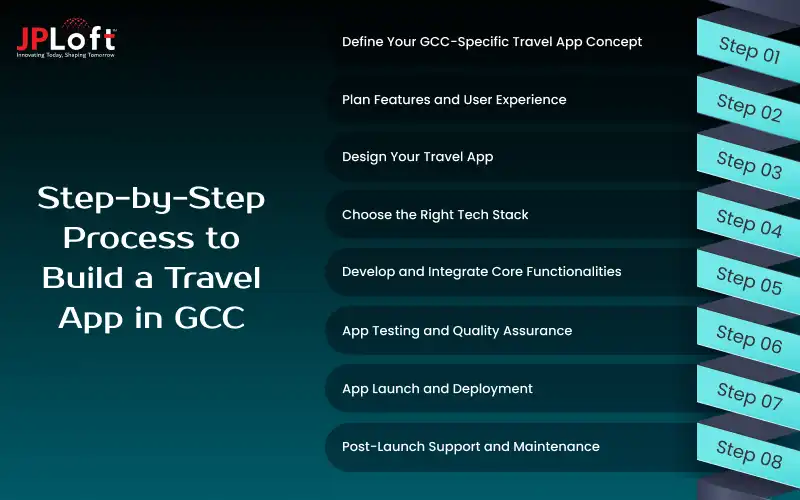
Here’s a step-by-step guide on how to develop a travel app in GCC.
Step 1: Define Your GCC-Specific Travel App Concept
Start by clearly identifying the type of travel app you want to build: flight booking, hotel reservations, tour guides, itinerary planners, or a comprehensive super app.
Understanding regional preferences is critical: for instance, UAE and Saudi Arabia travellers show strong demand for apps offering AI-powered personalized recommendations and multi-lingual support (Arabic + English).
Market research should also capture the local competitive landscape, analysing existing apps, user pain points, and gaps in service. This insight forms the foundation for custom travel app development in GCC, ensuring your app aligns with regional needs and stands out in a competitive market.
Step 2: Plan Features and User Experience
The next step includes outlining the essential features of your app in order to succeed in the GCC. For instance:
-
Real-time flight, hotel, and tour booking
-
AI-based itinerary suggestions
-
Secure payment gateways compatible with GCC banks
-
Push notifications and loyalty programs
-
Multi-currency and multi-lingual support
Once features are defined, focus on UX/UI design that is intuitive and culturally aligned. A well-structured, easy-to-navigate app not only builds trust but also increases its adoption. This is where the understanding of creating a travel app interface for GCC users becomes crucial, prioritizing simplicity, accessibility, and mobile-first layouts.
Step 3: Design Your Travel App
Once your GCC app features and UI/UX design are finalised, jump into designing your travel app. Mobile app designing is not just about aesthetics; it’s about creating user journeys that reduce friction.
For GCC travellers, their expectations revolve around speed, personalization, and visual clarity. Also, don’t forget to consider local travel behaviors, like frequent last-minute bookings or multi-destination itineraries, in addition to designing flows that accommodate these patterns.
Moreover, adopting principles from how to design a travel app ensures your interface supports seamless navigation, quick search and booking, and easy integration of loyalty programs or AI features. Thoughtful design also minimizes cognitive load, which is vital for retaining users in competitive markets.
Step 4: Choose the Right Tech Stack
Your app’s backend and infrastructure determine performance, scalability, and reliability, which are critical in high-demand regions like the GCC. Therefore, choose a robust technology stack that supports:
-
Real-time booking and availability updates
-
AI-powered recommendations
-
Multi-platform support (iOS, Android, and web)
-
Secure data handling and GDPR/GCC compliance
Selecting the right travel app tech stack ensures you can handle large user bases and peak travel seasons without compromising performance.
Step 5: Develop and Integrate Core Functionalities
With the design and tech stack in place, start development in modules: backend, frontend, API integrations, payment gateways, and AI features. GCC-specific development considerations include:
-
Multi-lingual support (Arabic + English)
-
Regional payment integration (Apple Pay, STC Pay, Mada, etc.)
-
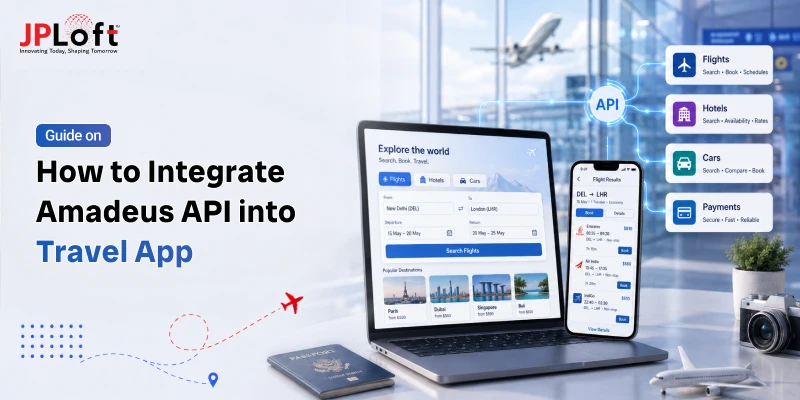
Airline, hotel, map, and travel service APIs
-
Compliance with local travel regulations and data privacy laws
At this stage, scalability, performance, and security must be ensured in the core architecture rather than added later. Collaborating with experienced travel app developers GCC helps ensure smooth third-party integrations, regulatory alignment, and a flexible codebase that supports future feature expansion.
Step 6: App Testing and Quality Assurance
Before launch, thorough travel app testing is essential to ensure reliability and performance, especially in high-demand GCC markets where user expectations for speed and security are high. This includes:
-
Functional testing across devices and platforms
-
Security and payment testing
-
Performance testing for high traffic scenarios
-
Usability testing with GCC-focused user flows
Rigorous testing ensures your app is stable, secure, and ready for real-world usage. It also helps identify gaps early, reducing post-launch risks and ensuring a smoother experience for travellers across the GCC.
Step 7: App Launch and Deployment
Launch your travel app in phases, starting with beta releases in key markets like Dubai, Riyadh, or Doha. This allows you to gather early feedback, fine-tune features, and optimise performance before a full rollout.
A controlled launch strategy reduces risk and improves adoption when you create a travel app in the GCC for diverse user segments. It also enables data-driven decision-making, helping teams prioritise feature enhancements based on real user behaviour and regional demand.
Step 8: Post-Launch Support and Maintenance
Post-launch support is crucial for long-term success, especially in the fast-evolving GCC travel ecosystem where user expectations and regulations continue to change. This phase focuses on continuous mobile app maintenance to keep the app secure, scalable, and aligned with evolving user needs. This includes:
-
Continuous performance monitoring
-
Bug fixes and security updates
-
Feature enhancements based on user behaviour
-
Scaling infrastructure during peak travel periods
Ongoing optimisation ensures your app stays competitive, compliant, and aligned with evolving user expectations, key to sustained growth when learning how to develop a travel app in GCC markets.
By following these steps, you not only understand how to build a travel app in GCC but also ensure it’s tailored to regional behaviours, expectations, and opportunities, setting the stage for sustainable growth.
Features to Include in a Travel App in GCC
To successfully create a travel app for the GCC, features must reflect regional travel habits, cultural expectations, and digital maturity. A well-planned feature set of mobile app features also ensures your product stands out when investing in custom travel app development GCC.
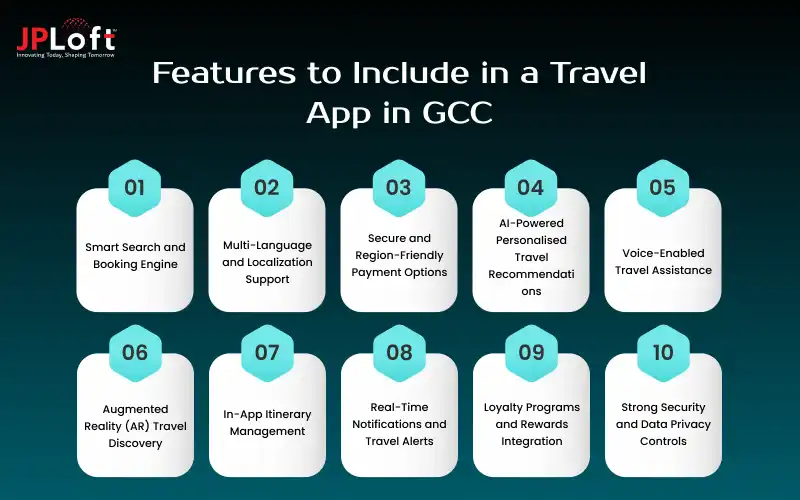
1. Smart Search and Booking Engine
Enable users to search and book flights, hotels, and experiences in real time with accurate pricing and availability across GCC and international destinations. Fast search responses and instant confirmations are critical for high-intent travellers.
2. Multi-Language and Localization Support
The app must support Arabic and English interfaces with region-specific content, currencies, and travel preferences. This is because localization improves usability and trust, especially for users across the UAE, Saudi Arabia, Qatar, and Kuwait.
3. Secure and Region-Friendly Payment Options
Integrate trusted payment methods such as Apple Pay, STC Pay, Mada, and regional credit cards. Strong encryption and compliance with GCC data regulations are essential for user confidence.
4. AI-Powered Personalised Travel Recommendations
Leverage user behaviour and past bookings to deliver tailored destination, hotel, and activity suggestions. Among modern travel app features, intelligent personalisation is now a core expectation for GCC travellers.
5. Voice-Enabled Travel Assistance
Allow users to search flights, check bookings, or get itinerary updates using voice commands. Understanding the role of AI voice assistants in travel apps helps deliver hands-free, instant support for users on the move.
6. Augmented Reality (AR) Travel Discovery
Use AR to enhance hotel previews, city exploration, or landmark navigation. Integrating AR in travel apps improves engagement and helps travellers visualise experiences before booking.
7. In-App Itinerary Management
Provide a central dashboard where users can manage bookings, schedules, and travel alerts. This reduces dependency on multiple platforms and improves trip planning efficiency.
8. Real-Time Notifications and Travel Alerts
Send instant updates for flight delays, gate changes, weather alerts, and booking confirmations. Timely notifications are vital for business and leisure travellers across GCC markets.
9. Loyalty Programs and Rewards Integration
Offer points, discounts, or exclusive deals for frequent travellers. Loyalty features encourage repeat usage and long-term user retention.
10. Strong Security and Data Privacy Controls
Implement secure authentication, encrypted data storage, and privacy-first design. Security remains a decisive factor when users evaluate travel apps in the GCC.
Cost to Build a Travel App in GCC
The cost to build a travel app in the GCC ranges between $20k and $120k+ (≈ AED 73,000–AED 441,000+), depending on app complexity, feature depth, technology choices, and compliance requirements specific to Gulf countries.
Businesses looking to develop a travel app for the GCC should budget carefully, as regional expectations around performance, security, and scalability are higher than in many other markets.
Here is a breakdown of mobile app development costs for businesses exploring travel app development in the GCC.
Estimated Cost Range (USD & AED):
|
App Type |
Estimated Cost USD |
Estimated Cost AED |
Key Features |
|
Basic travel app |
$20,000–$35,000 |
≈ AED 73,000 – AED 128,000 |
Includes core booking features, basic UI, and standard APIs. |
|
Mid-level travel app |
$40,000–$70,000 |
≈ AED 147,000 – AED 257,000 |
Covers AI recommendations, multi-language support, secure payments, and scalable backend |
|
Advanced or AI-driven travel app |
$80,000–$120,000+ |
≈ AED 294,000 – AED 441,000+ |
Includes real-time data processing, personalization engines, AR/AI features, and enterprise-grade security. |
Key Factors Influencing Travel App Development Costs in GCC
The following are the key factors that play a vital role in influencing the travel app development costs in the GCC.
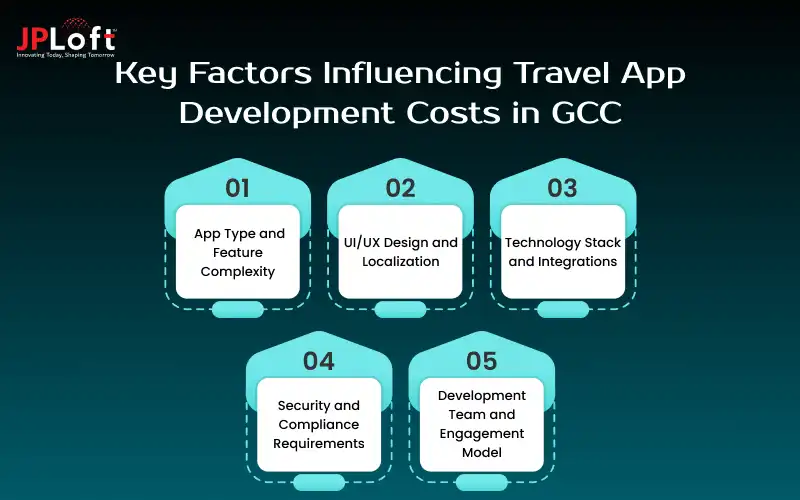
1. App Type and Feature Complexity
A flight or hotel booking app costs significantly less than a full travel super app with itinerary planning, AI assistance, and loyalty systems. Feature depth directly impacts development time and cost.
2. UI/UX Design and Localization
Designing for GCC users requires Arabic and English interfaces, cultural alignment, and accessibility standards. Premium UI/UX adds value but increases upfront investment.
3. Technology Stack and Integrations
Costs vary depending on backend scalability, third-party APIs, AI capabilities, and real-time booking engines. Choosing the right architecture early helps optimise the overall cost to develop a travel app without future rework.
4. Security and Compliance Requirements
Data privacy laws, secure payment handling, and cloud compliance standards in GCC countries add to development efforts but are non-negotiable for user trust.
5. Development Team and Engagement Model
Working with experienced teams familiar with GCC regulations and travel ecosystems, especially when you hire dedicated developers, reduces risk, improves delivery speed, and ensures better long-term ROI.
How to Optimise Your Travel App Budget?
These are the proven tactics using which you can use to easily optimise your travel app budget without burning a hole in your pocket.
-
Prioritise MVP features before scaling advanced functionality
-
Use modular development to add AI or AR features post-launch
-
Choose cloud infrastructure that supports regional scalability
-
Plan testing and optimisation early to avoid post-launch fixes
With the right planning, businesses can control the cost to build a travel app in the GCC while still delivering a high-performance, future-ready product tailored to Gulf travellers.
Challenges to Build a Travel App in GCC
While the GCC offers massive opportunities, building a travel app for this region comes with its own set of complexities. From regulatory frameworks to user trust expectations, understanding these travel app development challenges early helps businesses collaborate more effectively with experienced travel app developers GCC, and avoid costly setbacks.
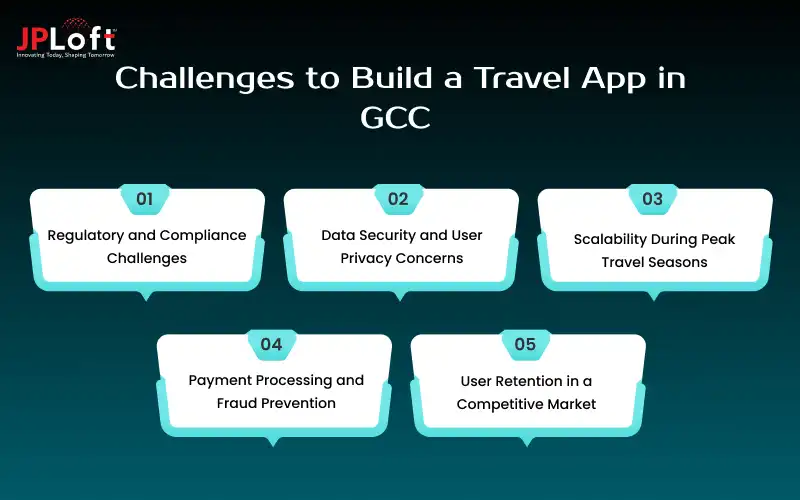
Challenge 1: Regulatory and Compliance Challenges
Each GCC country follows strict regulations around digital services, data protection, and payment processing. Travel apps must comply with local tourism authorities, financial regulations, and data residency requirements, which can vary between the UAE, Saudi Arabia, and Qatar.
The solution: Work with legal and technical teams that understand regional compliance from day one. Addressing these challenges early ensures smoother approvals, faster launches, and reduced operational risk.
Challenge 2: Data Security and User Privacy Concerns
Travel apps handle sensitive user data, including passports, payment details, and travel itineraries. In the GCC, users expect enterprise-grade security and transparency, making data protection a critical success factor.
The solution: Implement strong encryption, secure authentication, and compliance-ready cloud infrastructure. Prioritising travel app security from the early development stages helps meet regional data protection standards while strengthening long-term user trust.
Challenge 3: Scalability During Peak Travel Seasons
GCC travel demand spikes during holidays, religious seasons, and major events. Apps that fail to scale during high traffic periods risk downtime, slow performance, and lost revenue.
The solution: Use cloud-native architectures and load-balancing strategies that allow your app to scale dynamically. Scalable infrastructure is essential when you plan to develop a travel app for the GCC that can support millions of concurrent users.
Challenge 4: Payment Processing and Fraud Prevention
Supporting multiple regional payment methods while preventing fraud is complex. Payment failures or security issues directly impact conversion rates and user confidence.
The solution: Integrate region-specific payment gateways and advanced fraud detection mechanisms. Some platforms are now exploring blockchain in travel apps to improve transaction transparency and reduce chargebacks.
Challenge 5: User Retention in a Competitive Market
The GCC travel app market is highly competitive, with users expecting seamless experiences, personalisation, and real-time support. Poor UX or generic features can quickly lead to app abandonment.
The solution: Focus on AI-driven personalisation, intuitive design, and continuous optimisation based on user behaviour. Partnering with skilled developers ensures your app evolves alongside changing user expectations.
Travel App Trends to Leverage in GCC
The GCC travel ecosystem is evolving rapidly, driven by smart tourism initiatives, AI adoption, and increasing demand for unified digital experiences.
Businesses investing in travel app development GCC must align with these trends to stay competitive and deliver value-driven experiences when they create a travel app for GCC audiences.
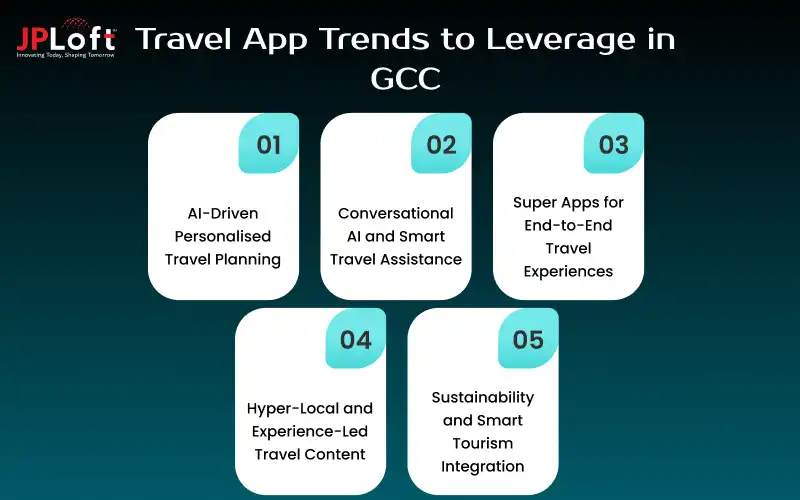
Below, we explore some of the top future travel app trends shaping how businesses design smarter, more personalised, and scalable digital travel experiences in the GCC.
1. AI-Driven Personalised Travel Planning
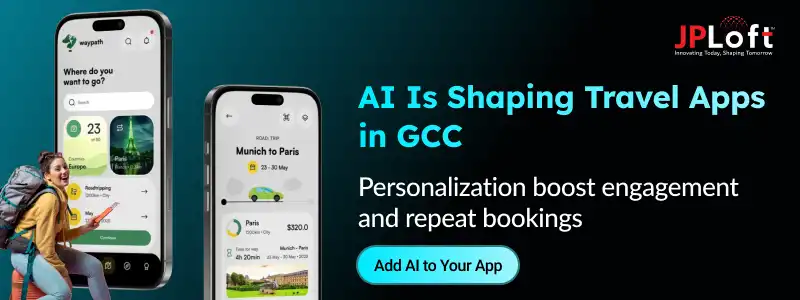
AI has moved from being an add-on to a core expectation among GCC travellers. Apps are increasingly using machine learning to analyse user behaviour, preferences, and travel history to deliver real-time recommendations for flights, hotels, and activities.
Advanced platforms are now focusing on how to build an AI itinerary app that dynamically adapts plans based on delays, weather, or user changes, making travel more seamless and stress-free.
2. Conversational AI and Smart Travel Assistance
Voice and chat-based interfaces are gaining strong traction in the GCC, where users value speed and convenience. AI-powered travel assistants help users search bookings, manage itineraries, and receive instant support without navigating multiple screens.
Understanding how to build an AI travel agent enables businesses to offer 24/7 assistance while reducing operational costs and improving user satisfaction.
3. Super Apps for End-to-End Travel Experiences
GCC users increasingly prefer all-in-one platforms that combine flights, hotels, experiences, payments, and loyalty programs under a single app. Inspired by regional digital ecosystems, travel super apps reduce fragmentation and boost engagement.
Exploring how to build a travel super app allows brands to consolidate services, increase user lifetime value, and dominate multiple touchpoints in the travel journey.
4. Hyper-Local and Experience-Led Travel Content
Beyond bookings, travellers now seek curated local experiences, events, and recommendations.
Travel apps in the GCC are evolving into discovery platforms that promote cultural tourism, entertainment hubs, and premium lifestyle experiences, aligning well with regional tourism visions.
5. Sustainability and Smart Tourism Integration
Governments across the GCC are promoting sustainable tourism through smart infrastructure and eco-conscious initiatives.
Travel apps that highlight low-impact travel options, smart mobility, and responsible tourism practices resonate strongly with modern travellers and align with long-term regional goals.
Why Partner with JPLoft to Build a Travel App in GCC?
Building a successful travel product in the GCC requires more than technical execution; it demands regional insight, compliance awareness, and future-ready architecture.
JPLoft brings together deep domain expertise and hands-on experience to help businesses confidently navigate the complexities of GCC travel ecosystems.
As a trusted travel app development company, JPLoft understands the nuances of GCC user behaviour, regulatory expectations, and performance benchmarks.
From AI-driven personalisation and secure payment integrations to scalable cloud infrastructure, every solution is built with long-term growth in mind.
Our team works closely with businesses at every stage, from ideation and design to development, testing, and post-launch optimisation.
Whether you’re launching a niche booking platform or a full-scale travel super app, JPLoft delivers custom, scalable solutions tailored to GCC markets, ensuring speed, security, and seamless user experiences.
Conclusion
The GCC has emerged as one of the most promising regions for digital travel innovation, driven by strong tourism growth, high mobile adoption, and government-backed smart tourism initiatives.
As traveller expectations evolve, businesses that invest in well-planned, secure, and scalable travel apps are better positioned to capture long-term value in this competitive market.
From understanding regional user behaviour and feature expectations to managing development costs, challenges, and future-ready trends, building a successful travel app in the GCC requires a strategic and informed approach.
When executed correctly, a travel app can become a powerful platform for engagement, loyalty, and sustained business growth.
By aligning technology, design, and innovation with the unique dynamics of GCC markets, businesses can turn travel ideas into impactful digital experiences that resonate with modern travellers today and in the years ahead.
FAQs
The development timeline typically ranges from 3 to 6 months, depending on the app’s complexity, features, and integrations. Basic apps with core booking features take less time, while AI-driven or super apps may require extended development and testing.
To create a travel app in the GCC, start by researching regional travel habits, plan key features, design an intuitive interface, select the right tech stack, integrate APIs and payment gateways, then test, launch, and maintain the app for scalability and compliance.
Apps offering all-in-one travel experiences, such as flight and hotel booking combined with itinerary management, perform well in the GCC. Personalisation, multi-language support, and secure payments are key factors driving user adoption.
The cost generally ranges between $20,000 and $120,000+ (approximately AED 73,000 to AED 441,000+), depending on features, design complexity, and technology stack. Advanced AI features and scalability requirements can increase the overall investment.
Yes. Travel apps must comply with local data protection laws, payment regulations, and tourism authority guidelines in each GCC country. Regulatory compliance is critical for smooth operations and user trust.

Kris Jacobs brings 20+ years of experience solving complex digital product challenges through strategic thinking and user-centric design. With deep exposure to on-demand services, entertainment, travel, and interactive platforms, she collaborates across teams to shape scalable, engaging solutions that align business goals with intuitive user experiences across evolving digital landscapes.



Share this blog