


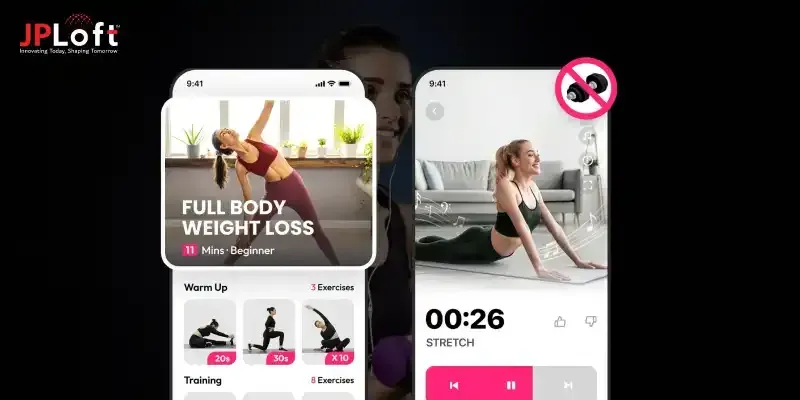
Key Takeaways
Researching user needs ensures your fitness app for women is relevant, engaging, and addresses diverse fitness goals effectively.
Following a structured roadmap with wireframing, prototyping, and testing ensures a scalable and intuitive app experience for users.
Personalized workouts, AI coaching, progress tracking, community support, and at-home routines are key to retaining users.
Development costs range from $20K to $150K+, with timelines of 3–9 months depending on complexity and features.
Subscriptions, in-app purchases, gamification, and AI-driven personalization drive revenue, while AI and at-home workouts lead current trends.
Partnering with an experienced team like JPLoft transforms your idea into a fully functional, engaging, and market-ready app for women.
Women today are redefining fitness, prioritizing not just workouts, but holistic health, mental wellness, flexibility, and lifestyle balance.
This shift has created massive opportunities for founders and businesses looking to build a fitness app for women that truly understands their needs.
From personalized workouts and cycle-based training to nutrition guidance, modern fitness apps for women offer comprehensive health support. They also focus on emotional wellness, making these apps digital companions rather than just workout tools.
If you’re wondering how to build a women's fitness app? Start by understanding your target audience, defining essential features, choosing the right technology, and planning a clear development roadmap.
In this blog, we will cover key aspects of how to build a fitness app for women, essential features, cost and timeline, monetization strategies, and popular women’s fitness app examples.
What is a Fitness App for Women?
A fitness app for women is a personalized digital wellness platform built specifically around women’s physical health, mental well-being, lifestyle routines, and fitness goals.
Unlike generic platforms, these apps focus on flexibility, hormonal balance, emotional wellness, nutrition planning, and adaptive training programs that fit real-life schedules.
They support everything from beginners starting their fitness journey to women managing long-term wellness goals, making them powerful tools for both health transformation and long-term engagement.
For entrepreneurs exploring how to start an online fitness business, this category offers strong market demand and sustainable growth opportunities.
How Does a Fitness App for Women Work?
-
User signs up and creates a personal health profile
-
Set fitness goals and daily routines
-
Receive customized workouts and wellness plans
-
Track progress, habits, and achievements
-
Get reminders, motivation, and coaching support
-
Evolve plans based on performance and feedback
Step-By-Step Process to Develop a Fitness App For Women
Developing a women-centric fitness platform requires strategic planning, deep user understanding, and strong technology alignment.
A structured roadmap ensures your product is scalable, user-friendly, and built for long-term engagement, helping you develop a fitness app for women that delivers real value, trust, and consistent user retention.
Following this step-by-step process will help you create a fitness app for women that is intuitive, secure, and future-ready.
Step 1: Market Research & Idea Validation
Understanding the market is the foundation of success. Validating your idea ensures you’re solving real problems, addressing genuine user pain points, and building a meaningful solution women truly need, not just another generic fitness product.
► Competitor & Market Analysis
Study existing fitness apps for women to evaluate their strengths, weaknesses, user expectations, and market positioning. This helps uncover unmet needs, clear differentiation opportunities, and strategic gaps for competitive advantage.
► User Persona Research
Define core user groups such as beginners, working professionals, mothers, and wellness-focused users. This clarity helps you develop a mobile app that feels personal, relevant, relatable, and emotionally aligned with real lifestyles.
► Business Model Validation
Test monetization options like subscriptions, freemium models, and in-app services. Early validation minimizes financial risk, improves revenue predictability, and builds a scalable, sustainable business foundation for long-term growth.
Step 2: Strategy Planning & Technical Foundation
This phase transforms your idea into a structured product vision supported by scalable architecture, technical clarity, and long-term planning that aligns business strategy, growth goals, and sustainable product development.
► Product Roadmap Creation
Define features, milestones, timelines, and scalability goals using a structured development framework that aligns business objectives with product execution, delivery phases, resource planning, and long-term product evolution strategy.
► Technology Planning
Choose architecture, frameworks, and integrations aligned with your growth vision. A strong technical foundation ensures performance, security, scalability, system stability, and long-term flexibility for evolving user and business needs.
► System Architecture Design
Define APIs, cloud services, and infrastructure using a scalable mobile app tech stack that supports real-time data processing, personalization engines, advanced analytics, system reliability, and future-ready digital expansion.
Step 3: UX Strategy, Wireframing & Prototyping
This stage focuses on transforming ideas into visual experiences that feel intuitive, smooth, and engaging for users. It ensures clarity, usability, emotional connection, and consistent interaction design across the entire experience.
► User Experience Planning
Create structured journeys that simplify navigation and reduce friction using professional mobile app design principles. These focus on accessibility and emotional connection, enabling inclusive, intuitive, human-centered digital user experiences across platforms.
► App Wireframes
Map user flows, screens, and interactions using structured mobile app wireframing to visualize the entire user journey before development begins. This ensures clarity, usability, alignment, and faster stakeholder approvals across teams.
► Interactive Prototypes
Build clickable models with mobile app prototyping to test usability, navigation flow, and user behavior before investing in full development. This ensures validation, continuous feedback loops, and risk reduction across product teams.
Step 4: Development & System Integration
This phase brings your app to life through scalable engineering and secure integrations. It ensures performance stability, system reliability, and seamless functionality. It also builds a strong technical foundation for future upgrades and long-term digital growth.
► Back-End Development
Build databases, APIs, and cloud systems that define your fitness app tech stack, supporting personalization, data tracking, and scalability. This ensures secure data handling, system reliability, real-time processing, and long-term infrastructure sustainability.
► Front-End Development
Create responsive interfaces that deliver smooth user experiences across devices. This ensures accessibility and consistency while maintaining design integrity, usability standards, performance optimization, and seamless interaction across multiple platforms.
► Team Execution
Collaborate with experts or hire dedicated developers to ensure faster delivery and better quality control. This improves technical reliability, workflow efficiency, reduces project risks, and ensures consistent execution across all development stages.
Step 5: Testing & Quality Assurance
Testing ensures your app performs reliably in real-world conditions and delivers a smooth user experience. It focuses on structured validation, performance optimization, risk reduction, and system stability. This creates consistent quality assurance across devices and environments.
► Functional Testing
Validate every feature through structured mobile app testing to ensure stability, performance, and reliability. This process identifies bugs, system errors, compatibility issues, and functional gaps across different devices and operating environments.
► Usability Testing
Observe real users interacting with the app to refine flows, improve navigation, and reduce friction. This enhances accessibility, clarity, emotional engagement, satisfaction levels, and overall user experience quality.
► Security & Performance Testing
Ensure data protection, load handling, and system stability to build long-term user trust. This includes vulnerability testing, performance benchmarking, risk mitigation strategies, and scalable infrastructure validation for sustained digital growth.
Step 6: Launch, Growth & Maintenance
Post-launch strategy is as important as development itself for long-term success. It drives market adoption, sustainable growth, and user retention. It also supports product evolution, operational stability, and a strong competitive digital presence in the fitness ecosystem.
► App Deployment
Launch across platforms with optimized onboarding, analytics integration, and performance tracking. This ensures stability, scalability, and visibility. It supports user acquisition, retention growth, and data-driven decision-making across global digital fitness ecosystems.
► User Feedback Loops
Collect insights to guide feature upgrades and product improvements through continuous analysis and behavioral tracking. This includes user research, feedback cycles, and data-driven optimization for long-term platform success, sustainability, user retention, and trust.
► Ongoing Support
Ensure long-term stability through structured mobile app maintenance, including updates, performance optimization, and security upgrades. This supports scalability, reliability, compliance standards, user trust, and continuous product improvement for sustainable growth.
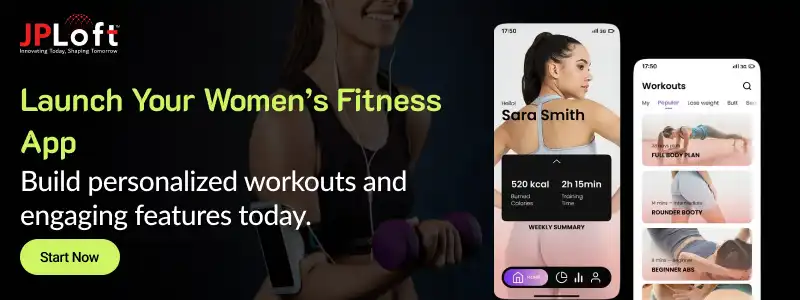
Essential Features of a Fitness App For Women
A successful women-focused wellness platform is built on personalization, intelligence, and emotional connection. These fitness app features ensure long-term engagement, retention, and trust while creating meaningful daily value for users.
1. Personalized Workout & Wellness Plans
Customized routines based on goals, lifestyle, and fitness levels help users stay consistent. Intelligent planning improves motivation, builds healthy habits, and ensures the fitness app for women feels supportive, adaptive, and truly personal.
2. Smart AI-Powered Coaching System
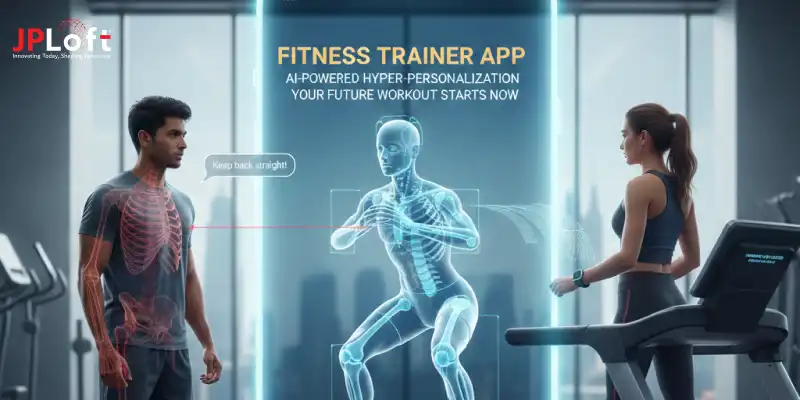
An AI fitness app for women delivers adaptive workouts, real-time feedback, and smart recommendations. Leveraging AI in fitness apps allows the system to learn user patterns, predict wellness needs, and continuously personalize routines for better results.
3. Nutrition & Lifestyle Management
Integrated meal planning, hydration tracking, and wellness routines support holistic health. These health and fitness apps for women go beyond workouts by promoting balanced living, sustainable habits, and long-term physical and emotional well-being.
4. Home-Based Training Experiences
Designed for flexibility, at-home fitness apps for women offer guided workouts, virtual coaching, and space-efficient routines. Users can train anytime, anywhere, without dependence on gyms, equipment, or rigid schedules.
5. Community & Motivation Ecosystem
Social challenges, peer groups, and accountability systems build emotional engagement. These mobile app features improve consistency, boost confidence, and create belonging, helping women stay committed to long-term fitness goals.
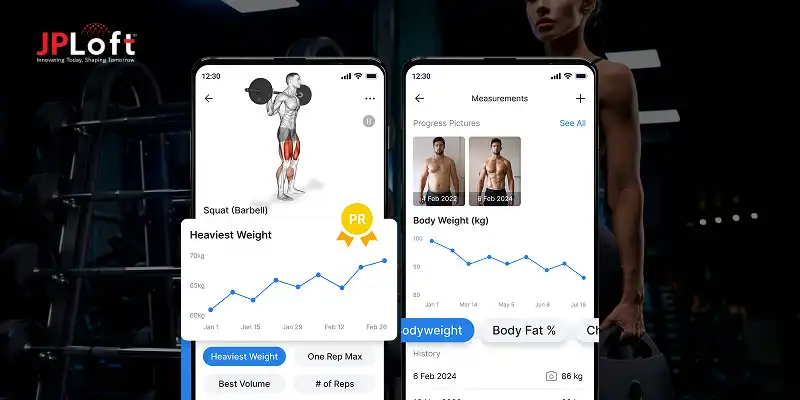
6. Intelligent Data & Progress Tracking
Smart analytics track habits, performance, and wellness patterns. Platforms provide predictive insights, behavioral analysis, and personalized progress recommendations that adapt over time to support continuous improvement and engagement.
7. Period & Ovulation Tracking
Tracking menstrual cycles and ovulation allows personalized workout and wellness guidance. Businesses can develop a period tracking app feature within their fitness solution to support women’s holistic health effectively.
Cost & Timeline to Build a Fitness App For Women
The cost to build a fitness app for women typically ranges between $20K to $150K+, depending on multiple factors. These include feature complexity, AI integration, personalization depth, platform support (iOS/Android), UI/UX quality, security layers, and third-party integrations like wearables, analytics, and payment systems.
When businesses plan their investment, understanding the cost to build a fitness app helps in budgeting effectively for AI-powered coaching, nutrition tracking, progress analytics, and scalable architecture.
Accurate cost estimation ensures resources are allocated for long-term maintenance, security, and future expansion.
In practical terms, a basic fitness app for women with standard workout plans, simple tracking, and limited personalization usually falls in the $20K–$40K range.
Mid-level platforms with AI personalization, nutrition planning, progress analytics, and community features typically range between $40K–$80K.
On the other hand, advanced solutions with AI-driven coaching, predictive health insights, wearable integration, and enterprise-grade security can exceed $100K–$150K+.
The development timeline varies with complexity and testing depth. When assessing how long does it take to build a mobile app, most fitness platforms require 3–5 months for core features, while advanced, scalable solutions may take 6–9 months or more to ensure performance, security, and long-term reliability.
Cost & Timeline Overview
|
App Type |
Estimated Cost |
Timeline |
|
Basic Fitness App |
$20K – $40K |
3–4 months |
|
Mid-Level Fitness App |
$40K – $80K |
4–6 months |
|
Advanced AI Fitness App |
$100K – $150K+ |
6–9+ months |
Challenges in Developing a Fitness App For Women and How to Solve Them
Building a fitness app for women involves unique hurdles. Understanding fitness app development challenges early helps ensure personalization, AI integration, security, engagement, and scalable solutions for long-term app success.
Challenge 1: Personalization and Adaptive Workouts
Users expect routines tailored to goals, fitness levels, and schedules. Developing adaptive algorithms that deliver meaningful workouts is technically challenging, requiring AI, analytics, and careful user-centric design to ensure engagement.
Solution: Implement AI-powered coaching systems that adjust workouts based on real-time data. Continuous monitoring of user behavior allows adaptive, engaging, and personalized routines, increasing retention and long-term satisfaction across diverse audiences.
Challenge 2: Ensuring Data Security and Privacy
Fitness apps for women handle sensitive health, location, and biometric data. Failing to protect this information risks breaches, compliance issues, and user distrust, which can negatively impact adoption and retention significantly.
Solution: Apply mobile app security best practices, including encryption, secure authentication, GDPR-compliant storage, and access controls. Regular security audits and risk assessments ensure data protection and reinforce user trust effectively.
Challenge 3: Integrating AI and Smart Features
Incorporating AI features like predictive coaching, nutrition guidance, or performance tracking is technically complex. Poor integration can result in lag, incorrect recommendations, or low user satisfaction.
Solution: Leverage a robust tech stack and iterative testing for AI features. With expert AI development services, predictive coaching, data analytics, and smart recommendations can be deployed effectively, enhancing personalization and improving overall user experience consistently.
Challenge 4: Retaining User Engagement
Maintaining consistent activity over time is difficult. Users often lose motivation, skip workouts, or abandon apps, reducing lifetime value and return on investment for the platform.
Solution: Gamification, community challenges, progress tracking, and personalized reminders create engagement. Reward systems, social features, and motivational content encourage daily interaction and help users remain consistent with their fitness goals.
Challenge 5: Cross-Platform Compatibility & Performance
Ensuring smooth functionality across iOS, Android, and multiple devices while managing updates is challenging. Poor UX or crashes can result in low ratings, uninstalls, and reduced adoption rates.
Solution: Use responsive design frameworks, cloud infrastructure, and optimized code. Regular QA and iterative testing ensure stability, speed, and consistent performance across devices, providing users with a seamless and reliable experience.
Popular Women's Fitness App Examples To Consider
Exploring successful women’s fitness apps helps you understand effective design, features, and engagement strategies. Reviewing top apps offers insights, inspiration, and practical fitness app ideas for building your own solution.
1. FitOn
FitOn offers free workouts led by celebrity trainers, including cardio, strength, and yoga. Its community challenges motivate daily activity, making it one of the fitness apps for women free that combines fun, guidance, and accountability.
2. Nike Training Club
Nike Training Club provides structured workouts, personalized routines, and progress tracking. With extensive free content and expert guidance, it remains the best fitness app for women, suitable for beginners and advanced fitness enthusiasts alike.
3. SWEAT
SWEAT is designed for women seeking guided programs, including post-pregnancy fitness and high-intensity training. Its app delivers step-by-step coaching, meal plans, and progress analytics, making it a top fitness app for women choice globally.
4. MyFitnessPal
MyFitnessPal combines nutrition tracking, calorie management, and exercise logging into one seamless platform. Its intuitive design supports habit building and balanced wellness. Understanding the cost to develop an app like MyFitnessPal helps businesses plan scalable fitness solutions strategically.
5. 8fit
8fit combines personalized workouts with meal planning, helping women achieve goals efficiently. Its structured programs, reminders, and adaptive routines make it one of the most popular fitness apps for women globally.
How Women’s Fitness Apps Make Money?
Understanding how do fitness apps make money is key for developers. Exploring revenue strategies helps ensure long-term sustainability while offering users valuable, engaging experiences in fitness apps for women.
[A] Subscription Model
Many fitness apps for women offer monthly or yearly subscription plans for premium content, exclusive workouts, or advanced tracking features.
Subscriptions provide predictable revenue while giving users enhanced, ad-free, personalized experiences.
[B] Freemium Model
Freemium platforms provide free workouts while charging for advanced content or premium features.
This model attracts users, builds trust, and gradually converts free users into paying subscribers, making it a top mobile app monetization strategy.
[C] In-App Purchases
Health and fitness apps for women often sell workout plans, nutrition guides, or virtual coaching sessions directly within the app.
In-app purchases offer flexible monetization while consistently enhancing user value and engagement.
[D] Advertisements & Sponsorships
Some apps display relevant ads or partner with brands for sponsorships.
Carefully integrated, non-intrusive advertising generates revenue without harming the user experience, increasing engagement while keeping the app credible for long-term use.
[E] Affiliate Marketing & Partnerships
Apps may earn commissions through fitness equipment, wellness products, or partner services.
Affiliate marketing complements subscriptions and in-app purchases, creating diversified revenue streams for developers and additional benefits for users.
Key Trends in Women’s Fitness Apps
Following emerging fitness app trends helps developers stay competitive. Popular trends shape fitness apps for women, including AI integration, at-home workout solutions, personalization, and gamification, creating more engaging, effective, and user-friendly experiences across platforms.
1. AI-Powered Personalized Workouts
AI fitness app for women is rapidly rising. Intelligent algorithms provide adaptive workouts, predictive coaching, and real-time progress insights.
Personalization boosts engagement, enhances results, and ensures every user gets a tailored fitness journey efficiently.
2. At-Home Fitness Integration
At-home fitness apps for women are growing due to convenience and flexibility.
They offer live classes, equipment-free routines, and interactive features, enabling businesses to build an AI avatar fitness trainer app that supports consistent home workouts.
3. Gamification and Social Engagement
Many fitness apps for women include challenges, badges, leaderboards, and communities.
Inspired by how AR VR is gamifying the fitness industry, these features boost motivation, social sharing, and long-term engagement through friendly competition.
4. Wearable Device Connectivity
Apps increasingly connect with smartwatches, fitness trackers, and health devices. Data-driven insights improve workout precision, track progress, and personalize experiences.
Integration enhances motivation, user retention, and provides a holistic view of overall health metrics.
5. Subscription and Premium Model Trends
Premium subscriptions offering personalized programs, exclusive workouts, or nutrition guides are popular.
Tiered offerings balance free access and paid content, maximizing adoption while ensuring revenue sustainability for developers of fitness apps for women.

Why Choose JPLoft to Build Your Fitness App For Women?
Building a fitness app for women requires a strategic mix of innovative technology, intuitive design, and a deep understanding of women’s health and fitness needs to deliver an engaging, effective, and user-friendly experience.
The right development partner ensures your idea becomes a fully functional, market-ready application that stands out in the competitive health and fitness app landscape while attracting and retaining loyal users.
As a leading fitness app development company, JPLoft brings extensive experience in developing personalized workout apps, AI-powered coaching solutions, and scalable fitness platforms with robust analytics, gamification, and monetization features.
Our skilled team of developers, designers, and strategists collaborates closely with you throughout the development lifecycle, from concept and UI/UX design to backend development, deployment, and post-launch support.
With JPLoft as your trusted partner, transforming your fitness app idea into a successful, revenue-generating product tailored for women becomes a seamless and reliable reality.
Conclusion
Creating a fitness app for women requires a thoughtful blend of design, personalization, and advanced technology to meet diverse user needs.
From AI-powered coaching to at-home workout solutions, opportunities for innovation are abundant.
Focusing on user engagement, seamless functionality, and robust security ensures your app delivers meaningful experiences.
Prioritizing scalable architecture and intuitive design allows your solution to adapt as user demands grow.
By understanding development processes, monetization options, and trending features, businesses can craft a fitness app for women that stands out.
Also, it supports healthy lifestyles and achieves long-term adoption in the competitive health and fitness app market.
FAQs
A great fitness app for women should offer personalized workouts, progress tracking, nutrition guidance, AI coaching, community support, and at-home exercise options to cater to different fitness levels and goals.
Development costs typically range from $20K to $150K+, depending on app complexity, platforms, features, integrations, and design requirements. Advanced apps with AI and premium features are at the higher end.
Timelines vary based on features and complexity. A basic app may take 3–4 months, while AI-powered, feature-rich apps often require 6–9 months for design, development, testing, and deployment.
Yes. AI-powered apps analyze user data, habits, and progress to create adaptive workouts, ensuring personalized recommendations that improve results, engagement, and long-term adherence to fitness routines.
Absolutely. Many apps offer free workouts, at-home routines, and basic tracking features. Users can access valuable fitness guidance without subscriptions, though premium features may require paid upgrades.

Yashwant Sharma is the CTO of JPLoft, with 18+ years of experience in software engineering, solution architecture, and digital innovation. His expertise spans scalable application development, AI-powered systems, RAG solutions, cross-platform development, software maintenance, and emerging mobility technologies such as EV and EV-charging platforms. He works across complex technical environments to help businesses build secure, maintainable, and high-performing digital products for industries including education, fitness, aviation, and healthcare.


Share this blog