


Key Takeaways
AI avatar fitness coaching apps are revolutionizing digital fitness, offering personalized, scalable, and engaging virtual coaching for all users.
A well-defined development process, from planning and UX design to AI training and testing, is essential for building a stable, high-performing fitness application.
Smart feature selection, including AI personalization, avatar coaching, and progress tracking, directly impacts user engagement and long-term app success.
Development costs usually fall between $20k and $120k+, depending on app complexity, AI depth, platform choice, and scalability requirements.
Key challenges such as AI accuracy, data handling, performance optimization, and compliance must be addressed early to avoid technical and operational risks.
Revenue models like subscriptions, in-app purchases, premium programs, and brand partnerships enable fitness apps to scale profitably over time.
Choosing JPLoft as your technological partner helps ensure expert AI implementation, smooth execution, and future-ready fitness solutions.
The fitness industry is undergoing a powerful transformation, driven by artificial intelligence and immersive digital experiences.
Today’s users no longer want generic workout plans; they expect personalized guidance, real-time feedback, and motivation that feels human.
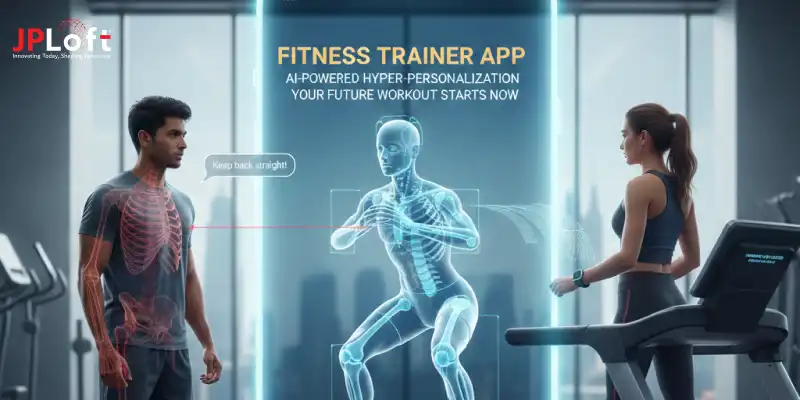
This is where an AI Avatar Fitness Trainer App changes the game. By combining AI, motion tracking, and lifelike avatars, businesses can deliver training experiences that closely resemble working with a real coach, anytime, anywhere.
An AI personal trainer app doesn’t just count reps; it analyzes posture, adapts routines, and evolves with user progress.
As demand rises for smarter, more engaging wellness solutions, entrepreneurs and fitness brands are actively exploring how to launch scalable, AI-powered products.
Understanding how to build an AI avatar–driven solution is now a strategic advantage, not just a technical choice.
This guide breaks down the entire journey, from concept to execution, so you can confidently plan, design, and build a future-ready AI Fitness Trainer App that stands out in a competitive market.
What is an AI Avatar Fitness Trainer App?
An AI Avatar Fitness Trainer App is a smart fitness solution that combines artificial intelligence, motion analysis, and realistic digital avatars to deliver personalized workout guidance.
For founders researching how to build an AI Avatar Fitness Trainer App, this technology represents a shift from static workout libraries to intelligent, adaptive coaching experiences.
Unlike a basic AI workout app, this platform uses computer vision and machine learning to observe user movements, correct posture in real time, and adjust training plans dynamically.
Acting as a virtual coach, it replicates the experience of a one-on-one trainer while remaining scalable and accessible.
For entrepreneurs exploring how to start an online fitness business, such apps open new opportunities by blending automation with highly engaging, human-like coaching experiences.
How an AI Avatar Fitness Trainer App Works?
An AI Avatar Fitness Coaching App operates through a combination of intelligent systems working together to deliver real-time, personalized fitness coaching.
Understanding this workflow is a critical step when evaluating how to create an AI Avatar Fitness Trainer App that feels responsive, accurate, and genuinely human-like.
Here’s a simplified breakdown of how it functions:
1. User Data Collection & Profiling
The app gathers basic inputs such as age, fitness goals, body metrics, workout history, and preferences. This foundation allows the AI Fitness Trainer App to tailor routines instead of offering generic workout plans.
2. Motion Tracking & Pose Detection
Using computer vision and camera-based tracking, the system analyzes user movements during workouts. This is where AI in fitness apps plays a critical role, detecting posture, angles, and form accuracy in real time.
3. AI-Powered Workout Analysis
Machine learning models evaluate performance data to identify mistakes, fatigue patterns, and improvement areas. Compared to a standard virtual personal trainer app, this approach enables continuous learning and adaptive coaching.
4. Avatar-Based Real-Time Coaching
A lifelike digital avatar demonstrates exercises, provides voice or visual feedback, and corrects form instantly. This creates an engaging, human-like training experience.
5. Progress Tracking & Smart Recommendations
The app tracks progress over time and dynamically adjusts workout intensity, recovery plans, and goals. This makes it feel like a truly evolving AI-based fitness coaching app.
Key Market Statistics of an AI Avatar Fitness Trainer App
The rapid convergence of AI, virtual coaching, and personalized wellness is accelerating the global adoption of intelligent fitness solutions.
-
The global fitness app market is projected to grow from USD 17.71 billion in 2025 to USD 45.03 billion by 2029, fueled by rising demand for personalization, virtual training, and engagement-driven health experiences.
-
The AI-powered health and fitness products market is expected to expand from USD 10.23 billion in 2025 to over USD 25.45 billion by 2030, growing at an estimated 20% CAGR, reflecting strong adoption of intelligent coaching and automated fitness personalization.
These numbers clearly reflect broader fitness app trends, where users increasingly favor smart, adaptive, and immersive workout experiences over static programs.
As the market matures, understanding how to build an AI fitness app becomes critical, leading directly into the step-by-step process of developing an AI-driven, avatar-based fitness platform.
Step-by-Step Process to Develop an AI Avatar Fitness Trainer App
When you build an AI avatar fitness trainer app, it’s not just about integrating workouts; it’s about designing an intelligent ecosystem that understands users, adapts in real time, and delivers a human-like training experience.
This step-by-step process explains how to develop an AI avatar fitness trainer app in a structured, scalable, and future-ready way, while ensuring performance, accuracy, and engagement from day one.
Step 1: Ideation, Market Research, and Product Vision
This foundational step defines what your AI Avatar Fitness Trainer App will truly stand for. Clear positioning at this stage avoids costly pivots later and ensures the product solves a real fitness problem.
► Understand User Needs & Fitness Goals
Identify your target audience: beginners, athletes, home workout users, or corporate wellness clients. Understanding goals such as weight loss, strength training, or rehab allows you to design an effective AI personal trainer app experience.
► Validate the Business Concept
Market research helps assess competition, pricing models, and differentiation. Many founders begin by learning how to create a fitness app that blends personalization, AI intelligence, and scalable delivery.
► Define Core Value Proposition
Clarify what differentiates your app, such as real-time form correction, adaptive AI avatars, or intelligent insights. As this clarity directs all future product, design, and technology decisions with purpose.
Step 2: App Architecture & Technology Planning
Once the concept is validated, the next step focuses on designing a scalable technical foundation. It should seamlessly support AI, avatars, and real-time interactions while ensuring stability, speed, and performance without bottlenecks or failures.
► Design System Architecture
Decide whether your app will be cloud-native, hybrid, or on-device AI–driven. This impacts scalability, latency, and operational costs for the AI Avatar Fitness Trainer App Development lifecycle.
► Choose the Right Fitness App Tech Stack
Selecting the right Fitness app tech stack is critical. AI models, backend services, mobile frameworks, and cloud infrastructure must work together seamlessly to handle video processing, analytics, and personalization.
► Plan Data Flow & Security
Workout videos, biometric data, and user profiles must be handled securely. Planning early ensures regulatory compliance, protects user privacy, and builds lasting trust throughout the AI Fitness Trainer App experience.
Step 3: AI & Machine Learning Model Development
This intelligence layer converts static workout content into a responsive digital coach. It uses AI and machine learning to dynamically adapt guidance, feedback, and training experiences for every individual user globally.
Partnering with a reliable machine learning development company ensures these models are designed, trained, and optimized to deliver precise, scalable results.
► User Profiling & Personalization Models
Machine learning algorithms analyze user data to generate adaptive routines. This enables personalized progression instead of generic plans, elevating the AI-based fitness coaching app experience.
► Pose Detection & Movement Analysis
Computer vision models analyze posture, joint angles, and repetitions in real time. This enables precise corrections, actionable performance insights, and movement accuracy that differentiates your app from basic AI workout solutions.
► Continuous Learning & Model Training
AI models continuously improve using anonymized performance data. This creates a learning feedback loop that adapts recommendations, refines coaching accuracy, and evolves the app alongside changing user fitness levels over time.
Step 4: Avatar Creation & 3D Experience Design
Avatars represent the app’s identity and strongly influence user engagement, emotional connection, trust, and motivation. They make fitness guidance feel personal, interactive, and approachable throughout every workout experience for all users.
► 3D Avatar Modeling
High-quality avatars accurately demonstrate exercises, while realistic design enhances credibility, relatability, and immersion. This helps the AI Avatar Fitness Coaching App feel more human, intuitive, and engaging for users worldwide.
► Avatar Animation & Synchronization
Avatar animations must align with real-time AI feedback. This ensures movement analysis and visual responses stay synchronized, delivering smooth, natural coaching interactions that feel responsive, accurate, and lifelike during workout sessions.
► Voice & Interaction Layer
Voice guidance, expressions, and conversational cues boost motivation and clarity. They create an immersive personal trainer app environment that feels supportive, interactive, and engaging while encouraging consistency and long-term fitness commitment.
Step 5: App Development & Integration
This step unifies AI intelligence, interactive avatars, and intuitive UI into a functional application. It enables users to engage seamlessly with personalized workouts, real-time feedback, and immersive fitness experiences.
► Frontend & Mobile App Development
Develop intuitive interfaces that support camera-based workouts, dashboards, and avatar interactions. This phase defines the user experience of the AI Avatar Fitness Trainer Mobile App Development process.
► Backend & API Integration
Backend services handle AI processing, user data, subscriptions, and analytics. A scalable architecture ensures reliability, security, and consistent performance as user demand and platform complexity grow over time.
► Team & Execution Strategy
To speed up delivery and maintain quality, many businesses hire dedicated developers with expertise in AI, computer vision, and fitness platforms. A focused development team helps streamline AI model training, motion tracking accuracy, and feature rollouts, ensuring faster execution without compromising performance or user experience.
Step 6: Testing, Deployment, and Optimization
Before launch, the app must undergo thorough mobile app testing and refinement to guarantee accuracy, stability, reliability, and user trust. This ensures every feature, from AI intelligence to avatar interactions, performs flawlessly across all devices and scenarios.
► AI Accuracy & Performance Testing
Test pose detection accuracy across different devices, environments, and lighting conditions. Maintaining high precision is crucial for credibility, user confidence, and delivering a reliable AI Fitness Trainer App experience.
► User Experience & Load Testing
Simulate real-world app usage to uncover performance bottlenecks. Ensuring smooth avatar interactions and fast feedback loops enhances user engagement, satisfaction, and long-term retention within the AI fitness training experience.
► Post-Launch Optimization
After deployment, continuous updates and mobile app maintenance services improve AI models, avatar behavior, and app features. These ongoing improvements keep the platform competitive, user-focused, and future-ready while adapting to evolving fitness trends and user expectations.
Essential Features of an AI Avatar Fitness Trainer App
To create an AI Avatar Fitness Trainer app, it’s essential to integrate features that combine personalization, engagement, and advanced AI capabilities.
These features not only enhance user experience but also differentiate your app from standard AI workout apps. Here are the key fitness app features to include in your app:
1. Personalized Workout Plans
AI algorithms analyze user data, goals, and progress to generate custom routines. Unlike generic apps, a virtual personal trainer app adapts exercises based on performance, ensuring every user receives the optimal challenge and progression.
2. Real-Time Form Correction & Pose Analysis
Using computer vision libraries like OpenCV or MediaPipe, the app monitors posture and movement accuracy. The avatar provides instant feedback, helping users avoid injuries and maximize workout efficiency, key for any AI-based fitness coaching app.
3. 3D Avatar Demonstrations
Interactive avatars demonstrate exercises in 3D, making routines visually clear and engaging. Avatars can be customized for different body types, fitness levels, and coaching styles, elevating the AI Avatar Fitness Trainer App experience.
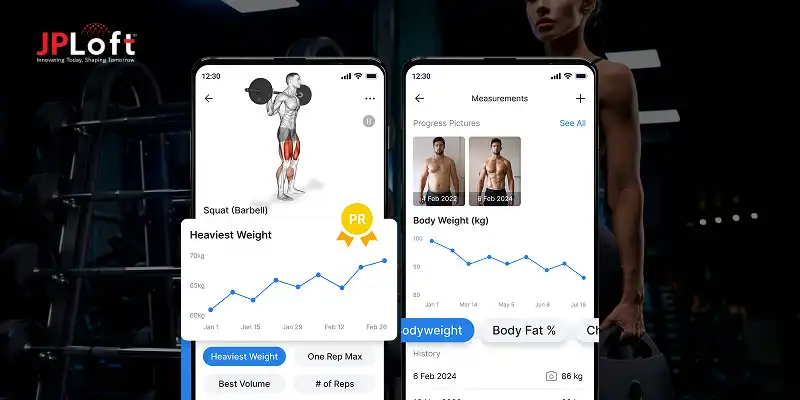
4. Progress Tracking & Analytics
Comprehensive dashboards track reps, calories, strength improvements, and more. Users can view trends, set milestones, and receive AI-driven recommendations, ensuring continuous motivation within an AI Fitness Trainer App.
5. Gamification & Motivation Tools
Features like achievement badges, leaderboards, and challenges boost user engagement. Gamified elements make workouts enjoyable and encourage adherence to routines, creating a compelling experience for an AI personal trainer app.
6. Diet & Lifestyle Integration
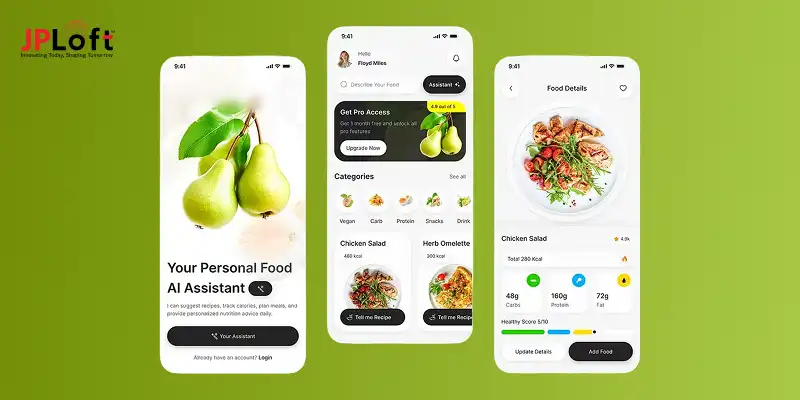
Advanced apps integrate nutrition guidance and lifestyle tracking, providing holistic coaching. AI analyzes diet alongside workouts to offer personalized recommendations, enhancing the AI Avatar Fitness Coaching App value proposition.
Cost & Timeline to Build an AI Avatar Fitness Trainer App
Developing an AI Avatar Fitness Trainer App requires careful planning, as costs vary depending on features, AI complexity, and platform support.
For entrepreneurs evaluating their budget, understanding the cost to build a fitness app is critical for realistic planning.
On average, the AI Avatar Fitness Trainer App Development Cost ranges between $30,000 to $250,000+, depending on whether you are building a basic MVP or a fully-featured enterprise-grade solution.
A simple AI workout app with essential features, personalized routines, 3D avatar demonstration, and basic analytics can start around $30K–$60K, taking roughly 3–4 months for development.
While the cost to build an AI avatar fitness trainer App with advanced functionality like AI-based motion tracking, adaptive avatars, diet integration, and gamification may range from $120K–$250K+ and take 6–9 months to develop.
The timeline also depends on the team size, integration of third-party AI frameworks or 3D modelling tools, and backend infrastructure.
Factoring in testing, deployment, and post-launch optimization ensures a robust AI Avatar Fitness Trainer Mobile App Development experience for users.
Cost & Timeline Overview Table
|
App Type |
Key Features |
Estimated Cost |
Development Timeline |
|
Basic AI Workout App |
Personalized routines, 3D avatar demo, basic analytics |
$30K–$60K |
3–4 months |
|
Intermediate AI Trainer App |
Motion tracking, adaptive avatar, gamification |
$70K–$120K |
4–6 months |
|
Advanced Enterprise App |
Full AI coaching, diet/lifestyle integration, multi-avatar support |
$120K–$250K+ |
6–9 months |
Challenges in Developing an AI Avatar Fitness Trainer App
When businesses make an AI Avatar Fitness Trainer app, they often face a mix of technical, operational, and user experience challenges. Tackling these early ensures a smoother development cycle and stronger user adoption.
Here are the key fitness app development challenges and practical solutions:
Challenge 1. Complex AI & Machine Learning Integration
Integrating AI for real-time pose detection, personalized workout plans, and responsive avatars requires expertise from a reliable AI app development company. Using frameworks like TensorFlow, PyTorch, and MediaPipe ensures accuracy and reliability.
Solution: Partner with experienced AI developers and run small-scale pilot models before full integration. This reduces errors and ensures accurate feedback in your AI-based fitness coaching app.
Challenge 2. Avatar Realism and 3D Modeling Challenges
Creating lifelike avatars that move naturally and mimic proper exercise form is resource-intensive. Poor animations can reduce user engagement in a virtual personal trainer app.
Solution: Use professional 3D modeling tools such as Blender or Unity, combined with motion capture libraries, to create smooth, lifelike avatar movements that enhance realism and user engagement.
Challenge 3. User Data Security and Privacy
AI apps handle sensitive user data such as body metrics, health information, and activity logs. Security breaches can lead to loss of trust and regulatory penalties.
Solution: Implement end-to-end encryption, secure cloud storage, and GDPR/CCPA compliance measures. Regular security audits safeguard the AI Fitness Trainer App ecosystem.
Challenge 4. High Development Cost and Timeline
Advanced AI, motion tracking, and avatar implementation significantly increase development complexity and costs, potentially exceeding budgets without careful planning, phased rollout, and MVP-first strategies.
Solution: Adopt phased development by launching an MVP first, then gradually adding advanced features. This strategy balances cost, encourages innovation, and validates market demand before full-scale implementation.
Challenge 5. Ensuring Cross-Platform Compatibility
Users expect seamless experiences on iOS, Android, and the web. Inconsistent performance or unoptimized AI models can harm retention and reduce satisfaction in an AI Avatar Fitness Trainer App.
Solution: Use cross-platform frameworks and perform thorough testing on all devices. Optimize AI models for mobile performance to ensure smooth, responsive, and consistent user experiences across platforms.
Challenge 6. Keeping Users Motivated and Engaged
Even with AI personalization, users may lose interest without continuous engagement. Gamification, progress tracking, and social interactions are essential to maintain motivation and long-term app usage.
Solution: Incorporate gamification, real-time feedback, progress tracking, and social sharing features to keep users motivated, engaged, and committed to long-term usage of your AI personal trainer app.
How Do AI Avatar Fitness Trainer Apps Make Money?
Monetization plays a critical role in the long-term success of an AI Avatar Fitness Trainer App. Beyond delivering personalized workouts, these apps are designed to generate sustainable revenue through multiple proven models.
Understanding how do fitness apps make money helps founders align product features with business goals from the start.
1. Subscription-Based Plans
Monthly or annual subscriptions remain the most reliable revenue stream. Users pay for premium access to advanced AI coaching, personalized workout plans, real-time posture correction, and avatar-led sessions, making this model ideal for scaling an AI-based fitness coaching app globally.
2. Freemium with In-App Purchases
A freemium approach lets users access core features for free, while charging for advanced workouts, custom avatars, nutrition plans, or insights. This model suits an AI workout app by lowering entry barriers, boosting adoption, and encouraging gradual upgrades over time naturally.
3. Personalized Coaching & Add-On Services
Users can pay extra for one-on-one virtual coaching, specialized training programs, or recovery-focused plans. These high-value add-ons elevate the virtual personal trainer app experience and significantly increase average revenue per user through premium personalization and long-term customer loyalty and retention.
4. Corporate Wellness & B2B Licensing
Enterprises and gyms license AI fitness platforms for employee wellness or client engagement. White-labeling your AI Fitness Trainer App for businesses creates predictable B2B revenue, larger contracts, long-term partnerships, and scalable distribution across multiple organizations with lower acquisition costs overall.
5. Partnerships, Ads, and Affiliate Revenue
Strategic partnerships with fitness brands, wearable companies, or nutrition providers generate additional income streams. Sponsored content, referrals, and affiliate programs perform best when integrated naturally, preserving trust while monetizing the AI personal trainer app experience without disrupting user journeys consistently.
Why Choose JPLoft to Build Your AI Avatar Fitness Trainer App?
Building an AI-powered avatar fitness trainer isn’t just about code; it’s about combining AI intelligence, fitness domain expertise, and scalable product thinking. That’s where JPLoft stands out as a trusted fitness app development company.
At JPLoft, we specialize in crafting AI avatar fitness trainer apps that feel human, adaptive, and results-driven. Our team deeply understands how AI models, motion intelligence, and personalized workout engines come together to deliver real user engagement, not generic fitness routines.
From smart posture correction to behavior-based workout recommendations, every feature is built to enhance long-term user retention.
We follow a future-ready development approach, ensuring your AI fitness avatar app is scalable, secure, and optimized for performance from day one. Whether you’re launching an MVP or a full-scale product, our agile process ensures faster go-to-market without compromising quality.
What truly differentiates us is our product-first mindset. We don’t just help you build an app; we help you build a profitable fitness product, aligning features with monetization models, user psychology, and market demand.
If you’re planning to develop an AI avatar fitness trainer app that competes with global leaders, JPLoft brings the right blend of AI expertise, fitness innovation, and proven delivery experience to make it happen.
Conclusion
AI avatar fitness trainer apps are redefining how users experience personalized fitness, making workouts smarter, more engaging, and far more consistent than traditional digital programs. By blending real-time guidance, adaptive training logic, and immersive avatar-led experiences, these apps bridge the gap between human trainers and scalable technology.
However, success in this space depends on more than just adopting AI. It requires thoughtful planning, user-centric design, accurate personalization, and a clear monetization roadmap. When executed right, an AI-powered fitness solution can deliver measurable results for users while building a strong, sustainable business for owners.
As demand for intelligent, interactive fitness experiences continues to rise, now is the right time to invest in an AI avatar fitness trainer app that’s built for performance, scalability, and long-term growth.
FAQs
An AI avatar fitness trainer app uses artificial intelligence and digital avatars to guide users through workouts, correct posture, adapt routines in real time, and deliver a personalized training experience without a human trainer being physically present.
When trained on quality fitness data and combined with motion tracking or user inputs, AI avatar trainers can deliver highly accurate workout guidance, posture feedback, and progress-based recommendations that improve over time with continued usage.
Yes. These apps are designed to adapt dynamically, offering beginner-friendly routines, intermediate progressions, and advanced training plans based on user goals, performance data, and consistency.
Absolutely. Gyms, fitness studios, and wellness brands use AI avatar fitness apps to extend their services digitally, engage remote users, and create new revenue streams through subscriptions and premium training programs.
Development timelines vary based on features and complexity, but a full-scale AI avatar fitness trainer app typically takes several months, covering planning, AI model training, avatar design, testing, and deployment.

Yashwant Sharma is the CTO of JPLoft, with 18+ years of experience in software engineering, solution architecture, and digital innovation. His expertise spans scalable application development, AI-powered systems, RAG solutions, cross-platform development, software maintenance, and emerging mobility technologies such as EV and EV-charging platforms. He works across complex technical environments to help businesses build secure, maintainable, and high-performing digital products for industries including education, fitness, aviation, and healthcare.


Share this blog