


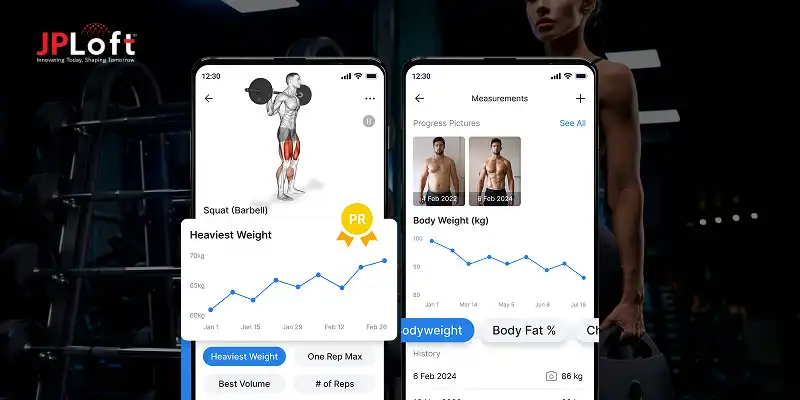
Key Takeaways:
Building a Hevy-like app needs a clear strategy, user-focused design, and scalable technology for long-term growth and market competitiveness.
Strong market demand and personalization make fitness apps high-potential digital products with sustainable engagement and revenue opportunities.
The cost to develop a Hevy-like app ranges between $20k–$120k+, based on features, platforms, and scalability needs.
Smart monetization models ensure steady revenue without compromising user experience or accessibility.
Trends like personalization, wearables, and data-driven insights are shaping the future of fitness apps.
JPLoft helps brands in Hevy clone app development with scalable solutions, faster delivery, and long-term growth focus.
The fitness app market is booming, and platforms like Hevy are leading the charge by combining workout tracking, analytics, and community-driven motivation into one seamless experience.
For fitness enthusiasts, these apps simplify goal-setting, progress tracking, and personalized coaching, all from the convenience of a smartphone.
For entrepreneurs and startups, this growing demand offers a golden opportunity to create a fitness app like Hevy that captures both engagement and revenue.
To develop an app like Hevy, you need to know about the market, choose features accordingly, and make sure that you offer something different to offer to users.
This guide covers everything you need to know, development steps, essential features, technology stack, cost factors, monetization strategies, and emerging trends, giving you a clear roadmap to build a scalable and successful fitness app.
What Is Hevy and How Does the App Work?
Hevy is a modern fitness app designed to make workout tracking, planning, and progress monitoring effortless. For entrepreneurs looking to start an online fitness business, Hevy serves as a perfect case study, blending personalization with social engagement.
Unlike generic fitness apps, it focuses on personalized routines, social motivation, and detailed analytics, catering to both beginners and seasoned athletes. Its intuitive interface, combined with smart tracking, ensures users stay engaged, motivated, and on track with their fitness goals.
How Hevy Works:
Hevy simplifies fitness management through a series of intuitive features:
-
Create a Profile: Users enter their fitness level, goals, and preferences.
-
Explore Workouts: Access a library of exercises and ready-made routines.
-
Log Exercises: Track reps, sets, weights, and duration with ease.
-
Monitor Progress: Visual dashboards show improvements over time.
-
Social Engagement: Share achievements, participate in challenges, and connect with other users.
-
Personalized Recommendations: AI-driven suggestions adjust workouts based on performance.
-
Set Reminders: Push notifications help users stay consistent with their schedule.
This combination of personalization, analytics, and community features makes Hevy an ideal example for understanding what makes top fitness apps successful and planning a platform that balances engagement and retention.
Key Market Stats and Insights
Here are some of the latest fitness app industry statistics that highlight why building a platform like Hevy makes strong business sense:
-
As per Market Research Future analysis, the Fitness App Market Size is projected to grow 661.08 USD Billion by 2035, exhibiting a compound annual growth rate (CAGR) of 27.62% during the forecast period 2025 - 2035.
-
Regionally, North America alone accounts for approximately 35% of the global fitness app market share, followed by Europe (~30%) and Asia‑Pacific (~25%).
-
Over 60% of smartphone users are estimated to use some form of fitness or health app, and more than 50% of active users integrate these apps with wearables for real‑time tracking.
-
Fitness app Hevy is loved by more than 11 million athletes worldwide, indicating a broad active community across iOS, Android, and web platforms.
These statistics clearly show that fitness apps are not just trending, they’re becoming essential digital fitness ecosystems globally, making it an attractive space for new investments and innovations like a Hevy‑style platform.
Why Investing in a Hevy-Like Fitness App Is a Smart Move?
The fitness app industry is growing at an unprecedented rate, offering immense opportunities for startups and entrepreneurs.
Building a Hevy-like app lets you tap into this demand while delivering value through personalization, engagement, and smart fitness solutions.
1. Rising Demand for Personalized Fitness Platforms
With more people seeking personalized fitness experiences, apps like Hevy cater to users’ individual goals and preferences.
Developing a fitness app that tracks performance, suggests routines, and adapts to user behavior ensures long-term engagement and positions your platform for sustainable growth.
2. High Revenue Potential
Fitness apps offer multiple monetization options, including subscriptions, in-app purchases, and premium content.
Entrepreneurs who develop a fitness app like Hevy can tap into these models, generating recurring revenue streams while offering users value-driven digital fitness solutions.
3. Leverage Proven App Concepts
Investing in a Hevy-like app allows you to build on a successful concept.
The app’s focus on goal tracking, analytics, and community engagement provides a tested framework that minimizes risk and accelerates time-to-market for new digital fitness products.
4. Stay Ahead with Innovative Features
Modern fitness apps increasingly integrate AI, ML, and smart analytics to offer personalized recommendations.
Hevy like app development lets you incorporate these trends, ensuring your app remains competitive in an evolving digital health landscape.
5. Inspire New Mobile Solutions
Fitness platforms serve as inspiration for broader wellness and lifestyle products.
Entrepreneurs exploring the best mobile app ideas can leverage Hevy’s design, gamification, and user engagement strategies to create complementary apps that enhance the overall health-tech ecosystem.
Overall, understanding the market opportunity and strategic advantages gives you a clearer perspective on how to build an app like Hevy that is scalable, profitable, and future-ready.
Step-by- Step Process To Develop an App Like Hevy
Its time to see how to create an app like Hevy?
Building a fitness app like Hevy requires a structured development lifecycle that balances business strategy, user experience, and technical architecture. Following a proven process helps you create an app like Hevy that is scalable, secure, and built for long-term growth.
Step 1: Market Research, Product Strategy & Vision Planning
The foundation of developing a mobile app successfully starts with deep market research and clear product strategy. Analyze user needs, competitor platforms, monetization models, and fitness behavior patterns.
Define your core value proposition, target audience, and feature priorities. Create user personas, map user journeys, and validate demand before development begins. This stage shapes your product roadmap and minimizes risk while ensuring long-term scalability.
A clear strategic vision helps align business goals with technical execution and ensures that when you make an app like Hevy, you are solving real fitness problems, not just replicating features.
Step 2: UX Architecture, Wireframes & Technical Planning
Once the strategy is defined, focus on structuring the user experience and technical architecture. This includes designing user flows, defining information hierarchy, creating mobile app wireframes, and planning interaction logic to visualize core journeys before development begins.
Strong UX architecture reduces friction and improves engagement. At the same time, choose a scalable mobile app tech stack that supports performance, real-time data syncing, analytics, and cloud scalability.
Your architecture should support future AI features, data processing, and third-party integrations. This planning phase ensures smooth development, lower rework costs, and a future-ready system that can scale as your user base grows.
Step 3: UI/UX Design & Frontend Engineering
Visual experience plays a major role in fitness app adoption. High-quality mobile app design builds trust, improves usability, and boosts retention. Designers should focus on intuitive navigation, clean layouts, motivational visuals, and fitness-friendly interfaces.
Accessibility and responsiveness are essential across devices. Once designs are finalized, frontend developers convert them into functional interfaces using native or cross-platform frameworks.
Smooth transitions, fast loading screens, and responsive components ensure seamless performance. This stage transforms concepts into real user experiences and shapes how users emotionally connect with your fitness platform.
Step 4: Backend Development & Team Structuring
The backend is the engine that powers your app’s intelligence, data processing, and personalization. It handles user profiles, workout tracking, analytics, cloud storage, and integrations.
Scalable APIs, secure authentication systems, and database architecture are critical here. At this stage, it’s also strategic to hire iOS developers and backend specialists with experience in fitness platforms.
Skilled teams accelerate development, reduce bugs, and improve architecture quality. Strong backend systems ensure performance stability, real-time synchronization, and reliable data flow across the platform, making your app dependable at scale.
Step 5: Quality Assurance, Testing & Platform Readiness
Before launch, comprehensive mobile app testing ensures your app is stable, secure, and user-ready. This includes functional testing, performance testing, security audits, usability testing, and device compatibility checks.
Bugs, crashes, and UX issues must be resolved before release. Once validated, prepare your publishing assets, compliance documents, and platform requirements.
Follow official guidelines for how to submit an iOS app to app store to meet Apple’s review standards and privacy policies. Proper testing and validation protect your brand reputation and improve user trust from day one.
Step 6: Deployment, Publishing & Post-Launch Growth
After testing, your app is ready for public release. Follow structured processes for how to publish app to google play store, including metadata optimization, store assets, and compliance documentation.
Post-launch, growth depends on consistent mobile app maintenance, including updates, performance optimization, security patches, and feature enhancements. Monitor analytics, user behavior, and feedback to improve engagement.
Regular updates not only improve retention but also signal reliability and trustworthiness to users. This long-term optimization phase turns your product into a scalable fitness ecosystem rather than a one-time launch.
By following this end-to-end process, you gain a clear understanding of how to build an app like Hevy that is scalable, user-centric, and designed for long-term growth.
Must-Have Fitness Features for a Scalable Hevy-Like Platform
Building a successful fitness platform requires more than just workout tracking. The right combination of fitness app features ensures user engagement, retention, and long-term growth while creating a competitive advantage in the digital fitness market.
Here are the key features to include in a fitness app like Hevy
1. Smart Workout Tracking & Performance Analytics
Users should be able to log workouts, sets, reps, and weights with ease. Advanced analytics help track progress, visualize improvements, and build motivation. This feature is essential to create a fitness app like Hevy that delivers real performance value to users.
2. Personalized Training Programs
Custom workout plans based on user goals, fitness level, and behavior increase engagement. Personalization makes the experience feel tailored rather than generic, helping brands develop a fitness app like Hevy that adapts to individual fitness journeys and long-term progression needs.
3. AI-Powered Recommendations & Insights
Modern platforms benefit from AI in fitness apps for intelligent workout suggestions, recovery insights, and habit optimization. Machine learning models analyze user data to deliver smarter routines, making the platform more interactive, adaptive, and performance-driven over time.
4. Progress Visualization Dashboards
Interactive charts, graphs, and performance summaries improve motivation and clarity. Visual feedback helps users understand their growth journey, making it easier to build a fitness app like Hevy that keeps users consistent and goal-oriented.
5. Community & Social Engagement Tools
Leaderboards, challenges, friend connections, and sharing features create accountability and motivation. Social engagement transforms solo workouts into shared experiences, strengthening retention and making your platform more engaging and community-driven.
6. Multi-Device & Wearable Integration
Seamless integration with smartwatches, fitness bands, and health platforms, often supported by a reliable wearable app development company, improves data accuracy. Device synchronization enhances user convenience and supports real-time tracking, making the app more valuable for serious fitness users.
7. Cloud Sync & Secure Data Storage
Cloud-based storage ensures user data safety, accessibility, and synchronization across devices. Secure architecture builds trust and reliability, which is essential when users rely on the app for long-term fitness tracking and personal health data management.
Together, these features provide a strong foundation for entrepreneurs wondering how to create an app like Hevy that is scalable, intelligent, and built for long-term user engagement.
How Much Does it Cost to Develop an App Like Hevy?
The cost to develop an app like Hevy typically ranges between $20,000 to $120,000+, depending on features, complexity, design quality, platform choice, and development strategy.
This range covers everything from basic MVP builds to advanced AI-driven fitness platforms, ensuring scalability, performance, and long-term growth.
Cost Breakdown:
|
App Type |
Estimated Cost |
|
Basic MVP Fitness App |
$20,000 – $35,000 |
|
Mid-Level Hevy-Like App |
$35,000 – $70,000 |
|
Advanced AI-Driven Platform |
$70,000 – $120,000+ |
Key Factors that Influence the Cost of Hevy Like app development
The following factors play a vital role in affecting the hevy-like app development cost.
Factor 1: App Complexity & Feature Depth
The cost to build a fitness app is directly influenced by the depth of features you include. Basic workout logging costs significantly less than platforms with AI coaching, advanced analytics, wearable integrations, and smart personalization.
The more intelligent and interactive your system becomes, the higher the engineering, data processing, and infrastructure investment required.
Factor 2: UI/UX Design Requirements
High-quality design impacts user trust, retention, and engagement. Premium interfaces require professional UX research, usability testing, interaction design, accessibility planning, and brand-aligned visuals.
While this increases development investment, it significantly improves long-term adoption and reduces churn, making design a strategic investment rather than a cost burden.
Factor 3; Platform Selection (iOS, Android, or Cross-Platform)
Platform strategy plays a major role in the overall cost to develop a mobile app. Single-platform apps reduce initial investment, while multi-platform solutions increase reach but require more resources.
Native development offers better performance, while cross-platform frameworks reduce cost of Hevy like app development but may limit advanced native capabilities and integrations.
Factor 4: Backend Infrastructure & Data Architecture
Scalable backend systems require secure servers, cloud hosting, real-time databases, APIs, analytics pipelines, and authentication systems.
These components support performance stability, data processing, and future feature expansion. A strong backend is essential for reliability, user trust, and long-term platform scalability.
Factor 5: Team Structure & Development Partner
Choosing the right mobile app development services directly impacts quality, timelines, and budget efficiency. Experienced development teams reduce rework, improve architecture quality, and accelerate delivery.
Costs vary based on team location, technical expertise, project management models, and development methodology used.
Factor 6: Maintenance, Updates & Scalability
Post-launch costs include performance optimization, security updates, feature upgrades, compatibility updates, and infrastructure scaling. They also cover ongoing mobile app maintenance services to ensure smooth operations.
Long-term maintenance ensures app stability, evolving user experience, and continuous growth, transforming your app into a sustainable digital fitness platform rather than a one-time product.
Key Challenges While Developing an App Like Hevy
Developing a Hevy-like app comes with multiple fitness app development challenges, including technical complexity, security, testing, and scalability.
Understanding these issues early allows entrepreneurs to plan solutions, reduce risks, and ensure a successful product launch
Challenge 1: Ensuring Data Security and Privacy
User health and personal data require strong protection. Breaches or leaks can destroy trust, violate compliance regulations, and harm your platform’s reputation if mobile app security best practices are not implemented from the start.
Solution:
Implement encryption, secure authentication, and compliance with GDPR and HIPAA standards. Regular security audits, penetration testing, and proactive monitoring ensure data protection and maintain user confidence while supporting long-term app credibility.
Challenge 2: Handling App Performance and Scalability
As user numbers grow, performance bottlenecks may appear, affecting app speed and responsiveness. Inefficient backend architecture can limit scalability, frustrating users and increasing churn on your Hevy like app development platform.
Solution:
Design scalable server architecture, optimize database queries, and leverage cloud services. Implement caching, load balancing, and modular code practices to maintain smooth performance and seamless scalability for a growing user base.
Challenge 3: Integration with Devices and Third-Party APIs
Fitness apps often require wearable integrations, payment gateways, and analytics tools. Compatibility issues, outdated APIs, or inconsistent data syncing can disrupt user experience and hinder long-term adoption.
Solution:
Select reliable APIs, maintain version updates, and perform extensive compatibility testing. Build robust error handling and fallback mechanisms to ensure smooth communication between devices, APIs, and your platform.
Challenge 4: Comprehensive Testing and Quality Assurance
Thorough testing is critical to catch functional bugs, crashes, or UI inconsistencies. Insufficient testing may lead to negative reviews, retention drop, and higher post-launch maintenance costs.
Solution:
Adopt automated and manual testing strategies, covering functionality, usability, performance, and security. Continuous testing during development reduces bugs, ensures stability, and enhances user satisfaction across devices and platforms.
Challenge 5: Delivering Engaging User Experience
Users expect personalized recommendations, intuitive navigation, and motivational features. Poorly designed interfaces or rigid workflows can reduce engagement and retention, making it harder to achieve long-term success in the competitive fitness app market.
Solution:
Focus on iterative UX design, user feedback, and analytics-driven improvements. Incorporate gamification, personalization, and AI-driven insights to maintain engagement, encourage consistency, and boost long-term adoption.
How Apps Like Hevy Make Money?
Understanding how do fitness apps make money is key before building a platform. A clear revenue strategy not only drives profitability but also ensures long-term sustainability without compromising user trust or engagement.
Here are some of the key monetization models that apps like Hevy use to make money.
► Subscription Models
Users pay recurring fees for premium features, exclusive content, or personalized training plans. Subscriptions ensure a stable, predictable revenue stream.
Platforms that develop a fitness app like Hevy can offer tiered memberships, trial periods, and value-added packages to attract long-term subscribers.
► In-App Purchases and Digital Goods
Fitness apps often sell digital content such as workout plans, nutritional guides, or virtual coaching sessions. This model increases engagement while generating incremental revenue.
This is one of the proven mobile app monetization strategies that helps maximize revenue per active user without disrupting free-tier access.
► Advertisements and Brand Partnerships
Apps with large user bases can collaborate with health, nutrition, and equipment brands for sponsored content, promotions, or affiliate marketing.
Carefully integrated ads maintain user experience while generating additional revenue for your Hevy like app development platform.
► Freemium Model Upselling
Offering a free version with basic features encourages onboarding, while premium content unlocks advanced workouts, AI recommendations, and analytics.
This approach drives conversions and increases long-term retention for apps that create a fitness app like Hevy, balancing accessibility with monetization.
► Corporate Wellness and B2B Partnerships
Partnering with gyms, corporate wellness programs, or insurance companies provides bulk subscriptions and specialized integrations.
These partnerships not only generate revenue but also expand user base credibility and brand reach in the digital fitness ecosystem.
Top Trends You Can Leverage While Developing an App Like Hevy
Staying ahead in the digital fitness space requires adopting modern fitness app trends that improve personalization, engagement, and performance.
These innovations help brands build smarter platforms, improve user retention, and create long-term competitive advantages in the evolving fitness ecosystem.
1. AI-Driven Personalization and Predictive Insights
AI and machine learning enable smart workout personalization, recovery recommendations, and adaptive training plans.
Platforms that create a fitness app like Hevy can use predictive models to analyze user behavior and deliver data-driven fitness experiences that evolve with user progress.
2. Voice Interaction and NLP-Based Fitness Guidance
Natural language processing enables voice commands, conversational coaching, and hands-free interaction during workouts.
These features enhance accessibility and user convenience, making fitness apps more intuitive and user-friendly across different workout environments and user preferences.
3. Wearable and Smart Device Integration
Seamless syncing with wearables, fitness trackers, and health devices allows real-time tracking of vitals, sleep, and activity data.
This integration supports personalized health insights and strengthens platform reliability for serious fitness users.
4. Gamification and Immersive Experiences
Gamified challenges, rewards, achievements, and interactive fitness journeys improve motivation and engagement. This clearly shows how AR VR is gamifying the fitness industry through immersive and interactive workout experiences.
These elements increase user consistency and retention, making platforms more engaging while supporting long-term behavioral change in fitness habits.
5. Data-Driven Performance Optimization
Advanced analytics help platforms identify user patterns, optimize workouts, and suggest recovery strategies.
This approach also provides practical insights into how to develop an app like Hevy that evolves with user behavior while continuously improving outcomes and engagement.
6. Scalable Smart Architecture
Modern fitness platforms are built with scalable cloud systems and modular design.
This structure supports future feature expansion, data processing, and integrations, forming a strong foundation for sustainable Hevy-like app development at scale.

How JPLoft Can Help You Develop an App Like Hevy?
At JPLoft, we combine strategy, design, and technology to help you Hevy clone app development that is scalable, secure, and market-ready.
As a trusted fitness app development company, we deliver end-to-end solutions, from product ideation and UI/UX design to development, testing, deployment, and long-term support.
Our expert team builds high-performance fitness platforms with smart features, seamless user experience, and future-ready architecture.
Whether you want to build an app like Hevy from scratch or launch a competitive fitness platform, we ensure faster time-to-market, high quality, and long-term scalability.
Let’s turn your fitness app idea into a powerful digital product.
Conclusion
Building a fitness platform like Hevy is more than a tech project; it’s an opportunity to create a scalable digital product in a fast-growing wellness economy.
With the right strategy, features, and development approach, brands can create a fitness app like Hevy that delivers real value, engagement, and long-term growth.
From planning and design to technology and monetization, every stage plays a critical role in success. A structured roadmap helps reduce risks and improve execution quality.
With the right vision and expertise, you can make an app like Hevy that stands out in a competitive market and builds a loyal fitness community.
The future of fitness is digital, build it smart, scalable, and sustainable.
FAQs
Hevy focuses on structured workout tracking, progress analytics, and performance-based training rather than generic fitness content. Its clean interface, data-driven approach, and community features make it more suitable for serious fitness enthusiasts and long-term habit building.
To build an app like Hevy, the development timeline typically ranges from 3 to 8 months. The duration depends on feature complexity, platform choice, design requirements, and whether AI-based personalization or wearable integrations are included.
Yes. Startups can launch a lean MVP for $20K–$35K to validate their idea. The cost to develop an app like Hevy can be optimized by starting with core features and scaling gradually based on user feedback and growth.
Building a similar platform requires mobile frameworks (native or cross-platform), cloud infrastructure, secure databases, APIs, analytics tools, and optional AI/ML components for personalization and performance insights.
Building a customized product is more sustainable than cloning. While inspiration helps, a unique value proposition, better UX, and smarter features ensure long-term success when you create an app like Hevy for a competitive market.

Yashwant Sharma is the CTO of JPLoft, with 18+ years of experience in software engineering, solution architecture, and digital innovation. His expertise spans scalable application development, AI-powered systems, RAG solutions, cross-platform development, software maintenance, and emerging mobility technologies such as EV and EV-charging platforms. He works across complex technical environments to help businesses build secure, maintainable, and high-performing digital products for industries including education, fitness, aviation, and healthcare.




Share this blog