


Key Takeaways
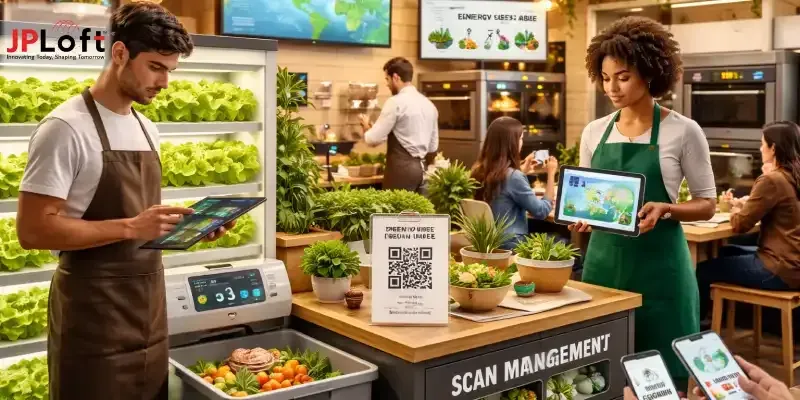
Technology is now a core driver of sustainability, helping restaurants reduce waste, energy use, and operational inefficiencies at scale.
Smart systems, automation, and data intelligence are transforming how restaurants manage resources and build long-term environmental responsibility.
Digital tools are enabling measurable sustainability outcomes, not just branding claims, across sourcing, operations, and customer engagement.
Sustainable innovation delivers real business value by improving efficiency, resilience, customer trust, and long-term profitability.
With expertise in sustainable digital solutions, JPLoft helps restaurants build future-ready, eco-conscious systems that drive growth and efficiency.
Sustainability is no longer just a trend in the restaurant industry; it’s becoming a business necessity. From reducing energy consumption to cutting food waste and improving sourcing transparency, restaurants are rethinking how they operate in a resource-conscious world.
This shift is being powered by sustainable restaurant technology and data-driven innovation that helps businesses balance profitability with responsibility.
As restaurant sustainability technology continues to evolve, digital tools, automation, and smart systems are transforming how restaurants manage resources, engage customers, and build greener operations.
In this blog, we explore how technology is reshaping sustainability in the restaurant industry, and why it’s becoming a competitive advantage, not just an ethical choice.
What Does Sustainability Mean in the Restaurant Industry?
Sustainability in the restaurant industry goes far beyond using biodegradable packaging or reducing plastic waste. It’s about building long-term systems that minimize environmental impact while improving operational efficiency, profitability, and customer trust.
This includes responsible sourcing, energy efficiency, waste reduction, ethical labor practices, and transparent supply chains.
For modern restaurants, sustainability also means embracing digital systems that support smarter operations, from inventory optimization to energy monitoring and waste tracking.
Many new entrepreneurs exploring how to start an online restaurant business now prioritize sustainable models from day one, recognizing that green operations are no longer optional; they’re expected.
At the same time, customer behavior is shifting. People increasingly support brands that align with environmental values.
That’s why your restaurant needs a mobile app; it’s no longer just about convenience, but about communication, transparency, and digital engagement that reinforces sustainable practices.
At its core, sustainability today is the fusion of responsible business ethics and intelligent innovation. In this shift, technology in sustainable restaurant models plays a key role in building efficient, resilient, and future-ready businesses.
The Role of Technology in Driving Sustainable Restaurant Operations
Technology is reshaping how restaurants manage resources, streamline operations, and build long-term sustainability strategies.
From automation to data intelligence, digital systems now play a central role in building responsible, efficient, and future-ready restaurant ecosystems.
1. Digital Operations and Workflow Automation
Digital transformation in restaurants helps replace manual processes with automated workflows.
Smart systems reduce paper usage, optimize staff scheduling, and improve operational efficiency.
This creates cleaner operations while lowering resource consumption across daily restaurant activities and improving long-term sustainability outcomes.
2. Scalable Digital Infrastructure for Sustainability
Modern sustainability strategies rely on platforms that can scale efficiently across locations and operations.
Many restaurants now choose to build a mobile app that supports digital ordering, inventory tracking, and sustainability reporting.
This helps centralize operations while improving resource efficiency and operational visibility across departments.
3. Data-Driven Decision Making
Analytics platforms help restaurants track energy usage, waste patterns, and supply chain performance.
Smart technology for restaurants enables predictive insights that improve forecasting and reduce overproduction.
It also supports sustainable operational planning without compromising service quality or customer experience in high-volume environments.
4. Secure Digital Ecosystems for Sustainable Growth
Sustainable digital operations depend on trust, safety, and data integrity. Strong mobile app security frameworks protect customer data, digital platforms, and operational systems.
This ensures that sustainability-driven digital transformation remains stable, compliant, and resilient against evolving cyber risks and long-term digital infrastructure vulnerabilities.
5. Human Expertise in Sustainable Tech Execution
Technology alone does not drive sustainability; execution does. Restaurants increasingly hire dedicated developers to design scalable systems, integrate sustainability tools, and optimize digital platforms.
This ensures that technology-driven sustainability initiatives are reliable, adaptable, and aligned with long-term operational and environmental goals.
By combining technology, data, and human expertise, restaurants can achieve truly sustainable operations. Learning how to develop a restaurant app tailored to these needs ensures efficient workflows, better resource management, and long-term operational success.
Key Technologies Helping Restaurants Become More Sustainable
Modern sustainability in restaurants is driven by real, deployable technologies, not abstract concepts.
These systems directly reduce waste, optimize resources, and improve efficiency while delivering measurable environmental and business impact across daily operations.
1. IoT Energy Sensors and Smart Meters
Connected IoT sensors monitor real-time electricity, gas, and water consumption across kitchens and dining spaces.
Energy-saving technology for restaurants helps identify waste patterns, optimize peak usage, and reduce unnecessary consumption through data-driven automation and intelligent load balancing systems.
2. AI-Based Demand Forecasting Platforms
AI forecasting tools analyze historical sales, weather data, and customer behavior to predict demand accurately.
Sustainable restaurant practices using technology become achievable when restaurants reduce overproduction, prevent food spoilage, and align inventory levels with real consumption trends.
3. Smart Refrigeration and HVAC Control Systems
Automated temperature control systems regulate refrigeration units and HVAC equipment based on real-time usage.
Eco-friendly restaurant technology reduces energy waste, maintains food safety compliance, and improves operational efficiency through intelligent climate optimization and predictive maintenance alerts.
4. Automated Waste Tracking Systems
Digital waste management tools use cameras, AI recognition, and sensors to track food disposal patterns.
Green technology for restaurants enables precise waste audits, better portion control, and data-driven menu optimization to reduce food loss and resource misuse.
5. Cloud-Based Sustainability Dashboards
Centralized dashboards aggregate energy data, waste metrics, and operational performance into a single interface.
Restaurant sustainability technology allows leaders to monitor environmental impact, track KPIs, and make informed sustainability decisions across multiple locations.
6. AI-Powered Inventory Management Software
Smart inventory platforms use predictive analytics to manage stock levels and automate procurement.
Sustainable technology in food industry ecosystems relies on these tools to minimize spoilage, improve supplier planning, and create lean, resource-efficient supply chains.
7. Smart Water Management Systems
Digital water monitoring systems detect leaks, regulate usage, and optimize cleaning cycles.
Sustainable restaurant technology helps restaurants conserve water resources while reducing operational costs and improving long-term environmental sustainability metrics.
8. Integrated Mobile and Digital Platforms
Sustainability-driven digital platforms connect ordering, operations, and reporting into unified systems.
A well-structured restaurant app tech stack supports automation, transparency, and operational efficiency while enabling scalable, technology-driven sustainability initiatives.
9. AI-Powered Restaurant Applications
AI-enabled applications support predictive ordering, waste reduction, and personalized operations.
AI in restaurant apps improves sustainability by aligning production with demand, reducing over-preparation, and optimizing resource utilization across restaurant workflows.
10. Autonomous AI Decision Systems
Advanced automation enables systems to act on insights without manual input. The role of AI agents in restaurant apps includes real-time optimization of inventory, scheduling, and resource allocation, creating proactive sustainability operations powered by intelligent automation.
11. Sustainable Customer-Facing Digital Interfaces
Digital ordering platforms, paperless menus, and smart engagement tools reduce material usage.
Well-designed top restaurant app features support eco-conscious customer behavior while improving operational efficiency and reducing physical resource dependency.
Real-World Examples: Restaurants Using Tech for Sustainability
Restaurants worldwide are leveraging advanced technologies to reduce environmental impact, improve efficiency, and engage customers responsibly.
These real-world examples showcase some of the best restaurant apps implementing sustainable practices at scale.
[A] McDonald’s – Energy-Saving Systems
McDonald’s uses energy-saving technology for restaurants, such as smart HVAC and kitchen energy monitoring across its global outlets. By integrating IoT sensors and automated climate control, the brand reduces electricity consumption while maintaining consistent food quality and comfort for customers.
[B] Starbucks – AI-Powered Demand Forecasting
Starbucks leverages AI analytics to optimize inventory and reduce food waste. Sustainable restaurant practices using technology help predict demand accurately, prevent overproduction, and align supply with customer consumption patterns, supporting sustainability while enhancing operational efficiency.
[C] Domino’s – Smart Digital Ordering Platforms
Domino’s implements digital ordering platforms to minimize paper usage and improve delivery efficiency. Eco-friendly restaurant technology drives order accuracy and reduces resource waste while enabling customers to engage with the brand through user-friendly mobile apps with millions of downloads worldwide.
[D] Pret A Manger – Automated Waste Tracking
Pret A Manger deploys AI-enabled waste tracking systems to monitor unsold food and optimize daily production. Green technology for restaurants reduces disposal, improves forecasting, and informs menu planning, resulting in lower environmental impact and improved profitability.
[E] Chipotle – Cloud-Based Sustainability Dashboards
Chipotle uses cloud-based platforms to track energy, water usage, and food waste across locations. Restaurant sustainability technology allows managers to monitor KPIs in real time, make data-driven decisions, and report sustainability performance transparently to stakeholders.
[F] Shake Shack – AI Inventory Management
Shake Shack utilizes predictive inventory software to prevent food spoilage and optimize supply chains. Sustainable technology in food industry ensures lean operations, reduces unnecessary procurement, and supports eco-friendly sourcing practices, combining efficiency with sustainability.
[G] KFC (Global) – Smart Water Management Systems
KFC integrates smart water monitoring systems in its kitchens to detect leaks and regulate usage. Sustainable restaurant technology reduces water waste, cuts operational costs, and supports the chain’s global sustainability initiatives across multiple regions.
[H] Taco Bell – Mobile Sustainability Integration
Taco Bell’s mobile app integrates sustainability-focused features such as digital receipts, eco-friendly rewards, and ordering analytics. Restaurant app ideas help encourage sustainable consumer behavior while improving operational tracking and reducing paper and energy usage.
[I] Panera Bread – AI-Powered Restaurant Apps
Panera’s app uses predictive ordering to reduce food waste and optimize menu offerings. Analyzing customer data enhances the dining experience, supports sustainability goals, and serves millions of users worldwide with seamless, efficient service.
[J] Subway – Mobile Engagement & Digital Innovation
Subway uses its mobile app to drive restaurant app development trends, including contactless ordering and sustainability awareness campaigns. The app encourages paperless interaction and educates customers on eco-friendly practices while maintaining efficient operational workflows.
[K] Burger King – Mobile Ordering & Sustainability
Burger King’s app combines digital ordering, loyalty programs, and waste reduction features. By centralizing orders and analytics, it improves operational efficiency, enhances customer engagement, and supports large-scale sustainable practices across its restaurants worldwide.
These examples show how restaurants worldwide are leveraging technology to boost sustainability, efficiency, and customer engagement. Partnering with top mobile app development companies can help brands implement similar innovative solutions tailored to their operations.
Business Benefits of Sustainable Restaurant Technology Adoption
Adopting sustainable technologies in restaurants not only reduces environmental impact but also strengthens operational efficiency, cost management, and brand reputation.
These benefits show how sustainable restaurant technology can align sustainability goals with measurable business outcomes.
[1] Reduced Energy and Resource Costs
Implementing energy-saving technology for restaurants helps cut electricity, gas, and water expenses.
Optimized energy usage and predictive maintenance reduce operational costs significantly while supporting long-term sustainability strategies and improving profitability across multiple locations.
[2] Minimized Food Waste
AI-powered inventory and waste tracking tools allow restaurants to forecast demand accurately and reduce spoilage.
Sustainable restaurant practices using technology help maintain lean inventory levels, improving both environmental impact and cost efficiency while enhancing supply chain management.
[3] Enhanced Operational Efficiency
Integrated digital systems streamline workflows and automate repetitive tasks. Smart technology for restaurants improves productivity and reduces human error.
It also frees staff to focus on customer service while supporting sustainable, tech-driven operations that scale easily across locations.
[4] Strengthened Brand Reputation
Sustainability initiatives positively influence public perception. Implementing restaurant sustainability technology demonstrates a clear commitment to eco-friendly practices.
This attracts environmentally conscious customers, increases loyalty, and positions the restaurant as a socially responsible market leader.
[5] Data-Driven Decision Making
Centralized dashboards and analytics empower managers to make informed decisions. Restaurants can evaluate performance metrics, adjust menus, and optimize resource allocation more effectively.
This helps prove ROI on sustainable technology in food industry investments while aligning operational goals with sustainability objectives.
[6] Improved Customer Engagement
Mobile apps enhance communication with eco-conscious consumers. Well-designed restaurant app design encourages paperless interactions and digital loyalty programs.
It also supports sustainability-focused promotions that create measurable engagement while reducing environmental impact.
[7] Reduced Long-Term Maintenance Costs
Modern platforms provide predictive monitoring, automated updates, and remote support.
Investing in app maintenance services ensures digital sustainability tools function efficiently.
It lowers unexpected costs, downtime, and maintenance overhead while supporting long-term operational resilience.
[8] Financial Planning and Investment Insights
Understanding ROI and resource allocation helps restaurants allocate budgets effectively.
Evaluating the cost to develop a restaurant app that integrates sustainability features ensures strategic investment decisions.
It helps digital systems deliver measurable savings, improved efficiency, and long-term environmental and business impact.
Challenges Restaurants Face in Adopting Sustainable Technology (And How to Overcome Them)
While sustainability-focused innovation offers long-term value, adoption comes with practical, technical, and operational challenges. Addressing these restaurant app development challenges strategically is essential for building resilient, scalable, and future-ready restaurant ecosystems powered by sustainable restaurant technology.
Challenge 1: High Initial Investment Costs
Implementing new digital systems, sensors, and automation platforms requires significant upfront capital investment.
Many restaurants struggle with budget constraints, delaying sustainable upgrades despite long-term financial, operational, and environmental benefits.
Solution:
Restaurants can prioritize restaurant sustainability solutions that deliver faster ROI through energy savings and waste reduction.
Phased implementation strategies and measurable efficiency improvements justify investment while reducing financial risk exposure.
Challenge 2: Complex System Integration
Integrating sustainability platforms with existing POS, inventory, and operational systems is technically complex.
Legacy infrastructure often lacks compatibility with modern digital sustainability technologies, creating delays, increased costs, and operational inefficiencies.
Solution:
Conducting detailed technical audits and selecting modular platforms with strong API compatibility simplifies integration.
Gradual migration strategies reduce disruption while ensuring smoother alignment between sustainability systems and existing operational infrastructure.
Challenge 3: Data Accuracy and Reliability Issues
Sustainability decisions depend on accurate, real-time data streams.
Poor data quality weakens restaurant sustainability technology, reducing analytics reliability, distorting performance insights, and limiting confidence in sustainability reporting outcomes.
Solution:
Implementing structured data governance frameworks and automated validation tools ensures accuracy and consistency.
Real-time dashboards enhance transparency, strengthen reporting credibility, and support informed sustainability decisions across operational environments.
Challenge 4: Operational Disruption Risks
Introducing new sustainability systems can disrupt daily restaurant workflows.
Without structured planning, technology transitions may cause service interruptions, employee resistance, operational slowdowns, and temporary instability, affecting customer experience.
Solution:
In technology in sustainable restaurant models, phased rollouts, pilot programs, and staff training reduce implementation risks.
Controlled testing environments ensure operational stability before expanding deployment across locations.
Challenge 5: Testing and Performance Validation
Sustainability platforms lacking proper validation may experience instability, security vulnerabilities, or inconsistent performance.
These risks threaten operational continuity and weaken trust in sustainability monitoring systems and reporting processes.
Solution:
Structured mobile app testing ensures stability, security compliance, and performance reliability before deployment.
Rigorous validation minimizes disruptions, protects operational data, and strengthens long-term sustainability monitoring infrastructure.
Challenge 6: User Adoption and Experience Gaps
If sustainability platforms are difficult to navigate, staff adoption declines quickly.
Poor UX design and unclear workflows are common reasons why restaurant apps fail in practical, real-world restaurant environments.
Solution:
Designing intuitive dashboards and simplified interfaces improves usability significantly.
Workflow-focused testing and staff training programs increase confidence, encourage engagement, and ensure that sustainability systems integrate seamlessly into daily operations.
Challenge 7: Quality Assurance and Scalability Issues
Sustainability platforms must operate consistently across multiple restaurant locations.
Without proper validation, scalability limitations may cause inconsistent performance, system failures, or inefficiencies in high-volume operational settings.
Solution:
Comprehensive restaurant app testing ensures consistent performance, system reliability, and scalability across expanding networks.
Structured validation strengthens digital sustainability tools and supports stable multi-location restaurant operations.
Challenge 8: Long-Term System Sustainability
Without continuous monitoring and optimization, sustainability systems gradually lose efficiency.
Performance declines reduce measurable environmental impact, weaken ROI visibility, and limit long-term operational and environmental value creation.
Solution:
Digital transformation in restaurants must include continuous improvement frameworks, regular updates, and performance audits.
Ongoing optimization ensures adaptability, measurable impact, and sustained operational value from sustainability investments.
How JPLoft Helps Restaurants Build Sustainable Technology Solutions?
Sustainability requires more than ideas; it needs the right technology partner and execution strategy.
At JPLoft, we work closely with restaurants to design scalable, future-ready digital ecosystems that support long-term environmental and operational goals.
As a trusted restaurant app development company, JPLoft focuses on building intelligent systems that align sustainability with business performance.
Our solutions are driven by restaurant sustainability technology that improves efficiency, reduces waste, and optimizes resource usage across operations.
Through sustainable restaurant technology, we help restaurants implement digital platforms that support automation, data-driven decision-making, and long-term sustainability growth.
With a strong focus on restaurant sustainability solutions, JPLoft empowers brands to transform sustainability into a measurable competitive advantage.
Conclusion
Sustainable restaurant growth now depends on how intelligently technology is used, not just how fast it’s adopted.
From automation and data intelligence to smart infrastructure and digital platforms, the future of dining is driven by innovation that balances efficiency with responsibility.
Restaurant sustainability technology is no longer optional, t’s a strategic necessity for brands aiming to stay competitive and resilient.
By investing in sustainable restaurant technology, restaurants can reduce waste, optimize resources, and build long-term operational stability.
The right digital approach transforms sustainability from a cost center into a growth engine, enabling restaurants to scale responsibly while meeting modern customer expectations.
FAQs
Sustainable restaurant technology helps reduce waste, improve energy efficiency, and optimize resource usage through automation, data tracking, and smart systems that improve daily operations.
Eco-friendly restaurant technology can be scalable and cost-efficient, allowing even small restaurants to start with basic tools like smart meters, digital inventory systems, and energy monitoring platforms.
Energy-saving technology for restaurants includes smart lighting, automated HVAC systems, and intelligent kitchen equipment that minimize power consumption and operational waste.
Digital transformation in restaurants enables better forecasting, waste reduction, and operational transparency through analytics, cloud platforms, and automation tools.
Restaurant sustainability solutions strengthen brand credibility by aligning business practices with environmental responsibility and modern consumer expectations.

Conor has 10+ years of experience in software development, application engineering, solution design, and UX/UI. He has worked across digital products in restaurant technology, food and grocery delivery, healthcare, media, streaming, and social platforms, bringing both technical and user-experience perspectives to product development. His experience working with large organizations and growth-focused digital products helps businesses translate complex requirements into practical, user-focused solutions.


Share this blog