


Key Takeaways
Successful diet and nutrition apps go beyond calorie tracking by delivering personalized meal plans, adaptive insights, and behavior-driven recommendations.
AI-powered personalization and accurate nutrition databases are critical for building long-term trust and sustaining daily user engagement.
A structured development process, from discovery and wireframing to launch and ongoing optimization, reduces risk and improves time-to-market.
Integrating wearable data and health platforms enables more precise tracking of dietary impact on overall wellness and fitness goals.
Monetization works best when premium features directly enhance user outcomes, such as personalized coaching, advanced analytics, or expert-led guidance.
Addressing challenges like data accuracy, personalization depth, and cross-device performance early leads to higher retention and better app ratings.
Security, compliance, and scalability are non-negotiable when handling sensitive health and nutrition data across diverse user bases.
Partnering with JPLoft ensures the app is technically robust, user-centric, and ready to evolve with changing nutrition trends.
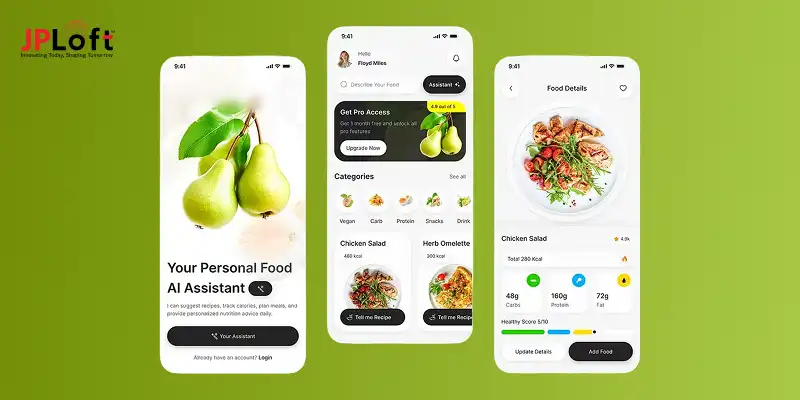
The global shift toward healthier lifestyles has driven strong demand for digital nutrition solutions. From calorie tracking and personalized meal plans to AI-powered insights and wearable integrations, diet and nutrition apps have become essential tools for people who want to eat better and stay healthy. For startups, fitness brands, and health-tech entrepreneurs, this growing demand presents a valuable market opportunity.
If you’re wondering how to build a diet and Nutrition app, the answer is straightforward: define a clear user goal, design an intuitive experience, integrate accurate nutrition data, and use technology to personalize recommendations based on user behavior. Successful apps go beyond basic food logging by focusing on engagement, usability, and long-term value.
Whether you want to create a diet and Nutrition app for weight management, sports nutrition, or wellness, this guide covers everything you need to confidently make a diet and Nutrition app that stands out in the competitive market.
What Is a Diet and Nutrition App?
A diet and nutrition app is a digital solution designed to help users track food intake, monitor nutrients, set health goals, and receive personalized dietary guidance based on their lifestyle and preferences. Modern apps go beyond manual calorie counting by using smart technologies such as AI in fitness apps to analyze eating patterns, suggest healthier alternatives, and adapt plans over time.
How a Diet and Nutrition App Works?
-
User Onboarding: Users sign up and enter basic details like age, weight, dietary preferences, allergies, and fitness goals.
-
Goal Setting: The app defines objectives such as weight loss, muscle gain, or disease-specific nutrition.
-
Meal & Nutrition Tracking: Users log meals manually or via barcode scanning, while the app calculates calories and nutrients.
-
Personalized Recommendations: Based on data and behavior, the app suggests meals, portion sizes, and improvements inspired by proven best mobile app ideas in the health space.
-
Progress Monitoring: Dashboards show trends, milestones, and actionable insights to keep users motivated.
This structured approach ensures users receive guidance that’s practical, personalized, and easy to follow.
Diet and Nutrition Market Statistics
-
The global diet and nutrition apps market is projected to reach around USD 4.56 billion by 2030, at a CAGR of 13.4%, driven by increasing consumer interest in digital health tracking and personalized diet solutions.
-
Mobile wellness apps, including diet and nutrition tools, are expected to account for a significant portion of the global health apps market, which is projected to reach USD 12.3 billion by 2030, reflecting growing adoption of preventive and holistic health apps.
-
Over 46% of new app users now prefer platforms with AI-based personalization, highlighting strong demand for intelligent recommendations in diet and nutrition apps.
-
The segment of subscription-based nutrition apps continues to grow, with premium memberships generating ~75% of total revenue, reflecting monetization opportunities through recurring subscriptions.
-
Integration with wearable devices and broader health platforms is rising, reinforcing fitness app trends toward connected, holistic digital wellness ecosystems.
Step-By-Step Process to Develop a Diet and Nutrition App
Developing a diet and nutrition app requires a structured approach that balances planning, design, and technology. By understanding how to create a diet and Nutrition app, businesses can align user needs with clear development goals. Following a step-by-step roadmap helps teams develop a diet and nutrition app efficiently, ensuring strong usability, scalability, and long-term user engagement.
Step 1: Discovery & Planning
Before writing a single line of code, understanding your users, market trends, and technical feasibility is crucial. This phase establishes a strong foundation for your app.
► Market Research
Analyze existing diet and nutrition apps, competitor offerings, and user feedback. Identify gaps, unmet needs, and potential features that provide a competitive edge. This insight informs your diet and nutrition mobile app development strategy.
► Goal Definition
Define clear objectives such as weight management, clinical nutrition, or holistic wellness tracking. Align these goals with target user segments to ensure your app meets real-world needs effectively.
► Technical Feasibility
Assess platform options (iOS, Android, or cross-platform), AI capabilities, API integrations, and database requirements. Evaluating technical constraints early helps plan the mobile app development and resources efficiently.
Step 2: Wireframing & Prototyping
Wireframing and prototyping are essential to visualize app structure and user flows before actual development begins.
► Wireframe Creation
Sketch all screens with clear navigation and layout hierarchy. Focus on intuitive placement of key features like meal logging, progress tracking, and AI recommendations. Using tools like Figma ensures seamless mobile app wireframing.
► Interactive Prototypes
Convert wireframes into interactive, clickable prototypes. Test core functionalities like meal tracking, notifications, and dashboard navigation to refine usability early. This step ensures mobile app prototyping is effective and practical.
► Feedback & Iteration
Share prototypes with a test audience to gather feedback on design, usability, and feature clarity. Iterate to resolve pain points before full-scale development begins.
Step 3: User-Centric UI/UX and Experience Design
Designing a visually appealing and user-friendly interface is critical to retain users and boost engagement. To achieve this, partnering with reputed UI/UX design services can make a significant difference.
► Visual Design
Choose consistent color palettes, typography, and branding elements that resonate with the target audience. Clear, minimalistic layouts reduce friction and enhance mobile app design quality.
► User Experience Flow
Simplify navigation and make core actions like logging meals, viewing progress, or receiving recommendations effortless. Design interactions that encourage daily usage and long-term engagement.
► Accessibility & Responsiveness
Ensure the app works seamlessly on multiple devices, screen sizes, and operating systems. Include accessibility features for diverse users while maintaining a polished experience across smartphones and tablets.
Step 4: Development & Integration
This phase transforms designs into a functional application, combining front-end, back-end, and third-party integrations.
► Frontend & Backend Development
Develop the app interface and underlying server architecture. Use frameworks like Flutter or React Native for cross-platform support. Proper coding standards and architecture ensure smooth diet and Nutrition app development.
► Feature Implementation
Integrate AI-based nutrition recommendations, meal tracking, notifications, and analytics dashboards. Features like personalized plans increase engagement and enhance the app’s value proposition.
► Third-Party Integrations
Connect APIs for barcode scanning, fitness devices, and health platforms (e.g., Apple HealthKit, Google Fit). Incorporate analytics and push notification services to maintain high user engagement. Evaluating fitness app tech stack helps select the right tools for scalable development.
Step 5: Testing & Quality Assurance
Rigorous mobile app testing ensures the app functions correctly, is secure, and delivers a seamless experience across devices.
► Functional Testing
Verify all features, forms, dashboards, and workflows work as intended. Identify and fix bugs before beta launch to reduce user frustration.
► Performance & Security Testing
Test app responsiveness, load times, and data handling. Implement mobile app security best practices to protect sensitive health and user data.
► Beta Testing
Release the app to a limited audience to capture real-world feedback. Monitor performance, gather insights, and implement necessary improvements before full launch.
Step 6: Launch & Post-Launch Maintenance
Publishing your app on the Play Store or submitting it to the App Store is only the beginning; ongoing support ensures long-term user engagement and sustained app success.
► App Store Submission
Prepare listings, optimize descriptions, screenshots, and ensure compliance with platform guidelines to maximize discoverability.
► User Engagement & Feedback
Continuously track analytics, reviews, and in-app behavior. Use insights to refine features and address user needs, ensuring sustained engagement.
► Continuous Updates
Ongoing mobile app maintenance services enable regular updates with new features, AI enhancements, and bug fixes. Monitoring market trends helps you adapt functionality and develop a mobile Diet and Nutrition app that remains relevant and competitive.
By following this step-by-step process, you may now understand how to develop a diet and nutrition app. However, features play a vital role in attracting users and keeping them engaged. In the next section, we’ll explore the essential features that every diet and nutrition app should include.
Essential Features of a Diet and Nutrition App
Creating a top-performing diet and nutrition app requires a careful balance of functionality, usability, and personalization. The features you include define user experience, engagement, and long-term retention. Incorporating the following essential features will help you develop a diet and Nutrition app that stands out in a crowded health-tech market.
1] User Onboarding & Profile Setup
Allow users to create accounts easily and enter key personal details such as age, weight, height, dietary restrictions, and fitness goals. Personalized profiles enable the app to make a diet and Nutrition app experience tailored to each individual, ensuring users feel supported from the first interaction.
2] Personalized Diet & Meal Plans
Provide AI-driven or expert-curated meal plans based on user goals such as weight management, muscle gain, or wellness. Recommendations should adapt over time according to logged meals and progress, leveraging fitness app features to enhance engagement and motivation.
3] Meal Logging & Calorie Tracking
Allow users to log meals manually, via barcode scanning, or by importing data from other health apps. Display calories, macronutrients, and micronutrients clearly through dashboards. Accurate tracking ensures users can make informed dietary choices while achieving their goals.
4] Comprehensive Food & Nutrition Database
Include a searchable library of foods with detailed nutritional information. Users can save favorites, explore alternatives, and make quick choices. This feature is essential for diet and Nutrition app features to deliver reliable and actionable insights consistently.
5] Progress Tracking & Analytics
Visual dashboards, weekly summaries, and milestone tracking provide insights into user behavior and improvements. Integration with wearable devices allows real-time monitoring of steps, activity, and energy expenditure, making progress transparent and actionable.
6] Reminders & Push Notifications
Offer timely reminders for meals, hydration, and activity. Smart notifications help maintain adherence to diet plans without being intrusive. Utilizing mobile app features ensures these notifications are consistent, personalized, and context-aware.
7] Integration with Health & Fitness Apps
Sync data with apps like Apple Health, Google Fit, and wearable devices to consolidate health metrics. Integration ensures a holistic approach to fitness and nutrition, enabling seamless data exchange and consistent insights across platforms.
8] Subscription & Premium Features
Offer free basic features while monetizing advanced capabilities through premium subscriptions. Paid features can include personalized coaching, detailed analytics, and exclusive meal plans. A solid strategy here ensures sustainable diet and Nutrition app development cost recovery.
Cost & Timeline to Develop a Diet and Nutrition App
The cost to build a diet and Nutrition app varies significantly depending on features, platform, design complexity, and integrations. On average, small to medium apps with essential features can range from $20,000 to $50,000, while highly customized apps with AI-driven recommendations, third-party integrations, and advanced analytics can exceed $120,000.
The development timeline typically spans 3–6 months for simpler apps and 6–12 months for comprehensive solutions with multiple platforms and complex functionality. Factors such as team size, technology stack, and app testing processes also influence both cost and duration.
Startups should also consider the ongoing mobile app development costs for updates, server maintenance, and feature upgrades. Planning a realistic budget upfront ensures timely delivery without compromising quality or user experience. For businesses exploring digital health, benchmarking against the cost to build a fitness app provides useful insights for budgeting and strategic planning.
Estimated Cost & Timeline Table
|
App Complexity |
Estimated Cost (USD) |
Development Timeline |
|
Basic App |
$20,000 – $50,000 |
3–6 months |
|
Medium Complexity |
$50,000 – $80,000 |
5–8 months |
|
Advanced App |
$80,000 – $120,000+ |
6–12 months |
How Do Diet and Nutrition Apps Make Money?
Monetization is a key consideration for any diet and nutrition app. While providing users with valuable health insights and personalized meal plans, these apps can also generate significant revenue when structured strategically. Understanding how do fitness apps make money helps startups and health-tech businesses apply proven revenue models to diet and nutrition app development.
A] Subscription Models
Offering a freemium model allows users to access basic features for free while unlocking premium content through monthly or annual subscriptions. Premium offerings may include personalized diet plans, AI-driven insights, expert consultations, and advanced analytics. This is one of the most common methods for how to develop a Diet and Nutrition app to generate recurring revenue.
B] In-App Purchases
Apps can offer additional meal plans, recipes, or exclusive content for a one-time purchase. This provides flexibility for users who may not want a subscription but are willing to pay for specific high-value resources. Implementing mobile app monetization features, such as in-app purchases, can boost overall revenue without affecting the free user experience.
C] Advertisements
Some apps incorporate carefully selected advertisements from health, wellness, and fitness brands. Native ads or sponsored content can create an additional revenue stream while staying relevant to user interests. When planning how to create a diet and Nutrition app, it’s essential to balance advertising frequency with user experience to avoid engagement drop-offs or churn.
D] Affiliate Marketing
Diet apps can partner with fitness equipment, health supplements, or grocery brands. Promoting relevant products through affiliate links allows apps to earn commissions on sales, enhancing profitability without charging users directly.
E] Partnerships & Corporate Wellness Programs
Collaborating with gyms, clinics, or corporate wellness programs allows apps to monetize via B2B deals. Offering the app as part of employee wellness initiatives or client packages can create large-scale revenue opportunities.
Implementing these strategies ensures that a diet and nutrition mobile app development project achieves both strong user engagement and long-term financial sustainability. By applying proven monetization models thoughtfully, nutrition-focused applications can maximize their impact while maintaining consistent profitability.
Challenges in Developing a Diet and Nutrition App
Developing a diet and nutrition app is a rewarding venture, but it involves several technical, strategic, and user-experience hurdles that can affect timelines, costs, and adoption. Many of these obstacles are similar to broader fitness app development challenges, such as personalization, scalability, and performance optimization.
Identifying these issues early and addressing them proactively helps ensure a smoother development journey and a high-quality, user-centric product.
1. Data Accuracy and Reliability
Challenge: Nutrition apps rely heavily on accurate data. Inaccurate food databases, incorrect portion sizes, or unreliable nutritional information can damage user trust.
Solution: Partner with credible nutrition sources and validate data rigorously. Integrate barcode scanning APIs and regular database updates. Leveraging diet and Nutrition mobile app development best practices ensures users receive reliable, real-time information.
2. Personalization and User Engagement
Challenge: Users expect highly personalized recommendations based on their goals, preferences, and lifestyle. Lack of personalization can result in low engagement and app abandonment.
Solution: Implement AI-driven recommendations, adaptive meal plans, and behavior-based insights. By continuously analyzing user interactions and progress, the app can refine suggestions over time, increasing relevance, motivation, and long-term engagement.
3. Integration with Wearables and Third-Party Apps
Challenge: Many users want integration with devices like smartwatches, fitness trackers, and health apps. Incompatible APIs or inconsistent data syncing can frustrate users.
Solution: Select a robust mobile app tech stack and ensure seamless integration with platforms like Apple HealthKit and Google Fit. Testing these integrations rigorously minimizes errors and enhances the user experience.
4. Compliance and Data Privacy
Challenge: Handling sensitive health data requires strict adherence to privacy regulations like GDPR and HIPAA. Non-compliance can lead to legal issues and loss of user trust.
Solution: Encrypt all data, implement secure authentication methods, and ensure robust security measures. Regular audits and updates maintain compliance and protect user information.
5. Development Costs and Resource Management
Challenge: Building a feature-rich app with AI, analytics, and integrations can become expensive and resource-intensive. Managing budgets and timelines effectively is crucial.
Solution: Plan a phased development approach, starting with a Minimum Viable Product (MVP). Hiring dedicated developers as a team of skilled professionals can ensure expertise and cost-effective scaling.
6. Platform Compatibility and Performance
Challenge: Apps must perform seamlessly across multiple devices, screen sizes, and operating systems. Poor performance can negatively affect reviews and adoption rates.
Solution: Use scalable cross-platform frameworks like Flutter or React Native to ensure consistent performance. Focus on optimizing app architecture, reducing latency, and refining UI responsiveness to deliver a smooth experience across all supported devices.
7. Retention and Long-Term Engagement
Challenge: Many diet apps experience high initial downloads but low long-term engagement. Users often stop logging meals or tracking progress over time.
Solution: Incorporate gamification, reward systems, and community features to encourage regular use. Regularly update content, add new features, and provide personalized recommendations to sustain engagement.
By proactively addressing these challenges, businesses can develop a mobile diet and Nutrition app that not only meets user expectations but also scales successfully in a competitive market. A well-structured approach, combined with experienced developers and strategic planning, ensures higher adoption rates, improved user retention, and long-term profitability.
How JPLoft Helps You Build a Diet and Nutrition App?
Building a successful diet and nutrition app requires more than just development; it demands strategic planning, expert design, and technical expertise. JPLoft, as a leading fitness app development company, provides end-to-end solutions for startups, health-tech entrepreneurs, and established brands aiming to enter the digital nutrition space.
Our team works closely with clients to understand their vision, target audience, and business goals. From initial diet and Nutrition app development strategy to UI/UX design, AI integration, and analytics, we ensure your app delivers an exceptional user experience while maintaining high performance and scalability.
JPLoft also emphasizes robust security, seamless integrations with wearables and health platforms, and ongoing support for updates and feature enhancements. By leveraging our experience, businesses can reduce development timelines, optimize costs, and bring a market-ready, user-centric nutrition app to life efficiently.
Whether you aim to launch a simple calorie tracker, an AI-powered meal planner, or a comprehensive wellness ecosystem, JPLoft’s expertise ensures your app stands out in the competitive health-tech landscape, drives user engagement, and supports long-term growth.
Conclusion
Developing a diet and nutrition app is a promising opportunity in today’s health-conscious world, but success depends on strategic planning, thoughtful design, and user-focused features. From understanding market needs to incorporating AI-driven personalization, accurate tracking, and seamless integrations, each step plays a vital role in creating an app that users love and trust.
By focusing on essential features, robust development, and effective monetization strategies, businesses can build a competitive app that engages users and delivers measurable results. With the right approach, a well-executed diet and Nutrition app development project can transform health and wellness experiences for millions of users while generating sustainable business growth.
FAQs
A diet and nutrition app is a digital tool that helps users track their meals, monitor nutrient intake, and achieve specific health goals such as weight management, improved fitness, or clinical nutrition. Many apps also offer personalized meal plans, AI-based recommendations, and integration with wearable devices to provide a holistic health experience.
The cost varies depending on features, complexity, and platform choice. Basic apps can start around $20,000, while advanced solutions with AI integration, analytics, and multiple platform support may exceed $120,000. Maintenance, updates, and third-party integrations also influence total costs.
Development timelines typically range from 3–6 months for simple apps to 6–12 months for comprehensive apps with complex features, AI recommendations, and multi-platform deployment. Proper planning and phased development help ensure timely delivery.
Key features include personalized diet plans, meal and calorie tracking, progress dashboards, reminders, nutrition databases, wearable integration, AI-based insights, and robust security. Features that enhance engagement and user retention are critical for long-term success.
Revenue can be earned through subscription models, in-app purchases, advertisements, affiliate partnerships, and corporate wellness programs. Premium features such as personalized coaching, AI recommendations, and advanced analytics are popular monetization strategies.

Meet Yashwant, the CTO of JPLoft. With 18+ years of industry experience, he brings deep technical expertise and visionary leadership to complex digital challenges. From scalable software architectures to emerging technology implementations, Yashwant drives innovation that empowers businesses across diverse industries to build future-ready, secure, and high-performing digital solutions.



Share this blog