


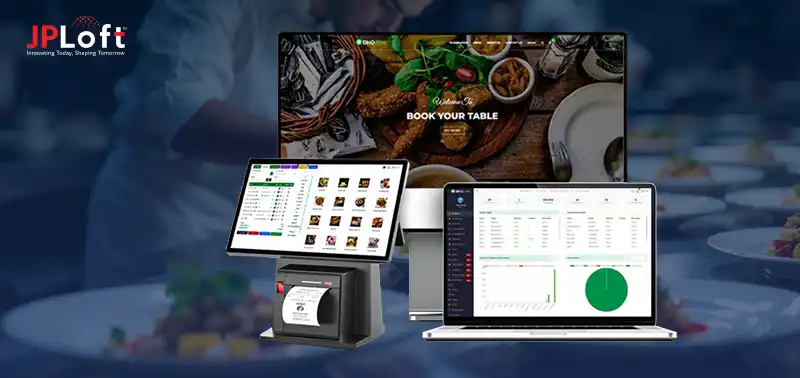
Key Takeaways:
Growing dependence on digital systems like POS, online ordering, and mobile apps has significantly increased cybersecurity and operational risks for restaurants.
A custom restaurant app centralizes critical operations, reducing reliance on scattered tools and minimizing vulnerabilities across multiple digital touchpoints.
Protecting customer data and ensuring regulatory compliance are essential to maintaining trust and avoiding financial and reputational damage.
Automation, real-time monitoring, and controlled access help reduce human error while improving service continuity and operational efficiency.
JPLoft helps restaurants build secure, scalable custom apps that proactively reduce business risks and support long-term digital growth.
Restaurants today depend on digital systems to manage orders, payments, reservations, menus, and customer data. While these technologies improve efficiency and customer experience, they also create significant cybersecurity risks in restaurants.
From POS terminals and cloud platforms to mobile apps and Wi-Fi networks, every digital touchpoint can be a potential entry for attackers.
Cybersecurity for restaurants is no longer limited to large chains, independent cafés, quick-service restaurants, and multi-location establishments are increasingly targeted due to weak defenses and sensitive data.
A single breach can disrupt operations, expose customer information, and harm reputation. Building a robust restaurant cybersecurity foundation is therefore essential, ensuring both business continuity and customer trust while supporting safe digital growth.
Overview & Industry Stats: Why Cybersecurity Matters for Restaurants
In today’s digitally powered foodservice environment, cybersecurity for restaurants is no longer optional; it’s fundamental to protecting your business, data, and customers.
The industry’s heavy reliance on digital systems like POS terminals, mobile ordering, online reservations, and cloud dashboards has exponentially expanded the cybersecurity risk for restaurants.
Restaurants process vast amounts of sensitive customer and payment data, making them attractive targets for cybercriminals.
Here are the key industry stats that underscore the urgency of strong protections:
-
The average cost of a cybersecurity breach in the hospitality sector is $3.82 million, highlighting the high financial risk for restaurants and other customer‑facing businesses.
-
More than 80% of restaurant transactions are processed digitally today, creating a larger attack surface and increasing restaurant data security concerns.
-
According to Cybersecurity Ventures, the global cost of cybercrime is projected to reach $10.5 trillion annually by 2025, affecting small and large operations alike.
These realities make it clear that restaurant cybersecurity solutions aren’t just technical upgrades; they’re essential business protections that safeguard revenue, reputation, and customer trust.
Common Cybersecurity Risks Restaurants Face
As restaurants adopt digital-first operations, multiple systems become interconnected, creating vulnerabilities that cybercriminals actively exploit.
Below are the most common cybersecurity risk for restaurants that clearly show where threats emerge and why proactive protection is essential.
1. POS System Vulnerabilities
Outdated or poorly secured POS systems are a prime target for attackers. Malware and skimming tools can silently capture card data, making POS-related breaches one of the common cyber attacks on restaurants and a serious threat to overall business operations.
2. Insecure Mobile and Web Applications
Customer-facing apps often lack strong authentication, encryption, or secure APIs. Overlooking security during planning, one of the most common restaurant app development challenges, increases exposure when teams rush features without embedding cybersecurity solutions for restaurants into the architecture.
3. Weak Network and Wi-Fi Security
Unsecured Wi-Fi networks, especially shared guest networks, can act as open doors for hackers. Once inside, attackers can move laterally to access POS systems, reservation platforms, and internal dashboards, amplifying cybersecurity threats for restaurants.
4. Phishing and Credential Theft
Employees are frequently targeted through fake emails and login pages. A single compromised credential can grant attackers system-wide access, increasing restaurant data breach risks, exposing sensitive information, disrupting daily operations across multiple locations, and harming brand reputation.
5. Third-Party and Vendor Risks
Integrations with delivery platforms, payment gateways, or customer-facing tools in the best restaurant apps often access sensitive systems and data. Weak vendor security practices can introduce hidden vulnerabilities beyond a restaurant’s direct control during daily digital operations scaling.
These risks highlight why a structured restaurant cybersecurity strategy is critical before scaling digital operations.
Business Impacts: What a Breach Can Cost Restaurants
A cybersecurity incident doesn’t just create technical problems; it directly impacts revenue, reputation, and long-term viability. For restaurants operating on thin margins, even a single breach can trigger a chain reaction that’s hard to recover from.
Understanding these consequences is essential to prioritizing cybersecurity for restaurants as a business investment, not an IT expense.
► Financial Losses and Operational Downtime
When attackers exploit cybersecurity risks in restaurants, operations often grind to a halt. POS outages, disabled online ordering, or locked reservation systems can stop sales instantly.
Beyond lost daily revenue, restaurants also face recovery costs, forensic audits, and system rebuilds, expenses that quickly escalate without proper restaurant cybersecurity solutions in place.
► Damage to Brand Trust and Customer Loyalty
Restaurants rely on repeat customers, making trust essential. A breach exposing personal or payment data can severely compromise restaurant data security and erode customer confidence.
Once trust is broken, patrons are far less likely to return, representing a hidden but long-lasting restaurant data breach risks that many restaurant operators often underestimate.
► Legal, Compliance, and Penalty Exposure
Neglecting data protection can trigger regulatory fines and lawsuits, especially when breaches stem from weak planning during restaurant app design or rushed digital launches.
New operators risk costly compliance challenges later if security is overlooked early, highlighting the importance of integrating robust data protection measures from the very beginning.
► Innovation Setbacks and Growth Delays
Data breaches often force businesses to halt innovation, including launching new digital services or exploring restaurant app ideas.
Leadership must shift focus from growth to damage control, causing delays in expansion, partnerships, and competitive differentiation, and slowing overall progress for restaurants trying to stay ahead in a fast-moving market.
► Long-Term Strategic Impact
Repeated data breaches raise doubts about leadership and technology choices, highlighting why restaurant apps fail even when demand is strong.
Without a proactive restaurant cybersecurity strategy, restaurants risk falling behind competitors that invest early in secure, scalable digital platforms, ultimately undermining long-term growth and strategic objectives in the digital marketplace.
Ultimately, the real cost of a breach extends far beyond money; it threatens the future of the business itself.
Core Cybersecurity Solutions for Restaurants
Protecting a restaurant from digital threats requires more than reactive fixes; it demands a structured, multi-layered approach.
Implementing robust security measures not only safeguards sensitive customer and payment data but also ensures operational continuity, regulatory compliance, and long-term growth.
Below are the key solutions restaurants should adopt, each explained in detail for actionable clarity.
1. Secure POS Systems
POS systems are the heart of daily transactions, and strong security often starts with reliable POS development services, followed by encrypted card data, regular updates, and endpoint monitoring.
Using firewalls and intrusion detection systems ensures unauthorized access is blocked before it can compromise critical transaction information.
Integrating the best cybersecurity solutions for restaurant POS systems into the POS infrastructure also protects against malware and skimming attacks, reducing cybersecurity risks in restaurants while enabling smoother daily operations.
2. Hardened Mobile and Web Applications
Customer-facing apps are often gateways for breaches. Implementing multi-factor authentication, end-to-end encryption, and secure API connections creates a safer digital ecosystem.
Restaurants launching new mobile or online platforms must embed cybersecurity solutions for restaurants at the development stage to prevent exposure and maintain a strong restaurant cybersecurity strategy.
Aligning security measures with a well-planned restaurant app tech stack also ensures applications remain stable, scalable, and resilient against modern threats.
3. Network Security and Wi-Fi Protection
Unsecured networks are an easy entry point for hackers. Segmenting guest Wi-Fi from operational systems, enforcing strong passwords, and applying encryption protocols protect sensitive areas such as POS, cybersecurity for restaurant reservation systems, and internal dashboards.
Implementing automated monitoring for unusual network activity further reduces cybersecurity threats for restaurants.
Regular auditing of connected devices, combined with employee training, ensures that all points of access comply with restaurant security best practices, reducing the risk of common cyber attacks on restaurants.
4. Cloud and Data Protection
Many restaurants rely on cloud services for reservations, payroll, and inventory management, making strong data protection essential.
Encrypting stored data, maintaining access logs, and partnering with cloud providers holding robust security certifications strengthen restaurant data security.
Automated backups and disaster recovery protocols minimize operational disruption during breaches. Secure cloud storage not only mitigates restaurant data breach risks but also ensures regulatory compliance and supports smooth, uninterrupted daily operations for restaurants of all sizes.
5. AI-Powered Security Solutions
Artificial intelligence can proactively identify threats before they cause damage. Tools that monitor network behavior, flag unusual transactions, and detect malware help secure complex restaurant technology environments at scale.
Restaurants leveraging AI in restaurant apps gain real-time monitoring capabilitiesand faster threat detection. This improves response accuracy, helping address vulnerabilities early and reduce the risk of large-scale security incidents.
Using AI-driven analytics helps refine restaurant cybersecurity solutions by identifying patterns and preventing future incidents.
6. Employee Training and Awareness Programs
Employees are often the weakest link in cybersecurity, making structured training critical. Covering phishing, credential management, and safe usage of digital tools helps reduce breaches caused by human error.
Regular simulations, timely policy updates, and strict access control enforcement reinforce an effective restaurant cybersecurity strategy.
Awareness initiatives, combined with technical security measures, foster a culture where staff actively protect data, significantly decreasing cybersecurity threats and embedding security into everyday restaurant operations.
7. Regular Testing and Maintenance
Cybersecurity is an ongoing process, not a one-time task. Regular testing, including penetration testing, vulnerability scans, and restaurant app testing, ensures all systems remain resilient against evolving threats.
Following established restaurant security best practices, continuous maintenance, timely patch updates, and careful review of third-party integrations protect the digital ecosystem.
Combined with strong mobile app security policies, these proactive measures reduce restaurant data breach risks while enabling secure, reliable, and customer-friendly operations that maintain trust and operational continuity.
Compliance Matters: Regulations Restaurants Must Know
Compliance is essential for protecting payments, customer data, and operational continuity. Restaurants must follow global regulations and best practices to avoid fines, breaches, and reputational damage.
1. Secure Payment Processing & PCI DSS Compliance
Laws / Standards to Cover: PCI DSS (Global), FTC Act Section 5 (USA), UK FCA Payment Services Regulations (PSR 2017)
Why this matters: Restaurants accepting card payments must secure POS systems, encrypt transactions, enforce access controls, and monitor activity continuously.
PCI DSS ensures cardholder data protection, while FTC Section 5 and UK PSR regulate fair and secure payment handling. Compliance reduces fraud risk and prevents costly penalties or suspension of payment processing privileges.
2. Customer Data Privacy & Consent Management
Laws / Regulations to Cover: GDPR (EU), UK GDPR & Data Protection Act 2018, CCPA/CPRA (USA), Canada PIPEDA, Australia Privacy Act & APPs
Why this matters: Restaurants handle personal data from reservations, apps, and loyalty programs. Privacy laws require lawful collection, secure storage, and transparent usage of customer data.
GDPR and CCPA give customers rights over their information, while Australian and Canadian laws add regional requirements. Following these rules ensures trust, legal compliance, and protection of customer privacy.
3. Data Breach Detection, Response & Disclosure
Laws / Regulations to Cover: GDPR Articles 33 & 34, UK GDPR breach reporting, US State Breach Notification Laws, FTC Breach Notification Rule
Why this matters: Regulations mandate rapid detection, reporting, and response to data breaches. GDPR requires notifications within 72 hours, while U.S. state laws and the FTC impose similar obligations.
Restaurants must implement monitoring, incident response plans, and reporting workflows to minimize financial and reputational damage when breaches occur.
4. Access Control, Staff Training & Internal Security
Laws / Frameworks to Cover: ISO/IEC 27001, NIST Cybersecurity Framework, CIS Controls, UK Cyber Essentials
Why this matters: Strong internal controls reduce human error and insider threats. Role-based access, employee security training, authentication policies, and audit logs ensure staff only access necessary systems.
These frameworks, while not always mandatory, are widely accepted benchmarks for demonstrating “reasonable security practices” during audits or regulatory reviews.
5. Third-Party & Vendor Security Compliance
Laws / Regulations to Cover: GDPR Article 28, CCPA/CPRA Service Provider Obligations, PCI DSS Third-Party Requirements, SOC 2
Why this matters: Restaurants rely on POS providers, reservation apps, and cloud vendors, but accountability remains with the restaurant. Regulations require due diligence, contracts, and ongoing oversight.
Ensuring vendor compliance mitigates hidden vulnerabilities, preventing breaches originating outside direct control while maintaining overall regulatory adherence.
Actionable Security Checklists for Restaurateurs
Implementing a strong restaurant cybersecurity strategy requires clear, actionable steps that operators can follow immediately. A checklist ensures that nothing is overlooked, from daily operational safeguards to ongoing system maintenance.
Below are critical areas every restaurant should cover.
1. POS System Security Checklist
-
Regularly update POS software and firmware.
-
Use end-to-end encryption for all payment transactions.
-
Restrict administrative access to authorized personnel only.
-
Monitor transactions for unusual activity.
Benefit: Reduces common cyber attacks on restaurants and ensures restaurant data security.
2. Network and Wi-Fi Protections
-
Segment guest Wi-Fi from operational systems.
-
Use strong WPA3 encryption and complex passwords.
-
Enable automated network monitoring to detect suspicious activity.
-
Disable unused ports and services.
Benefit: Mitigates cybersecurity threats for restaurants and prevents unauthorized access.
3. Mobile and Web Application Security
-
Implement multi-factor authentication (MFA) for app logins.
-
Apply secure coding practices and encrypted data transmission.
-
Regularly audit app permissions and integrations.
-
Conduct mobile app testing before launch and after updates.
Benefit: Strengthens cybersecurity solutions for restaurants while protecting customer data.
4. Employee Awareness and Training
-
Conduct quarterly cybersecurity training sessions.
-
Simulate phishing attacks to evaluate employee vigilance.
-
Implement strict access control policies and password management.
-
Encourage reporting of suspicious emails or activity.
Benefit: Reduces human error-related breaches and supports restaurant cybersecurity solutions.
5. Cloud and Data Backup Procedures
-
Encrypt all sensitive customer and business data.
-
Implement daily automated backups stored offsite or in secure cloud storage.
-
Maintain a disaster recovery plan and test it annually.
-
Ensure vendor compliance with security standards.
Benefit: Protects against data loss, minimizing restaurant data breach risks.
6. AI and Advanced Monitoring Tools
-
Deploy AI-powered monitoring tools for network and POS systems.
-
Monitor unusual transaction patterns and system anomalies in real-time.
-
Integrate AI insights into incident response procedures.
-
Update AI models regularly to adapt to evolving threats.
Benefit: Enhances the detection of cybersecurity risks in restaurants by leveraging automation and intelligence, reflecting the growing role of AI agents in restaurant apps for faster incident response.
7. Regular Review and Audits
-
Conduct annual security audits of all systems and processes.
-
Review and update policies to reflect emerging threats and regulatory changes.
-
Document all security measures and staff responsibilities.
-
Engage third-party specialists or hire dedicated developers to strengthen systems and enhance security.
Benefit: Maintains compliance and strengthens restaurant cybersecurity strategy over time.

How JPLoft Helps Restaurants Build Secure Digital Platforms?
Building secure digital platforms for restaurants requires more than adding security tools after launch; it demands a security-first mindset from day one.
As a trusted restaurant app development company, JPLoft helps restaurants design, develop, and scale digital solutions with cybersecurity for restaurants embedded into every stage of the process.
From POS integrations and mobile apps to cloud dashboards and data workflows, security is treated as a core business requirement, not an afterthought.
Our approach focuses on minimizing cybersecurity risks in restaurants by implementing secure architectures, encrypted data handling, role-based access controls, and continuous monitoring.
As demand for specialized technical talent grows across the cyber security job market, having expert development partners helps businesses bridge the skill gap effectively.
We align every solution with industry compliance standards to strengthen restaurant data security while ensuring smooth customer experiences across digital touchpoints.
JPLoft combines technical expertise with deep domain understanding of restaurant operations.
This allows us to deliver scalable platforms that protect sensitive data, support long-term growth, and reduce exposure to evolving cybersecurity threats for restaurants, helping restaurant owners innovate with confidence in an increasingly digital landscape.
Conclusion
As restaurants continue to embrace digital platforms, cybersecurity can no longer be treated as an optional safeguard. From POS systems and mobile apps to cloud services and customer databases, every connected system introduces potential exposure.
Without a well-defined restaurant cybersecurity strategy, businesses risk financial losses, regulatory penalties, and long-term damage to customer trust.
Implementing the right cybersecurity solutions for restaurants helps protect sensitive information, maintain operational continuity, and support sustainable growth in a highly competitive market.
More importantly, a proactive approach to restaurant cybersecurity enables restaurant owners to focus on innovation and customer experience without constantly worrying about digital threats.
In an era where technology powers nearly every restaurant operation, investing in cybersecurity for restaurants is not just about prevention; it’s about protecting the future of the business itself.
FAQs
Restaurants process high volumes of digital payments and customer data daily, often using multiple connected systems. Limited in-house IT expertise and outdated infrastructure make them attractive targets for attackers looking for easy entry points and quick financial gains.
POS systems, online ordering platforms, reservation tools, and cloud-based dashboards are the most commonly targeted. Weak authentication, unpatched software, and insecure integrations significantly increase exposure across these systems.
Cybersecurity should be reviewed continuously, with formal audits conducted at least once a year. Any system update, new digital feature, or third-party integration should also trigger a security review to ensure protections remain effective.
Yes. Smaller restaurants are often targeted more frequently because attackers assume weaker defenses. Even a single breach can cause severe financial strain, reputational damage, and operational disruption for independent businesses.
The first step is identifying all digital touchpoints: POS, apps, networks, and data storage, and assessing their vulnerabilities. From there, restaurants can prioritize protections, staff training, and long-term security planning.

Conor has more than 10 years of experience in software development, app creation, solution engineering, and UX/UI design. With an impressive track record of high retention and growth working with Fortune 500 companies, he brings the technical depth and strategic perspective needed to help businesses build impactful, user-focused digital solutions.


Share this blog