


Key Takeaways:
The cost of building a restaurant app ranges between USD 15,000 and USD 100,000+, depending on the complexity of the development.
Knowing restaurant app development cost helps businesses plan budgets, prioritize essential features, and build scalable apps.
Restaurant app revenue streams include a commission-based model, subscription, delivery fee, in-app advertising, and booking fee.
App complexity, design, technology, integrations, and development expertise significantly impact the cost to create a restaurant app.
JPLoft develops scalable, pocket-friendly restaurant apps with transparent pricing, modern technology, and tailored solutions for your business goals.
Every online order you miss is a customer your competitor serves. Is your restaurant ready to stay ahead?
From independent restaurants to growing food chains, many businesses are investing in mobile apps to stay competitive and boost revenue.
And when you are looking for development, the most important question that arises is: how much does it cost to make a restaurant app?
The cost to make a restaurant app depends on factors like features, platform selection, design complexity, technology stack, and development approach. Knowing these cost drivers helps you plan your budget wisely and avoid unexpected expenses.
In this blog, we will see how much does a restaurant app costs, factors affecting pricing, hidden expenses, monetization models, and practical tips to optimize your investment.
What is the Cost to Develop a Restaurant App?
On average, the cost of developing an app for a restaurant ranges between USD 15,000 and USD 100,000+. The final price to develop a restaurant app depends on the complexity, integrations, supported platforms, and customization requirements.
Below is a cost table based on the complexity of restaurant app development:
|
App Difficulty |
Estimated Cost |
Reason |
|
Basic Restaurant App |
$15,000 to $25,000 |
Menu display, user registration, food ordering, basic payment gateway, order tracking |
|
Standard Restaurant App |
$25,000 to $50,000 |
Real-time order tracking, table reservations, loyalty programs, push notifications, and multiple payment options |
|
Advanced Restaurant App |
$50,000 to $75,000 |
AI suggestions, live delivery tracking, CRM integration, analytics dashboard, multi-location management, third-party integrations |
|
Enterprise-Grade Restaurant App |
$75,000 to $100,000+ |
AI suggestions, multilingual support, advanced analytics, inventory management, POS integration, custom admin panel, scalable architecture |
Restaurant App Development Cost Based on Business Model
While some restaurant app ideas focus on online ordering, others support restaurant operations, customer retention, or multi-vendor marketplaces.
Here is the table of costs to develop a restaurant app, depending on the different types:
|
Restaurant App Type |
Estimated Cost |
Development Timeline |
|
Food Ordering Apps |
$15,000 to $110,000+ |
2 to 4 months |
|
Table Reservation Apps |
$20,000 to $40,000+ |
3 to 5 months |
|
Restaurant Management Apps |
$30,000 to $70,000+ |
4 to 7 months |
|
Restaurant Loyalty Apps |
$20,000 to $45,000+ |
3 to 5 months |
|
QR Code Menu Apps |
$15,000 to $25,000+ |
2 to 3 months |
|
Restaurant Discovery Apps |
$35,000 to $75,000+ |
5 to 8 months |
|
Multi-Restaurant Aggregator Apps |
$70,000 to $100,000+ |
7 to 12+ months |
|
Restaurant Chain Apps |
$45,000 to $90,000+ |
6 to 10 months |
Defining business goals and required features with the help of a restaurant app development company helps you choose the right app type while keeping the project budget-friendly.
Factors Affecting the Cost to Create the Restaurant App
Several technical and business decisions influence the cost of restaurant app development. Knowing these factors helps businesses estimate budgets accurately and prioritize features that deliver the highest value.
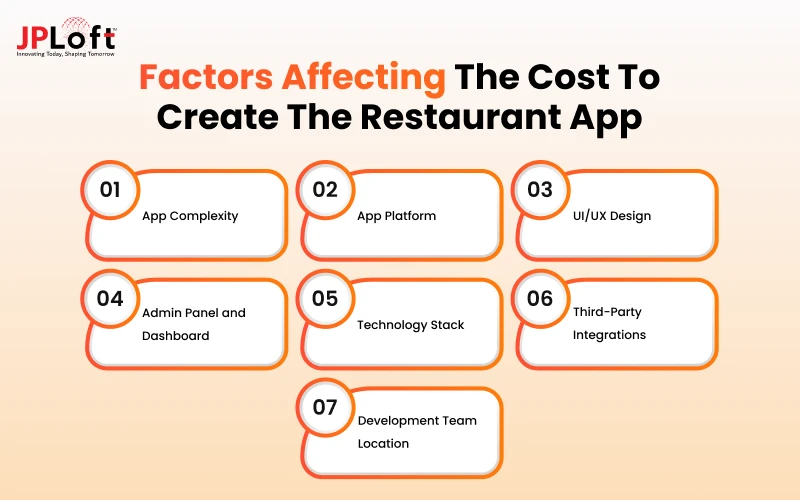
Here are the factors that affect the cost to build a restaurant app:
Factor 1: App Complexity
The platform’s complexity has the biggest impact on the cost to create a restaurant app. A basic app costs less than an advanced restaurant management solution with AI features and analytics.
More complex applications also require extensive restaurant app testing and longer development cycles, increasing the overall project budget.
Factor 2: App Platform
Developing for Android, iOS, or both is beneficial for audience and long-term business strategy but affects the cost of an app for a restaurant.
Native apps require separate development for each platform, while cross-platform frameworks reduce costs by using a shared codebase.
Factor 3: UI/UX Design
A simple interface requires less design effort than a highly interactive user experience. A well-designed interface also improves customer satisfaction and encourages repeat app usage.
Custom animations, branded visuals, intuitive navigation, and personalized user journeys increase restaurant app design time and development expenses.
Factor 4: Admin Panel and Dashboard
A powerful admin panel enables restaurant owners to manage menus, orders, reservations, customers, promotions, and business reports.
The more advanced the dashboard capabilities, the higher the cost to build a restaurant app.
Factor 5: Technology Stack
The choice of programming languages, frameworks, databases, APIs, and backend architecture impacts development time and overall investment.
Modern technologies improve scalability and performance, but may require experienced developers. Selecting the right restaurant app tech stack also ensures easier upgrades and future feature expansion.
Factor 6: Third-Party Integrations
Integrating external services adds to the cost to build restaurant app. Each integration requires proper configuration and testing to ensure reliable performance.
Building restaurant POS systems, CRM platforms, inventory management software, or delivery management solutions helps streamline business operations.
Factor 7: Development Team Location
Developer rates vary across regions and play a major role in the cost of developing an app for a restaurant.
Hiring a dedicated developer team in North America generally costs more than working with experienced teams in Asia or Eastern Europe, making location an important pricing factor.
Hidden Costs of Restaurant App Development
Beyond the initial development budget, several ongoing and operational expenses can impact how much does it cost to create a restaurant app.
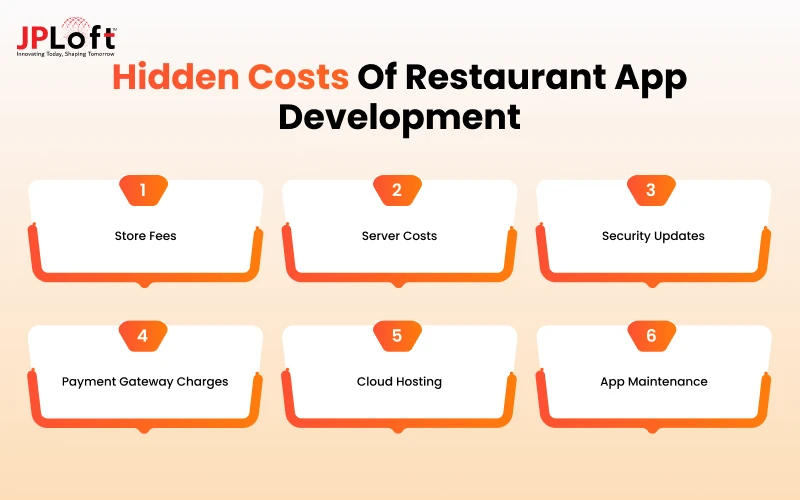
Accounting for these hidden expenses from the beginning enables businesses to create a realistic budget and ensure long-term success:
1. Store Fees
Launching a restaurant app on the iOS App Store requires enrollment in the Apple Developer Program, which costs USD 99/year. Android apps require a Google Play Developer account before publication, which is a one-time fee of USD 25.
Additional costs to develop an app for restaurant reservations may arise if your app offers paid subscriptions or in-app purchases.
2. Server Costs
Your app requires servers to process user requests, store data, and support real-time features. As the number of users grows, server resources and associated expenses also increase.
High traffic during peak hours may require additional server capacity to maintain fast performance and prevent downtime.
3. Security Updates
Protecting customer information requires continuous security improvements, vulnerability assessments, and encryption updates.
Businesses also have to update to comply with evolving restaurant app cybersecurity standards. Regular security audits also reduce the risk of data breaches and regulatory penalties.
4. Payment Gateway Charges
If your app supports online payments, payment providers charge transaction fees for every successful purchase.
These recurring cost of building a restaurant app increase with higher order volumes. Comparing different payment gateways can help reduce processing expenses over time.
5. Cloud Hosting
Cloud infrastructure supports databases, media storage, backups, and application performance. Monthly hosting costs depend on traffic, storage requirements, and computing resources.
Choosing a scalable hosting solution ensures the app can handle future business growth efficiently, but it adds to the cost of an app for a restaurant.
6. App Maintenance
Regular restaurant app maintenance keeps the app running smoothly by fixing bugs, improving performance, and ensuring compatibility with new operating system updates and devices.
Most businesses allocate an annual maintenance budget to keep the application reliable and competitive.
How to Reduce the Cost of Making a Restaurant App?
Reducing restaurant app development cost requires strategic planning and smart decision-making.
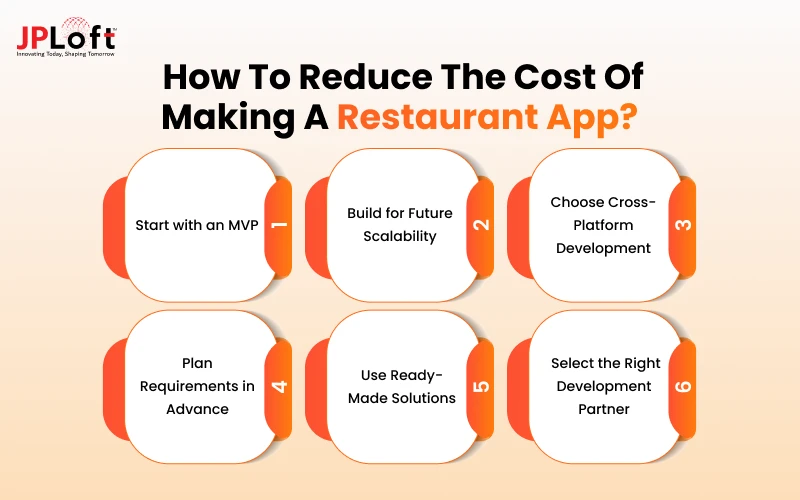
The right approach helps create a scalable restaurant app while maintaining quality, performance, and customer satisfaction.
1. Start with an MVP
After knowing why your restaurant needs a mobile app, start by building a minimum viable product with only essential features like menu browsing, ordering, and reservations. This approach reduces initial investment while validating your app before scaling.
2. Build for Future Scalability
Design a flexible application architecture that supports future expansion without major redevelopment. A scalable foundation reduces the long-term overall cost of developing an app for a restaurant by allowing new features, additional restaurant locations, and higher user traffic to be added efficiently.
3. Choose Cross-Platform Development
Use cross-platform frameworks to build Android and iOS apps from a single codebase. This minimizes development time, reduces resource requirements, and lowers overall cost to make a restaurant app while maintaining a consistent user experience across multiple devices.
4. Plan Requirements in Advance
Prepare detailed project requirements, user flows, and feature lists inspired by the top restaurant apps before development begins. Clear documentation reduces misunderstandings, prevents unnecessary rework, and helps developers deliver the project within budget.
5. Use Ready-Made Solutions
Instead of building from scratch, integrate restaurant app features from trusted third-party services. Ready-made solutions reduce development effort, shorten timelines, and help maintain reliable app performance without increasing the cost of building a restaurant app.
6. Select the Right Development Partner
Choose an experienced mobile app development service provider with expertise in restaurant solutions. A skilled team follows efficient development practices, avoids common mistakes, delivers quality code, and helps optimize resources without compromising application performance.
Monetization Models for Successful Restaurant Apps
Choosing the right restaurant app monetization model depends on your business model and audience.
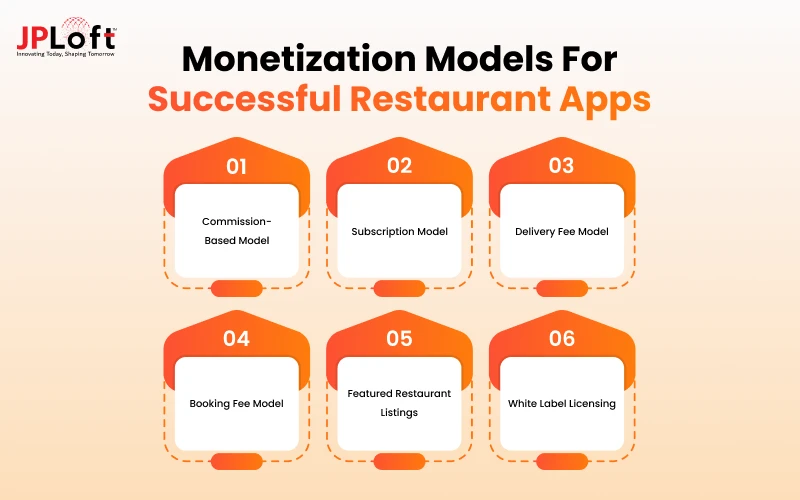
Many successful restaurant apps combine multiple revenue streams to recover restaurant application development costs and maximize profitability.
1. Commission-Based Model
Restaurant apps earn a percentage from every order placed through the platform. The commission varies based on restaurant partnerships, order value, and service agreements.
Best For: Multi-restaurant aggregator apps and food delivery marketplaces.
2. Subscription Model
Restaurants pay a recurring monthly or annual subscription fee to access premium features, analytics, customer management tools, and business insights.
Best For: Restaurant management platforms and SaaS solutions.
3. Delivery Fee Model
The platform charges customers a delivery fee for each order. Fees may vary depending on distance, demand, delivery speed, or restaurant location.
Best For: Food ordering and delivery apps.
4. Booking Fee Model
The app charges customers or restaurant partners a small fee for confirmed table reservations made through the platform.
Best For: AI table reservation apps and fine dining platforms.
5. Featured Restaurant Listings
Restaurants pay to appear in premium search results, homepage banners, or recommended sections, helping them increase visibility and attract more customers.
Best For: Restaurant discovery and aggregator apps.
6. White Label Licensing
The platform licenses its restaurant app solution to multiple restaurant businesses, allowing each brand to operate under its own identity.
Best For: Restaurant technology providers and SaaS companies.
Why Choose JPLoft to Make a Pocket-Friendly Restaurant App?
Building a budget-friendly app is not just about reducing the cost to create a restaurant app. It is about investing in a solution that delivers long-term value.
At JPLoft, we help restaurants, startups, and food businesses build scalable and cost-effective mobile apps tailored to their unique requirements.
Our highly experienced developers focus on creating feature-rich apps that boost user engagement, simplify operations, and support growth without unnecessary expenses.
JPLoft carefully analyzes your goals, suggests features you need, and optimizes every stage to maximize your budget.
JPLoft ensures you receive a high-quality restaurant app that balances performance, user experience, and affordability, helping your business stay competitive in the growing digital food industry.
Conclusion
Developing a restaurant app is a strategic investment that can improve customer engagement, streamline operations, and increase revenue. The cost to build a restaurant app depends on the app type, features, design, technology stack, and customization requirements.
By understanding the key cost factors, hidden expenses, and budget optimization strategies, you can make informed decisions and maximize the ROI. Choosing the right monetization model also helps create sustainable revenue while delivering greater value to customers.
Whether you are launching a food ordering, restaurant management, or multi-restaurant platform, knowing how much does it cost to build a restaurant app is essential for long-term success.
Partnering with the right service provider ensures your app is scalable, secure, and built to meet your business objectives.
FAQs
Restaurant app development typically costs between USD 15,000 and USD 100,000+. Pricing depends on app complexity, features, platforms, design, integrations, and customization needs. Advanced apps with AI capabilities require higher investments than basic solutions.
The development cost of a restaurant app depends on app complexity, feature set, platform, technology stack, integrations, and development team location. Each factor influences development time, technical effort, and the overall project budget.
Hidden costs include requirement changes, data migration, accessibility compliance, performance optimization, localization, employee training, and scalability planning. Knowing these early helps businesses avoid unexpected budget increases during development.
Start with an MVP and prioritize essential features. Use cross-platform development and ready-made components. Plan requirements carefully and partner with an experienced development company. These strategies keep the project within budget.
Popular monetization models include order commissions, delivery fees, subscription plans, featured listings, in-app advertising, and reservation fees. Combining multiple revenue streams helps restaurant apps achieve long-term profitability and sustainable business growth.

Conor has more than 10 years of experience in software development, app creation, solution engineering, and UX/UI design. With an impressive track record of high retention and growth working with Fortune 500 companies, he brings the technical depth and strategic perspective needed to help businesses build impactful, user-focused digital solutions.


Share this blog