


Key Takeaways
Develop an app like ParkMobile by integrating real-time parking availability, GPS navigation, secure payments, and scalable backend systems.
The cost to build a smart parking app like ParkMobile ranges from $20,000 to $90,000+, depending on features, complexity, and integrations.
Essential features include user registration, live parking updates, advance booking, in-app payments, push notifications, QR entry, and admin dashboards.
Monetization models for parking apps include booking fees, subscriptions, commissions from operators, in-app ads, premium features, and data-driven insights.
Key challenges include real-time data management, secure payments, GPS accuracy, regulatory compliance, user engagement, and operator integrations.
Partner with JPLoft for end-to-end support to build reliable, scalable, and user-friendly ParkMobile-style apps.
Urban parking has become one of the biggest daily frustrations in modern cities. With rising vehicle ownership and shrinking parking spaces, drivers are actively turning to smart digital solutions.
The global smart parking market is projected to surpass $20 billion by 2030, driven by IoT, mobile payments, and real-time tracking technologies.
So, many entrepreneurs and startups often come with the question of how to develop an app like ParkMobile?
The answer lies in integrating real-time parking availability, GPS navigation, secure digital payments, and a scalable backend into one seamless and user-friendly platform.
In this blog, we will explore the key features, development process, technology stack, and cost considerations required to successfully create an app like ParkMobile.
What is the ParkMobile App?
If you are planning to create an app like ParkMobile, the first question that comes to mind is, what is the ParkMobile app, isn’t it? Before you create an app in this space, understanding the foundation is essential.
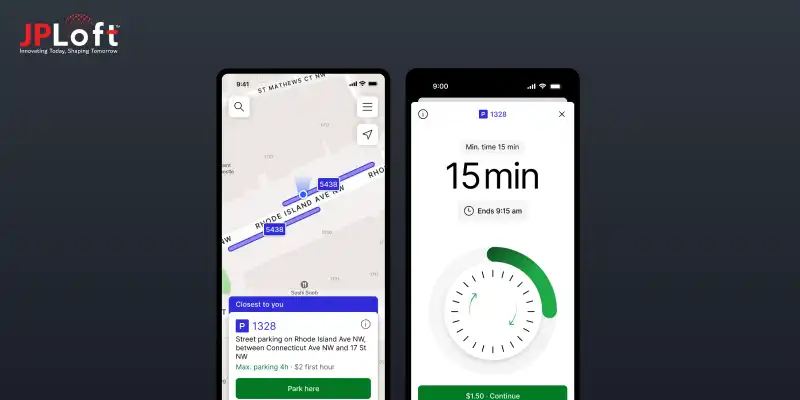
ParkMobile is a smart parking payment and reservation application that allows users to find, book, and pay for parking spaces directly from their smartphones.
Instead of searching for coins or waiting at payment meters, users can check real-time parking availability, extend parking duration remotely, and receive alerts before their time expires. In simple terms, it transforms traditional parking into a contactless, digital experience.
The app connects drivers with parking providers through GPS technology, secure payment gateways, and cloud-based systems, making urban parking faster, easier, and more efficient.
Why Build an App Like ParkMobile?
Building a parking solution today is more than just launching another app, it’s about entering a rapidly evolving mobility ecosystem.
Here’s why businesses choose to develop an app like ParkMobile:
-
Growing Demand for Smart Mobility: Urban congestion is increasing, and cities are investing heavily in digital infrastructure. To develop a smart parking app like ParkMobile means tapping into a future-ready market driven by automation and convenience.
-
High Revenue Potential: Parking apps generate income through booking fees, service charges, subscriptions, and partnerships with municipalities. This diversified monetization model ensures consistent cash flow and long-term profitability for businesses.
-
Expanding USA Mobile App Development Market: The USA mobile app development market continues to grow due to strong digital adoption and smart city initiatives, making it a lucrative region for parking app investment. With increasing reliance on mobile-first solutions, businesses have a strong opportunity to capture a tech-savvy urban audience.
-
Scalable Business Model: If you’re exploring how to create an app like ParkMobile, you’ll find that the model is easily scalable across multiple cities and regions. With the right cloud infrastructure, expansion into new markets can be achieved without rebuilding the entire system.
-
Competitive Advantage in Urban Tech: When you develop an app like ParkMobile, you position your business at the intersection of transportation, fintech, and smart city innovation. This strategic positioning strengthens brand authority and differentiates your platform in a competitive digital ecosystem.
By investing in innovation today, businesses can secure a strong position in tomorrow’s smart mobility landscape.
A well-planned strategy to make an app like ParkMobile can open doors to long-term growth and recurring revenue opportunities.
Must-Have Features of an App Like ParkMobile
When businesses plan to develop a smart parking solution, one of the first things they focus on is functionality. After all, the success of any parking platform depends on how smoothly it solves real-world problems.
Users don’t just want to find parking, they want speed, accuracy, security, and convenience in a single tap.
That’s why understanding the key features of a mobile app like ParkMobile becomes crucial. Below are the essential features your parking app must include:
|
Feature |
Description |
Why It Matters |
|
User Registration & Profile Management |
Simple sign-up via email, phone, or social login with profile customization. |
Ensures personalized experience and easy booking history tracking. |
|
Real-Time Parking Availability |
Displays live parking space availability using GPS and sensors. |
Reduces user frustration and saves time. |
|
GPS Navigation Integration |
Built-in maps to guide users to their selected parking spot. |
Improves convenience and enhances user satisfaction. |
|
Advance Parking Reservation |
Allows users to book parking spaces in advance. |
Helps users plan better and guarantees availability. |
|
Secure In-App Payments |
Integration with credit/debit cards, wallets, and digital payment gateways. |
Enables seamless, contactless, and secure transactions. |
|
Parking Time Extension |
Users can extend parking duration remotely. |
Prevents fines and improves user flexibility. |
|
Push Notifications & Alerts |
Reminders for parking expiration and booking confirmations. |
Keeps users informed and increases app engagement. |
|
Admin Dashboard |
Backend panel for managing users, payments, reports, and analytics. |
Helps businesses monitor performance and optimize operations. |
|
QR Code or Contactless Entry |
Scan-based or automated entry/exit system. |
Enhances safety and speeds up the parking process. |
|
Ratings & Feedback System |
Users can rate parking locations and share reviews. |
Builds trust and improves service quality. |
By integrating these powerful functionalities, you can ensure your app delivers both efficiency and reliability. Carefully selecting the features of an app like ParkMobile will directly impact user retention and revenue growth.
Ultimately, the right combination of technology and usability transforms a simple parking app into a scalable smart mobility solution.
How to Develop an App Like ParkMobile: Step-by-Step Process
Successful startups and enterprises transform a parking idea into a scalable digital product by following a structured strategy, leveraging the right technology, and focusing on long-term scalability and user experience.
What does it really take to develop an app like ParkMobile that is secure, reliable, and ready for real-world traffic?
Before diving into the detailed explanation, here’s a quick overview of the development journey:
-
Step 1: Market Research & Business Planning
-
Step 2: Define Core Features & App Requirements
-
Step 3: Choose the Right Technology Stack
-
Step 4: UI/UX Design & Prototyping
-
Step 5: Backend & Frontend Development
-
Step 6: Payment & Third-Party Integrations
-
Step 7: Testing & Quality Assurance
-
Step 8: Deployment & Post-Launch Support
Now, let’s explore the step-by-step process to build an app like ParkMobile in detail.
Step 1. Market Research & Business Planning
Every successful ParkMobile-like app development project begins with deep market research. Before you build an app like ParkMobile, you must understand parking behavior, city regulations, and user pain points.
Analyze competitors, study their monetization models, and evaluate customer feedback to identify improvement opportunities. This research helps you position your app strategically in the market.
You should also define your target audience: daily commuters, event visitors, corporate users, or municipalities. A clear business plan ensures financial viability and long-term sustainability.
Step 2. Define Core Features & App Requirements
To make a mobile parking payment app like ParkMobile, clearly outline the must-have and advanced features. Core features typically include real-time parking availability, slot booking, GPS navigation, digital payments, and push notifications.
You should also define role-based access for users, parking operators, and administrators. This ensures streamlined management from both the front-end and backend perspectives.
Preparing a detailed requirement document helps developers understand workflows, user journeys, and technical needs.
Step 3. Choose the Right Technology Stack
Selecting the right mobile app tech stack is critical when you develop an app like ParkMobile. The technology should support real-time data processing, scalability, and secure transactions.
Frontend frameworks like Flutter or React Native allow cross-platform compatibility, while backend technologies such as Node.js or Python ensure smooth server-side operations.
Cloud services like AWS or Google Cloud help manage large user volumes efficiently. A reliable database system is also necessary to store booking records and transaction data securely.
Step 4. UI/UX Design & Prototyping
When planning to make a digital parking platform like ParkMobile, user experience should be simple, intuitive, and visually clean. Users should be able to search, reserve, and pay within seconds without confusion.
Professional UI/UX design services help create wireframes and interactive prototypes to visualize how the app will function before development begins. This approach identifies usability issues early and ensures a seamless flow.
A smooth navigation structure and minimal steps for payment increase user retention. A well-designed interface not only enhances convenience but also builds trust and credibility in competitive app marketplaces.
Step 5. Backend & Frontend Development
This is the stage where your concept becomes reality. Front-end development focuses on the user interface, maps integration, booking screens, and notifications.
Backend development manages server logic, real-time parking updates, user authentication, payment processing, and admin dashboards. To successfully develop an app like ParkMobile, your backend architecture must support high traffic during peak hours.
Many top mobile app development companies in the USA emphasize strong API development to ensure seamless communication between users, parking providers, and the central database system. Choosing experienced developers can significantly reduce errors and improve app reliability.
Step 6. Payment & Third-Party Integrations
Secure payment integration is the backbone of any parking app. To make a mobile parking payment app like ParkMobile, you must integrate reliable gateways such as Stripe, PayPal, or regional payment solutions.
Support for multiple payment options improves user convenience and increases transaction success rates.
Additionally, integration with map APIs, notification services, and QR code systems ensures smooth operation. Proper encryption and compliance with security standards protect sensitive financial and user data.
Step 7. Testing & Quality Assurance
Before launching, thorough mobile app testing is essential. Even minor technical errors in booking confirmations or payment processing can damage user trust.
Functional testing ensures every feature works correctly, while performance testing checks system stability under heavy traffic.
Security testing protects the app from vulnerabilities and cyber threats. If you aim to build a clone like ParkMobile that users depend on daily, quality assurance must be treated as a priority, not an afterthought.
Step 8. Deployment & Launch
Once testing is complete, the app is deployed to app stores. Deployment involves configuring servers, optimizing performance, and ensuring compliance when you submit an iOS app to the App Store and publish an app to the Google Play Store.
A soft launch or beta release can help gather initial user feedback before a full-scale rollout.
Marketing strategies such as social media campaigns and partnerships with parking operators should align with the launch timeline. A well-executed deployment strategy sets the stage for strong initial traction, downloads, and positive user reviews.
Step 9. Post-Launch Support & Maintenance
Development doesn’t end after launch. Continuous monitoring, app maintenance services, updates, and improvements are essential for long-term success.
Post-launch support includes fixing bugs, improving performance, adding new features, and updating security patches. As user demand grows, scaling infrastructure becomes necessary to maintain speed and reliability.
Businesses that consistently refine their platform can successfully maintain user engagement and stay competitive in the evolving smart mobility market.
By following this structured, complete process to build an app like ParkMobile, businesses can transform a simple parking idea into a high-performing digital solution.
With the right combination of planning, technology, design, and post-launch support, your app can deliver a seamless, reliable, and user-friendly experience.
Cost to Develop a Smart Parking App Like ParkMobile
One of the first questions that comes to mind for businesses is, “How much does it cost to develop a smart parking app like ParkMobile?”
The mobile app development cost can vary widely depending on features, complexity, technology stack, and the development team’s location and experience.
On average, developing a parking app can range from $20,000 to $90,000, covering design, development, backend setup, and basic third-party integrations.
Here’s a breakdown of estimated costs based on major app components:
|
App Component |
Estimated Cost (USD) |
Description |
|
UI/UX Design |
$4,000 – $10,000 |
Designing intuitive interfaces, wireframes, and prototypes. |
|
Frontend Development |
$5,000 – $15,000 |
User interface, booking screens, maps, and navigation. |
|
Backend Development |
$6,000 – $20,000 |
Server-side logic, database, APIs, and admin dashboard. |
|
Payment & Third-Party Integrations |
$2,000 – $8,000 |
Payment gateways, GPS services, notifications, QR system. |
|
Testing & QA |
$3,000 – $7,000 |
Functional, performance, and security testing. |
|
Deployment & Launch |
$1,000 – $5,000 |
App store submission, optimization, and initial support. |
The final cost may increase with advanced features like IoT-based real-time parking sensors, AI-driven analytics, or additional customizations.
Partnering with a top rated mobile app development company ensures that your app is built efficiently, with high-quality standards and future-ready scalability.
Monetization Models for Parking Utility App Like ParkMobile
Developing a parking utility app is not just about solving urban parking challenges, it’s also about creating a sustainable and scalable revenue model.
For businesses exploring on-demand parking app development like ParkMobile, understanding different monetization strategies is key to maximizing ROI and ensuring long-term growth.
Here are the most effective models:
1. Booking & Service Fees
Users pay a small fee for every parking booking made through the app. This is one of the most straightforward and widely used methods in parking reservation app development like ParkMobile.
It provides a consistent revenue stream for each transaction while keeping the app accessible for regular users.
2. Subscription Plans
Offering monthly or yearly subscription plans for frequent parkers, corporate clients, or premium users ensures predictable and recurring revenue.
Subscribers can benefit from perks like discounted parking rates, priority booking, and early access to high-demand parking zones. This model works well for apps that aim to build a loyal user base.
3. Commission from Parking Operators
Partnering with parking lot owners or commercial parking spaces allows the app to earn a commission per booking.
This is particularly effective in on-demand parking app development like ParkMobile, as it creates a win-win for both operators and the platform. It also encourages operators to maintain accurate availability data, enhancing user trust.
4. Advertising & Promotions
Targeted in-app advertising can be another revenue stream. Display promotions from nearby businesses, car services, or retail outlets near parking zones.
Besides generating additional revenue, this also adds value to users by providing relevant deals or services during their parking experience.
5. Premium Features
Adding in-app premium options like reserved spots, valet services, extended parking time, or AI-powered parking suggestions allows apps to earn higher revenue per user.
Premium features also differentiate your app from competitors and cater to users seeking extra convenience.
6. Data-Driven Insights for Businesses
Advanced apps can provide analytics and parking trend reports to municipalities, event organizers, or shopping centers for a subscription or one-time fee.
These insights help businesses optimize parking operations and improve traffic flow, creating a B2B revenue channel.
By carefully combining these monetization strategies, businesses can make their parking app both profitable and user-friendly.
A smart approach ensures that your parking reservation app development like ParkMobile generates sustainable revenue while scaling across multiple cities and parking networks.
Challenges in Developing an App Like ParkMobile
Developing a parking app like ParkMobile is highly rewarding, but it comes with multiple technical, operational, and market challenges that businesses must tackle for long-term success.
Understanding these hurdles upfront can help in building a more robust solution:
Challenge 1: Real-Time Data Management
Delivering accurate parking availability requires a highly reliable backend system capable of processing live updates. Integration with IoT sensors or third-party data sources is essential to reflect accurate slot availability in real-time.
Solution: Implement cloud-based architecture with real-time APIs and IoT integrations to ensure instant and accurate parking data synchronization.
Challenge 2: Scalable Infrastructure
Handling thousands of concurrent users, especially during peak hours or city events, demands cloud-based, scalable infrastructure. Without proper scaling, apps can crash or lag, affecting user experience and credibility.
Solution: Use scalable cloud platforms like AWS or Azure with load balancing and auto-scaling features to handle traffic spikes efficiently.
Challenge 3: Secure Payment Integration
Digital payment systems must support multiple payment options while ensuring security against fraud and data breaches. Compliance with financial regulations and PCI DSS standards is critical to maintain trust.
Solution: Integrate trusted payment gateways with end-to-end encryption and ensure full compliance with security standards.
Challenge 4: GPS & Navigation Accuracy
Seamless GPS and navigation integration are crucial to guide users to the nearest available parking spots. Inaccurate maps or delayed updates can frustrate users and increase churn.
Solution: Integrate reliable mapping services like Google Maps API and continuously update location data for better accuracy.
Challenge 5: Compliance with Local Regulations
Parking laws and regulations vary across cities and countries. Apps must comply with local rules regarding payments, parking permits, and data privacy. Failing to comply can result in fines or legal challenges.
Solution: Conduct thorough legal research and collaborate with local authorities to ensure regulatory compliance from the start.
Challenge 6: User Retention & Engagement
Even if the app functions well technically, keeping users engaged through features like loyalty programs, push notifications, and easy-to-use interfaces is critical to long-term success.
Solution: Implement reward programs, personalized notifications, and intuitive UI/UX design to enhance user engagement and retention.
Challenge 7: Integration with Multiple Parking Operators
Coordinating with different parking providers can be complex, as each may use unique booking systems, slot availability formats, or reporting structures. Ensuring smooth synchronization is vital for accurate real-time data.
Solution: Develop strong API integrations and standardized data formats to ensure seamless communication between operators and the central system.
Challenge 8: Technology Upgrades & Maintenance
Regular updates, bug fixes, and performance enhancements are necessary to stay competitive. The challenge is balancing feature additions with maintaining app stability and performance.
Solution: Follow an agile development approach with continuous monitoring, testing, and scheduled updates to maintain long-term performance and reliability.
Addressing these challenges effectively is key to building a clone like ParkMobile. A well-planned approach ensures reliability, scalability, and a superior user experience.
It also positions your app for success in the rapidly growing smart mobility ecosystem.
Partner with JPLoft to Build Your Parking App Like ParkMobile
Looking to launch a seamless parking solution that makes finding, booking, and paying for parking easier than ever for your users? JPLoft, a trusted mobile app development company in USA, specializes in delivering tailored parking solutions that meet the unique needs of your business.
From ideation and strategy to UI/UX design, development, and deployment, JPLoft provides comprehensive end-to-end support to ensure your app performs flawlessly and scales effortlessly as your user base grows.
Our expert team leverages advanced technologies, real-time GPS integrations, secure payment systems, and scalable backend architectures to craft apps that not only solve parking challenges but also provide a superior user experience.
We focus on creating intuitive, fast, and reliable platforms that keep users engaged and coming back.
By partnering with JPLoft, you gain more than just a development team, you gain a strategic partner committed to quality, innovation, and long-term success in ParkMobile-like app development.
Final Wrap-Up
Building a parking app can be a game-changer for businesses and city mobility. By following this structured approach to develop an app like ParkMobile, you can create a platform that is user-friendly, secure, and scalable.
From market research to deployment, every step ensures your app meets modern urban demands. Partnering with experienced developers like JPLoft can further accelerate your journey, delivering a superior digital parking solution that stands out in the competitive landscape.
With careful planning, smart technology choices, and ongoing support, your app can become a leading solution in the smart parking ecosystem.
FAQs
Follow a step-by-step approach like researching the market, defining features, designing UI/UX, developing backend and frontend, integrating payments, testing thoroughly, and deploying with ongoing support.
The average cost ranges from $20,000 to $90,000, depending on features, technology, and complexity.
Essential features include real-time parking availability, slot booking, GPS navigation, payment gateways, notifications, admin dashboards, and analytics.
Front-end frameworks like Flutter or React Native, backend technologies such as Node.js or Python, cloud services like AWS, and secure database systems are recommended.
Revenue models include booking fees, subscriptions, commissions from parking operators, advertising, premium features, and data analytics for businesses.

Priyanka Sukhwal is the Managing Director and Business Head of JPLoft, a results-driven leader with 10+ years of experience steering technology ventures and business growth. Her strategic acumen and deep understanding of digital markets and on-demand solutions have consistently translated into innovations that help businesses scale, evolve, and lead in competitive landscapes.



Share this blog