


Key Takeaways
A travel super app unifies bookings, itineraries, payments, and on-the-go services into one seamless digital travel ecosystem.
Understanding how to build a travel super app involves clear planning, strong architecture, and AI-driven user personalization.
Integrating advanced technologies, AI, blockchain, voice assistants, and VR elevates user experience and strengthens competitive advantage.
The cost to develop such an app ranges from $20k to $100k+, varies depending on features, integrations, and long-term scalability requirements.
Effective monetization models like commissions, subscriptions, ads, and partner placements ensure continuous revenue growth.
Real-world super apps like Hopper, Expedia, and Skyscanner reveal the impact of smart design, customer experience, and strategic feature expansion.
Partnering with a skilled team like JPLoft ensures smooth planning, development, and long-term success for your travel super app vision.
The travel industry is undergoing a massive digital transformation, and users today expect everything, flights, hotels, cabs, tours, insurance, and itinerary planning—to be accessible within one seamless ecosystem.
That’s where the concept of a travel super app comes in. Instead of juggling multiple apps, travelers now want a single platform that can manage their entire journey end to end.
How to build a travel super app? Start by analyzing your target audience, defining essential multi-service features, integrating AI for personalization, and implementing secure, seamless payment and booking systems.
As businesses explore this opportunity, the demand for convenience, instant support, and personalized experiences makes travel super apps the future of digital travel.
What is a Travel Super App?
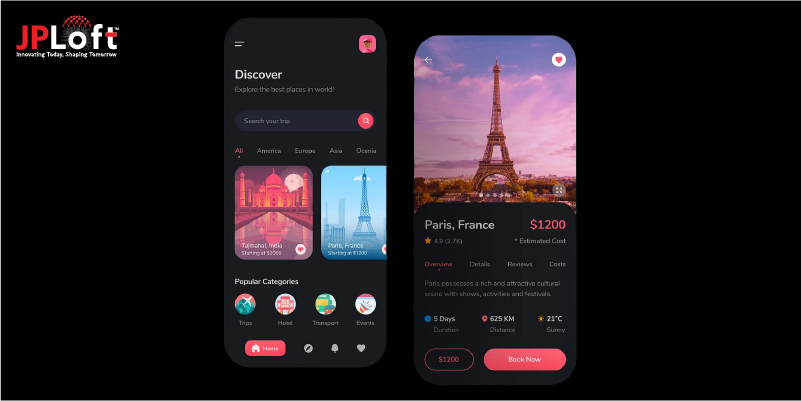
A travel super app is a single platform that brings together multiple travel services, flights, hotels, cabs, tours, insurance, and itineraries, into one seamless app. Instead of juggling multiple apps, travelers can manage their entire journey in one place.
1. Key Benefits of a Travel Super App
-
Convenience: Book flights, hotels, and transport without switching apps.
-
Personalization: AI-driven recommendations based on user preferences.
-
Loyalty Integration: Access rewards and loyalty programs in-app.
-
Real-time Updates: Get notifications for bookings, delays, and offers.
Businesses exploring how to create a travel super app must understand that it’s more than just combining services. It’s about creating a frictionless experience that saves time and enhances the traveler’s journey.
Many companies wonder how to create a travel app that handles multiple services while remaining user-friendly. The answer lies in smart API integrations, a robust backend, and a clean interface. Proper implementation ensures the app is reliable, fast, and intuitive.
2. Why Travel Super Apps Are Trending
-
Travelers prefer all-in-one platforms over multiple specialized apps.
-
Users expect personalized suggestions, instant support, and loyalty rewards.
-
Travel app development trends indicate that super apps are becoming the standard for modern digital travel.
By understanding how to make a travel super app correctly, businesses can deliver a competitive edge and meet the high expectations of today’s travelers.
How Does a Travel Super App Work?
A travel super app works by streamlining every step of a traveler’s journey into a single, seamless experience.
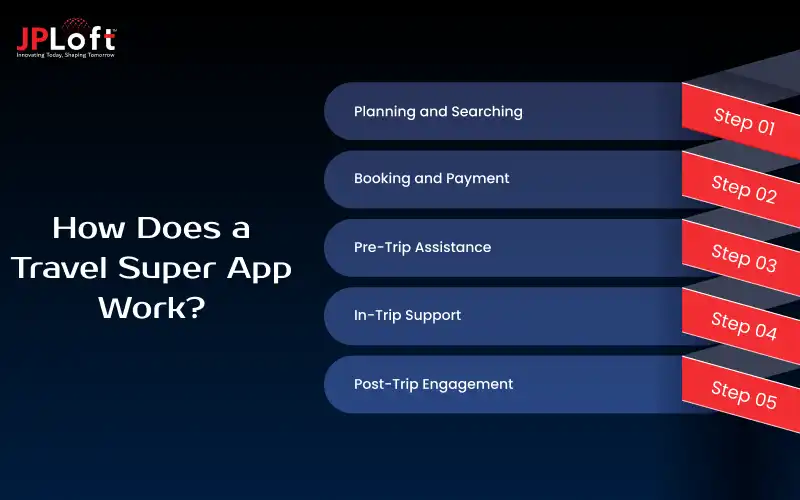
From planning a trip to completing bookings and exploring local attractions, the app integrates multiple services to save time and enhance convenience.
Step 1: Planning and Searching
Users start by entering their travel preferences, destination, dates, and activity interests. The app then provides personalized recommendations for flights, hotels, and tours. AI-powered engines analyze user behavior to suggest the best options.
Understanding how to develop a travel super app ensures the app can handle these complex queries efficiently while providing a smooth user experience.
Step 2: Booking and Payment
Once users select their preferred services, the app consolidates bookings into a single streamlined process. Secure payment gateways support credit/debit cards, digital wallets, and loyalty points.
Travelers can also modify or cancel bookings without leaving the app. Companies exploring how to create an app like Hopper can replicate this seamless booking flow, ensuring every step is fast and intuitive.
Step 3: Pre-Trip Assistance
Before the trip, travelers receive notifications for check-ins, flight updates, and local travel advisories.
AI-powered assistants can suggest nearby restaurants, attractions, or essential travel tips, making planning effortless. This proactive approach is one reason why building a travel super app is far more effective than maintaining multiple standalone apps.
Step 4: In-Trip Support
During travel, the app functions as a personal digital assistant. It provides navigation, language translation, ride-hailing, and activity recommendations.
Users can communicate with AI chat assistants for instant help or rebook services on the go. Many modern platforms follow examples of how to develop an app like Kayak to integrate real-time travel support and ensure smooth in-trip experiences.
Step 5: Post-Trip Engagement
After the journey, users can rate services, leave reviews, and claim loyalty rewards. This feedback loop allows the app to refine future recommendations.
Some apps even enable travelers to share experiences on social media, driving engagement. Businesses studying how to make an app like TripAdvisor can learn to incorporate post-trip engagement to boost retention and loyalty.

Why Build a Travel Super App Today?
Travel behavior has changed dramatically over the last few years. Travelers now expect convenience, personalization, and real-time support.
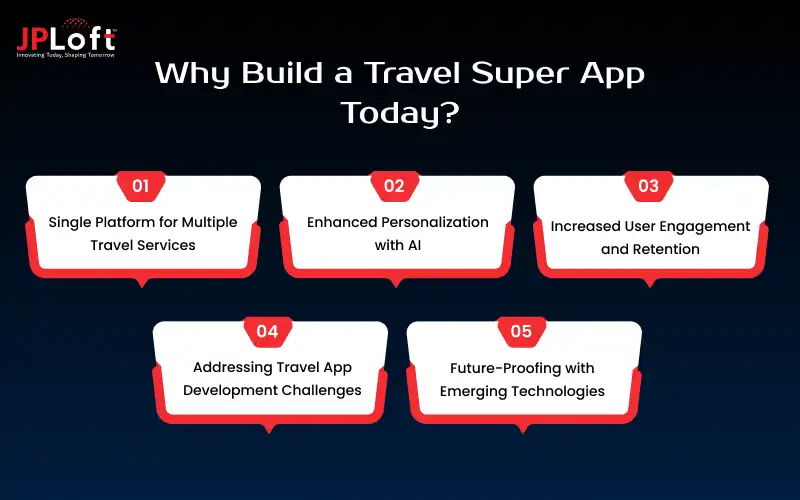
Building a travel super app today can give businesses a competitive edge while meeting these rising expectations. Here’s why it’s the perfect time to invest:
1] Single Platform for Multiple Travel Services
A travel super app consolidates flights, hotels, cabs, tours, and even insurance into one platform. This reduces friction for users and increases engagement.
Companies exploring how to make a travel super app can leverage this integration to create a seamless experience that keeps travelers returning.
2] Enhanced Personalization with AI
Modern travelers expect recommendations tailored to their preferences. By using AI algorithms, apps can suggest destinations, itineraries, and services that match individual behavior.
This also allows businesses to upsell personalized packages, improving revenue per user.
3] Increased User Engagement and Retention
By integrating loyalty programs, notifications, and in-app rewards, a travel super app keeps users engaged throughout the journey. Loyalty-based apps see up to 20% higher retention rates compared to apps without reward systems.
Personalized push notifications can boost engagement by up to 191%, keeping users active throughout their journey. Businesses can study and develop a super app strategy to learn how to maintain long-term user loyalty and satisfaction.
4] Addressing Travel App Development Challenges
Travel apps often face fragmentation, users must switch between multiple apps for different services.
A Super App solves this problem, offering a unified experience. Proper planning mitigates travel app development challenges while boosting reliability.
5] Future-Proofing with Emerging Technologies
Investing in a Travel Super App today allows integration with AI assistants, AR experiences, and predictive analytics.
This ensures your platform stays ahead of why online travel apps fail by adopting next-gen solutions before competitors do.
Key Features That Your Travel Super App Must Offer
A successful travel super app must go beyond simple booking functionalities. It should deliver a complete end-to-end experience, combining convenience, personalization, and reliability.
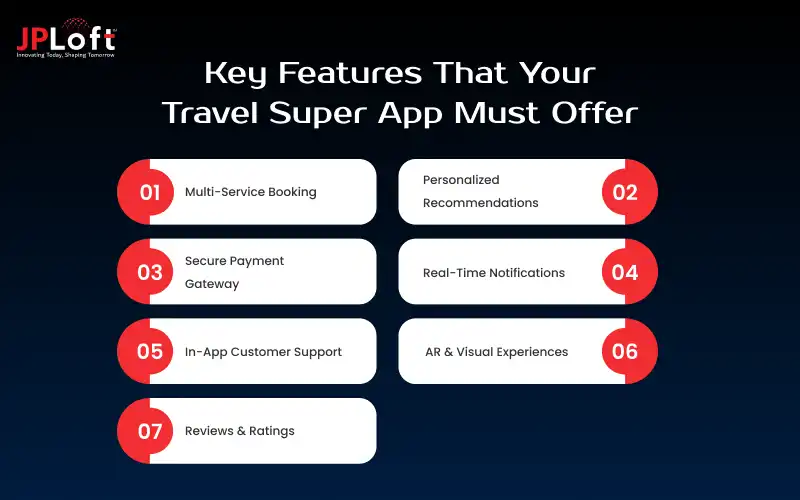
Here are the essential features every app should offer:
► Multi-Service Booking
Allow users to book flights, hotels, car rentals, tours, and travel insurance all in one app. This reduces friction and makes planning more efficient.
Businesses looking to create a Travel Super App can integrate multiple APIs to provide seamless bookings.
For example, apps like Skyscanner and Booking.com offer consolidated options, letting travelers compare and reserve services without switching apps.
► Personalized Recommendations
Use AI to analyze user behavior and suggest destinations, itineraries, and activities that match individual preferences.
Personalized suggestions increase user engagement and satisfaction. Incorporating top travel app features like predictive recommendations ensures travelers receive relevant options instantly, boosting app retention and potential upselling of premium services.
► Secure Payment Gateway
A robust payment system supports multiple methods, including credit/debit cards, digital wallets, and loyalty points.
Security builds trust and reduces transaction-related issues. Following proper travel app security ensures sensitive data is protected while maintaining a smooth checkout process. This feature directly impacts user confidence and repeat usage.
► Real-Time Notifications
Notify users about flight updates, hotel confirmations, promotional offers, or last-minute itinerary changes.
Real-time alerts keep travelers informed and engaged, reducing anxiety during trips. Apps like Expedia and Trip.com use proactive notifications to enhance the travel experience, ensuring users stay connected with relevant information.
► In-App Customer Support
Provide AI-powered chat assistants or live support to resolve queries instantly. Users feel more confident knowing help is available within the app, which improves retention.
Examples like Kayak’s AI chat and Skyscanner support highlight the importance of immediate assistance in driving trust.
► AR & Visual Experiences
Augmented Reality (AR) allows travelers to preview hotels, tours, or attractions before booking. Companies implementing AR in travel apps can create immersive experiences that help users make informed decisions.
For instance, AR hotel room previews or virtual destination tours provide added value and increase conversion rates.
► Reviews & Ratings
Enable users to submit reviews and rate services. Transparent feedback builds credibility and helps new users make informed decisions.
Leading apps like Tripadvisor leverage reviews to guide traveler choices, while also encouraging engagement and community-building within the app.
Together, these features form the core foundation of any high-performing travel super app. But having the right features is only the beginning, what truly determines success is how you build, integrate, and scale them. This is where a structured development approach becomes essential.
Steps to Build a Travel Super App
A successful travel super app requires a clear roadmap, from research to UI/UX, infrastructure, integrations, AI, QA, and scaling.
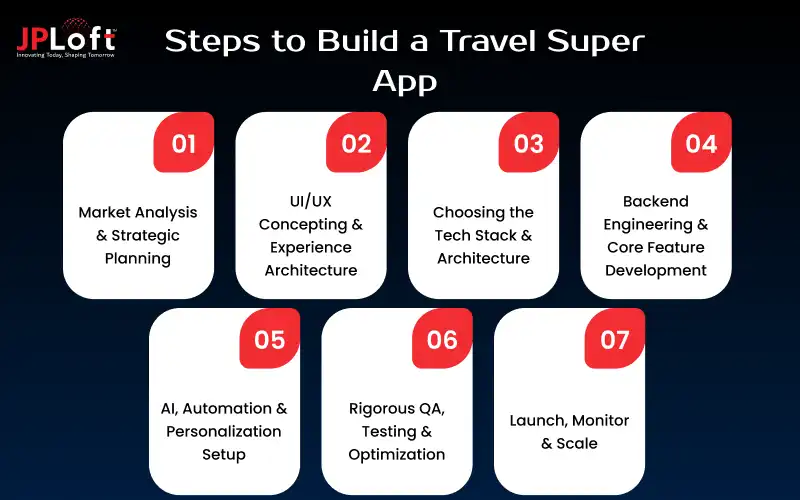
This section provides a complete travel super app development guide to help you plan, design, and execute every phase effectively while ensuring long-term growth and user satisfaction.
Step 1: Market Analysis & Strategic Planning
Before you create a travel super app, understanding your market dynamics, audience behavior, and competitive gaps is essential. This step shapes your feature priorities and long-term value proposition.
► Define target user groups
Segment business travelers, digital nomads, family vacationers, or luxury travelers. Each group demands unique features and pricing patterns.
► Study competitors & identify product gaps
Benchmark leaders like Hopper, Booking.com, and Trip.com to uncover unmet needs in bundles, price insights, itinerary personalization, or loyalty perks.
► Establish core product vision
Decide whether your app will begin with bookings, AI planning, rewards, or community-driven travel discovery.
► Validate revenue streams
Assess commission-based earnings, subscriptions, partnerships, and B2B integrations to ensure a profitable model from the start.
Step 2: UI/UX Concepting & Experience Architecture
A super app’s usability strongly influences retention. This is where you conceptualize seamless journeys, micro-interactions, and visual hierarchies relevant to How to Build a Travel Super App today.
► Map user journeys
Plot flows from search to booking confirmation to reduce friction and enhance app clarity.
► Develop wireframes for key screens
Create layouts for search filters, booking flows, itinerary dashboards, rewards, and payments to visualize structure before coding.
► Apply mobile-first design principles
Focus on responsiveness, thumb-friendly navigation, accessibility standards, and intuitive interface behaviors.
► Build interactive prototypes
Clickable prototypes allow early user testing and help refine the overall experience while aligning with modern guidelines for designing a travel app.
Step 3: Choosing the Tech Stack & Architecture
Your technology foundation determines performance, scalability, and data security. The right setup ensures your app can support millions of users and real-time bookings.
► Build robust backend architecture
Choose between microservices or modular monoliths depending on how fast you want to scale and integrate new modules.
► Select mobile development frameworks
Flutter, Kotlin, Swift, or React Native are common for travel super apps, depending on your performance and cost goals.
► Integrate core APIs & data services
Connect flights, hotels, car rentals, payment gateways, maps, currency converters, and geolocation services.
► Establish CI/CD & deployment workflows
Automate build pipelines, code testing, deployments, logging, and rollbacks, best practice for any modern mobile app tech stack planning.
Step 4: Backend Engineering & Core Feature Development
This is where your Travel Super App starts becoming functional. Search systems, booking engines, payments, and user accounts are engineered here.
► Develop scalable search engines
Implement caching, distributed processing, and intelligent ranking for fast flight and hotel search results.
► Build booking & reservation engines
Ensure availability checks, price accuracy, partner confirmations, and cancellation workflows are reliable and real-time.
► Develop authentication & user account systems
Social logins, biometrics, MFA, and token-based security help safeguard user data.
► Integrate multi-mode payments
Include cards, wallets, BNPL, points, and global currencies—part of a modern and modular travel app tech stack strategy.
Step 5: AI, Automation & Personalization Setup
AI radically improves travel discovery, itinerary planning, and support efficiency, making it essential for anyone aiming to develop a travel super app with future-ready capabilities.
► Build recommendation engines
AI analyzes user interests, travel history, and budgets to suggest tailored destinations and activities.
► Implement smart itinerary planning
Machine learning automates trip creation, optimizing routes, timelines, and cost predictions.
► Use predictive analytics
AI anticipates price drops, peak seasons, and availability changes to help users book at the right time.
► Deploy intelligent chatbots
AI chatbots enhance customer support by managing booking queries, modifications, and real-time travel alerts.
Step 6: Rigorous QA, Testing & Optimization
Testing ensures your app performs flawlessly under real-world travel scenarios, search surges, currency changes, policy conflicts, and more.
► Conduct functional and UX testing
Validate every user flow across devices, networks, and platforms for smooth operations.
► Perform performance & load testing
Simulate large booking traffic to confirm speed and server resilience during peak travel seasons.
► Carry out advanced security testing
Protect against fraudulent transactions, API vulnerabilities, database breaches, and identity theft.
► Test travel-logic scenarios
Check date errors, location mismatches, multi-city journeys, and flight disruptions using structured workflows inspired by robust travel app testing approaches.
Step 7: Launch, Monitor & Scale
After rigorous testing, your Travel Super App is ready for deployment. Launch strategy and continuous monitoring determine your long-term success.
► Start with a beta launch
Test with limited users and incorporate feedback to refine flows and fix bugs.
► Monitor user analytics & booking metrics
Track conversion rates, user drop-offs, high-performing modules, and engagement trends.
► Roll out new modules gradually
Introduce loyalty programs, memberships, social sharing, or premium AI planning as your user base grows.
► Scale infrastructure based on traffic
Implement cloud autoscaling and redundancy systems, a best practice across teams looking to develop a mobile app with sustainable performance.

Use of Advanced Technologies in a Travel Super App
Modern travel super apps rely heavily on advanced technologies to deliver seamless, predictive, and highly personalized user experiences.
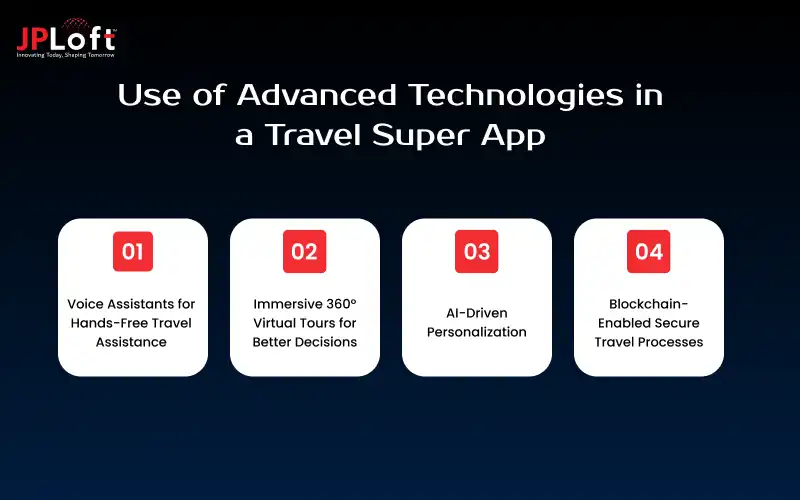
These technologies not only make travel planning smoother but also increase trust, safety, and convenience for users at every stage of their journey.
1] Voice Assistants for Hands-Free Travel Assistance
The role of AI voice assistants in travel is rapidly expanding, offering hands-free assistance throughout the journey. Travellers can search flights, modify bookings, check real-time updates, and navigate destinations using simple voice commands; ideal for multitasking and on-the-go support.
2] Immersive 360° Virtual Tours for Better Decisions
Before booking, users want a deeper sense of destinations. Brands increasingly develop a 360 VR app for tourism to let travellers experience hotels, attractions, and local areas virtually. These immersive previews help users make confident choices and improve booking conversions.
3] AI-Driven Personalization
AI helps a travel super app understand user intent, preferences, and real-time behavior. From suggesting destinations to optimizing itineraries based on budget and interests, AI enhances the decision-making experience. It also supports dynamic recommendations for accommodations, flights, and activities.
4] Blockchain-Enabled Secure Travel Processes
Blockchain in travel apps brings transparency and safety to bookings, identity verification, and payment flows. Its decentralized structure reduces fraud and ensures travellers have tamper-proof digital records for loyalty points, tickets, and transactions, strengthening trust.
Real-World Case Studies of Travel Apps
Studying global travel apps reveals what makes a super travel app-like development successful, scalable, and user-centric.
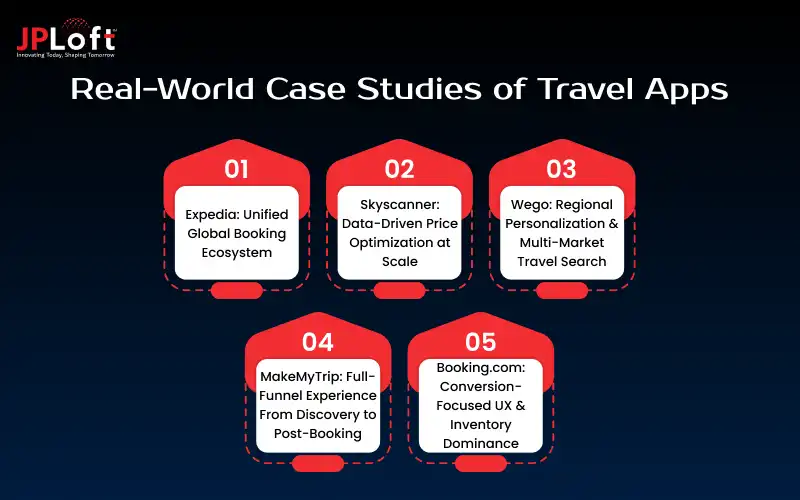
These real-world examples highlight how leading brands solved user pain points, optimized booking flows, and enhanced personalization; key insights for those planning to develop a travel super app.
1. Expedia: Unified Global Booking Ecosystem
Expedia has built a powerful multi-service ecosystem combining flights, stays, cars, activities, and loyalty programs under one platform. The brand’s success comes from simplifying global travel discovery through intelligent search, transparent pricing, and smooth in-app payments.
Its operational model serves as a strong reference for brands researching how to develop an app like Expedia with a similar one-stop approach. Expedia’s focus on customer-centric UX and massive inventory makes it an ideal benchmarking case.
2. Skyscanner: Data-Driven Price Optimization at Scale
Skyscanner stands out for its advanced fare prediction engine powered by AI and large-scale travel data. The platform offers price alerts, flexible date searches, and real-time fare comparisons, solving one of travel’s biggest friction points: unpredictability in costs.
Companies aiming to develop a travel super app can learn from how Skyscanner blends smart analytics with a simple UI. This becomes especially relevant when planning to develop a travel app like Skyscanner, particularly for brands wanting to excel in flight search intelligence.
3. Wego: Regional Personalization & Multi-Market Travel Search
Wego achieved fast growth across Asia and the Middle East by localizing content, currencies, and inventory. Its platform integrates hotels, flights, deals, and travel guides tailored to regional user behavior.
It is a strong reference point for teams exploring how to develop a travel booking app like Wego, especially when building a multi-country travel super app targeting emerging markets. Wego’s success proves that hyper-localization is a core driver of adoption.
4. MakeMyTrip: Full-Funnel Experience From Discovery to Post-Booking
MakeMyTrip has evolved from a flight-booking platform into a comprehensive travel ecosystem offering hotels, buses, trains, activities, payments, and loyalty benefits. The brand excels at pre-trip planning, real-time travel support, and post-trip engagement using AI-driven personalization.
Its model mirrors key principles of the super travel app like development, especially in markets requiring price-sensitive and multilingual experiences. MakeMyTrip demonstrates the value of addressing the entire end-to-end travel journey.
5. Booking.com: Conversion-Focused UX & Inventory Dominance
Booking.com’s strength lies in its extensive global hotel inventory and frictionless booking experience. The platform uses machine learning to deliver personalized suggestions, urgency triggers, and price transparency, significantly improving conversions.
For brands planning to develop a travel super app, Booking.com app development provides a clear example of how data, simplicity, and trust signals shape user decisions. Its model shows how a travel super app can scale through continuous optimization and merchant partnerships.
Cost to Make a Travel Super App
The cost to make a travel super app typically ranges from $20,000 to $150,000+, depending on the scale, features, and technology stack your product requires.
Every business that wants to understand the cost to make a travel super app must evaluate not only development hours but also design depth, integrations, security layers, and long-term scalability.
Building such a platform isn’t as simple as coding various modules together. You must first understand how to build a travel super app strategically, planning features, defining user workflows, and selecting the right tech stack that ensures your app performs flawlessly even under heavy user load.
Estimated Cost Breakdown to Create a Travel Super App
|
Development Component |
Estimated Cost Range |
|
UI/UX Design |
$3,000 – $20,000 |
|
Frontend Development |
$5,000 – $25,000 |
|
Backend Development + Database |
$7,000 – $30,000 |
|
API Integrations (Flights, Hotels, Payments) |
$4,000 – $20,000 |
|
AI/ML Personalization Systems |
$5,000 – $25,000 |
|
Multi-Service Workflow Setup |
$3,000 – $15,000 |
|
Security, Compliance & Encryption |
$2,000 – $18,000 |
|
Admin Panel & Management Dashboard |
$2,500 – $20,000 |
|
QA, Testing & Optimization |
$1,500 – $17,000 |
|
Deployment + DevOps |
$1,000 – $15,000 |
|
Total Estimated Cost |
$20,000 – $150,000+ |
Monetization Strategies for Travel Super Apps
To scale efficiently and stay profitable, every business must understand how revenue flows within a multi-service travel ecosystem.
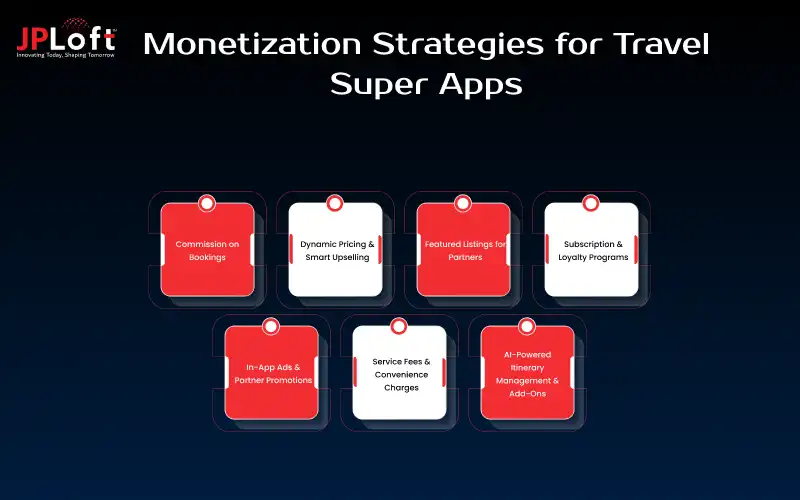
Effective travel app monetization strategies emphasize diversified, low-friction channels that drive recurring income and long-term user retention. When you aim to develop a travel super app, your monetization model is as important as your feature set.
A] Commission on Bookings
One of the most powerful revenue streams for travel super apps is earning commissions on hotels, flights, activities, and transport bookings.
Every successful travel platform, from regional players to global powerhouses, relies on this model to generate steady income without adding friction for users.
B] Dynamic Pricing & Smart Upselling
Travel super apps can boost revenue by offering premium inventory, travel bundles, or dynamic fare options.
AI-driven upselling (e.g., seat upgrades, room category improvements, or same-day deals) enhances the user experience while increasing average order value, one of the core recommendations in any advanced travel super app development guide.
C] Featured Listings for Partners
Hotels, tour operators, and airlines frequently pay for priority placement or sponsored slots within search results.
This model benefits both sides: partners improve visibility, and the platform unlocks a high-margin revenue stream while maintaining user trust with transparent labels.
D] Subscription & Loyalty Programs
Premium memberships offering fast checkout, discounts, no-fee cancellations, or exclusive travel deals are becoming increasingly popular.
When you develop a travel super app, loyalty programs also help create recurring revenue while improving retention.
E] In-App Ads & Partner Promotions
Ads from travel brands, insurance partners, luggage companies, or fintech firms can generate significant revenue when implemented carefully.
Native, non-intrusive ads tend to perform best, especially when powered by personalization engines.
F] Service Fees & Convenience Charges
Many travel apps add small service fees for instant confirmations, special seat selections, or last-minute deals. When scaled across thousands of monthly transactions, these micro-fees create meaningful revenue without harming user experience.
More detailed insights into pricing models can be explored by analyzing how top travel platforms structure their fees, especially when building monetization around multi-service journeys.
G] AI-Powered Itinerary Management & Add-Ons
Advanced itinerary planning, document storage, trip reminders, and smart suggestions can be monetized through optional add-on packs or premium travel planning tools.
This is particularly relevant for companies exploring how to develop a travel planner app like TripIt, where smart itinerary management is a core revenue driver.
Connect with JPLoft to Build Your Travel Super App
Building a full-scale, multi-service travel platform requires more than coding; it demands strategy, innovation, and flawless execution. If you want to make a travel super app that stands out globally, JPLoft brings the perfect blend of expertise, technology, and vision.
As a leading travel app development company, JPLoft helps businesses plan, architect, design, and launch feature-rich super apps tailored to every use case. From intelligent booking engines to AI-driven personalisation, our team knows exactly how to create a travel super app that performs, scales, and succeeds in a competitive digital travel landscape.
Whether you're a startup, enterprise, or established travel brand, we turn your ideas into a high-performing super app built for long-term growth.
Ready to build the next big thing in travel? Let JPLoft turn your super app vision into reality.

Conclusion
Building a modern, scalable travel platform requires clear planning, the right technology, and a strong understanding of user expectations.
Whether you’re exploring how to build a travel super app, planning features, or refining workflows, the goal remains the same, delivering a seamless end-to-end travel experience.
As you move from ideation to execution, ensuring the right strategy will help you create a travel super app that truly stands out.
And for businesses evaluating how to make a travel super app, the journey becomes easier when guided by proven development practices, thoughtful UI/UX, and long-term scalability.
Your travel super app can become the next big success with the right vision and execution.
FAQs
A travel super app is an all-in-one platform that combines flights, hotels, transportation, activities, payments, itineraries, and more into a single unified ecosystem. It offers end-to-end travel solutions without requiring multiple standalone apps.
To build a travel super app, start by defining your core services, selecting the right tech stack, integrating secure APIs for bookings, designing seamless multi-service workflows, and implementing AI-powered personalization. A strong development roadmap and scalable architecture are essential for long-term growth.
Essential features include real-time booking, itinerary management, AI recommendations, map integration, multiple payment options, customer support, loyalty programs, and multi-currency support. Advanced apps also offer trip planners, voice search, and smart travel alerts.
The development timeline typically ranges from 4–12 months depending on features, integrations, design complexity, and the level of personalization required. Super apps with multiple services may take longer.
Most travel super apps use AI, machine learning, cloud infrastructure, secure APIs, geolocation services, voice assistants, and sometimes blockchain. These technologies enable real-time insights, personalization, and faster performance.
Costs vary widely depending on features, platforms, geographic location of developers, and integrations. A typical budget ranges from $20,000 to $100,000+ for MVP builds, while highly advanced super apps may exceed this range.

Kris Jacobs brings 20+ years of experience in digital product strategy, user-focused design, and solving complex product challenges. She has worked across on-demand services, travel, entertainment, sports, insurance, education, and service marketplaces, including handyman, dog-walking, courier, event-management, and equine platforms. Her focus is on shaping practical, scalable digital experiences that align user needs with business goals and long-term product growth.



Share this blog