


Key takeaways:
Building a Wanderlog-like app requires clear vision, user-first design, and a scalable tech foundation to ensure long-term growth and platform sustainability.
Investing in a Wanderlog-like app offers strong business potential driven by digital travel transformation and increasing user dependence on smart planning platforms.
A structured development process, from ideation to deployment, ensures faster execution, better product quality, and reduced time-to-market risks.
The right feature mix, including AI, collaboration, and immersive experiences, is essential for creating a competitive and engaging travel planning platform.
Development costs vary by complexity and integrations, making early budgeting and cost planning critical for sustainable and profitable app development.
Leveraging AI, ML, chatbots, and AR future-proofs your app and aligns it with evolving traveler expectations and technology trends.
Partnering with JPLoft ensures expert guidance, strong execution, and full-cycle support to transform your idea into a scalable, market-ready product.
Planning trips today isn’t just about booking flights and hotels; it’s about creating seamless, personalized travel experiences. Apps like Wanderlog have transformed how travelers organize itineraries, discover destinations, and manage trips in one place.
For startups and travel brands, this shift creates a powerful opportunity to create an app like Wanderlog that combines planning, discovery, and collaboration into a single intelligent platform.
So, how to build a travel planning app like Wanderlog? Building a travel planning app like Wanderlog, focus on user-centric UX design, AI-driven personalization, and real-time collaboration, supported by secure cloud infrastructure, scalable architecture, and seamless third-party integrations.
Whether you’re a travel entrepreneur or a digital business looking to enter the tourism space, building a smart trip-planning solution can unlock new revenue streams and long-term user engagement.
This guide explores the features, technology, costs, and strategy you need to develop an app like Wanderlog and build a scalable travel planning product that users genuinely love.
Wanderlog Overview & Current Market Stats
Wanderlog is a comprehensive travel planning app that helps travelers build detailed trip itineraries, organize flights and hotel bookings, plan routes on interactive maps, track budgets and expenses, and collaborate with friends in real time.
It works across devices and offers features like Gmail reservation import, offline access, route optimization, and packing checklists, making it a go-to tool for both solo and group travel planning in 2025 and beyond.
The global travel app space is booming, making it one of the strongest categories for consumer engagement and business opportunities, especially as users increasingly rely on digital platforms to plan, book, and manage their journeys.
Here’s what the latest market data shows about where things stand:
-
The global travel and tourism apps market is expected to grow at a CAGR of 18.50% from 2025 to 2034, reaching a value of ~USD 3,552.7 billion by 2034.
-
The travel planner app market is estimated to be USD 4.2 billion in 2025 and is expected to grow to USD 9.3 billion by 2032 at a CAGR of ~11.2% (2025–2032).
-
The broader travel app platforms market is expected to grow from ~USD 134.4 billion in 2023 to ~USD 242.4 billion by 2030 (CAGR ~9.2%).
-
With mobile penetration rising and travelers expecting richer functionality, mobile app ideas focused on personalization, itinerary management, and real-time updates continue to attract investment and user loyalty.
These figures highlight the immense growth potential for travel planning solutions, and why investing in a create an app like Wanderlog project now could position you at the forefront of this expanding digital travel economy.
Why You Should Invest in a Wanderlog-Like App
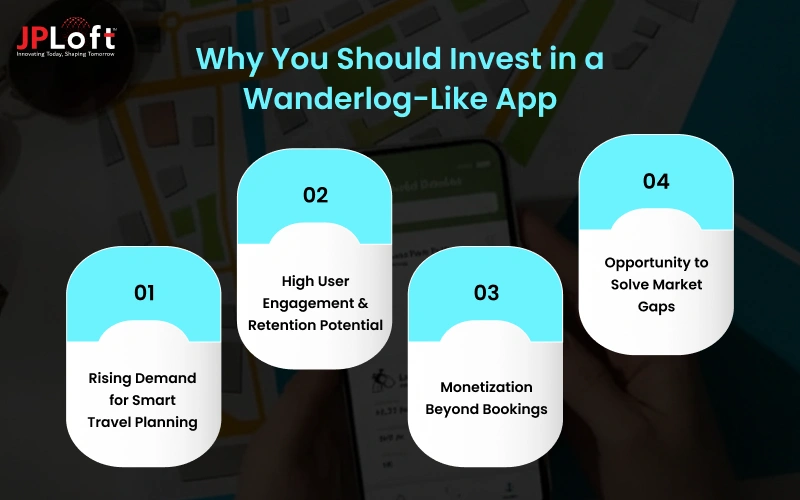
Here are key business reasons to invest in building a travel planning platform similar to Wanderlog, each focused on growth, scalability, and long-term value:
1. Rising Demand for Smart Travel Planning
Modern travelers prefer digital-first planning tools that centralize itineraries, bookings, and collaboration.
This growing demand makes it the right time to make an app like Wanderlog that simplifies trip organization while offering real-time planning convenience.
2. High User Engagement & Retention Potential
Trip-planning apps naturally drive repeat usage before, during, and after travel.
When businesses develop an app like Wanderlog, they create a product ecosystem that stays relevant across the entire travel lifecycle, not just at booking stages.
3. Monetization Beyond Bookings
Unlike traditional travel apps, planning platforms unlock diversified revenue streams such as premium subscriptions, partnerships, and in-app services.
This makes it easier to build apps like Wanderlog as long-term digital assets, not just utility tools.
4. Opportunity to Solve Market Gaps
Many platforms struggle due to poor UX, weak personalization, and fragmented services, clear reasons why online travel apps fail.
A well-designed Wanderlog-style solution can fix these gaps through smarter UX, AI-driven planning, and seamless integrations.
This makes Wanderlog-like app development a high-potential investment in today’s experience-driven travel economy.
How to Develop an App Like Wanderlog?
Developing a travel planning app requires strategic planning, technology alignment, and user-focused design.
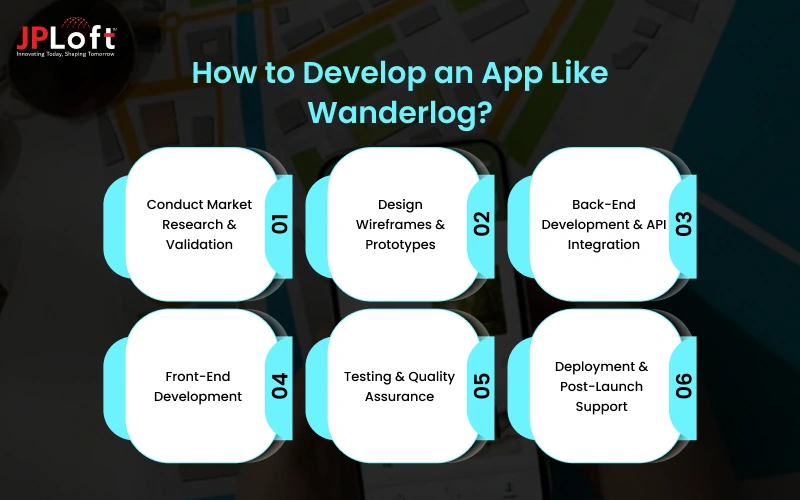
Following a step-by-step roadmap ensures your solution is scalable, intuitive, and engaging, allowing travelers to organize, collaborate, and enjoy seamless trip planning experiences.
Step 1: Conduct Market Research & Validation
Validating your app idea through competitor analysis and traveler surveys ensures you develop an app like Wanderlog that meets expectations. This reduces market risk while highlighting opportunities for differentiation and growth.
► Analyze Competitor Apps
Identify top travel apps and their features, strengths, and weaknesses. Benchmarking helps refine your unique value proposition, ensures you address gaps, and allows your app to stand out in the competitive travel planning space effectively.
► Define Target Audience
Segment travelers by demographics, behavior, and travel habits. Understanding your audience allows you to create an app like Wanderlog with tailored itineraries, collaboration features, and personalized recommendations that increase adoption and retention.
► Validate Business Model
Choose between freemium, subscription, or in-app monetization models. Testing your mobile app monetization model early ensures profitability and aligns your app with user willingness to pay, building a sustainable revenue stream for long-term success.
Step 2: Design Wireframes & Prototypes
Wireframes and prototypes provide a visual representation of workflows, screens, and features. Using app wireframes and app prototype tools ensures your app is intuitive, easy to navigate, and ready for development iterations.
► Plan UI/UX Design
Create screens that are visually appealing and easy to use. Prioritize intuitive navigation, consistent branding, and essential features to ensure travelers enjoy smooth and enjoyable experiences while planning their trips efficiently.
► Prototype Testing
Test early prototypes with real users to gather feedback on navigation and feature usability. Iterative testing reduces errors, improves satisfaction, and ensures the product experience is intuitive, stable, and user-centered.
► Feature Prioritization
Identify core functions such as itinerary creation, collaboration, and map integration. Prioritizing features allows you to build an MVP that delivers value quickly while validating demand before investing in full-scale development.
Step 3: Back-End Development & API Integration
The back-end manages data storage, synchronization, and scalability. Integrating booking, mapping, and third-party APIs ensures you develop a trip planner app like Wanderlog provides real-time updates and handles user demands reliably.
► Database Management
Select a secure, high-performance database to store itineraries, bookings, and preferences. Optimized architecture ensures fast data retrieval, scalability, and reliability while safeguarding sensitive traveler information from breaches or misuse effectively.
► API Integrations
Connect maps, booking engines, and travel services using APIs. Proper integration allows your Wanderlog clone app development to deliver accurate, real-time information seamlessly, enhancing the traveler’s planning experience and reducing app errors.
► Server & Cloud Setup
Use cloud servers that scale to handle peak traffic efficiently. Cloud infrastructure ensures global availability, performance reliability, and uninterrupted service for users, allowing your app to grow without compromising speed or accessibility.
Step 4: Front-End Development
The front-end is the user-facing interface. Using modern frameworks ensures the app is fast, responsive, visually engaging, and delivers a seamless user experience across devices.
► Interactive UI Elements
Implement intuitive buttons, forms, and navigation menus. A responsive interface enhances usability and ensures travelers can plan trips efficiently without confusion or delays, improving engagement and retention.
► Cross-Platform Responsiveness
Develop a responsive design compatible with iOS and Android. Ensuring consistency across devices maximizes reach and provides travelers with a consistent experience regardless of their preferred mobile platform.
► Visual Appeal
Use vibrant visuals, maps, and interactive elements to make trip planning enjoyable. A visually engaging interface encourages repeated app usage, making it easier to how to design a travel app that captivates users.
Step 5: Testing & Quality Assurance
Rigorous mobile app testing ensures your app functions correctly, performs consistently, and is secure. Conduct functional, usability, and performance tests to prepare your Wanderlog-like app development for a successful launch with high user satisfaction.
► Functional Testing
Check every feature for proper functionality, including itinerary creation, map integration, and collaboration tools. Ensuring all features work as expected prevents user frustration and reduces post-launch issues.
► Usability Testing
Observe real users interacting with the app to identify navigation or interaction challenges. This ensures your solution is intuitive, enjoyable, and easy to use for travelers of all experience levels.
► Security Testing
Test data protection measures, encryption, and access controls. Travel apps handle sensitive information, so maintaining strong travel app security prevents breaches and builds user trust in your Wanderlog clone app development.
Step 6: Deployment & Post-Launch Support
Launch the app on app stores, monitor user analytics, and gather feedback. Using app maintenance services ensures updates, performance improvements, and issue resolution, keeping your travel planning app relevant and competitive.
► App Store Deployment
Publish your app on the Play Store or submit your app to the App Store by following the platform’s guidelines. Proper deployment ensures discoverability and accessibility to travelers, increasing downloads and establishing a strong market presence immediately.
► Monitor Analytics
Track user engagement, retention, and behavior patterns. Analytics help identify feature success, optimize workflows, and inform future updates, enabling you to develop a trip planner app like Wanderlog that meets user needs continuously.
► Continuous Updates
Regularly release bug fixes, feature enhancements, and security updates. Continuous improvement ensures your app remains relevant, competitive, and trusted by users, maximizing long-term engagement and revenue.
Features to Integrate in a Wanderlog-like App
A successful trip planning app combines core functionalities, personalization, and collaboration tools.
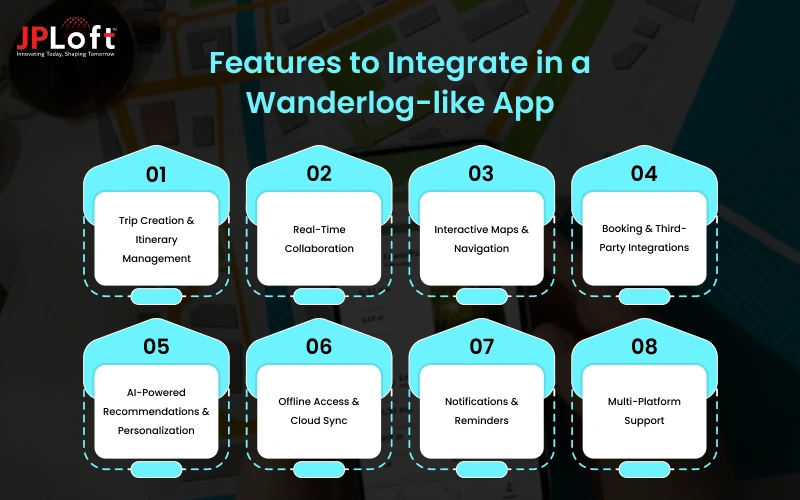
Integrating the right travel app features ensures user engagement, retention, and monetization while differentiating your solution from competitors in the travel planning market.
1. Trip Creation & Itinerary Management
Allow users to create trips, add destinations, and organize activities efficiently. This core function is essential to create an app like Wanderlog that empowers travelers to plan detailed itineraries with seamless collaboration.
2. Real-Time Collaboration
Enable users to share trips with friends or family, allowing live updates and joint editing. Real-time collaboration enhances engagement and is a key Wanderlog-like app development feature that encourages social planning experiences.
3. Interactive Maps & Navigation
Integrate GPS-based maps, route planning, and navigation tools. These functionalities allow travelers to visualize destinations and optimize routes, improving usability and trip management across multiple locations.
4. Booking & Third-Party Integrations
Connect with flights, hotels, and activity booking APIs. This enables users to complete reservations inside the app, increasing convenience while providing a complete platform to develop an app like Wanderlog effectively.
5. AI-Powered Recommendations & Personalization
Leverage AI trip planning app’s technologies to suggest destinations, restaurants, and experiences based on user preferences. AI enhances engagement by providing personalized recommendations that improve the overall travel planning experience.
6. Offline Access & Cloud Sync
Allow users to access itineraries offline while syncing changes across devices. This reliability supports consistent planning experiences and helps users create a trip planner like Wanderlog, even in remote areas with limited connectivity.
7. Notifications & Reminders
Send push notifications for upcoming activities, booking confirmations, or schedule updates. Timely reminders keep travelers informed, reduce missed events, and increase engagement, making it easier to build a trip planner app like Wanderlog.
8. Multi-Platform Support
Ensure accessibility via iOS, Android, and web platforms. Multi-platform availability allows a wider audience to plan trips efficiently and ensures users can make an app like Wanderlog accessible anytime, anywhere.
How Much Does it Cost to Develop an App like Wanderlog?
Developing a travel planning app can range between $20,000 to $120,000+, depending on complexity, platform, features, and integrations. Early budgeting helps align your expectations with development realities while planning a profitable solution.
Here’s a detailed cost breakdown:
|
Development Component |
Estimated Cost (USD) |
Description |
|
Market Research & Planning |
2,000 – 5,000 |
Research target audience, competitors, and validate your create an app like Wanderlog idea for feasibility and market demand. |
|
UI/UX Design & Wireframes |
3,500 – 10,000 |
Designing interactive screens and wireframes to ensure smooth navigation and a user-friendly interface. Helps plan how to create an app like Wanderlog? effectively. |
|
Front-End Development |
8,000 – 25,000 |
iOS, Android, or cross-platform coding for a responsive interface that supports trip planning and collaboration for your app. |
|
Back-End Development & API Integration |
10,000 – 30,000 |
Server setup, cloud storage, database management, and integration of booking or mapping APIs to enable a full-featured travel app. |
|
Advanced Features & AI |
5,000 – 15,000 |
Features like AI recommendations, collaborative planning, and smart suggestions enhance usability and differentiate your Wanderlog-like app development. |
|
Testing & Quality Assurance |
3,000 – 7,000 |
Functional, usability, and performance testing ensure your app is stable, secure, and ready for user adoption. |
|
Deployment & Post-Launch Support |
2,500 – 8,000+ |
Publishing on app stores and ongoing support, including updates and bug fixes, ensures smooth long-term performance. |
|
Optional Enhancements |
5,000 – 15,000 |
Features like offline access, push notifications, and multi-language support can increase engagement and improve user experience. |
Key Considerations for Cost
-
Platform Choice: Developing for a single platform reduces cost, while multi-platform apps require more investment.
-
Feature Complexity: Adding AI, advanced analytics, or booking integrations increases development costs.
-
Development Approach: Hiring a professional team versus freelancers impacts overall expenditure.
-
Budget Planning: Aligning features with your budget ensures your cost to create a travel app meets expectations without overspending.
Overall, the cost to develop a mobile app like Wanderlog depends on design, features, team, and technology choices. A small MVP may start around $20K, whereas a full-featured app with AI, collaboration, and AR functionalities can exceed $120K.
Key Challenges While Developing an App like Wanderlog
Building a comprehensive travel planning app comes with multiple travel app development challenges, from technical complexity to user experience issues.
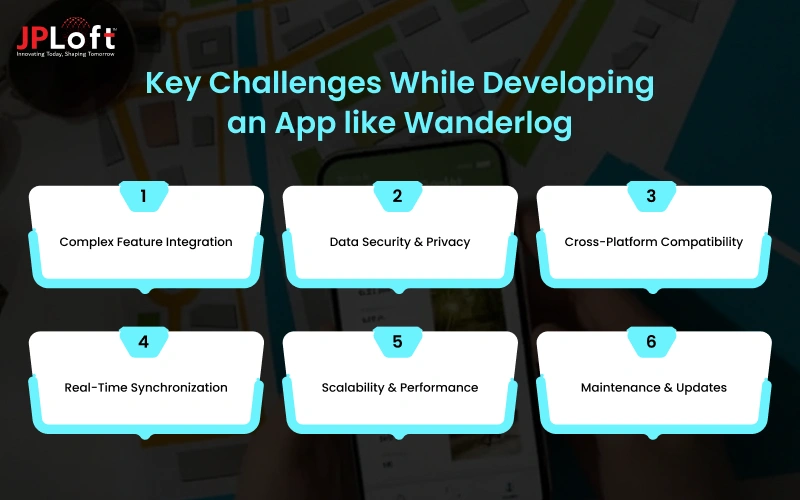
Recognizing these obstacles early ensures smoother execution, better budgeting, and a higher chance of success.
Challenge 1: Complex Feature Integration
Integrating features like collaborative planning, AI recommendations, and third-party bookings requires careful coding and synchronization. Managing multiple features simultaneously can increase errors and development time, making develop an app like Wanderlog more challenging.
Solution: Use modular architecture, API-first development, and microservices to isolate system components. This reduces dependencies, improves stability, and simplifies future feature expansion.
Challenge 2. Data Security & Privacy
Handling traveler data, bookings, and payment information demands strict security protocols.
Implementing encryption, secure login, and GDPR compliance ensures your app meets user expectations and maintains travel app security standards.
Solution: Implement end-to-end encryption, secure authentication, and compliance-based data handling. This ensures regulatory alignment, protects user data, and builds long-term trust.
Challenge 3: Cross-Platform Compatibility
Ensuring consistent performance across iOS, Android, and web platforms is technically demanding. Differences in device resolutions, OS versions, and frameworks can slow development for a Wanderlog-like app development project.
Solution: Adopt cross-platform frameworks and unified design systems for consistent experiences. This minimizes platform conflicts and accelerates development across devices.
Challenge 4: Real-Time Synchronization
Collaborative trip planning requires real-time updates across multiple devices. Ensuring data consistency and minimizing latency is critical to maintaining a smooth experience and avoiding user frustration while you develop a trip planner app like Wanderlog.
Solution: Use real-time databases, cloud messaging, and socket-based communication systems. This ensures instant updates, data accuracy, and seamless collaboration.
Challenge 5: Scalability & Performance
Supporting growing numbers of users, large itineraries, and high server loads requires careful back-end architecture. Failing to scale properly can compromise usability and performance, impacting overall traveler satisfaction.
Solution: Build on cloud infrastructure with load balancing and scalable server architecture. This supports growth, manages traffic spikes, and maintains performance reliability.
Challenge 6: Maintenance & Updates
Frequent updates, bug fixes, and feature improvements are essential post-launch. Planning for regular maintenance ensures continued app performance, keeps users engaged, and sustains long-term reliability of your travel app.
Solution: Establish CI/CD pipelines, monitoring tools, and structured update cycles. This ensures system stability, faster improvements, and long-term product health.
Top Trends You Can Leverage While Developing an App like Wanderlog
In 2025–2026, travel planning apps are evolving rapidly, driven by travel app trends such as AI personalization, machine learning recommendations, chatbots, and immersive AR experiences.
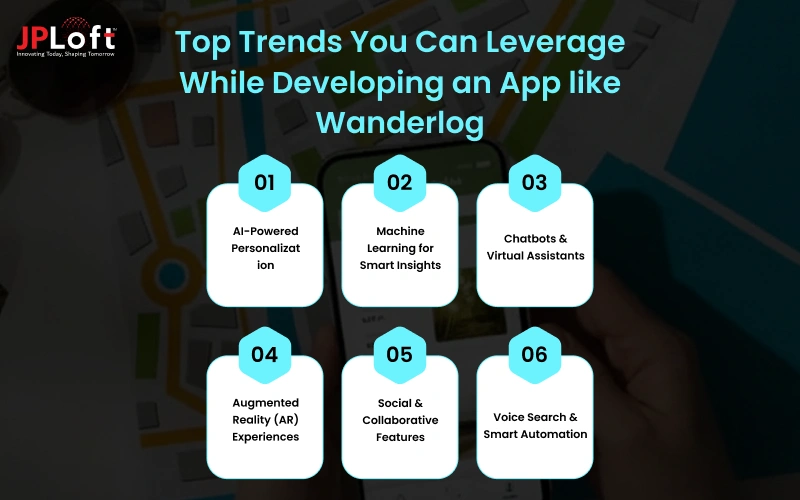
Leveraging these technologies helps your Wanderlog-like app development stay competitive and innovative.
1. AI-Powered Personalization
AI enables smart itinerary suggestions, personalized destination recommendations, and predictive travel insights. AI in travel apps ensures users receive tailored experiences, improving engagement and encouraging repeat use for a develop-an-app-like-Wanderlog solution.
2. Machine Learning for Smart Insights
Machine learning algorithms analyze user behavior, preferences, and travel patterns to optimize suggestions. Using ML to automate planning enhances decision-making and allows your app to offer advanced insights, aligning with modern create an app like Wanderlog strategies.
3. Chatbots & Virtual Assistants
Interactive chatbots provide instant customer support, travel guidance, and booking assistance. Incorporating conversational AI helps travelers resolve queries quickly, improving user satisfaction while creating smoother, more human-centered digital travel experiences.
4. Augmented Reality (AR) Experiences
Augmented reality helps users explore landmarks, hotels, and routes through immersive visual overlays in real time. AR in travel apps creates interactive travel experiences that feel intuitive, engaging, and naturally connected to real-world journeys for smarter planning decisions.
5. Social & Collaborative Features
Collaborative trip planning and social sharing are increasingly popular. Leveraging social integrations allows users to plan trips with friends, share updates, and stay connected, following emerging trends in community-driven planning.
6. Voice Search & Smart Automation
Voice-enabled searches and automated reminders simplify planning and booking processes. Integrating AI-driven voice functions ensures convenience, reflecting next-generation practices for Wanderlog clone app development in the travel industry.
How JPLoft Can Help You Develop an App Like Wanderlog?
As a trusted travel app development company, JPLoft specializes in building scalable, secure, and high-performance travel solutions tailored to modern user expectations.
From strategy and UI/UX to full-cycle development and deployment, we help businesses create an app like Wanderlog that stands out in a competitive market.
Our team combines deep technical expertise with industry insights to design intuitive interfaces, implement AI-powered personalization, integrate third-party travel APIs, and build robust cloud-based architectures.
Whether you're planning to develop an app like Wanderlog as an MVP or launch a full-featured platform, JPLoft delivers solutions that are future-ready, scalable, and built for long-term growth.
Partner with JPLoft to transform your travel app idea into a powerful, user-loved digital product that drives engagement, loyalty, and revenue.
Conclusion
Building a travel planning app like Wanderlog is more than just a development project, it’s a strategic business opportunity in a rapidly growing digital travel ecosystem.
With the right features, technology stack, and development approach, you can create an app like Wanderlog that delivers real value to modern travelers.
From smart planning tools and AI-driven personalization to collaborative experiences and scalable architecture, every element plays a role in long-term success.
By clearly understanding the development process, costs, challenges, and emerging trends, businesses can confidently develop an app like Wanderlog that stands out in a competitive market.
A well-planned product today can become tomorrow’s go-to travel companion for millions of users worldwide.
FAQs
To build an app like Wanderlog, start with market research, define core features, design intuitive UI/UX, choose the right tech stack, and develop scalable architecture. Testing, security, and post-launch optimization are essential for long-term success.
Core features include itinerary creation, real-time collaboration, interactive maps, AI-based recommendations, offline access, booking integrations, and cloud synchronization to deliver a seamless trip planning experience.
Development typically takes 4 to 9 months, depending on feature complexity, platform choice, AI integration, and whether you’re building an MVP or a full-scale application.
Yes, AI significantly improves user experience by offering personalized recommendations, smart itinerary planning, predictive suggestions, and automated assistance, making trip planning faster and more intuitive for users.
Yes, travel planning apps can be highly profitable through monetization models like premium subscriptions, affiliate bookings, partnerships, ads, and API integrations, especially with growing demand for digital travel solutions.

Kris Jacobs brings 20+ years of experience solving complex digital product challenges through strategic thinking and user-centric design. With deep exposure to on-demand services, entertainment, travel, and interactive platforms, she collaborates across teams to shape scalable, engaging solutions that align business goals with intuitive user experiences across evolving digital landscapes.


Share this blog