


Key Takeaways
A plumbing app can be developed within 2 to 6+ months, depending on its complexity and feature set.
A well-structured development process, from research and design to launch and updates, ensures your plumbing app runs effectively.
The cost to build a plumbing service app ranges from $5,000 to $100,000+, based on requirements and technology.
Core features like booking, tracking, payments, and support are essential for a smooth and reliable user experience.
Plumbing apps earn revenue through commissions, subscriptions, featured listings, and in-app advertisements.
People now expect quick help for daily problems, including home repair needs like plumbing services. Moreover, they do not want to wait or make multiple calls.
They prefer simple apps that connect them with nearby professionals in minutes. Hence, this shift has created a strong demand for digital platforms in the home service industry today.
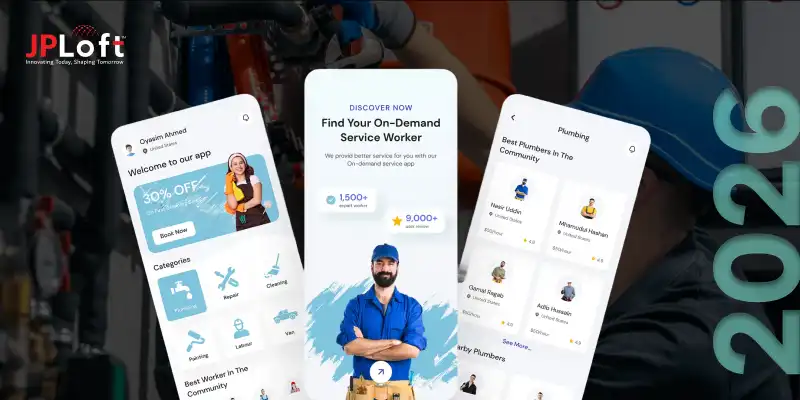
Many startups now plan to build a plumbing service app to meet this growing demand and improve customer experience. These apps help users book services, track professionals, and make secure payments without any hassle.
At the same time, businesses can manage requests and grow faster with better control. Today, handyman platforms like Uber for plumbers are becoming popular because they offer speed, trust, and convenience in one place.
If you are thinking about entering this market, this blog will help you make smarter business decisions and succeed faster with a plumbing service app.
What is a Plumbing Service App?
A plumbing service app is a handyman platform that connects customers with skilled plumbers for quick and reliable help. It allows users to book services, track professionals, and pay online without hassle.
However, many businesses now create a handyman app for plumbing services to improve customer experience and manage service requests more efficiently.
How it works:
-
Users sign up and select the required plumbing service from the app.
-
The app shows nearby plumbers based on location and availability.
-
A user books a service by selecting a time and service details.
-
The plumber accepts the request and visits the customer's location.
-
User tracks progress and makes payment after service completion.
Types of plumbing apps:
-
Aggregator apps: Connect multiple plumbers with customers on one platform.
-
Dedicated apps: Built for a single business offering its own plumbing services.
Key Features of a Plumbing Service App
Behind every successful service app is a smart feature set, and the right handyman app development company knows how to turn those features into an experience users keep coming back for.
There are several simple, useful handyman app features for customers, plumbers, and admins to ensure a smooth service flow. When businesses develop a plumbing service app, they should focus on usability, speed, and easy management for all users.
|
Features |
Description |
|
Customer Panel |
|
|
Easy Registration & Login |
Users can sign up quickly using phone, email, or social accounts without confusion |
|
Service Booking & Scheduling |
Customers can select services, choose time slots, and confirm bookings easily |
|
Real-Time Tracking |
Users can track the plumber’s location and service progress in real time |
|
Secure Payments |
Multiple payment options ensure safe and smooth transactions after service completion |
|
Plumber Panel |
|
|
Profile Management |
Plumbers can update skills, experience, availability, and service areas anytime |
|
Job Notifications & Acceptance |
They receive instant alerts and can accept or reject service requests quickly |
|
Earnings Dashboard |
A clear dashboard helps track daily, weekly, and monthly earnings easily |
|
Admin Panel |
|
|
User Management |
Admin can manage customers and plumbers, including approvals and support requests |
|
Order Tracking & Analytics |
Tracks all bookings and provides useful data for better business decisions |
|
Payment & Commission Control |
Admin manages payments, commissions, and overall revenue efficiently |
Advanced Features in a Plumbing App to Stand Out in 2026
Modern users expect more than basic booking and payment options from service apps today. To stay ahead, businesses must develop a plumbing service app that offers smart, fast, and personalized experiences.
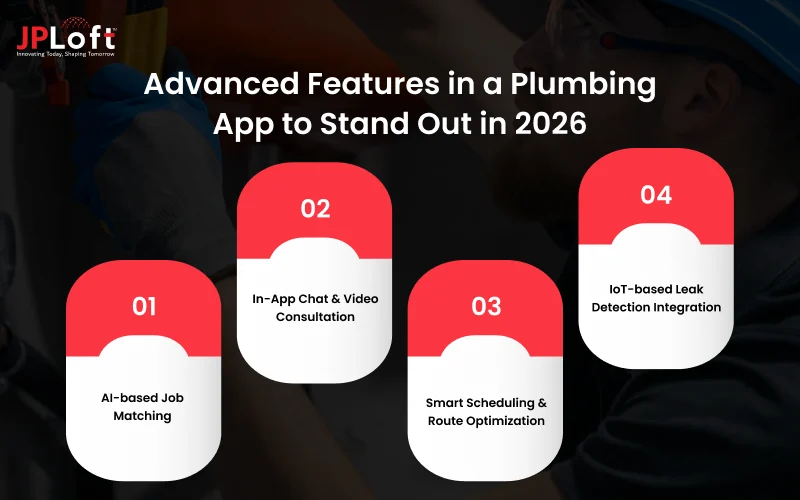
These advanced mobile app features help improve efficiency, increase customer trust, and drive long-term growth.
1. AI-based Job Matching
AI in handyman apps helps match the right service provider with the right job based on skills, location, and availability. This reduces waiting time and improves service quality for customers using the app.
It also helps businesses handle more requests without manual effort or confusion. Smart matching improves efficiency and ensures better outcomes for both users and service providers.
2. In-App Chat & Video Consultation
In-app chat allows users to communicate directly with plumbers before booking a service. This helps them explain issues clearly and avoid misunderstandings during the actual visit.
Video consultation adds more value by allowing plumbers to see the problem in real time. It can reduce unnecessary visits and help users get quick advice instantly.
3. Smart Scheduling & Route Optimization
Smart scheduling helps assign jobs based on time, urgency, and location automatically. This ensures better time management and reduces delays for both customers and plumbers.
Route optimization helps plumbers reach the location faster using the shortest path available. It saves fuel, time, and increases the number of jobs completed daily.
4. IoT-based Leak Detection Integration
IoT devices can detect leaks early and send alerts directly to the app instantly. This helps users fix issues before they turn into costly repairs or major damage.
This feature adds innovation and builds strong customer trust in your platform. IoT in handyman apps also supports businesses investing in plumbing service app development for long-term growth.
Step-by-Step Process to Build a Plumbing Service App
To build a mobile app, you need a clear plan and the right execution at every stage. If you want to make a plumbing service app, following a structured process will help you avoid mistakes and save time.
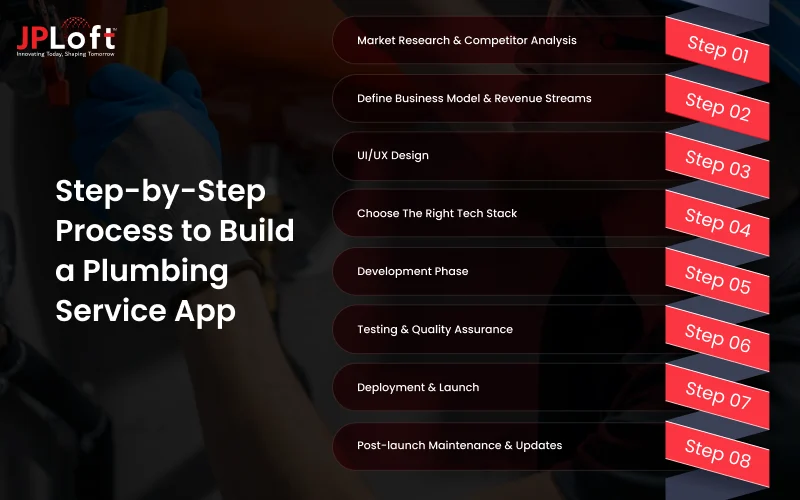
Each step plays an important role in creating a reliable and user-friendly solution.
Step 1: Market Research & Competitor Analysis
Start by understanding handyman market statistics and identifying real customer problems. This step builds a strong base for your app idea and strategy.
► Analyze Target Customer Needs
Perform market research on what users expect, such as fast booking, fair pricing, and trusted plumbers. This helps you design features that truly solve their problems.
► Study Direct Competitors
Look at apps offering similar plumbing services and analyze their strengths and weaknesses. This gives you ideas on what to improve or avoid.
► Define Unique Value Propositions
Decide what makes your app different, such as faster service or better pricing. A strong value helps you stand out in a crowded market.
Step 2: Define Business Model & Revenue Streams
A clear business model ensures long-term success and stable income from your app.
► Choose A Primary Model
Select a model like an aggregator or a dedicated service depending on your business goals. This choice affects how your app will operate.
► Design Multiple Revenue Streams
Include options like commissions, subscriptions, or service fees for better income. Multiple streams help reduce business risks over time.
► Decide Pricing Policy
Set fair and competitive pricing to attract more users and maintain profits. Proper pricing builds trust and improves customer retention.
Step 3: UI/UX Design
A simple and clean handyman app design makes your platform easy to use for all users.
► Create User-flow Diagrams
Map how users will move through the app from booking to payment. This helps create a smooth and logical experience.
► Develop Wireframes
Design basic app wireframes to plan the structure of each screen clearly. This step saves time before actual design work begins.
► Build Interactive Prototypes
Create clickable designs to test how the app will work in real use. Many teams create a plumbing service app prototype to gather early feedback.
Step 4: Choose The Right Tech Stack
The right handyman app tech stack ensures your platform runs smoothly and scales easily.
► Select Platforms
Decide whether to build for Android, iOS, or both platforms based on your target audience. This decision impacts your reach and cost.
► Define Backend Stack
Choose reliable technologies to manage data, users, and services efficiently. A strong backend supports smooth app performance.
► Integrate Third-party Services Early
Add tools like payment gateways, maps, and notifications at an early stage. This makes development faster and more efficient.
Step 5: Development Phase
This is where your idea turns into a working product, step by step.
► Develop The Backend First
Start with backend systems to manage users, bookings, and data securely. A strong base ensures smooth frontend performance later.
► Build The Mobile Frontend
Design and develop user-friendly screens for customers and plumbers carefully. Many businesses develop a plumbing service app with a focus on simple navigation.
► Implement Role-based Modules
Create separate panels for users, plumbers, and admins for better control. This improves app management and overall experience.
Step 6: Testing & Quality Assurance
Testing ensures your app works smoothly without errors or performance issues.
►Run Functional Testing
Check if all features, like booking and payments, work correctly. Handyman app testing helps fix basic issues before launch.
► Perform Integration & Performance Testing
Test how different parts of the app work together under real conditions. This ensures your app can handle multiple users easily.
Step 7: Deployment & Launch
Once testing is complete, your app is ready to go live for users.
► Prepare App Stores
Publish your handyman app to Google Play and submit your handyman app to the App Store with proper details and images. This step ensures smooth approval and visibility.
► Roll Out In A Phased Manner
Launch the app in selected areas first to test real user response. This reduces risks and improves performance before full release.
► Plan Marketing Campaigns
Promote your app through ads, social media, and local campaigns. Strong marketing helps you gain early users quickly.
Step 8: Post-launch Maintenance & Updates
Launching the app is just the beginning of your business journey.
► Establish A Support System
Provide quick customer support to handle issues and build trust. Good support improves user satisfaction and loyalty.
► Monitor Analytics
Track user behavior, bookings, and app performance regularly for insights. This helps you make better business decisions.
► Release Regular Updates
Improve features and fix bugs based on user feedback and trends. Regular handyman app maintenance keeps your plumbing service app development competitive and relevant.
Plumbing Service App Development Cost in 2026
The cost to build a plumbing service app in 2026 usually ranges between $5,000 to $100,000+, depending on features, complexity, and development approach.
In general, mobile app development costs vary widely based on the level of functionality and business goals. A simple app with basic features costs much less than a complex platform with real-time tracking, payments, and multiple user roles.
If you plan to make a plumbing service app, it is important to understand that the cost to build a handyman app is not fixed. It depends on your feature list, design quality, and the experience of your development team. Let’s understand this better with the help of the table below:
|
Category |
App Cost |
Features Offered |
Factors Affecting Cost |
|
Basic App |
$5,000 – $15,000 |
Login, booking, simple UI |
Small team, single platform, basic design |
|
Mid-level App |
$15,000 – $50,000 |
Payments, notifications, and admin panel |
Cross-platform, moderate backend, APIs |
|
Advanced App |
$50,000 – $100,000+ |
AI matching, video calls, analytics, multi-role systems |
Large team, complex backend, third-party integrations, scalability needs |
Monetization Strategies for Plumbing Apps
Strong app monetization models help businesses earn steady revenue while keeping their services affordable and competitive. When you create a plumbing service app, choosing the right strategy ensures long-term growth and better returns on your investment.
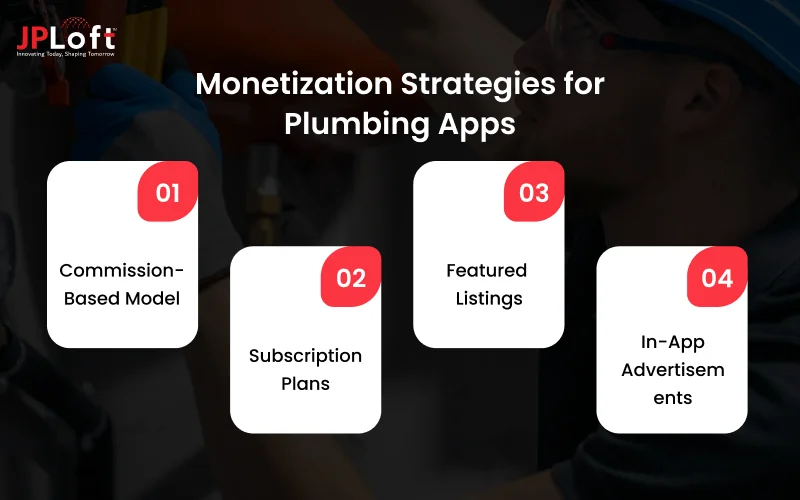
Let’s discuss more:
1. Commission-Based Model
This model charges a fixed percentage on every completed service booked through the app. It works well for aggregator platforms and ensures steady income as more users book plumbing services regularly through the platform.
2. Subscription Plans
Offer monthly or yearly subscription plans to plumbers for using your platform regularly. This provides predictable revenue and helps service providers access premium features, better visibility, and more job opportunities without depending only on commissions.
3. Featured Listings
Allow plumbers to pay for better visibility by appearing at the top of search results. This increases their chances of getting more bookings while generating additional income for your business without affecting the core user experience.
4. In-App Advertisements
Display relevant ads within the app, such as tools or home improvement services, to generate extra revenue. This works best when ads are limited and do not disturb the user experience or reduce app performance.
Challenges in Developing a Plumbing Service App
Building a service platform comes with several handyman app development challenges that can affect user experience and business growth.
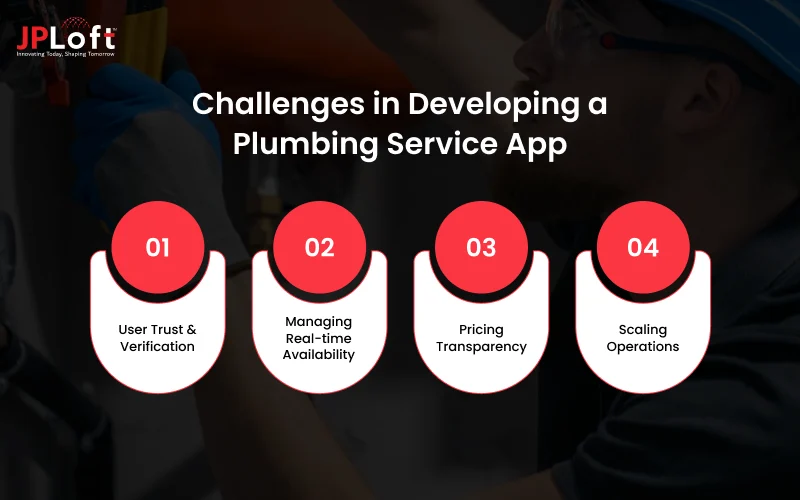
When you make a plumbing service app, it is important to identify these issues early and apply the right solutions to ensure long-term success.
Challenge 1: User Trust & Verification
One of the major mobile app development challenges is building trust between customers and service providers on your platform. Users often worry about safety, service quality, and reliability before booking any plumbing services online.
Solution: To solve this, you should verify plumbers through ID checks, certifications, and background screening. Adding ratings, reviews, and secure payment options also helps build confidence and trust among users.
Challenge 2: Managing Real-time Availability
Handling real-time availability of plumbers can become difficult as your platform grows. Delays or incorrect availability can lead to poor user experience and missed service opportunities.
Solution: Hire dedicated developers to solve this by using smart scheduling systems and automated updates for plumber availability. Many businesses create a plumbing service app with live tracking and instant status updates to manage this efficiently.
Challenge 3: Pricing Transparency
Customers often hesitate to book services if pricing is unclear or changes later. Lack of transparency can reduce trust and increase customer complaints over time.
Solution: To fix this, provide clear pricing before booking and show detailed cost breakdowns. Fixed pricing models or upfront estimates can improve user confidence and reduce confusion.
Challenge 4: Scaling Operations
As your user base grows, managing more bookings, users, and data becomes complex. Without proper planning, this can slow down your app and affect performance.
Solution: To handle scaling, use cloud-based infrastructure and scalable technologies from the start. Proper planning during plumbing service app development ensures your app can grow smoothly without performance issues.
Why Choose JPLoft to Build a Plumbing Service App?
Choosing the right development partner plays a key role in your app’s success and long-term growth. When you plan to build a plumbing service app, working with an experienced plumber app development company such as JPLoft ensures better quality, faster delivery, and scalable solutions.
Their team works with advanced frameworks such as React Native, Flutter, Node.js, and Python to create high-performance mobile apps. This ensures your app runs smoothly across platforms while maintaining speed and reliability.
JPLoft uses modern technologies to build scalable handyman apps based on business demands. The company has over 15 years of experience in automating processes, improving user experience, and supporting real-time features in your app.
They also follow an agile development process, which helps launch apps faster and improve them continuously. With strong UI/UX design, post-launch support, and scalable architecture, JPLoft helps businesses grow and succeed in a competitive market.
Final Words
The demand for digital home services is growing fast, and plumbing is no exception. Customers now expect quick, reliable, and hassle-free solutions at their fingertips. This makes it the right time for businesses to invest in a smart and scalable app solution.
If you plan to develop a plumbing service app, you need more than just an idea. You need the right strategy, user-focused features, and a clear development roadmap to succeed in a competitive market.
From understanding the cost to create a plumbing service app to choosing the right technologies, every step matters. A well-planned approach helps you avoid risks and build a strong foundation for long-term growth.
With the right execution and expert support, your app can deliver real value to users while helping your business grow faster and stay ahead in the market.
FAQs
The time to build a plumbing app usually ranges from 2 to 6+ months. A basic app takes less time, while advanced apps with complex features, integrations, and testing phases require longer development and refinement cycles.
The cost to make a plumbing service app typically ranges between $5,000 and $100,000 or more. It depends on features, design, technology stack, and team expertise involved in building a scalable and high-performing application.
Essential features include user registration, service booking, real-time tracking, secure payments, notifications, and customer support. These features ensure a smooth user experience, efficient service management, and better communication between customers, plumbers, and administrators within the platform.
Plumbing apps generate revenue through commission on bookings, subscription plans for service providers, featured listings, and in-app advertisements. These models help create a steady income while keeping services accessible and valuable for both users and professionals.
Yes, startups can build a plumbing app on a budget by starting with a basic version. They can focus on essential features first, then upgrade later based on user feedback, demand, and available financial resources over time.

Kris Jacobs brings 20+ years of experience in digital product strategy, user-focused design, and solving complex product challenges. She has worked across on-demand services, travel, entertainment, sports, insurance, education, and service marketplaces, including handyman, dog-walking, courier, event-management, and equine platforms. Her focus is on shaping practical, scalable digital experiences that align user needs with business goals and long-term product growth.


Share this blog