


Key Takeaways:
A multi-vendor handyman marketplace app connects customers with multiple verified service providers (plumbing, electrical, cleaning, repairs, etc.) in one platform, handling bookings, payments, and reviews.
Different revenue streams, faster market expansion, diverse service offerings, and stronger customer engagement are driving the growth of handyman marketplace apps.
A six-step flow — customer signs up and posts a request → vendor matching and notification → booking confirmation → live service tracking → secure payment and review → admin oversight for scaling.
To develop a successful handyman marketplace app, you should start with market research, choose right revenue model, work on UI/UX design, select the right tech stack, payment system build, trust features, QA testing, and then launch.
North America is the biggest market for on-demand home services, holding a 40.1% share.
The reason is simple: homeowners want quick, dependable help — and multi-vendor marketplace apps are emerging as the easiest way to get it.
The result? A repair and maintenance boom that’s reshaping how people find help, and a massive opportunity for anyone willing to build the platform that connects them.
That’s exactly why multi-vendor handyman marketplace apps are having a moment.
For investors, this isn’t just another app category.
It’s a growing business opportunity where regular customer demand, multiple service providers, and increasing digital usage come together.
If you’re planning to enter the industry, this multi-vendor handyman marketplace app development guide will help you understand the key aspects of building one.
Quick Answer: How Do You Build a Multi-Vendor Handyman Marketplace App?
Building a multi-vendor handyman marketplace app starts with a clear plan — decide how you'll make money, then create a simple, easy-to-use app for customers, vendors, and admins. Add must-have features like vendor sign-up, instant booking, safe payments, and live tracking so users trust your platform. Keep the design clean and the experience smooth. With the right development partner, you can build a multi-vendor handyman marketplace app that's secure and grow your business.
What Is a Multi-Vendor Handyman Marketplace App?
One of the most asked questions is, “What is a multi-vendor handyman marketplace app?”
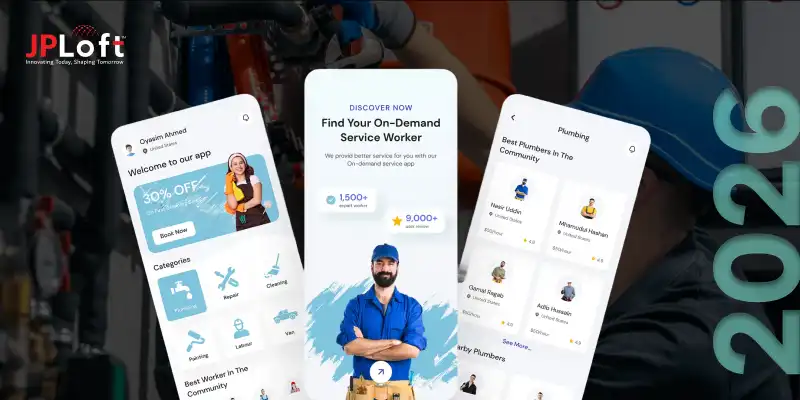
In simple terms, it’s an app that brings different handymen and service providers together in one place.
Instead of relying on just one person or company, customers can browse profiles, compare prices, check reviews and book the right professional for jobs like plumbing, electrical work, painting, or repairs, all from a single app.
The platform itself doesn’t fix anything; it simply connects customers with trusted, verified professionals and takes care of bookings, payments, and reviews, making the whole process quick and hassle-free for everyone.
If you are looking to create a handyman app, make sure to invest in multi-vendor marketplace handyman apps.
Why Build a Multi-Vendor Home Services Marketplace App?
The home services industry is going through huge transformation.
And smart businesses are already finding ways to cash in on it.
If you are looking to create a handyman marketplace app, but wondering how it can be beneficial.
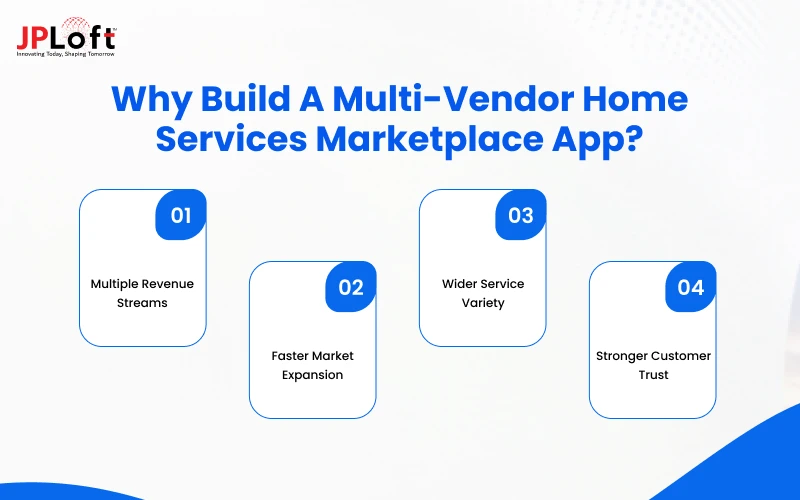
Here’s why it makes sense for your business:
1. Multiple Revenue Streams
A multi-vendor home services marketplace app lets you earn from every transaction.
You can charge commissions on bookings and premium single-vendor apps; your earnings aren’t limited to one revenue model.
More vendors mean more bookings; more bookings mean steady, scalable revenue for your platform.
2. Faster Market Expansion
Onboarding vendors is quicker than hiring your own workforce.
A marketplace app grows through partnerships, not payroll. You can expand your business into new cities without worrying about handling operations.
Vendors bring their own tools, skills, and customer base.
This makes scaling faster, cheaper, and far less risky than traditional service businesses.
3. Wider Service Variety
Customers want everything in one place.
A multi-vendor handyman marketplace app lets you offer plumbing, electrical, cleaning, and repairs together.
This variety keeps users coming back.
It also increases customer lifetime value. The more categories you offer, the stickier your platform becomes for everyday household needs.
4. Stronger Customer Trust
Reviews and ratings build confidence naturally.
A handyman marketplace app allows customers to compare vendors easily.
They can pick based on price, ratings, or availability.
This transparency builds long-term trust. Trust leads to repeat bookings; repeat bookings turn into loyal, lifetime customers for your business.
How Does a Multi-Vendor Handyman Marketplace App Work?
Curious how a multi-vendor handyman marketplace app works in real life? It’s simpler than you think.
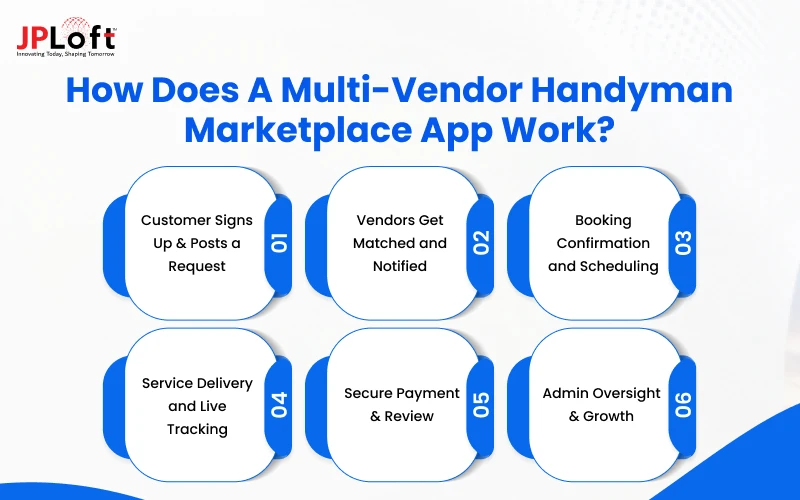
The entire process connects customers and service providers through a few automated steps:
Step 1: Customer Signs Up & Posts a Request
The journey begins when a customer downloads the app and creates a quick profile.
Then, they have to describe the problem-a leaking pipe, a broken switch, or furniture assembly- and specify its location and preferred time slot.
This is the entry point for anyone looking to start an online handyman business, since every request feeds vendors real, ready-to-book customers.
Step 2: Vendors Get Matched and Notified
Behind the scenes, the app instantly matches the request with nearby, available vendors based on skill, location, and ratings.
Verified handymen receive a notification and can accept the job within seconds.
This is where a multi-vendor handyman marketplace app truly shines; it removes the manual searching and connects the right expert automatically.
Step 3: Booking Confirmation and Scheduling
Once a vendor accepts, the customer service confirmation is sent along with the vendor’s profile, ratings, and estimated arrival time.
Both sides can chat within the app to finalize details. This transparency builds trust before the job even begins.
Step 4: Service Delivery and Live Tracking
The vendor arrives and completes the job while the customer can track progress in real time.
Live updates keep everything transparent, reducing no-shows and communication issues, a major reason platforms and businesses focus heavily on tracking features.
Step 5: Secure Payment & Review
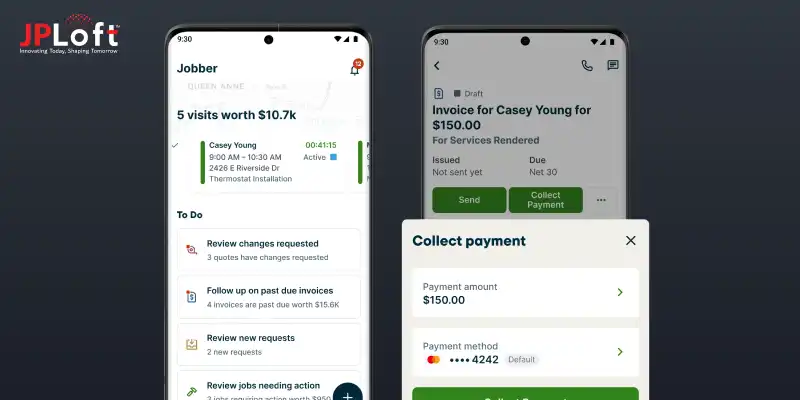
After the job is done, payment is processed securely through the app, no cash handling, no confusion.
The customer then rates the vendor, building a review system that helps future users choose confidently.
Step 6: Admin Oversight & Growth
Behind every transaction, the admin panel tracks bookings, commissions, and vendor performance.
This data helps platform owners refine operations and scale smoothly.
Having such data is really helpful to establish yourself in the market, which is why more and more investors is looking to build a multi-vendor handyman marketplace app instead of relying on traditional methods.
Handyman Marketplace Business Models
One of the huge reasons businesses invest in these kinds of platforms is to generate good revenue.
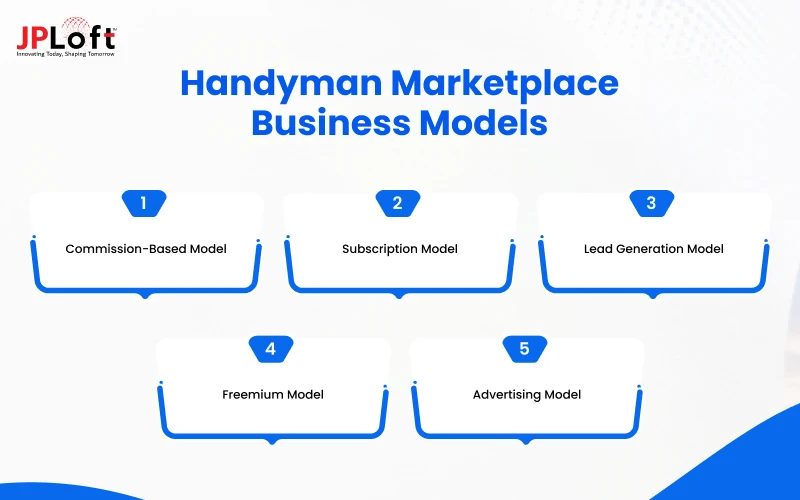
Let’s explore the different handyman app monetization models:
1. Commission-Based Model
This is the most popular model in this industry.
Every time a vendor completes a job through the app, the platform takes a small percentage as commission.
It’s a win-win: vendors only pay when they earn, and your revenue grows automatically with every booking on the platform.
2. Subscription Model
Instead of charging per booking, vendors pay a fixed monthly or yearly fee to stay listed on the platform.
This model gives vendors unlimited bookings without extra charges, while you enjoy predictable, recurring income.
It works especially well once your platform has a steady, loyal vendor base.
3. Lead Generation Model
Here, vendors pay a small fee to access customer leads or job requests, whether or not they win the job.
This model works great for platforms with high traffic, since vendors are willing to pay for quality leads that could turn into paying customers.
4. Freemium Model
Vendors can join and list their services for free, but premium features like top placement, verified badges, or advanced analytics come at a cost.
This model attracts a large vendor base quickly, while premium upgrades create a steady side revenue stream as vendors grow.
5. Advertising Model
Once your platform gains decent traffic, you can generate revenue by allowing vendors or third-party brands to advertise within the app.
Banner ads, featured listings, or sponsored placements let vendors boost visibility, while you earn passive income without touching the core booking process.
Must-Have Features of a Handyman Marketplace App
Picking the right handyman marketplace app features can make or break your platform’s success.
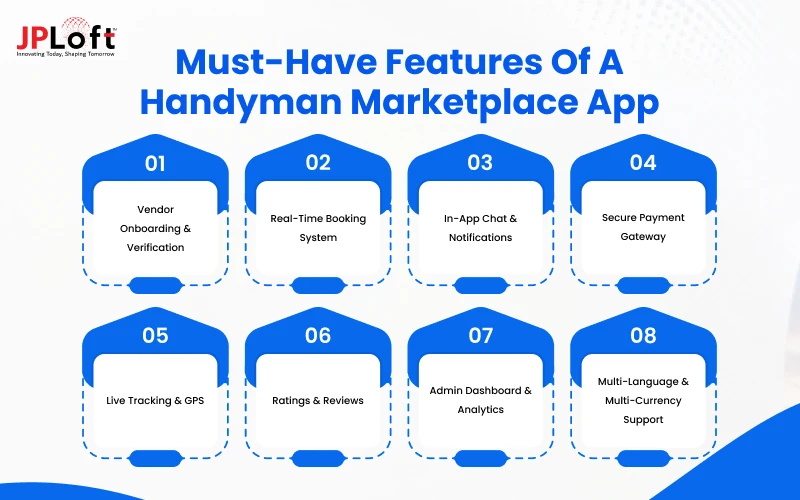
Here are the must-have handyman app features you should include:
► Vendor Onboarding & Verification
Vendors can register, submit documents, and get verified before going live. This builds trust and keeps only genuine professionals on your platform.
► Real-Time Booking System
Customers can book services instantly based on availability, location, and service type, a core feature that drives success in any handyman marketplace app.
► In-App Chat & Notifications
Customers & Vendors can communicate directly within the app. Instant alerts keep both sides updated on bookings, arrivals, and changes.
► Secure Payment Gateway
Multiple payment options, cards, wallets, UPI – ensure smooth, secure transactions. This is a non-negotiable part of multi-vendor handyman marketplace app development.
►Live Tracking & GPS
Customers can track their vendor's location in real time, reducing anxiety and no-shows while improving overall service transparency.
►Ratings & Reviews
Customers can rate vendors after every job, helping future users choose confidently and pushing vendors to maintain quality service standards.
►Admin Dashboard & Analytics
Platform owners get a powerful panel to manage vendors, bookings, commissions, and performance — essential for scaling any multi-vendor handyman marketplace app smoothly.
►Multi-Language & Multi-Currency Support
This feature allows your platform to serve customers across different regions, making global expansion easier for any modern handyman marketplace app.
So, these features are important to create a handyman marketplace app. Let’s talk about the development process.
How to Build a Multi-Vendor Handyman Marketplace App?
So, you've decided to build a handyman marketplace app- great move.
Given how fast this industry is growing.
But turning that decision into a working, flexible platform takes careful planning and the right execution.
Let’s break down the exact steps involved:
Step 1: Research the Market & Define Your Niche
Before you create a handyman marketplace app, spend time studying your competitors, local demand, and target audience behavior.
Look at what existing platforms are missing, maybe faster response times, better vendor vetting, or underserved service categories.
Decide whether you’ll offer general handyman services or specialize in specific categories like plumbing, electrical work, or home cleaning.
A clear, well-researched niche helps you stand out in a crowded market and gives your marketing a stronger, more focused direction from day one–and it all starts with solid app market research.
Step 2: Choose the Right Business & Revenue Model
Decide early how your platform will actually make money: commission on bookings, vendor subscriptions, lead generation fees, or a hybrid mix of these.
This decision isn’t just about revenue; it shapes your app’s entire structure, from how vendors get billed to how payments flow between customers and providers.
Get this wrong, and you’ll end up rebuilding core logic later. Get it right, and your app monetization strategy grows naturally alongside your user base.
Step 3: Plan Core Features
A successful platform needs three distinct panels: customer, vendor, and admin, each with its own set of features.
Customers need browsing, booking, and payment options. Vendors need job requests, scheduling, and earnings tracking.
Admins need oversight tools like vendor approval, commission tracking, and performance analytics.
Planning out every feature for each panel early in the process saves you from expensive rework once development is already underway.
Step 4: Design an Intuitive UI/UX
Your users should be able to book a service in just a few taps, without confusion or unnecessary steps.
This is where good UI/UX design plays a key role — clean navigation, minimal clutter, clear call-to-action buttons, and a logical booking flow make all the difference.
Remember, many of your users will be everyday homeowners, not some tech-savvy business owners, so simplicity will matter to them more than flashy designs.
A well-designed interface directly improves conversion rates and reduces app abandonment during booking.
Step 5: Choose the Right Tech Stack
The app tech stack plays an important role whether you build natively for iOS & Android or choose a cross-platform approach.
Leverage no-code tools. After all, your tech stack decisions affect development speed, long-term scalability and overall cost.
This step is important to any home services marketplace app development project. Choosing the wrong stack early on can limit future feature additions.
It can also slow down performance. And it may make scaling into new markets unnecessarily difficult and expensive.
Step 6: Develop an App with Smooth Vendor Onboarding
Your vendors are the backbone of the platform, so onboarding needs to be smooth yet thorough.
Vendors should be able to sign up, upload identity documents and certifications, and get verified through a quick, structured review process.
A frictionless onboarding experience attracts more vendors to join quickly, while strong verification standards ensure only credible, skilled professionals represent your brand, protecting both your reputation and your customers’ trust.
Step 7: Build the Booking & Payment System
This is the true heart of the app, where customers and vendors actually connect and transact.
Real-time booking, live availability calendars, instant vendor matching, and secure multi-option payment gateways all need to work together seamlessly.
Any friction here- a failed payment, a booking glitch- directly hurts user experience and trust.
Investing extra time and testing into this system pays off in fewer support tickets and higher retention.
Step 8: Add Trust-Building Features
Since customers and vendors are essentially strangers transacting through your app, trust-building features aren’t optional; they’re essential.
Rating & reviews, live GPS tracking, in-app chat, and verified vendor badges all work together to reassure users they’re in safe hands.
These features are non-negotiable when you develop a handyman marketplace app meant to scale long-term, as trust directly drives repeat bookings and word-of-mouth growth.
Step 9: Test Thoroughly Before Launch
Before going live, run your app through rigorous, multi-layered QA testing, checking for bugs, payment failures, notification delays, and performance issues across different devices.
It's time to do app testing from all aspects. After all, you need a smooth, glitch-free launch experience that directly impacts your early user reviews, app store ratings, and word-of-mouth momentum in the starting weeks.
Step 10: Launch, Market & Scale
Once your app is live, focus first on onboarding a strong initial batch of quality vendors, since customers won’t stick around without enough options.
Run targeted local marketing campaigns, offer early-bird incentives, and actively gather user feedback from bookings.
Use this data to change features, fix any users' pain points, and plan your expansion into new cities or additional service categories, turning your launch into long-term growth.
Technology Stack for Handyman Marketplace App Development
Choosing the right technology stack lays the foundation for your app's performance, scalability, and long-term success.
From the front-end interface to the back-end database and third-party integrations, every layer plays a role in how smoothly your platform runs.
Below is a breakdown of the recommended tech stack for handyman marketplace app development, covering the tools and technologies used across different components of the app.
|
Component |
Technology Options |
|
Frontend (iOS) |
Swift, SwiftUI |
|
Frontend (Android) |
Kotlin, Java |
|
Cross-Platform |
Flutter, React Native |
|
Backend |
Node.js, Python (Django), Ruby on Rails |
|
Database |
MongoDB, PostgreSQL, MySQL |
|
Cloud Storage |
AWS, Google Cloud, Microsoft Azure |
|
Payment Gateway |
Stripe, PayPal, Razorpay |
|
Push Notifications |
Firebase Cloud Messaging (FCM), OneSignal |
|
Real-Time Tracking |
Google Maps API, Mapbox |
|
Chat & Communication |
Twilio, Socket.io |
Build From Scratch vs Marketplace App Builder vs White-Label Solution
When it comes to handyman marketplace app development, businesses usually choose between three paths: building from scratch, using a marketplace app builder, or opting for a white-label solution.
Each option differs in cost, speed, and customization level.
Building from scratch offers complete control but takes longer. App builders are fast and budget-friendly but limit flexibility.
Whereas white-label solutions strike a balance, offering quicker launches with decent branding freedom.
|
Factor |
Build From Scratch |
Marketplace App Builder |
White-Label Solution |
|
Development Time |
4-8 months |
1-2 months |
2-3 months |
|
Customization |
Full control |
Limited templates |
Partial customization |
|
Scalability |
Highly scalable |
Limited by builder |
Scalable with add-ons |
|
Ownership |
Full code ownership |
Platform-dependent |
Depends on licensing terms |
|
Best For |
Long-term, unique platforms |
Quick MVPs, testing ideas |
Fast launch with branding control |
|
Technical Expertise Needed |
High |
None |
Low to Moderate |
Multi-Vendor Handyman Marketplace App Development Cost
One of the first questions every business owner asks is, “What’s the actual handyman app development cost?”
The honest answer: it depends on several factors. On average, the cost can be around $10,000–$150,000+.
App complexity, number of features, platform choice (iOS, Android, or both), design requirements, and the development team’s location all influence the final price.
► Basic MVP (Minimum Viable Product)
-
Cost Range: $10,000 – $25,000
-
What's Included: Simple sign-up flow, basic service browsing, manual job booking, and standard payment integration like Stripe.
-
Best For: Validating a local market idea without heavy upfront investment.
► Medium-Complexity Marketplace
-
Cost Range: $25,000 – $75,000
-
What's Included: Real-time GPS tracking, push notifications, in-app chat, ratings and reviews, plus a functional admin web panel.
-
Best For: A regional startup ready to compete with established local platforms.
► Advanced Enterprise Platform
-
Cost Range: $75,000 – $150,000+
-
What's Included: AI-powered job matching and scheduling, multi-language support, automated invoicing, advanced analytics, and custom CRM integrations.
-
Best For: Businesses planning multi-city or nationwide expansion.
Common Challenges in Building a Handyman Marketplace App
No platform grows without hurdles, and the challenges in building handyman apps are real, from trust issues to operational complexity.
Understanding these challenges early helps you plan smarter and avoid costly mistakes down the line.
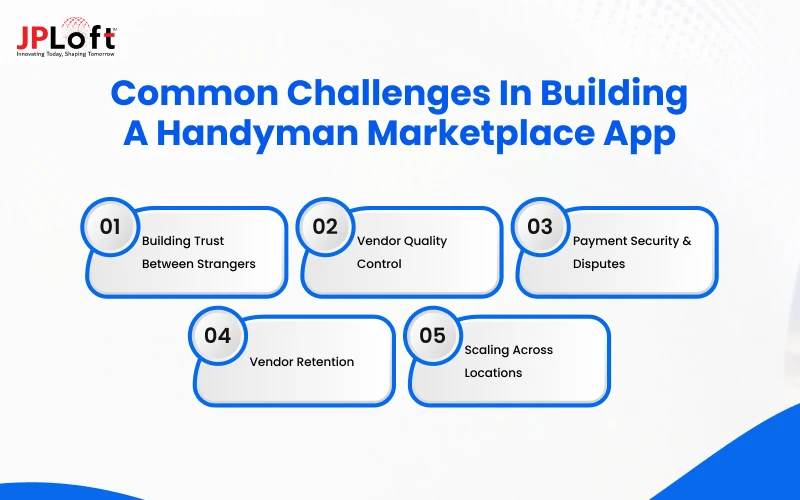
Here’s a closer look at the most common ones, along with practical solutions:
Challenge 1: Building Trust Between Strangers
Customers are essentially inviting an unknown professional into their home, which naturally creates hesitation.
Without proper verification, this trust gap can hurt adoption significantly.
Solution:
Implement strict vendor verification, background checks, ID validation, and a transparent ratings-and-reviews system.
Showing verified badges and past customer feedback helps new users feel confident booking through your platform.
Challenge 2: Vendor Quality Control
Not every handyman who signs up will deliver consistent, professional service, and a poor experience can quickly damage your platform’s reputation.
Solution:
Set clear onboarding standards, require skills certifications where applicable, and continuously monitor vendor performance through ratings.
Underperforming vendors should be flagged or removed to maintain overall service quality.
Challenge 3: Payment Security & Disputes
Handling payments between customers and multiple vendors increases the risk of fraud, failed transactions, or disputes over incomplete work.
Solution:
Use secure, PCI-compliant gateways with escrow-style holding, releasing funds only after job completion.
A clear dispute resolution process also protects both customers and vendors.
Challenge 4: Vendor Retention
Attracting vendors is one thing; keeping them engaged and active on your platform long-term is a completely different challenge.
Solution:
Offer fair commission structures, timely payouts, and vendor-specific perks like priority job access or performance-based incentives to reduce churn.
Challenge 5: Scaling Across Locations
What works in one city may not translate smoothly to another due to differing vendors' availability, pricing norms, or local regulations.
Solution:
Build a flexible platform architecture that supports location-based pricing, localized vendor pools, and easy configuration for new markets as you expand.
How Can JPLoft Help With Handyman Marketplace App Development?
Building a handyman marketplace app takes more than just good code.
You need a platform that vendors trust, customers enjoy using, and that grows with your business.
That’s exactly what JPLoft, a handyman app development company, helps you create.
Our team has real experience building on-demand marketplace apps.
We handle everything: market research, easy-to-use design, backend development, secure payments, and more. You don’t have to juggle multiple teams or vendors.
Want a simple MVP to test your idea? Or a full-scale platform with smart, AI-powered features? Either way, JPLoft builds around your budget, timelines, and goals, so your app is ready to compete from day one.
Final Words
The handyman services industry is growing fast, and multi-vendor marketplace apps are leading that shift.
Building one takes the right blend of market research, smart feature pricing, and solid execution, but the payoff is a scalable, revenue-generating platform with long-term potential.
Whether you’re just starting to explore the idea or ready to move into development, partnering with an experienced team like JPLoft can help you launch a platform built to grow, not just survive.
FAQs
Depending on complexity, development can take anywhere from 6-8 weeks for a basic MVP to 6-8 months for a fully-featured enterprise platform.
Costs typically range from $10,000 for a basic MVP to $150,000+ for an advanced platform, depending on features and complexity.
Commission-based models are the most popular, but many successful platforms use a hybrid approach combining commissions, subscriptions, and lead generation fees.
Yes, most multi-vendor marketplace apps are built with scalability in mind, allowing you to add new service categories or expand into new cities as your business grows.
Strict onboarding processes, document verification, skill certifications, and an active ratings-and-reviews system help maintain consistent vendor quality.

Kris Jacobs brings 20+ years of experience in digital product strategy, user-focused design, and solving complex product challenges. She has worked across on-demand services, travel, entertainment, sports, insurance, education, and service marketplaces, including handyman, dog-walking, courier, event-management, and equine platforms. Her focus is on shaping practical, scalable digital experiences that align user needs with business goals and long-term product growth.



Share this blog