


Key Takeaways:
Stock trading apps are growing fast, and design now plays a major role in user adoption, trust, and long-term platform success.
Stock trading app design directly impacts how users understand data, execute trades, and stay confident during market activity.
Key design components include onboarding, dashboards, trading screens, charts, portfolios, and built-in security elements.
Best design practices start with user research, clear app flows, wireframes, and performance-focused UI design.
AI-driven features, personalization, and modern UI trends enhance usability when integrated thoughtfully.
Real-world apps like Robinhood, TradingView, eToro, and Webull show how design choices shape user behavior and engagement.
Partnering with an experienced stock trading app development company helps align design, performance, and scalability from day one.
Retail investors now execute the majority of their trades through mobile apps, not brokers or desktop terminals.
The global online trading platform market is set to cross $19.9 billion by 2033, driven by mobile-first design, AI-powered insights, and a steady rise in first-time investors managing their own portfolios.
This shift has pushed businesses to rethink how they approach app development. Founders who once treated design as a final polish step now bring it in from day one, working with a stock trading app development company to map user flows, security architecture, and compliance requirements before a single screen gets built.
Getting the design right means understanding what traders actually need, planning the app's flow end to end, layering in security at every step, and testing relentlessly before launch.
In this blog, we break down how to design a stock trading app, the components that matter most, and the practices that separate apps people use once from apps people trust with their portfolios.
Why is Stock Trading App Design Important?
The most common reason why designing your stock trading app is important is that it improves the app's usability and adaptability. These apps help users make real financial decisions.

Here are some of the key reasons that justify the need to plan for a stock trading app design when planning to build a stock trading app.
1. Improves User Satisfaction and Daily Usage
The potential users of a stock trading app can be both, i.e., beginners and experts. Hence, the trading apps must work smoothly for every user type, especially during busy market hours.
When users can place trades or check portfolios without effort, they feel more confident if the mobile stock trading app design is transparent and easy to use. This comfort plays a big role in long-term engagement and loyalty.
2. Simplifies Onboarding for New Users
As mentioned, not all stock market app users are professional traders; some are first-timers. Hence, an efficiently planned stock trading application design helps beginners get started without feeling lost.
Simple onboarding steps, guided screens, and clear labels make the app easier to learn. When users understand how the app works early, they stay longer and explore more features over time.
3. Supports Platform Scalability
Stock trading app design also affects how easily the platform grows. A structured design system allows teams to add new features without changing the core experience.
This includes new asset types, tools, or compliance updates. When screens follow consistent patterns, updates feel familiar to users and are faster to build for developers.
4. Handles Growing Data and User Load
As trading platforms scale, they manage more real-time data and active users. A good stock market app design keeps dashboards organized and responsive, even as information increases.
Clear and transparent grouping of data and smart layouts prevent screens from feeling crowded, which helps maintain performance and usability.
5. Meets Modern User Expectations
Traditionally, having a mobile app was itself a great achievement for businesses and helped target users. But modern-day users expect mobile-friendly layouts, smooth interactions, and customization options.
Hence, a custom stock trading app design that supports these needs ensures that the app stays relevant while adapting to future updates.
Strong mobile app design not only keeps users satisfied today but also prepares the platform for steady growth tomorrow.

Components of Stock Trading App Design
A reliable app design depends on a set of well-planned components that work together smoothly. Each element supports confident trading while keeping the platform stable and ready to scale.
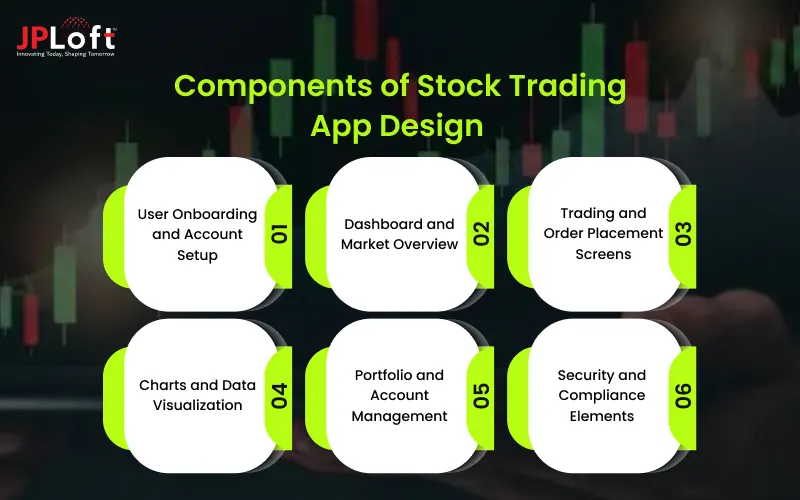
Here are the key components to be focused on when planning for a stock trading app design.
► User Onboarding and Account Setup
A key component is the user onboarding and account setup. The first interaction users have with the stock trading app shapes how users feel about the app. Onboarding should guide users through registration, verification, and initial setup in simple steps.
Clear instructions, progress indicators, and fewer input fields reduce confusion and effort. When users complete setup without friction, they feel more comfortable exploring features and being loyal to the app.
► Dashboard and Market Overview
Setting up the dashboard is among the components of stock trading app design to focus on. This serves as the key working screen for users. It should present market data, portfolio value, and quick actions in a clean and structured layout.
Users need to understand price movements and trends quickly. Clear spacing, readable numbers, and logical grouping help users focus on key information without feeling overloaded.
► Trading and Order Placement Screens
When planning for the investment app design, ensure that the trade execution screens feel clear and reliable. Buy and sell options, order types, pricing details, and confirmation steps should follow a logical flow.
Well-planned components of stock trading app design help users be aware of what action they are taking and what happens next. Clear feedback after each step builds confidence and reduces the chance of errors.
► Charts and Data Visualization
Charts are one of the key tools that help users analyze stock trends and make informed decisions. Hence, it is important to follow the key principles of stock trading app design that ensure that the chart is easy to find, read, and consistent across devices.
Users should be able to switch time frames or indicators without breaking focus. Simple visuals and smooth interactions make data easier to understand and encourage regular use.
► Portfolio and Account Management
Portfolio screens provide users with a detailed overview or snapshot of their investments. Holdings, gains, losses, and performance history should appear in a clear and structured format.
Hence, when planning for the stock trading application design, ensure that it provides easy access to transaction history and account details helps users track progress and manage their finances with confidence.
► Security and Compliance Elements
Security is not a feature to be integrated separately, but is a core component of stock market app design. Hence, it should feel built into the experience. Login checks, confirmations, and data protection cues reassure users without slowing actions.
When users clearly see security measures in place, they feel safer using the app on a regular basis. Such a security check is important as it can significantly impact the cost to build the stock trading app.
Basic Design Principle of Stock Trading App Design
Stock trading apps are not just random apps on your mobile device; they support real decisions that involve real money.
Hence, the design must stay simple, clear, and steady, and follow key principles of stock trading app design, so users can focus on trading without distractions.
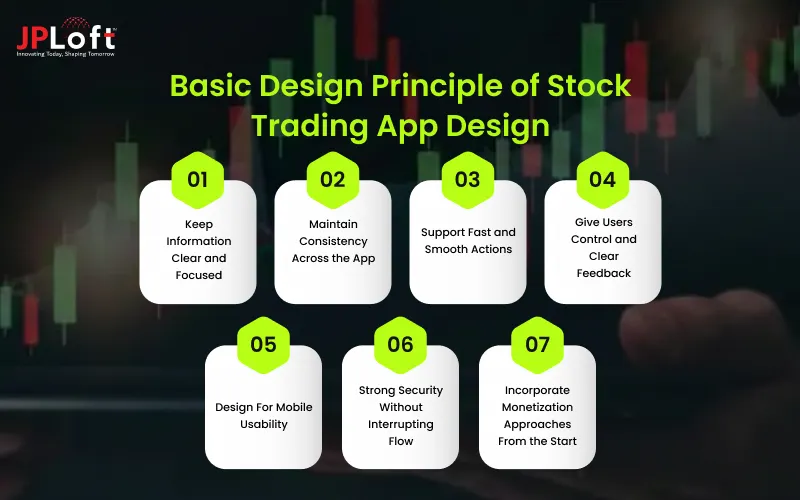
Here are some of the basic principles that help create an experience that feels reliable for users and practical for long-term growth.
A] Keep Information Clear and Focused
Every screen should show only what users need at that moment. Prices, actions, and labels must be easy to read and understand. Avoid placing too much information on one screen.
When designing your stock trading app, ensure that the app lets users see clear data without clutter, so they feel more confident making decisions.
B] Maintain Consistency Across the App
Consistent layouts and actions are one of the key principles of stock trading app design, which ensures that users move through the app with ease.
Buttons, icons, and screen patterns should work the same way everywhere. This familiarity reduces confusion and helps users learn the app faster, especially during their first few trades.
C] Support Fast and Smooth Actions
The app design should allow users to act quickly without delays. Screens must load smoothly, provide market updates, and respond instantly to taps.
Clear visual feedback lets users know that their action was successful, which is important during busy market hours. Such is also among the key stock market app trends being focused on to offer a seamless experience to the users.
D] Give Users Control and Clear Feedback
An efficient custom stock trading app design provides users with proper control and helps them understand what is happening in the app.
Confirmation messages, error alerts, and success updates should appear clearly and at the right time. This helps users avoid mistakes and feel in control of every trade they place.
E] Design For Mobile Usability
The stock trading app should work effectively on mobile devices. These mobile devices have infrastructural limitations compared to laptop/desktop computers.
Hence, the online trading app design must fit small screens without hiding key details. Touch-friendly buttons and readable text make trading easier and more comfortable on phones.
F] Strong Security Without Interrupting Flow
Mobile app security is one of the core components of stock trading apps. But in the process of integrating security into trading app design, it should not interrupt the usage experience of the mobile app.
Login checks and confirmations should be clear but quick. When users see that security is built into the design, they trust the platform more.
G] Incorporate Monetization Approaches From the Start
The developers should plan for the potential route through which the stock trading app will make money.
This can help better plan and implement approaches from the start, rather than redesigning the app once it scales just to incorporate the revenue-generating elements in the trading app.
Best Practices to Incorporate Stock Trading App Design
Designing a stock trading app requires a clear process where good design choices and practical steps work together.
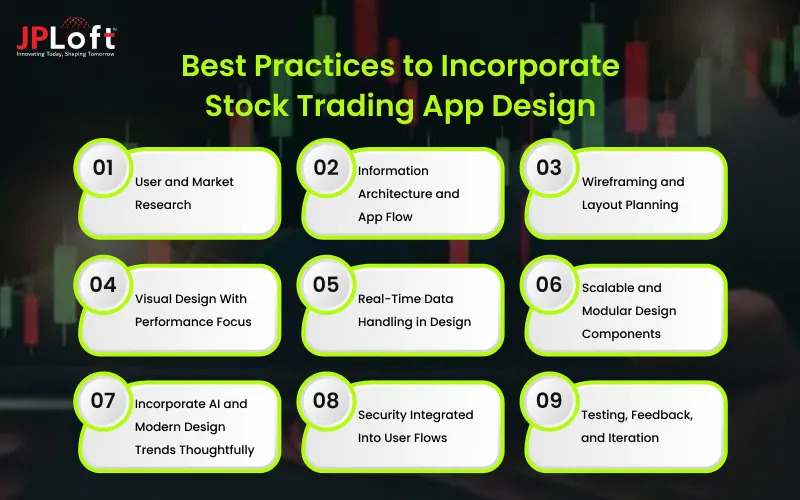
Each stage should support ease of use, real-time interaction, and future growth. When these best practices are followed in order, the design stays structured and user-focused from the start.
1. User and Market Research
If concerned about “how to design a stock trading app”, start by understanding who will use the app and how they trade. For instance, some users check prices occasionally, while others place multiple trades in a day.
Hence, it is important to study their goals, habits, and common challenges. At the same time, study popular existing trading apps to understand design patterns users already recognize. This research helps set design priorities and prevent design elements that can confuse users.
2. Information Architecture and App Flow
Once you have done your research, the trading app design should be followed by a detailed structure of how information moves through the app.
Define how users go from onboarding to market views, charts, trading, and portfolio screens. Keep navigation paths short and logical. Important actions like buying, selling, or checking performance should always feel easy to reach.
A strong structure reduces confusion and supports smoother growth as stock trading app features increase.
3] Wireframing and Layout Planning
App wireframes help teams plan screen layouts before adding visual detail. This stage focuses on placement, spacing, and content order. Decide where prices, charts, actions, and alerts appear.
Such planning makes it easier to test the usability of the app early and adjust flows quickly. They also help designers and developers proceed with app prototyping and stay aligned before moving into detailed UI work.
4] Visual Design With Performance Focus
Visual components of your stock trading app design should stay clean and practical. Use simple color choices that clearly show price movement and status changes. Also, the text should remain readable across all devices.
Avoid heavy effects that slow loading times. Create reusable design elements, so screens look consistent and are easier to build. This approach supports smooth performance during busy trading hours.
5] Real-Time Data Handling in Design
Trading apps rely on real-time data updates. Hence, the design should present changes clearly without causing distraction.
The best practices of stock trading app design in such a scenario would be to use small visual indicators to show price movement instead of refreshing entire screens. Keep key values stable, so users can follow changes easily.
This helps users stay focused during active trading sessions.
6] Scalable and Modular Design Components
The app design plays an important role in keeping your app stable and scalable. It is recommended that your custom stock trading app design should be planned with growth in mind from the beginning.
Build modular components for charts, order forms, tables, and cards. These components should adapt easily when new features or assets are added. This reduces redesign effort, keeps the experience familiar, and helps overcome potential stock trading app development challenges.
7] Incorporate AI and Modern Design Trends Thoughtfully
AI in stock trading apps plays a significant role in the app's functionality and user acceptability. The planned online trading app design should support AI-driven features like smart alerts, personalized dashboards, and data insights in a clear way.
Along with AI, modern trends such as dark mode, customizable views, and accessibility-friendly layouts improve comfort and usability. When integrated with the help of a reputed AI development company, AI and current design trends enhance user experience and prepare the app for future growth.
8] Security Integrated Into User Flows
Among the key stock trading app design best practices, a key aspect to be followed is ensuring that security is blended naturally within the app.
Design login steps, trade confirmations, and error messages as part of normal user actions. Clear confirmations help users feel safe without slowing them down. When security is visible but simple, trust grows without affecting speed.
9] Testing, Feedback, and Iteration
Mobile app testing should continue throughout the stock trading app design process. Start with wireframes, move to interactive prototypes, and then full UI screens. Observe how easily users complete tasks and understand actions.
Further, the feedback from real users often reveals issues that are easy to fix early. Regular testing supports smoother launches and better updates over time.
Case Study: Top Stock Trading App and Its Design Lessons
Studying real-world stock trading apps helps explain why stock trading app design is important and how thoughtful design supports different user needs while keeping platforms scalable.

Leading stock trading apps show how design choices directly influence usability, trust, and long-term engagement.
1. Robinhood: Simplicity That Lowers Entry Barriers
Robinhood focuses on making trading easy for new users. The trading app design interface uses minimal text, large touch-friendly buttons, and clean screens that highlight prices and basic actions.
Complex trading details stay hidden unless needed. This approach, when integrated into building an app like Robinhood, reduces hesitation for first-time users and shortens the learning curve. The design also supports quick navigation, which encourages frequent use.
Design inspiration: Simple layouts and limited on-screen elements help new users trade with confidence.
2. TradingView: Structured Design for Advanced Data
TradingView supports users who rely on charts and technical analysis. Its design handles large volumes of data without overwhelming the screen.
Users can customize chart layouts, indicators, and views while keeping navigation consistent. Tools stay organized, allowing users to explore deeper features gradually.
Design inspiration: Well-structured layouts and customization help manage complex data while keeping usability intact.
3. eToro: Social Interaction Built Into Trading
The eToro online trading app design blends trading with social features. The design places social feeds, trader profiles, and copy trading options alongside market data.
Visual separation between trading actions and social elements keeps the interface easy to follow. Users can learn from others without losing focus on their own trades.
It is a key design inspiration for entrepreneurs planning to build an app like eToro for modern-day investors and traders.
Design inspiration: Social features can enhance engagement when integrated clearly into the core trading flow.
4. Webull: Balanced Design for Growing Traders
Webull investment app design offers a mix of clean visuals and detailed insights. The app presents charts, alerts, and extended market data in clearly defined sections.
Users can access deeper information without crowding the main screens. This layered approach supports users as their trading experience grows and acts as a design example for startups planning to build an app like Webull.
Design inspiration: Layered information design helps serve both beginner and active traders within the same platform.

How Can JPLoft Help Design A Successful Stock Trading App?
Building a stock trading app requires careful planning, strong design thinking, and a clear understanding of trading behavior. As an experienced development partner, JPLoft focuses on creating designs that support user confidence, platform stability, and long-term growth.
We start by understanding your business goals and target users. Whether your app is aimed at beginners or active traders, we design user flows that feel clear and easy to follow. From onboarding to trade execution and portfolio tracking, every screen is planned to reduce confusion and support quick actions.
Scalability is built into our design process. We use modular components that make it easier to add new features, asset types, or compliance updates without affecting the core experience. This keeps the app consistent as it grows.
By combining practical design methods with technical understanding, JPLoft helps businesses launch trading apps that users trust and continue to use over time.
Conclusion
Design plays a critical role in the success of any stock trading app. It shapes how users interact with market data, place trades, and manage their investments with confidence. A well-planned stock trading app design helps reduce errors, improve user satisfaction, and support smooth performance during real-time trading activity.
From clear onboarding to structured dashboards and scalable components, every design choice contributes to trust and usability. As trading platforms grow, strong design also makes it easier to introduce new features, handle larger data volumes, and meet changing user expectations without disrupting the experience.
For businesses planning to build or improve a trading platform, investing in thoughtful and custom stock trading app design is not optional. It sets the foundation for user adoption, long-term engagement, and steady growth.
FAQs
A good app design is clear, easy to navigate, and responsive. It helps users view market data, place trades, and track portfolios without confusion.
UI and UX design improve user confidence and reduce errors. A well-designed interface allows users to act quickly and understand market data easily.
Designing a stock trading app usually takes several weeks. The timeline depends on app complexity, number of features, and testing requirements.
Scalable design uses modular components and consistent layouts. This allows teams to add new features or updates without affecting the user experience.
To design a stock trading app, start with user research, define clear app flows, create wireframes, design a simple UI, and test the experience before development.

Savannah is a passionate tech enthusiast with a sharp understanding of client needs across diverse digital domains. With expertise spanning financial platforms, on-demand solutions, and emerging technologies, she brings a unique blend of analytical insight and interpersonal skills, helping businesses decode complexities and make informed decisions in today's rapidly evolving digital world.




Share this blog