


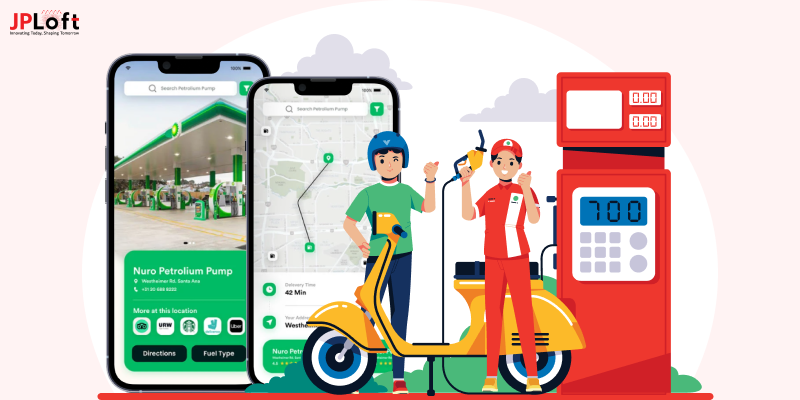
The on-demand economy has transformed consumer behavior, and the fuel delivery sector is the next major frontier.
With busy schedules and a growing preference for convenience, consumers and businesses are increasingly choosing mobile refueling over traditional gas stations.
This shift has created a massive opportunity for entrepreneurs to disrupt the multi-billion dollar fueling industry.
However, as the market matures, standard "on-demand gas" models face intense competition and tight margins.
To build a successful fuel delivery startup, you need a highly targeted niche and an innovative business model.
This blog post explores the top unique fuel delivery app ideas, ranging from corporate fleet management solutions to hybrid EV emergency services.
These ideas can help your startup stand out, improve operational efficiency, and capture untapped market opportunities.
Fuel Delivery Apps and Related Stats
Before picking an idea, it helps to understand which segment of this market you're actually entering.
This is because "fuel delivery" covers several distinct markets growing at different speeds.
Let’s explore the fuel delivery app stats:
-
Market Size: The global mobile fuel delivery market is expected to reach between $5.84 billion and $7.1 billion, depending on the industry segment being analyzed.
-
Growth Rate: The market is expanding steadily, with a projected compound annual growth rate (CAGR) of 7.1% to 9.6% during the forecast period.
-
Key Growth Drivers: Adoption is increasing across logistics, construction, and fleet-driven industries.
Businesses are leveraging fuel delivery solutions to minimize operational downtime, improve efficiency, and avoid long queues at traditional fuel stations.
Why Invest in Fuel Delivery App Ideas?
Fuel delivery apps are serving a great purpose in this current dynamic world.
However, identifying the true reason for exploring and adopting the idea is important.
Let’s examine them all in this section.
A. Convenience and Time Savings
Nobody wakes up excited to stand in a gas station queue. That's exactly where fuel delivery apps work; they bring the pump to the customer’s doorstep, driveway, or job site.
When your app saves users some minutes every week, convenience stops being a feature and becomes the reason they never go back to the old way.
B. Growing Market Size
The numbers make a compelling case for fuel delivery startup ideas.
The mobile fuel delivery system market is expected to grow to $8.6 billion by 2034, growing at a CAGR of 9.5% during the forecast period.
Markets growing this fast rarely stay uncrowded for long; early movers with the right fuel delivery business idea capture the territory first.
C. Contactless Service
Modern customers expect to order everything- food, groceries, even fuel- without a single handshake.
Fuel delivery startup app ideas built around contactless service let users order, pay, track, and receive fuel entirely through their phone.
It’s safer, faster, and perfectly aligned with how on-demand app users already behave, making adoption feel effortless rather than experimental.
D. Builds New Revenue Streams
The best fuel delivery startup ideas don't rely on a single income source.
Delivery fees, per-gallon markups, subscription plans, fleet contracts, and add-on services like car washes or maintenance all stack into one platform.
This diversified fuel monetization app model means your app keeps earning even when one revenue stream slows down, exactly what investors want to see.
E. Customer Retention and Loyalty
Fuel is a repeat purchase by nature, and that’s gold for retention.
A well-executed fuel delivery app idea turns a one-time order into a weekly habit through loyalty rewards, scheduled refills, and personalized offers.
Once users experience their tank filling itself while they sleep, switching back to gas stations feels like a downgrade.
F. Offers Competitive Advantage
While traditional fuel stations compete on location and price, a fuel delivery startup competes on experience.
Launching a fuel delivery startup idea positions your business years ahead of brick-and-mortar rivals who can’t follow customers to their doorstep.
In a barely digitized industry, even a well-built MVP becomes a serious market differentiator.
Key Fuel Delivery App Startup Ideas
So, how to create a fuel delivery app? Well, before answering this question, it’s essential to evaluate the idea you can invest in.
Here is the list to consider:
1. On-Demand Fuel Delivery App
The classic model, and still the biggest market: a consumer opens the app, drops a pin, selects fuel type and quantity, and a tanker arrives at their car, home, or job site.
Who it serves: Urban car owners, stranded drivers, construction sites, generator owners.
Revenue model: Delivery fee per order ($5–$15 typical), plus a small per-gallon markup. Surge pricing during emergencies (storms, outages) adds margin.
Must-have features:
-
Real-time GPS tracking of the delivery tanker
-
Scheduled vs. instant delivery
-
Fuel-type selection’
-
Secure in-app payments
-
Delivery proof (photo + digital receipt)
-
SOS/emergency mode for stranded drivers
Reality check: Competition is high in metros, and regulatory compliance (transporting fuel is heavily regulated) is your biggest startup cost after the app itself. Winning here is about operational excellence, not just the app.
Examples: CAFU (UAE), FuelBuddy, Booster (US).
2. B2B Fleet Fueling Platform
Instead of chasing individual consumers, refuel entire fleets, delivery vans, trucks, school buses, construction equipment, overnight at their depot.
One contract can be worth more than ten thousand consumer orders.
Who it serves: Logistics companies, last-mile delivery operators, construction firms, municipalities.
Revenue model: Monthly service contracts plus per-gallon margin. B2B customers also pay for the reporting layer — fuel consumption analytics per vehicle, tax-ready documentation, and theft prevention.
Must-have features:
-
Multi-vehicle scheduling
-
Per-vehicle fuel logs
-
Driver/fleet-manager role separation
-
Consumption dashboards
-
Route-optimized delivery for your own tankers
-
Invoicing/ERP integrations.
Reality check: Longer sales cycles, but dramatically better retention and unit economics than consumer delivery. This is the segment where most profitable fuel delivery companies actually make their money.
Examples: Booster and Yoshi
3. Subscription-Based Fueling Service
Turn refueling into a utility bill.
Users pay a flat monthly fee for scheduled top-ups; for example, every Sunday night their car is refueled in their driveway while they sleep.
Who it serves: Busy professionals, two-car households, small businesses with predictable usage.
Revenue model: Tiered monthly plans (e.g., 2, 4, or unlimited fills per month) with fuel billed at market rate or slightly below station price. Predictable recurring revenue makes this model attractive to investors.
Must-have features:
-
Recurring schedule management
-
Plan upgrades/downgrades
-
Smart reminders based on estimated tank level
-
Family/multi-vehicle plans, and pause/resume options.
Reality check: Churn is the metric that decides whether this works. The product must be invisible-good — users should forget gas stations exist. Route density matters enormously for margins, so launch neighborhood-by-neighborhood, not city-wide.
Examples: Yoshi and CAFU
4. EV Charging Delivery App
The fastest-emerging niche. EV adoption is outpacing charging infrastructure in most markets, and "charge anxiety" is the new range anxiety.
A mobile charging van that delivers a boost to a stranded or queued EV solves a real, growing pain point.
Who it serves: EV owners in cities with patchy charging networks, EV fleet operators, events and venues.
Revenue model: Per-session delivery fee plus per-kWh pricing; B2B contracts with EV fleets and roadside-assistance providers; partnerships with insurers and automakers as a bundled service.
Must-have features:
-
Live charger-van tracking
-
Charge-level selection (e.g., "enough to reach the nearest station" vs. full)
-
Integration with vehicle APIs where available
-
Charging-spot reservation and roadside-assistance dispatch.
Reality check: Hardware cost (mobile DC chargers) is significant, but competition is thin, and the market is compounding. This is the highest-upside idea on this list for 2026–2030.
Examples: SparkCharge, Lightning Mobile (for the mobile-charging model); PlugShare and ChargePoint for the discovery/network layer.
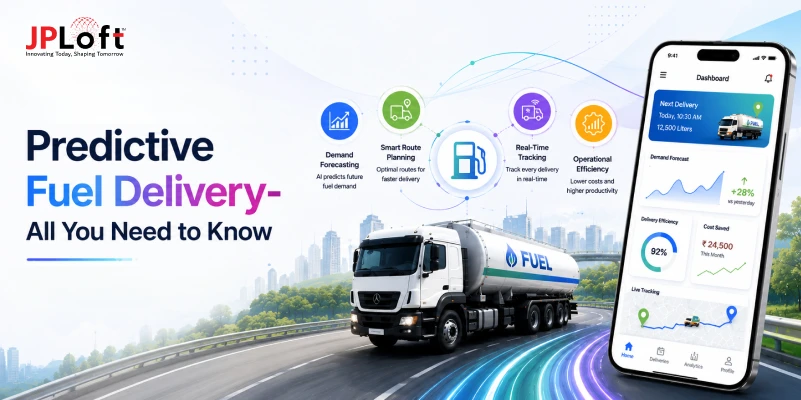
5. Predictive, AI-Driven Fuel Delivery
This is a layer on top of idea #1 or #2. Instead of waiting for users to place an order, the platform predicts when they'll need fuel.
The prediction is based on consumption patterns, telematics data, weather, and route history.
Using this, the platform proposes a delivery, or automatically schedules one, before the tank runs low.
Who it serves: Fleets first (richest data), then consumers via connected-car integrations.
Revenue model: SaaS pricing for the prediction/optimization layer, on top of standard delivery margins. The AI layer is also your defensible moat and your differentiator in investor conversations.
Must-have features:
-
Consumption forecasting per vehicle
-
Automated reorder triggers with approval workflows
-
Dynamic delivery routing that batches nearby predicted orders
-
An analytics dashboard showing fuel-cost savings achieved.
Reality check: Don't build this as a standalone first product — you need delivery operations generating data before prediction adds value. Treat it as your phase-two differentiator.
6. IoT Smart-Tank Monitoring + Auto-Refill
Install IoT fuel level sensors in stationary tanks located at farms, factories, backup generators, and residential heating systems.
The sensors continuously track fuel levels. Once fuel drops below a set limit, a refill is automatically scheduled.
Customers don't need to place orders or use an app, ensuring a seamless refueling experience.
Who it serves: Agriculture, manufacturing, hospitals, and data centers (generator diesel), residential heating-oil markets.
Revenue model: Three layers — sensor hardware (sold or leased), monthly monitoring SaaS fee, and margin on every automatic refill. Extremely sticky once installed.
Must-have features:
-
Real-time tank-level telemetry
-
Threshold-based auto-ordering
-
Leak/anomaly alerts
-
Multi-site dashboards for enterprise clients
-
Delivery confirmation tied to measured level increase
Reality check: Longer setup per customer, but near-zero churn and contract values that dwarf consumer delivery. Great fit if your team has IoT/hardware experience.
7. Sustainable & Biofuel Delivery
A delivery platform focused on renewable diesel, biodiesel, HVO, and propane for customers with emissions targets. Sustainability reporting is now a procurement requirement for many enterprises — and they'll pay a premium for fuel that helps them hit their numbers.
Who it serves: Corporates with ESG commitments, municipal fleets, eco-conscious consumers, event companies.
Revenue model: Premium per-gallon pricing, B2B sustainability contracts, and a reporting layer (per-delivery CO₂ savings certificates) sold as an add-on.
Must-have features:
-
Fuel-type transparency with certification documents
-
Per-delivery emissions-savings reports
-
ESG dashboard exports for corporate clients
-
Carbon-offset bundling.
Reality check: Supply is the constraint — secure your biofuel sourcing partnerships before building the app. Differentiation is strong, but only in markets where regulation or corporate policy creates real demand.
Examples: Booster's renewable fuel program, Biofuel Express (Europe).
8. Fuel Delivery Marketplace (Aggregator Model)
Don't own tankers at all. Build the platform that connects independent fuel suppliers and tanker operators with customers — the "Uber for fuel" model in its literal sense, where you're the marketplace, not the operator.
Who it serves: Markets with fragmented local fuel suppliers (most of South Asia, Africa, Latin America); founders who want an asset-light model.
Revenue model: Commission per completed order (typically 8–15%), supplier subscription tiers for lead priority, and payment-processing margin.
Must-have features:
-
Supplier onboarding with compliance verification
-
Dynamic pricing comparison across suppliers
-
Ratings and dispute resolution
-
Escrow-style payments
Reality check: Classic marketplace chicken-and-egg: you need suppliers to attract customers and vice versa. Start hyper-local — one city, even one industrial zone — and reach liquidity there before expanding.
How to Choose the Right Fuel Delivery App Idea?
Looking to transform your fuel delivery app idea into reality? It can be difficult to select a suitable business idea; however, with the right guidance and steps, you can achieve it.
Let’s explore how to choose the right idea for your business:
Here, you can go through all these steps for selecting the right fuel delivery app.
Step 1: Evaluate the Market Needs
Start by studying current market trends and analyzing the fuel delivery services already operating in your target region.
This helps you understand what users are actually looking for, and where existing solutions fall short.
Step 2: Understand the User Needs
You should dig into user preferences and segment the market.
Effective segmentation reveals who your prime customers and early adopters are, so you know exactly which audience to approach first.
Step 3: Clear Your Purpose
Using insights from the first two steps, define a clear objective for your fuel delivery app.
Without a well-defined purpose, your app is unlikely to reach its destination, or its users.
Step 4: Carve Out a Niche
To stand out in a competitive landscape, you need a clearly defined niche.
Decide whether you’re building an online fuel delivery business, an EV charging solution, or something in between, and own that space.
Step 5: Evaluate Feasibility and Resources
Assess the practicality of your business idea and the resources it demands.
Doing this early keeps you from being caught off guard by the cost of creating a fuel delivery app later on.
Step 6: Monitor and Validate
Finally, keep monitoring and refining your idea, and hire dedicated developers to validate it and turn it into a revenue-generating solution.
An experienced development team can also help you optimize your project budget and fine-tune the finer details.
How Can JPLoft Help You Turn Your Fuel Delivery App Idea?
JPLoft can be your partner in processing your idea and then converting it into reality. Over 15+ years of experience, we have launched 1100+ apps with a 98% client retention rate.
With our custom fuel app development services, we build customized solutions that simplify fuel ordering, delivery tracking, fleet management, and customer experiences.
If you want to launch an on-demand fuel startup, enterprise solution, or niche fuel delivery platform, JPLoft can turn your vision into a market-ready digital product.
Conclusion
The fuel delivery industry is rapidly evolving, creating new opportunities for businesses and startups.
Investing in a fuel delivery app offers multiple advantages, including better convenience, contactless services, multiple revenue streams, improved customer engagement, and a competitive edge.
From AI-powered predictive solutions and sustainable fuel options to advanced fleet management systems, businesses have various innovative ideas to explore.
However, choosing the right concept requires proper market research, niche selection, feasibility analysis, and a future-focused approach.
By selecting the right fuel delivery app idea and partnering with experienced professionals, you can build a powerful solution that drives customer convenience and long-term business growth.
FAQs
Investing in a fuel delivery app offers convenience, addresses a growing market (projected to reach $11,927.6 million by 2035), provides contactless service, opens new revenue streams, enhances customer loyalty, and gives you a competitive advantage.
Key ideas include On-Demand Fuel Delivery, Predictive Fuel Delivery (AI-driven), Subscription-Based Fueling Services, Multi-Vehicle Fleet Management, IoT-Enabled Smart Vehicle Integration, EV Charging Delivery Apps, Sustainable Fuel Delivery Options, and AI-Driven Emissions Monitoring and Reporting Tools.
Yes, you can develop sustainable fuel delivery apps by prioritizing options like EV charging delivery, offering biofuels, focusing on zero-emission fleets, or implementing AI-driven emissions monitoring tools.
To choose the right idea, you should evaluate market needs, understand your target user, clarify your app's purpose, define a niche, assess feasibility and resources, and continuously monitor and process your concept.
Challenges include ensuring data privacy and ethical AI use, overcoming technical hurdles (like data integration and real-time updates), managing scalability and infrastructure, and addressing potential biases in AI models.

Savannah is a passionate tech enthusiast with a sharp understanding of client needs across diverse digital domains. With expertise spanning financial platforms, on-demand solutions, and emerging technologies, she brings a unique blend of analytical insight and interpersonal skills, helping businesses decode complexities and make informed decisions in today's rapidly evolving digital world.


Share this blog