


Key Takeaways:
Automatic delivery reduces run-out risks and emergency calls, improving customer trust and ensuring uninterrupted heating during peak demand periods.
Call-In vs Automatic heating oil delivery highlights a clear tradeoff between price control and convenience, helping businesses align services with customer behavior.
Automatic delivery increases customer lifetime value through recurring contracts, predictable demand, and higher retention across multiple heating seasons.
Call-in delivery lowers entry barriers and CAC but often leads to higher churn and revenue volatility during off-peak periods.
Long-term returns improve when delivery models use data-driven forecasting, route optimization, and automation to control operational costs.
Businesses working with JPLoft can build scalable fuel delivery platforms that balance automation, profitability, and customer experience for sustained growth.
The global fuel delivery market is expected to grow to $11.93 billion by 2035, reflecting a strong CAGR of 7.4% during the forecasted period.
Well, if you want to become the one to contribute to this growing market, then identifying the right business model and knowing what kind of services you can opt for is important.
With recurring delivery models gaining traction, heating oil providers are rethinking how deliveries are scheduled and managed to protect margins and reduce risk.
So the real question is: “What is the main difference between Call-In vs automatic heating oil delivery?”
In simple terms, Call-in delivery depends on customers placing orders when they notice low fuel levels, while automatic delivery uses usage data, schedules, and forecasting to deliver fuel before a tank runs low.
When the fuel delivery apps grow, and the customers are expecting fewer disruptions, choosing the right model becomes more important.
Hence, this guide will break down every aspect related to the Call-in and automatic heating oil delivery. It will help you to understand which model to undertake and why.
Let’s proceed with this blog in detail.
What is Call-In Delivery?
When you proceed to create a fuel delivery app, you need to decide the category of the app. And for this, you need to learn about what types of apps you can invest in.
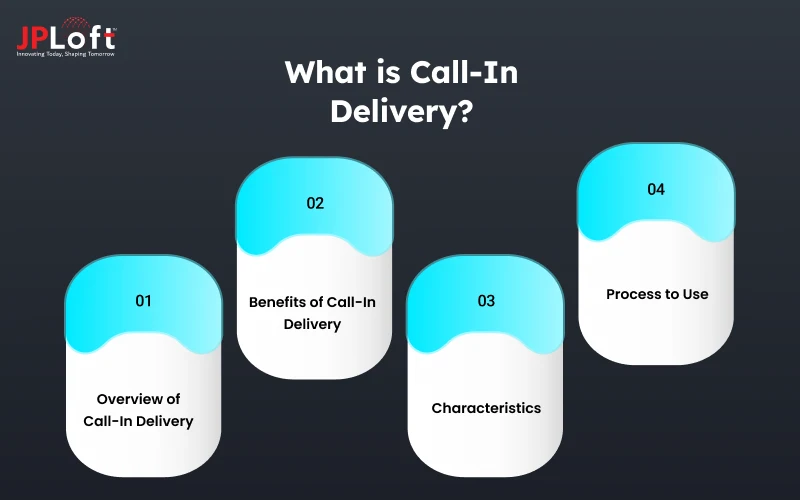
Here, we are going to discuss Call-in delivery as one of the types.
1. Overview of Call-In Delivery
Call-in fuel delivery is a customer-initiated ordering method where buyers contact the supplier directly via phone to place orders and then request delivery at a designated location.
This approach combines the convenience of advance ordering with the immediacy of self-pickup, commonly used in the fuel delivery industry. Where customers prefer controlling pickup timing and avoiding delivery fees.
2. Benefits of Call-In Delivery
Here is the complete list of benefits to rely on when it comes to selecting Call-in delivery as an option to invest.
-
Cost Savings: Eliminates delivery fees and fuel surcharges, reducing overall purchase costs for customers.
-
Flexible Pickup Timing: Customers control when they collect orders based on their schedules rather than waiting for delivery windows.
-
Immediate Availability: Orders can be picked up shortly after placement, ideal for urgent needs without premium rush delivery charges.
-
Order Verification: Customers can inspect products before leaving the pickup location, ensuring accuracy and quality.
-
Reduced Waiting Time: No need to wait at home or business for delivery trucks during uncertain time windows..
-
Better Inventory Management: Suppliers can confirm product availability before customers arrive, preventing wasted trips.
-
Lower Environmental Impact: Consolidating customer pickups reduces overall vehicle trips compared to individual deliveries.
3. Characteristics
-
Customer-Initiated Communication: Orders are placed through direct phone calls rather than automated online systems.
-
Pre-Payment or Payment on Pickup: Transactions can be completed over the phone or when collecting the order.
-
Designated Pickup Locations: Specific warehouses, distribution centers, or retail locations serve as collection points.
-
Scheduled Pickup Windows: Suppliers provide timeframes when orders will be ready for collection.
-
Order Confirmation Process: Customers receive confirmation with pickup details, order numbers, and required documentation.
-
ID Verification Required: Pickup often requires identification and order confirmation to prevent unauthorized collection.
-
No Home/Business Delivery: Products must be collected by customers; no transportation to their locations is provided.
4. Process to Use
If you want to start a fuel delivery app business, that too at a vast level, then identifying the key parameters of models as Call-in vs automatic heating oil delivery, is crucial. Now, let’s check out the process of using the Call-in fuel delivery.
Step 1: Place Order via Phone Call
Customer contacts the supplier's designated phone number to place an order, providing product details, quantities, preferred pickup time, and contact information. The supplier confirms product availability, pricing, pickup location, and estimated ready time while assigning an order confirmation number.
Step 2: Order Preparation and Confirmation
The supplier processes the order, prepares items for pickup, and contacts the customer via phone, SMS, or email when the order is ready for collection. Confirmation includes the pickup address, business hours, required documentation (ID, order number), and any special instructions for locating the pickup area.
Step 3: Customer Picks Up Order
Customer arrives at the designated pickup location during specified hours, presents identification and order confirmation number to staff, and verifies order contents before loading fuel into their vehicle. Payment is processed if not completed during the initial call, and customers receive receipts and any necessary product documentation.
Step 4: Post-Pickup Follow-Up
Supplier marks the order as completed in their system, and customers can contact the business if any issues arise with their order. Many suppliers follow up to ensure satisfaction and encourage future call-in orders through loyalty programs or pickup discounts.
Now, let’s proceed with the automatic heating oil delivery in the next section.
What is Automatic Heating Oil Delivery?
To convert your fuel delivery app ideas into reality, you should have a strong hold on your business model. And, when it's about automation, here is a brief of the mode to look at.
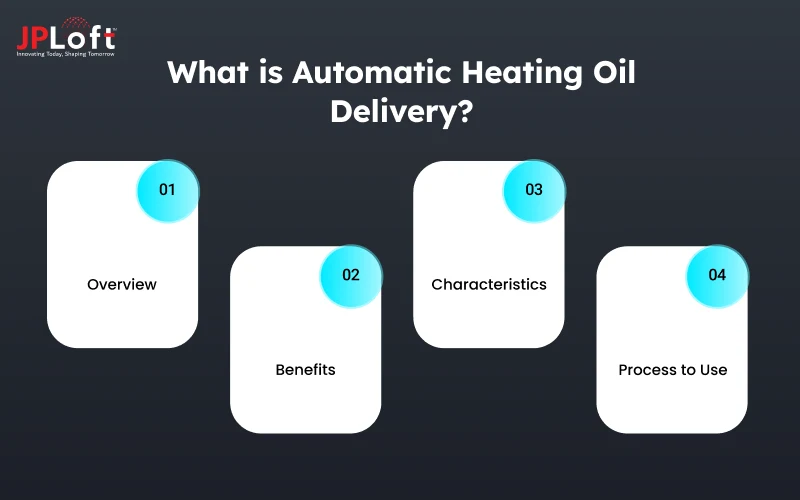
1. Overview
Automatic heating oil delivery is a convenient service where fuel suppliers monitor customers' heating oil consumption and automatically schedule deliveries before tanks run empty, eliminating the need for customers to manually track fuel levels or place orders.
Using predictive algorithms based on historical usage patterns, weather data, and tank capacity, suppliers proactively deliver heating oil to ensure homes and businesses never experience interruptions in heating service during cold months.
2. Benefits
-
Eliminates Running Out of Fuel: Automatic monitoring prevents emergencies where heating systems shut down due to empty tanks.
-
Hands-Free Convenience: Customers never need to check tank levels, calculate consumption, or remember to place orders.
-
Optimized Delivery Scheduling: Suppliers plan efficient routes delivering to multiple customers in the same area, potentially reducing costs.
-
Price Protection Options: Many automatic delivery programs offer budget plans, price caps, or fixed-rate contracts protecting against market fluctuations.
-
Priority Service: Automatic delivery customers often receive priority scheduling during peak demand periods and severe weather.
-
Prevents System Damage: Consistent fuel supply prevents heating system damage that can occur when tanks run dry, and air enters fuel lines.
-
Seasonal Peace of Mind: Particularly valuable during winter months when heating is critical and running out could be dangerous.
3. Characteristics
-
Predictive Delivery Algorithms: Systems use degree days (temperature data), tank size, and historical consumption to forecast when deliveries are needed.
-
No Customer Action Required: Deliveries occur automatically without customers needing to call, order online, or monitor tank gauges.
-
Automatic Enrollment Options: Customers sign up once and remain enrolled season after season unless they opt out. It is one of the core features of a fuel delivery app to look for whenautomating the complete procedure.
-
Tank Monitoring Technology: Some programs include wireless tank monitors providing real-time fuel level data to suppliers.
-
Flexible Delivery Thresholds: Suppliers typically deliver when tanks reach 25-30% capacity, ensuring adequate buffer before running empty.
-
Contract-Based Service: Usually requires enrollment agreements specifying terms, pricing structures, and delivery commitments.
-
Combined with Payment Plans: Often paired with budget billing, spreading annual heating costs across monthly payments.
4. Process to Use
Here is the list of steps to consider when it comes to evaluating the user journey with such a method.
Step 1: Enroll in the Automatic Delivery Program
Customer contacts their heating oil supplier to enroll in automatic delivery service, providing information about tank size, heating system type, home square footage, insulation quality, and typical thermostat settings.
The supplier explains program terms, including pricing structure, delivery policies, payment options, and any enrollment fees or minimum purchase requirements.
Step 2: Supplier Establishes Delivery Schedule
The heating oil company uses customer information combined with local weather data (degree days) and historical consumption patterns to create a predictive delivery schedule.
Some suppliers install wireless tank monitors that transmit real-time fuel levels, while others rely on algorithms calculating consumption rates based on temperature, tank size, and usage history from previous seasons.
Step 3: Automatic Delivery Execution
When the supplier's system determines a customer's tank will soon need refilling (typically at 25-30% capacity), a delivery is automatically scheduled and added to the driver's route.
The customer receives notification via phone call, email, or text message indicating the scheduled delivery date or time window, and the delivery occurs without requiring customer presence or action in most cases.
Step 4: Ongoing Monitoring and Adjustments
The supplier continuously monitors consumption patterns throughout the heating season, adjusting delivery schedules if usage changes due to temperature fluctuations, occupancy changes, or other factors.
Customers can contact the supplier to request early deliveries, update account information, or adjust program settings, while the system automatically adapts to ensure consistent fuel availability throughout winter. Through fuel delivery app maintenance, you can proceed with ongoing monitoring and further adjustments or updates in the apps.
Now, when it comes to deciding one among the above, it's crucial to look for Call-in vs automating heating oil delivery, as it is one of the important differences to consider before investing in one.
Let’s check out all the differences in the following section.
Difference Between Call-in and Automatic Heating Oil Delivery
Learning about the differences between the call-In and automating heating oil delivery will help you to decide on an investment model and then stick to it.
Hence, let's figure out the difference in the model within the following table.
|
Factor |
Call-in Delivery |
Automatic Heating Oil Delivery |
|
Order Initiation |
The customer must manually monitor tank levels and call to place orders when fuel is needed |
Supplier automatically schedules deliveries based on consumption patterns and tank monitoring without customer action |
|
Customer Responsibility |
High - customers must track fuel levels, predict when to order, and contact the supplier before running out |
Low - supplier assumes responsibility for monitoring and ensuring timely deliveries before tanks run empty |
|
Convenience Level |
Less convenient; requires vigilance, planning, and remembering to order before fuel runs out |
Highly convenient; completely hands-free with no need to monitor tanks or place orders |
|
Risk of Running Out |
Higher risk if the customer forgets to order, misjudges consumption, or delays ordering during busy periods |
Minimal risk as the supplier proactively delivers based on predictive algorithms and usage monitoring |
|
Pricing Structure |
Typically market-rate pricing at time of order; prices fluctuate based on current oil market conditions |
Often includes price protection options, budget plans, fixed rates, or price caps that stabilize costs |
|
Delivery Timing Control |
Customer controls exactly when deliveries occur and can time purchases to take advantage of lower prices |
Supplier determines optimal delivery timing based on tank levels, weather, and route efficiency |
|
Service Priority |
Standard service; may experience delays during peak demand or severe weather when everyone orders simultaneously |
Priority service; automatic customers often receive preferential scheduling during high-demand periods |
|
Enrollment Requirements |
No enrollment needed; pay-per-delivery basis with no ongoing commitments or contracts |
Requires enrollment in a program with service agreements specifying terms, commitments, and delivery policies |
|
Payment Options |
Payment is typically due at the time of delivery or within a short billing period |
Often includes budget billing options, spreading costs across monthly payments for easier financial planning |
|
Monitoring Method |
Customer manually checks the tank gauge and estimates remaining fuel based on visual inspection |
Supplier uses predictive algorithms based on degree days, consumption history, and sometimes wireless tank monitors |
|
Cost Considerations |
No enrollment or monitoring fees; customers pay only for fuel delivered when ordered |
May include enrollment fees, tank monitoring equipment costs, or minimum purchase requirements |
|
Best Suited For |
Cost-conscious customers who want price flexibility, have predictable usage, and prefer controlling delivery timing |
Busy homeowners, elderly residents, vacation properties, or anyone prioritizing convenience over price control |
|
Emergency Service Risk |
Higher likelihood of needing expensive emergency deliveries if the customer runs out unexpectedly |
Virtually eliminates emergency delivery needs through proactive monitoring and scheduled refills |
|
Seasonal Commitment |
No long-term commitment; can switch suppliers or delivery methods at any time |
Typically requires a seasonal or annual commitment to the automatic delivery program |
|
Communication Frequency |
Customer initiates all communication when ordering fuel |
Supplier communicates proactively with delivery notifications and periodic account updates |
With this table, you might have got an analysis of how call-in vs automatic heating oil delivery differs, but still, there remains the confusion between which model prefers you the most.
Hence, let's check out the following section for more.
Which Model Offers Long-Term Returns?
Deciding on one model among the will call vs. automatic heating oil delivery can be a tough decision. However, going through the process of deciding can be helpful.
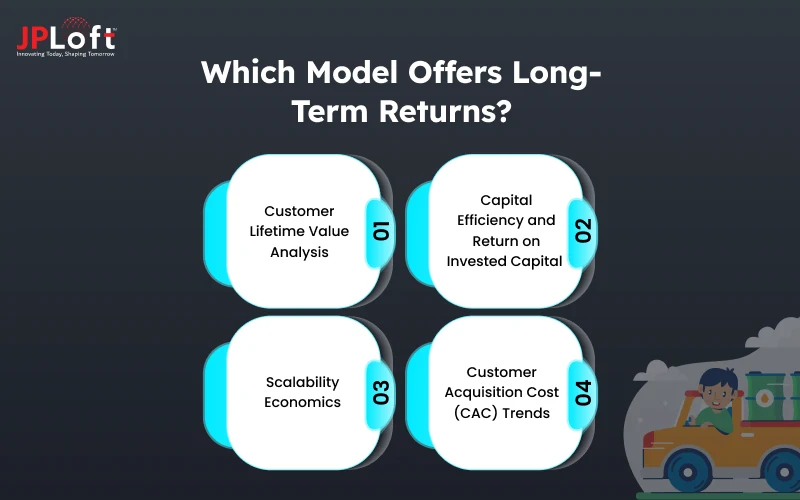
Hence, here are a certain number of practices to consider for deciding which model offers long-term returns.
Model 1: Customer Lifetime Value Analysis
One of the important segments you should consider is identifying the customer lifetime value period with the brand. It can help you to estimate the long-term returns for each of the models.
For the automatic heating oil delivery, the average contract length will typically fall between 1-3 years with an auto-renewal clause. You should measure customer retention rates that might usually be 80-90% for the automatic delivery.
For the Call-in delivery, the customer's lifetime value with the model can vary between 6-18 months. This can increase the working capital of your business, but it will also help you to enhance the customer reach and acquisition rate.
Model 2: Capital Efficiency and Return on Invested Capital
For evaluating the long-term returns for your model, it is essential to find the ratio of (net operating profit after tax) NOPAT/ invested capital
When it comes to automatic heating oil delivery, you boost efficiency via predictable routes and less emergency service for the business.
Whereas for the Call-in fuel delivery, this model will require more capital for frequent, costly emergency deliveries, as well as less-efficient routing, which lowers ROIC, through which customers save by timing purchases during the price dips.
Model 3: Scalability Economics
The scalability economics help in determining long-term model viability through revealing that automatic delivery decreases the marginal cost per customer.
For the automatic delivery, you need to analyse the marginal cost per customer, need to evaluate the technology leverage, and calculate the operational efficiency gains from the predictive routing and inventory management.
For the Call-in fuel delivery, the scalability economics can be defined by lower variable last-mile costs and higher fixed, location-dependent costs.
Model 4: Customer Acquisition Cost (CAC) Trends
It is one of the significant trends that varies by business model. A higher CAC is expected due to the longer sales cycles, requiring a strong LTV, often needing a ratio of 3:1, for more profitability.
For the automatic fuel delivery, a higher CAC can be due to education and equipment installation. The long-term CAC decreases through referrals, word-of-mouth, and with the increased brand reputation.
For the Call-in fuel delivery, the CAC is moderate through traditional marketing. Here, the long-term CAC remains stable or increases due to market saturation and competition. Here, you will be required to make continuous marketing investments to replace the churned customers.
Well, if we summarise in one line, then you should select the automatic heating oil fuel delivery if you want high customer lifetime value, ROIC can be high, will have scalable economics, and higher CAC. However, you can select Call-in fuel delivery when it comes to lower CAC and lower ROIC.
You should decide the model depending on the cost to hire fuel delivery app developers, their skills, and the overall business model.
If you are still wondering about the right app development partner, then the following section is for you.
Looking to Invest in the Right Heating Oil Delivery Model with JPLoft?
Selecting between the Call-in and automatic fuel delivery model does require a careful analysis of the customer lifetime value, scalability economics, and the potential for profitability in this model. In this case, selecting the right model can impact the overall business.
Hence, deciding on the right partner is one of the difficult tasks that you might be worried about.
But here is the solution. JPLoft, a leading fuel delivery app development company, specializes in building robust, scalable solutions for both Call-in and automatic delivery models. Our experienced team helps investors and entrepreneurs evaluate which model aligns best with their market, capital structure, and growth objectives.
We develop custom fuel delivery platforms with advanced features, including real-time tracking, predictive analytics, route optimization, and IoT integration.
Ready to make an informed investment decision? Partner with JPLoft to maximize long-term returns and position your business for sustained growth in the competitive energy market.
Conclusion
Choosing between Call-in and automatic heating oil delivery models significantly impacts your business's long-term profitability and sustainability. While Call-in offers lower initial investment and faster market entry, automatic delivery provides superior customer lifetime value, recurring revenue, and stronger competitive positioning.
The decision ultimately depends on your available capital, target market preferences, and strategic vision. Automatic delivery typically delivers better long-term returns through improved customer retention, operational efficiency, and scalability economics, despite requiring higher upfront technology investment.
By carefully analyzing customer acquisition costs, ROIC, and market dynamics, you can select the model that aligns with your business objectives and maximizes returns over time.
FAQs
Many experts recommend scheduling a delivery when the tank is about to empty and is one-quarter full. This buffer ensures that you have enough oil hand to last through unplanned cold snaps or delays due to weather disruptions.
Call-in delivery requires customers to manually monitor fuel levels and place orders when needed, while automatic delivery uses predictive algorithms and tank monitoring to schedule deliveries proactively without customer intervention, ensuring tanks never run empty.
Call-in delivery eliminates enrollment fees and allows customers to time purchases during price dips, potentially saving money. However, automatic delivery offers price protection plans, budget billing options, and prevents costly emergency deliveries, often providing better long-term value despite higher service fees.
Automatic delivery uses predictive algorithms based on weather data, historical consumption patterns, tank capacity, and sometimes wireless tank monitors to schedule deliveries when tanks reach 25-30% capacity, ensuring adequate fuel supply before running empty and preventing heating system shutdowns.
Automatic delivery typically offers superior long-term returns with 80-90% customer retention rates, higher customer lifetime value, recurring revenue streams, and better scalability economics. Despite requiring higher initial technology investment, it generates 15-25% higher profit margins and improved ROIC over 5-10 years.

Savannah Bustos is a technology professional with experience across financial platforms, mobility solutions, and on-demand digital products. Her areas of expertise include FinTech, digital banking, eWallets, lending, BNPL, stock trading, fuel delivery, and taxi-booking platforms. She combines a strong understanding of business requirements with practical technology insight, helping companies evaluate challenges, define product needs, and make informed decisions about scalable digital solutions.


Share this blog