


Key Takeaways:
Trends in equine app streamline equine care, training, scheduling, and payments through centralized digital tools that improve operations.
Emerging technologies like AI, wearables, cloud systems, and real-time monitoring enable early health management and training.
Security, privacy controls, and reliable data storage build user trust, protect sensitive information, and ensure compliance with the app.
Integrated payments, marketplaces, and multiple roles dashboards simplify operations, improve user experience, and revenue opportunities.
Continuous innovation, user feedback, and scalable architecture help apps adapt to changing demands and support growth.
Hiring a development company like JPLoft ensures strategic planning, advanced features, strong performance, and successful growth.
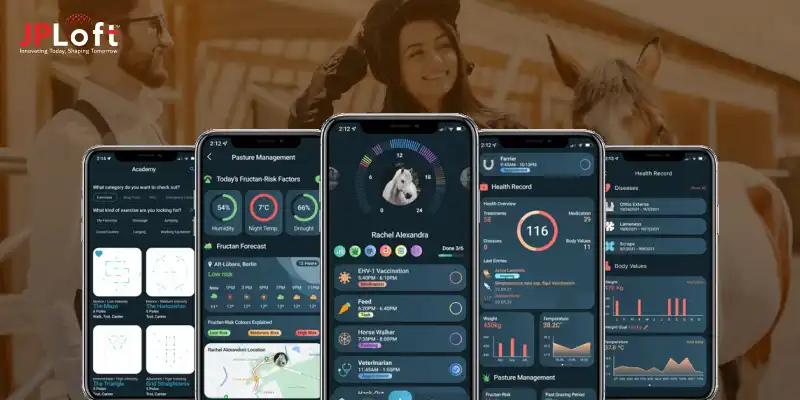
From smart stables to data-driven training, the equine industry is switching to equine apps. What was once managed manually is now powered by sophisticated apps tailored for equine pets.
Equine service providers now rely on apps to manage bookings, health records, training schedules, and secure payments with ease. New technologies such as AI insights, wearable integrations, and cloud systems are shaping how equine services operate.
Key trends in equine app development are real-time health tracking, virtual veterinary consultation, smart scheduling, GPS tracking, AR/VR integration, smart assistants, and predictive intensive care.
These trends are rapidly evolving, shaped by advances in technology. Knowing these changes helps decision-makers plan better products, reduce operational gaps, and deliver consistent value to users.
In this blog, we explore the key leading trends in equine app and how they are transforming equine pet care, training, and business management.
Overview of Equine App
An equine app is a digital platform designed to simplify how stable owners, trainers, breeders, and service providers manage operations and communication. Instead of relying on manual records or tools, you can handle bookings, health tracking, feeding schedules, training plans, and payments within a single app.
This improves accuracy, saves time, and creates a more organized workflow for both professionals and owners. Modern solutions also support real-time updates, cloud storage, and secure data sharing, which helps teams stay connected across locations.
Many apps now include equine app features such as performance monitoring, veterinary history, reminders, and customer management tools to improve service quality and user satisfaction. For equine businesses, adopting a dedicated mobile or web solution is no longer optional.
It also supports better, stronger customer relationships and scalable growth in a competitive market. As digital adoption increases across the industry, well-planned equine platforms are becoming essential for delivering efficient services, improving transparency, and creating consistent value for investors.
Recent Equine App Market Statistics
Below, we have provided recent market statistics for better planning and investment in equine app development trends:
-
According to VerifiedMarketResearch, North America leads the horse management software market, while the US segment is expected to hit USD 308 million by 2032 at around 9% CAGR.
-
The horse software market globally is expected to grow up to USD 520 million by 2032 at 8.5% CAGR, as estimated by VerifiedMarketResearch.
-
DataIntelo estimates that related segments, such as equine training log apps, are projected to reach about USD 438.9 million by 2033, reflecting robust expansion in adjacent app types.
With a clear understanding of what an equine app is, the next step is to explore the innovations shaping its future. Let’s look at the top trends in equine app that are redefining efficiency, care, and digital growth across the equestrian industry.
15+ Top Trends of Equine Apps in 2026
The technology trend in equine app is evolving rapidly, introducing smarter tools that improve equine care, training accuracy, business efficiency, and user engagement. Being aware of the latest trends helps equestrian businesses adopt futuristic solutions, stay competitive, and deliver safer service:
1. AI-Powered Health and Performance Analytics
AI-powered analytics in equine apps use machine learning to study health records, movement patterns, nutrition history, and training outcomes. These systems detect early warning signs, predict performance changes, and support smarter care planning.
By turning complex data into simple insights, AI helps owners and trainers make faster and more accurate decisions that improve stable pet health and long-term performance.
How is it making a difference in the equestrian industry:
-
Enables early detection of injuries, stress, or illness through continuous pattern analysis and predictive alerts.
-
Supports data-driven training programs that improve performance while reducing overtraining risks and recovery time.
-
Helps veterinarians and trainers collaborate using clear insights instead of relying only on manual observation.
2. Wearable Device and IoT Integration
Wearable sensors and IoT devices are the top trends in equine apps. They connect directly to that app for capturing live data such as heart rate, movement, sleep, and activity levels. This constant monitoring provides accurate visibility into an equine’s physical condition during training, travel, and rest.
Integration with mobile platforms ensures that owners and professionals can access meaningful health insights anytime without complex manual tracking.
How is it making a difference in the equestrian industry:
-
Improves safety by alerting users instantly when abnormal vitals or movement patterns appear.
-
Enhances training precision through measurable performance data rather than guess-based routines.
-
Reduces long-term medical costs by identifying potential health concerns before they become serious conditions.
3. Real-Time Health Monitoring and Alerts
Real-time monitoring allows equine apps to provide instant updates about temperature, hydration, injury risk, or unusual behavior. Instead of waiting for periodic checkups, stakeholders receive continuous notifications that support rapid response and preventive care.
This shift from reactive treatment to proactive health management is becoming essential for modern equestrian operations focused on welfare and performance.
How is it making a difference in the equestrian industry:
-
Allows immediate medical attention when warning signs appear, reducing complications and treatment delays.
-
Strengthens trust between owners, trainers, and veterinarians through transparent and shared health information.
-
Supports better competition readiness by ensuring pets remain in optimal physical condition consistently.
4. Telemedicine and Virtual Veterinary Consultations
Telemedicine trends in equine app allow owners to consult veterinarians through video calls, chat, and digital record sharing. It reduces travel time and ensures faster professional guidance during emergency or routine health concerns.
Virtual care also improves accessibility for remote areas where immediate veterinary support may not always be available.
How is it making a difference in the equestrian industry:
-
Provides quick expert advice that can prevent minor health issues from becoming serious conditions.
-
Saves transportation costs and time for both veterinarians and owners.
-
Expands access to specialized veterinary knowledge regardless of geographic limitations.
5. Smart Scheduling and Automated Reminders
Smart scheduling can be listed as one of the top equine app ideas due to its last-minute reminders. It helps manage training sessions, veterinary visits, feeding routines, competitions, and stable tasks from a single dashboard.
Automated reminders reduce the risk of missed activities and improve daily organization. This structured approach saves time for owners and staff while ensuring that every equine receives consistent care and attention without relying on manual tracking.
How is it making a difference in the equestrian industry:
-
Prevents missed medical appointments, feeding times, or training sessions through timely automated notifications and alerts.
-
Improves stable productivity by organizing tasks, staff responsibilities, and event planning in one coordinated system.
-
Enhances equine health because consistent routines support better health, behavior stability, and performance readiness.
6. Integrated Digital Payments and Subscriptions
Digital payment integration allows equine businesses to accept service fees, training charges, boarding costs, and subscriptions directly within the app. Secure transactions, automated invoices, and payment tracking reduce administrative work and financial errors.
This creates a smoother experience for customers while helping businesses maintain steady cash flow and transparent financial management across services.
How is it making a difference in the equestrian industry:
-
Simplifies billing processes by removing manual calculations, paperwork, and delayed payment follow-ups.
-
Builds customer trust through secure, transparent, and trackable financial transactions inside the platform.
-
Supports recurring equine app monetization models such as memberships, training plans, or premium service subscriptions.
7. GPS Tracking and Location-Based Safety Features
GPS-enabled equine app trends enable real-time tracking of equine location during travel, grazing, or outdoor training. Geofencing alerts notify owners if pets move outside a safe boundary.
These safety-focused tools are especially useful for large farms, transport situations, or high-value competition equines where constant visibility and quick response are critical.
How is it making a difference in the equestrian industry:
-
Reduces the risk of lost or stolen equines through continuous and accurate location monitoring.
-
Improves transportation safety by allowing owners to track movement and travel conditions in real time.
-
Provides peace of mind for breeders, trainers, and owners managing stable pets across large properties.
8. AR and VR-Based Training and Simulation
Augmented and virtual reality technologies are entering equine training through immersive simulations, riding posture analysis, and virtual learning environments.
These tools allow riders to practice techniques, understand movement patterns, and prepare for competitions without physical strain on pets. AR and VR create safer learning experiences while improving skill development and training accuracy.
How is it making a difference in the equestrian industry:
-
Reduces physical stress on stable pets by shifting early training practice into virtual environments.
-
Improves rider technique through visual guidance, posture correction, and simulated scenarios.
-
Enhances education and remote learning opportunities for new riders and equine professionals.
9. Multi-Role Dashboards for Owners, Trainers, and Veterinarians
Multi-role dashboards provide customized access for different stakeholders within the same equine app. Owners can view health and billing details, trainers can manage schedules and performance data, and veterinarians can review medical history.
Role-specific permissions keep information organized, secure, and easy to use while improving coordination across the entire equine care ecosystem.
How is it making a difference in the equestrian industry:
-
Improves teamwork by allowing each professional to access relevant information without confusion.
-
Protects sensitive data through controlled permissions and structured visibility across user roles.
-
Streamlines communication between stakeholders, leading to faster decisions and better pet care outcomes.
10. Blockchain for Ownership Records and Transactions
Blockchain technology offers transparent and tamper-resistant records for equine ownership, breeding history, medical data, and financial transactions.
By storing verified information on decentralized ledgers, equine apps can reduce fraud, simplify transfers, and improve trust between buyers and sellers. This secure digital record system is becoming valuable for high-value equine and international trade.
How is it making a difference in the equestrian industry:
-
Prevents ownership disputes through permanent and verifiable transaction histories.
-
Builds buyer confidence with transparent medical, breeding, and competition records.
-
Simplifies cross-border sales and legal verification for valuable equine assets.
11. Marketplace Integration for Equine Services and Products
Marketplace functionality allows equine apps to connect buyers and sellers, equipment, training services, boarding facilities, and veterinary care within a single platform.
This centralized ecosystem simplifies discovery, comparison, and transactions. Businesses benefit from expanded reach, while users gain convenient access to trusted services and verified providers in one digital environment.
How is it making a difference in the equestrian industry:
-
Expands business visibility by connecting service providers with a wider and more targeted audience.
-
Simplifies purchasing and booking through integrated search, reviews, and secure transactions.
-
Encourages industry collaboration by bringing multiple equine services into one connected platform.
12. Voice-Enabled Commands and Smart Assistants
Voice technology in equine apps allows users to schedule tasks, check health updates, record notes, or set reminders using simple spoken commands.
This hands-free interaction is useful during stable work or training sessions when manual device use is inconvenient. Smart assistants improve accessibility, efficiency, and ease of use for daily equine management activities.
How is it making a difference in the equestrian industry:
-
Saves time by enabling quick actions without navigating complex menus or screens.
-
Improves safety when handlers need information while actively working with equines.
-
Enhances accessibility for users who prefer voice interaction over manual input.
13. Offline Access with Automatic Data Synchronization
Equine environments often include rural or remote locations with limited internet connectivity. Offline functionality allows users to record health updates, training logs, or stable activities without network access.
Automatic synchronization ensures that stored data updates securely once connectivity returns, maintaining continuity and preventing information loss across operations.
How is it making a difference in the equestrian industry:
-
Ensures uninterrupted record keeping even in areas with weak or no internet connection.
-
Prevents data loss by securely syncing updates once connectivity is restored.
-
Supports reliable field operations for trainers, veterinarians, and farm staff working remotely.
14. Customizable User Experience and Dashboards
Customization features allow equine app users to tailor dashboards, notifications, reports, and workflows based on their specific roles or preferences. Personalized interfaces reduce complexity and highlight the most relevant information.
This flexibility improves usability, boosts engagement, and ensures the app adapts to different operational needs across the equestrian ecosystem. Hire mobile app developers with experience to integrate this feature seamlessly.
How is it making a difference in the equestrian industry:
-
Enhances productivity by displaying only the most relevant tools and data for each user.
-
Improves user satisfaction through flexible layouts, alerts, and workflow personalization.
-
Supports diverse business models ranging from small stables to large equine enterprises.
15. API Integrations with Third-Party Equine Tools
Modern equine apps increasingly connect with external platforms such as veterinary software, breeding databases, payment gateways, insurance systems, and competition management tools through secure APIs.
These integrations create a unified digital ecosystem where information flows smoothly between services. Instead of switching between multiple systems, users can manage operations from one connected platform, improving efficiency and data accuracy across equine activities.
How is it making a difference in the equestrian industry:
-
Eliminates manual data entry by syncing records automatically between veterinary, training, and management systems.
-
Improves operational efficiency through centralized access to multiple equine services in one interface.
-
Supports scalable digital ecosystems that adapt the latest equine app tech stack and services to enter the market.
16. Predictive Maintenance and Preventive Care Insights
Predictive care uses historical health data, workload patterns, and sensor inputs to forecast injury risks. It also predicts fatigue levels or medical concerns before symptoms become visible.
Such trends in equine app help owners and trainers take preventive action early. This shift from reactive treatment to proactive wellness management improves equine longevity, reduces emergency costs, and supports consistent athletic performance.
How is it making a difference in the equestrian industry:
-
Reduces unexpected injuries by identifying risk factors before physical damage occurs.
-
Lowers veterinary expenses through early intervention and preventive treatment planning.
-
Extends the performance lifespan of competition horses with smarter workload and recovery management.
17. Community Networking and Social Engagement Features
Equine apps are evolving into community-driven platforms where owners, riders, breeders, and trainers can share knowledge, discuss care practices, promote events, and build professional connections.
Social engagement tools such as forums, messaging, and content sharing encourage collaboration and learning. Strong digital communities increase platform value while strengthening relationships within the equestrian ecosystem.
How is it making a difference in the equestrian industry:
-
Encourages knowledge sharing that improves care, training quality, and industry awareness.
-
Helps businesses promote services, events, and equines to a targeted equestrian audience.
-
Builds stronger professional networks that support collaboration, partnerships, and long-term growth.
These merging equine app trends highlight a clear digital shift, helping businesses improve care, efficiency, and growth while delivering quality service. Now let’s look at practical ways to stay ahead by adopting the right strategies, technologies, and user-focused approaches.
How to Stay Ahead With the Top Trends?
Staying competitive in the digital equine market requires more than launching an app. Businesses must follow emerging trends, adopt smarter technologies, and focus on user expectations. The following strategies highlight practical ways to integrate leading trends in equine app that deliver value:
1. Prioritize User-Focused Design
Prioritize user-focused equine app design with clear navigation, simple dashboards, and fast loading screens. A smooth experience keeps stable owners and service providers engaged.
It also reduces support issues and improves retention. Regular usability testing ensures the platform continues meeting evolving needs effectively.
2. Embrace Emerging Technologies
Integrating emerging equine app development trends such as AI, IoT, and automation to improve health monitoring, predictive insights, and service efficiency.
Early adoption helps equine businesses deliver smarter experiences, streamline operations, reduce manual workload, and stay competitive in a rapidly digitizing industry.
3. Leverage Data Analytics
Leverage data analytics to understand user behavior, stable pet performance trends, and operational efficiency across services. Actionable insights support better planning, tailored recommendations, and informed choices.
Data-driven strategies help equine platforms improve outcomes, optimize resources, and enhance sustainable growth.
4. Focus on Security and Compliance
Focus on mobile app security and compliance to protect sensitive health records, financial data, and user information from evolving cyber threats.
Following industry regulations, using encryption, and enabling secure authentication builds trust, prevents breaches, and ensures reliable digital operations for equine providers.
5. Listen to the Equestrian Community
Listen to the equestrian community to understand real challenges in equine apps, their expectations, and feature needs across daily care and management.
Feedback from owners, trainers, and professionals guides meaningful improvements, strengthens engagement, and helps businesses create practical, user-centered equine app experiences.
6. Make Your App Scalable
Scalable architecture prepares for increasing users, features, and data volume without performance loss. This future-ready approach reduces the overall cost of making an equine app and supports long-term growth.
Businesses investing in scalable foundations can expand services confidently while maintaining consistent speed and reliability.
7. Adopt Cloud-Based Infrastructure
Cloud-based systems allow secure storage, easy scalability, and seamless access across multiple devices and locations. This flexibility supports growing user demand without heavy infrastructure costs.
Reliable backups, data protection, and smooth performance make cloud adoption essential for modern equine business operations.
Staying ahead with technology trend in equine app requires adopting these changes strictly to support long-term growth. Businesses that follow emerging trends can improve efficiency, strengthen customer trust, and build scalable digital platforms prepared for future market demands.
How Can JPLoft Help You Build a Future-Ready Equine App?
Building a successful digital solution in the equestrian space requires more than just coding. It demands deep industry understanding, scalable architecture, and a clear focus on user needs.
JPLoft, a highly experienced equestrian app development company, helps you create future-ready platforms through strategic planning, modern design, and a tailored process to deal with operational challenges.
Our team works closely with people who regularly handle equine pets to design features such as health tracking, smart scheduling, secure payments, wearable integration, and cloud-based data management.
This ensures your app delivers practical value while remaining flexible for future growth. From concept validation and UI design to development, testing, and long-term maintenance, we provide complete support at every stage.
JPLoft also prioritizes performance, security, and scalability so your platform can handle increasing users and data without disruption. With experience in building advanced on-demand and management solutions, we help you launch faster, reduce technical risks, and stay aligned with evolving market trends.
Partnering with JPLoft means transforming your vision into a reliable digital product that strengthens customer engagement, improves operational efficiency, and positions your equine business for sustainable growth in a competitive digital landscape.
Conclusion
The equine industry is steadily moving toward smarter, connected, and data-driven operations. These digital platforms play a central role in the daily management and long-term growth of equestrian stables.
From AI insights and wearable monitoring to secure payments, modern trends in equine app development are reshaping how owners, trainers, veterinarians, and businesses deliver care and services.
These trends are improving equine health and performance while creating more efficient, transparent, and scalable operations.
Organizations that understand and adopt these innovations early can strengthen customer trust. They also reduce operational challenges and stay highly competitive in this rapidly advancing market.
As technology continues to evolve, investing in UI/UX, secure, and future-ready equine solutions will remain essential for sustainable success. Businesses emerging with these trends will be prepared to meet changing expectations and unlock new opportunities across the global equestrian ecosystem.
FAQs
Key trends in equine app development include AI analytics, wearable integration, real-time health tracking, cloud management, and digital payments. Other advanced key trends you may add to the list are telemedicine, GPS safety, data-driven training, secure storage, and customizable dashboards that improve care quality, operational efficiency, and overall user experience.
Choosing the right digital trends for an equine app requires understanding business goals, user needs, budget, and scalability. Prioritize features that improve equine health, simplify operations, enhance security, and deliver measurable value aligned with future growth and customer expectations consistently.
Digital solutions are becoming important in the equine industry because they improve health monitoring, streamline stable management, enable remote veterinary support, and enhance communication between stakeholders. Technology-driven efficiency reduces manual errors, saves time, supports data-based decisions, and strengthens.
Staying ahead of top equine app trends involves continuous market research, user feedback analysis, and timely technology upgrades. Businesses should invest in scalable architecture, strong security, and innovative features that solve real problems while maintaining simple usability and consistent performance.
Real-time monitoring and wearable devices benefit equine care by tracking vital signs, movement, and activity patterns continuously. Early alerts help prevent injuries, guide training intensity, support faster medical response, and provide accurate data that improves overall pet wellbeing and safety.

Kris Jacobs brings 20+ years of experience in digital product strategy, user-focused design, and solving complex product challenges. She has worked across on-demand services, travel, entertainment, sports, insurance, education, and service marketplaces, including handyman, dog-walking, courier, event-management, and equine platforms. Her focus is on shaping practical, scalable digital experiences that align user needs with business goals and long-term product growth.





Share this blog