
Table of Contents

    As the equine industry continues to evolve, digital solutions are becoming essential tools for horse owners, trainers, and enthusiasts alike. Equine apps, whether for tracking horse health, managing stables, or connecting the equine community, offer a range of functionalities that enhance efficiency and provide valuable insights. 

    Thus, one common question among businesses entering this niche is, “What’s the cost to create an equine app?”

    The cost to build an equine app is between USD 20,000 and USD 80,000, depending on factors like features, design complexity, and development approach. This estimated cost also varies based on your choice of native or cross-platform development and the region of your development team.

    In this equine app development cost guide, we will break down development costs, the key factors that affect development, explore must-have cost reduction strategies and share tips to help you plan your budget effectively. 

    Key Takeaways

    • An equine app simplifies horse care, training, and management by centralizing data, tracking performance, and improving communication in its community.

    • The cost to build an equine app ranges from $20,000 to $80,000, depending on features, complexity, and platform choice.

    • Generates revenue through subscriptions, in-app purchases, ads, partnerships, and marketplace integrations that offer steady, scalable income.

    • Hidden expenses like maintenance, hosting, marketing, and compliance can add 15–25% to your total budget each year.

    • You can save costs by starting with an MVP, using cross-platform tools, outsourcing smartly, and planning scalable development.

    • Major factors, including features, platform, design, backend, and security, directly influence total development costs.

    • JPLoft’s expert developers can help you create a powerful, feature-rich equine app tailored to your goals and business needs.

    Overview of An Equine App

    An equine app is a specialized mobile app designed to help horse owners, trainers, riders, and veterinarians. It helps manage various aspects of horse care and performance. The app acts as an all-in-one digital assistant for organizing data, tracking performance, monitoring health, and coordinating events, making horse management more efficient and data-driven.

    The core idea is to bring convenience with the help of this equine app. Users can store detailed horse profiles with information like age, breed, vaccination history, feeding routines, and medical records. Some advanced apps even integrate with wearable devices and GPS trackers to monitor real-time activity, movement patterns, and overall fitness levels. 

    Beyond horse care, equine apps are useful for managing schedules, setting reminders for vet visits or farrier appointments, and maintaining financial records related to stables or breeding programs. They can also connect riders, coaches, and veterans through chat and notification systems, improving collaboration and communication. 

    From personal horse owners to professional equestrian centers, these apps cater to a wide range of users. Whether you are tracking one horse or managing an entire stable, an equine app helps reduce paperwork, prevent missed tasks, and improve decision-making with organized digital records. 

    Equine App and Related Market Statistics

    Let's take a look at the recent market statistics of the equine app industry:

    • According to MarketReportAnalytics, the global digital horse management app market is estimated to be worth USD 500 million in 2025.​

    • It is projected to achieve a compound annual growth rate (CAGR) of 15% from 2025 to 2033, reaching approximately USD 1.5 billion by 2033.​

    • DataIntelo estimates that related segments, such as horse training log apps, are projected to reach about USD 438.9 million by 2033, reflecting robust expansion in adjacent app types.

    • North America currently holds the largest market share, followed by Europe, due to high equestrian activity and technology adoption, as estimated by MarketReportAnalytics.

    The equine app market is a vibrant, tech-driven sector with rapid growth potential globally. With growing demand for efficiency and real-time insights in the equestrian world, equine apps are becoming an essential tool for managing both horse welfare and stable operations effectively. Now that you know about it, let’s look at how much does it cost to develop an equine app.

    What is the Cost to Build an Equine App?

    The estimated cost to build an equine app ranges from USD 20,000 to USD 80,000, depending on its complexity, features, and overall design.  

    The cost to create a mobile app like such is an exciting investment for anyone involved in the horse industry, whether you run a stable, train horses, or are just an equestrian enthusiast. 

    Here’s a detailed breakdown of equine app development cost table with major components, their descriptions, and estimated price ranges:

    Component

    Description

    Estimated Cost (in USD)

    Market Research & Planning

    Includes competitor analysis, audience and mobile app tech stack research. Requirement gathering to define app goals and features.

    $1,000 – $3,000

    UI/UX Design

    Covers app wireframes, visual design, user interface, and user experience testing to ensure smooth navigation.

    $2,000 – $10,000

    Frontend Development

    Building the user-facing side of the app with all screens, menus, and interactive elements.

    $5,000 – $20,000

    Backend Development

    Development of server-side logic, databases, and APIs to manage data securely and ensure smooth performance.

    $5,000 – $20,000

    Core Features

    Includes horse profiles, feeding and health tracking, training logs, reminders, and calendar integration.

    $4,000 – $10,000

    Advanced Features

    Adds GPS tracking, wearable integration, AI analytics, cloud storage, and chat or community features.

    $10,000 – $25,000

    Third-Party Integrations

    Integration with tools like payment gateways, Google Maps, or notification services.

    $500 – $5,000

    Testing & Quality Assurance (QA)

    Functional, performance, and usability testing to remove bugs and ensure smooth operation.

    $2,000 – $10,000

    Deployment 

    (App Store & Play Store)

    Preparing the app for submission, app store optimization, and compliance checks.

    $500 – $2,000

    Project Management

    Covers communication, progress tracking, and coordination between design, development, and QA teams.

    $2,000 – $5,000

    Maintenance & Support (Yearly)

    Ongoing bug fixes, feature updates, and OS compatibility checks after launch.

    $2,000 – $10,000 per year

    Marketing & Promotion

    Includes app store marketing, paid ads, influencer partnerships, and social media campaigns.

    $2,000 – $15,000

    Legal & Compliance

    Covers data protection measures, terms of service, and GDPR or regional regulation compliance.

    $1,000 – $6,000

    Hosting & Server Costs

    Cloud storage, server hosting, and data management for smooth app performance.

    $1,000 – $8,000 per year

    This estimated cost breakdown of equine app development is based on data from the recent development industry regarding similar apps.

    Total Cost with Different App Complexity:

    1. Basic App: 

    • Features: Simple features like horse profiles, feeding schedules, training logs, and reminder alerts.

    • Development Time: 2 to 4 months

    • Estimated Cost in USD: $20,000 – $35,000 

    2. Intermediate App:

    • Features: GPS tracking, event scheduling, health record management, and photo uploads.

    • Development Time: 3 to 5 months

    • Estimated Cost in USD: $35,000 – $60,000

    3. Advanced App:

    • Features: Real-time performance analytics, wearable device integration, AI-based health predictions, chat features, and cloud storage

    • Development Time: 6 to 9 months

    • Estimated Cost in USD: $60,000 – $80,000+

    These timelines and cost breakdown of equine app development may vary based on the development team’s location, experience, and size.

    Considering all these components, the total cost to develop an equine app ranges from USD 20,000 for a basic version to USD 80,000 for an advanced, feature-rich platform. The exact figure depends on the features you choose, the design complexity, and the experience level of your development team.

    After exploring what’s the cost to create an equine app, it’s important to understand what factors actually drive those numbers.

    Factors Impacting the Overall Cost to Develop an Equine App

    The cost to develop an equine app depends on several key factors like design, features, platform choice, and maintenance needs. Each decision you make during development has a direct impact on your final budget. 

    Understanding the factors that affect how much does it cost to develop an equine app could help you plan smarter, avoid hidden expenses, and build a well-balanced app that fits your business goals. 

    1. App Complexity and Features

    The more complex your app, the higher the cost to build an equine app. A basic equine app might include horse profiles, training logs, and reminders. However, if you add advanced features like GPS tracking, AI-based analytics, and wearable integration, the time and cost to develop an equine app rise significantly. More complexity also means more maintenance and higher hosting fees over time.

    Tip: Start small with an MVP (Minimum Viable Product) to test user interest before expanding features.

    Complexity Level

    Features Included

    Estimated Cost (in USD)

    Basic

    Profiles, logs, reminders

    $20,000 – $35,000

    Medium

    GPS, event calendar, vet tracking

    $35,000 – $60,000

    Advanced

    AI analytics, wearable sync, chat

    $60,000 – $80,000+

    2. Platform Choice (iOS, Android, or Both)

    Deciding which platform to launch on affects both equine app development cost and time. Developing and submitting apps on iOS Store along with the Play Store doubles coding time if done natively. Cross-platform frameworks like Flutter or React Native reduce expenses by allowing one codebase for both systems. Choosing based on your audience’s device preference ensures better ROI. 

    Tip: Opting for cross-platform can reduce the cost to create an equine app by 30–40% without affecting app performance.

    Platform Type

    Description

    Estimated Cost (in USD)

    iOS or Android (Native)

    Built separately for one platform

    $20,000 – $40,000

    Cross-Platform

    One codebase for both iOS and Android

    $25,000 – $50,000

    Native for Both

    Separate apps for each system

    $40,000 – $80,000+

    3. Design and User Experience (UI/UX) 

    A good mobile app design not only attracts users but also keeps them engaged. Investing in a user-friendly interface ensures users can easily navigate through horse profiles, training logs, and reminders. Simple interfaces cost less, while detailed, animated, or custom-designed UIs increase both equine app development cost and time. 

    Tip: Invest in an intuitive design early, as redesigning later can double the equine app development cost.

    Design Type

    Description

    Estimated Cost (in USD)

    Basic

    Simple layout and static screens

    $2,000 – $5,000

    Medium

    Branded color scheme, icons, and smooth navigation

    $5,000 – $10,000

    Advanced

    Interactive animations and dynamic layouts

    $10,000 – $15,000

    4. Development Team Location

    Where your development team is based plays a major role in determining the complete cost to make an equine app. Outsourcing allows you to balance quality with budget efficiency. However, make sure to verify experience through past projects and reviews. Hiring dedicated developers' rates may vary widely across countries, with teams in North America being the most expensive and those in Asia offering the most cost-effective options.

    Tip: Choose a region that balances skill, communication, and affordability.

    Region

    Average Hourly Rate(in USD)

    Estimated Project Cost (in USD)

    North America / Western Europe

    $80 – $150/hour

    $60,000 – $100,000+

    Eastern Europe

    $40 – $70/hour

    $35,000 – $70,000

    Asia

    $25 – $50/hour

    $20,000 – $50,000

    5. Backend Development and Database Management

    The backend development powers all your app’s features. It manages data storage, logins, notifications, and synchronization. A strong backend ensures your app runs smoothly, even when multiple users are active. A strong backend created with the most recent mobile app tech stack gives higher reliability and better data storage with high security. It also comes with a higher cost compared to an average backend system.

    Tip: Optimize your backend architecture to handle future upgrades without full redevelopment.

    Scope

    What’s Included

    Estimated Cost (in USD)

    Basic backend build

    Core horse management, user profiles, bookings, feeding & vet schedules, login, database setup, payment APIs

    ~$12,000

    Intermediate backend with reporting

    Basic features + admin controls, notifications, reports, training logs, financial tracking

    ~$15,000 – $18,000

    Advanced backend with real-time + analytics

    Intermediate + live updates, GPS tracking, smart alerts, performance analytics, scalable DB setup

    ~$20,000+

    6. Third-Party Integrations

    Equine apps often use third-party services like GPS, payment gateways, cloud storage, and notification systems. These tools save development time but may have recurring fees. APIs make your app more functional by connecting it to external services. While they enhance user experience, most APIs come with licensing or usage fees. Choosing reliable APIs helps minimize future issues and saves on the estimation of how much does it cost to develop an equine app.

    Tip: Use only the integrations that add real value to users to avoid extra expenses.

    Integration Type

    Examples

    Estimated Cost (in USD)

    Basic APIs

    Maps, chat, notifications

    $500 – $2,000

    Advanced APIs

    Payment gateways, analytics tools

    $2,000 – $5,000

    Enterprise APIs

    AI and wearable integrations

    $5,000 – $10,000

    7. Testing and Quality Assurance (QA)

    Mobile app testing ensures your app works perfectly before launch. Developers run manual and automated tests to find bugs and fix issues. Functional testing checks each feature, while usability testing ensures a smooth user experience. More complex apps require extensive testing across different devices and networks. Quality assurance may seem time-consuming but saves money in the long term by avoiding post-launch errors.

    Tip: Continuous testing during development saves money compared to fixing post-launch issues.

    Testing Scope

    Description

    Estimated Cost (in USD)

    Basic

    Manual testing on limited devices

    $2,000 – $4,000

    Intermediate

    Cross-device and performance testing

    $4,000 – $7,000

    Advanced

    Automated and stress testing

    $7,000 – $10,000

    8. App Maintenance and Updates 

    Mobile app maintenance is an ongoing cost that keeps your app fresh and reliable. Regular updates help fix bugs, improve speed, and introduce new features. It also includes server monitoring and security patches. The more complex your app is, the higher the maintenance cost will be. Thus, connecting with the mobile app maintenance service provider will be helpful here. Planning a yearly maintenance budget ensures smooth performance and user satisfaction over time.

    Tip: Set aside at least 15–20% of your initial development budget for yearly maintenance.

    Maintenance Type

    Description

    Estimated Cost (in USD)

    Basic

    Minor fixes and small updates

    $2,000 – $4,000

    Intermediate

    Feature upgrades and OS compatibility

    $4,000 – $8,000

    Advanced

    Continuous monitoring and security updates

    $8,000 – $12,000

    9. Marketing and Promotion

    After launching your app, marketing plays a key role in attracting users. Campaigns on social media, influencer partnerships, and app store ads help build awareness. Marketing costs depend on your target audience and region. Creative campaigns and app store optimization improve visibility and downloads. Investing in marketing ensures that your app reaches the right audience faster.

    Tip: Start small, test channels, and scale campaigns that give the best results.

    Marketing Type

    Activities Included

    Estimated Cost (in USD)

    Basic

    ASO and social media setup

    $2,000 – $5,000

    Intermediate

    Ads and influencer marketing

    $5,000 – $10,000

    Advanced

    Multi-channel campaigns

    $10,000 – $20,000

    10. App Security and Compliance 

    Since equine apps often store sensitive data, like customer details or payment info, security is critical. Meeting data protection laws such as GDPR adds extra steps to development. Developers must implement encryption, authentication, and secure data storage. Regular mobile app security audits also increase cost but ensure long-term reliability. Investing in security early prevents data leaks and builds user trust.

    Tip: Prioritizing user trust by investing in security saves you from costly risks later.

    Security Level

    Description

    Estimated Cost (in USD)

    Basic

    Standard encryption and secure login

    $1,000 – $3,000

    Intermediate

    GDPR compliance and firewalls

    $3,000 – $5,000

    Advanced

    Full data encryption, audit logs, and legal compliance

    $5,000 – $8,000

    11. Hosting and Cloud Storage 

    Every equine app needs reliable hosting and storage to keep data secure and accessible. Cloud services like AWS or Google Cloud Services ensure your app runs smoothly even with high traffic. The cost depends on storage size, data usage, and scalability options. If your app includes videos, photos, or horse health records, you’ll need more space and bandwidth. Choosing scalable cloud hosting helps you handle growth without frequent system upgrades. 

    Tip: Cloud hosting like AWS or Google Cloud offers scalability and cost control as your app grows.

    Hosting Type

    Description

    Estimated Cost (in USD)

    Shared Hosting

    Low-traffic apps with basic storage

    $1,000 – $3,000

    Cloud Hosting

    Scalable, flexible hosting for growing apps

    $3,000 – $6,000

    Dedicated Servers

    For enterprise apps with large data

    $6,000 – $10,000

    12. Project Management and Communication

    Smooth coordination between developers, designers, and clients is vital for timely delivery. Project management tools like Jira or Trello help track progress and maintain transparency. These tools require paid plans for advanced collaboration and time tracking features. Efficient management reduces rework, delays, and misunderstandings, saving both time and money in the long run.

    Tip: Efficient management prevents delays, rework, and unnecessary expenses during development. 

    Project Scope

    Description

    Estimated Cost (in USD)

    Small Team

    1–2 managers for basic projects

    $1,000 – $3,000

    Mid-Sized Team

    Coordination across multiple roles

    $3,000 – $5,000

    Large Team

    Dedicated managers and agile tracking tools

    $5,000 – $8,000

    While the main factors shape your complete cost to make an equine app, there are several hidden expenses that often go unnoticed during planning. Let’s evaluate them below. 

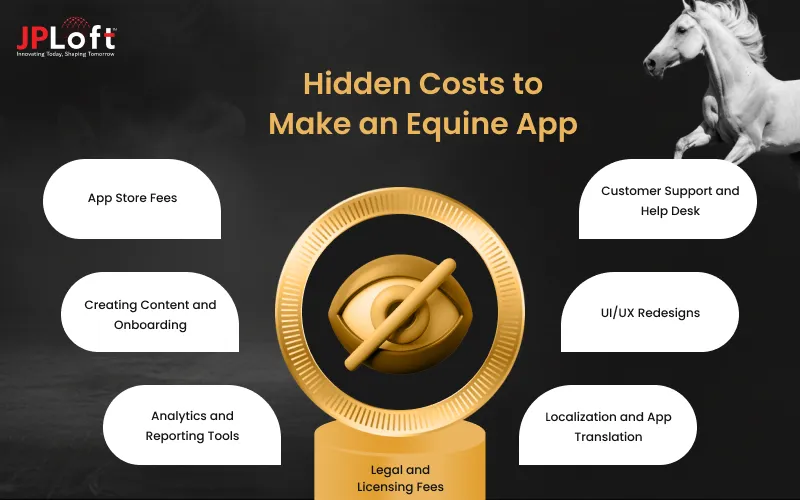
    Hidden Costs to Make an Equine App

    When planning your equine app development, it's easy to focus on design, coding, and testing costs. However, several hidden costs can quietly add up and affect your estimated cost to build an equine app. Knowing these in advance helps you plan better and avoid surprises later. 

    1. App Store Fees

    Estimated Cost: Apple Store: USD 99/year & Google Play: USD 25 one-time

    To publish your app, you must pay platform fees. Apple charges USD 99 per year, while Google Play has a one-time USD 25 fee. Additional costs may apply for in-app purchase setup or verification. These are small yet recurring expenses that many forget to include in early budgets.

    2. Customer Support and Help Desk

    Estimated Cost: USD 1,000–USD 4,000 per year

    Once users start using your app, they’ll have queries or issues. Providing support through chat, email, or ticket systems comes with added costs. Hiring support staff or subscribing to helpdesk software increases expenses. However, good customer service builds loyalty and positive reviews.

    3. Creating Content and Onboarding

    Estimated Cost: USD 1000–USD 2,000 per year

    If your app targets stables, trainers, or veterinarians, you may need to provide onboarding sessions. Training videos, user guides, or webinars ensure smooth adoption. Creating and maintaining these materials adds small but steady costs. It’s a smart investment for better user retention.

    4. UI/UX Redesigns

    Estimated Cost: USD 3,000–USD 12,000 per redesign

    As trends and user preferences change, you’ll need to refresh your app’s design to stay appealing. Redesigning layouts, icons, and user flows takes both time and money. A better design improves engagement but also requires skilled designers and user testing.

    5. Analytics and Reporting Tools

    Estimated Cost: USD 500–USD 2,500 per year

    To track your app’s performance, you’ll likely use analytics tools like Firebase or Mixpanel. While some are free initially, advanced plans with detailed reports come with monthly fees. These tools help you understand user behavior and improve features but add to operational costs.

    6. Localization and App Translation

    Estimated Cost: USD 1,000–USD 5,000 depending on the number of languages

    If your app serves users in different countries, you’ll need to translate it into multiple languages. Localization includes changing not just text but also currency formats, date systems, and cultural references. It improves user reach but increases both design and development costs.

    7. Legal and Licensing Fees

    Estimated Cost: USD 1,000–USD 4,000 depending on legal complexity

    Before launch, you may need to secure licenses for software tools, images, or third-party libraries. Legal documentation, privacy policies, and user agreements also require expert consultation. Ignoring these can lead to compliance issues later, so it’s safer to include them in your budget.

    Factoring in this hidden cost to build an equine app ensures your budget covers both development and the long-term success of your app. But with the right strategies, you can significantly reduce equine app development cost without sacrificing app quality or performance.

    How to Reduce an Equine App Development Cost?

    Reducing the cost to create an equine app means smart planning, prioritizing features, and using resources efficiently. Here are some practical ways to manage your budget while still building an AI app with high quality:  
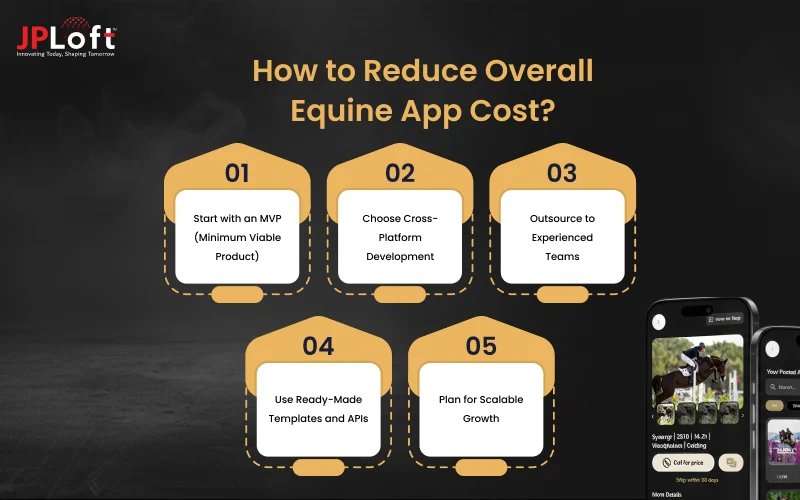
    1. Start with an MVP (Minimum Viable Product)

    Focus on essential features mentioned in the guide to equine app development cost, like horse profiles, health tracking, and reminders, before adding complex tools. Launching an MVP helps you test user interest and gather feedback early. You can later invest in advanced features once your app gains traction.

    2. Choose Cross-Platform Development

    Instead of building separate apps for iOS and Android, use frameworks like Flutter or React Native. This saves time, reduces coding effort, and lowers the total cost to develop an equine app. It also simplifies maintenance since updates can be rolled out simultaneously across both platforms.

    3. Outsource to Experienced Teams

    If you hire mobile app developers from cost-effective regions, you can significantly reduce expenses without compromising quality. A skilled offshore team can offer end-to-end development, testing, and maintenance at lower rates. Always check portfolios and client reviews before partnering.

    4. Use Ready-Made Templates and APIs

    Pre-built design templates and third-party APIs for payments, maps, or analytics can speed up development. They reduce custom coding requirements and minimize technical errors. This approach helps you save both time and money.

    6. Plan for Scalable Growth

    Design your app’s architecture to handle gradual feature upgrades instead of full rebuilds. Scalable planning ensures smoother future expansion with minimal equine app development cost increases. It also prevents you from overspending on features that may not be needed right away.

    Partnering with the best mobile app development company in Denver can help you build an equine app at the best price. Let’s now look at the most effective monetization strategies that can help your equine app earn money and stay profitable in the long run.

    How Does an Equine App Earn Money? 

    An equine app can earn money through several practical and effective monetization strategies. The right mobile app monetization model depends on the app’s purpose, target audience, and features offered. Here are some of the most common ways these apps generate revenue: 

    1. Subscription Plans

    Many equine apps use monthly or yearly subscriptions where users pay to unlock advanced tools and features. These may include detailed analytics, health tracking, unlimited horse profiles, and priority support. Subscription models are ideal for professional users who rely on the app daily for stable or performance management.

    2. Freemium Model

    This approach allows users to access the app for free but limits certain features. To unlock premium options such as cloud data backup, advanced reports, or expert consultations, users can upgrade to a paid plan. It helps attract a larger audience while converting loyal users into paying customers.

    3. In-App Purchases

    Users can buy additional content or tools directly from the app, such as training programs, diet plans, or digital horse care guides. This model works well for offering one-time purchases that enhance user experience without forcing a subscription.

    4. Advertisements

    The app can display ads related to equine products, veterinary services, or local events. Developers earn revenue through ad clicks or impressions while ensuring that the ads remain relevant to the equestrian community.

    5. Partnerships and Sponsorships

    Collaborating with equine brands, trainers, or event organizers helps the app earn through sponsorships or featured promotions. This model also builds brand trust and expands the app’s visibility in the equestrian industry.

    6. Marketplace Integration

    Some equine apps include buying and selling platforms for horses, accessories, or services. They earn commissions or listing fees from each transaction, creating a steady and scalable income stream.

    With the help of an experienced mobile app development company, you can combine these models strategically and build an equine app with a steady revenue stream. All while offering valuable services to the equestrian community.

    Talk to the Experts of JPLoft and Build Your Equine App

    Ready to bring your equine app idea to life? The expert team at JPLoft is here to help you turn your vision into a fully functional, user-friendly app tailored to the equestrian industry. 

    With years of experience in development, JPLoft, an equine app development company, understands what it takes to build a powerful platform that simplifies horse care, training, and stable management. Our process starts with understanding your goals, analyzing your target audience, and crafting a custom strategy to match your needs and budget. 

    Whether you want a simple horse tracking app or a feature-rich platform with GPS, AI analytics, and cloud storage, we can build it with precision and creativity. We ensure your app is fast, secure, and scalable to grow with your business. Plus, our post-launch support keeps your app updated and competitive.

    Don’t wait to make your idea a reality. Talk to the experts at JPLoft today and get a free consultation on your equine app development project. Let’s create a smart, modern solution that connects horse owners, trainers, and riders seamlessly!

    Conclusion

    Investment in an equine app for anyone in the horse industry or looking to serve it is highly valuable opportunity. Offering smarter ways to manage horse care, training, and stable operations. Knowing what's the cost to create an equine app is highly crucial before you start building the app. The exact figure depends on your chosen features, design quality, and development approach. 

    Following the guide to equine app development cost, planning carefully, and prioritizing essential features can help you stay within budget without giving up on quality. Starting with an MVP, using cross-platform development, and partnering with experienced developers are some of the best ways to reduce expenses. 

    Look out for hidden costs like maintenance, hosting, and marketing, which ensure your app remains reliable and competitive after launch. When built strategically, an equine app not only simplifies operations but also strengthens connections between owners, trainers, and veterinarians. In the end, a well-planned app delivers lasting value for both users and your business.

    FAQs

    The cost to develop an equine app ranges from $20,000 to $80,000, depending on features, design complexity, and platform choice. Advanced features like GPS tracking or AI analytics increase the total development cost.

    Building an equine app usually takes three to six months. The timeline depends on the number of features, testing stages, and whether you’re developing for one platform or both iOS and Android simultaneously.

    You can lower costs by starting with an MVP, choosing cross-platform development, and outsourcing to experienced teams in cost-effective regions. These steps maintain quality while cutting unnecessary expenses.

    Hidden costs include app maintenance, hosting, third-party APIs, marketing, and security updates. These ongoing expenses ensure your app stays updated, performs well, and remains compliant with privacy and data protection laws.

    Yes. Regular maintenance, feature updates, and security checks are vital after launch. Continuous support ensures a smooth user experience, prevents downtime, and keeps your app compatible with new OS versions.