


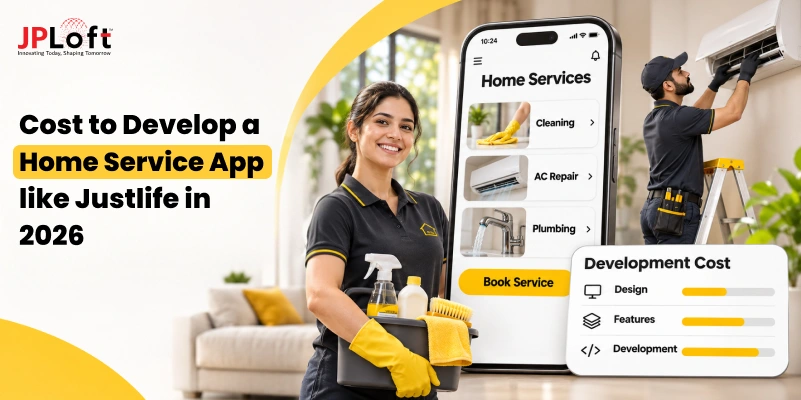
Booking a cleaner, a massage, or an AC technician used to mean endless phone calls.
Today, the same job takes only a few taps on a phone.
Justlife is one of the apps that made this shift real across the Gulf. It began with home cleaning and now offers more than 30 services and has over 1 million users.
If you are a startup founder, you may be thinking about building something similar. The first question on your mind is probably the overall cost to develop an app like Justlife.
The short answer is that most home services apps like Justlife cost approx. $15,000 to $150,000 or more in 2026. That is roughly AED 55,000 to AED 551,000.
A simple launch version sits at the lower end of that range. A full-scale Justlife clone app development project sits much closer to the top.
This guide explains the Justlife app development cost step by step. You will see which features to plan for and what pushes the price up or down.
If you want to develop an app like Justlife, this is the right place to start.
What is the Justlife App and How Does It Work?
Before building something similar, it helps to understand what makes Justlife work.
Here is a quick look at the company and its booking process.
Justlife is a home services app based in Dubai. It started in 2015 as Justmop, a home cleaning service.
The company later changed its name to Justlife as it added more services.
Today, the app offers more than 30 services, including home cleaning, AC servicing, pest control, salon and spa at home, and moving.
The app is available in Dubai, Abu Dhabi, Sharjah, Ajman, Riyadh and Jeddah. It says more than 1 million customers use its services every year.
Customers rated the app on the Play Store 4.6/5, and on the App Store 4.7/5. Careem also offers Justlife services inside its own app, which helps it reach even more users.
Here is how a booking works for a customer:
-
Step one: The customer opens the app and picks a service such as cleaning or massage.
-
Step two: They choose a date and a time and add any special notes.
-
Step three: The app matches them with a top-rated professional nearby.
-
Step four: They pay online by card or choose to pay in cash.
-
Step five: After the service, they rate the professional and can rebook the same person.
The model works because it solves two problems at once. Customers get trusted help fast, and professionals get a steady flow of jobs.
Trust is a big part of this model because people let strangers into their homes. Justlife says it works with thousands of trained professionals across the region.
Good app development goes beyond booking features. It also focuses on provider verification, training, and customer ratings.
This simple flow is what you will need to recreate and improve when you plan your own app.
Now let us look at the features that make this experience possible.
Key Features of a Home Services App Like Justlife
App features decide how useful your app feels and how much it costs to build.
Let us walk through the key features for each part of the app.
Customer App Features
The customer app is where your users search, book and pay for services.
-
Easy sign-up and login with phone number, email or social accounts.
-
A clear list of services with prices, photos and descriptions.
-
Simple booking with date, time and special instructions for the professional.
-
Live tracking so customers can see when the professional will arrive.
-
Secure payment options including cards, wallets and cash on service.
-
Ratings and reviews after every completed service.
-
Easy rebooking of a favourite professional for repeat jobs.
-
Push notifications for booking updates, offers and reminders.
-
Coupons, offers and a wallet for discounts and refunds.
-
Customer support through chat or call inside the app.
-
English and Arabic language options for local users.
Service Provider App Features
The provider app helps cleaners, technicians and beauty experts manage their daily work.
-
Profile creation with documents and ID upload for verification.
-
Job requests that providers can accept or decline quickly.
-
A calendar to set working hours and manage availability.
-
Built-in navigation to reach the customer location on time.
-
Job status updates such as on the way, started and completed.
-
An earnings dashboard with payout history and commission details.
-
Access to customer ratings and feedback to improve service quality.
-
Notifications for new jobs, changes and cancellations.
Admin Panel Features
The admin panel lets your team manage the whole marketplace from one screen.
-
A dashboard showing bookings, revenue and active users at a glance.
-
Tools to approve, manage or block customers and service providers.
-
Control over service categories, prices and available time slots.
-
Booking management to track, reassign or cancel jobs when needed.
-
Commission settings and payout management for service providers.
-
Coupon and offer management to run promotions.
-
Reports and analytics on popular services, cities and peak hours.
-
A complaint and refund system for quick customer support.
Once your core app is stable, you can add advanced features such as subscription packages, smart provider matching, in-app video calls and referral rewards.
These are not needed at launch, but they can help you stand out later. Each extra feature adds to the budget, so the next section shows the actual numbers.
How Much Does It Cost to Develop a Home Services App Like Justlife?
Every founder asks this question first, and the answer depends on what you want to build.
Let us start with the big picture and then look at where the cost of app development goes.
On average, building an app like Justlife can cost around AED 55,000 to AED 551,000. That is roughly $15,000 to $150,000 or more.
A Justlife-style product needs three parts working together: a customer app, a provider app and an admin panel.
The Justlife app development cost for a full copy sits near the top of the range. The real app covers 30+ services, many cities and several payment options.
For wider context, the mobile app development cost in Dubai usually starts near AED 25,000 for a simple app. Complex apps can go past AED 500,000.
Here is a rough split of where the money goes for a mid-level app:
-
Customer app: about $12,000 to $22,000 (AED 44,000 to AED 81,000).
-
Service provider app: about $10,000 to $18,000 (AED 37,000 to AED 66,000).
-
Admin panel: about $8,000 to $15,000 (AED 29,000 to AED 55,000).
Other than this, the overall cost can increase, making up to $40,000 to $75,000+ (about AED 147,000 to AED 275,000).
Costs after launch matter too. Yearly maintenance usually adds 15% to 20% of the build cost.
Treat these numbers as a starting point and always ask for a detailed quote.
Some costs are easy to miss when you plan a budget. Apple and Google both charge developer account fees, and cloud hosting, text messages and customer support tools add monthly bills.
The next section shows how these costs change as the app becomes more complex.
Cost to Develop a Home Service App Like Justlife by Complexity Level
Not every founder needs a full-scale platform on day one.
Here is how the cost to develop a home service app like Justlife changes at each level.
The ranges below are estimates based on current market data and will vary by team.
AED figures use a rate of about 3.67 AED per US dollar. Let's break down how the cost of app development changes with each level of app complexity.
-
Basic or MVP App: $15,000 to $40,000 (about AED 55,000 to AED 147,000) and around three to four months. This version has sign-up, a service list, booking, one payment method, ratings and a simple admin panel. It is ideal for testing your idea in one city.
-
Mid-level App: $40,000 to $80,000 (about AED 147,000 to AED 294,000) and around five to seven months. It adds live tracking, digital wallets, coupons, in-app chat, multiple languages and detailed reports. It suits founders who are ready to grow across a few cities.
-
Advanced App: $80,000 to $150,000 or more (about AED 294,000 to AED 551,000 or more) and around eight to twelve months. It adds smart provider matching, subscription plans, advanced reports, multi-city controls and strong security tools. It suits businesses that plan a full Justlife-scale platform.
Most startups should begin with the basic level and grow from there. You can move up once bookings and revenue prove that your idea works.
Remember that the cost to create an app like Justlife rises with every extra layer of features.
Next, let us look at the factors that move your budget up or down.
Factors Affecting the Cost of Building an App Like Justlife
Two apps that look similar on screen can have very different price tags. These six factors explain why, and each one affects your final budget.
Knowing them early helps you control the cost to make an app like Justlife.
►App Design and User Experience
Design is one of the biggest cost areas in Dubai. Market guides say design alone takes about 25% to 35% of the total project budget.
Custom screens, smooth animations and Arabic language support all add design hours. Simple and clean layouts keep this cost lower.
In Dubai, mobile app design alone can range from AED 25,000 to AED 250,000 depending on how custom it is.
Good UI/UX design is worth the money because it keeps customers coming back.
Cost Impact: Around 10%–15% of the total development budget.
►Features and Functionality
Every feature adds hours of planning, building and testing. A basic booking flow costs far less than a full app with chat, wallets and live tracking.
Features like in-app chat, multiple languages, loyalty rewards and subscription plans each raise the budget.
List your must-have features first and move the rest to a later release.
Cost Impact: Around 20%–25% of the total development budget.
►Technology Stack
The tools you pick change both the build time and the long-term cost. Cross-platform tools let one team build for iPhone and Android, which usually costs less than two separate native apps.
Native apps cost more but can feel faster and smoother for heavy features.
Cost Impact: Around 5%–10% of the total development budget.
►Third-Party Integrations
Every outside service you connect adds setup work and often a monthly fee. Maps, payment gateways, text messages and push notifications are the most common ones.
Some services charge per transaction or per message, so usage costs grow with your user base.
Ask your team for a full list of these running costs before you sign anything.
Cost Impact: Around 5%–10% of the total development budget.
►Backend Development and Infrastructure
The backend and servers are the hidden part of your app that users never see. They handle bookings, payments, provider matching and data storage.
A larger platform with thousands of daily bookings needs stronger servers and better security. That raises both the build cost and the monthly hosting bill.
In the UAE, apps that handle payments and personal data must also follow data protection rules, which adds extra work.
Cost Impact: Backend development can account for approximately 20%–25% of the total budget.
►Development Team and Location
Who builds your app and where they sit has a big effect on the price. Typical hourly rates differ a lot around the world:
-
United Arab Emirates: About $60 to $65 per hour (roughly AED 220 to AED 240).
-
United States: About $95 to $100 per hour.
-
Western Europe: About $80 to $90 per hour.
-
Eastern Europe: About $50 to $55 per hour.
-
Asia: About $25 to $40 per hour.
Many founders choose a local mobile app development firm for easy meetings and local market knowledge.
Others hire a trusted home service app development company overseas to bring the budget down.
Pick a team based on its experience with marketplace apps and not only on the lowest hourly rate.
Cost Impact: Development team expenses can account for approximately 25%–35% of the overall budget.
Together, these factors determine the cost of creating a home service app like Justlife.
Next, let us look at the tech stack that powers an app like this.
Technology Stack for Creating an App like Justlife
The right technology keeps your app fast, safe and easy to grow. Here is a simple look at the tools most home services apps use.
You do not need to know every tool, but this helps you talk to your development team.
-
Mobile App: Flutter or React Native lets one team build for both iPhone and Android.
-
Native Option: Swift for iPhone and Kotlin for Android give the best speed and feel.
-
Backend: Node.js, Python or Laravel handles bookings, payments and user data behind the scenes.
-
Database: MongoDB, MySQL or PostgreSQL stores users, bookings and reviews safely.
-
Admin Panel: React or Angular powers a clean web dashboard for your team.
-
Maps and Tracking: Google Maps services show locations and live arrival times.
-
Payments: Stripe, Checkout.com or PayTabs accept cards and wallet payments securely.
-
Alerts: Firebase sends push notifications, and Twilio can send text codes and messages.
-
Cloud Hosting: AWS, Google Cloud or Microsoft Azure keep the app running smoothly.
Platform choice also affects your budget. Android holds a large share of the UAE market, while Dubai has many premium iPhone users.
That is why many founders work with an iOS app development company in Dubai to launch an iPhone version first and add Android later.
Once the tools are chosen, the build itself can begin. Here is how the full process works from idea to launch.
How to Develop a Home Services App Like Justlife?
Building a successful app is a step-by-step process, and every stage matters. Follow these six stages to develop an app like Justlife without costly mistakes:
Market Research and Business Planning
Start by doing thorough market research before serving your users.
Look closely at Justlife, Urban Company and the home services section inside Careem.
Find out which services people book the most and where customers feel unhappy. Then decide your city, your first services and your pricing.
A written plan also helps you estimate your revenue and your budget clearly.
Speak with at least ten possible customers and a few service professionals before you finalise the plan. Their answers often show needs that no report can reveal.
UI/UX Design
Design decides whether customers finish a booking or leave the app. Keep screens simple so a user can book a service in just a few taps.
In the Gulf, you should also plan for both English and Arabic. Arabic needs a right-to-left layout.
Designers first draw rough screens and share them for feedback. Final designs follow only after you approve the flow.
Frontend and Backend Development
The frontend is everything users see and tap on their phones. The backend is the engine that stores data and runs bookings behind the scenes.
Developers build the customer app, the provider app, and the admin app (or panel, whichever is preferred) together. They connect all three so a booking made by a customer reaches the right provider instantly.
Work is usually split into small parts so you can review progress every few weeks.
Third-Party API Integration
An API is a ready-made connection to another company's service. It saves time because you do not build everything yourself.
Home services apps usually connect to maps for location and tracking. They also connect to payment gateways, text message services, and push notifications.
Some apps also add identity checks to verify service providers before they join.
Testing and Quality Assurance
App testing finds problems before your customers do. Testers try every booking step on many phones and screen sizes.
They check payments, notifications, tracking and cancellations again and again. They also test how the app behaves when many people book at the same time.
Fixing issues at this stage costs far less than fixing them after launch.
App Launch and Maintenance
Many founders launch in one city first and collect feedback from early users. This keeps risk low and helps you improve quickly.
After launch, you need regular updates for bugs, security and new phone software. Plan around 15% to 20% of the original cost each year for this work.
Keep adding features that customers ask for and track which services earn the most. With the app maintenance being clear, the next step is to understand how your app will earn money.
Revenue Models for a Home Services App Like Justlife
App Monetisation Models for an App Like Justlife
A good app also needs a clear plan for earning money from day one. These are the most common ways home services platforms make revenue.
Here are the app revenue models you can choose from:
-
Commission on Bookings: The app keeps a share of each completed job, and most platforms charge between 10% and 30%.
-
Provider Subscriptions: Service professionals pay a monthly fee for more visibility and priority job requests.
-
Featured Listings and Ads: Providers can pay to appear at the top of search results.
-
Peak Time Pricing: Higher rates during busy hours or weekends bring in extra income.
-
Lead Fees: Providers pay a small fee for each customer enquiry they receive.
-
Partnerships: Justlife powers the home services section inside the Careem app, which brings it new customers.
-
Product and Kit Sales: Some platforms sell branded tools and supplies to their service providers.
Most successful apps combine two or three of these models. Start with commission because it is simple for everyone to understand.
Pick your model before development starts because it changes the features you need. A subscription plan needs billing screens, while commission needs automatic payout tools.
You can always add new revenue streams later once your platform has steady bookings.
How to Reduce Home Services App Development Costs like Justlife?
A smaller budget does not mean a weaker app if you plan the work wisely. These simple steps can bring down the cost to build a home service app like Justlife.
You will hear plenty of useful advice around MVP in mobile app development, but one of the smartest moves is to launch with only the features users actually need on day one.
But there are many other top-notch pieces of advice you need. These extra steps can help you save even more money:
-
Launch in one city first and expand once bookings start growing.
-
Use cross-platform tools so one team builds for both iPhone and Android.
-
Reuse ready-made modules for login, chat and payments instead of building them from scratch.
-
Work with an experienced team in a lower-cost region, which one guide says can save 35% to 60%.
-
Pick pay-as-you-go cloud plans so server costs grow only when your users grow.
-
Avoid adding extra features during development because every change adds time and cost.
-
Agree on fixed milestones with your team so the budget stays predictable.
Small decisions like these can save thousands of dollars before launch.
Saving money should never mean cutting corners on payments, security or testing. These areas protect your customers and your brand.
Why Invest in Home Services App Development like Justlife in 2026?
People today want their daily chores handled without spending hours finding the right service provider. So, investing in an app like Justlife can help businesses tap into this growing demand.
Here are some good reasons why this market is worth exploring:
1. Growing Preference for On-Demand Services
Busy schedules leave people with less time for household chores.
Many prefer booking a cleaner, plumber, or salon professional through an app instead of making calls. This creates room for businesses to offer convenient services.
A well-planned platform can bring different household services together and make everyday bookings easier.
2. Multiple Revenue Opportunities
A home services platform can earn money in more ways than one.
You can charge a commission on every booking, offer monthly subscriptions, or introduce premium service packages.
Partnerships with local service providers can also create new income streams. This flexibility helps businesses build a revenue model around their target customers.
3. Repeat Bookings and Customer Loyalty
Home services are not always one-time purchases. Customers need cleaning, maintenance, pest control, and beauty services regularly.
A smooth booking experience can encourage them to return.
Features like saved preferences, booking reminders, loyalty points, and service packages can make repeat bookings easier and give customers more reasons to stay.
4. Easy Expansion Across Service Categories
You do not have to offer every service from the beginning. Start with popular categories like cleaning or home maintenance.
Once you understand customer demand, introduce more options such as laundry, beauty, and appliance repair.
This gradual approach lets businesses expand their offerings without making the initial platform too complicated.

Why Choose JPLoft for Creating an App like Justlife?
Choosing the right team matters as much as choosing the right features.
JPLoft, a top mobile app development company in Dubai, has expertise in building on-demand apps for startups and growing businesses, including home services and handyman platforms.
The team can take your idea from planning to launch and support it after release.
Founders who want Justlife clone app development get one partner for design, coding and testing.
Here is what you can expect when you work with the team:
-
A team that understands how booking, payment and provider apps work together.
-
Clear planning before coding so you know the scope and cost early.
-
Simple and clean design that makes booking easy for customers and providers.
-
Testing on real devices before launch to catch problems early.
-
Support after launch for updates, fixes and new features as your business grows.
If you have an app like Justlife in mind, JPLoft can help you plan it the right way.
Share your idea with the team today and get a clear estimate for your project.
Conclusion
Making a home service app like Justlife can be a promising business opportunity in 2026. But success depends on more than choosing the right features or setting a development budget.
You need a clear business model, reliable service providers, and an easy booking experience. As an expert, we suggest starting with important features and then expanding as the user base grows.
Plan your technology, integrations, and maintenance costs before development begins.
With the right app development strategy, you can make an app like Justlife that attracts customers, encourages repeat bookings, and supports long-term business growth.
FAQs
The cost to build an app like Justlife usually starts near $15,000 (about AED 55,000) for a launch version. A full-featured platform with advanced tools can cross $150,000+ (about AED 551,000). The final price depends on features, platforms, design and the team you hire. Share your feature list with a development team to get an exact quote.
A basic version takes around three to four months from idea to launch. A mid-level app with more features usually needs 5 to 7+ months. Advanced platforms with smart tools can take eight to twelve months. Clear requirements and quick feedback help you stay on schedule.
Every home services app needs easy sign-up, a service list, booking, secure payments and ratings. Customers also expect live tracking and instant alerts. Service providers need a job request screen and an earnings view. Admins need a panel to manage users, prices and payouts.
Yes, you can start small with a focused launch version. Pick one city, a few popular services and one payment option. Build the core booking flow first and add extra features after real users share feedback. This approach keeps your first investment lower and reduces the risk of waste.
Most of these apps earn a commission on every completed booking. Many also offer provider subscriptions, featured listings and peak time pricing. Some founders also partner with larger platforms to reach more customers. A mix of two or three models often works better than relying on only one.
Plan to spend about 15% to 20% of the original build cost every year. For a $40,000 app, that means roughly $6,000 to $8,000 (about AED 22,000 to AED 29,000) per year.This covers bug fixes, phone software updates, security patches and small improvements. Server and third-party service fees come on top of that amount.

Priyanka Sukhwal is the Managing Director and Business Head of JPLoft, with 10+ years of experience in technology, digital product strategy, and business growth. She has worked closely with businesses building mobile applications, custom software, marketplaces, and on-demand platforms across mobility, automotive, consumer services, and startup ecosystems. At JPLoft, she focuses on understanding business models, identifying product opportunities, and helping companies plan digital solutions that can scale with changing market needs.



Share this blog