


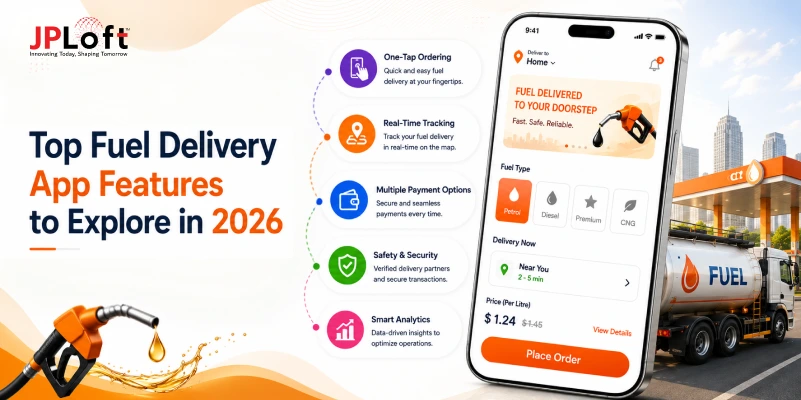
Key Takeaways:
A successful fuel delivery app in 2026 must combine safety, convenience, and smart technology, offering real-time ordering, live GPS tracking, and secure payments for customers while ensuring compliance and driver safety across every delivery.
Core features differ by user type: customers need ordering & tracking, drivers need route optimization & proof of delivery, and admins need fleet management & dynamic pricing.
AI-powered tools like demand forecasting, predictive fuel monitoring, and voice-enabled ordering are becoming essential differentiators, not optional extras.
Fuel delivery offers strong investment potential due to growing demand, low competition, multiple revenue streams, and easy scalability across new locations.
Choosing an experienced development partner like JPLoft ensures the platform is secure, compliant, and built to meet 2026 industry standards from day one.
Every successful app is built around one simple question: what does the user actually want?
For fuel delivery apps, the answer is safety, convenience, and reliability, and investors who understand this are the ones who build platforms that actually last.
So, this is what investors need to pay attention to: it is not enough to just build a fuel delivery app, and platforms are the ones that are building what user wantly wants.
This blog breaks down the must-have features every fuel delivery app needs in 2026, giving investors a clear roadmap of what to prioritize when building a platform users will actually stick with and a business will actually grow around.
Quick Answer: What Features Does a Fuel Delivery App Need?
A fuel delivery app needs three core sets of features to work well: for customers, real-time ordering, live GPS tracking, secure payment options, and order history. For drivers, route optimization, digital proof of delivery, and an easy-to-use order management dashboard; and for admins, fleet and inventory management, dynamic pricing control, and compliance tracking. Beyond these basics, a strong fuel delivery app in 2026 also includes safety and regulatory compliance features, since fuel delivery involves handling combustible material, along with AI-powered demand forecasting and predictive fuel monitoring to keep operations efficient and scalable.
Why Invest in Fuel Delivery App Development in 2026?
Fuel delivery is quickly moving from a convenience feature to a full-fledged on-demand industry.
With rising fuel prices and growing fleet operations, demand is steady. But success depends on getting the right features of a fuel delivery app in place from the start.
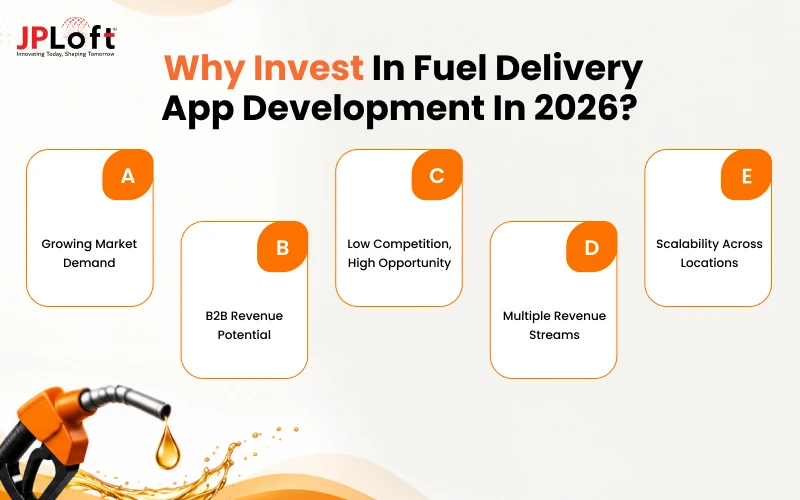
Here’s why this space is worth investing in:
► Growing Market Demand
More users and businesses are choosing delivery over traditional fuel stations, creating consistent, repeat demand.
► B2B Revenue Potential
Fleet operators, logistics companies, and construction businesses need reliable, downtime-free fueling, opening up a high-value customer segment beyond individual users.
► Low Competition, High Opportunity
Unlike food delivery or ride-hailing, the fuel delivery space is still relatively untapped, giving early movers a first-mover advantage.
► Multiple Revenue Streams
You can make money from a fuel delivery app in various ways, including commission on deliveries, subscription plans for fleet clients, and premium features.
► Scalability Across Locations
Once the core platform is built, expanding into new cities requires onboarding delivery partners rather than heavy operational investment.
Basic & Advanced Features for Fuel Delivery Apps
Are you looking to build a fuel delivery app? You should explore the top basic & advanced fuel delivery app features.
Features for Customer Panel:
Let’s explore the customer panel fuel delivery app features:
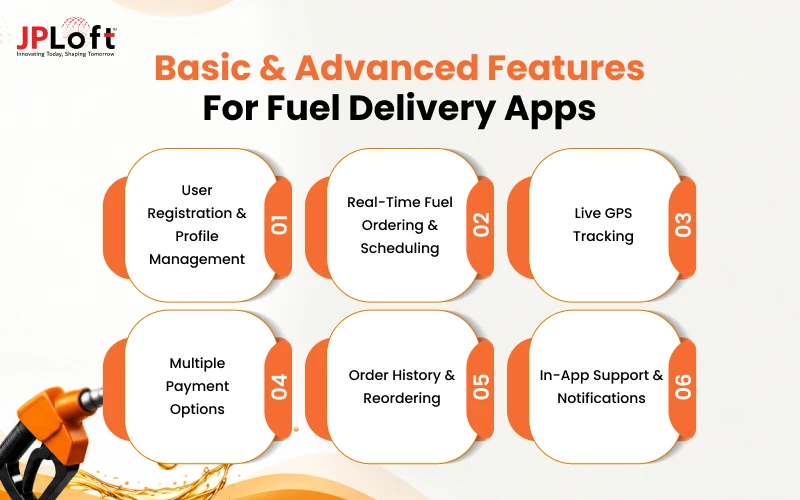
1. User Registration & Profile Management
User sign-up should take just some seconds, not minutes.
Let users register via phone, email, or social login, then save vehicle details, addresses, and preferred fuel types.
A smart profile saves users from re-entering information every time, especially useful for multi-vehicle households or those ordering for both home & office.
2. Real-Time Fuel Ordering & Scheduling
Some users need fuel now; others prefer planning ahead.
Give them both options: instant ordering for urgent, low-fuel moments and scheduled delivery for weekly top-ups or routine refills.
This flexibility keeps spontaneous and habitual users equally satisfied and equally loyal to your app.
3. Live GPS Tracking
Nobody likes waiting blindly.
Having live GPS tracking in your fuel delivery app’s features list is one of the important things. Real-time tracking shows exactly where the delivery vehicle is and how long it’ll take to arrive.
This transparency reduces anxiety, cuts down on constant questions from users, “where’s my order” support tickets, and builds the kind of trust that turns first-time users into repeat customers.
4. Multiple Payment Options
Payment friction kills conversions first.
You should offer them multiple payment options such as cards, wallets, UPI, and event cash-on-delivery to cover every user preference.
A secure, flexible checkout builds confidence, speeds up transactions, and ensures to customer abadons an order simply because their preferred payment method isn’t supported.
5. Order History & Reordering
Repeat orders should be effortless.
Let users view past deliveries and reorder their usual fuel type and quantity in a single tap.
This small convenience saves time, encourages habitual use, and turns one-time customers into a predictable, recurring revenue base for your platform.
6. In-App Support & Notifications
Keep users informed at every step: order confirmation, driver assignment, arrival updates, and payment receipts.
Pair this with easy access to in-app support for questions or issues.
Proactive communication reduces confusion, builds trust, and prevents small problems from becoming bad reviews.
Features for a Delivery Driver Panel:
Here’s a quick look at the top features of a fuel delivery app that keep drivers efficient and customers satisfied:
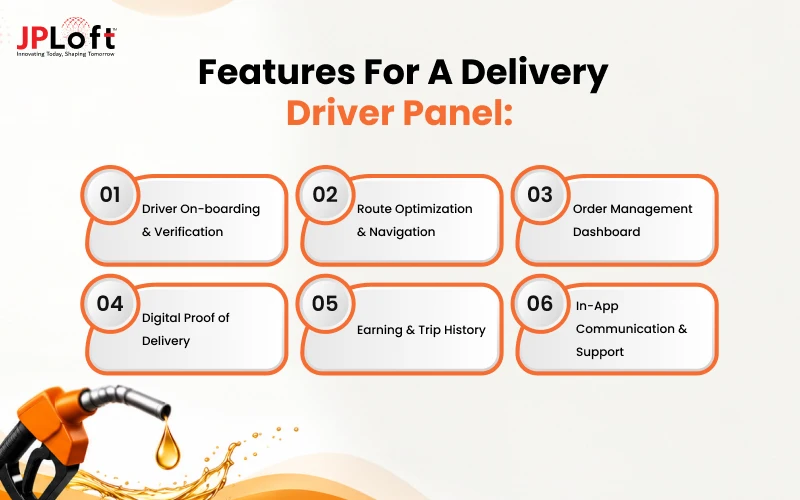
► Driver On-boarding & Verification
Not just paperwork, a smart gateway.
Drivers upload licenses, ID proofs, and vehicle documents, while automated background checks and instant verification ensure only safe, qualified drivers make it through.
This builds a trustworthy fleet from day one, keeping every fuel delivery in reliable hands.
► Route Optimization & Navigation
Every trip gets the smartest path forward.
The app calculates the fastest, safest routes in real time, dodging traffic and rerouting on the fly.
Multiple stops get sequenced intelligently, saving fuel, time, and driver frustration on every delivery.
► Order Management Dashboard
A driver’s mission control center. Incoming fuel order pops up instantly with pickup points, drop locations, quantities, and customer notes, all in one glanceable screen.
Drivers accept, prioritize, and track jobs effortlessly, turning chaotic dispatch calls into a smooth, organized workflow.
► Digital Proof of Delivery
No more “did it actually arrive?” disputes.
Drivers capture signatures, snap photos, or verify OTPs right at the drop-off point, creating an instant digital paper trail.
This builds accountability, protects against fraud, and gives both drivers and customers total peace of mind.
► Earning & Trip History
Money talks, and this feature makes sure it’s crystal clear. Drivers get a real-time breakdown of completed trips, incentives, bonuses, and payouts, no guesswork, no hidden numbers.
Transparent earnings tracking builds trust and keeps drivers motivated to hit the road again.
► In-App Communication & Support
Because every delivery hits an obstacle sometimes.
Built-in chat and call features connect drivers directly with dispatch or support teams, resolving issues, wrong addresses, delays, and emergencies in seconds.
It’s a lifeline that keeps drivers confident and customers reassured throughout the journey.
Features for Admin Panel:
Here’s a look at the top features for a fuel delivery app in the admin panel running smoothly:
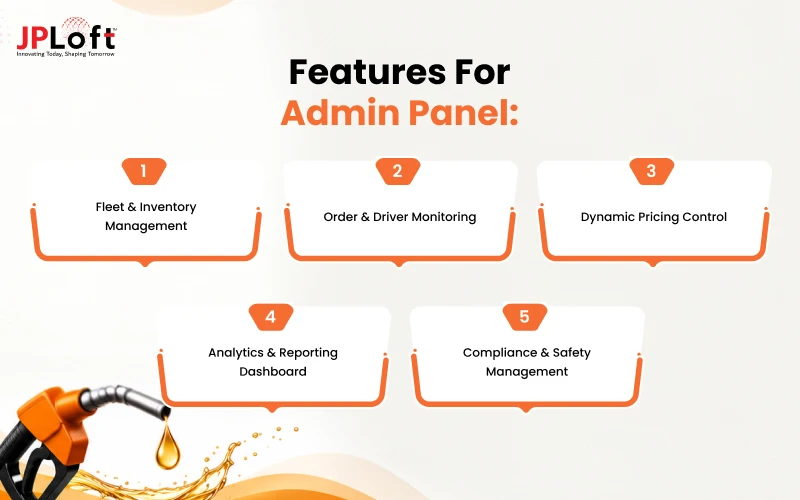
► Fleet & Inventory Management
For a successful fuel delivery business, you need to manage fleet & inventory at your fingertips. Admins got real-time visibility into fuel stock levels, vehicle status, and maintenance schedules, all from one screen.
This prevents shortages, avoids overstocking, and keeps the entire fleet running efficiently without last-minute surprises or costly downtime.
► Order & Driver Monitoring
Stay updated on every order and every driver, in real time.
Admins track every order’s status and every driver’s live location simultaneously, spotting delays before customers even notice.
Reassignments happen instantly when needed, keeping deliveries on schedule and giving management the confidence that operations are running exactly as planned.
► Dynamic Pricing Control
Pricing that changes with the market, not stuck in one place.
Admins can adjust fuel rates based on demand, location, time of day, or market fluctuations, all without a line of code.
This flexibility protects margins during volatile periods while keeping prices competitive and customers satisfied.
► Analytics & Reporting Dashboard
Numbers that actually tell a story.
Admins get visual breakdowns for revenue, delivery times, driver performance, and customer trends, turning real data into meaningful insights.
Smarter decisions become second nature when every metric that matters is just one glance away.
► Compliance & Safety Management
Safety isn't optional when fuel's involved.
Strong compliance in fuel delivery apps means the panel tracks licensing, vehicle certifications, and safety protocols, flagging expirations before they become violations.
This keeps the business audit-ready, reduces liability, and ensures every delivery meets regulatory standards without constant manual oversight.
Advanced Features to Consider for Fuel Delivery Apps in 2026
As the industry races ahead, AI-powered features are no longer optional extras; they’re what separate a good fuel delivery app from a truly smart one.
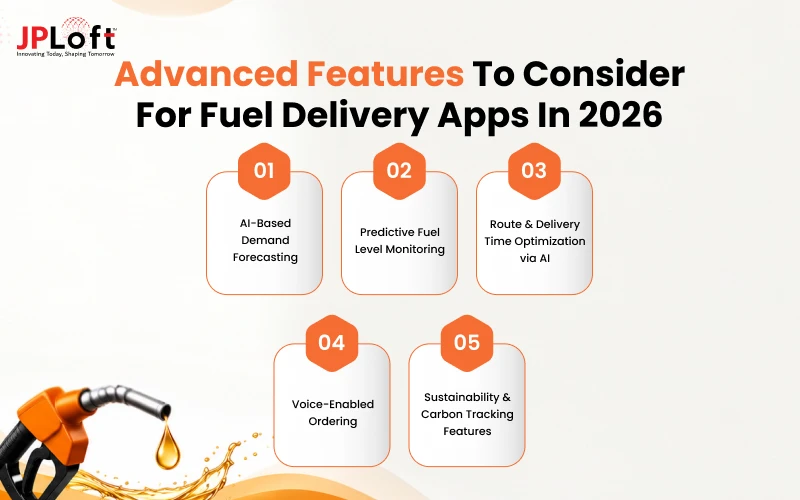
Here’s what’s shaping the future of the space:
A. AI-Based Demand Forecasting
Know tomorrow's fuel demand today.
By analyzing weather patterns, seasonal trends, and historical order data, AI predicts spikes before they happen.
Stay prepared for peak demand without carrying excess stock. It’s like giving your business a crystal ball, removing the guesswork, plus the profits.
B. Predictive Fuel Level Monitoring
Know when tanks are running low, before it's a problem.
IoT in fuel delivery apps continuously monitors fuel levels and sends real-time alerts the moment stock dips low.
Combined with predictive analytics, refills get scheduled automatically before anyone even notices a shortage.
It’s proactive management at its finest, turning potential emergencies into non-events.
C. Route & Delivery Time Optimization via AI
Always take the fastest, smartest route.
AI constantly analyzes live traffic, weather, and delivery windows to chart the smartest possible route, adjusting on the fly when things change.
The result? Faster deliveries, happier customers, and drivers who spend less time stuck and more time moving.
D. Voice-Enabled Ordering
Typing isn’t always convenient.
Customers simply speak their fuel order, quantity, location, and timing, and the app handles the rest. It’s hands-free, fast, and refreshingly human.
For business professionals or drivers already on the move, voice ordering removes friction and makes fueling up feel almost effortless.
E. Sustainability & Carbon Tracking Features
Going green isn’t just a buzzword anymore.
The app tracks carbon emissions per delivery, suggests eco-friendly routes, and shows businesses their environmental impacts over time.
It’s a small feature with a big message, proving that convenience and sustainability can absolutely ride in the same truck.
How Can JPLoft Help Build Your Fuel Delivery App?
Are you looking to build a fuel delivery app with basic & advanced features? JPLoft is your go-to fuel delivery app development services provider for turning that vision into a market-ready solution.
With 16+ years of experience, our team understands exactly what it takes to build a platform that’s fast, reliable, and scalable.
From must-have essentials to advanced AI capabilities, we cover every feature of mobile fuel delivery app development, ensuring your platform is equipped to meet user expectations and industry standards from day one.
We also prioritize security, compliance, and seamless third-party integrations, so your app runs smoothly while meeting industry standards.
Ready to bring your fuel delivery app idea to life? Let’s build something exceptional together.
Conclusion
Launching a fuel delivery app in 2026 isn't just about deploying another on-demand platform; it's about combining safety, convenience, and smart technology into one seamless experience.
From real-time ordering and live GPS tracking for customers, to route optimization and digital proof of delivery for drivers, to fleet management and compliance tracking for admins, every layer plays a role in long-term success.
Add AI-powered demand forecasting, predictive fuel monitoring, and sustainability tracking, and you get a platform truly built for the future.
Investors and businesses who prioritize the best features of the fuel delivery app right from the planning stage are the ones who build platforms users trust and stick with.
With the right foundation, this is one industry still ripe for early movers to lead the way.
FAQs
A fuel delivery app needs real-time ordering, live GPS tracking, secure payment options, and order history for customers; route optimization, order management, and digital proof of delivery for drivers; and fleet management, dynamic pricing, and compliance tracking for admins.
The cost depends on features, platform (iOS/Android/both), and complexity. A basic app with core features costs less, while an advanced app with AI-powered demand forecasting, IoT integration, and predictive monitoring will require a higher investment.
Development timelines typically range from 3 to 6 months, depending on the number of features, integrations, and whether you're building an MVP or a full-scale platform with advanced capabilities.
Yes. With growing market demand, low competition, and multiple revenue streams like delivery commissions, subscriptions, and B2B fleet contracts, fuel delivery offers strong profit potential for early movers.
With 16+ years of experience, JPLoft builds secure, scalable, and compliant fuel delivery apps tailored to your business needs, from basic features to advanced AI-powered capabilities, ensuring your platform is ready for 2026 and beyond.

Savannah Bustos is a technology professional with experience across financial platforms, mobility solutions, and on-demand digital products. Her areas of expertise include FinTech, digital banking, eWallets, lending, BNPL, stock trading, fuel delivery, and taxi-booking platforms. She combines a strong understanding of business requirements with practical technology insight, helping companies evaluate challenges, define product needs, and make informed decisions about scalable digital solutions.


Share this blog