


Key Takeaways
Building an app like Eatigo combines real-time bookings, dynamic discounts, and smooth restaurant-user interactions.
AI, ML, and automation enhance personalization, demand prediction, and discount optimization for a competitive edge.
Developing a restaurant reservation app requires strategic features, UX-first design, a strong tech stack, and reliable testing.
Monetization comes from commissions, subscriptions, paid listings, and targeted promotions for diners and restaurants.
JPLoft provides the expertise and engineering depth to turn your Eatigo-style app into a scalable, market-ready product.
Building a smart restaurant reservation platform is becoming one of the most promising opportunities in the digital dining space.
So, how to build a restaurant reservation app like Eatigo? Start by understanding key features such as real-time table booking, dynamic discount engines, seamless restaurant-user interactions, and a UX-first mobile experience that keeps diners engaged.
With apps like Eatigo setting new standards, many entrepreneurs are exploring how to create a platform that stands out. Whether you want to replicate Eatigo’s model or innovate further, knowing user expectations and technical best practices is essential.
This guide breaks down everything you need to know, from features to development strategies, to confidently build a restaurant reservation app like Eatigo that attracts diners and restaurant partners alike.
Understanding a Brief on Eatigo App
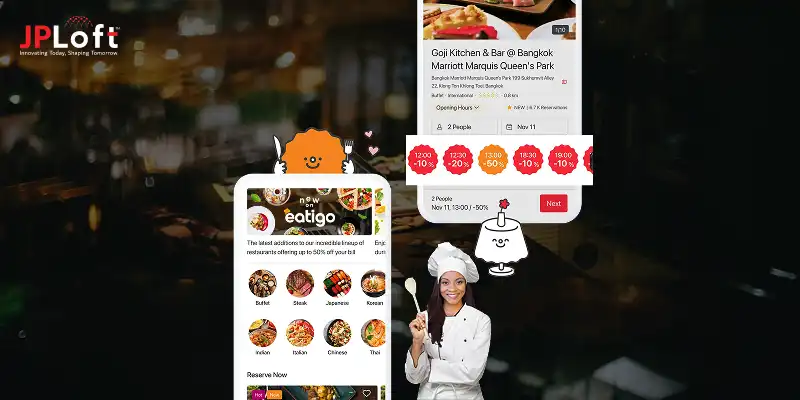
Eatigo is a leading restaurant reservation platform known for its simple booking flow and time-based discounts that help users dine affordably while helping restaurants fill empty tables.
To understand how to create an app like Eatigo, it’s important to break down what makes the platform effective and explore the best mobile app ideas for building a reservation app that delivers seamless user experiences and strong restaurant engagement.
1. What Makes Eatigo Popular?
-
Time-based discounts that adjust dynamically based on demand.
-
Instant table reservations with real-time availability.
-
Easy restaurant discovery through categories, ratings, and location filters.
-
A smooth booking experience that’s quick even for first-time users.
2. Cost Perspective
Companies evaluating the cost to develop a restaurant app often use Eatigo as a benchmark because it blends simplicity with advanced automation, something essential for any competitive reservation platform today.
Understanding Eatigo’s foundation gives you a clear sense of how to plan features, design the user journey, and build a revenue-ready app that can compete effectively in today’s dining-tech ecosystem.
How Does an App like Eatigo Work?
Apps like Eatigo follow a structured, automated flow that makes table booking effortless for users and operationally beneficial for restaurants.
Below’s a simplified breakdown of how platforms operate when you plan to make a restaurant reservation app like Eatigo or develop an app like Eatigo.
1. User Browsing & Restaurant Discovery
Users start by exploring restaurants based on location, cuisine, ratings, or popularity. To enhance discovery, platforms often include features like curated lists, trending spots, personalized suggestions, and smart filters that help diners find restaurants that match their preferences quickly and effortlessly.
2. Real-Time Table Availability Sync
Once a user selects a restaurant, the app pulls live availability from the restaurant’s backend or partner dashboard. A strong syncing mechanism is essential when you create an app like Eatigo to prevent booking conflicts.
3. Dynamic Time-Based Discounts
Eatigo is known for unique time-based discounts. Restaurants set flexible discount percentages for each time slot. The app displays these options clearly, helping users pick the best value. This feature heavily influences modern restaurant app development trends going on in the restaurant industry.
4. Instant Booking & Confirmation
After selecting time and party size, users receive instant confirmation. This is where smart automation plays a major role in apps that make an app like Eatigo by ensuring zero manual intervention and instant allocation.
5. User Check-In at the Restaurant
Users simply arrive, show their booking code, and enjoy the discount. From an operational standpoint, this improves walk-in forecasting and helps restaurants manage peak and non-peak traffic better.
6. Restaurant Partner Dashboard
Restaurants use a partner interface to:
-
Update menus
-
Adjust discount slots
-
Manage reservations
-
View analytics
This is crucial when you develop a restaurant reservation app like Eatigo, as operational control directly affects restaurant adoption.
7. Review, Ratings & Experience Feedback
Users share their dining experience, which the system leverages to improve recommendations and trust. Feedback becomes especially important for businesses learning how to start an online restaurant business through data-driven decisions.
8. Smart Search & Location-Based Suggestions
Many Eatigo-like apps also implement features used in how to develop a restaurant finder app, helping users discover nearby restaurants using maps, GPS, and smart filters.
9. Automated Notifications & Reminders
From booking reminders to discount alerts, automated notifications help increase user engagement and repeat visits, essential for long-term success when you aim to build an app like Eatigo.
Why Build a Restaurant Reservation App like Eatigo?
Building a platform similar to Eatigo offers significant opportunities in the growing digital dining space.
With consumers shifting toward online table reservations, entrepreneurs increasingly want to build an app like Eatigo or even innovate beyond it. Below are key reasons why this model continues to succeed.
1] Rising Demand for Online Table Reservations
More diners now prefer reserving tables before visiting restaurants, about 59% of diners say they prefer to book online, according to industry data.
A streamlined platform helps them avoid queues and guarantees seating, making it highly appealing when you create a restaurant reservation app like Eatigo.
2] Better Restaurant Occupancy & Revenue Boost
Restaurants often struggle to manage traffic during non-peak hours. Eatigo’s time‑based discount model solves this by filling empty tables efficiently, which can significantly boost a restaurant’s revenue.
Also, filling slow hours can reduce no-shows and increase turnover, improving profitability, which strongly motivates entrepreneurs to develop a reservation app with revenue-oriented features.
3] Win–Win Model for Users & Restaurants
Apps like Eatigo simultaneously offer users great deals and restaurants improved footfall. This dual benefit continues to inspire entrepreneurs exploring Restaurant app ideas or considering Eatigo like app development.
4] High User Retention Through Smart Deals
Discount-driven platforms enjoy high retention, backed by studies showing that over 50% of diners revisit apps that offer time-based deals. Users return frequently for savings, while restaurants benefit from predictable customer flow. Such loyalty-focused mechanics help businesses make an app like Eatigo that sustains long-term engagement.
5] Scalable & Future-Ready Business Model
With digital dining expanding, there is vast potential to develop an app like Eatigo and integrate advanced features like automation, AI recommendations, and personalized offers over time. This makes it a scalable opportunity with strong future relevance.
6] Strong Data Insights for Restaurants
Platforms like Eatigo give restaurants access to powerful analytics: peak hours, user preferences, discount performance, and feedback patterns. These data insights help restaurants make informed decisions while encouraging more businesses to partner with apps that operate like Eatigo.
Features to Include in an App like Eatigo
To create a restaurant reservation app like Eatigo, the right feature set is essential. Users expect a smooth, fast, and intuitive dining reservation experience, while restaurants need powerful tools to manage bookings and discounts.
Below are the top restaurant app features every Eatigo-style platform should include.
1. Easy Restaurant Search & Filters
Allow users to browse restaurants by location, cuisine, cost, timings, popularity, or ratings. This forms the foundation for anyone aiming to make a restaurant reservation app like Eatigo.
2. Real-Time Table Availability
Live availability prevents booking conflicts and ensures users can plan confidently. This feature is crucial when you develop an app like Eatigo that handles large booking volumes throughout the day.
3. Time-Based Dynamic Discounts
Eatigo’s signature feature, users can see discounts based on the time slot selected. Integrating a flexible discount engine helps businesses develop a restaurant reservation app like Eatigo with strong conversion capabilities.
4. Smart Restaurant Profiles
Detailed restaurant pages with menu, photos, opening hours, maps, reviews, and available slots. These pages support user decision-making and help you build an app like Eatigo that feels complete and reliable.
5. One-Click Booking Flow
A simple booking process, pick a slot, confirm details, and receive instant confirmation. Frictionless checkout boosts user satisfaction when you create an app like Eatigo or develop an app like Eatigo.
6. Digital Discount Codes & Vouchers
Offering promotional codes or deal vouchers increases engagement and encourages repeat bookings, a core element of platforms aiming to make an app like Eatigo with high retention.
7. Smart Notifications & Reminders
Push alerts for deals, reservations, reminders, and nearby restaurant suggestions help users stay engaged and improve conversion rates.
8. User Reviews & Rating System
Feedback enhances transparency and helps restaurants improve. This also builds trust, an essential factor when you create a clone like Eatigo or design a competitive alternative.
9. Restaurant Partner Dashboard
Restaurateurs need tools to manage:
-
Discount slots
-
Table availability
-
Menu updates
-
Customer analytics
-
Booking history
This backend foundation is non-negotiable when you make a clone like Eatigo or develop a clone like Eatigo.
10. Map-Based Discovery & GPS Navigation
Built-in maps help users locate restaurants quickly, and partnering with a GPS tracking app development company ensures accurate, real-time navigation. This modern browsing experience strengthens the value of Eatigo like app development by increasing user convenience.
11. Secure Login & User Profiles
Social login, preferences, booking history, and saved restaurants make the experience more personalized and help you create a restaurant reservation app like Eatigo that feels user-centric.
12. Analytics & Insights for Restaurants
Data on customer behavior, peak hours, cancellation rates, and user preferences empowers restaurants and adds significant value to the platform.
13. Multi-Device Compatibility
Your app should work seamlessly across Android, iOS, tablets, and mobile browsers, especially if you plan to make an app like Eatigo that serves a wide user base.
How to Develop a Restaurant Reservation App Like Eatigo?
Building an app like Eatigo requires a structured, user-centric, and technically sound approach.
Below is a complete breakdown of how to develop a restaurant app using which you can plan, design, develop, test, and optimize a restaurant reservation platform that delivers seamless bookings, dynamic discounts, and smooth restaurant-user interactions.
Step 1: Conduct Market & User Research
Start by identifying what diners expect: real-time availability, instant confirmation, personalized recommendations, and dynamic offers. This research shapes your app’s positioning, differentiation, and core feature set.
► Analyze competitor apps
Study apps like Eatigo, Zomato, and OpenTable to uncover UI strengths, feature gaps, and opportunities for innovation.
► Identify target audience behaviors
Evaluate how users search for restaurants, preferred cuisines, discount sensitivity, and booking patterns to craft optimized user journeys.
► Map your feature list
Validate essential features such as table booking, restaurant listings, discount slots, push notifications, reviews, and payments.
► Plan scalability and future upgrades
Document long-term additions like AI-powered suggestions, voice-based booking, and advanced analytics to ensure smooth product evolution.
Step 2: Plan the App Architecture & Choose Your Tech Stack
A strong backend lays the foundation for real-time seat availability, high-traffic booking loads, and instant updates. Selecting the right restaurant app tech stack early ensures speed, stability, and long-term scalability.
► Define backend architecture
Choose between microservices or monolithic architecture based on app complexity, traffic patterns, and future scalability needs.
► Select the ideal tech stack
Use Node.js, Python, or Java for backend APIs. For cross-platform user experiences, opt for React Native or Flutter. Cloud platforms like AWS or GCP help deliver high performance and reliability.
► Integrate core real-time systems
Add WebSockets, live availability tracking, automated scheduling, and slot-based dynamic discount engines to replicate Eatigo-like real-time interactions.
► Prioritize security & compliance
Implement strong data encryption, role-based access controls, and ensure compliance with PCI-DSS and regional data protection laws.
By aligning all components with a scalable mobile app tech stack, your reservation app stays fast, secure, and future-proof.
Step 3: Design an Intuitive & Conversion-Focused UI/UX
A frictionless design is essential for helping users explore restaurants, book tables quickly, and move through the app without confusion. Strong restaurant app design ensures every interaction feels simple, fast, and purpose-driven.
► Create clean, user-friendly navigation
Ensure users can easily filter restaurants, browse time slots, compare deals, and move between screens without unnecessary steps.
► Build mobile-first layouts
Use touch-friendly components, optimized screen structures, and responsive layouts that load quickly and adapt to all device sizes.
► Design for high-conversion flows
Include simplified booking steps, clear availability states, eye-catching CTAs, and trust signals such as reviews, ratings, and photos to boost conversions.
► Validate design with usability tests
Test prototypes with real users to identify friction points early and optimize overall flow for a smoother, more intuitive booking experience.
Step 4: Start App Development (Frontend + Backend)
This phase brings your features, interface, and backend logic together to create a working product. If you’re planning to build a mobile app, following a structured development workflow ensures speed, stability, and clean execution.
► Develop frontend interfaces
Implement user-facing screens, booking flows, restaurant listings, discount logic, and profile dashboards using clean, intuitive UI components.
► Build backend modules
Create robust APIs for booking, search, authentication, menus, restaurant control panels, and dynamic pricing engines.
► Enable restaurant-side dashboards
Allow restaurants to manage discounts, update time slots, modify seating, review bookings, and track analytics, all from a dedicated dashboard.
► Integrate third-party services
Connect payment gateways, SMS/Email notifications, Google Maps, loyalty tools, and analytics systems for a complete real-world experience.
A structured approach ensures your application is scalable, stable, and future-ready when you eventually design a mobile app that meets evolving user demands.
Step 5: Test the App Thoroughly for Reliability & Accuracy
Reservation apps must perform flawlessly under real-time traffic and heavy load. Effective restaurant app testing eliminates booking conflicts, UI glitches, and timing errors before launch.
► Functional & real-time booking tests
Verify availability updates instantly, bookings are atomic, and no double reservations occur.
► Performance & load tests
Simulate discount spikes, weekend surges, and peak-hour loads to confirm the system scales and responds predictably.
► Device & OS compatibility tests
Validate booking flows across devices, screen sizes, and OS versions to ensure consistent UX.
► Security & payment validation
Run API penetration tests, validate payment flows end-to-end, and audit data protection controls.
Step 6: Deploy, Launch & Optimize the App
Once tested, deploy the app on App Store and Play Store followed by promotions, onboarding, and analytics-driven improvements.
► App store optimization
Optimize listing, screenshots, and keywords to drive organic downloads.
► Onboard restaurants efficiently
Launch with selected restaurants and gradually expand partnerships.
► Track KPIs & user behavior
Analyze booking patterns, drop-offs, peak hours, and deal preferences for improvements.
► Collect user feedback for upgrades
Run in-app surveys and monitor reviews to iterate faster.
Step 7: Maintain & Scale the App Continuously
Post-launch optimization is crucial for sustaining performance, stability, and user satisfaction. Effective restaurant app maintenance ensures your reservation platform stays fast, secure, and adaptable as user needs evolve.
► Regular performance optimization
Improve app speed, refine APIs, resolve bugs, and boost overall responsiveness through continuous monitoring.
► Add new features based on user data
Enhance recommendations, onboarding flows, loyalty elements, and contactless dining options by analyzing user behavior.
► Update tech stack components
Upgrade frameworks, libraries, servers, and third-party services to maintain long-term reliability and compatibility.
► Ensure 24/7 uptime & monitoring
Monitor downtime, traffic spikes, unusual errors, or slow responses with real-time alerting tools to maintain app stability at all times.
Once your core reservation platform is built using the right architecture, features, and workflows, the next step is strengthening it with advanced technologies, especially AI, ML, NLP, cloud systems, and automation, to create a truly modern, scalable Eatigo-like app.
Can Technologies Like AI Enhance Eatigo Like App Development? How?
Modern Eatigo like app development goes far beyond AI, it now blends Machine Learning, NLP, cloud architecture, IoT, microservices, real-time data systems, and automation tools to build smarter, scalable, and highly efficient restaurant reservation platforms. Together, these technologies make booking, discovery, and discount optimization more intelligent and seamless.
1. AI-Powered Personalization With ML + Cloud Data Pipelines
AI and ML analyze user behavior, cuisine preferences, dining frequency, and peak activity to deliver hyper-personalized suggestions.
Development Impact:
-
ML models hosted on cloud pipelines auto-learn patterns
-
Real-time personalization improves retention
-
Helps you build user journeys similar to leading AI in restaurant apps
This ensures your platform feels tailored, even with millions of users.
2. Dynamic Pricing Engines Using ML + Predictive Algorithms
Dynamic discounting is a core Eatigo feature. ML models analyze demand, competitor pricing, weather, and event data to auto-adjust discount levels.
How it supports development:
-
Predictive pricing APIs integrate with restaurant dashboards
-
Ensures accurate discount logic
-
Helps you design stronger discount engines when you develop an app like Eatigo
3. Voice-Based Booking Systems Using NLP + Speech APIs
With the increased adoption of voice ordering in restaurant apps, developers integrate NLP engines and speech recognition into booking workflows.
Benefits during development:
-
Faster reservation flows without typing
-
Hands-free accessibility
-
Easy integration via third-party voice APIs or custom NLP modules
Works seamlessly alongside AI for more intuitive user experiences.
4. AI Agents & Automated Customer Support Using LLMs
The role of AI agents in restaurant apps is expanding quickly. Developers integrate conversational agents to handle queries, cancellations, waitlist updates, and FAQs.
Development Advantages:
-
Reduces load on human teams
-
Offers instant 24/7 support
-
Integrates via chat APIs, LLM models, or custom AI microservices
Supports scalable, automated customer interaction.
5. Smart Search & Filter Systems Using NLP + Vector Databases
Modern reservation apps use NLP services and semantic search to understand queries like:
“Best rooftop bar with 40% discount tonight.”
Enhancement:
-
NLP engines interpret user intent
-
Vector search improves accuracy
-
Faster, more intuitive discovery
This strengthens overall UX and improves app stickiness.
6. Predictive Analytics for Restaurants Using BI + Data Warehousing
Beyond AI, the use of business intelligence dashboards, data warehouses, and analytics engines helps restaurants access deeper insights.
Development Gains:
-
Demand forecasting
-
Peak hour predictions
-
Inventory planning suggestions
-
Automated insights via ML + BI integrations
Makes your partner portal far more valuable and data-driven.
7. Scalable Architecture With Microservices, IoT & Real-Time Databases
Large-scale reservation platforms benefit from modern backend technologies beyond AI.
Core development technologies include:
-
Microservices architecture for modular, scalable functions
-
Real-time databases (Firebase, MongoDB Atlas) for instant updates
-
IoT integrations for smart tables, queue systems, or restaurant automation
-
Robust cloud infrastructure to support high-traffic booking windows
This ensures your Eatigo like app development is stable, fast, and future-ready.
8. Chatbots & Smart Workflow Automation Using AI + RPA
AI chatbots and robotic process automation streamline operational tasks such as booking confirmations, restaurant notifications, and discount updates.
Development Value:
-
Reduces manual processes
-
Ensures accurate communication
-
Easily integrates with restaurant management systems
-
Often implemented with support from an AI development company
How an App Like Eatigo Earns Money?
Apps like Eatigo thrive because they blend user convenience with strong partner-driven revenue streams.
Below is a clear breakdown of the most profitable monetization models used by discount-driven restaurant reservation apps.
1. Commission From Every Booking
Most revenue comes from the commission model, where restaurants pay a percentage for every confirmed reservation.
How it works:
-
Restaurants are charged per seated customer.
-
Higher-demand time slots may have higher commissions.
-
Encourages restaurants to participate in peak and off-peak discount programs.
This structure is also one of the core examples of how restaurant apps make money in the real world.
2. Subscription Plans for Restaurants
Many platforms offer premium subscription tiers for restaurants seeking better visibility and analytics.
What subscriptions may include:
-
Featured placement in search results
-
Access to premium analytics
-
Highlighted discount banners
-
Priority placement during high-traffic hours
It is a steady recurring revenue model.
3. Featured Listings & Sponsored Placements
Restaurants can pay for spotlight positions on the homepage or category pages.
Why this works well:
-
High user traffic increases restaurant visibility
-
Sponsored badges improve credibility
-
Restaurants get quicker bookings
This is a simple but highly profitable add-on.
4. Advertising Revenue
Brands (food, beverages, events, credit cards, lifestyle brands) often buy ad placements inside the app.
Opportunities include:
-
Banner ads
-
In-app promotions
-
Co-branded campaigns during festivals or holidays
Helps diversify income beyond restaurants.
5. Payment Gateway Commissions
If the platform integrates payments for prepaid reservations, it can earn revenue from payment gateway fees or partner banks.
Earning potential:
-
Per-transaction fee share
-
Special rates from banking/UPI partners
-
Cashback-led promotional collaborations
A lightweight but reliable revenue stream.
6. Event-Based Promotions
Apps earn during festivals or special seasons (New Year, Valentine’s Day, Christmas) through restaurant event promotions.
Earning opportunities:
-
Paid festive campaigns
-
Priority event listings
-
Exclusive partner offers
Seasonal monetization boosts short-term revenue significantly.
7. Affiliate Commissions
Apps can earn by recommending:
-
Food delivery brands
-
Culinary events
-
Travel offers
-
Dining cards
-
Hotel bookings
How it works:
Earn per conversion via affiliate partners.
Challenges to Develop an App Like Eatigo
Building a restaurant reservation platform like Eatigo requires more than great features; it demands accuracy, reliability, and a well-executed ecosystem connecting users, restaurants, and real-time data.
Below are the biggest challenges businesses face when they aim to develop an app like Eatigo at scale.
A] Building a Reliable Real-Time Reservation System
A reservation app must sync availability instantly across thousands of restaurants.
Challenges include:
-
Managing real-time bookings and cancellations
-
Avoiding overbooking
-
Preventing time-slot conflicts
-
Handling heavy traffic during peak dining hours
Achieving high precision in availability syncing is one of the hardest technical barriers.
B] Maintaining High Performance During Peak Hours
Dinner hours, weekends, and festival seasons generate heavy traffic bursts.
Issues developers face:
-
Slow loading screens
-
Lag in updating discount slots
-
Drop in API response times
-
Unstable partner dashboards
Performance engineering becomes essential to make an app like Eatigo that scales cleanly.
C] Implementing a Smart Discount Engine
Eatigo’s USP is time-based dynamic discounts. Recreating this system requires intelligent logic.
Difficulties:
-
Designing flexible discount rules
-
Ensuring price accuracy
-
Integrating with restaurant POS systems
-
Preventing abuse of discount loopholes
This requires careful business logic modeling.
D] Restaurant Partner Integration & Onboarding
The platform must integrate with POS systems, internal workflows, and restaurant schedules.
Challenges include:
-
Varying POS tools across restaurants
-
Custom integration requirements
-
Non-tech restaurants needing training
-
Maintaining consistent partner data
Poor onboarding is a major reason why restaurant apps fail early.
E] Ensuring High-Quality User Experience (UX/UI)
Dining apps need intuitive UX flows that help users book in seconds.
Common design hurdles:
-
Making the search and filter experience fluid
-
Displaying discounts clearly
-
Reducing booking friction
-
Designing an attractive restaurant listing layout
Complicated UX leads to high abandonment rates.
F] Managing Fraud, Fake Users & No-Shows
Reservation platforms often struggle with non-serious bookings.
Key pain points:
-
Users blocking slots without showing up
-
Duplicate or fake accounts
-
Restaurants manipulating availability
-
Misuse of discount features
Fraud detection frameworks are essential in building an app like Eatigo roadmap.
G] Data Accuracy & Menu/Details Consistency Across Restaurants
Keeping restaurant data updated is challenging when managing hundreds or thousands of partners.
Common issues:
-
Menu and pricing mismatches
-
Outdated photos
-
Incorrect timing details
-
Inconsistent availability info
Bad data can push users away quickly.
H] Building a Scalable Restaurant Partner Dashboard
Restaurants need detailed insights to improve occupancy.
Challenges:
-
Real-time analytics
-
Customer behavior predictions
-
Dynamic pricing controls
-
Accurate reporting tools
A poor dashboard reduces restaurant engagement.
Connect with JPLoft and Build an App Like Eatigo
Building a successful restaurant reservation platform like Eatigo requires strategic planning, precision engineering, and a user-first experience. That’s where JPLoft helps you turn your product vision into a reliable, scalable, and future-ready app.
JPLoft, a leading restaurant app development company, brings deep expertise in crafting high-performance dining and reservation solutions. From dynamic discount engines and real-time table syncing to clean UI, intelligent automation, and robust restaurant dashboards, we handle every layer of development with accuracy and innovation.
Whether you want to integrate AI-driven recommendations, build a seamless multi-restaurant marketplace, or create a custom reservation workflow, our team ensures your app stands out in a competitive market.
Ready to bring your Eatigo-style platform to life? Let’s build it together.

Conclusion
Building an app like Eatigo goes beyond simple restaurant listings; it’s about creating a dynamic platform where real-time discounts, smart table management, and personalized dining experiences work together seamlessly.
As users expect faster bookings, better deals, and smoother navigation, apps that deliver a frictionless flow stand out quickly. By combining strong UX, reliable backend architecture, and intelligent features powered by AI, ML, and smart automation, you can build a dining platform that feels modern, intuitive, and scalable.
With the right strategy and technology approach, your Eatigo-style app can attract diners, empower restaurants, and carve out a strong niche in the competitive food-tech market.
FAQs
Start by defining your feature set, user flows, and discount logic. Next, create UX/UI prototypes, choose the right tech stack, develop core modules (booking engine, discount engine, restaurant dashboards), integrate AI recommendations if needed, and thoroughly test the platform before launch.
An Eatigo-style app connects diners with restaurants by offering real-time table availability and time-based discounts. Users browse restaurants, pick a time slot, reserve a table, and redeem the discount when dining.
Essential features include real-time table booking, dynamic discounting, restaurant dashboards, user reviews, geolocation search, secure payments, push notifications, and personalized recommendations.
A basic MVP may take 3–4 months, while a fully scalable version with AI-driven recommendations, automation, and analytics may require 6–9 months.
Popular choices include React or Flutter for the front end, Node.js or Django for the backend, AWS or GCP for cloud infrastructure, and PostgreSQL or MongoDB for data management.

Conor has more than 10 years of experience in software development, app creation, solution engineering, and UX/UI design. With an impressive track record of high retention and growth working with Fortune 500 companies, he brings the technical depth and strategic perspective needed to help businesses build impactful, user-focused digital solutions.


Share this blog