


Key Takeaways
Building a successful vacation rental platform requires strategic planning, scalable technology, seamless booking systems, and a strong user experience.
The cost to make a vacation rental website typically ranges between $10,000 and $120,000+, depending on features, integrations, complexity, and design.
Essential features like property listings, booking calendars, secure payments, and review systems help create competitive rental marketplaces.
Following structured development steps helps businesses build a vacation rental website that attracts hosts, travelers, and consistent bookings.
Emerging technologies like AI personalization, virtual tours, voice search, and IoT integrations are transforming modern vacation rental platforms.
Partnering with experienced technology experts like JPLoft ensures scalable architecture, advanced features, and reliable long-term platform support.
The global vacation rental market is booming as travelers increasingly prefer unique, home-like stays over traditional hotels.
Platforms like Airbnb and Vrbo have transformed how people discover and book accommodations, creating massive opportunities for entrepreneurs and travel businesses.
As a result, many founders are exploring how to make a vacation rental website that connects property owners with travelers through a seamless booking experience.
If you’re planning to build vacation rental website, understanding the right features, development process, and investment requirements is essential.
This guide will walk you through how to create a vacation rental website, covering everything from core functionality and development steps to costs, challenges, and emerging technologies shaping the future of vacation rental platforms.
What is a Vacation Rental Website?
A vacation rental website is an online platform that connects property owners with travelers looking for short-term stays, such as apartments, villas, or holiday homes.
These platforms allow hosts to list properties, manage bookings, and handle payments seamlessly.
Businesses planning to create a vacation rental website often focus on delivering a smooth booking experience with search filters, secure payments, and listing management.
Many companies collaborate with a reliable website development company to ensure the platform is scalable, secure, and optimized for high booking volumes.
1. Key Data Stats and Insights
The vacation rental industry has grown rapidly with the expansion of digital booking platforms and changing traveler preferences.
Below are some credible statistics highlighting the market potential.
-
The global vacation rental market is projected to reach USD 121.94 billion by 2033, growing at a CAGR of 3.7% from 2026 to 2033.
-
More than 35% of travelers prefer vacation rentals over traditional hotels for longer stays and group travel.
-
More than 60% of travel bookings are now made online, highlighting the importance of digital platforms.
2. How a Vacation Rental Website Works?
The working process of a vacation rental platform is relatively straightforward but relies on several integrated systems.
-
Property Listing: Hosts register on the platform and add property details, images, amenities, and pricing.
-
Search & Discovery: Travelers search properties using filters like location, price range, availability, and ratings.
-
Booking Process: Once a property is selected, guests choose dates and confirm reservations through a secure booking system.
-
Payment Handling: Integrated payment gateways process bookings and securely transfer payments to hosts.
-
Reviews & Management: Guests leave reviews after their stay, while hosts manage availability, bookings, and communication through dashboards.
This streamlined process is why many entrepreneurs exploring how to build a vacation rental website focus heavily on intuitive search, booking automation, and secure payment integration.
Benefits of Investing in a Vacation Rental Website
The rising demand for digital travel platforms has made vacation rental websites a profitable opportunity for entrepreneurs and hospitality businesses.
Many founders researching how to start an online travel business now explore rental marketplaces as a scalable entry point into the global tourism industry.
With the right strategy, businesses can build platforms that attracts global travelers and generates consistent bookings.
For startups exploring how to start a vacation rental website, the following benefits highlight why investing in such platforms can be highly rewarding.
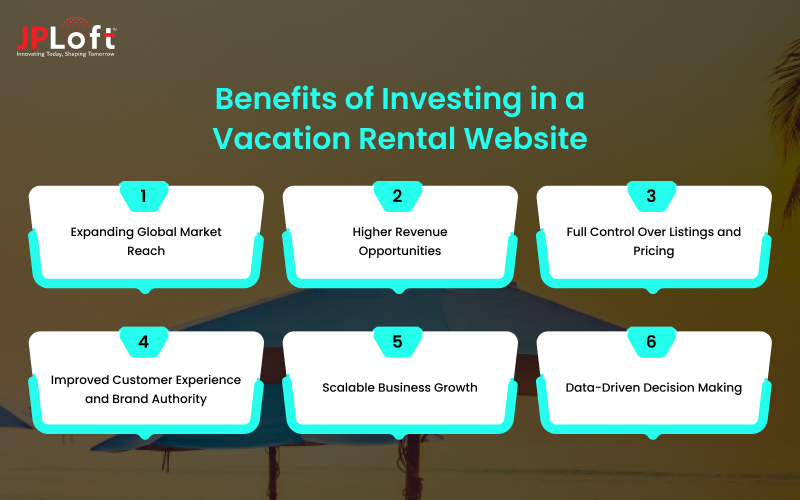
Here are the key benefits of investing in a vacation rental website:
1. Expanding Global Market Reach
A vacation rental platform enables businesses to reach travelers across different countries and regions without geographical limitations.
Entrepreneurs exploring how to create a vacation rental website can attract global users seeking unique accommodations and flexible travel experiences.
2. Higher Revenue Opportunities
Unlike traditional booking channels, vacation rental websites allow businesses to generate income through listing fees, booking commissions, and premium host subscriptions.
This flexible monetization model helps startups steadily make a vacation rental website profitable over time.
3. Full Control Over Listings and Pricing
Operating your own platform gives you complete control over property listings, pricing structures, and booking policies.
Businesses planning how to build a website for vacation rental platforms can customize pricing rules, seasonal rates, and host guidelines easily.
4. Improved Customer Experience and Brand Authority
A dedicated platform allows businesses to design seamless booking experiences with personalized recommendations, advanced filters, and secure payment systems.
This improves trust, builds brand authority, and encourages repeat bookings from satisfied travelers.
5. Scalable Business Growth
Vacation rental websites are highly scalable, allowing businesses to add thousands of listings and new locations over time.
Many startups hire dedicated developers to implement scalable architecture and automation tools that support long-term platform growth.
6. Data-Driven Decision Making
Digital platforms provide valuable insights about traveler preferences, booking patterns, and seasonal demand.
These analytics help businesses optimize marketing strategies, pricing models, and user experience to improve platform performance and maximize revenue.
Overall, investing in a vacation rental website allows businesses to expand their reach and build a scalable digital marketplace. It also helps create long-term revenue opportunities in the rapidly growing travel industry.

Features to Include in a Vacation Rental Website
Choosing the right features determines whether your platform delivers a seamless booking experience or struggles with user engagement.
Modern platforms combine intuitive interfaces, automation, and scalable architecture inspired by popular travel app features used across leading booking platforms.
Businesses planning how to design a vacation rental website should prioritize core features for smooth management, secure payments, and better user experience.
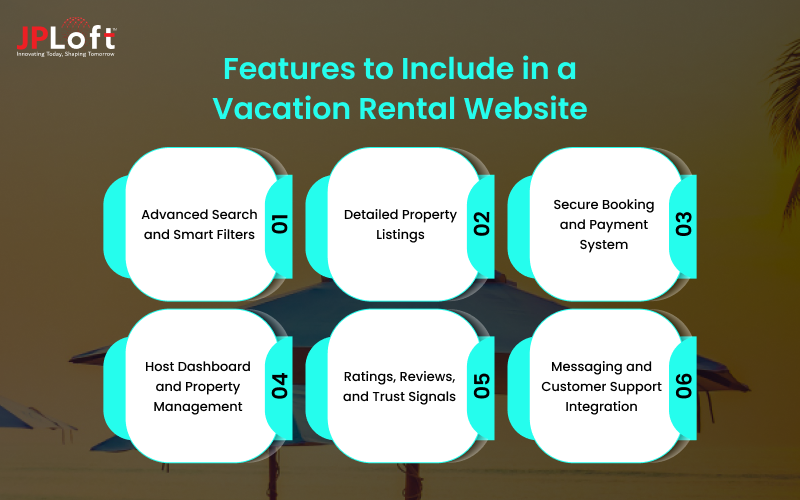
Here are the key features to include in a vacation rental website:
► Advanced Search and Smart Filters
Advanced search functionality allows users to quickly find properties using filters like location, price, property type, amenities, availability, and guest ratings.
This feature improves user experience and is essential when planning how to build a website for vacation rental platforms successfully.
► Detailed Property Listings
Comprehensive property listings include high-quality images, property descriptions, amenities, pricing details, availability calendars, and host information.
This level of transparency builds traveler trust and helps platforms compete with services that develop a hotel booking app like Booking.com.
► Secure Booking and Payment System
A reliable booking system enables users to select dates, confirm reservations, and complete payments securely through integrated gateways.
Businesses exploring how to make a website with booking vacation rentals must ensure encrypted transactions and multiple payment options for global travelers.
► Host Dashboard and Property Management
A dedicated host dashboard enables property owners to manage listings, update availability, adjust pricing, respond to inquiries, and track bookings.
Many startups hire web developers to build intuitive dashboards that simplify property and reservation management.
► Ratings, Reviews, and Trust Signals
Guest reviews and ratings play a crucial role in building trust within the platform.
Verified reviews help travelers make informed decisions while improving credibility, transparency, and user confidence in the platform’s listings and overall booking experience.
► Messaging and Customer Support Integration
Integrated messaging enables hosts and guests to communicate directly for inquiries, booking confirmations, or special requests.
Real-time chat and support tools enhance customer satisfaction while strengthening engagement and improving the overall booking experience.
Overall, incorporating these essential features helps businesses create a user-friendly platform that simplifies bookings and improves user trust. It also strengthens competitiveness in the rapidly expanding vacation rental marketplace.
Step-by-Step Approach to Building a Vacation Rental Website
Building a successful vacation rental platform requires careful planning, the right technology stack, and a user-focused design approach.
Businesses that understand the development roadmap can create scalable booking platforms that attract hosts and travelers alike.
If you’re wondering how to build a vacation rental website, following a structured development process helps avoid costly mistakes and ensures long-term platform growth.
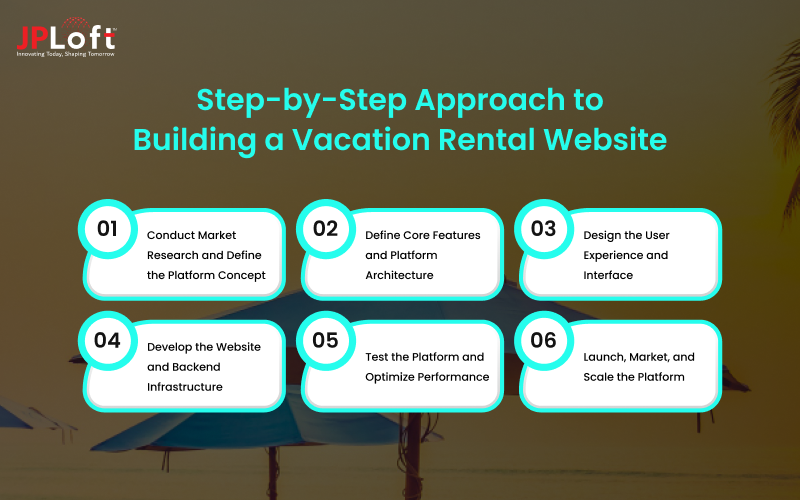
Here are the essential steps to build a vacation rental website successfully:
Step 1: Conduct Market Research and Define the Platform Concept
The first step is identifying your target audience, business model, and competitive positioning.
Analyze successful platforms, pricing models, and user expectations to define your platform’s core value proposition.
Market research also helps determine property categories, geographic focus, and monetization strategies.
Entrepreneurs researching how to create a vacation rental website should evaluate competitors like Airbnb and Vrbo to understand demand patterns, traveler preferences, and property host requirements before moving forward with development planning.
Step 2: Define Core Features and Platform Architecture
Once the concept is clear, the next step is outlining the essential platform features and system architecture.
Determine user roles such as guests, hosts, and administrators while defining search filters, booking workflows, and payment systems.
A well-planned architecture ensures scalability, performance, and seamless integrations.
Businesses exploring how to build a vacation rental platform website must also decide between custom development or ready-made frameworks, depending on scalability goals and long-term product expansion strategies.
Step 3: Design the User Experience and Interface
An intuitive user experience is critical for attracting travelers and encouraging bookings.
The design process includes creating wireframes, user flows, and responsive layouts for both desktop and mobile platforms.
Entrepreneurs researching how to design a vacation rental website should focus on clean navigation, fast search results, and visually appealing property listings.
Many businesses also explore guides such as how to make an app like Airbnb to understand marketplace design patterns, booking flows, and trust-building features used by successful rental platforms.
Step 4: Develop the Website and Backend Infrastructure
The development phase involves building the frontend interface, backend logic, APIs, and database infrastructure.
This stage integrates payment gateways, messaging systems, booking engines, and listing management tools.
Businesses often hire software developers experienced in marketplace platforms to ensure the website performs reliably under heavy traffic.
Teams focusing on how to make a vacation rental website should prioritize security, scalability, and cloud-based architecture to support thousands of property listings and real-time booking transactions.
Step 5: Test the Platform and Optimize Performance
Before launching the platform, comprehensive testing ensures the system operates smoothly across devices and browsers.
Quality assurance includes performance testing, security validation, payment gateway checks, and booking workflow testing.
Companies planning how to set up a vacation rental website should also run usability tests to identify navigation issues and booking friction points.
Continuous testing improves reliability and ensures travelers enjoy a seamless browsing and booking experience.
Step 6: Launch, Market, and Scale the Platform
Once testing is complete, the platform can be launched with strategic marketing campaigns.
Initial growth often involves onboarding property owners, running digital advertising campaigns, and implementing referral programs.
Businesses that want to develop a vacation rental website successfully should focus on SEO, influencer partnerships, and travel partnerships to attract early users.
As bookings increase, the platform can scale by adding more locations, features, and integrations to support long-term marketplace growth.
By following these structured steps, businesses can build a reliable vacation rental platform that attracts property owners and delivers seamless booking experiences.
Many startups partner with an experienced web development company Denver to ensure scalable architecture and smooth marketplace performance.
What’s the Cost to Make a Vacation Rental Website?
Developing a vacation rental website typically costs between $10,000 and $120,000+, depending on the platform’s complexity, features, integrations, and development approach.
Businesses exploring how to make a vacation rental website must consider factors like UI/UX design, backend infrastructure, booking systems, payment gateways, and third-party integrations.
For startups entering this market, the investment varies significantly depending on whether they launch a basic MVP or a fully scalable marketplace with advanced automation and analytics capabilities.
► Estimated Development Cost Breakdown
|
Development Component |
Estimated Cost Range |
|
Market Research & Planning |
$1,000 – $3,000 |
|
UI/UX Design |
$2,000 – $6,000 |
|
Frontend Development |
$3,000 – $20,000 |
|
Backend Development |
$4,000 – $30,000 |
|
Booking & Payment Integration |
$2,000 – $12,000 |
|
Testing & Quality Assurance |
$1,500 – $6,000 |
|
Deployment & Launch |
$1,000 – $3,000 |
These estimates are similar to budgeting considerations involved in calculating the cost to develop a travel app, where platform complexity, integrations, and scalability play a major role in determining the overall investment.
In addition to development costs, businesses should also plan budgets for maintenance, hosting, security upgrades, and feature expansion to ensure long-term platform stability.
► Cost Based on Platform Complexity
|
Platform Type |
Estimated Cost |
|
Basic MVP Website |
$10,000 – $25,000 |
|
Mid-Level Marketplace Platform |
$25,000 – $70,000 |
|
Advanced Platform with AI Features |
$70,000 – $120,000+ |
Entrepreneurs evaluating marketplace development often analyze factors such as advanced booking engines, AI-powered recommendations, automation workflows, and global integrations. These elements significantly influence overall platform development costs.
Overall, the investment required to build a vacation rental website depends on feature depth, technology stack, platform scalability, and long-term product strategy. Careful planning is therefore essential before starting development.
Challenges to Create a Vacation Rental Website
Building a vacation rental platform involves technical, operational, and market-related complexities.
Businesses planning how to start vacation rental website platforms must carefully address these obstacles to ensure long-term success.
Understanding these issues also helps entrepreneurs avoid mistakes responsible for why online travel apps fail, particularly when launching new digital marketplaces.
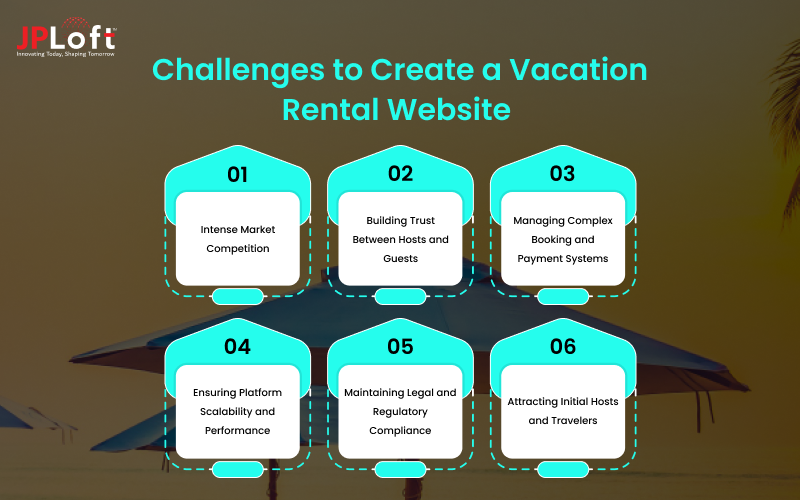
Here are the major challenges businesses face when they create a vacation rental website and their solutions:
Challenge 1: Intense Market Competition
The vacation rental industry is highly competitive, with dominant platforms like Airbnb and Vrbo controlling significant market share. This makes it difficult for startups to quickly attract hosts, travelers, and build platform trust.
Solution: Start by targeting niche markets such as luxury villas, eco-friendly stays, or regional rentals. Offering unique features, competitive pricing, and localized experiences helps new platforms differentiate effectively.
Challenge 2: Building Trust Between Hosts and Guests
Trust is a major concern for travelers booking accommodations online. Without proper verification systems, users may hesitate to book properties, affecting conversion rates and platform credibility significantly.
Solution: Implement verified profiles, secure payment gateways, guest reviews, property verification processes, and transparent cancellation policies to build trust. Strong trust signals encourage bookings and create long-term user loyalty.
Challenge 3: Managing Complex Booking and Payment Systems
Handling bookings, cancellations, refunds, and secure payments requires advanced backend systems. Platforms attempting to make vacation rental website marketplaces without proper architecture often face operational inefficiencies and booking conflicts.
Solution: Use reliable booking engines, automated availability calendars, and secure payment integrations. Scalable backend architecture ensures seamless reservations, real-time updates, and smooth financial transactions across the entire platform.
Challenge 4: Ensuring Platform Scalability and Performance
As listings and users grow, platforms may face performance issues, slower load times, and system crashes. Poor scalability negatively affects user experience and booking conversions significantly.
Solution: Adopt cloud-based infrastructure, microservices architecture, and scalable databases. These technologies support increasing traffic, ensure consistent performance, and allow platforms to expand listings without technical limitations.
Challenge 5: Maintaining Legal and Regulatory Compliance
Vacation rental platforms must comply with varying regional regulations related to short-term rentals, taxation policies, and property licensing requirements. Non-compliance may lead to penalties or operational restrictions.
Solution: Consult legal experts, implement automated tax calculations, and create compliance frameworks for different regions. Maintaining regulatory transparency helps businesses operate smoothly while protecting hosts and guests.
Challenge 6: Attracting Initial Hosts and Travelers
New platforms struggle to build supply and demand simultaneously. Without property listings, travelers hesitate to join, while hosts avoid platforms lacking sufficient booking demand.
Solution: Launch with targeted host acquisition strategies, promotional incentives, and referral programs. Strong early marketing campaigns encourage both hosts and guests to join the platform ecosystem.
Addressing these challenges strategically allows businesses to successfully create scalable platforms. It also helps them confidently build vacation rental website marketplaces that attract users and grow sustainably.
How Vacation Rental Websites Make Money?
Vacation rental platforms operate as digital marketplaces connecting hosts and travelers. Their business models focus on generating revenue through bookings, listings, and value-added services.
Understanding monetization models is essential for entrepreneurs exploring how to build a vacation rental website that generates sustainable revenue and long-term platform growth.
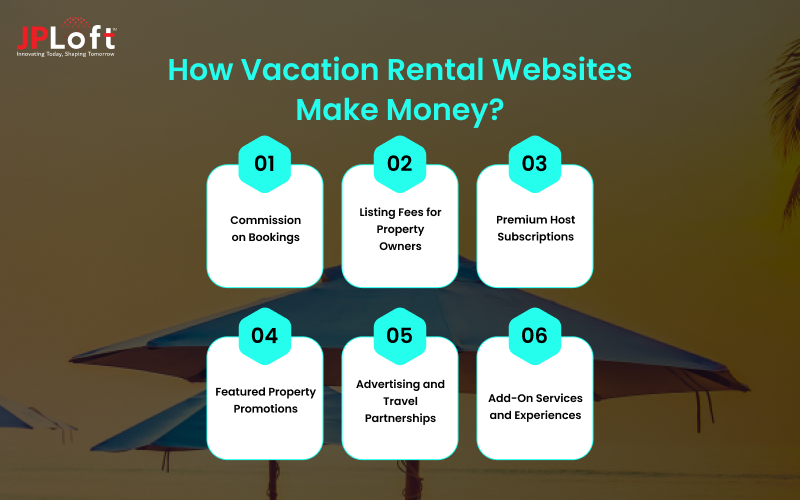
Here are the most common monetization strategies used by vacation rental websites:
1. Commission on Bookings
Vacation rental platforms earn revenue by charging a commission on each booking made through the platform.
Businesses researching how to create a vacation rental website often implement guest service fees or host commissions as primary income sources.
2. Listing Fees for Property Owners
Some platforms charge hosts a fee to list their properties on the marketplace.
This model ensures consistent revenue generation while encouraging property owners to maintain high-quality listings that attract travelers.
3. Premium Host Subscriptions
Vacation rental websites may offer premium subscription plans to hosts.
These plans include advanced analytics, promotional listing placements, and enhanced visibility within search results, helping hosts generate more bookings.
4. Featured Property Promotions
Property owners can pay additional fees to highlight their listings at the top of search results.
This promotional model increases property visibility while creating an additional advertising revenue stream for the platform.
5. Advertising and Travel Partnerships
Many vacation rental platforms generate income by partnering with travel brands, airlines, tour providers, and local service companies.
Advertising placements and affiliate partnerships create additional monetization opportunities.
6. Add-On Services and Experiences
Platforms often provide additional services such as airport transfers, guided tours, insurance packages, or travel experiences.
Businesses that build vacation rental website marketplaces can significantly increase revenue through these complementary services.
By implementing these monetization strategies, businesses can transform their booking platforms into sustainable digital marketplaces. This also helps maximize profitability in the growing vacation rental industry.
Future Trends in Developing a Vacation Rental Website
Technology is rapidly transforming how travelers discover, book, and experience accommodations online.
Businesses planning to create a vacation rental website must understand emerging technologies shaping the future of digital travel platforms.
These innovations are also influencing global travel platforms. They are helping businesses build vacation rental website ecosystems that deliver smarter, immersive, and personalized booking experiences.
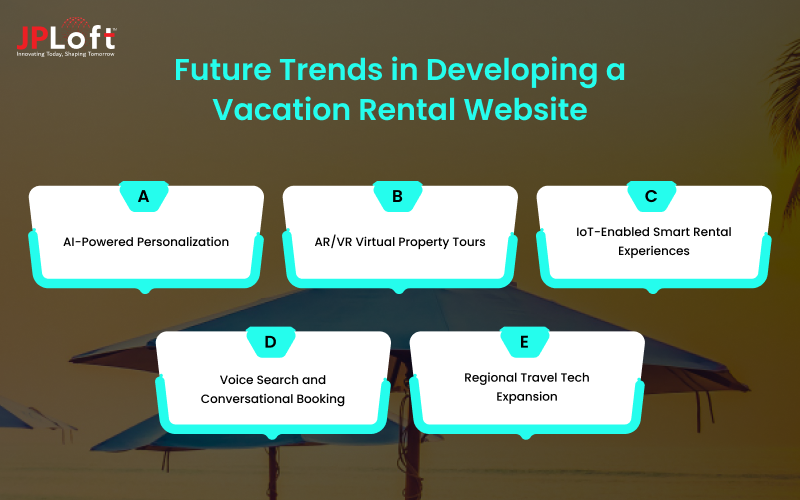
Here are the future trends shaping vacation rental website development:
A. AI-Powered Personalization
Artificial intelligence enables platforms to analyze traveler behavior, preferences, and booking patterns.
Businesses looking to develop a vacation rental website can leverage AI recommendation engines and even build an AI travel agent that suggests personalized properties.
It can also optimize dynamic pricing and assist users with smarter booking decisions in real time.
B. AR/VR Virtual Property Tours
Augmented and virtual reality technologies allow travelers to explore properties before booking.
Immersive 3D tours increase user confidence, improve engagement, and significantly boost booking conversion rates across modern vacation rental platforms.
C. IoT-Enabled Smart Rental Experiences
IoT-powered smart locks, automated lighting, climate control, and security systems enhance guest convenience.
Collaborating with an IoT development company enables platforms to integrate these smart property technologies effectively.
These integrations improve operational efficiency while delivering seamless guest experiences across modern vacation rental accommodations worldwide.
D. Voice Search and Conversational Booking
Voice assistants and conversational AI allow travelers to search and book rentals through voice commands.
Platforms increasingly collaborate with a speech recognition software development company to integrate voice-based discovery and booking experiences into modern vacation rental platforms.
E. Regional Travel Tech Expansion
Digital travel platforms are expanding rapidly across emerging tourism markets.
This growth shows how regional travel ecosystems are increasingly adopting advanced booking technologies and scalable rental platforms.
Localized digital infrastructure is also evolving to support the rising demand for online vacation rental services.
Businesses that adopt these technologies early can successfully scale digital platforms and confidently create future-ready vacation rental marketplaces.

Why Partner with JPLoft to Build Your Vacation Rental Website?
Building a successful rental marketplace requires strong technology expertise, scalable architecture, and deep industry knowledge.
As a trusted travel app development company, JPLoft specializes in building advanced travel platforms tailored for modern businesses.
Our experienced developers help businesses develop a vacation rental website with secure booking systems, seamless user experiences, and scalable cloud infrastructure.
Whether you're planning how to make a vacation rental website from scratch or expanding an existing booking platform, our team ensures your platform meets evolving travel industry standards.
We combine advanced technologies like AI-based recommendations, automated booking engines, and smart analytics to help businesses build platforms that stand out in competitive markets.
With end-to-end development, UI/UX expertise, and post-launch support, JPLoft helps businesses confidently scale their travel platforms.
Conclusion
The vacation rental industry continues to grow rapidly as travelers increasingly prefer flexible and personalized accommodation options.
For entrepreneurs exploring how to make a vacation rental website, understanding features, development steps, monetization strategies, and future trends is essential.
Businesses must focus on user experience, scalable technology, and secure booking systems to compete with established global marketplaces.
By carefully planning the platform architecture and technology stack, companies can successfully create a vacation rental website that attracts hosts and travelers alike.
With the right development strategy and expert support, businesses can launch powerful vacation rental marketplaces that deliver long-term growth and profitability.
FAQs
If you are exploring how to create a website for my vacation rental, you need a booking engine, a property listing system, payment integration, and a user-friendly design. Partnering with experienced developers ensures secure architecture and scalable platform performance.
Developing a vacation rental website typically ranges between $10,000 and $120,000+, depending on features, integrations, platform complexity, and development approach. Custom marketplace platforms usually require a higher investment due to advanced functionality and scalability needs.
To build vacation rental website platform with advanced features like booking systems, host dashboards, and payment gateways usually takes 3 to 6 months, depending on project complexity and development scope.
To how to set up a vacation rental website, essential features include property listings, booking calendars, secure payments, guest reviews, messaging systems, and host dashboards that help manage reservations and availability.
Yes, entrepreneurs can build rental marketplaces similar to Airbnb by focusing on niche markets, scalable infrastructure, and user trust systems. Understanding how to start a vacation rental website helps businesses compete effectively in the growing travel marketplace.

Kris Jacobs brings 20+ years of experience solving complex digital product challenges through strategic thinking and user-centric design. With deep exposure to on-demand services, entertainment, travel, and interactive platforms, she collaborates across teams to shape scalable, engaging solutions that align business goals with intuitive user experiences across evolving digital landscapes.




Share this blog