


Key Takeaways:
Delivering real-time match updates without delays remains one of the biggest sports app development challenges.
Managing sudden traffic spikes during live sporting events can impact app stability and performance.
Ensuring accurate sports data and low-latency live streaming requires complex technical infrastructure.
Designing an intuitive user experience while handling large volumes of content is a constant challenge.
Maintaining long-term user engagement while continuously scaling and updating the app is essential for sustained success.
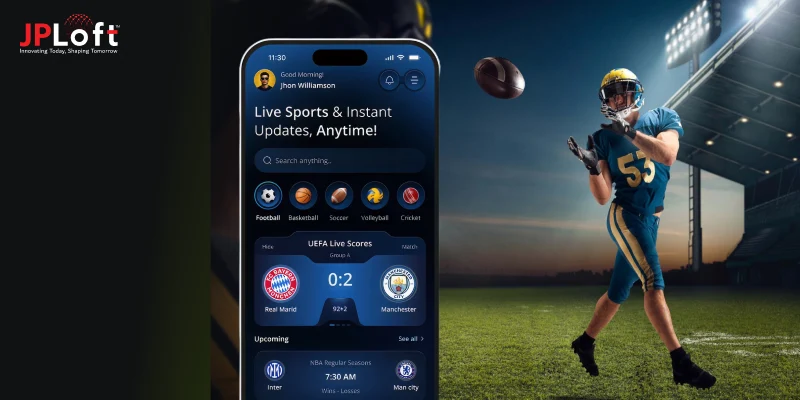
Every sports app promises live scores and instant updates, but not every app delivers them without lag, crashes, or delays. This gap between promise and performance is where most common sports app development challenges begin.
Founders enter this space expecting a straightforward build, only to face real-time data delays, sudden traffic spikes during big matches, and users who expect flawless performance every single time. What works for a regular app often fails under the pressure sports apps face daily.
These challenges are not signs to avoid the market. They are simply problems that need the right solutions, from scalable infrastructure to reliable data integration and smooth streaming performance.
This blog walks through the most common challenges in sports app development that founders face today, along with proven solutions for each. By the end, you will know exactly what it takes to build a sports app that performs well under pressure.
What Makes Sports App Development Unique?
Sports apps are not like regular apps. They deal with fast-changing data and traffic spikes. Here is what sets them apart.
1. Real-Time Information
Fans expect scores, stats, and updates the moment they happen. Any delay frustrates users and pushes them toward other apps. Your app must process and show live data without lag.
2. High User Engagement During Live Events
Traffic spikes hard during matches. Thousands of users open the app at once to check scores or place fantasy picks. Your sports app idea must handle this sudden load smoothly.
3. Video and Multimedia Content
Fans want highlights, replays, and live streams inside the app. This needs a strong video infrastructure that loads quickly, even on slow networks or older devices.
4. Performance Expectations
A single crash during a big match can drive users away for good. Sports apps must stay fast, stable, and responsive, especially during high traffic moments.
5. Multiple User Roles
One app often serves different types of users. Each role needs its own dashboard, permissions, and features, which adds complexity to the app's design and structure.
6. Scalability Requirements
User numbers can jump overnight after a big tournament or viral moment. The app's backend must scale quickly without slowing down or breaking under pressure.

10+ Key Sports App Development Challenges With Solutions
Building a sports app brings real hurdles, from live data delays to sudden traffic spikes. Below are the most common development challenges in sports app development that founders face, along with practical solutions for each.
Challenge 1: Delivering Real-Time Match Updates
Fans want live scores the instant a goal is scored or a wicket falls. Any delay makes your app feel outdated compared to faster rivals in the market.
Match statistics must update instantly. Fans track player performance, possession, and other details in real time, and slow updates quickly break their trust in your app.
Event synchronization across multiple matches adds more pressure on your systems. Push notifications must also reach users fast, or the excitement of a live moment gets lost completely, hurting engagement.
Solution: Use event-driven architecture with WebSockets to deliver instant live updates. Connect reliable sports data APIs and add caching to reduce delays and downtime.
Challenge 2: Handling High Traffic During Major Sporting Events
Big matches bring sudden spikes in app usage. Thousands of fans open the app within minutes, and this sudden load can overwhelm your servers fast.
Server overload often leads to crashes at the worst possible time, right when fans want live updates the most. This mobile app development challenge damages user trust and brand image quickly.
Slow response times during these moments frustrate users badly. Many will simply switch to a competitor app instead of waiting for your app to finally load properly.
Solution: Use cloud infrastructure with auto-scaling to manage sudden spikes. Add a CDN and load balancing for smooth, stable performance.
Challenge 3: Integration With Genuine Data Providers
Sports apps depend heavily on accurate data. Live scores, player statistics, team standings, and schedule updates all need to come from a fully trusted source.
Many data providers offer inconsistent or delayed information. This creates confusion for users and makes your app look unreliable, especially during close or important matches.
Schedule updates also change often due to postponements or rescheduling. Without proper integration, your app may show outdated or incorrect match timings to fans, hurting credibility.
Solution: Partner with trusted data providers and build in API redundancy. Use data validation and caching to ensure accuracy always.
Challenge 4: Ensuring Smooth Live Streaming Performance
Live streaming is a major draw, but it comes with technical sports app challenges. Buffering during a crucial moment can ruin the entire viewing experience instantly.
Video quality must adjust based on the user's network speed. A fan on slow internet still expects a watchable stream without constant interruptions or long pauses.
Latency is another concern. If your stream lags behind the actual match, fans may hear their neighbors cheering before they even see the goal on screen.
Solution: Work with a trusted app development company to use adaptive bitrate streaming with a global CDN and optimize video files for fast, efficient, and reliable media delivery.
Challenge 5: Creating an Intuitive User Experience
Sports apps often pack in scores, news, stats, and video content all at once. This can overwhelm users if the navigation is not kept simple.
Information overload is a real problem here. Too many features crammed onto one screen confuse users and make it hard for them to find what they actually need.
Poor accessibility also excludes many users. Apps that ignore accessibility standards lose potential users who rely on assistive technology to browse and use content easily.
Solution: Consider user-centered UI/UX design services for personalized dashboards to keep navigation simple and follow accessibility-first design principles.
Challenge 6: Keeping User Data Secure
Sports apps collect user accounts and personal information during sign-up. This data must be protected from breaches and unauthorized access at all times, without exception.
If your app offers subscriptions, payment security becomes even more critical. Any weakness here can lead to financial loss and serious damage to overall user trust.
Privacy concerns are growing among users today. They want to know how their data is stored, used, and shared before they trust an app fully with their information.
Solution: Apply encryption and multi-factor authentication throughout the app. Use secure APIs and follow privacy regulations closely and consistently.
Challenge 7: Multi-Device Compatibility
Fans use different devices to follow their favorite sports. Some prefer Android or iOS phones, while others use tablets or smart TVs for a much bigger view.
Wearables like smartwatches are also becoming popular for quick score checks on the go. Your app must work well across all these devices without losing any functionality.
Building separately for each platform takes more time and budget. Without careful planning, this can delay launch significantly and increase the overall development cost of a sports app.
Solution: Use cross-platform development with responsive interfaces for all screens. Test extensively across every target device before launch.
Challenge 8: Integrating Wearables and Fitness Devices
Many sports apps now connect with smartwatches and fitness trackers. Users want to check scores or track their own activity directly from their wrist during matches.
Health monitoring devices add another layer of complexity. These devices often use different data formats, making integration harder and more time-consuming for development teams to manage.
Without proper syncing, data shown on wearables may not match the main app. This creates confusion and reduces user confidence in your platform's overall reliability.
Solution: Hire dedicated developers to smoothly integrate native health APIs. Ensure reliable synchronization and thorough compatibility testing across all devices.
Challenge 9: Maintaining Fast App Performance
Slow loading times frustrate users, especially during live matches when every second truly counts. A laggy app quickly loses its audience to faster, more reliable competitors.
Large media files, like videos and images, can also slow down your app significantly. This is a common issue for apps with heavy live streaming content and visuals.
Battery consumption is another concern. Apps that drain battery quickly during live events often get uninstalled, no matter how good their features and design actually are.
Solution: Optimize the backend and compress images and videos properly. Add caching and monitor app performance regularly and consistently.
Challenge 10: Keeping Users Engaged Over Time
Many sports apps see high downloads at launch, followed by a steady decline in usage. Keeping users active after the initial excitement fades away is genuinely tough.
Notification fatigue is a common cause of this drop. Sending too many alerts, or irrelevant ones, pushes users to turn off notifications entirely, reducing engagement even further.
Low retention often comes from a lack of personalized content. Fans want an app tailored to their favorite teams, not generic updates covering every single sport equally.
Solution: Add personalized content, achievement badges, and community features for users. Use interactive challenges and smart notifications to boost engagement.
Challenge 11: Scaling the App as Your Audience Grows
As your sports app gains popularity, you may need to support new leagues or sports over time. This requires your app's structure to be flexible from the very start.
More users also mean more pressure on your backend systems. Without proper planning, this growth can lead to slower performance and frequent downtime during peak usage hours.
International expansion brings additional challenges like supporting multiple languages, currencies, and time zones across your rapidly growing global user base.
Solution: Build with modular architecture and cloud-native infrastructure from day one. Use scalable databases and microservices to support growth.
Challenge 12: Ongoing Maintenance and Feature Updates
Sports apps need constant updates to stay compatible with new operating system versions. Ignoring this can lead to crashes on newer devices and becomes one of the biggest challenges while developing a sports app.
Bug fixes and security updates are equally important for long-term success. Outdated apps become vulnerable to security risks and often provide a poor overall user experience.
Performance optimization should be an ongoing process too, not a one-time task. User needs and expectations evolve constantly, so your app must evolve right alongside them.
Solution: Consider app maintenance services to schedule regular maintenance and continuous testing throughout the year. Use analytics and user feedback to guide future improvements.
Best Practices for Building a Successful Sports App
Avoiding top sports app development challenges is only half the job. Following proven best practices helps founders build a sports app that performs well and lasts long-term.
► Define a Clear Business Objective
Know your goal before development starts. Whether it is fan engagement, fantasy sports, or live streaming, a clear objective guides every decision your team makes later.
► Start With an MVP
Launch with core features first, like live scores or basic streaming. This helps you test the market, gather feedback, and avoid spending on features users may not want.
► Choose Reliable Third-Party Integrations
Pick trusted providers for data feeds, payments, and streaming. Unreliable integrations can cause downtime and errors, damaging user trust right when your app needs it the most.
► Design for Scalability
Build your app to handle growth from day one. A scalable structure lets you add new leagues, users, or regions without rebuilding your entire system later.
► Prioritize Security
Security challenge in sports app is a major one, and protecting data is important from day one. Strong app security builds trust and keeps your platform compliant with privacy regulations across different regions and markets.
► Test Under Heavy Traffic
Simulate high user loads before launch, especially around major events. This helps you catch performance issues early, before real users experience crashes or slow response times.
► Monitor User Behavior After Launch
Track how users interact with your app post-launch. This data reveals what works, what does not, and where improvements are needed to boost retention.
► Plan for Continuous Maintenance
Treat your app as an ongoing project, not a one-time build. Regular app maintenance, bug fixes, and feature improvements keep your app relevant and competitive over time.
Why Should Businesses Partner with JPLoft To Build Sports Apps?
Building a sports app that stands out takes more than just good code. It needs the right technology, industry experience, and a team that understands what sports fans truly expect. This is where JPLoft comes in.
With years of experience in custom sports app development, JPLoft helps founders and businesses turn their ideas into fully functional, scalable apps. From real-time score updates to secure live streaming, every feature is built with performance and user experience in mind.
The team follows a structured process, starting with clear planning and ending with ongoing support after launch. This reduces risks and keeps your project on track from day one.
Choosing the right partner can save time, cut costs, and avoid development challenges of sports apps. With a proven track record across multiple industries, JPLoft brings the reliability businesses need to launch a successful sports app.
Conclusion
The sports app market will only grow bigger as fans demand faster updates, richer streaming, and more personalized experiences. Founders who plan will be the ones who win user loyalty in this competitive space.
Technology will keep evolving, too. Wearables, AI-driven insights, and smarter notifications are already shaping the next wave of sports apps. Businesses that stay ready for these shifts will have a real edge over competitors who wait too long to adapt.
Success in this space depends on choosing the right development partner from the start. A team that understands real-time performance, scalability, and user engagement can help resolve the top challenges in sports apps.
If you are ready to build a sports app that stands out, now is the time to act. The right foundation today will help your app grow smoothly as your audience and ambitions expand tomorrow.
FAQs
Common challenges of sports app development include delivering real-time updates, handling high traffic during live events, ensuring smooth streaming, keeping data secure, and maintaining fast performance across devices.
Sports apps use event-driven architecture with WebSockets and reliable data APIs. This setup pushes live scores, stats, and notifications to users instantly, without noticeable delay.
User traffic can spike suddenly during big matches or tournaments. Scalable infrastructure keeps the app fast and stable, even when thousands of users log in at once.
Personalized content, achievement badges, community features, and smart notifications keep users active. These features make the app feel relevant to each fan's interests over time.
Cost depends on features, platform choice, third-party integrations, live streaming needs, and design complexity. Apps with real-time data and video streaming usually cost more.

Kris Jacobs brings 20+ years of experience in digital product strategy, user-focused design, and solving complex product challenges. She has worked across on-demand services, travel, entertainment, sports, insurance, education, and service marketplaces, including handyman, dog-walking, courier, event-management, and equine platforms. Her focus is on shaping practical, scalable digital experiences that align user needs with business goals and long-term product growth.



Share this blog