


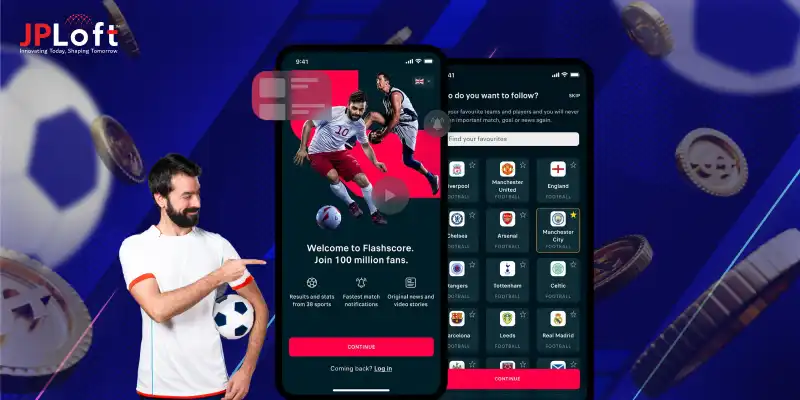
Key Takeaways:
Building a Flashscore-like app requires strong planning, reliable sports data integration, and scalable backend infrastructure.
Development timelines usually range from 3 to 9+ months, depending on app complexity and feature scope.
Essential features like live scores, notifications, stats, and standings define the core user experience.
Real-time syncing, latency control, and API management are the biggest technical challenges in development.
Multiple monetization models can turn a live sports app into a profitable long-term business.
Partnering with JPLoft can simplify development and improve launch success.
Live sports fans expect score updates the moment a match changes. That is why platforms like Flashscore have become popular among sports audiences worldwide.
They offer instant match results, player stats, team rankings, and real-time alerts in one place.
For startups and sports businesses, this growing demand creates a strong market opportunity. Many founders now want to build an app like Flashscore to target niche leagues, regional sports audiences, or dedicated fan communities.
However, success takes more than copying an existing platform. You need the right product strategy, smart feature planning, and reliable technology to compete in this space.
This flashscore app development guide will walk you through the full process, helping you understand what it takes to launch a successful live score platform.
What is Flashscore and Why is it So Popular?
Flashscore is a live sports score platform that gives users real-time match updates across many sports and leagues. It helps fans track matches, player stats, standings, and event details from one simple app.
Key Statistics & User Base
Flashscore has built one of the largest audiences in the live sports app market. According to company-reported data, the platform has more than 155 million monthly active users worldwide.
However, the app has over 50 million downloads on the Play Store. Its wide global reach covers hundreds of leagues and tournaments, making it one of the most used live score platforms worldwide. The app has built a strong presence among fans of football, cricket, basketball, and tennis.
Core Reasons Behind Flashscore’s Success
Its biggest strength is speed. Users get updates almost instantly after events happen in live matches.
The platform also offers deep match details, a clean design, and broad sports coverage. Many businesses now study its model when planning to create an app like Flashscore because of its proven market success.
Market Opportunity for Live Sports Score Apps
The market for live sports score apps is growing fast as fans spend more time tracking games on mobile devices. For founders planning to build a sports app like Flashscore, this creates a strong business opportunity with long-term growth potential.
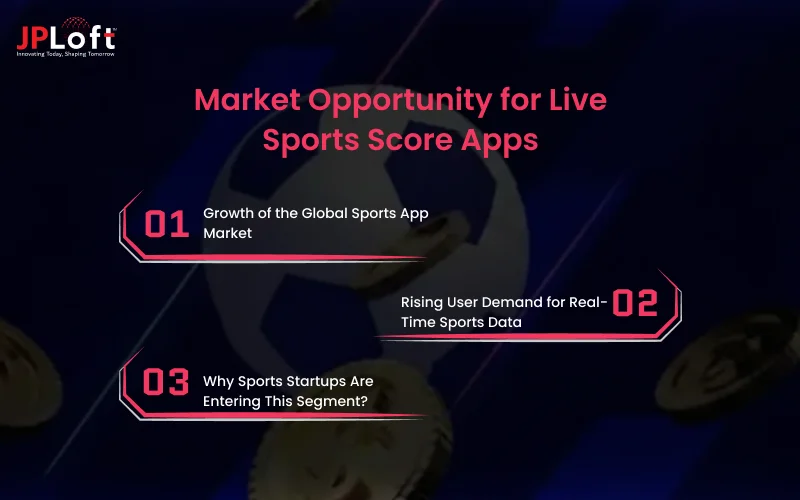
[A] Growth of the Global Sports App Market
The global sports app market is expanding at a steady pace. However, the market is projected to reach $8.03 billion by 2030, growing at a 10.9% CAGR. This shows strong long-term demand for sports-focused mobile platforms.
[B] Rising User Demand for Real-Time Sports Data
Sports fans now expect instant updates wherever they are. Research shows that many users engage with sports apps, highlighting how common mobile sports consumption has become. Live score tracking, alerts, and second-screen viewing continue driving this trend.
[C] Why Sports Startups Are Entering This Segment?
Investor interest in sports tech continues to rise as digital fan engagement grows. Recently, sports tech dealmaking reached $200 billion in total transaction value, reflecting major confidence in the future of sports platforms and fan engagement technology.
Many founders now choose to create a sports app like Flashscore because the market offers scalable revenue through ads, subscriptions, partnerships, and premium fan experiences.
Essential Features Needed to Build an App Like Flashscore
To make an app like Flashscore successful, you need more than a basic score tracker. Users expect speed, detail, and a smooth experience across every part of the platform.
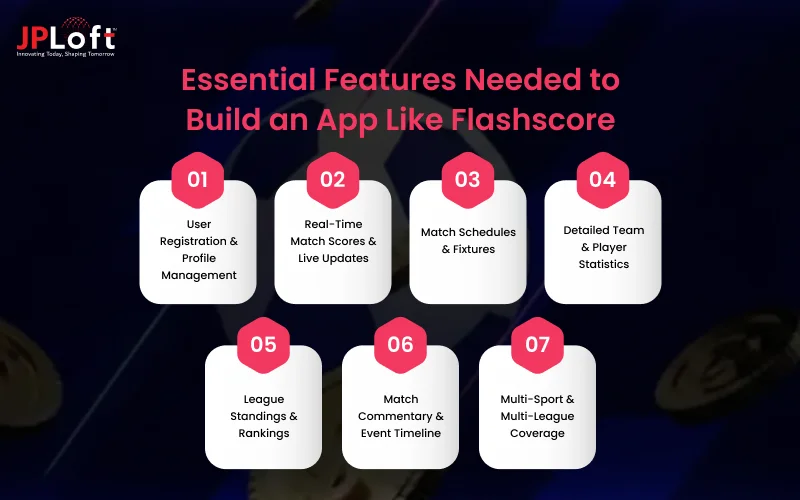
The right app features help improve retention, increase engagement, and make your app competitive in a crowded sports market. Below are the must-have features every live sports platform should include.
1. User Registration & Profile Management
User registration allows fans to create personal accounts inside the app. It helps them save settings, manage alerts, and access features across devices.
Profile management improves user convenience by storing favorite teams and notification settings in one place.
2. Real-Time Match Scores & Live Updates
Real-time score updates are the core of every live sports platform. Users expect match events to appear instantly with minimal delay.
This feature keeps fans engaged during live games and builds trust in the platform’s reliability.
3. Match Schedules & Fixtures
Match schedules help users view upcoming games across leagues and tournaments.
A clean fixture calendar also increases return visits because users open the app before matches begin.
4. Detailed Team & Player Statistics
Stats give users deeper insight into team and player performance, including goals, assists, possession, and more.
Rich statistics improve user engagement by making the app useful for analysis, fantasy sports, and betting-related research.
5. League Standings & Rankings
League tables show current rankings, points, wins, losses, and form. Fans use this to track team progress during the season.
This feature adds more value beyond live scores and keeps users informed about tournament outcomes.
6. Match Commentary & Event Timeline
Live commentary gives text-based updates for users who cannot watch matches live. It explains key moments as they happen.
This adds depth to the live score experience for anyone planning to develop a sports app like Flashscore.
7. Multi-Sport & Multi-League Coverage
Covering multiple sports helps attract a wider audience. It allows users to follow football, cricket, basketball, tennis, and more in one app.
Broad league coverage also increases user stickiness because fans prefer one platform for all sports tracking needs.
Step-by-Step Flashscore Like App Development Process
To build a sports app like Flashscore, you need a clear roadmap from planning to launch. Following a structured development process helps reduce risks, control budgets, and improve execution quality.
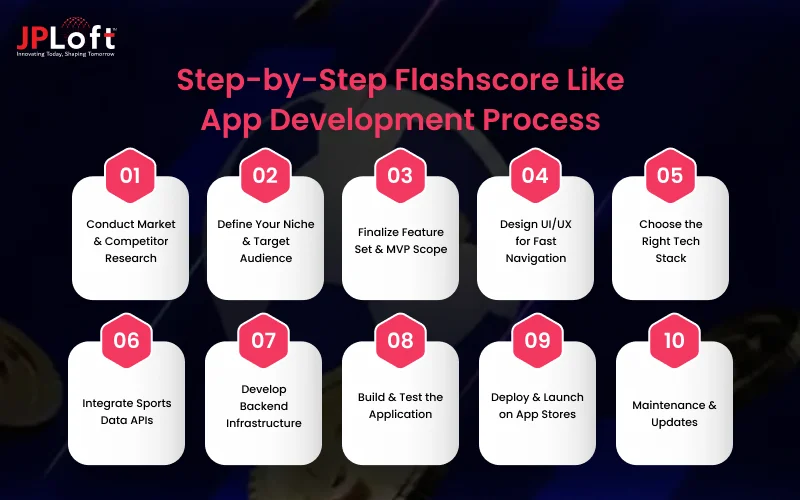
Below is a balanced step-by-step framework with each stage kept consistent in depth for easier blog formatting.
Step 1: Conduct Market & Competitor Research
Start with market research, as this helps you understand what users expect and how existing sports apps operate. Competitor analysis also reveals missing features, user complaints, and market gaps you can use to your advantage.
Research should focus on:
-
Competitor feature analysis
-
User reviews and complaints
-
Market demand by region
-
Monetization model review
-
Industry trend tracking
Step 2: Define Your Niche & Target Audience
Define the audience your sports app will serve and the niche you want to target. A focused approach helps shape your product strategy and prevents feature overload during early development. It also improves marketing efficiency after launch.
Key planning areas include:
-
Sports and leagues to cover
-
Target countries or user regions
-
Audience type and user personas
-
Your market positioning strategy
-
Main problem your app solves
Step 3: Finalize Feature Set & MVP Scope
Choose the core features your first app version should include. A lean MVP allows faster launch, easier testing, and lower development costs. You can add advanced functionality after validating market demand. This approach reduces unnecessary product complexity.
MVP planning should define:
-
User account features
-
Personalization options
-
Push notification needs
-
Future feature roadmap
Step 4: Design UI/UX for Fast Navigation
Your app should allow users to access scores and match data within seconds. Fast, simple navigation improves user satisfaction and keeps engagement levels high. Poor design often increases bounce rates and lowers retention.
UI/UX design services should cover:
-
Match list layouts
-
Navigation structure
-
Mobile-first design flow
-
User interaction paths
-
Loading speed optimization
Step 5: Choose the Right Tech Stack
The app tech stack you choose affects performance, scalability, and future maintenance costs. Selecting the right tools early helps your app support growth without technical issues later. This step is critical for long-term success.
Technology planning includes:
-
Frontend framework choice
-
Backend programming language
-
Database architecture
-
Cloud hosting setup
-
DevOps and deployment tools
Step 6: Integrate Sports Data APIs
Sports APIs provide the live data your platform depends on, including scores, schedules, stats, and rankings. Reliable API integration ensures users receive fast and accurate updates during matches. Poor API quality can damage user trust quickly.
API review should include:
-
Data refresh speed
-
Sports coverage availability
-
API pricing structure
-
Usage limitations
-
Data licensing terms
Step 7: Develop Backend Infrastructure
Backend infrastructure powers live updates, notifications, user accounts, and real-time processing. It must handle sudden traffic spikes during major sporting events without slowing down. Strong backend systems improve reliability and scalability.
Backend development includes:
-
Real-time data processing
-
User management systems
-
Push notification setup
-
Server scaling logic
-
Performance monitoring tools
Step 8: Build & Test the Application
Once planning and development are complete, testing becomes a crucial aspect. App testing ensures the product works properly before release and helps avoid major launch issues. Strong QA improves app quality significantly.
Testing should include:
-
Functional testing
-
Load and stress testing
-
API response validation
-
Cross-device compatibility
-
Security and bug checks
Step 9: Deploy & Launch on App Stores
After testing, prepare the app for launch across major app stores. A smooth release process helps improve first impressions and supports better early user adoption. Launch planning also reduces technical issues after release.
Launch preparation includes:
-
Metadata optimization
-
Final QA review
-
Analytics setup
-
Post-launch monitoring
Step 10: Maintenance & Updates
Launching the app is only the beginning of the product journey. To keep users engaged and competitive in the market, your platform needs regular maintenance services, feature improvements, and performance updates. Ongoing support also helps prevent technical issues over time.
Maintenance planning should include:
-
Bug fixes and issue resolution
-
Performance optimization updates
-
New feature rollouts
-
Security patch implementation
-
User feedback improvements
Following this process helps businesses make a sports app like Flashscore with better planning, smoother execution, and stronger market readiness.
How Much Does it Cost to Build an App Like Flashscore?
The cost to create an app like Flashscore typically ranges from $15,000 to $100,000+. Final sports app development cost depends on feature depth, app complexity, platform choice, and backend requirements.
A basic live score app with core features like score updates, schedules, and notifications may cost $15,000–$30,000. This works well for MVP launches.
A mid-level sports app with personalization, multi-sport coverage, and advanced stats often costs $30,000–$60,000.
An advanced platform with AI, commentary, betting integrations, and enterprise infrastructure may cost $60,000–$100,000+, depending on scalability needs.
Hence, once you understand the cost and process of how to make an app like Flashscore, it becomes important to know the challenges involved. Let’s discuss this in the next section.
Challenges in Building a Live Sports Score App Like Flashscore
When businesses build a live score app like Flashscore, they face several technical and operational hurdles during development. Below, we will discuss the common app development challenges with their possible solutions.
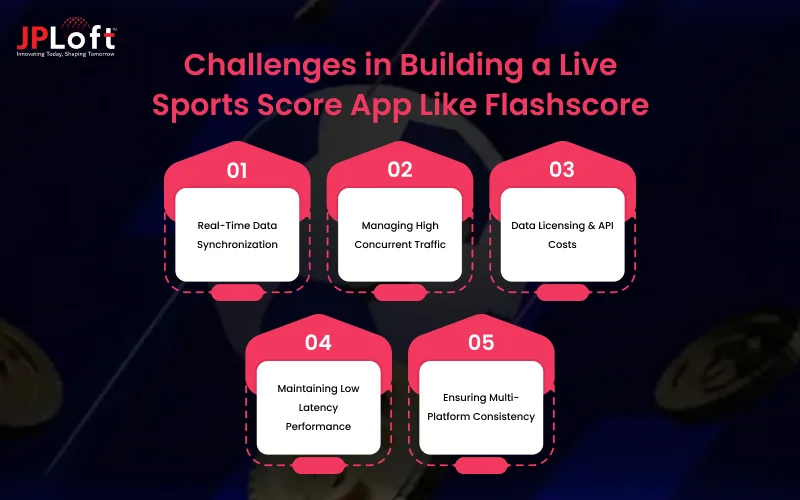
Challenge 1: Real-Time Data Synchronization
Sports events change every second, and users expect instant updates without delay. Your platform must sync scores, cards, substitutions, and other live events in real time across all devices. Even minor delays can damage user trust and reduce engagement.
Solution: Use WebSockets and a real-time event streaming architecture for faster data syncing.
Challenge 2: Managing High Concurrent Traffic
Traffic can spike suddenly during major tournaments or popular matches. Thousands of users may access the app at once, creating pressure on servers and backend systems. Without proper infrastructure, the app may slow down or crash during peak periods.
Solution: Use cloud auto-scaling and load balancing to handle traffic spikes efficiently.
Challenge 3: Data Licensing & API Costs
Sports data providers often charge significant fees for live match data access. Costs rise further when you expand into premium leagues or multiple sports categories. Many startups underestimate these recurring expenses during planning.
Solution: Select scalable API partners and negotiate flexible licensing plans early.
Challenge 4: Maintaining Low Latency Performance
Users expect match updates within seconds of live action. If your platform shows delayed information, users may switch to faster alternatives immediately. Backend inefficiencies and poor optimization often create latency issues during high traffic periods.
Solution: Consider an app development company in USA to optimize backend logic, caching layers, and database performance regularly.
Challenge 5: Ensuring Multi-Platform Consistency
Your app must deliver the same smooth experience across iOS, Android, tablets, and web platforms. Different devices and operating systems create testing and design challenges. Inconsistent performance can frustrate users and lower retention rates.
Solution: Follow shared design systems and perform extensive cross-platform testing.
Monetization Strategies for Flashscore-Like Apps
When planning your revenue strategy, it is important to think beyond user growth alone. If you want to develop an app like Flashscore, combining multiple revenue streams can improve long-term profitability and reduce dependence on one channel.
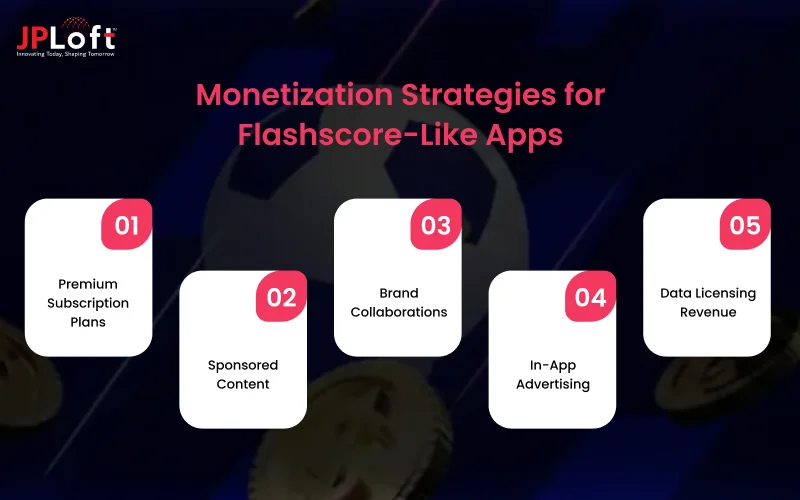
Below are the most profitable monetization app models for live sports platforms.
Strategy 1: Premium Subscription Plans
Subscription models allow users to pay for ad-free access or unlock advanced app features. This creates predictable monthly recurring revenue for the business.
Strategy 2: Sponsored Content
Sponsored content helps brands promote featured articles, match highlights, or dedicated in-app campaigns. It adds monetization without disrupting the user experience heavily.
Strategy 3: Brand Collaborations
Companies pursuing a flashscore clone app development guide often use brand partnerships for co-marketing campaigns, event sponsorships, and in-app promotional placements.
Strategy 4: In-App Advertising
Advertising is one of the easiest ways to monetize a growing sports audience. Banner ads, native placements, and video ads can generate steady income from active users.
Strategy 5: Data Licensing Revenue
Teams working on a flashscore app development guide may also monetize platform-generated insights by licensing data to media companies, analysts, and sports organizations.
Why Choose JPLoft to Develop a Sports App Like Flashscore?
JPLoft stands out as a trusted technology partner for businesses looking to build a live score app like Flashscore with speed, quality, and long-term scalability.
With strong experience in sports app development services, the company builds custom live score platforms and solutions tailored to modern business needs.
The team handles the complete development cycle, from strategy and UI/UX design to backend architecture, API integration, deployment, and post-launch support.
This end-to-end expertise helps businesses launch faster while reducing technical risks.
JPLoft focuses on building high-performance, scalable, and user-friendly sports applications designed for real-time engagement.
Whether you want to launch an MVP or an enterprise-grade platform, the company delivers solutions aligned with your business goals.
For startups and enterprises alike, JPLoft remains a top development partner for turning sports app ideas into successful digital products.
Conclusion
The demand for live sports platforms continues to grow as fans expect faster, smarter, and more personalized match-tracking experiences. This creates a strong opportunity for businesses that want to know how to develop an app like Flashscore and enter a fast-expanding digital sports market.
However, creating a successful platform requires more than copying existing features. You need the right business strategy, scalable technology, reliable data sources, and a user-first experience to stand out from competitors.
From market research and feature planning to development, monetization, and long-term maintenance, every stage plays a key role in product success. With proper execution, a live score platform can become a powerful digital asset with strong revenue potential.
Whether you want to target niche sports or global audiences, now is the right time to invest in sports app innovation and launch a platform built for the future of fan engagement.
FAQs
To develop a live score app like Flashscore effectively, define your niche, choose core features, integrate reliable sports APIs, and build scalable infrastructure with expert development support.
Development time typically ranges from 3 to 9+ months, depending on project scope, design complexity, and the number of features.
Core features include live score updates, match schedules, push notifications, player statistics, league standings, search filters, and personalized watchlists.
Major challenges include real-time data synchronization, API costs, traffic spikes, latency optimization, and multi-platform consistency.
They earn through in-app advertising, premium subscriptions, affiliate betting partnerships, sponsored content, and data licensing.

Kris Jacobs brings 20+ years of experience in digital product strategy, user-focused design, and solving complex product challenges. She has worked across on-demand services, travel, entertainment, sports, insurance, education, and service marketplaces, including handyman, dog-walking, courier, event-management, and equine platforms. Her focus is on shaping practical, scalable digital experiences that align user needs with business goals and long-term product growth.



Share this blog