


Key Takeaways:
The sports app development process includes proper planning, design, testing, and deployment.
Sports app development costs vary widely based on feature set, integrations, and platform complexity.
Core features like live scores, notifications, and user profiles are essential for strong user engagement.
Monetization options include subscriptions, ads, sponsorships, and in-app purchases, depending on the app model.
Choosing a scalable tech stack is critical for handling real-time sports data and future growth.
The sports industry is growing fast, and digital apps are leading this change. Today, fans expect real-time updates, live streaming, and interactive features in one place.
This shift has created strong demand for smart and engaging sports applications across global markets. A well-planned sports app development guide can help businesses turn this demand into real opportunities.
Whether you want to build a sports app for fans, teams, or leagues, the right approach matters. From idea validation to feature planning, every step plays a key role in success.
Startups and enterprises both can benefit from investing in sports apps today by getting into the billion-dollar market. These platforms open new ways to engage users, increase revenue, and build long-term brand value.
In this blog, we will break down the key steps, features, and strategies you need to build and scale a sports app successfully.
Market Overview of Sports App
The sports app market is growing fast as users demand real-time updates and interactive experiences on mobile devices.
-
The global sports app market is expected to reach $12.6 billion by 2032, at a CAGR of 11.64%.
-
Around 82% of sports organizations are already using AI technologies to improve performance and engagement.
These numbers clearly show that investing in sports apps today can help businesses capture growing demand and build a strong digital presence in the market.
Types of Sports App Investors Can Consider
Choosing the right app type is the first step to success. Each model serves a different user need and business goal.
Below is a simple comparison to help you decide:
|
App Type |
What It Does |
Business Value |
|
Score Tracking Apps |
Show live scores, match stats, and real-time updates |
High daily user engagement and strong ad revenue opportunities |
|
Sports News & Streaming |
Provide news, live matches, and video content |
Monetization through ads, subscriptions, and premium access |
|
Community Sports App |
Connect players, fans, and local teams through chats, events, and forums |
Builds strong user communities, increases retention, and opens opportunities for revenue |
|
Team Management Apps |
Help teams manage players, schedules, and performance |
Useful for clubs and academies with SaaS-based revenue |
When you plan to build a mobile app, choosing the right type reduces risk. However, it also helps you target the right audience from the start.
Must-Have Features to Include in a Sports App
The success of any sports app depends on the app features you offer. If you want to build sports app that users love, focus on value and ease of use.
A proper sports app development process ensures both users and admins get the right tools. Below are the key features every business should consider:
|
Panel |
Features |
What It Does |
Business Benefit |
|
User Panel |
User Registration & Profiles |
Allows users to sign up and manage personal details |
Helps track user behavior and offer personalized experiences |
|
Live Scores & Real-Time Updates |
Shows instant match scores and stats |
Increases daily engagement and repeat app usage |
|
|
Push Notifications |
Sends alerts for matches, news, and updates |
Keeps users active and improves retention |
|
|
Social Sharing & Chat |
Let users share content and interact |
Builds community and boosts app visibility |
|
|
Multi-Language Support |
Offers content in different languages |
Expands reach to global audiences |
|
|
Admin Panel |
User Management |
Helps manage user accounts and activity |
Ensures smooth operations and better control |
|
Content Management |
Allows updating news, scores, and media |
Keeps the app fresh and relevant |
|
|
Analytics Dashboard |
Tracks user data and app performance |
Supports data-driven business decisions |
|
|
Monetization Controls |
Manages ads, subscriptions, and payments |
Helps optimize revenue streams effectively |
|
|
Advanced Features |
AI-Based Recommendations |
Suggests content based on user behavior |
Improves user experience and engagement |
|
AR/VR Match Experience |
Offers immersive viewing experiences |
Creates a unique and premium app offering |
|
|
Real-Time Analytics |
Provides live data insights during matches |
Attracts serious fans and professionals |
|
|
Gamification Elements |
Adds rewards, points, and challenges |
Increases user retention and app stickiness |
Sports App Development Process: From Idea to Launch
To build a successful product, you need a clear roadmap followed by a trusted app development company in USA.
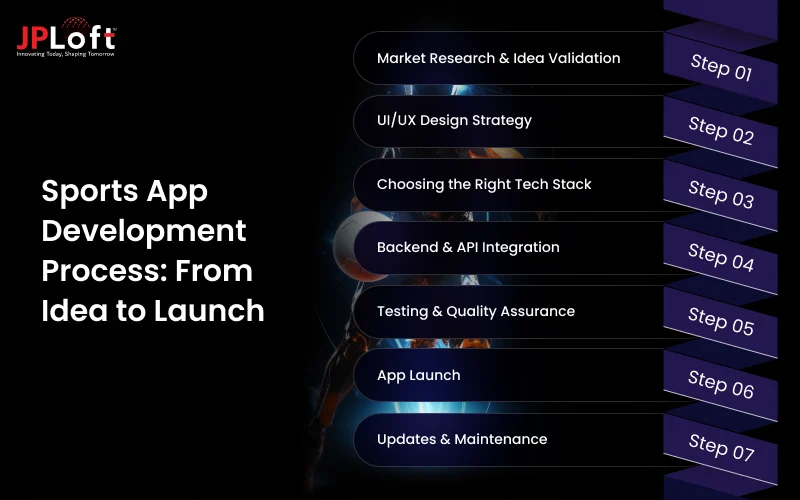
This complete guide to sports app development explains each step so businesses can plan, execute, and launch with confidence while reducing risks.
Step 1: Market Research & Idea Validation
This step focuses on performing market research and helps you confirm your idea before investing resources.
→ Analyze Competitors and Market Trends
Study top sports apps to understand features, pricing, and user feedback patterns. Analyze current trends like live streaming, fantasy sports, and AI usage to identify gaps and opportunities before starting development.
→ Identify Target Audience and Validate Demand
Define your ideal users based on age, interests, and behavior patterns. Conduct surveys or research to confirm demand, ensuring your idea solves real problems and has strong potential for user adoption.
Step 2: UI/UX Design Strategy
The focus of this step is to create sports app with a smooth and engaging user experience.
→ Develop Wireframes and Prototypes
Create app wireframes to outline the structure and flow of your application clearly. Build interactive prototypes to visualize user journeys and test navigation before development, ensuring your design meets user expectations.
→ Conduct User Testing and Iterations
Test your app prototypes with real users to identify usability issues early. Gather feedback on navigation, layout, and features, then refine designs through multiple iterations to improve overall user experience and satisfaction.
Step 3: Choosing the Right Tech Stack
Selecting the right app tech stack ensures long-term performance and scalability.
→ Select Frontend and Backend Frameworks
Choose the top programming frameworks for smooth user interfaces and handling data and logic. The right combination ensures your application runs efficiently, supports features, and handles increasing user demand effectively.
→ Choose Databases and Cloud Infrastructure
Select secure databases to manage large volumes of sports data efficiently. Use cloud platforms for scalability, faster performance, and reliability, ensuring your application can handle real-time updates and growing user traffic.
Step 4: Backend & API Integration
This step builds the core functionality of your application.
→ Build Backend APIs and Server Logic
Develop secure APIs and server-side logic to manage user data, authentication, and application processes. A strong backend ensures stability, smooth performance, and seamless communication between the app and server systems.
→ Integrate Sports Data APIs and Real-Time Feeds
Integrate reliable third-party APIs to deliver live scores, player statistics, and match updates instantly. Real-time data improves user engagement and keeps your application relevant for sports fans seeking up-to-date information.
Step 5: Testing & Quality Assurance
Proper app testing ensures your platform works properly before launch.
→ Perform Unit & Integration Testing
Conduct unit testing to check individual components and integration testing to ensure systems work together smoothly. This process helps identify bugs early and ensures your application delivers a stable and reliable experience.
→ Execute User Acceptance & Performance Testing
Perform user acceptance testing to confirm the application meets business goals. Conduct performance testing to measure speed, scalability, and responsiveness under different conditions, ensuring a seamless experience for all users.
Step 6: App Launch
This step focuses on releasing your app to the market successfully.
→ Prepare App Store Assets and Submit
Create high-quality screenshots, descriptions, and promotional content for app stores. Submit your app to the App Store or publish your app on the Play Store by following the platform guidelines to improve approval chances.
→ Monitor Initial Rollout and Gather Feedback
Track app performance, downloads, and user behavior after launch. Collect feedback from early users to identify issues and improvements, helping you refine the product and enhance overall user satisfaction quickly.
Step 7: Updates & Maintenance
Continuous improvement keeps your app relevant and competitive.
→ Release Patches and Feature Updates
Regularly release updates to fix bugs and introduce new features. Keeping your application updated with the help of proper app maintenance services ensures better performance, improved security, and higher user satisfaction.
→ Monitor Performance and User Feedback
Analyze user reviews, app performance metrics, and engagement data consistently. This helps identify improvement areas and guides future updates, ensuring your application remains competitive and aligned with changing user needs.
UI/UX Best Practices for Sports Apps
Strong UI/UX design services improve user engagement and keep people coming back to your app. So, if you want to develop sports app that performs well, focus on speed, simplicity, and user comfort at every stage.
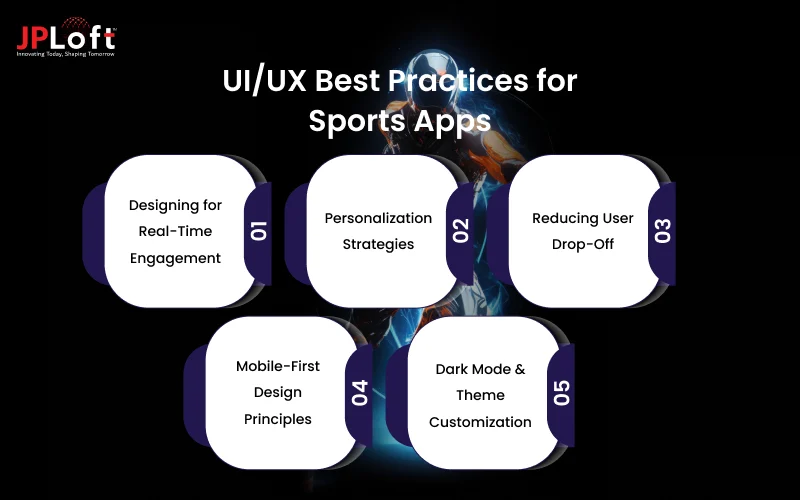
1. Designing for Real-Time Engagement
Sports apps rely on instant updates, so your design should highlight live scores, match stats, and notifications clearly. Users should access real-time data quickly without delays, which improves engagement and keeps them active during live events.
2. Personalization Strategies
Personalization helps users feel connected to the app by showing content they care about. Allow users to select favorite teams, leagues, and sports, so they receive relevant updates, which improves retention and overall user satisfaction.
3. Reducing User Drop-Off
A complicated interface can cause users to leave the app quickly. Keep navigation simple, reduce loading times, and avoid unnecessary steps so users can easily find what they need without confusion or frustration.
4. Mobile-First Design Principles
Most users access sports apps on mobile devices, so your app design should prioritize smaller screens. Use responsive layouts, easy-to-tap buttons, and fast performance to ensure a smooth experience across all devices.
5. Dark Mode & Theme Customization
Providing dark mode and theme options improves user comfort, especially during long usage sessions. Users prefer flexibility in appearance, and giving them control over themes helps improve engagement and creates a better overall experience.
Monetization Strategies to Consider for Sports Apps
Choosing the right app monetization strategy is key to long-term success.
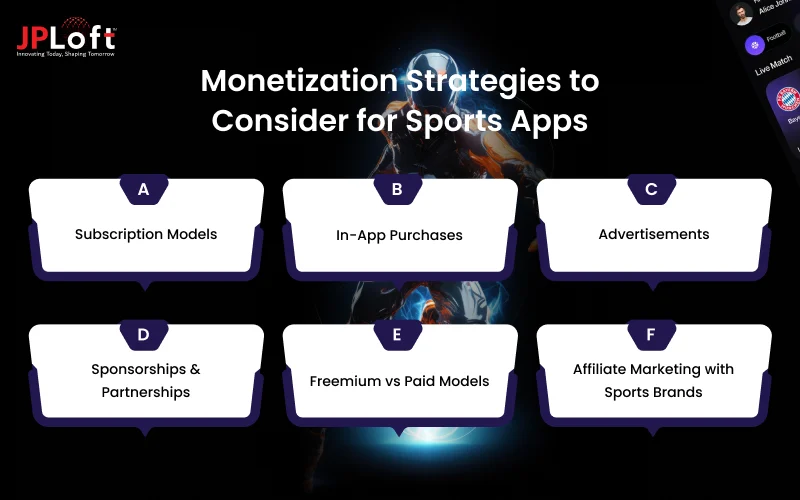
A well-planned process to create sports app helps businesses align revenue models with user expectations and market demand.
[A] Subscription Models
If you are wondering how to build a sports app that generates a steady income, subscription models are a strong choice. Users pay monthly or yearly for premium features like live streaming, exclusive content, or ad-free access, ensuring predictable revenue.
[B] In-App Purchases
In-app purchases allow users to buy premium features, virtual items, or exclusive content within the app. This model works well for fantasy sports and training apps, helping businesses increase revenue through user engagement.
[C] Advertisements
Advertising is one of the easiest ways to monetize a sports app. You can display banner ads, video ads, or sponsored content to generate income, especially when your app has a large and active user base.
[D] Sponsorships & Partnerships
Partnering with sports brands, teams, or event organizers creates strong revenue opportunities. These partnerships not only bring income but also improve brand visibility and credibility in the market.
[E] Freemium vs Paid Models
Freemium models offer basic features for free and charge for advanced features, while paid models require an upfront payment. Choosing the right model depends on your target audience and overall business strategy.
[F] Affiliate Marketing with Sports Brands
If you are exploring how to develop a sports app with multiple revenue streams, affiliate marketing is a smart option. You can promote sports products and earn commissions, adding extra income without affecting user experience.
What is the Cost to Create a Sports App?
The cost to build a sports app can range from $8,000 to $150,000+, depending on features, design, and overall complexity. A simple app with basic features costs less, while advanced apps with real-time updates and AI features require a higher budget.
If you plan to develop a sports app, you should also consider factors like platform choice, development team, and third-party integrations.
Let’s understand the cost breakdown with the table below:
|
App Type |
Features Included |
Estimated Cost |
|
Basic App |
User login, simple UI, basic score updates |
$8,000 – $20,000 |
|
Mid-Level App |
Live scores, notifications, user profiles, basic analytics |
$20,000 – $60,000 |
|
Advanced App |
Real-time updates, streaming, chat, API integrations |
$60,000 – $120,000 |
|
Enterprise-Level App |
AI features, AR/VR, advanced analytics, high scalability |
$120,000 – $150,000+ |
However, this app development cost breakdown helps businesses choose the right investment level based on their app vision and target audience.
Challenges in Developing a Sports App & Its Solutions
Building a sports app comes with several technical and business challenges.
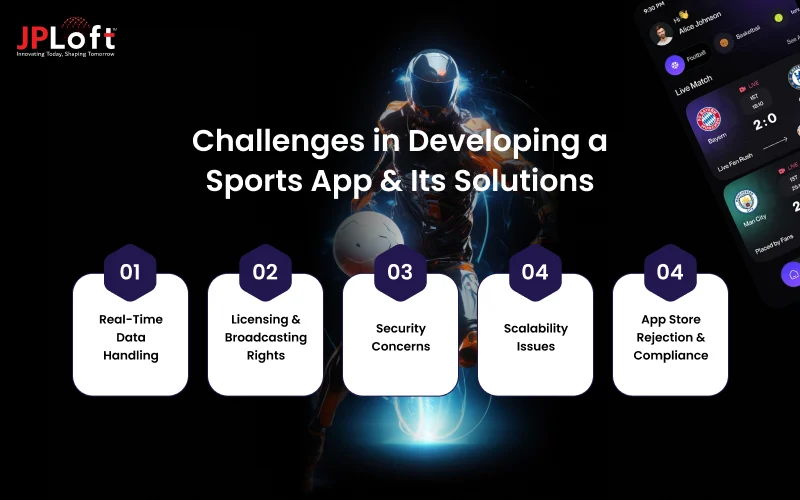
Understanding these app development challenges early helps you plan better and avoid delays during the process to develop a sports app.
Challenge 1: Real-Time Data Handling
Sports apps rely on live updates like scores, stats, and match events. Handling large volumes of real-time data without delays can be difficult, especially during peak traffic when thousands of users access the app at once.
Solution: Use reliable APIs, strong backend systems, and cloud infrastructure to manage real-time data efficiently and ensure smooth performance.
Challenge 2: Licensing & Broadcasting Rights
Streaming matches or using official sports data often requires legal permissions. Getting licenses from leagues or broadcasters can be costly and complex, especially for startups entering the market.
Solution: Partner with authorized data providers or use licensed APIs to avoid legal risks and ensure compliance.
Challenge 3: Security Concerns
Sports apps store user data, payment details, and personal preferences. Without proper security, apps are at risk of data breaches, hacking, and fraud, which can damage user trust and brand reputation.
Solution: Implement strong encryption, secure payment gateways, and regular security audits to protect user data and prevent threats.
Challenge 4: Scalability Issues
As your app grows, more users and data can affect performance. Poor scalability can lead to slow loading times, crashes, and a poor user experience, especially during major sports events.
Solution: Use scalable cloud solutions and flexible architecture to handle increasing traffic and ensure consistent performance.
Challenge 5: App Store Rejection & Compliance
App stores have strict guidelines for design, content, and functionality. Failing to meet these standards can lead to rejection, delays, or even removal after launch.
Solution: Follow platform guidelines carefully, test your app thoroughly, and ensure compliance before submission to avoid rejection issues.
Latest Trends To Consider When Building a Sports App
The sports industry is changing fast with new technologies. Businesses that follow these app development trends can build better products, improve user experience, and stay ahead in the market.
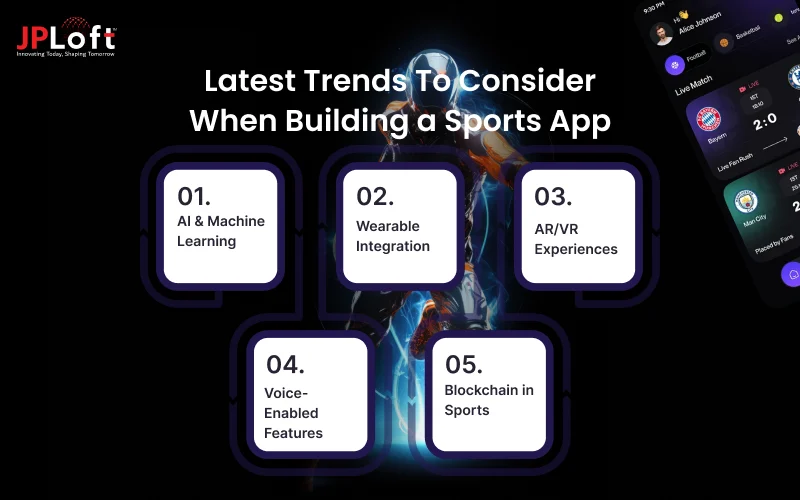
► AI & Machine Learning
AI is transforming how sports apps deliver content and insights. With AI in sports, apps can offer personalized recommendations, match predictions, and smart analytics based on user behavior. This helps improve engagement and keeps users connected to the platform.
► Wearable Integration
Wearable devices like fitness bands and smartwatches are widely used by sports users today. Integrating these devices allows apps to track health data, performance, and activity in real time. However, this creates a more connected and valuable user experience.
► AR/VR Experiences
AR and VR technologies are making sports apps more immersive. Users can enjoy virtual match experiences, 3D stadium views, and interactive training sessions. Businesses investing in AR/VR app development services can offer unique features that stand out in the market.
► Voice-Enabled Features
Voice technology is improving how users interact with apps. Users can check scores, get updates, or search for content using voice commands. Hence, making the app more accessible and easy to use, especially during live events.
► Blockchain in Sports
Blockchain is helping improve transparency and security in sports apps. It can be used for secure ticketing, digital collectibles, and safe transactions. By using blockchain development services, businesses can build trust and offer secure digital experiences to users.

Why Choose JPLoft to Develop a Sports App?
Choosing the right development partner can determine the success of your app. A skilled team helps you reduce risks, control costs, and launch faster with better quality.
JPLoft is an experienced sports app development company that brings strong experience in building scalable and user-friendly sports apps. The team understands market trends, user behavior, and business needs, helping you turn your idea into a high-performing product.
They follow a structured process, from planning and design to development and launch. This ensures your app is built with the right features, smooth performance, and future scalability in mind.
With expertise in modern technologies like AI, AR/VR, and real-time data integration, they help businesses create innovative solutions. So, if you want to make a sports app, their approach focuses on delivering value and long-term growth.
By choosing the right partner, you not only build an app but also create a strong digital product that supports your business goals.
Conclusion
The sports app market offers strong growth potential for businesses ready to invest in digital innovation. Success depends on making the right decisions at every stage, from idea validation to feature selection and long-term scaling.
This sports app development guide highlights how a structured approach can turn simple ideas into high-performing products. If you are exploring how to create a sports app, focus on delivering real value to users through speed, personalization, and engaging features.
At the same time, choosing the right monetization strategy and technology stack will help you stay competitive in a fast-changing market.
In the end, building a successful sports app is not just about development, but about creating a platform that keeps users engaged and supports business growth.
FAQs
The cost to build a sports app ranges from $8,000 to $150,000+, depending on features, design complexity, platform choice, and integrations like real-time data, streaming, and advanced technologies.
A sports app should include user profiles, live scores, notifications, and analytics. Advanced features like AI recommendations, real-time updates, and social sharing help improve engagement and user experience.
Sports apps make money through subscriptions, in-app purchases, advertisements, sponsorships, and affiliate marketing. Choosing the right model depends on your audience, app type, and long-term business goals.
A strong tech stack includes React Native or Flutter for the frontend, Node.js for the backend, cloud services like AWS, and APIs for real-time data to ensure scalability and performance.
Building a sports app usually takes 2 to 6+ months, depending on features, complexity, team size, and testing requirements, before launching the app in the market successfully.

Kris Jacobs brings 20+ years of experience solving complex digital product challenges through strategic thinking and user-centric design. With deep exposure to on-demand services, entertainment, travel, and interactive platforms, she collaborates across teams to shape scalable, engaging solutions that align business goals with intuitive user experiences across evolving digital landscapes.



Share this blog