


Key Takeaways:
A pharmacy delivery app development cost typically ranges from $10,000 to $150,000+, based on app scope and complexity.
Advanced features like AI, telemedicine, and multi-vendor support can significantly increase the total project budget.
Starting with an MVP helps businesses validate ideas and reduce initial development investment.
Ongoing costs such as maintenance, hosting, and compliance updates are crucial for long-term budget planning.
Partnering with JPLoft helps businesses build scalable and cost-efficient pharmacy solutions.
The online pharmacy market is growing quickly as more customers choose digital healthcare services for speed and convenience. Startups and established businesses are now investing in pharmacy platforms to meet this rising demand.
Before entering this space, it is important to understand the medicine delivery app development cost and what shapes the overall budget.
Building a successful platform involves more than basic design and coding. Your final investment depends on app complexity, required features, platform selection, compliance needs, and long-term scalability.
A simple app for one pharmacy will cost much less than a full marketplace with multiple vendors and advanced tools.
In 2026, businesses must plan carefully to compete in the growing ePharmacy market. This guide will help you understand pricing, major cost factors, and development considerations so you can make informed decisions.
Why are Businesses Investing in ePharmacy Apps?
Healthcare buying habits are changing fast. Customers now prefer quick, digital access to medicines instead of visiting physical stores.
This shift is pushing businesses to invest in ePharmacy apps and build stronger online healthcare channels.
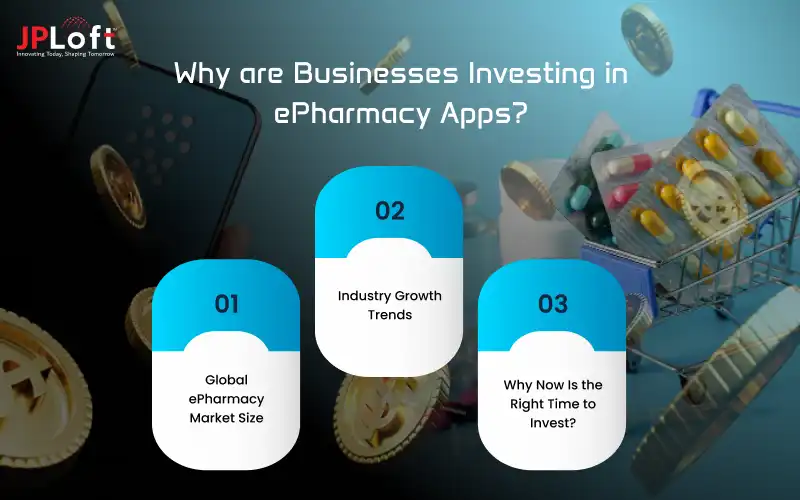
Global ePharmacy Market Size
The global ePharmacy market is witnessing strong growth worldwide. According to Fortune Business Insights, the market is projected to grow from $177.79 billion in 2026 to $733.38 billion by 2034, showing massive long-term business potential.
Industry Growth Trends
Several market trends are fueling this growth. Rising smartphone usage, wider internet access, and increasing adoption of digital healthcare services continue to push more customers toward online medicine ordering.
Many consumers now prefer doorstep delivery over visiting physical pharmacies. These factors are helping the industry maintain a projected CAGR of 19.4% during 2026–2034.
Why Now Is the Right Time to Invest?
-
Consumer demand for online medicine delivery is increasing steadily.
-
Many markets still offer room for new pharmacy platforms.
-
Businesses can reach wider audiences beyond physical store locations.
-
Repeat medicine purchases support long-term recurring revenue.
-
Early movers can build a stronger market presence before saturation.
How Much Does Medicine Delivery App Development Cost?
The medicine delivery app development cost usually ranges from $10,000 to $150,000+. Your final budget depends on the app’s complexity, number of features, platform choice, and security requirements. A simple MVP costs much less than a large multi-vendor platform with advanced automation.
Businesses should define their goals early because every added feature increases the overall app development cost. For example, prescription scanning, live tracking, AI suggestions, and pharmacy management systems can raise the budget significantly.
Industry cost benchmarks show that healthcare and pharmacy apps become more expensive as compliance, integrations, and scalability needs grow.
Here is a general breakdown of the cost to create a medicine delivery app based on complexity:
|
App Type |
Estimated Cost |
Best For |
Typical Inclusions |
|
Basic App |
$10,000 – $30,000 |
Startups / MVPs |
Login, medicine search, cart, payments, simple ordering |
|
Mid-Level App |
$30,000 – $70,000 |
Growing Businesses |
Prescription upload, order tracking, notifications, admin panel |
|
Advanced App |
$70,000 – $150,000+ |
Enterprises / Large Platforms |
AI features, multi-vendor support, analytics, advanced security |
Cost Breakdown by Development Stage
The total cost to build a medicine delivery app is divided into several development stages. Each phase plays a direct role in shaping the final product and budget.
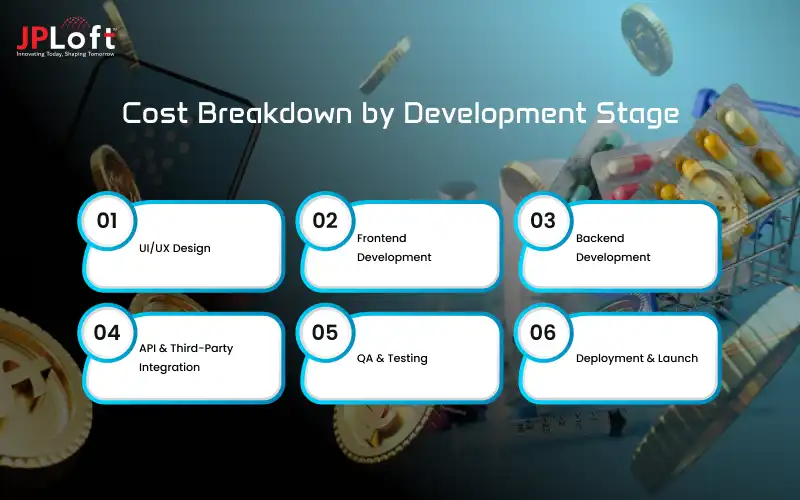
Understanding where your investment goes helps you control expenses during the development of a medicine delivery app.
1. UI/UX Design
UI/UX design services focus on creating the app’s layout, user flow, and visual experience. It includes wireframes, screen designs, clickable prototypes, and brand styling. A well-designed interface improves usability and keeps customers engaged.
Cost Impact: $2,000 to $8,000
2. Frontend Development
Frontend development covers everything users interact with inside the app. This includes customer screens, animations, navigation, forms, and responsive layouts. Costs increase when building for multiple platforms, such as iOS and Android.
Cost Impact: $5,000 to $20,000
3. Backend Development
Backend development powers the apps’ core functionality. It manages servers, databases, user accounts, order processing, prescription data, and business logic. More complex systems require stronger backend architecture.
Cost Impact: $8,000 to $30,000
4. API & Third-Party Integration
Third-party integrations connect your app with external tools and services. These may include payment gateways, map services, SMS systems, push notifications, and pharmacy inventory platforms.
Cost Impact: $3,000 to $15,000
5. QA & Testing
QA and testing ensure the app works smoothly before launch. This stage checks performance, usability, security, and compatibility across devices. Thorough testing reduces bugs and improves reliability.
Cost Impact: $3,000 to $10,000
6. Deployment & Launch
Deployment covers preparing the app for live release. It includes server setup, app store publishing, final performance checks, and launch support. Proper deployment ensures a smooth market entry.
Cost Impact: $1,000 to $5,000
Key Factors Affecting the Cost to Develop an ePharmacy app
Several factors directly affect the final development budget of a medicine delivery app.
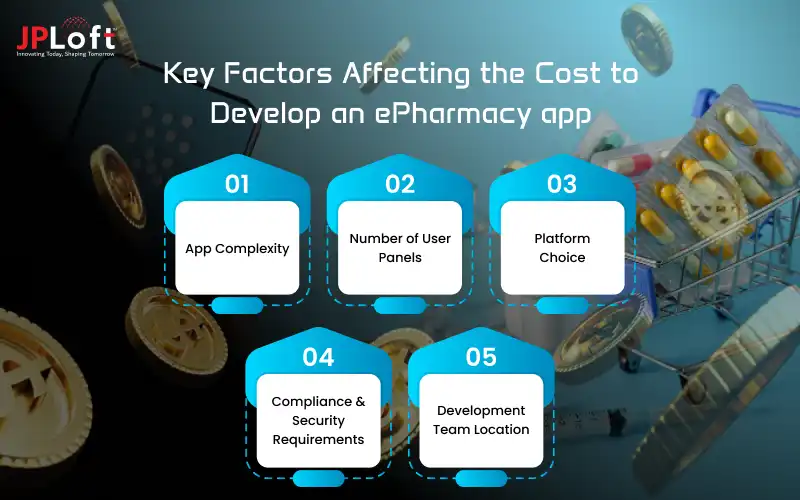
Understanding these cost drivers helps businesses estimate expenses more accurately and make smarter product decisions.
Factor 1: App Complexity
App complexity has a major impact on overall pharmacy app cost. A basic app with limited features requires less time and fewer resources. In contrast, advanced platforms with AI recommendations, live tracking, and multi-vendor support demand more development effort and infrastructure.
Cost Impact: 30% to 50% of the overall development cost
Factor 2: Number of User Panels
Most medicine delivery platforms include separate panels for customers, pharmacies, delivery agents, and administrators. Each additional panel requires unique interfaces, workflows, and backend logic, which raises development time.
Cost Impact: $5,000 to $15,000+
Factor 3: Platform Choice
Developing for a single platform is more affordable than building across multiple platforms. Businesses launching on iOS, Android, and the web simultaneously must invest more in design, coding, and testing.
Cost Impact: 20% to 40% of total development cost
Factor 4: Compliance & Security Requirements
Healthcare apps need advanced protection for patient and prescription data. App security measures such as encryption, secure payments, HIPAA/GDPR-aligned architecture, and prescription verification systems add technical complexity.
Cost Impact: $5,000 to $20,000+
Factor 5: Development Team Location
Developer hourly rates differ by region. Teams in North America and Western Europe usually charge more than offshore teams in Asia or Eastern Europe. Location directly affects the total project cost, even for similar app requirements.
Cost Impact: 30% to 60% of total development cost
Advanced Features That Increase Development Cost
Advanced features make a medicine delivery app more powerful and competitive. However, each added feature increases development effort and overall project cost.
|
Advanced Feature |
Description |
Cost Impact |
|
AI-Based Medicine Recommendations |
- Suggests medicines based on user behavior - Improves personalization and upselling |
$8,000 to $20,000+ |
|
Telemedicine Integration |
- Enables doctor consultations inside the app - Supports chat, voice, or video calls |
$10,000 to $30,000+ |
|
Subscription Refills |
- Automates repeat medicine orders - Helps drive recurring revenue |
$4,000 to $10,000+ |
|
Smart Prescription Scanner |
- Scans prescriptions using OCR/AI - Extracts medicine details automatically |
$7,000 to $18,000+ |
|
Voice Search |
- Allows search through voice commands - Improves accessibility and convenience |
$3,000 to $8,000+ |
|
Chatbot Support |
- Handles customer queries instantly - Reduces manual support workload |
$5,000 to $12,000+ |
Medicine Delivery App Cost by Business Model
The medicine app development cost can vary significantly based on the business model you choose.
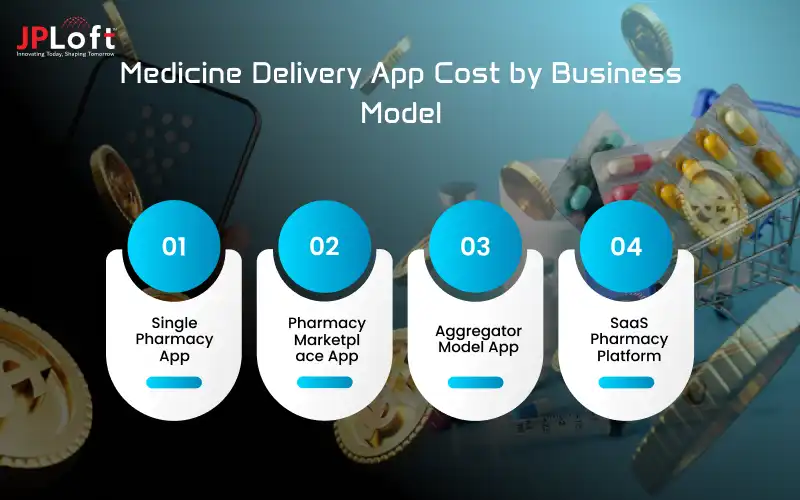
Each model requires different features, workflows, and technical architecture, which directly affects the final budget.
#1: Single Pharmacy App
A single pharmacy app is built for one pharmacy or medical store. It allows customers to browse products, upload prescriptions, place orders, and track deliveries from one seller. This model is simpler to build because it supports only one vendor.
Estimated Cost: $10,000 to $30,000
#2: Pharmacy Marketplace App
A pharmacy marketplace app connects multiple pharmacies on one platform. Customers can compare products, prices, and availability from different sellers. This model needs vendor onboarding, commission systems, and advanced order management.
Estimated Cost: $30,000 to $80,000
#3: Aggregator Model App
An aggregator platform partners with multiple pharmacies while managing customer acquisition and logistics centrally. It often includes route optimization, delivery tracking, pharmacy dashboards, and operational controls for platform owners.
Estimated Cost: $50,000 to $100,000+
#4: SaaS Pharmacy Platform
A SaaS pharmacy platform allows multiple pharmacy businesses to use the software under subscription plans. It requires multi-tenant architecture, custom branding options, role management, and scalable infrastructure for many clients.
Estimated Cost: $70,000 to $150,000+
Choosing the right business model early helps businesses estimate budgets more accurately and build the right platform architecture from the start.
Cost to Build Apps Like Popular Pharmacy Platforms
Many businesses use leading pharmacy apps as benchmarks when planning their product.
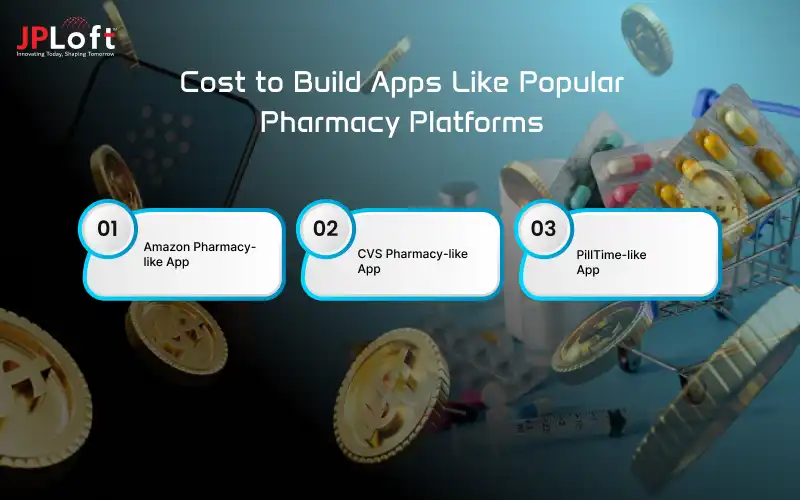
These platforms offer a clear idea of the features, scale, and investment needed to build a competitive ePharmacy solution.
1. Amazon Pharmacy-like App
Amazon Pharmacy is a large-scale digital pharmacy platform built for seamless prescription ordering and nationwide delivery.
-
Supports online prescription transfers and medicine ordering
-
Offers subscription savings and automated refill options
-
Includes insurance integration and medication management
-
Handles high user traffic with enterprise-grade infrastructure
Estimated Development Cost: $70,000 to $150,000+
2. CVS Pharmacy-like App
CVS Pharmacy combines pharmacy services with broader healthcare and retail functionality.
-
Supports prescription refills and in-store pickup scheduling
-
Offers health records and medication reminders
-
Includes wellness product ordering and rewards programs
-
Requires advanced backend systems and healthcare integrations
Estimated Development Cost: $60,000 to $140,000+
3. PillTime-like App
PillTime focuses on personalized prescription management and recurring medicine delivery.
-
Supports repeat prescription ordering
-
Includes medication sorting and refill scheduling
-
Offers subscription-based medicine management
-
Emphasizes automation and chronic care workflows
Estimated Development Cost: $40,000 to $100,000+
Hidden Costs of Medicine Delivery App Development
Many businesses focus only on upfront development expenses when planning their budget. However, the real investment goes beyond the initial build.
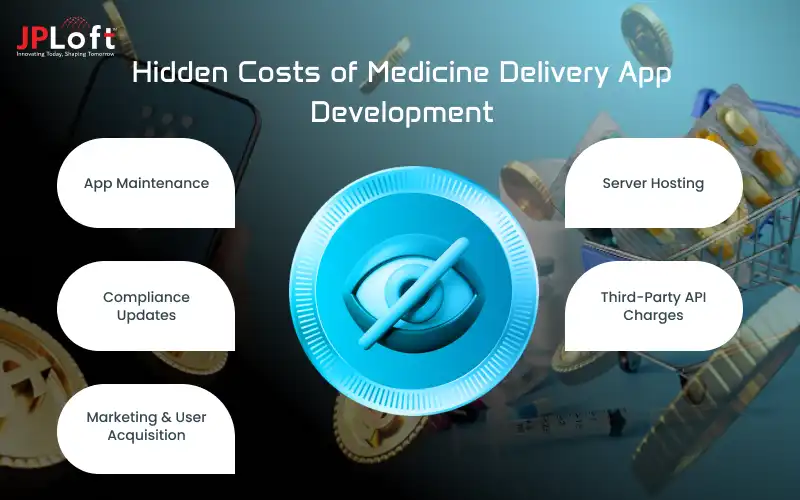
Several ongoing and post-launch costs can affect the total cost of ownership over time.
► App Maintenance
App maintenance is required to keep the platform stable after launch. It includes fixing bugs, improving performance, updating features, and ensuring compatibility with new devices or operating system updates.
Typical Annual Cost: 15% to 20% of total development cost
► Server Hosting
Server hosting supports the backend infrastructure of your app. It stores user data, manages pharmacy inventory, processes orders, and handles traffic across the platform.
Typical Cost: $500 to $5,000+ per month
► Compliance Updates
Healthcare and data privacy regulations often evolve. Businesses may need to update app policies, security systems, and workflows to remain compliant with legal standards.
Typical Cost: $2,000 to $10,000+ annually
► Third-Party API Charges
Medicine delivery apps rely on external services for key functions. These often include payment gateways, map integrations, SMS alerts, push notifications, and prescription verification tools.
Typical Cost: $500 to $5,000+ per month
► Marketing & User Acquisition
Building the app is only part of the investment. Businesses also need marketing to attract users and compete in the growing ePharmacy market.
Typical Cost: $5,000 to $50,000+ for launch campaigns
How to Reduce Pharmacy Delivery App Development Cost?
Reducing ePharmacy app development expenses requires strategic planning and efficient execution.
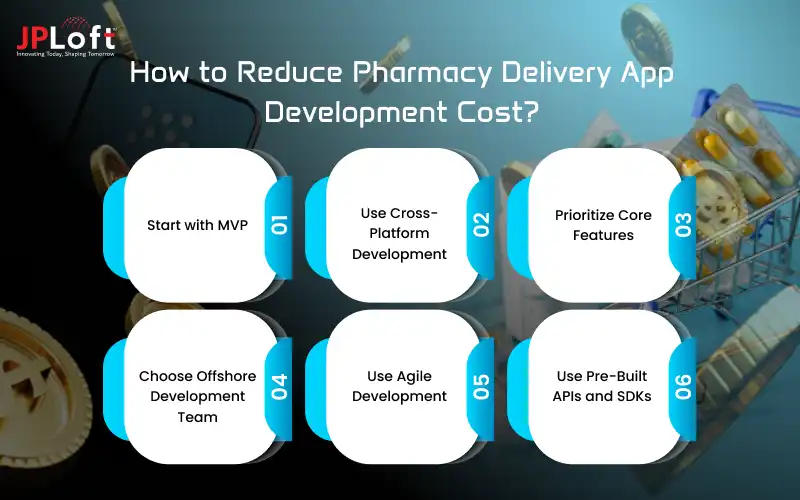
Below are practical ways businesses can lower costs while maintaining product quality and scalability.
1. Start with MVP
Launching with a minimum viable product allows businesses to enter the market with only the most essential features. Instead of building a complete platform upfront, you test your concept with real users first.
Potential Savings: 20% to 40% of initial development cost
2. Use Cross-Platform Development
Cross-platform development allows businesses to use a single codebase for both iOS and Android applications. This reduces development hours, lowers testing requirements, and minimizes engineering effort compared to building separate native apps.
Potential Savings: 25% to 40% compared to native development
3. Prioritize Core Features
Adding every possible feature during the first development cycle often leads to unnecessary expenses. Businesses should focus only on must-have features that solve the primary customer problem.
Potential Savings: 15% to 30% of project cost
4. Choose Offshore Development Team
Hiring an offshore development team can significantly reduce labor costs without sacrificing quality when the right partner is selected. Many offshore firms offer experienced developers, designers, and project managers at more competitive rates than local agencies.
Potential Savings: 30% to 60% on total development cost
5. Use Agile Development
Agile development breaks the project into smaller, manageable sprints instead of building everything at once. This allows businesses to review progress regularly, adjust priorities quickly, and identify issues before they become expensive problems.
Potential Savings: 10% to 20% through better resource management
6. Use Pre-Built APIs and SDKs
Pre-built APIs and software development kits help developers integrate common functions without building them from scratch. Businesses can use ready-made solutions for payments, maps, messaging, authentication, and notifications.
Potential Savings: 10% to 25%, depending on integrations used
Monetization Models for a Medicine Delivery App
Choosing the right monetization strategy is important for long-term profitability.
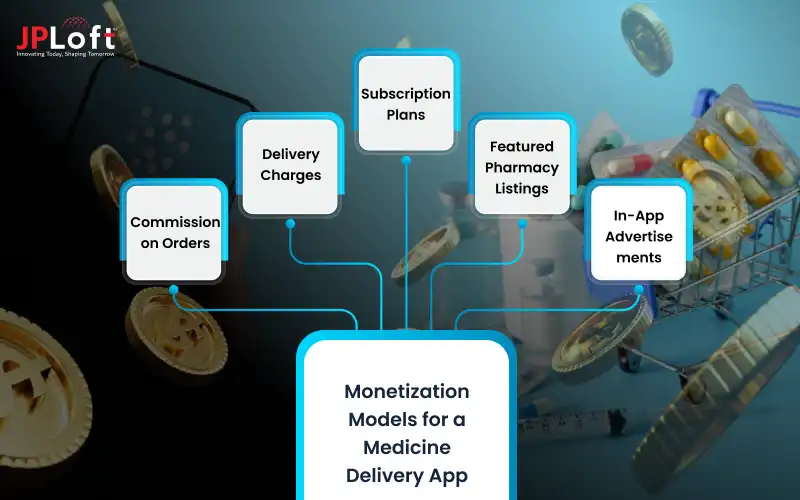
A medicine delivery app can generate revenue through multiple channels depending on its business model, target audience, and service offerings.
1. Commission on Orders
Platform owners can charge partner pharmacies a commission on every completed order. This is one of the most common revenue models for marketplace and aggregator apps.
2. Delivery Charges
Businesses can earn through delivery fees charged to customers. Pricing may vary based on distance, urgency, or order value.
3. Subscription Plans
Apps can offer premium memberships with benefits like free delivery, exclusive discounts, or faster shipping. This creates recurring monthly or yearly revenue.
4. Featured Pharmacy Listings
Pharmacies can pay to appear at the top of search results or category listings. This helps them gain more visibility and orders.
5. In-App Advertisements
Healthcare brands and pharmacies can advertise products or promotions inside the app. Sponsored banners and product placements generate additional revenue.
Build Budget-Friendly Medicine Delivery Apps With JPLoft
As a trusted medicine delivery app development company, JPLoft helps businesses build high-quality pharmacy apps without overspending. Our team combines healthcare industry expertise with cost-efficient development strategies to deliver scalable solutions.
We focus on building feature-rich medicine delivery platforms that balance performance, security, and affordability. From MVP development for startups to enterprise-grade pharmacy marketplaces, we create solutions designed for long-term growth.
Our developers use modern frameworks, agile methods, and optimized workflows to reduce unnecessary costs while maintaining top-tier quality.
JPLoft offers end-to-end support, including business analysis, UI/UX design, development, testing, deployment, and post-launch maintenance. We also help clients choose the right features and technology stack to maximize ROI from the start.
Whether you need a simple pharmacy app or a complex multi-vendor healthcare platform, JPLoft delivers budget-friendly solutions built for speed, scalability, and business success.
Conclusion
The future of pharmacy is digital, and businesses that adapt early stand to gain the most. As customer expectations shift toward faster, more convenient healthcare services, medicine delivery apps are becoming a powerful way to capture market demand and build recurring revenue.
Still, success in this space is not about launching the most expensive platform. It is about investing wisely in the right features, choosing a scalable business model, and building a product that aligns with your growth goals.
A well-planned app can start lean, evolve strategically, and deliver strong returns over time. This complete guide to medicine delivery app development cost helps businesses understand the financial, technical, and strategic factors involved before entering the market.
With the right technology partner and execution strategy, your medicine delivery app can become a long-term digital asset in the rapidly expanding ePharmacy industry.
FAQs
The cost to make a medicine delivery app typically ranges from $10,000 to $150,000. However, the final cost depends on app complexity, features, business model, platform selection, compliance requirements, and development team expertise.
A medicine delivery app usually takes 2 to 6+ months to develop, depending on project requirements.
Advanced features like AI recommendations, telemedicine integration, smart prescription scanning, real-time tracking, multi-vendor support, and advanced security systems increase pharmacy app development costs the most.
Yes, businesses can start with an MVP to launch faster, validate market demand, gather user feedback, and reduce initial development costs before scaling.
Maintaining a medicine delivery app typically costs 15% to 20% of the initial development cost annually, depending on the need for updates, hosting, monitoring, and support.

Meet Yashwant, the CTO of JPLoft. With 18+ years of industry experience, he brings deep technical expertise and visionary leadership to complex digital challenges. From scalable software architectures to emerging technology implementations, Yashwant drives innovation that empowers businesses across diverse industries to build future-ready, secure, and high-performing digital solutions.



Share this blog