


Key Takeaways:
On demand medicine delivery app development starts with market research, business planning, UI/UX design, technology selection, development, testing, compliance, and maintenance to create a secure and scalable platform.
A medicine delivery app connects customers, pharmacies, and delivery partners on a single platform, ensuring a safe and secure process.
Key features include user registration, medicine browsing, prescription uploads, secure payments, order tracking, and admin controls.
To create your medicine delivery app, costs can range between $10,000 and $150,000+.
JPLoft can help businesses build scalable medicine delivery apps with custom features, AI capabilities, and ongoing support.
So many people are now accustomed to ordering everything online through smart and secure applications.
Whether it is food, groceries, clothes, or anything, you can get on-time delivery within minutes. Thanks to digital advancements, the medical industry is also grabbing this opportunity.
Businesses are investing in high-performing medical delivery platforms to ensure convenient and consistent medicine refills.
A digital platform helps businesses easily connect pharmacies, customers, and delivery partners in a single system.
But building a medicine delivery app requires more than just a technology stack. It needs a secure connection between pharmacies and deliveries and compliance with legal rules.
In this guide, explore the medicine delivery app development process, with features, costs, and beyond.
How Does a Medicine Delivery App Work?
A medicine delivery app is a smart digital platform that allows customers to order medications. This platform connects a wide range of pharmacists to deliver the required medicines to the buyer’s doorstep.
Here is the detailed step-by-step process of how medicine delivery app development solutions work.
-
First comes account registration. Patients have to sign up and fill in the necessary personal details.
-
Users search for the preferred medicine by sharing the name, brand, or other supported categories.
-
If the required medication needs a prescription, users can upload it, and the verified pharmacists can follow the required verification workflow.
-
Availability of the required medication is cross-verified across different networks. The system identifies the available store and processes the delivery.
-
The user confirms the quantity, address, and delivery date of the medication.
-
Once everything is confirmed, the payment is processed within the app or at the time of delivery, depending on the customer.
-
The pharmacy prepares and manages the order according to operational requirements.
-
For delivery, the designated person ensures the medication reaches the doorstep.
-
The customer is informed about the order placement, dispatch, and delivery status.
-
After this, the order is confirmed and recorded in the platform’s dashboard.
Market Overview and Growth of Online Pharmacy Apps
Online pharmacies now allow users to search for medicines, upload prescriptions, pay online, and track deliveries, all through a single platform. Here are the market reports showcasing growth in online medicine delivery app development worldwide.
-
The digital pharmacy market size is projected to reach $662.58 billion by 2034 at a CAGR of 17.28%.
-
Aggregator apps contribute 35% of the digital pharmacy market. They help connect users with multiple pharmacists through a centralized platform.
-
53% of digital pharmacies use AI-enabled systems to recommend medicines. 28% of online pharmacies use blockchain technology for secure medicine authenticity, and 12% support voice-assisted ordering.
Types of Medicine Delivery Apps to Consider
Medicine delivery businesses include different business models. This helps determine the type of medicine delivery app you should build. Each model functions differently, has its own target audience, and employs different types of features.
Here are the different types of medicine delivery apps to consider.
|
Types |
Description |
Target Audience |
Example |
|
Standalone Pharmacy Apps |
Functions independently for prescription refills and provides full control over the pharmacy. |
Direct-to-consumer digital pharmacies, local pharmacies, and professional pharmacists. |
Capsule Alto Pharmacy PharmEasy |
|
Aggregator Platforms |
Users can connect with multiple pharmacies and vendors in a single platform. |
Healthcare startups, pharmacy aggregators, and entrepreneurs. |
Nimble RX Pills2Me MedZoomer |
|
Multi-Vendor Marketplace Apps |
It allows multiple pharmacists to set up their stores on a single platform. |
Healthcare startups, Pharmacists, and entrepreneurs. |
NavEx Healthera |
|
Healthcare Integrated Apps |
Combines medicine delivery, doctor consultation, and medication management services. |
Clinics and hospital networks, and platform-based service doctors. |
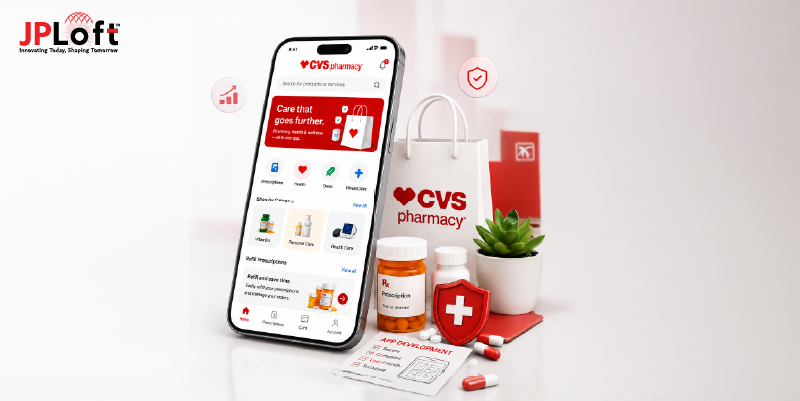
CarelonRx CenterWell Pharmacy CVS Pharmacy |
Essential Features of a Medicine Delivery App
A medicine delivery app serves different user bases. A patient needs quick access to browsing and ordering. A pharmacist needs access to manage inventory. Meanwhile, delivery management relies on live maps and tracking to deliver medicines.
Here are the effective features of medicine delivery apps, combining all the major user bases.
|
Feature |
Description |
|
User Panel |
|
|
Login and Profile Management |
Patients can create their profile with the necessary details and ID verification. |
|
Upload Prescription |
It allows users to upload an e-prescription for a verified pharmacist to view and suggest medicines accordingly. |
|
Browing Services |
It allows patients to check different medicine categories and place an order when available. |
|
Payment Gateway |
The system helps to manage online payments when the order is confirmed. |
|
Chat |
Generative AI bots are available 24/7 to answer users’ questions |
|
Feedback |
The feedback form allows users to share reviews and suggest improvements. |
|
Medine Details |
All the medicine details are available for users to check storage information and how to take them. |
|
Pharmacy Panel |
|
|
Dashboard |
The dashboard allows pharmacists to view orders placed, track deliveries, and manage payments. |
|
Order Management |
Drug orders, returns, refunds, and proper prescription verification are handled in this feature. |
|
Order History |
Allows pharmacists to view patients' past medical orders, even in offline mode. |
|
Inventory Management |
It helps pharmacists manage inventory, track available drugs, flag low supplies, and out-of-stock items. |
How to Develop An On Demand Medicine Delivery App?
Creating a successful medicine delivery app requires a clear understanding of user needs, regulatory compliance, and technical complexities.
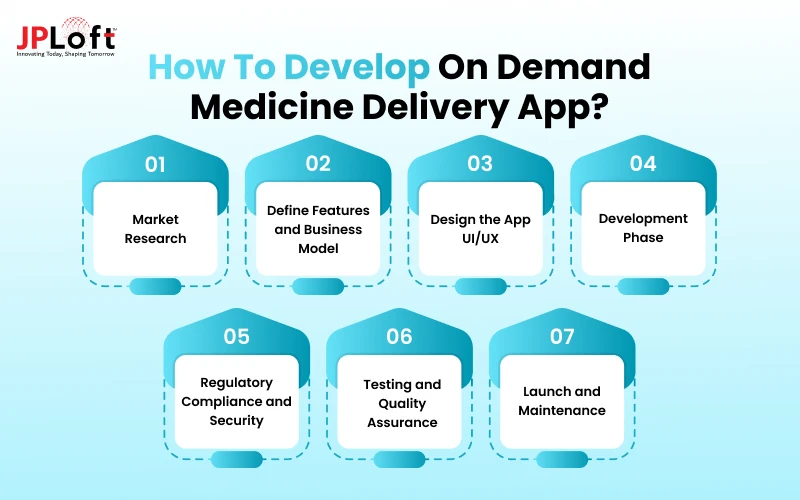
Here is a complete step-by-step process for online medicine delivery app development.
Step 1: Market Research
Every on demand medicine delivery app development begins with strong market research and careful planning. Lay a foundation for the medicine delivery app by considering these important aspects.
-
Analyze Competition: Conduct a complete analysis of competitors’ apps. It helps to understand the positions of medicine delivery apps, key features, which ones drive engagement, and which ones still lack user demand.
-
Survey Target Users: Then, conduct a smart survey of the target users, such as chronic patients, elderly individuals, and caregivers. Understand user needs through regular online surveys and interviews.
-
Create Project Roadmap: To create your medicine delivery app, focus on designing a project roadmap with a timeline, budget, tools, and technologies.
Step 2: Define Features and Business Model
Your medicine delivery platform will outperform the competition only if it includes the right set of features and a business model to generate smart revenue opportunities.
-
Prioritize Features: Pharmacy key features include inventory management, order processing, and coordination with delivery personnel. There are advanced AI recommendations and telemedicine integration features as well.
-
Choose Revenue Model: Choose the preferred revenue model, from commission, subscription, and hybrid to free delivery models. A clear revenue model supports long-term value for the business.
-
User Roles: At this stage, define the user roles, such as customer, pharmacist, delivery partners, and administrators. It will help manage the platform seamlessly.
Step 3: Design the App UI/UX
A user-friendly mobile app design helps users explore the app features and platform functions seamlessly.
-
Intuitive Navigation: Create an app wireframe and prototype to understand the design and how users will use your app. Finalize the design interface so it is easily accessible to all users. Create role-based access to avoid confusion.
-
Medicine-Focused Design: Design clear medicine landing pages with dosage information, availability, prescription requirements, pricing, and delivery details.
-
Accessible Features: Use larger fonts, voice assistance, and ensure accessibility and reliability across every feature.
Step 4: Development Phase
Once the design is finalized, start building the core app functions. The development stage of a medicine delivery platform involves frontend and backend technology to make the app work properly.
-
Build Frontend: Develop the user interface, such as a medicine catalog, shopping cart, and payment screen, clearly.
-
Build Backend: Then work on the backend system to ensure smooth performance of the platform and handle processing orders, customer requests, and several backend tasks.
-
Ensure Security: Implement strong security measures to prevent data leaks to third parties and ensure the protection of user data.
Step 5: Regulatory Compliance and Security
When building a medicine delivery app, you cannot just rely on features of the app. Following proper healthcare rules and app security practices enables safe medicine platform usage and maintains user trust.
-
Pharmacy and Business Licence: Obtain the required pharmacy delivery app development licensing, prescription validation, and a legally valid licence to sell medicines to consumers.
-
Audit HIPAA/GDPR: With sensitive health information involved, following GDPR and HIPAA regulations is non-negotiable. It helps to protect user information and avoid legal issues.
-
Quality and Safety Standards: Some medicines need to be stored at a controlled temperature. So, as per the legal guidelines, store and manage medicines systematically according to temperature.
Step 6: Testing and Quality Assurance
Conduct mobile app testing to ensure the app is free from bugs, performance issues, and security weaknesses.
-
Functional and Security Testing: Check key features, such as ordering and prescription uploads, work as expected. Identify vulnerabilities and protect sensitive user, prescription, and payment information.
-
Monitor Feedback: Collect feedback from real users to identify issues and improve the app experience.
-
Optimise App Speed and Security: Regularly improve loading times, app performance, and security measures based on testing results.
Step 7: Launch and Maintenance
Finally, after all the testing and assurance, you can plan for the final launch. Ensure the app meets the requirements of the Play Store and App Store.
-
Launch the App: Publish the tested app across selected platforms and make it available to your target users.
-
Monitor App Performance: Track app speed, uptime, orders, crashes, and other key performance metrics.
-
Regular Updates: Add useful features, fix bugs, and improve the overall user experience.
Technology Stack Used to Build a Medicine Delivery App
Choosing the right technology stack determines what the app does and how the app is built. A reliable tech stack ensures smooth performance, platform scalability, and a better user experience.
Here are the key technologies businesses use to build the medicine delivery platform.
|
Layer |
Technology |
Benefit |
|
Frontend |
Mobile: React Native, Flutter, Kotlin Web: React.js, Node.js |
Cross-platform Development, Better UI, Easy Navigation |
|
Backend |
Node.js, Django, Laravel |
API Management, Order Management, Workflow Automation |
|
Database |
PostgreSQL, MySQL, MongoDB, Redis |
Secure Data Storage, Fast Data Access, Scalability |
|
Cloud |
AWS, Google Cloud, Microsoft Azure |
Scalability, High Availability, Traffic Management |
|
Security |
SSL Encryption, OAuth, HIPAA Tools |
Data Protection, Secure Authentication, Compliance |
How Much Does It Cost To Build A Medicine Delivery App?
Do you think the cost to build a medicine delivery app was different 4–5 years ago compared to today? Modern technology, changing trends, and rising customer expectations have increased development costs.
Here is a complete breakdown.
|
Complexity Level |
Cost |
Features |
|
Basic MVP |
$10,000-$30,000 |
Search, ordering, payment, tracking, and basic pharmacy tools. |
|
Mid-Complexity Level |
$30,000-$70,000 |
Multiple pharmacies, advanced dashboards, API integrations. |
|
Enterprise Level |
$70,000-$150,000+ |
AI, multi-vendor operations, advanced security, Chatbot support. |
Challenges in Medicine Delivery Mobile App Development Process
Every medicine delivery app includes several development challenges. Identifying these obstacles on time helps to prevent costly mistakes and time-consuming development solutions.
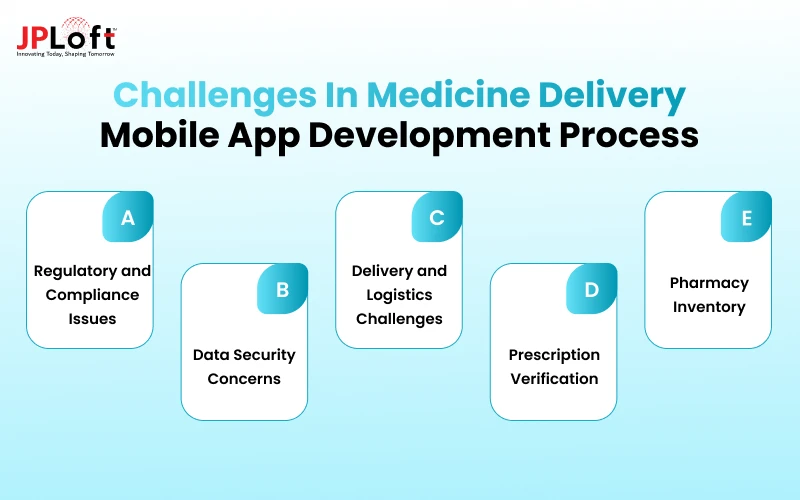
Here are the common challenges in medicine delivery platforms.
Challenge 1: Regulatory and Compliance Issues
Medicine delivery apps are subject to strict rules and regulations. HIPAA and GDPR protect user privacy and information. Ignoring or failing to follow these rules can lead to several legal charges and impact users’ trust.
Solution: Seek help from qualified legal experts who can explain rules, such as HIPAA and GDPR.
Challenge 2: Data Security Concerns
As cybercrimes are increasing day by day, businesses failing to manage the data security of users’ information can increase several risks. Data leaks, insecure payments, and altered digital prescriptions can put users and businesses at serious risk.
Solution: Use strong encryption, multi-factor authentication, and protected APIs to safeguard user data. Conduct regular security testing to identify risks.
Challenge 3: Delivery and Logistics Challenges
A successful app can also fail due to inconsistent delivery management. Sometimes, traffic, incorrect addresses, or the customer's unavailability create delivery delays and ultimately impact the app’s reputation.
Solution: Connect with a custom mobile app development company in the USA to build route optimization features so delivery personnel can find the best routes.
Challenge 4: Prescription Verification
Sometimes, users upload a blurry image of a prescription, or unclear doctor’s handwriting can cause serious safety problems. Based on the images, the pharmacy may misinterpret the medicine and deliver the wrong dosage.
Solution: Use AI-powered OCR to read prescription details and flag unclear or unreadable information. Allow users to re-upload unclear prescriptions for pharmacist verification.
Challenge 5: Pharmacy Inventory
The biggest drawback in medicine delivery mobile app development is managing inventory and stock. Customers spend time on the app, only to find out that the preferred medicine is out of stock.
Solution: Connect the app with pharmacy management systems for real-time stock updates. Pharmacists can update inventory and flag expired products through a mobile app.
Future Trends in Developing Medicine Delivery Apps
Medicine delivery apps will continue to upgrade how customers search for and book their medicines. Therefore, you must look for medicine delivery app trends to stay ahead of the market and deliver a better user experience.
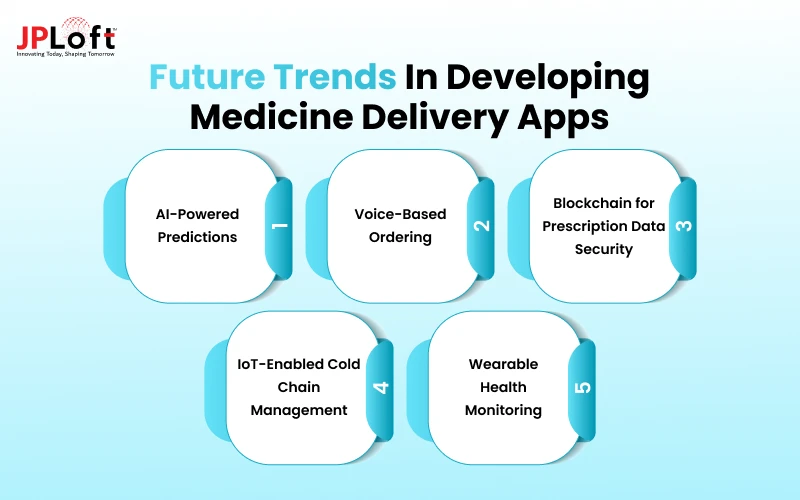
1. AI-Powered Predictions
The use of AI in healthcare is driving the growth of these platforms. It helps predict future demand for medicines by analysing past orders and rising user demand. For a medicine delivery platform, this can help reduce stockouts, avoid excess inventory, and improve order fulfillment.
2. Voice-Based Ordering
The trend of voice-based ordering allows users to record their voice instead of typing and order their preferred medicines effortlessly. This trend is more beneficial for elders and non-tech users, and supports multi-region languages for better support.
3. Blockchain for Prescription Data Security
Blockchain technology helps identify fake medicines. Further, it makes the supply chain clear, transparent, and safer by creating a record of all medicine details. Customers can scan the QR code and check details such as the manufacturing address, batch number, and other relevant data.
4. IoT-Enabled Cold Chain Management
Some medicines, like insulin or vaccines, need to stay at a required temperature. IoT sensors are used in medicine packages to continuously monitor temperature and humidity during deliveries. These sensors can alert pharmacies when storage conditions change during transit.
5. Wearable Health Monitoring
Smartphones and smartwatches can track health data such as heart rate and BP levels. This allows users to monitor their health data through connected devices. This information can also help pharmacies monitor medication schedules and improve the user experience.
Why Choose JPLoft for Medicine Delivery App Development?
Choosing the right development partner can strongly affect your app's long-term success. JPLoft, a medicine delivery app development company, helps businesses turn medicine delivery ideas into platforms that work for real users and pharmacies.
Our approach is simple: we understand that not every feature needs to be built from day one.
Our team helps you prioritize what matters most, control development costs, and avoid spending your budget on features users may not need.
From prescription verification and pharmacy inventory to secure payments, maps, notifications, and delivery tracking, we can build the key parts your platform needs.
A medicine delivery app is strongly supported by regulatory compliance. Therefore, security and compliance are considered early, and not added at the last minute.
With JPLoft, you get a medicine delivery app planned around your business, budget, users, and long-term goals.
Conclusion
Medicine delivery app development offers strong opportunities for pharmacies, startups, and businesses. The growing online pharmacy market shows that digital medicine access will remain important for users’ convenience.
However, a successful app needs more than ordering and delivery features.
It must support pharmacies, protect sensitive information, manage prescriptions, and handle daily operations.
Therefore, when developing, start by defining your target users and business model. Choose technology that supports your current needs and future growth. Most importantly, plan compliance and security before development begins.
With the right strategy, your medicine delivery idea can become scalable. It can also create a simpler and more convenient experience for customers.
FAQs
Pharmacy app development includes target audience research, choosing your business model, planning the UI/UX interface, selecting the right technology, integrating necessary services, testing, and launching the app to the market.
The cost to develop a medicine delivery app could range from $10,000 to $ 150,000+. However, this cost is driven by factors such as app complexity, feature integration challenges, security compliance, and backend complexity.
A medicine delivery app includes easy registration, prescription upload, medicine browsing, secure payment options, customer support, order management, and more.
Yes, AI can be integrated into medicine delivery apps. It helps automate inventory management, prescription checks, optimize delivery routes, and improve user experience.
The legal considerations in medicine delivery apps include e-prescription requirements, pharmacist verification, patient data protection, and secure payment.

Meet Yashwant, the CTO of JPLoft. With 18+ years of industry experience, he brings deep technical expertise and visionary leadership to complex digital challenges. From scalable software architectures to emerging technology implementations, Yashwant drives innovation that empowers businesses across diverse industries to build future-ready, secure, and high-performing digital solutions.


Share this blog