


Key Takeaways:
Steps to start a medicine delivery business include validating demand, selecting a model, checking regulations, securing pharmacy partners, designing operations, building technology, testing, launching, and upgrading over time.
Prescription delivery business models include independent pharmacy delivery, inventory-based, online marketplaces, pharmacy delivery aggregators, and subscription-based.
US pharmacy delivery must address licensing, prescription rules, controlled substances, HIPAA obligations, data security, and safe medication handling.
Cost to start a pharmacy delivery service ranges from $3,000 to $60,000, depending on operations, technology, licensing, and marketing.
Common challenges include meeting compliance demands, coordinating with pharmacies, managing privacy risks, handling delivery failures, and managing drivers.
JPLoft can develop connected customer, pharmacy, driver, and admin solutions with secure workflows, integrations, testing, and ongoing support.
A prescription is only valuable when the medicine reaches the patient on time, making reliable pharmacy delivery a critical business opportunity.
Starting a pharmacy delivery service requires businesses to establish reliable pharmacy partnerships, manage prescriptions, coordinate deliveries, and maintain compliance with healthcare regulations.
Unlike food or packages, medicines may need temperature control, restricted access, and accurate delivery records to protect patient safety.
With the right business model and technology, entrepreneurs can build a service that makes medicines more accessible while creating new revenue opportunities.
Entering this market requires careful planning, as businesses must consider delivery costs, licensing requirements, digital payment options, and customer trust before launching their services.
This guide explains how to start a pharmacy delivery service, covering essential business requirements, operational strategies, technology considerations, and investment factors.
What is a Prescription Delivery Service?
An online pharmacy delivery service helps customers access prescription and over-the-counter medicines through online ordering and home delivery. It connects customers with pharmacies or pharmacy networks through mobile or web interfaces.
Depending on the business model, the prescription delivery driver app may support prescription uploads, medicine search, refill requests, digital payments, delivery tracking, notifications, and customer support. It provides a convenient digital channel for managing medicine purchases and deliveries.
How Does a Prescription Delivery Service Work?
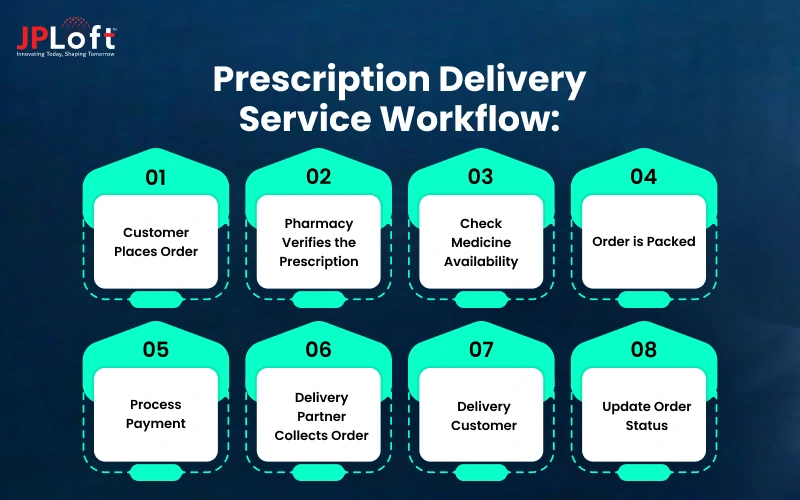
The following are the steps in how a prescription delivery service works:
-
Customer Places an Order: Customers order through an app, website, or phone service, upload prescriptions when required, select medicines, and provide delivery details.
-
Pharmacy Verifies the Prescription: A pharmacist checks the prescription’s validity, medicine details, dosage, and applicable requirements before approval.
-
Medicine Availability is Confirmed: The pharmacy confirms stock and communicates approved alternatives if required.
-
Order is Prepared and Packed: Approved medicines are checked, packed, and stored according to handling requirements.
-
Payment is Processed: Customers complete payment through supported methods, including online payments or cash where permitted.
-
Delivery Partner Collects the Order: A driver collects the prepared package from the pharmacy.
-
Medicines Are Delivered: The driver delivers medicines to the specified address, following applicable identification or receipt requirements.
-
Order Status is Updated: Customers receive dispatch and delivery notifications, while businesses maintain delivery records and manage follow-up services.

Types of Prescription Delivery Business Models
Choosing the right prescription delivery business model helps entrepreneurs define their operations, investment requirements, revenue streams, and customers' experience. The ideal model depends on pharmacy partnerships, delivery capabilities, regulatory requirements, and target customers.
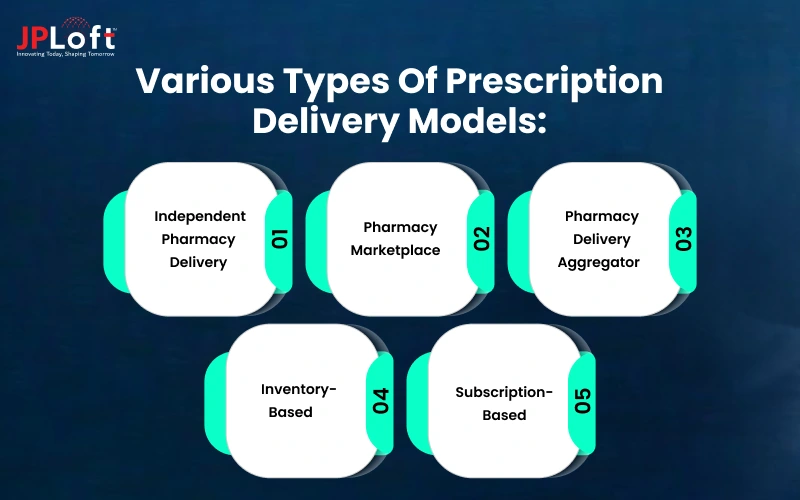
The following are the five common prescription delivery business models you can choose from:
Type 1. Independent Pharmacy Delivery Model
In this model, an existing pharmacy offers medicine delivery directly to customers. The pharmacy manages inventory, prescription verification, order preparation, and customer relationships.
Best for: Local pharmacies and pharmacy chains.
Revenue model: Medicine sales and delivery fees.
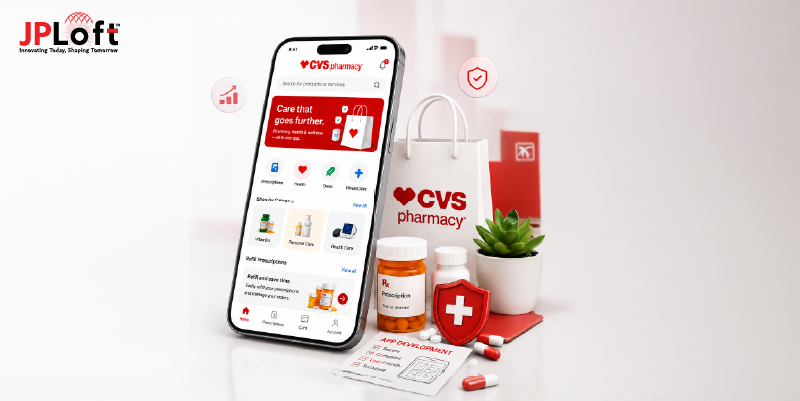
Example: CVS Pharmacy
Type 2. Online Pharmacy Marketplace Model
An online pharmacy marketplace connects customers with multiple licensed pharmacies through a website or mobile app.
Customers can search for medicines, upload prescriptions, compare availability, and place orders. The platform earns revenue by charging commissions, listing fees, or service charges to participating pharmacies.
Best for: Entrepreneurs building multi-pharmacy platforms.
Revenue model: Commissions, subscription fees, and service charges.
Example: GoodRx
Type 3. Pharmacy Delivery Aggregator Model
A pharmacy delivery aggregator partners with pharmacies and manages the delivery process without necessarily owning medicine inventory.
Customers place orders through the platform, while partner pharmacies fulfill them. The business focuses on order coordination, logistics, delivery tracking, and customer support.
Best for: Businesses focused on medicine delivery logistics.
Revenue model: Delivery fees, pharmacy commissions, and service charges.
Example: NimbleRx
Type 4. Inventory-Based Online Pharmacy Model
In this model, a business operates an online pharmacy and maintains its own medicine inventory. It manages procurement, storage, prescription verification, order fulfillment, and delivery.
This model offers greater control over inventory and customer experience but requires substantial operational investment and appropriate licenses.
Best for: Established pharmacy businesses and well-funded entrepreneurs.
Revenue model: Medicine sales, delivery fees, and recurring orders.
Example: Amazon Pharmacy
Type 5. Subscription-Based Medicine Delivery Model
A subscription-based service delivers recurring prescriptions to customers according to their medication schedules.
It may offer automatic refill reminders, scheduled deliveries, and recurring payment options. Prescription validity and continued medication requirements must be checked before refilling orders.
Best for: Businesses serving customers with ongoing medication needs.
Revenue model: Subscription fees, delivery charges, and medicine sales.
Example: PillPack
Legal and Privacy Requirements for Pharmacy Delivery Business
Starting a pharmacy delivery business in the US requires compliance with federal and state healthcare regulations, pharmacy licensing laws, prescription-handling rules, and data privacy requirements.
Businesses must establish clear responsibilities for prescription verification, medicine storage, customer data protection, and delivery operations before accepting orders. They must also understand the regulations governing controlled substances, pharmacy partnerships, and interstate deliveries.
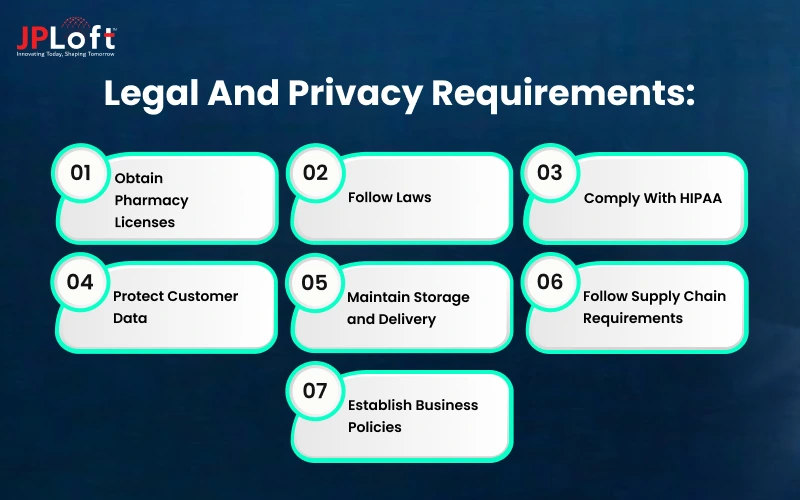
Here are the major legal and privacy requirements to consider when launching a pharmacy delivery business in the USA:
1. Obtain Required Pharmacy Licenses
Pharmacies must meet state licensing requirements and appoint a pharmacist-in-charge when required. Delivery-only services should verify whether additional business licenses or pharmacy-related authorizations apply to their operations.
Businesses should also assess DEA registration, nonresident pharmacy licenses, HIPAA compliance, DSCSA requirements, and state-specific delivery permits.
2. Follow Prescription and Controlled Substance Laws
Pharmacies must verify prescriptions before dispensing medicines and follow applicable rules for refills, transfers, and substitutions.
Businesses handling controlled substances must comply with DEA registration requirements, legitimate prescription standards, security procedures, and recordkeeping obligations. Online pharmacies may face additional federal and state requirements.
3. Comply With HIPAA Requirements
HIPAA protects certain patient health information handled by covered entities and their business associates. Depending on their role, delivery businesses may need Business Associate Agreements, restricted data access, secure electronic prescription records, and breach reporting procedures.
Businesses should determine whether HIPAA applies to their operations based on their specific relationships, services, and access to protected health information.
4. Protect Customer Data and Privacy
Pharmacy delivery platforms handle sensitive information, including prescriptions, addresses, and medication histories. They should also comply with applicable state privacy requirements and data breach notification laws governing customer information.
Businesses should encrypt data at rest and in transit, implement secure authentication and access controls, collect only necessary information, and maintain clear privacy policies.
5. Maintain Medicine Storage and Delivery Standards
Medicines must be stored and transported according to applicable requirements and product-specific conditions.
Businesses should use appropriate packaging, maintain required temperatures, prevent unauthorized access, and document handoffs during delivery. Temperature-sensitive medicines may require specialized packaging and monitoring.
6. Follow Drug Supply Chain Security Requirements
The Drug Supply Chain Security Act (DSCSA) establishes requirements for protecting prescription medicines from illegitimate products.
Businesses involved in regulated distribution should verify whether product tracing, verification, and recordkeeping requirements apply to their activities.
7. Establish Clear Business Policies
Before launching, establish written policies that define how the pharmacy delivery business handles customer agreements, privacy notices, prescription verification, failed deliveries, refunds, cancellations, and medicine returns.
Clear documentation helps maintain consistent operations while setting expectations for customers, pharmacies, and delivery partners.
Requirements depend on whether you operate a pharmacy, manage delivery, or connect customers with licensed pharmacies. Consult a healthcare attorney and the relevant state board of pharmacy to verify requirements for your business model.
What Technology Do You Need to Run a Prescription Delivery Service?
Running a prescription delivery service requires technology that connects customers, pharmacies, delivery partners, and administrators. The system must support order management, prescription workflows, secure data handling, delivery tracking, and the latest medicine delivery app trends.
Here is a table of the most common tech stacks used by top pharmacy delivery businesses:
|
Technology Component |
Purpose & Key Functions |
Recommended Technology Options |
|
Customer Mobile App or Website |
Allows customers to register, securely log in, upload prescriptions, check medicine availability, request medicines, manage addresses, track orders, and receive refill reminders. |
Flutter, React Native, React, Next.js |
|
Pharmacy Management Dashboard |
Helps partner pharmacies manage incoming orders, verify prescriptions, check medicine availability, accept orders, update fulfillment status, and communicate issues. |
React, Next.js |
|
Delivery Partner App |
Manages delivery assignments and provides pickup and delivery information, GPS navigation, pickup confirmation, status updates, and relevant handling instructions. |
Flutter, React Native |
|
Admin Dashboard |
Provides centralized control over customers, pharmacies, delivery partners, orders, payments, complaints, analytics, delivery delays, and operational performance. |
React, Next.js |
|
Backend System & Database |
Connects platform components and manages authentication, order processing, pharmacy coordination, payment records, prescription documents, and scalable business operations. |
Node.js, Python, Java, PostgreSQL, MySQL |
|
Maps, GPS & Route Optimization |
Supports driver assignment, distance calculation, ETA estimation, and route planning based on traffic, delivery deadlines, and medicine handling requirements. |
Google Maps, Mapbox |
|
Payments & Notifications |
Enables online payments, confirmations, refunds, and notifications for order confirmation, pickup, delivery progress, and completion. |
Stripe, Adyen, Firebase, Twilio |
|
Security & Compliance Technology |
Protects sensitive information through encryption, secure authentication, role-based access, audit logs, backups, and safeguards for applicable HIPAA requirements. |
AWS, Microsoft Azure, encryption, RBAC, audit logging |
A prescription delivery platform needs integrated systems for customers, pharmacies, drivers, and admins. Start with essential ordering, fulfillment, tracking, and security features, then expand integrations as the business grows.
Essential Features for a Prescription Delivery Platform
A successful pharmacy delivery business model depends on more than connecting pharmacies with customers. It needs reliable operational capabilities to manage orders, coordinate pickups, track deliveries, process payments, and handle exceptions while maintaining medicine safety and customer trust.
Here are the core medicine delivery app features a business should have in its platform:
|
Feature |
Essential Capabilities |
|
Order Management |
Receive medicine requests, generate order IDs, track order status, and manage cancellations. |
|
Pharmacy Coordination |
Confirm orders, verify prescription status, check medicine availability, update pickup readiness, and communicate fulfillment delays. |
|
Delivery Assignment |
Assign orders to available drivers, share pickup and delivery details, provide handling instructions, and confirm pickups. |
|
Delivery Tracking |
Track delivery progress, provide estimated arrival times, notify customers, and record delivery status. |
|
Proof of Delivery |
Confirm receipt by the intended or authorized recipient, record delivery time, and maintain delivery records. |
|
Failed Delivery and Exception Handling |
Record failed attempts, manage unavailable recipients, coordinate pharmacy returns, and resolve damaged or missing orders. |
|
Payment Management |
Process delivery charges, record payments, manage eligible refunds, and maintain transaction records. |
|
Operational Administration |
Manage pharmacy and driver accounts, configure service areas, monitor orders, handle support requests, and maintain operational records. |
|
Security and Access Control |
Restrict access to sensitive information, protect prescription records, and maintain appropriate access and activity logs. |
How Much Does Starting a Prescription Delivery Service Cost?
Starting a pharmacy delivery business model in the USA can cost approximately USD 3,000 to USD 60,000+. The cost depends on the business model, technology requirements, and delivery operations.
Here is a breakdown of the major startup expenses of starting a prescription delivery business:
|
Cost Category |
Estimated Cost |
|
Business & Legal Setup |
$200 - $3,000 |
|
Licensing & Compliance |
$100 - $3,000 |
|
Pharmacy Partnerships & Integration |
$400 - $4,000 |
|
Technology Development |
$2,000 - $50,000+ |
|
Driver & Fleet Operations |
$500 - $8,000 |
|
Insurance |
$300 - $4,000 |
|
Marketing & Customer Acquisition |
$300 - $5,000 |
These are the estimated costs of starting a pharmacy delivery service. Actual expenses depend on state requirements, operating scale, and other business requirements.
Ongoing Operational Costs
A prescription delivery business must budget for recurring expenses, including:
-
Technology Maintenance: Software updates, cloud hosting, security, and platform maintenance.
-
Driver and Delivery Operations: Driver payments, fuel, vehicle maintenance, and delivery supplies.
-
Customer Support: Salaries, communication tools, and order assistance.
-
Marketing: Digital advertising, customer acquisition, and referral programs.
-
Insurance: Commercial auto, general liability, and other applicable coverage.
-
Compliance and Administration: Accounting, regulatory reviews, and business administration.
-
Pharmacy Coordination: Partner communication, order management, and integration support.
A startup partnering with existing pharmacies can begin with a smaller investment, while businesses developing custom platforms may require more capital.
How Does Prescription Delivery Services Make Money?
Prescription delivery apps generate revenue through delivery fees, pharmacy partnerships, and subscriptions. The revenue model depends on whether the business operates as a delivery provider, marketplace, or licensed online pharmacy.
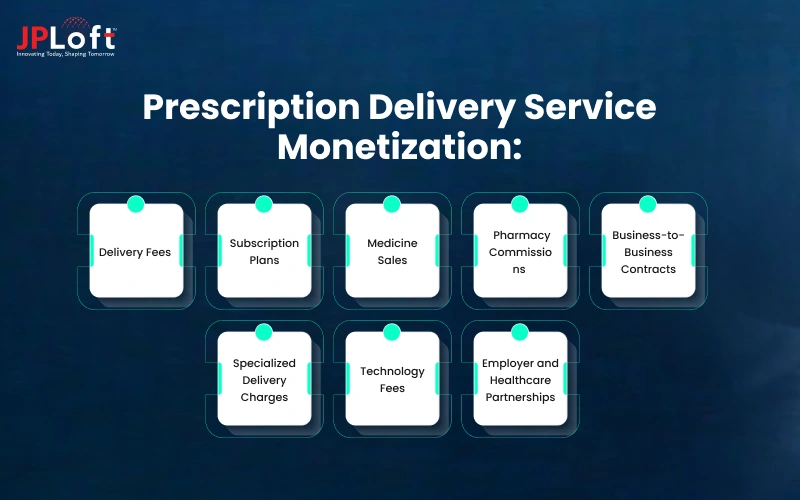
The following is a list of the most popular monetization models for a pharmaceutical delivery app:
1. Delivery Fees
Customers pay for medicine transportation. Businesses can charge standard, specialized services, express, distance-based, or scheduled delivery fees. Delivery charges can vary depending on distance, urgency, and customer location.
2. Subscription Plans
Customers pay recurring fees for benefits such as discounted deliveries, priority service, or scheduled medicine delivery. Subscriptions can generate predictable revenue. Businesses can offer monthly or annual plans to encourage repeat usage.
3. Medicine Sales
Licensed online pharmacies earn revenue by selling medicines. Their gross margin comes from the difference between selling prices and medicine acquisition costs, before operating expenses. This model requires appropriate licenses, inventory management, and pharmacy fulfillment operations.
4. Pharmacy Commissions
Marketplaces may earn commissions from partner pharmacies for eligible orders. Commission arrangements must comply with applicable healthcare regulations. If you start a pharmacy delivery service, it will earn revenue by connecting customers with pharmacies and facilitating eligible transactions.
5. Business-to-Business Contracts
Delivery startups can sign contracts with pharmacies or healthcare organizations. Revenue may come from monthly service agreements, per-delivery charges, or dedicated delivery arrangements. These contracts can help businesses establish recurring revenue and plan delivery capacity.
6. Specialized Delivery Charges
Businesses may charge additional fees for same-day, after-hours, scheduled, or temperature-controlled deliveries. Pricing should reflect actual operating costs and handling requirements. Specialized services may require additional equipment, trained drivers, and careful delivery coordination.
7. Technology Fees
A pharmacy delivery app can charge pharmacies for order management, delivery coordination, software access, and custom integrations through subscriptions or transaction fees. This model allows businesses to generate revenue without directly selling or dispensing medicines.
8. Employer and Healthcare Partnerships
Organizations may pay for medicine delivery services through monthly contracts, per-member fees, or agreed service packages. These partnerships can help businesses reach defined customer groups and establish longer-term service agreements.
Prescription delivery businesses can combine multiple revenue streams, but profitability depends on delivery costs, customer demand, pharmacy agreements, and regulatory compliance. Choose a model that matches your operational responsibilities and budget.
Steps to Start a Pharmacy Delivery Service
Starting a pharmacy delivery service requires careful planning, reliable pharmacy partnerships, and a well-organized delivery system. A structured launch strategy helps entrepreneurs control initial investment, identify operational challenges, and build a sustainable business.
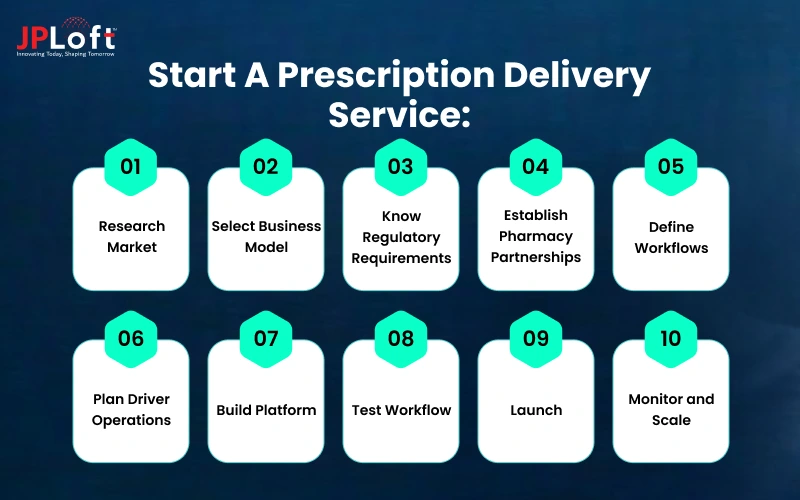
Here are the essential steps on how to start a prescription delivery service:
Step 1. Research Your Target Market
Begin by understanding your target customers, local pharmacy market, and existing competitors. Potential customers include older adults, caregivers, people managing recurring prescriptions, and individuals seeking convenient medicine access.
Research local pharmacies, delivery services, pricing, operating hours, and service coverage. Conduct customer surveys and pharmacy interviews to understand demand and operational challenges.
Evaluate potential order volume, delivery expectations, and customer preferences before investing.
Key actions:
-
Identify target customers and their needs.
-
Research competitors and pharmacy availability.
-
Estimate demand and operating costs.
-
Identify underserved locations.
Step 2. Select Your Business Model
Choose a business model based on your investment, operational capabilities, and revenue goals.
Common options include independent pharmacy delivery, online pharmacy marketplaces, delivery aggregators, inventory-based online pharmacies, and subscription-based services.
For example, partnering with existing pharmacies allows a startup to focus on delivery coordination without maintaining medicine inventory. Operating an online pharmacy requires additional licensing, inventory management, and dispensing operations.
Key actions:
-
Select a suitable business model.
-
Define inventory and fulfillment responsibilities.
-
Decide whether to operate your own fleet.
-
Identify potential revenue streams.
-
Determine your initial service area.
Step 3. Determine Regulatory Requirements
Identify the federal, state, and local regulations applicable to your business activities.
In the USA, pharmacy licensing is primarily regulated at the state level. Requirements depend on whether your business dispenses medicines, handles regulated distribution activities, or provides delivery services through licensed pharmacies.
Review applicable prescription verification, controlled substance, privacy, and medicine transportation requirements.
Key actions:
-
Consult a healthcare attorney.
-
Check applicable state licensing requirements.
-
Assess HIPAA and state privacy obligations.
-
Review controlled substance regulations.
-
Establish compliant handling procedures.
Step 4. Establish Pharmacy Partnerships
When you are working on the process of how to start a pharmacy delivery business, identify licensed pharmacies willing to collaborate with your delivery startup.
Discuss your business model, delivery coverage, expected order volume, and technology capabilities. Establish written agreements covering responsibilities, pricing, fulfillment, and customer communication.
Define how pharmacies will verify prescriptions, prepare orders, and notify drivers when medicines are ready.
Key actions:
-
Identify suitable pharmacy partners.
-
Verify applicable pharmacy licenses.
-
Negotiate commercial agreements.
-
Establish order and pickup procedures.
-
Define technology integration requirements.
Step 5. Define Delivery and Prescription Workflows
Create a standardized workflow of the online pharmacy delivery service covering every stage from customer order to completed delivery.
Customers submit medicine requests and prescriptions through the pharmacy delivery app. The pharmacy verifies prescriptions, confirms availability, and prepares approved orders.
Once an order is ready, the platform assigns a driver. The driver collects the package, follows the delivery route, and completes the handoff. Establish procedures for cancellations, incorrect addresses, failed deliveries, and damaged packages.
Key actions:
-
Map the complete order journey.
-
Assign responsibilities to pharmacies and drivers.
-
Define pickup and delivery confirmation.
-
Establish exception handling procedures.
-
Maintain appropriate operational records.
Step 6. Plan Driver Operations
Determine whether to employ drivers, work with independent delivery partners, or outsource transportation.
Evaluate each option based on delivery volume, service coverage, operating costs, and handling requirements. Start with a manageable delivery team and increase capacity as order volume grows.
Establish driver onboarding, training, scheduling, and performance monitoring. Drivers should understand package handling, pickup verification, customer communication, and incident reporting.
Key actions:
-
Choose a driver operating model.
-
Recruit and train delivery personnel.
-
Establish delivery zones and working hours.
-
Arrange suitable vehicles and equipment.
-
Review insurance and employment requirements.
Step 7. Choose or Build Your Technology Platform
Select technology for developing a medicine app that connects customers, pharmacies, drivers, and administrators. Choose technology that supports current operations and future expansion.
A basic online pharmacy delivery service should include customer ordering, pharmacy order management, driver assignment, delivery tracking, and an admin dashboard.
Depending on your business model, additional features may include prescription uploads, secure document storage, payment integration, notifications, and pharmacy software connectivity.
Key actions:
-
Define essential platform features.
-
Choose suitable software or development partners.
-
Integrate maps, payments, and notifications.
-
Establish secure data access and storage.
-
Test system performance and reliability.
Step 8. Test the Complete Delivery Workflow
Test the complete order journey of the pharmacy delivery service before launching publicly. Simulate successful orders, pharmacy delays, unavailable medicines, cancellations, and failed deliveries.
Verify that pharmacies receive orders correctly, drivers receive accurate pickup instructions, and customers receive timely updates.
Also test payments, delivery tracking, proof of delivery, security controls, and exception reporting.
Key actions:
-
Test prescription submission and order placement.
-
Verify pharmacy confirmation and pickup notifications.
-
Check driver assignment and navigation.
-
Test delivery confirmation and failed deliveries.
-
Resolve critical issues before launch.
Step 9. Launch in a Defined Service Area
Begin operations in a limited geographic area where pharmacy partnerships and delivery coverage are manageable.
Choose locations based on customer demand, pharmacy availability, driver capacity, and delivery costs. Clearly communicate delivery hours, pricing, service limitations, and order requirements.
Monitor customer feedback, delivery delays, cancellations, and failed orders during the initial launch. A controlled launch helps validate your business model under real operating conditions.
Key actions:
-
Select an initial delivery zone.
-
Confirm pharmacy and driver readiness.
-
Communicate service terms clearly.
-
Monitor early customer orders.
-
Resolve operational issues quickly.
Step 10. Monitor and Scale Operations
Once operations become consistent, use performance data of the medicine delivery service to identify improvement opportunities. Scaling should follow operational readiness and customer demand.
Monitor order volume, average delivery time, fulfillment delays, delivery success rates, customer acquisition costs, and repeat orders.
Review pharmacy performance, driver availability, and customer feedback to identify operational bottlenecks. Expand pharmacy partnerships, delivery capacity, and service areas according to demonstrated demand.
Key actions:
-
Monitor operational and financial performance.
-
Improve delivery efficiency and customer experience.
-
Strengthen pharmacy relationships.
-
Expand service areas gradually.
-
Introduce technology improvements where useful.
Common Challenges of Starting a Prescription Delivery Service
Starting a prescription delivery service involves more than managing orders and drivers. Businesses must coordinate with pharmacies, protect sensitive information, and deliver medicines safely to avoid basic medicine delivery app challenges.
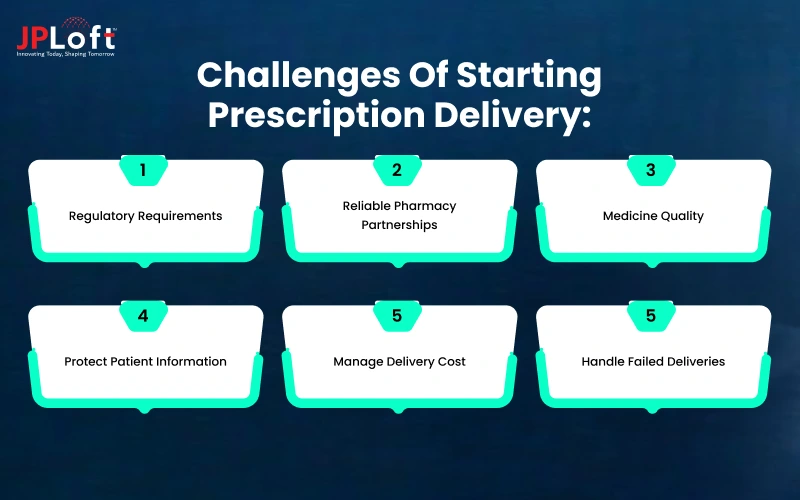
Challenge 1. Meeting Regulatory Requirements
Prescription delivery businesses must follow applicable federal and state regulations. Requirements may differ based on the business model, medicines handled, and delivery locations.
Solution: Consult healthcare compliance professionals and confirm licensing, prescription-handling, and delivery requirements before launch.
Challenge 2. Building Reliable Pharmacy Partnerships
Pharmacies may have different order-processing systems, operating hours, and fulfillment procedures. Poor coordination can cause delays, incorrect pickups, and customer dissatisfaction.
Solution: Establish clear partnership agreements covering order acceptance, prescription readiness, pickup procedures, service areas, and delivery timelines.
Challenge 3. Maintaining Medicine Quality
Some medicines require specific storage temperatures or careful handling during transportation. Improper handling may compromise medicine quality and create patient safety risks.
Solution: Create handling protocols, train delivery staff, and use suitable packaging and temperature-monitoring procedures when required.
Challenge 4. Protecting Patient Information
A medication delivery app may involve sensitive prescription and customer information. Unauthorized access or data exposure can damage customer trust and create compliance concerns.
Solution: Apply access controls, encryption, secure communication, and staff training. Collect only the information needed to complete deliveries.
Challenge 5. Managing Delivery Costs
Driver payments, fuel, insurance, technology, and customer support can increase operating expenses. High costs may reduce margins, especially when order volumes are low.
Solution: Start in a defined service area, optimize routes, track cost per delivery, and review pricing regularly.
Challenge 6. Handling Failed Deliveries
Customers may be unavailable, addresses may be incorrect, or delivery instructions may be incomplete.
Failed attempts increase costs and delay access to medicines.
Solution: Confirm delivery details, provide tracking updates, and establish secure procedures for rescheduling or returning orders.
A reliable prescription delivery service needs compliant operations, pharmacy coordination, secure data handling, and disciplined delivery management.
How Can JPLoft Help You Start a Reliable Pharmacy Delivery Service?
Building a reliable pharmacy delivery service requires more than a functional app.
JPLoft, an experienced medicine delivery app development company, helps businesses turn their delivery concept into a secure, scalable, and efficient digital solution.
Our team can develop customer apps, pharmacy dashboards, pharmacy delivery service platforms, and admin panels that connect every stage of the delivery process. We focus on essential workflows such as prescription verification coordination, order tracking, driver assignment, delivery notifications, and proof of delivery.
We also help integrate maps, payment gateways, and pharmacy systems based on your business requirements. Security, usability, and performance guide our development approach, while testing helps identify issues before launch.
From discovery and UI/UX design to development, deployment, and ongoing maintenance, JPLoft supports your product lifecycle. Build a pharmacy delivery platform designed around your operations, customer expectations, and future growth.
Conclusion
To proceed with how to start a medicine delivery business, you require careful planning across business operations, pharmacy partnerships, technology, and compliance.
Choose a business model that fits your resources and target market, then establish clear processes for prescription handling, order fulfillment, delivery, and customer support. Licensing, privacy, and state-specific requirements should guide your decisions from the beginning.
A reliable medicine delivery service also depends on secure information systems, accurate order tracking, and dependable pharmacy coordination. Begin with a focused service area, test your workflows, and use customer and pharmacy feedback to improve operations before expanding.
With the right foundation, your business can provide convenient prescription delivery while building trust with customers and partners. A scalable digital platform can help manage daily operations and support future growth as demand increases.
FAQs
Choose a business model, research local demand, confirm licensing and privacy obligations, partner with pharmacies, and plan delivery operations. Then start building and test your platform before launching in a defined service area, before scaling further.
Requirements vary by state and business model. Check state pharmacy board rules and applicable federal requirements. Delivery-only businesses may face different obligations than pharmacies dispensing medication or handling controlled substances directly.
Startup costs depend on licensing, technology, staffing, insurance, and delivery operations. A lean service may cost tens of thousands. Broader platforms and fleets require more capital and ongoing working funds.
Yes, independent pharmacies can offer delivery, subject to applicable laws and operational capacity. They may use employees, contractors, or a delivery partner with clear procedures for privacy and handoffs documented.
A service may need customer ordering, pharmacy and driver dashboards, a secure backend, GPS mapping, notifications, payment tools, and reporting. Integrations depend on pharmacy workflows, business models, and compliance needs.

Yashwant Sharma is the CTO of JPLoft, with 18+ years of experience in software engineering, solution architecture, and digital innovation. His expertise spans scalable application development, AI-powered systems, RAG solutions, cross-platform development, software maintenance, and emerging mobility technologies such as EV and EV-charging platforms. He works across complex technical environments to help businesses build secure, maintainable, and high-performing digital products for industries including education, fitness, aviation, and healthcare.



Share this blog