


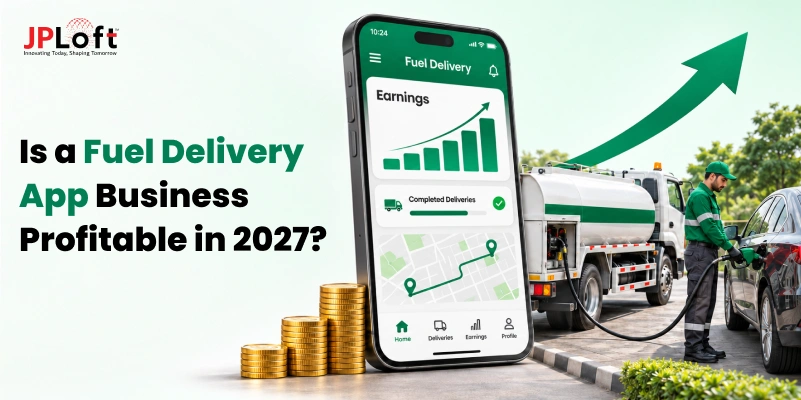
A $6.2 billion fuel app market in 2026, projected to reach $10.1 billion by 2033!
The global mobile fuel delivery industry is opening new opportunities for business owners, with a projected CAGR of 7.3%. So for you, this growth could mean a chance to tap into rising demand and build a profitable fuel delivery venture.
Customers value doorstep fuel delivery, but convenience alone doesn't guarantee a sustainable business. You must account for fuel procurement, driver salaries, vehicle maintenance, delivery costs, and customer acquisition expenses.
Choosing the right U.S. market also matters. Areas with high vehicle ownership, growing commercial fleets, and limited access to fuel may offer better opportunities than markets dominated by established competitors.
But can your startup compete with traditional gas stations and existing fuel delivery companies? That depends on your pricing, service quality, operational efficiency, and business model.
In this blog, we'll explore the profitability of a fuel delivery app business in 2027 and what you need to build a competitive, sustainable venture.
Visit: Fuel Delivery App Development Company
How Does an On-Demand Fuel Delivery App Business Work?
As a fuel delivery business owner, you need a system that connects customers, fuel suppliers, delivery drivers, and your operations team. An on-demand fuel delivery app brings these activities together through a digital platform.
Here is how the complete fuel delivery app workflow operates:
1. Customer Places a Fuel Order on App
Customers open your app, enter their delivery location, select the fuel type, and choose the required quantity. They can also schedule deliveries based on their convenience.
2. App Checks Fuel Availability
The system checks available fuel inventory, supplier details, and delivery coverage. It displays applicable fuel prices, delivery charges, and estimated arrival times.
3. Order Confirmation and Payment
Once customers confirm their orders, they can pay through available digital payment methods or select cash on delivery, if supported. Your business receives the order details for processing.
4. Admin Assigns a Delivery Driver
Your operations team receives the order and assigns an available driver based on location, workload, and delivery capacity. Automated assignment can also reduce manual coordination.
5. Driver Collects and Delivers Fuel
The assigned driver collects the required fuel from your storage facility or authorized supplier. They follow the delivery route and transport fuel using approved vehicles and equipment.
6. Customer Receives the Delivery
Customers track the driver's location and receive notifications about delivery progress. Once the fuel reaches the destination, the driver confirms the order through the app.
7. Business Tracks Revenue and Operations
Your admin dashboard records completed orders, payments, delivery costs, fuel inventory, and driver performance. These insights help you monitor operating expenses and identify opportunities to improve profit margins.
This workflow manages more orders without increasing manual coordination in the same amount of time. However, your profitability still depends on fuel sourcing costs, delivery efficiency, regulatory compliance, and customer demand.
Also Read: How Fuel Delivery Apps Work? A Complete Guide
Why is the Fuel Delivery Business Gaining Attention in the U.S. Market?
Whether you are planning to launch or expand a fuel delivery business in the U.S., several market opportunities are worth exploring. Here are the six major factors this business model is gaining attention:
1. Growing Demand for Fleet Fueling Services
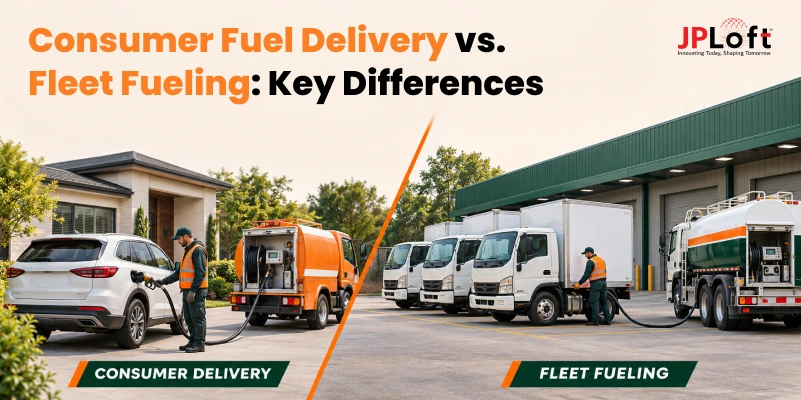
Fleet operators need regular fuel supplies to avoid vehicle downtime. You can partner with logistics companies, delivery services, and transportation businesses to provide scheduled refueling at their parking facilities and warehouses. These contracts can help you generate repeat orders and predictable revenue.
2. Increasing Preference for Convenient Fueling
Customers increasingly value services that save time. Your fuel delivery business can serve vehicle owners who prefer refueling at home, offices, or parking locations instead of visiting gas stations. Flexible scheduling and real-time tracking can improve customer convenience.
3. Opportunities Beyond Individual Customers
You do not have to depend only on individual vehicle owners. You can target construction firms, rental companies, and corporate fleets. Logistics operators and commercial sites are good fits too. Serving multiple customer segments helps diversify your revenue sources and reduce dependence on one market.
4. Opportunities to Differentiate From Traditional Fuel Stations
Competing with established gas stations on location and availability can be difficult. Instead, position your business around on-site refueling, scheduled deliveries, bulk fuel supply, and fleet management services. These offerings address specific customer needs that traditional fueling models may not fully serve.
5. Better Operational Control Through Technology
A fuel delivery app can help you manage customer orders, fuel inventory, driver assignments, payments, and delivery schedules. You can also monitor operating expenses and identify inefficient routes. Better operational visibility helps you control costs as your business grows.
6. Scope for Local and Regional Expansion
You can begin operations in one city, build a reliable customer base, and expand into nearby service areas. However, check local licensing, fuel transportation, storage, and mobile fueling regulations before entering new markets.
Also Read: How Mobile Apps Help Propane Delivery Companies
Which Fuel Delivery Business Model Should You Choose?
Before investing in a fuel delivery app business, you need to decide how your company will source fuel, manage deliveries, and earn revenue. Your business model directly affects startup investment, operating expenses, profit margins, and scalability.
Here are the popular fuel delivery business models you can consider for the U.S. market:
|
Fuel Delivery Business Model |
How It Works |
Revenue Sources |
Best Suited For |
|
B2C Fuel Delivery |
Deliver gasoline directly to individual customers at offices or other permitted locations. Also homes and parking lots of eligible U.S. cities. |
Fuel margins, delivery fees, and convenience charges. |
Startups targeting individual vehicle owners. |
|
B2B Fuel Delivery |
Supply fuel to businesses operating delivery vehicles, logistics fleets, transportation services, and company-owned vehicles. |
Bulk fuel sales, delivery charges, and business contracts. |
Operators targeting commercial customers. |
|
Fleet Fueling Contracts |
Sign recurring agreements with fleet operators to provide scheduled refueling at their parking facilities or depots. |
Contract-based payments, per-gallon margins, and service fees. |
Businesses seeking predictable recurring revenue. |
|
Construction Equipment and Heavy Machinery Fuel Delivery |
Deliver diesel directly to construction sites for excavators, generators, loaders, bulldozers, and other heavy equipment. |
Bulk fuel margins, site delivery charges, and long-term supply agreements. |
Fuel suppliers serving construction and industrial businesses. |
|
Emergency Fuel Delivery and Roadside Assistance |
Provide urgent fuel deliveries to drivers who run out of fuel or need assistance at approved roadside locations. |
Emergency delivery fees, fuel margins, and roadside assistance partnerships. |
Businesses targeting individual drivers and roadside service providers. |
|
Subscription-Based Fuel Delivery Services |
Offer weekly or monthly plans that provide scheduled fuel deliveries to individual customers or commercial accounts. |
Subscription fees, fuel sales, and additional delivery charges. |
Businesses with repeat customers and predictable fuel requirements. |
|
Hybrid Fuel Delivery |
Combine individual customer deliveries with commercial fueling services to serve multiple market segments. |
Retail fuel margins, bulk sales, subscriptions, and business contracts. |
Operators looking to diversify revenue streams. |
|
Asset-Light Fuel Delivery |
Partner with existing fuel suppliers and authorized delivery operators instead of owning all fuel storage facilities and delivery vehicles. |
Supplier commissions, platform fees, delivery charges, and negotiated margins. |
Startups and technology-focused businesses with limited infrastructure investment. |
Also Read: Petrol Pump Management Software: Features, Benefits & How to Choose a Development Company
How Much Profit Can a Fuel Delivery Business Make Per Gallon and Per Order?
If you are planning to start or are running a fuel delivery business, understanding your profit per gallon and per order is essential. In the U.S. market, fuel retailers typically measure their gross margins in cents per gallon.
► Profit Margin Per Gallon
Your per-gallon profit starts with the difference between your fuel selling price and purchase cost. For example, if you purchase fuel at $3.00 and sell it for $3.35, your gross margin is $0.35 per gallon.
According to NACS, the average U.S. gasoline retailer gross margin was 39.7 cents per gallon in 2025. This is a retail benchmark, not a guaranteed mobile fueling margin.
Rough Estimates:
|
Metrices |
Amount |
|
Fuel purchase cost |
$3.00 |
|
Selling price |
$3.35 |
|
Gross margin |
$0.35 |
|
Delivery expenses |
$0.20 |
|
Estimated contribution |
$0.15 |
► Profit Per Fuel Delivery Order
Your earnings also depend on the quantity delivered and service fees collected. Suppose you deliver 60 gallons with a $0.30 margin per gallon and charge a $5 delivery fee.
-
Fuel margin: $18
-
Delivery fee: $5
-
Total contribution before delivery expenses: $23
-
Allocated delivery expenses: $14
-
Estimated contribution per order: $9
Factors That Affect Your Profit
Your actual earnings depend on how efficiently you manage daily operations.
-
Fuel procurement: Negotiate competitive supplier rates to improve margins.
-
Order volume: Larger orders help distribute delivery costs across more gallons.
-
Delivery distance: Shorter routes reduce fuel consumption and driver expenses.
-
Customer contracts: Recurring fleet orders provide predictable demand.
-
Vehicle utilization: More deliveries per shift help distribute fixed operating costs.
Real-World Fuel Delivery Business Case Study: What to Learn From Existing Companies?
Studying the existing fuel delivery business in the U.S. can help you understand how to attract customers and generate consistent revenue. These thriving businesses have adopted different approaches to fuel procurement, customer acquisition, delivery management, and technology.
Here is a table of some of the top players in the fuel delivery app industry that can help you show you how to take your business to new heights:
|
Company |
Business Model |
Key Services |
Business Lessons |
|
Booster |
Technology-driven fleet fueling |
On-site gasoline, diesel, renewable fuel, and DEF delivery |
Target commercial fleets, use route optimization, and provide fuel consumption reports. |
|
EzFill |
On-demand consumer and commercial fueling |
App-based fuel delivery for individuals and businesses |
Serve multiple customer segments and expand through regional delivery operations. |
|
Fuelster |
App-based on-demand fuel delivery |
Convenient gasoline delivery, contactless service, and flexible scheduling |
Simplify fuel ordering, maintain transparent pricing, and encourage repeat purchases. |
|
Diesel Direct |
Commercial and job-site fuel delivery |
Diesel delivery, tank monitoring, and fuel management |
Target businesses with regular fuel requirements and offer additional management services. |
Also Read: Fuel Delivery App for Gas Stations: Features, Benefits & How to Build One
How to Start a Profitable Fuel Delivery App Business: Step-by-Step
Starting a fuel delivery app business requires more than investing in vehicles and technology. You need to understand customer demand, establish reliable fuel supply channels, manage delivery costs, and build a system that supports daily operations.
The steps to help you launch and grow your business in the U.S. market:
Step 1: Research Your Target Market
Start by identifying customers who regularly need fuel deliveries. Your potential customers may include logistics companies, construction businesses, corporate fleets, and individual vehicle owners.
Study existing competitors, their pricing, service areas, and delivery options to identify market gaps.
Step 2: Choose Your Business Model
Decide how your business will source fuel and generate revenue. Choose a model that matches your investment capacity and operational resources.
You can operate your own delivery fleet, partner with fuel suppliers, serve commercial fleets, or build a marketplace connecting customers with suppliers.
Step 3: Obtain Required Licenses and Permits
Check federal, state, and local requirements before launching. Follow DOT/FMCSA hazardous materials rules for fuel trucks and obtain applicable CDL tank (N) and hazmat (H) endorsements.
Get fuel meters tested and approved by state weights and measures authorities. Also secure local fire marshal permits, business registration, and commercial insurance.
Step 4: Partner With Reliable Fuel Suppliers
Identify authorized fuel wholesalers and distributors who can provide consistent supplies at competitive rates.
Compare wholesale prices, minimum purchase quantities, payment terms, and delivery schedules. Maintain backup supplier relationships to avoid disruptions and protect your customer commitments.
Step 5: Arrange Delivery Vehicle and Equipment
Purchase or lease suitable fuel delivery vehicles based on your expected order volume. Your vehicle capacity should match the customer segments you plan to serve.
Arrange approved fuel tanks, pumps, calibrated meters, hoses, spill kits, and safety equipment.
Step 6: Calculate Your Startup Costs
Prepare a budget covering vehicle purchases, fuel inventory, permits, insurance, employee salaries, equipment, and app development. Include marketing, maintenance, and working capital in your calculations.
Estimate your expected revenue and monthly expenses to understand when your business can reach its break-even point.
Step 7: Develop a Fuel Delivery App
Build a platform that connects customers, drivers, suppliers, and your operations team. Your fuel delivery app development should include features like customer ordering, driver assignments, GPS tracking, and digital payments.
Include inventory management and an admin dashboard for ease in handling business operations. Start with essential features and introduce advanced tools such as route optimization and demand forecasting as your business grows.
Step 8: Hire Drivers and Operations Staff
Recruit qualified drivers who meet applicable licensing and safety requirements. Hire dispatchers, operations managers, and customer support executives to manage daily activities.
Establish clear procedures for fuel handling, vehicle inspections, delivery confirmation, and emergency response.
Step 9: Launch Your Business in a Limited Area
Begin operations in one city or delivery zone instead of expanding immediately. Use what you learn from daily orders to improve pricing, delivery schedules, and resource allocation.
Monitor daily orders, gallons delivered, delivery expenses, customer retention, and vehicle utilization.
Step 10: Market Your Business and Expand
Promote your services through local SEO, Google Ads, referral programs, and direct B2B partnerships. Approach logistics companies, construction contractors, and fleet operators with customized fueling contracts.
Once your existing operations generate consistent demand and positive contributions, expand into nearby locations and introduce additional services.
Visit: on-demand fuel delivery app development company
Final Verdict: Is Starting a Fuel Delivery App Business Worth It?
Starting a fuel delivery app business in 2027 can be profitable, but your actual returns depend on fuel margins, delivery costs, customer demand, and operational efficiency.
For new operators, the commercial fleet fueling business model can be an attractive starting point because recurring contracts offer more predictable demand and delivery schedules.
However, increasing orders alone will not guarantee higher profits. You need to control fuel procurement, optimize delivery routes, manage driver utilization, and keep operating expenses under control. Before investing, understand local licensing, fuel storage, transportation, and safety regulations.
With the right business strategy, regulatory planning, and technology, you can build a sustainable fuel delivery operation with long-term growth potential.
FAQs
Yes, the U.S. fuel delivery market offers strong business potential in 2027. The average gasoline gross margin is $39.7 per gallon for retailers, depending on delivery fees, recurring contracts, operating expenses, and customer demand.
Starting a fuel delivery business may require $30,000 to $150,000+ for a single-truck operation. Actual costs depend on vehicles, permits, equipment, insurance, fuel inventory, and technology.
A fuel delivery business can generate $2,000 to $12,000+ monthly in revenue, depending on order volume, fuel margins, delivery fees, customer base, and operational efficiency. Actual profit varies significantly.
Yes. Most operators need business licenses, fuel permits, transportation registrations, and environmental approvals, and requirements vary by state. Requirements vary by state, fuel type, storage arrangements, and delivery operations.
Fleet fueling can offer attractive revenue opportunities through recurring contracts, bulk orders, and scheduled deliveries. However, profitability depends on procurement rates, delivery efficiency, operating expenses, and contract terms.
B2B fuel delivery can offer predictable demand through recurring contracts and larger orders. Residential delivery may generate additional convenience fees but often involves smaller orders and higher delivery costs.

Savannah Bustos is a technology professional with experience across financial platforms, mobility solutions, and on-demand digital products. Her areas of expertise include FinTech, digital banking, eWallets, lending, BNPL, stock trading, fuel delivery, and taxi-booking platforms. She combines a strong understanding of business requirements with practical technology insight, helping companies evaluate challenges, define product needs, and make informed decisions about scalable digital solutions.


Share this blog