


Every missed refill request costs a propane supplier more than one delivery. It can cost a loyal customer a repeat order and a good reputation.
Most US propane businesses still take orders through calls, texts, and paper notes. As customer numbers grow, this makes it hard to track requests, plan routes, and keep records accurate.
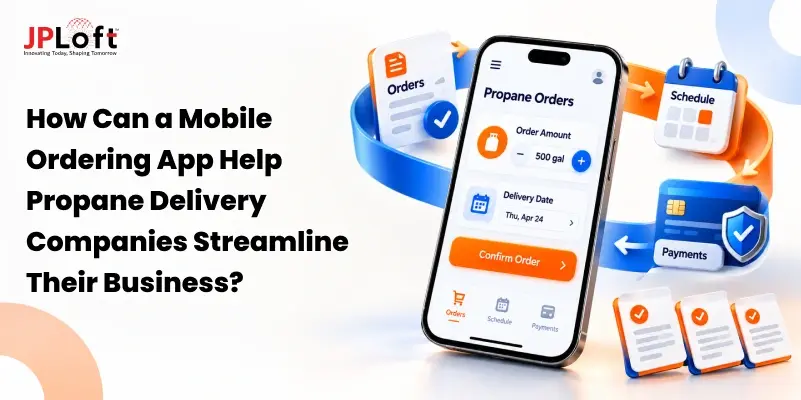
A mobile ordering app brings every request into one system. Customers can order or reorder in a few taps, while your team gets clear details to plan deliveries with confidence.
Many suppliers now choose propane delivery app development services to build an app around their tanks, customers, and delivery routes, without disrupting the work already running smoothly.
In this blog, we will explain the main delivery problems an app can solve, how it fits into your current operations, and what to look for in the right development partner.
Visit Now: Fuel Delivery App Development Company
Propane Delivery Challenges a Mobile Ordering App Can Help Solve
Propane suppliers handle urgent requests, seasonal demand, and scattered customers daily. Without a clear ordering system, small gaps turn into missed deliveries and wasted trips. These challenges show where a mobile ordering app can help most.
|
Propane Delivery Challenge |
How a Mobile Ordering App Helps |
|
Missed Refill Requests Leave Customers Without Propane |
Customers request refills in a few taps, and reminders prompt early reorders |
|
Last-Minute Orders During Peak Heating Seasons |
One order list tagged by urgency, with daily limits and open delivery slots |
|
Limited Visibility Into Tank Levels |
Customers share gauge readings, and the app can connect with tank monitors |
|
Unnecessary Deliveries From Inaccurate Fuel Estimates |
Tank levels are confirmed before booking, so early stops are skipped |
|
Managing Will-Call And Automatic Customers |
Each customer is tagged by plan and sees the right ordering options |
|
Repeated Calls For Refill And Delivery Updates |
Order status, delivery dates, pricing, and push notifications in the app |
|
Deliveries To Rural And Remote Locations |
Map pins, photos, and access notes saved for each tank location |
|
Inaccurate Customer Tank, Refill, And Delivery Records |
One profile per customer that updates after every order and delivery |
1. Customers Running Out of Propane Due to Missed Refill Requests
Many propane customers wait until the tank is almost empty before they ask for a refill. If that call is missed or a note gets lost, the request never reaches dispatch.
The customer is then left without heat or hot water, and your team has to rush an emergency delivery at short notice, often at a higher cost.
Repeated run-outs also hurt trust, and unhappy customers often move to another local supplier without warning, which puts yearly propane revenue at risk.
How A Mobile Ordering App Helps:
A mobile ordering app lets customers request a refill in a few taps, any time of day. Each request goes straight to dispatch, and reminders prompt customers to reorder before the tank runs too low.
2. Managing Last-Minute Propane Orders During Peak Heating Seasons
Cold weather brings a sudden jump in refill requests. Calls pile up in the same few days, and many customers want delivery the same day.
Dispatchers must decide which orders to fit in, which to delay, and how to reach everyone without overloading drivers who are already working long winter days.
Without a clear system, urgent orders get mixed with routine ones, delivery promises are broken, and customers become frustrated and worried during the coldest weeks.
How A Mobile Ordering App Helps:
The app collects every order in one list, tagged by urgency and location. Dispatchers can set daily order limits, offer open delivery slots, and tell customers early when a requested time is full.
3. Limited Visibility Into Customer Tank Levels and Refill Requirements
Most suppliers do not know how much propane a customer has left until the customer calls or a driver checks the gauge during a visit.
Tank sizes, usage, and heating needs differ from home to home, so refill timing is mostly guesswork based on old delivery dates and experience.
This leads to late deliveries for some customers and early, half-empty stops for others, which makes route planning much harder for your team every week.
How A Mobile Ordering App Helps:
Customers can enter their tank gauge reading in the app or tap a quick level option. Your team gets the data in one place and can plan refills based on actual need. It can also connect with existing tank monitors.
4. Scheduling Unnecessary Deliveries Due to Inaccurate Fuel Estimates
When suppliers estimate fuel use from old records, they often schedule a delivery before the tank actually needs it, especially after a mild stretch of weather.
The driver arrives, finds a tank that is still more than half full, and leaves with a small drop or no sale at all.
These trips still cost fuel, driver time, and truck wear, so low-volume stops quickly reduce profit on every route, and they also block space for customers who truly need fuel.
How A Mobile Ordering App Helps:
Customers confirm their latest tank level in the app before a delivery is booked. Your team can then skip early stops, combine nearby orders, and schedule trips only where a proper fill is needed.
5. Managing Will-Call and Automatic Propane Delivery Customers
Suppliers usually serve two types of customers. Will-call customers order when they need fuel, while automatic delivery customers receive refills on a schedule set by the supplier.
Each group needs a different process. Mixing them in one list or phone log makes it easy to miss a will-call request or deliver to an automatic customer too soon.
Staff also spend extra time checking who is on which plan, and any mistake leads to billing errors, late deliveries, and unhappy customers.
How A Mobile Ordering App Helps:
The app can tag each customer as will-call or automatic and show the right options for each. Will-call customers order in seconds, while automatic customers can view, skip, or adjust upcoming deliveries.
6. Handling Repeated Customer Calls for Refill and Delivery Updates
A large share of daily calls ask the same simple questions. Customers want to know when the truck is coming, whether the order was received, and what the current propane price is.
Each call takes only a few minutes, but together they add up quickly across a busy day, especially in winter.
Office staff then have less time for new orders, billing, and urgent problems, and callers may face long waits or busy lines at the worst time.
How A Mobile Ordering App Helps:
Customers can check order status, delivery dates, and current pricing in the app anytime. Push notifications confirm each order and share delivery updates, so fewer customers need to call your office.
7. Coordinating Propane Deliveries Across Rural and Remote Locations
Many propane customers live on farms, ranches, and country roads far from the depot. Deliveries to these areas take longer, and one wrong detail can waste a whole trip.
Addresses may not show on maps, gates may be locked, and tanks may sit behind a barn or at the back of a property.
Drivers then lose time searching, calling customers, or returning later, which raises fuel costs and delays other deliveries on the same route that day.
How A Mobile Ordering App Helps:
Customers can save exact tank locations with a map pin, photos, and access notes such as gate codes. Drivers see these details before they leave, so routes are planned better, and trips are not wasted.
8. Maintaining Accurate Customer Tank, Refill, and Delivery Records
Customer details often sit in different places, such as billing software, paper files, driver notes, and staff memory. Tank size, last fill date, and delivery notes are rarely in one place.
When records do not match, staff waste time searching, invoices contain errors, and drivers arrive without key details about the tank or the delivery site.
It also becomes harder to answer customer questions, settle billing disputes, or prove what was delivered and when it happened.
How A Mobile Ordering App Helps:
The app stores each customer’s profile, tank details, order history, and delivery notes in one place. Every request and delivery updates the record automatically, so staff and drivers always see the same accurate information.
How Would a Mobile Ordering App Fit Into an Existing Propane Delivery Business?
A new app should work with the systems your team already uses. A good propane delivery app development company builds around your current records and delivery routes, so daily work continues smoothly during the switch.
1. Connect Existing Customer and Tank Records
Most suppliers already keep customer details, tank sizes, and delivery history in billing or office software. The app should connect to these existing records.
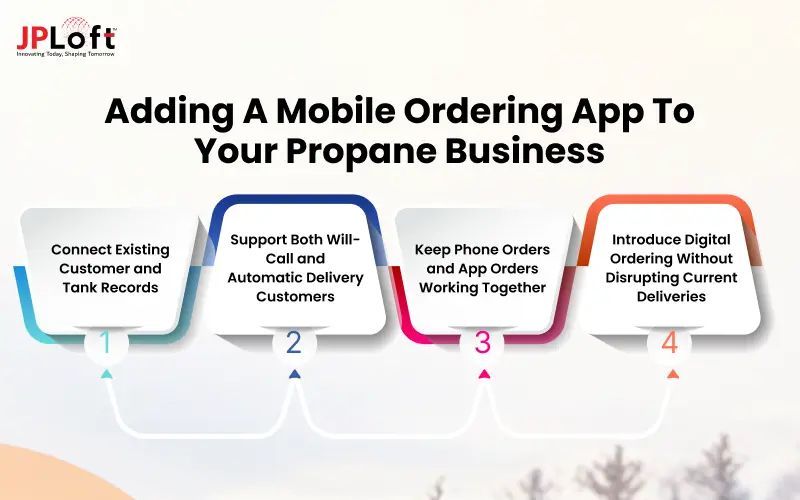
Customers then see correct tank and order details in the app from day one, and staff avoid double entry, typing errors, and manual updates.
2. Support Both Will-Call and Automatic Delivery Customers
Your business likely serves both customer types, and each needs a different ordering flow. The app should handle both without adding extra work for dispatch.
Will-call customers can order when needed, while automatic customers can view or adjust schedules. Dispatch sees both groups clearly in one system.
3. Keep Phone Orders and App Orders Working Together
Not every customer will switch to an app, and that is fine. Many longtime customers still prefer to call, so phone ordering should stay available.
Staff can enter phone orders into the same system, so every request appears in one list and nothing gets double-booked or missed.
4. Introduce Digital Ordering Without Disrupting Current Deliveries
A planned gradual rollout protects your daily work. Many suppliers start with a small group of customers and add more as the process proves reliable.
Staff and drivers learn the app in stages with simple training, while current routes, schedules, and deliveries continue as normal during the change.
How Can JPLoft Help Propane Suppliers Improve Their Delivery Operations?
JPLoft helps propane suppliers move from phone calls and paper notes to a simple ordering system that fits their daily work. The goal is fewer missed requests, smoother routes, and happier customers across every heating season.
With custom propane delivery app development, JPLoft builds a customer ordering app around your exact tank details, will-call and automatic plans, pricing, and delivery areas, so the app matches how your business already runs.
The app connects with your current customer and billing records, so staff avoid double entry. Customers can order, reorder, share tank levels, and track deliveries, while dispatch sees every request in one place.
JPLoft also plans a gradual rollout and trains your team, so current deliveries keep running as the new system goes live. After launch, support and updates help the app grow with your customer base and changing needs.
Visit Now: On-demand Fuel Delivery App Development Company
Conclusion
Propane delivery runs on timing. When a refill request is missed, or a tank is read wrong, the cost shows up in wasted trips, unhappy customers, and lost orders.
A mobile ordering app tackles these problems at the source. Customers can reorder in seconds, share tank levels, and track deliveries, while your team gets clear requests, cleaner records, and better route planning, even during the busiest weeks of winter.
It also works with your current business. Existing records stay connected, phone orders stay available, and both will-call and automatic customers are supported through a gradual rollout.
For suppliers ready to move forward, the right development partner makes the change simple. JPLoft can build a propane ordering app that fits your operations and helps your business deliver faster, with less stress.
FAQs
Mobile apps bring orders, tank details, and delivery updates into one system. Customers order faster, dispatch plans routes with better information, and staff spend less time on repeat calls, so fewer customer requests are missed.
An app cannot fill tanks itself, but it can help prevent run-outs. Reminders, easy reordering, and customer-shared tank levels help your team schedule refills earlier, before customers reach an urgent low-fuel situation in cold weather.
Yes, many apps can connect securely with tank monitoring systems if the monitor provider allows it. Live tank levels then appear in the app and dispatch view, helping teams plan refills with more accurate data.
The cost to build a propane delivery app depends on features, integrations, platforms, and design needs. A simple ordering app costs less, while one with tank monitoring, billing links, and driver tools costs more. A discovery call gives a clearer estimate.
Yes, customers can request a refill, pick a delivery date or slot, and save repeat orders in the app. Dispatch gets each request instantly, and customers can track the order until the delivery is complete.
A basic propane ordering app development process can take a few months, while apps with integrations and tank monitoring take longer. Timelines depend on features, existing systems, and testing. A clear scope keeps the project on track.

Savannah Bustos is a technology professional with experience across financial platforms, mobility solutions, and on-demand digital products. Her areas of expertise include FinTech, digital banking, eWallets, lending, BNPL, stock trading, fuel delivery, and taxi-booking platforms. She combines a strong understanding of business requirements with practical technology insight, helping companies evaluate challenges, define product needs, and make informed decisions about scalable digital solutions.


Share this blog