


Key Takeaways
To build an app like Dubai REST, you require careful budgeting, as costs vary based on features, security, integrations, and scalability needs.
Effective app development depends on clear planning, simple design, secure systems, reliable data sources, and continuous testing.
Dubai REST-like apps can generate revenue through subscriptions, service fees, partnerships, API access, and value-added services.
JPLoft helps integrate essential features such as ownership verification, title deeds, market insights, rental index, and secure login to build user trust.
Key challenges include ensuring data accuracy, maintaining security, meeting compliance rules, managing integrations, and scaling smoothly.
Are you planning to build an app like Dubai REST? Well, you are stepping into one of the fastest-growing digital real estate services. A trusted government platform that helps users access property data, ownership records, and market insights in one place.
Many businesses now want to build similar platforms that offer secure, easy, and digital property services. In simple terms, building a similar app requires business planning, market research, good design, seamless development, and testing before final launch.
With the rise of smart cities and digital governance, real estate apps are no longer optional. They help businesses improve trust, reduce paperwork, and deliver faster services to users. From property verification to market insights, such apps bring transparency to real estate processes.
In this blog, we will discuss everything from how to build an app like Dubai REST to making money from such apps. Stay connected for more details.
Overview of Dubai REST App
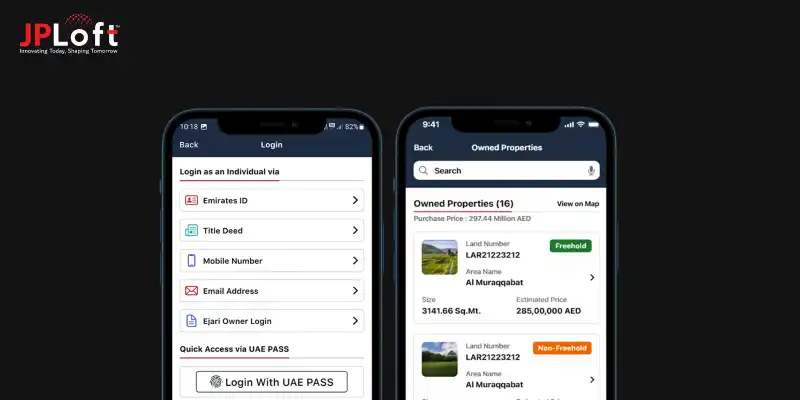
The Dubai REST app is a digital real estate platform launched by the Dubai Land Department to provide easy access to property-related services. It allows users to view verified property details, ownership records, rental data, and real estate market information from one trusted source.
Key services of the app include property ownership verification, title deed details, rental index, sale prices, project status, and access to important real estate documents.
Moreover, Dubai REST is trusted by businesses because it provides official, accurate, and updated data directly from government services. This transparency maintains safety and ensures informed property decisions.
Key Statistics
-
The Dubai REST app has surpassed 500K installs on Android devices, indicating strong user adoption.
-
The UAE proptech market size is expected to grow at a CAGR of 17.6% during 2026-2032, and reach USD 2226.4M by 2032.
-
With such an immense market, Dubai holds 45% share of the entire real estate market, showcasing transaction worth AED 66.8 billion in May 2025 alone.
-
In January 2026, Dubai’s residential transactions went to AED 111 billion, highlighting sustained market depth and a great opportunity for businesses.
How Does the Dubai Rest App Work?
The Dubai REST app works as a single platform that connects users with official real estate services provided by DLD (Dubai Land Department). The app works as follows.
-
Users log in using secure identity verification to access real estate services.
-
The app connects with Dubai Land Department systems to fetch verified property data.
-
Users can view ownership details, rental index, and transaction history.
-
Market insights and project updates are shown in real time.
-
All information is displayed in a simple and user-friendly dashboard.
Moreover, investors can also track project progress and market trends through simple reports. However, by bringing all services into one place, the Dubai REST app reduces paperwork, saves time, and improves transparency.
Moving further, we will discuss why businesses should create an app like Dubai REST and how it is a great investment opportunity.
Why Businesses Should Invest in Dubai REST Like Apps?
Choosing to build a real estate app like Dubai REST helps businesses meet rising digital property demands and much more.
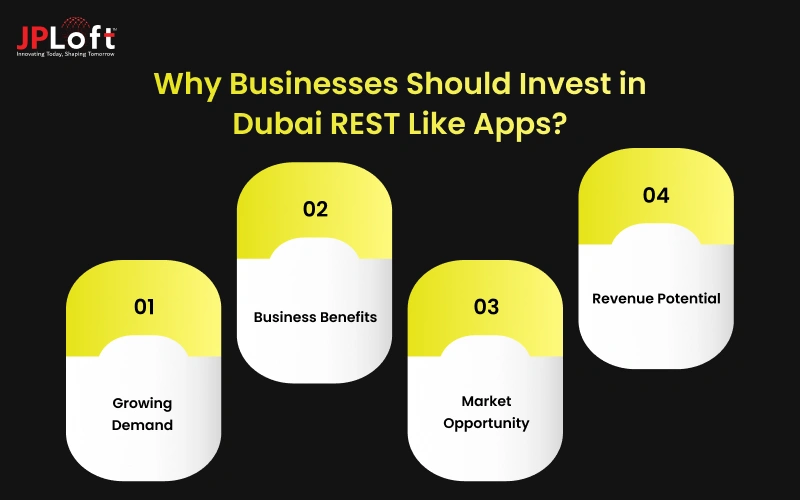
Below are a few points that let you know the reasons to invest in such apps.
1. Growing Demand
Dubai’s real estate market is highly active, and users now prefer digital platforms for property-related services. Mobile apps help users access property details, rental information, and market trends quickly. This shift towards online services increases demand for secure and accessible real estate apps across Dubai.
2. Business Benefits
Government authorities can deliver services faster and reduce paperwork using digital platforms. Enterprises gain by offering trusted property data and improving customer experience. PropTech startups benefit by launching scalable solutions, building user trust, and introducing mobile app features that meet modern business needs.
3. Market Opportunity
Dubai continues to focus on digital transformation and smart city initiatives. Real estate digitalization supports his growth by improving transparency and efficiency. Moreover, businesses investing in real estate apps can tap into a growing user base and long-term market demand.
4. Revenue Potential
Building a real estate app like Dubai REST offers multiple revenue options, including subscriptions, service fees, and partnerships. High user engagement and regular property activities create steady demand. Businesses can build long-term value by offering reliable services while generating consistent revenue.
Key Features to Include in an App Like Dubai REST
Using essential real estate app features helps keep the user engaged and deliver smooth services.
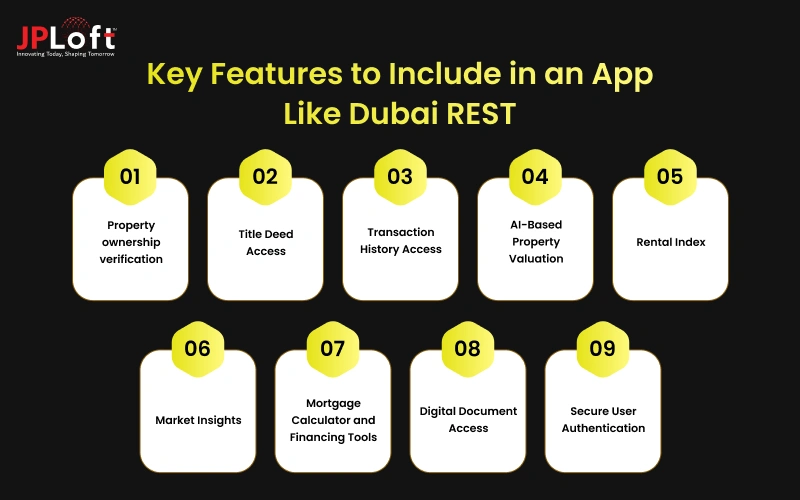
Below are a few features discussed to use when you create an app like Dubai REST.
1. Property ownership verification
Ownership verification allows users to confirm legal ownership details directly within the app. It builds trust by showing verified records and reduces fraud risks. Moreover, it helps buyers, investors, and authorities access accurate property information instantly without delays.
2. Title Deed Access
Title deed access lets users view official property documents in digital form. It removes the need for physical visits and speeds up verification. This ensures users can securely check ownership details anytime using a single platform with government-backed data sources.
3. Transaction History Access
This feature helps users review past property sales, transfers, and rental records in one place. This access improves transparency and supports better decisions. Moreover, this allows investors to track property performance over time easily with clear timelines, verified data, and records.
4. AI-Based Property Valuation
AI-based property valuation uses data and market trends to estimate property value instantly. You can choose an AI development company in Dubai to help buyers and investors understand fair pricing, compare properties, and make informed decisions without relying only on manual evaluations or external valuation reports.
5. Rental Index
The rental index shows average rental values based on location and property type. This feature helps landlords price rentals fairly and supports tenants during negotiations. It provides clear insights into current rental market conditions for informed leasing decisions, planning, and compliance.
6.Market Insights
Market insights provide users with data on sales trends, demand patterns, and area performance. These insights help businesses, investors, and buyers understand market movement. However, they can plan real estate decisions with confidence using real-time analytics, reports, and visual dashboards.
7. Mortgage Calculator and Financing Tools
Mortgage calculator and financing tools help users estimate loan amounts, interest, and monthly payments. These tools support better financial planning. Moreover, they allow users to compare options before applying for property financing through simple inputs, accurate results, and lender visibility.
8. Digital Document Access
Digital document access allows users to view, download, and store property-related documents safely. It reduces paperwork, saves time, and ensures important records are always available within the app when needed for transactions, compliance, sharing, verification, audits, and approvals.
9. Secure User Authentication
Secure user authentication ensures only verified users can access sensitive property services. UAE Pass-like login improves security, protects personal data, and prevents unauthorized access. This builds strong trust between users and the platform through encrypted identity checks.
How to Build an App Like Dubai REST?
Are you still thinking about how to develop an app like Dubai REST?
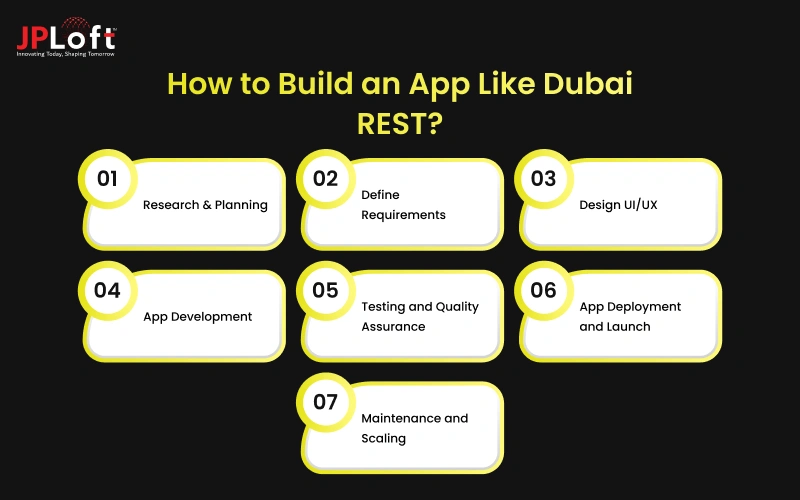
Well, here we discuss the process to create a real estate app that will ease your journey.
Step 1: Research & Planning
This step focuses on understanding the real estate market, user needs, and app goals to build a strong base for a real estate platform.
► Market and Competitor Analysis
This stage studies Dubai’s real estate trends, laws, and digital growth. Businesses identify key users such as tenants, owners, brokers, and investors. Reviewing real estate apps like Bayut and Dubai REST helps understand features, gaps, user needs, and market expectations.
► Goal and Scope Definition
Clear goals help define what the app should achieve for users and businesses. This step sets project scope, success metrics, and MVP features. It also identifies possible risks early and plans solutions to reduce delays, rework, and unexpected development challenges.
► Timeline and Budget Planning
A detailed timeline outlines each development phase and delivery milestones. Budget planning estimates the cost to develop a mobile app, team size, and infrastructure needs. This step ensures realistic planning and proper resource allocation before moving into the Dubai REST app development phase.
Step 2: Define Requirements
The next stage clearly defines what the app should do and how it should perform, ensuring proper functionality and scalability.
► Functional Requirements
Knowing functional requirements describes what the app should do for users. This includes property search, document access, transactions, and digital signatures. Clear workflows help developers understand user actions and ensure smooth property services.
► Non-Functional Requirements
Non-functional requirements focus on how the app performs under real conditions. These include security standards, scalability, speed, uptime, and compliance needs. Defining these early ensures the app remains stable, secure, and reliable as user numbers and data volume grow.
► Technical Specifications
Technical specifications define user roles, access levels, and system integrations. This includes payment gateways, identity verification, and government data APIs. A clear technical document helps align developers, reduces confusion, and ensures the MVP includes essential features.
Step 3: Design UI/UX
The UI/UX design services focus on creating a simple and user-friendly interface that allows users to access the service easily and navigate the app.
► Wireframing
Creating app wireframes provides basic layouts for key app screens such as dashboards, listings, and profiles. This step focuses on structure and navigation flow. Moreover, it helps visualize user journeys, ensures logical information placement, and supports responsive design.
► Prototyping
The app prototypes turn wireframes into interactive designs with visuals and transitions. They show how users will interact with the app. This step includes branding, language options, and accessibility needs to help businesses test real usage before development begins.
► Design Testing
Testing design gathers feedback from real users to identify confusion or usability issues. Designers refine layouts and flows based on the feedback. Repeated testing ensures the app feels simple, intuitive, and easy to use for all target user groups.
Step 4: App Development
This Dubai REST app development stage involves building the technical foundation of the app for a smooth performance.
► Tech Stack Selection
Choosing the right app tech stack ensures performance and scalability. Businesses select frontend, backend, database, and cloud tools based on project needs. The goal is to support a smooth user experience, secure data handling, and long-term maintenance with cross-platform compatibility.
► Core Feature Implementation
Developers build essential features such as property records, document uploads, payments, and transaction tracking. Secure APIs connect frontend and backend systems. This stage ensures accurate data flow, real-time updates, and reliable feature performance across all user roles.
► Agile Development Process
Agile development breaks work into small phases called sprints. Teams review progress regularly and make improvements quickly. This approach allows flexibility, faster issue resolution, and better collaboration, helping businesses adapt features based on feedback during Dubai Rest clone app development.
Step 5: Testing and Quality Assurance
The mobile app testing ensures the app works correctly, remains secure, and delivers a reliable experience through thorough testing.
► Comprehensive Testing Types
Testing checks the app’s functionality, performance, and security. Teams run unit, integration, and full system tests. Security and compliance checks ensure user data protection and legal alignment, while load testing confirms stability during high user activity.
► Beta Testing Phase
Beta testing releases the app to selected users, such as real estate professionals. Their feedback highlights usability issues and feature gaps. This phase simulates real usage and helps businesses refine the app before full public launch.
► Bug Resolution
Reported bugs are logged, prioritized, and fixed systematically. Critical issues are resolved first to avoid user impact. After fixes, regression testing ensures existing features remain stable, delivering a smooth and reliable app experience before launch.
Step 6: App Deployment and Launch
This stage prepares the app for release by setting up infrastructure, submitting the app to the App Store, and publishing the app to the Play Store.
► Infrastructure Setup
Cloud infrastructure supports app hosting, data storage, and performance monitoring. Servers, databases, and security tools are configured carefully. CI/CD pipelines help automate updates, ensuring faster releases, reduced downtime, and smooth system management after launch.
► App Store Preparation
Preparing for app stores includes creating listings, icons, descriptions, and screenshots. Apps must meet platform rules for Android and iOS. Proper optimization improves visibility, speeds approval, and ensures a professional presentation to potential users.
► Launch Execution
The launch phase deploys the app to live environments. Data migration, analytics setup, and monitoring begin immediately. Businesses may choose phased rollouts to control risk while supporting marketing efforts to attract users and build early adoption.
Step 7: Maintenance and Scaling
The last step is considering the app maintenance services to improve performance and scale the system to support growing business needs.
► Performance Monitoring
After launch, teams monitor app performance, user behavior, and system health. Metrics such as retention, transactions, and crash rates guide improvements. Continuous monitoring helps detect issues early and maintain a reliable user experience.
► Update and Enhancement Planning
Regular updates keep the app aligned with user needs and regulations. Businesses plan new features based on feedback and market trends. Testing updates before release ensures stability while improving functionality and long-term user satisfaction.
► Infrastructure Scaling
As users grow, infrastructure must scale smoothly. Auto-scaling systems manage traffic spikes and data growth. Redundancy and security updates protect the platform, ensuring consistent performance, high availability, and reliable service for expanding user bases.
Once you know how to make an app like Dubai REST, it is important to know the cost associated with it. In the next section, we will discuss the cost of development for such apps.
Cost to Build an App Like Dubai REST
The cost to build an app like Dubai REST can vary depending on various factors. Usually, developing such an app ranges from AED 90,000 to AED 900,000+ ($25,000 - $250,000+).
Below, we discuss the mobile app development cost in Dubai based on the type of proptech business idea you have.
|
App Type |
Features to Use |
Estimated Cost (in AED) |
Project Duration |
|
Basic MVP |
Login, Property Search, Ownership Info |
90,000 - 200,000 |
3 to 5 months |
|
Mid-Level App |
Retail Index, Transaction History, Analytics |
200,000 - 450,000 |
6 to 8 months |
|
Advanced App |
AI Valuation, Blockchain Records, Secure Authentication |
450,000 - 900,000+ |
9 to 12+ months |
Though you can begin the development process after hiring government app developers in UAE. Still, there are several factors that impact the overall costs, and below are these discussed.
-
Features & Complexity - More features need more development effort and increase cost.
-
Technology Stack - Using advanced technologies like AI, blockchain, or real-time data adds to costs.
-
Design & User Experience - Custom designs and interactive UI elements increase development time.
-
Security & Compliance - Apps handling sensitive data require strong security and legal compliance, which impacts pricing.
-
Team & Location - The cost to hire mobile app developers in Dubai varies by team experience and expertise.
-
Integrations - Connecting with external systems such as gov APIs, UAE Pass, payment gateways, or third-party databases increases effort and cost.
Challenges to Build an App Like Dubai REST & its Solutions
Building an app like Dubai REST involves more than standard app development.
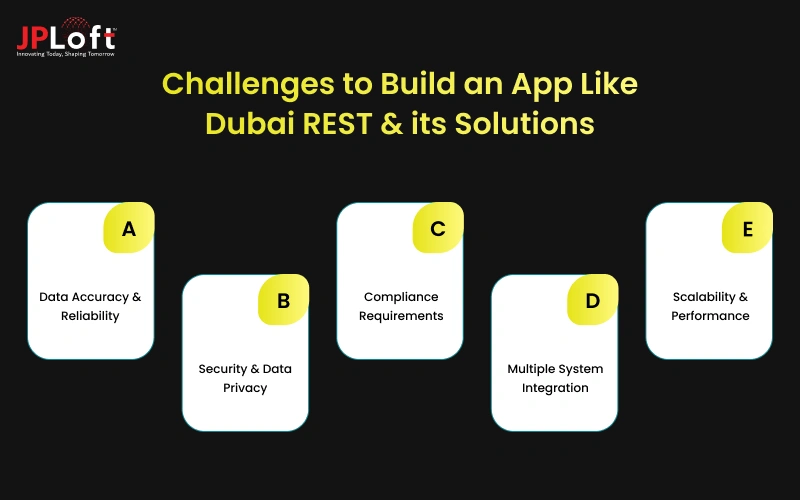
Below are the key challenges in real estate app development that businesses should understand before they make an app like Dubai REST.
[1] Data Accuracy & Reliability
Challenge: Real estate apps depend on accurate and up-to-date property data. Ensuring data correctness from multiple sources is challenging and requires strong validation processes to maintain user trust and avoid misinformation.
Solution: Use verified data sources, regular updates, and validation checks to keep property information reliable and current.
[2] Security & Data Privacy
Challenge: Such apps handle sensitive user and property information. Protecting this data from breaches, unauthorized access, and misuse is critical and requires advanced security measures and strict access controls.
Solution: You can hire mobile app developers to apply encryption, secure authentication, and role-based access to protect sensitive user and property data.
[3] Compliance Requirements
Challenge: Real estate services must follow laws and regulations. Aligning the app with legal, compliance, and data protection standards can be complex and often requires continuous updates.
Solution: Work closely with legal guidelines, follow local regulations, and update the app regularly to stay compliant.
[4] Multiple System Integration
Challenge: Connecting the app with external systems like identity verification, payment gateways, and property databases can be technically challenging and time-consuming.
Solution: Use well-documented APIs and stable system connections to ensure smooth integration with external services.
[5] Scalability & Performance
Challenge: As user numbers grow, the app must handle high traffic and large data volumes. Designing a scalable architecture that performs consistently under load is a major challenge.
Solution: Consider proptech app development services to build a flexible architecture that can handle growing users, traffic, and data without performance issues.
Monetization Models for Dubai REST Like Apps
Dubai REST-like apps can generate revenue in multiple ways while still delivering value to users.
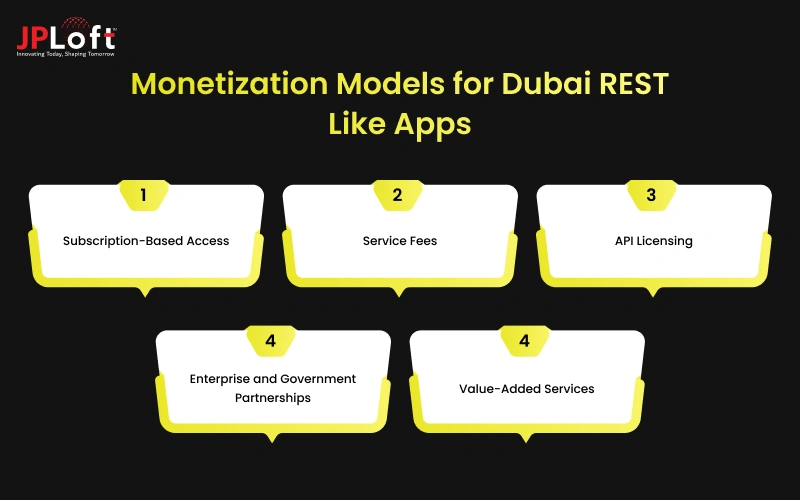
Below are simple and effective app monetization models businesses can consider.
A. Subscription-Based Access
Businesses can offer monthly or yearly subscription plans for advanced features such as detailed market insights, analytics, or premium property reports. This model ensures steady and predictable revenue.
B. Service Fees
A small fee can be charged for specific services like document generation, transaction processing, property verification, or valuation reports. Users pay only when they use a service, making it flexible and user-friendly.
C. API Licensing
Property data, market insights, or valuation APIs can be licensed to banks, brokers, or third-party platforms. This model works well for B2B revenue and scales easily as demand grows.
D. Enterprise and Government Partnerships
Apps can generate revenue through long-term contracts with enterprises, developers, or government bodies that need custom real estate solutions, integrations, or dedicated platforms.
E. Value-Added Services
Additional services such as legal support, mortgage assistance, or property management tools can be offered through partnerships, generating commission-based income.
Why Choose JPLoft to Build an App Like Dubai REST?
Choosing JPLoft to create an app like Dubai REST means working with a team that understands both technology and business needs.
JPLoft is a mobile app development company in Dubai that has strong experience in developing secure, scalable, and custom real estate apps.
The focus is always on clean design, smooth user experience, and reliable system performance. From planning and design to Dubai Rest clone app development, testing, and launch, JPLoft provides end-to-end support to ensure the app meets market and user expectations.
Security and data protection are treated as top priorities, especially for apps handling sensitive property information. JPLoft also offers fully customized solutions, so the app is built around your specific goals rather than using fixed templates.
With clear communication, transparent processes, and ongoing support after launch, JPLoft helps businesses create real estate apps that build trust, drive user adoption, and long-term growth.
Conclusion
Considering development services for a property app is a smart move for businesses looking to enter the digital real estate space. Such apps improve trust, reduce paperwork, and make property services faster and more transparent for users.
With the right planning, features, and secure technology, businesses can offer verified property data, market insights, and digital document access from one platform.
Moreover, development requires careful investment in design, security, and compliance. From steady user demand to multiple revenue options, Dubai REST-like apps offer great growth potential.
By following a clear development process and choosing an experienced app development partner, businesses can build a reliable real estate platform that supports their goals.
FAQs
The cost to develop an app like Dubai REST usually ranges from AED 90,000 to AED 900,000+ ($25,000 to $250,000+), depending on features, security needs, integrations, app complexity, and more.
To make an app like Dubai REST, you need to start with market research, define clear goals, design a simple UI, use secure technology, integrate verified data sources, test thoroughly, and scale the app after launch.
You can make money through subscriptions, service fees, API licensing, enterprise partnerships, and value-added services like valuation reports, legal support, or mortgage assistance.
Key features include property ownership verification, title deed access, transaction history, rental index, market insights, secure authentication, and more.
Major challenges in building an app like Dubai REST include data accuracy, security, legal compliance, and system architecture, which require strong planning, verified APIs, and a secure architecture.

Priyanka Sukhwal is the Managing Director and Business Head of JPLoft, with 10+ years of experience in technology, digital product strategy, and business growth. She has worked closely with businesses building mobile applications, custom software, marketplaces, and on-demand platforms across mobility, automotive, consumer services, and startup ecosystems. At JPLoft, she focuses on understanding business models, identifying product opportunities, and helping companies plan digital solutions that can scale with changing market needs.


Share this blog