


Key Takeaways:
Different types of real estate apps are property listing/management, real estate investment, and virtual/AR property tour apps.
Real estate app development steps include market research, feature choice, UI/UX design, development, testing, and launch.
The top tech stack to build a real estate app is React Native, Flutter, Node.js, Django, MongoDB, Mapbox, Stripe, Twilio, and TensorFlow.
The real estate app development cost varies between USD 15,000 and USD 150,000+, based on the features, tech stack, and design.
Smart features in real estate apps include AI-powered recommendations, a 24/7 chatbot, predictive pricing, and natural language search.
Popular real estate app monetization models are freemium+premium, subscription plans, commission, and lead generation.
JPLoft delivers scalable, user-friendly real estate apps with expert strategy, modern technology, and end-to-end support for effective growth.
The real estate industry is changing fast, and mobile apps are the center of this shift. Buyers, sellers, and agents now expect quick access to property listings, virtual tours, and real-time updates right from their phones.
This growth creates a strong opportunity for businesses to build smart, user-friendly real estate apps that stand out in this crowded market. But building a successful app isn't just about adding listings and maps.
The process of how to create a real estate app requires clear planning, the right features, and a smooth user experience that solves real problems. From property search to secure transactions, every element must work together.
In this blog, you will learn how to build a real estate app step by step. We will also cover key features, cost, tech stack, different types of apps, and best practices to help you create a reliable and scalable solution.
Types of Real Estate Apps
Before beginning with how to create a real estate app, you should know about various forms of apps that exist. Each type of app is designed to solve a specific user need across buying, selling, renting, and investing. Knowing these different types helps you choose the right app model for the targeted audience:
|
App Type |
Description |
Key Features |
|
Property Listing & Search Apps |
Property listing app development helps users browse, search, and compare properties for buying or renting. |
Advanced search filters, map integration, property details, price comparison, saved listings |
|
Real Estate Investment Platforms |
Designed for investors to explore, analyze, and invest in real estate opportunities with data-backed insights. |
ROI calculators, market trends, portfolio tracking, fractional ownership options |
|
Property Management Apps |
Property management app development helps landlords and property managers handle operations like maintenance, tenant communication, and rent tracking. |
Tenant management, maintenance requests, payment tracking, reporting dashboards |
|
Virtual Tour & AR-Based Apps |
Focus on immersive property viewing experiences using 3D tours, VR, and AR technologies. |
3D walkthroughs, AR visualization, virtual staging, remote property viewing |
|
Rental Management Apps |
Tailored for managing rental properties, listings, and tenant interactions in one place. |
Rent collection, lease management, tenant screening, notifications |
|
Agent CRM Apps |
Built for real estate agents to manage leads, client relationships, and sales pipelines efficiently. |
Lead tracking, automated follow-ups, contact management, sales analytics |
|
Mortgage & Loan Calculator Apps |
Help users estimate loan eligibility, EMIs, and repayment plans before purchasing a property. |
EMI calculators, interest breakdown, loan comparison, amortization schedules |
Must-Have Features in a Real Estate App
Some of the features that create a real estate app form the core foundation. When these real estate app features are combined effectively, they create a seamless experience for buyers, sellers, and agents while driving higher engagement and conversions.
Here we have listed the must-have features to make a real estate app that ensures a smooth user experience and high business value:
|
Component |
Features |
Description |
|
User Panel Features |
Property Search with Filters |
Helps users find properties based on location, price, BHK, and preferences. It improves user experience by saving time and effort. |
|
Map Integration |
Displays properties on maps using tools like Google Maps or Mapbox. It allows users to explore nearby areas and view property locations visually. |
|
|
Advanced Search & AI Recommendations |
Uses AI to suggest properties based on user behavior and search history. This makes property discovery more personalized and relevant. |
|
|
Wishlist / Save Properties |
Users can bookmark properties they like for later viewing. It helps in easy comparison and decision-making. |
|
|
Virtual Tours (360° / AR) |
Enables users to explore properties remotely through immersive tours. It reduces the need for physical visits and speeds up decisions. |
|
|
In-App Chat with Agents |
Users can connect with agents directly within the app. It ensures quick communication and better engagement. |
|
|
Push Notifications & Alerts |
Sends updates about new listings, price drops, or offers. It keeps users informed and increases app engagement. |
|
|
Agent / Seller Panel Features |
Property Listing Management |
Allows agents to add, edit, and manage property listings easily. It ensures accurate and up-to-date information for users. |
|
Lead Management Dashboard |
Helps track and manage potential buyers or renters in one place. It improves follow-ups and conversion rates. |
|
|
Analytics & Performance Reports |
Insights into listing views, leads, and engagement. It helps agents improve their sales strategies. |
|
|
Admin Panel Features |
User & Agent Management |
Enables admins to manage user accounts and agent profiles. It ensures platform security and smooth operations. |
|
Content & Listing Moderation |
Review and control property listings and content quality. It prevents fraud and maintains trust. |
|
|
Revenue & Subscription Management |
Tracks earnings from subscriptions, ads, or commissions. It helps manage billing and overall platform revenue efficiently. |
Real Estate App Tech Stack
Choosing the best tech stack for real estate app 2026 is key to building a reliable app. Mobile app tech stack impacts performance, scalability, and user experience. From frontend tools to AI features, each component plays a vital role in delivering a seamless and efficient platform.
Here is a table of common and most popular tech stacks to build a real estate app:
|
Category |
Technologies / Tools |
Explanation |
|
Frontend Technologies |
React Native, Flutter, Swift, Kotlin |
Builds responsive and user-friendly apps. They ensure smooth performance across Android and iOS platforms. |
|
Backend Technologies |
Node.js, Django, Laravel |
Backend handles business logic, data processing, and server communication. These frameworks support scalable and secure app development. |
|
Database Options |
PostgreSQL, MongoDB, Firebase |
Stores property data, user details, and transactions. Choosing the right database ensures fast data retrieval and reliability. |
|
Maps API |
Google Maps, Mapbox |
Enables location-based search and map views in real estate marketplace app development. Helps users explore properties and nearby areas visually. |
|
Payment Gateway |
Razorpay, Stripe |
Payment gateways allow secure online transactions. Support rent payments, booking fees, and subscriptions. |
|
Video/Chat Integration |
Twilio, Agora |
Enables in-app communication through chat, voice, or video. Improves interaction between buyers and agents. |
|
Property Data APIs |
ATTOM Data API, BatchData API |
Gives access to real estate listings and market data. Enrich your app with reliable property information. |
|
Cloud & Hosting |
Amazon Web Services, Google Cloud Platform, Microsoft Azure |
Cloud platforms offer scalable infrastructure for hosting apps. Ensure high availability, security, and performance. |
|
AI/ML Stack for Smart Features |
TensorFlow, OpenAI APIs, Recommendation Engines |
AI/ML helps deliver smart property suggestions and predictive analytics. Enhances user experience with personalization and automation. |
Step-by-Step Process to Build A Real Estate App
Real estate app development steps require a clear process that balances user needs, technology, and business goals. Following a proper process helps businesses reduce risks, control costs, and deliver high-quality products.
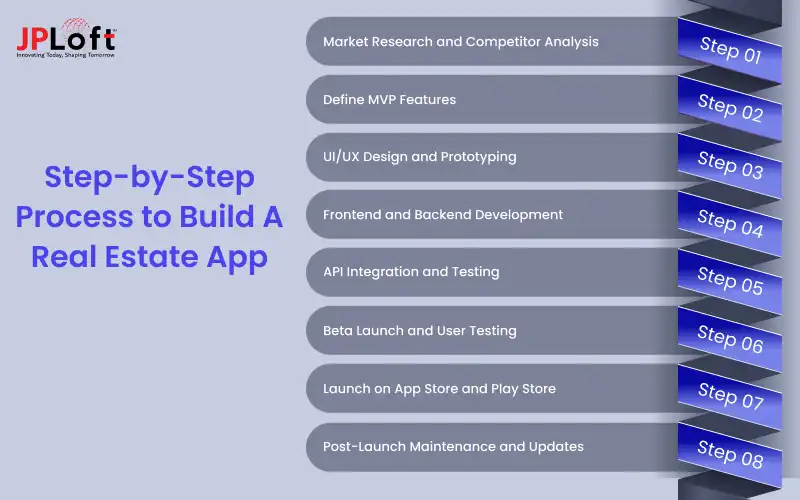
Below is the step-by-step process for how to build a real estate app and launch with confidence:
Step 1. Market Research and Competitor Analysis
Start by understanding your target audience and market demand. Identify whether your app is for buyers, renters, agents, or investors. Study competitors to analyze their features, strengths, and gaps.
Focus on user pain points such as complex navigation, outdated listings, or a lack of transparency.
Validate your idea with real user feedback and define your unique value proposition. This ensures you build a product that solves real problems instead of guessing market needs.
Step 2. Define MVP Features
Once research is complete, outline your minimum viable product (MVP). The goal is to launch quickly with only essential app features.
Include core real estate app MVP features list like property search, filters, map view, user login, and basic listings. Avoid adding advanced features at this stage.
Prioritize features that directly impact user experience and business value. A well-defined MVP reduces real estate app development cost and helps you test your idea faster in the market.
Step 3. UI/UX Design and Prototyping
Design plays a major role in user engagement. Start with app wireframes to map out the app structure and user flow. Then move to high-fidelity designs that reflect the final look and feel.
Focus on simple navigation, clean layouts, and fast loading screens. Use clickable prototypes to test user journeys before development begins.
Good design by an expert UI/UX design service provider reduces friction and ensures users can easily search, view, and interact with property listings.
Step 4. Frontend and Backend Development
This step is where your app starts taking shape. The frontend handles what users see and interact with, while the backend manages data, servers, and logic.
Use top mobile app development frameworks like React Native or Flutter for frontend development. For the backend, frameworks like Node.js or Django work well.
Hire an AI development company to ensure your architecture supports scalability and AI features as real estate apps often handle large datasets and user traffic.
Step 5. API Integration and Testing
Integrate third-party APIs to add essential functionalities. This includes maps using Google Maps, payments via Stripe, and communication tools.
After integration, conduct thorough testing. This step in how to make a real estate app process includes functional testing, performance testing, and security testing. Identify and fix bugs early to avoid issues during launch.
App testing ensures it runs smoothly across devices and provides a reliable user experience.
Step 6. Beta Launch and User Testing
Before full launch, release a beta version to a limited audience. This helps you gather real user feedback and identify usability issues.
Track how users interact with the custom real estate app development, which features they use most, and where they drop off.
Make improvements based on this data. A beta launch reduces risk and helps refine your app before reaching a wider audience.
Step 7. Launch on App Store and Play Store
Once your app is tested and optimized, prepare for an official launch. Publish app on the Google Play Store and Apple App Store while following their guidelines strictly to avoid rejection.
Ensure your app listing includes a strong description, screenshots, and relevant keywords.
Follow guidelines to submit iOS apps to the App Store to avoid rejection. A well-planned launch improves visibility and helps attract early users.
Step 8. Post-Launch Maintenance and Updates
Launching the app is just the beginning. Regular updates by the leading app maintenance service providers are essential to keep your app relevant and competitive.
Monitor app performance, fix bugs, and release new features based on user feedback.
Keep your app updated with the latest technologies and security measures. Continuous improvement helps retain users and ensures long-term success in the market.
How Much Does it Cost to Develop A Real Estate App?
The real estate app development cost ranges between USD 15,000 to USD 150,000+. This cost depends on features, complexity, design, and tech stack. A simple app with basic property listings and search will cost less.
For businesses, the smart approach is to start with an MVP and scale gradually. Partnering with a mobile app development company to build an MVP helps you control the costs of developing a real estate app while validating the app idea in the market.
Development location, team expertise, and third-party integrations also impact the final budget.
Along with development, if you are wondering how long does it take to build a real estate app, then generally for a basic app it takes 2-3 months. Advanced apps with AI features and futuristic tech can take 5-8 months or more to develop.
Below is the real estate app development cost based on the development complexity:
|
App Type |
Estimated Cost (in USD) |
Development Duration |
Features Included |
|
Basic App |
$15,000 – $30,000 |
2 – 3 months |
Property listings, search filters, user login, basic UI |
|
Mid-Level App |
$40,000 – $80,000 |
3 – 5 months |
Map integration, chat, notifications, and advanced filters |
|
Advanced App |
$75,000 – $150,000+ |
5 – 8+ months |
AI recommendations, virtual tours, analytics, and payment integration |
Hiring mobile app developers who have experience and are the most compatible ensures you get the best value while building a high-performing real estate app.
Monetization Models for Real Estate Apps
Choosing the right mobile app monetization strategy is the key to turning your real estate app into a sustainable business. A balanced combination of proven monetization models helps maximize revenue while maintaining a smooth user experience.
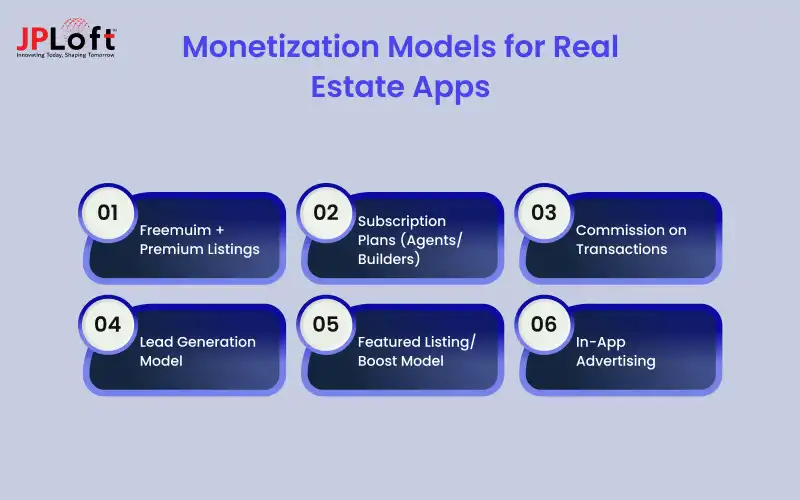
Below are the most effective real estate app monetization models used by top market players:
1. Freemuim + Premium Listings
This model offers basic features for free while charging for advanced visibility or tools. Users can browse listings for free, but agents or sellers pay to highlight their properties or access premium features.
Revenue Source: Fees from premium listings, featured placements, and enhanced property visibility.
2. Subscription Plans (Agents/Builders)
A recurring revenue model where agents or builders pay monthly or yearly fees. Integrating into a real estate marketplace app development can give subscribers access to tools like lead management, analytics, and unlimited listings.
Revenue Source: Monthly or annual subscription fees from real estate professionals.
3. Commission on Transactions
The platform earns a percentage from successful property transactions. When a deal is closed through the app, the platform charges a fixed percentage or service fee.
Revenue Source: Commission from property sales, rentals, or booking transactions.
4. Lead Generation Model
The lead generation model create a real estate app that concentrates on selling verified leads to agents and property sellers. Users show interest in properties, and those leads are shared with agents for a fee.
Revenue Source: Charges per lead or bulk lead packages for agents and brokers.
5. Featured Listing/Boost Model
A visibility-based model where listings are promoted for better reach. Sellers pay to boost their property listings to appear at the top of search results.
Revenue Source: Fees for boosting listings, homepage placements, and priority search ranking.
6. In-App Advertising
Generates revenue by displaying ads from third-party businesses. The app displays ads related to home loans, furniture, or moving services.
Revenue Source: Ad placements, banner ads, and partnerships with relevant brands.
AI & Smart Features in Real Estate Apps
AI features in a real estate app, and various smart features are transforming how users search, evaluate, and interact with properties.
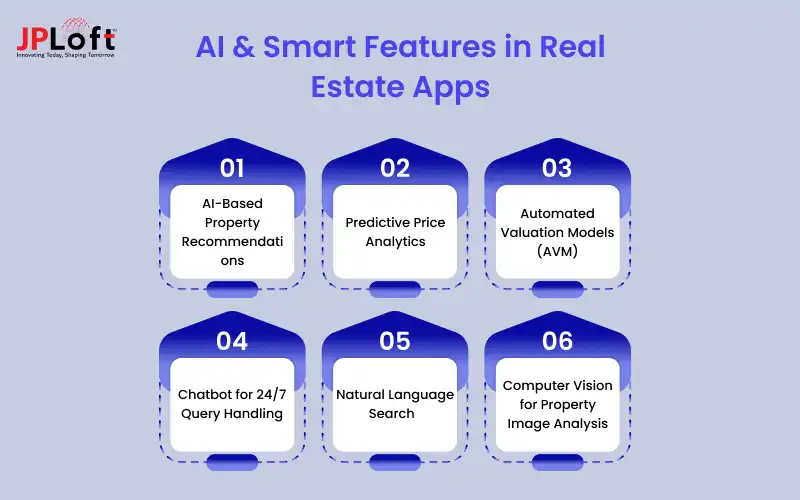
From smart recommendations to automated insights, these features enhance user experience, improve decision-making, and give a strong competitive edge:
#1: AI-Based Property Recommendations
AI analyzes user behavior, preferences, and search history to suggest relevant properties in a proptech app development. Hire AI developers to improve discovery, increase engagement, and help users find suitable homes faster with personalized recommendations.
#2: Predictive Price Analytics
AI in real estate mobile app development uses historical data and market trends to predict property prices. It helps buyers and investors make informed decisions by understanding future price movements and investment potential.
#3: Automated Valuation Models (AVM)
AVMs use machine learning algorithms to estimate property values instantly. They analyze location, property features, and market data to provide accurate pricing without manual intervention.
#4: Chatbot for 24/7 Query Handling
AI-powered chatbots handle user queries anytime without human support. Building AI chatbots helps answer questions, suggest properties, schedule visits, and improve customer experience while reducing operational workload for businesses.
#5: Natural Language Search
This feature allows users to search using everyday language instead of filters. An AI real estate app understands intent and delivers precise results, making property searches faster and more user-friendly.
#6: Computer Vision for Property Image Analysis
Computer vision analyzes property images to detect features like rooms, interiors, and quality. It enhances listings, improves search accuracy, and helps users evaluate properties visually with better insights.
Best Practices to Design a Real Estate App
A great real estate app development for startups consists of a design that provides a seamless user experience. A strong UX design keeps users engaged, builds trust, and increases conversion rates.
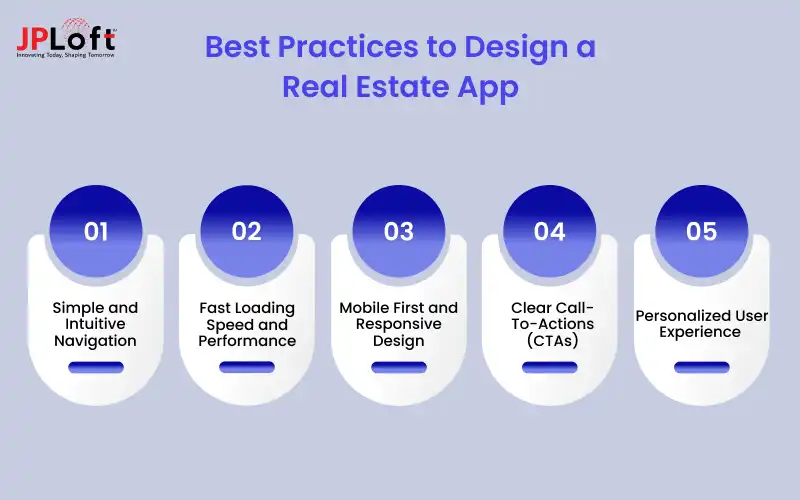
Some of the best practices you can adapt while you design an app for real estate:
► Simple and Intuitive Navigation
Keep navigation clear and easy, so users can find properties quickly. A simple structure reduces drop-offs, improves engagement, and helps businesses convert visitors into qualified leads efficiently. Use high-resolution images, videos, and virtual tours to showcase properties effectively.
► Fast Loading Speed and Performance
Optimize enterprise real estate app solutions speed to ensure smooth browsing without delays. Faster performance improves user retention, reduces bounce rates, and directly impacts lead generation and overall business growth.
► Mobile First and Responsive Design
Design the app for mobile users first, ensuring a seamless experience across devices. A responsive design increases reach, enhances usability, and supports higher engagement from on-the-go property seekers.
► Clear Call-To-Actions (CTAs)
Place strong and clearly visible CTAs like “Contact Agent” or “Schedule Visit.” Effective CTAs guide users toward actions, boosting lead generation and helping businesses achieve higher conversion rates.
► Personalized User Experience
Leverage user data and app prototypes to offer tailored property suggestions and content. Personalization improves engagement, builds trust, and increases the chances of repeat visits and successful transactions.
Legal & Compliance Considerations for Real Estate App
The process of how to make a real estate app requires strict attention to legal and regulatory standards. Ignoring compliance can lead to penalties, loss of trust, and operational risks.
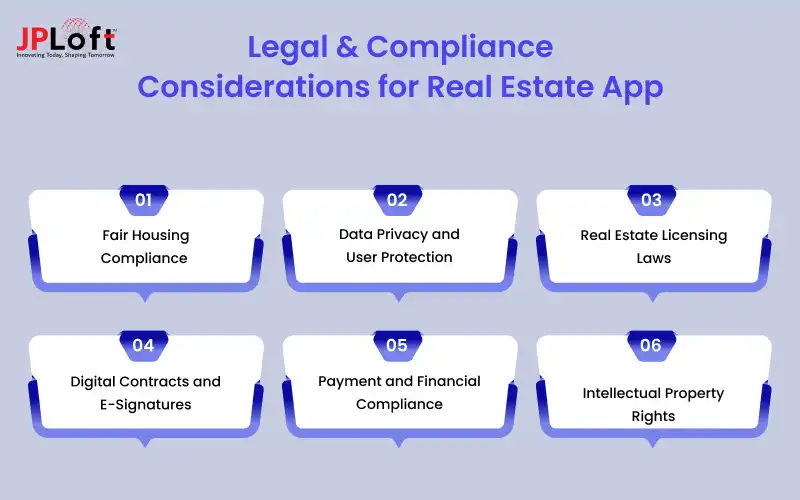
Here are the key legal and compliance considerations to take care of when you create a real estate app:
1. Fair Housing Compliance
Your app must follow the Fair Housing Act, which prohibits discrimination based on race, religion, gender, disability, or family status. Ensure property listings, filters, and ads do not promote biased or restricted housing preferences.
2. Data Privacy and User Protection
Real estate apps collect sensitive user data like contact details and financial information. Compliance with laws like the California Consumer Privacy Act is essential. You must provide clear privacy policies, allow users to manage their data, and ensure secure storage.
3. Real Estate Licensing Laws
Agents and brokers using your platform must hold valid state licenses. Regulations vary by state, so your app should verify and display agent credentials. This helps maintain transparency and builds user trust.
4. Digital Contracts and E-Signatures
If your real estate marketplace app development supports agreements or bookings, it must comply with the Electronic Signatures in Global and National Commerce Act. Ensure that digital signatures are legally valid and properly recorded.
5. Payment and Financial Compliance
For handling payments like booking fees or subscriptions, follow financial regulations and PCI-DSS standards. Using trusted gateways helps ensure secure transactions and reduces fraud risks.
6. Intellectual Property Rights
Protect your app’s content, design, and branding through copyrights and trademarks. Also, ensure that property images, descriptions, and third-party data used in your app are properly licensed.

How to Choose the Right Real Estate App Development Company?
Choosing the right real estate app development company is crucial for building a reliable and scalable solution. You should evaluate their experience, technical expertise, portfolio, and knowledge of market trends before making a decision that impacts your business growth.
JPLoft stands out as a trusted partner for real estate app development. With proven experience in delivering high-performing apps, JPLoft focuses on building user-friendly, scalable, and feature-rich solutions tailored to your business needs.
Their team follows a strategic approach from idea validation to post-launch support, ensuring smooth development and long-term success. By combining modern technologies with industry insights, JPLoft helps businesses create apps that drive engagement, generate leads, and maximize ROI in this market.
Conclusion
Real estate app development is a strategic investment of technology and public knowledge. It requires a clear understanding of user needs, the right feature set, and a scalable tech stack to support long-term growth.
From selecting the right app type to defining your MVP, designing the interface, and integrating smart AI features, every step plays a key role in success. It is equally important to choose the right monetization model and ensure legal compliance.
A well-planned process to build a real estate app helps reduce risks, control costs, and deliver a high-quality product that users trust. As the demand for digital property solutions continues to rise, businesses that act early can gain a strong competitive advantage.
By focusing on performance, usability, and innovation, you can build a real estate app that attracts users while generating consistent revenue growth.
FAQs
The process includes market research, defining MVP features, UI/UX design, development, API integration, testing, beta launch, and final deployment. Post-launch updates and maintenance are crucial for improving performance, resolving issues, and keeping users engaged.
Businesses can build listing apps, investment platforms, property management tools, rental apps, CRM systems for agents, AR-based virtual tour apps, and mortgage calculators. The choice depends on target users, business goals, and the specific problems the app aims to solve.
A real estate app should include property search, filters, map integration, chat, notifications, and virtual tours. For businesses, agent dashboards, analytics, and admin controls are essential to manage listings, track leads, and ensure smooth platform operations.
The best tech stack depends on scalability and performance needs. Common choices include React Native or Flutter for frontend, Node.js or Django for backend, and cloud platforms like AWS, ensuring flexibility, speed, and long-term growth support.
The cost ranges between USD 15,000 and USD 150,000+, depending on complexity. Basic apps cost less, while advanced apps with AI, analytics, and integrations require higher investment. Starting with an MVP helps businesses manage budgets effectively and scale later.
Your real estate app must follow the Fair Housing Act, which prohibits discrimination based on race, religion, gender, disability, or family status. Ensure property listings, filters, and ads do not promote biased or restricted housing preferences.

Rahul Sukhwal is the CEO and Founder of JPLoft, a visionary technologist with 18+ years at the forefront of emerging tech innovation and software engineering. He channels deep software engineering and AI expertise into building smarter, scalable solutions that shape how forward-thinking businesses worldwide harness the true power of AI.



Share this blog