


Key Takeaways:
Custom software development gives businesses tailored solutions that improve workflows, scalability, and long-term efficiency.
How to create a custom software? Define goals, study user needs, pick the right tech stack, and follow a structured SDLC.
Choosing between Agile, Waterfall, and DevOps affects delivery speed, teamwork, and overall project outcomes.
Strong security practices in custom software protect data, reduce risks, and keep systems reliable as they scale.
Clear timelines help teams manage resources, avoid delays, and maintain predictable development cycles.
The right technologies ensure better performance, flexibility, and future-ready growth for any custom solution.
JPLoft offers expert custom software development with strong technical skills, transparent communication, and long-term support.
The global custom software market is already crossing USD 40 billion and is set to grow rapidly over the next decade.
More businesses are stepping away from generic tools because they no longer match real workflows, real user expectations, or long-term growth goals.
That’s where a solid guide to custom software development becomes essential. It helps teams understand what to build, why it matters, and how to create systems that actually support the way their business runs.
This guide will walk you through the steps, features, and more so you know exactly how custom software comes to life. It starts with defining clear goals, studying user needs, choosing the right tech stack, and selecting the right development approach. From there, the process moves through a full SDLC, planning, design, development, testing, deployment, and ongoing maintenance to keep the product strong as your business evolves.
What is Software Development?
Software development is the process of designing, building, testing, and maintaining applications that solve specific problems or support business operations.
Custom software is developed for the business processes, objectives, and users' needs of a certain business, rather than from a general, one-size-fits-all perspective. It gives companies full control over features, integrations, security, and scalability.
This makes it easier to streamline processes, automate tasks, and support long-term growth. What it basically means, in simple words, is that custom software works precisely the way your business does, and it creates a smoother and efficient digital experience for both teams and customers.
Let’s learn about the custom software market below.
-
The global software development market size is estimated at USD 43.16 billion in 2024, and is projected to reach USD 146.18 billion by 2030, that is growing at a CAGR of 22.6% from 2025 to 2030.
-
The custom software development market in the U.S is growing from 2025 to 2030. This market size is projected to be USD 146.18 billion.
-
Additionally, the global software development market size was accounted at USD 43.21 billion in 2024 and is predicted to increase from USD 53.02 billion in 2025 to approximately USD 334.49 billion by 2034, that is expanding at a CAGR of 22.71% from 2025 to 2034.
-
The global custom software development market is valued at USD 42.05 billion in 2024, and is growing at a CAGR of 22.4% from 2025 to 2034.
Well, as you are aware of the growing market creates an important reason to proceed with software development.
As you know, the demand for software is increasing, and you are beginning to enter the software market. The next question is what type of software should you make next?
Let’s get ahead to the following section to learn about different types of software in the market.
What Are the Different Types of Software Development?
There are diversified types of software development models that you can pursue with such as the Waterfall Model, 2 V model, incremental and iterative model, Spiral model, and many more.
Let’s learn about these models in detail here.
Type 1: Web Development
Web development covers the creation of websites and web applications running on internet browsers.
This includes front-end development for the user interface, back-end development for the server side, and full-stack development, which a skilled website development company typically handles from end to end.
In creating the responsive and interactive web experience for different devices and platforms, developers make use of technologies such as HTML, CSS, JavaScript, React, Node.js, and PHP.
Type 2: Mobile App Development
Mobile app development services focus on creating applications for mobile devices, including smartphones and tablets.
It ranges from native development using Swift for iOS to Kotlin/Java for Android, and even cross-platform development with frameworks such as React Native and Flutter.
Applications range from simple utilities to complex enterprise solutions, leveraging features that include push notifications, GPS, and camera integration.
Type 3: Desktop Application Development
The development of desktop applications creates software that runs directly on personal computers and workstations, without dependence on any web browser.
The development is made for specific operating systems like Windows, macOS, or Linux using languages such as C++, C#, Java, or Python to create software that fits the required functionality.
Compared to web applications, desktop apps usually have the advantage of more processing capability and offline functionality, best suited for resource-intensive applications.
Type 4: Game Development
Game development is a specialized process of creating interactive entertainment software for various platforms, from consoles and PC to mobile and VR devices.
It unites the work of programming, graphics design, physics simulation, and storytelling using either game engines like Unity and Unreal Engine or custom-built frameworks.
This ranges from casual mobile games to complex AAA titles, encompassing skills related to 3D modeling, animation, sound design, and multiplayer networking.
Type 5: Embedded System Development
The development of embedded systems involves software creation that operates on hardware devices with specific functions, like IoT devices, smart home appliances, automotive systems, and medical equipment.
These systems are limited in resources and also call for low-level programming using languages such as C, C++, or assembly.
Embedded developers must, among other things, optimize code for performance, power consumption, and real-time operations while guaranteeing reliability and security.
Type 6: Enterprise Software Development
Development in enterprise software primarily focuses on large-scale applications that fulfill the complex demands of organizations and businesses.
It encompasses enterprise resource planning (ERP), customer relationship management (CRM), supply chain management, and business intelligence tools that help businesses build a software ecosystem tailored to their operations.
Enterprise software involves robust architecture for scalability, security, and integration with existing business systems to enhance operations and improve productivity across all departments.
Type 7: Cloud Computing Development
Cloud computing development involves the creation and deployment of applications on cloud infrastructures and services provided by vendors such as AWS, Azure, or Google Cloud.
Developers develop scalable, distributed applications by implementing microservices architecture, containerization (Docker, Kubernetes), and serverless computing. With the Google Cloud development services, you can build your own cloud computing software.
Cloud-native development means that an organization can cut down on infrastructure costs while gaining scalability and high availability through features such as auto-scaling and load balancing.
Type 8: DevOps and Automation
DevOps development fills in the gap between software development and IT operations by placing a strong focus on automating deployment pipelines, continuous integration/delivery, and infrastructure management.
DevOps engineers apply various tools like Jenkins, GitLab, Terraform, and Ansible for workflow streamlining, reduction of deployment times, and software quality improvement.
This approach emphasizes collaboration, monitoring, and rapid iteration in order to deliver updates and fixes more efficiently.
Type 9: AI and Machine Learning Development
AI and machine learning development focus on building software that can learn, predict, and automate tasks without constant human input.
Enterprises choose this type of development to analyze large datasets, personalize user experiences, detect patterns, and improve decision-making. It helps companies automate repetitive processes, forecast trends, and respond faster to changing business needs.
This approach is ideal for organizations that want smarter, more adaptive systems across operations, customer service, security, and product innovation.
Type 10: Cybersecurity Development
Cybersecurity development concentrates on building secure software with strong protective measures against digital threats, vulnerabilities, and attacks, often supported by AI in cybersecurity to detect risks faster and more accurately.
Security developers build encryption systems, authentication mechanisms, intrusion detection utilities, and security testing frameworks to protect sensitive data and systems.
They work on vulnerability identification and penetration testing, ensuring that applications are kept safe from malicious actors and data breaches by following the standards for security.
After understanding the types, let's switch to the cost figure in the following section.
How Much Does It Cost to Develop Software?
The cost to develop software typically ranges from $30,000 to $250,000+, depending on the complexity of the system, the number of features, and the technology involved.
Smaller tools with basic functionality fall on the lower end, while large-scale platforms like ERPs, CRMs, or AI-driven applications move toward the higher range.
Factors like design, integrations, security needs, and development team expertise also influence the final budget.
Let’s check out the following table for more.
|
Software Complexity Level |
Estimated Cost Range |
Key Components Included |
|
Basic Software |
$30,000 – $60,000 |
Simple UI, core features, basic database, standard integrations, essential user flows |
|
Mid-Level Software |
$60,000 – $150,000 |
Advanced UI/UX, multiple user roles, API integrations, dashboards, moderate automation, stronger security |
|
Advanced Software |
$150,000 – $250,000+ |
Complex workflows, custom architecture, AI/ML features, enterprise security, real-time processing, high scalability |
In this guide to custom software development, now, let's proceed with the development steps in the following section.
What is SDLC? 7 Phases of Software Development
SDLC, or the Software Development Life Cycle, is a structured process used to plan, build, test, deploy, and maintain software. It ensures development happens in clear, organized phases that reduce risks and improve final product quality.
When it's about answering “how to develop software”. You should go through the steps strategically to lead the market and to engage the right audiences.
Let’s study all the phases here.
Phase 1: Planning & Requirements Analysis
Planning is one of the most important aspects that comes after IDEA! When you kick-start a journey, you need to plan the strategy, learn about the market and audience, as well as be aware of the competitive landscape.
► Key Objectives
This is about understanding the business's needs and what needs to be achieved with the software. Here, the teams identify the problem, define the scope, and set expectations right from the very beginning.
This phase makes certain that everyone is aligned on the goals of the projects before development can even begin.
► Activities Involved
Workshops are held with stakeholder interviews and requirement-gathering sessions. The technical teams study workflows, user needs, and system constraints.
These activities help to rationalize the plan with realism and avoid scope confusion later on.
► Final Deliverables
You exit this stage with a detailed document on requirements, a feature list, an estimated timeline, and a roadmap for the project. The deliverables direct the entire course of development and maintain clarity.
Phase 2: Feasibility Study & Market Research
Market research is not just about the data, even though it's also about learning the basic needs of the users, knowing what the user actually wants, and then putting this research to work.
► What This Phase Evaluates
This stage assesses the technical, financial, and operational feasibility of the project. Teams are checking out risks, resource requirements, and limitations of technology.
This aims to validate that the project is actually worth building.
► Research and Analysis Exercises
Competitive analysis, studies of user behavior, and cost forecasting are done. Technical experts verify whether the selected tech stack can support the required features. All this research lays a very robust foundation for decision-making.
► Outcomes of the Feasibility Study
The deliverables are a feasibility report, risk assessment, and early project approval. This provides a clear view of any impending issues that will ensure the project moves forward with confidence.
Phase 3: UI/UX Design & System Architecture
Now it's time to draft the design for your software. It's about framing the first impression for your users, engaging them, and being relevant to the basic principles of UI/UX.
► Designing the User Experience
Designers draw up wireframes, mapping the user journeys to ensure a smooth and intuitive interface. It is one of the more effective steps when it's all about how to develop custom software.
They think about how users move through the software and the experience that should be created, which is exactly what strong UI/UX design services focus on. This makes the final product far more user-friendly. It will help you to reach the users well and effectively.
► Creating System Architecture
Developers design the structure of the backend, APIs, database models, and integration layers. Now you should develop a complete architecture for your software. It should be all about the conceptual model that defines the structure, behavior, and views of a complicated system.
This architecture will define how the system will work internally. Good design prevents bottlenecks from arising during development.
► Deliverables Before Development
Final deliverables include UI mockups, prototypes, technical architecture diagrams, and design guidelines that act as an explicit guide to the developers to start coding without any confusion.
Phase 4: Coding & Development
There can be a way to avoid this step, and that is no-code software development; however, if you want the one with code, then you should be aware of the coding languages, databases, and much more.
► Core Development Tasks
Developers translate the requirements and designs into actual, working code. Each feature is built in modules for easier testing and updating. This phase forms the backbone of the final product. To build custom software, it's significant to know what the backend should look like.
► Frontend, Backend, and Integrations
Frontend developers take care of UI and interactions, backend developers are in charge of logic, servers, and databases, while APIs and third-party integrations are added on top to support other features. Everything combined provides a working product.
► What Gets Delivered in This Phase
You get the working modules, feature builds, and incremental releases for testing. This allows teams to view early progress and refine features before final testing.
Phase 5: Testing & Quality Assurance
Software testing is crucial for checking if the software is enable to serve the users or not. It is an effective procedure to go through for enhancing the overall performance of the software.
► Types of Testing Conducted
QA teams perform functional, performance, security, usability, and regression testing. Each of those types of testing verifies the behavior of software under different conditions to ensure that a product performs well during its real operation.
► QA Activities and Tools
Test cases are written, bugs are logged, and automated tests may be performed. The functionality can also be validated using tools like Selenium, JMeter, or Postman. QA ensures that the app is reliable and safe.
► Test Results
The result is a stable and error-free product that is ready to be deployed. Bugs are fixed, there are improvements, and performance issues are resolved. This phase ensures the quality that users expect.
Phase 6: Deployment & Launch Strategy
When you ask about how to develop software, one of the points is where and how you can deploy your app.
Hence, it's time to deploy the software and select the launch strategy. Let’s learn it all here.
► Preparing for Deployment
The team also configures the servers, databases, and cloud environments. Performing final checks means that the system works in production. Backups and rollback plans are configured for safety.
► Release and Rollout Approaches
The launch can be full, in stages, or as a beta. Each of the strategies has its own way of controlling the risks involved and getting user feedback. The aim is a disruption-free launch.
► Post-Launch Verification
Teams monitor system performance, user activities, and error logs. Issues that appear after a launch are quickly fixed. This helps in stabilizing the software within an initial usage period.
Phase 7: Maintenance, Updates & Bug Fixes
You cannot sustain the market without considering continuous maintenance. Hence, here comes the need to connect with the leading software maintenance services company.
► Continuous Monitoring Tasks
Just developing software is not enough; regularity in checking logs, analytics are run, and server performance is monitored. That helps in the early detection of errors, downtime, or any changes in behavior. Continuous tracking keeps the software healthy.
► Types of Updates and Improvements
Updates include new features, security patches, API upgrades, and UI improvements. Improvements make the product relevant as user needs evolve. This phase, therefore, guarantees long-term usefulness.
► Long-Term Maintenance Goals
To develop custom software, you should meet the long-term maintenance goals. The aim would be to ensure stability, scalability, and security of the software over time. The incremental improvements will help the software grow with your business. Ongoing maintenance protects your investment and supports future expansion.
Following the phases of how to develop a custom software, you can now make your personalized software.
Well, in this process of developing a custom software, one of the important parts that you cannot ignore is resources. After the cost, you should be aware of the timelines required to create the software.
Hence, let's move ahead with the timeline in the following section.
How Long Does Software Development Take?
Software development takes 3 to 12 months from planning to launch. This helps to break the work into clear phases that assist teams to stay aligned and ensures that the product moves smoothly from concept to completion.
Apart from this, you should note that the Software development timelines vary based on complexity, features, integrations, and the size of the development team.
Let's check out the complete table below to learn in detail about the timeline.
|
SDLC Phase |
Description |
Estimated Duration |
|
1. Planning & Requirements Analysis |
Defining goals, gathering requirements, setting scope, and aligning expectations with stakeholders. |
0.5 – 1 month |
|
2. Feasibility Study & Market Research |
Validating technical feasibility, risks, budget fit, and user demand before development begins. |
0.5 – 1 month |
|
3. UI/UX Design & System Architecture |
Creating wireframes, prototypes, user journeys, and overall technical architecture. |
1 – 2 months |
|
4. Coding & Core Development |
Building frontend, backend, APIs, and integrations. This stage forms the bulk of the project. |
1.5 – 6 months |
|
5. Testing & Quality Assurance |
Verifying functionality, performance, security, and usability through structured test cycles. |
0.5 – 1.5 months |
|
6. Deployment & Launch Strategy |
Configuring servers, releasing the build, and performing soft or staged rollouts. |
0.25 – 0.5 month |
|
7. Maintenance, Updates & Bug Fixes |
Ongoing improvements, patches, optimizations, and new features after launch. |
Continuous (monthly cycles) |
A timeline helps to set a deadline to achieve the project goals and related objectives. Well, here comes the need to hire software developers for your project. In this guide to software development, we have discussed steps, cost, types, and even the timeline.
Now, as you get to know about the software development, one of the crucial factors lies here is what kind of methodology is required to select for the development process.
Well, with the following section, you can have a close view of methodology selection.
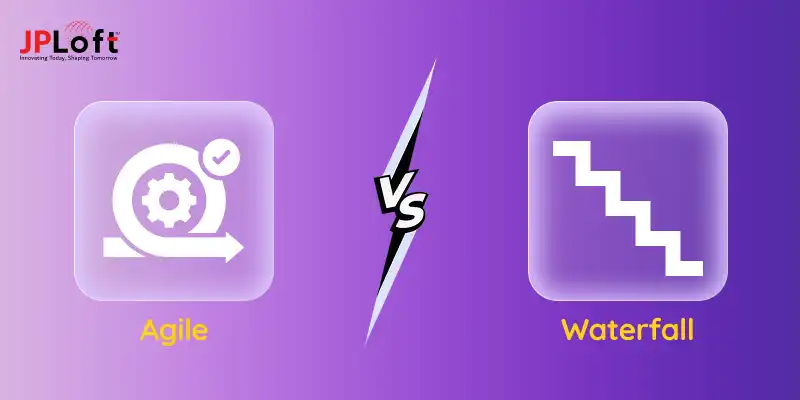
Agile vs Waterfall vs DevOps: Which Methodology to Choose?
When it's about how to make software, it's essential to check out the right methodology for your project.
If you are struggling with the methodology selection, then evaluating agile, waterfall, or DevOps is crucial. You should be aware of all the different types of methodologies.
Let’s learn them all in this section.
|
Factor |
Agile |
Waterfall |
DevOps |
|
Flexibility |
High, adapts to changes easily |
Low, fixed plan from start |
High, continuous updates |
|
Delivery Speed |
Fast, iterative releases |
Slow, sequential phases |
Very fast, automated pipelines |
|
Risk Level |
Low, issues found early |
High, problems appear late |
Low, continuous monitoring |
|
Collaboration |
Strong teamwork, frequent feedback |
Limited, siloed teams |
Strong Dev + Ops collaboration |
|
Best For |
Evolving requirements, dynamic projects |
Fixed-scope projects |
Rapid delivery, scalable apps |
Agile is the most fit methodology for modern mobile app projects due to its swift adaptation, continuous improvement, and reduction of risk by way of frequent iterations. This lets teams test early features, get feedback on those features, and refine the product without slowing down delivery.
However, Waterfall works where the requirements are fixed and unlikely to change, making it suitable only in highly controlled environments. DevOps is ideal for teams that want automation, rapid deployment, and strong collaboration between development and operations.
In real life, most businesses prefer using Agile or a hybrid of Agile-DevOps because this methodology ensures speed and flexibility while providing consistent quality along the whole development lifecycle.
What Technologies Are Used in Software Development?
The technologies used for software development are React, Node.js, Flutter, MySQL, AWS, Google Cloud, and more.
After selecting the technologies, the question “ how to develop custom software” becomes more adequate.
Let’s list the technologies in the table given below:
|
Category |
Technologies |
|
Frontend |
React, Angular, Vue.js, HTML, CSS, JavaScript, Next.js |
|
Backend |
Node.js, Laravel, Django, Spring Boot, Ruby on Rails, .NET Core, Go |
|
Mobile |
Flutter, React Native, Swift, Kotlin, Xamarin |
|
Databases |
MySQL, PostgreSQL, MongoDB, Firebase, Redis |
|
Cloud |
AWS, Google Cloud, Azure, DigitalOcean |
|
DevOps |
Docker, Kubernetes, Jenkins, GitHub Actions, Terraform |
|
Testing |
Selenium, Jest, Cypress, Appium, Postman |
|
APIs |
REST, GraphQL, gRPC, WebSockets |
|
AI/ML |
TensorFlow, PyTorch, OpenAI APIs |
|
UI/UX Tools |
Figma, Adobe XD, Sketch |
|
Big Data |
Hadoop, Spark, and Elasticsearch |
|
Messaging |
Kafka, RabbitMQ, Socket.io |
|
Servers |
Nginx, Apache |
Well, if you proceed with how to build custom software, there can be a certain list of challenges that you might come across during the procedure.
Let’s find and learn about them all in the following section.
What Are Common Software Development Challenges?
The common software development challenges can be security vulnerabilities, integration with third-party systems, performance, and scalability issues.
Let’s discuss the complete list of challenges below.
Challenge 1: Changing Requirements Mid-Project
Scope often shifts as businesses are refining their ideas or finding new market needs. This creates pressure on timelines, architecture, and estimation.
It requires teams to balance flexibility with stability so the final product still meets user expectations without turning into an endless rebuild. If you are not clear with the project goals and scope, then it can impact the overall project completion process as well as the result.
Challenge 2: Security Vulnerabilities
Every custom software is at risk, be it due to insecure APIs, weak authentication, or data exposure. Your app might face security vulnerabilities such as malware, phishing, ransomware, DoS attacks, and many others.
Attackers are constantly evolving, so strong encryption, regular audits, and secure coding practices will be required for development teams. Without proactive security thinking, even a strong app can get targeted easily.
Challenge 3: Integration With Third-Party Systems
Most applications are now dependent on third-party APIs for payment, CRM, analytics, or even cloud functions. The real challenge arises when APIs fail, documentation becomes outdated, or integrations do not scale well.
This requires teams to plan for fallback mechanisms and compatibility for maintaining system reliability. When you create custom software, integration with third-party systems plays an important role.
Challenge 4: Performance and Scalability Issues
Poorly optimized code, slow queries, or weak server setups can cause lag or crashes when the number of users grows.
Architecture decisions should be made considering speed and load times. Performance is kept smooth with the help of monitoring and caching, along with stress testing.
Challenge 5: Timeline and Budget Management
Even the best-planned projects tend to overrun their estimates because of complexity being underestimated or due to features being added at the last minute.
In such scenarios, teams find it very difficult to maintain quality without going overboard on spend. Clear communication, realistic sprint planning, and continuous tracking of progress make for far smoother execution.
Challenge 6: Talent and Collaboration Gaps
A project may struggle when design, development, QA, and DevOps teams aren't aligned. Miscommunication leads to rework, inconsistent features, and slower delivery.
Strong documentation, agile workflows, and the right project manager help keep everyone on the same page.
Considering these challenges, now you are ready to build a custom software, but the question is which is the best company to connect with. Don’t worry, we have covered it all in the following section.

How to Choose a Software Development Company?
You can select the right software development company after analyzing different factors such as hiring charges, location of the developers, technical expertise, and evaluating the diversified methodology.
Additionally, you should also check their past work, communication style, transparency, and the ability to scale with your long-term goals.
Well, when it comes to selecting the best Custom Software Development Services, JPLoft tops the list. Our team offers deep technical expertise, clear communication, flexible engagement models, and industry-ready solutions built to match your vision.
We focus on reliability, performance, and long-term support so your software stays strong as your business grows.
Our team understands your goals, maps out the right tech stack, and creates software that feels fast, secure, and scalable from day one.
Beyond development, we focus on reliability, consistent performance, and long-term support so your software stays strong as your business grows. With JPLoft, you get a partner committed to quality, transparency, and delivering results that genuinely move your business forward.
Conclusion
Custom software development gives businesses the freedom to build tools that match their exact needs, scale without limitations, and stay competitive in a fast-moving digital world.
With the right planning, technology selection, and development methodology, you can create software that delivers long-term value instead of short-term fixes.
The key is choosing a team that understands your industry, communicates clearly, and supports you beyond launch.
JPLoft brings all of this together with strong technical expertise and a commitment to delivering high-quality, future-ready solutions. With the right partner, your software can grow, adapt, and support your business for years.
FAQs
Custom software development means building applications tailored to a business’s unique processes, goals, and users instead of relying on generic off-the-shelf solutions. It provides better control, flexibility, and long-term scalability for growing businesses.
To develop a custom software, you need to start with planning, design, and tech stack, and then identify platforms to launch your app. Along with this, you need to connect with the software developers to improve the overall performance of your project and even to connect with the target audiences smoothly.
Most projects take 3 to 12 months, depending on features, integrations, complexity, team size, and required testing cycles. Larger enterprise systems or AI-driven platforms may take longer due to deeper technical requirements.
Technologies include React, Node.js, Flutter, MySQL, AWS, Google Cloud, and various DevOps, testing, and AI tools. The final selection depends on project goals, performance needs, and scalability requirements.
Check expertise, past work, pricing, communication style, tech capabilities, and long-term support. A strong company will offer transparent processes and guide you from planning to maintenance with clear expectations.

Priyanka Sukhwal is the Managing Director and Business Head of JPLoft, a results-driven leader with 10+ years of experience steering technology ventures and business growth. Her strategic acumen and deep understanding of digital markets and on-demand solutions have consistently translated into innovations that help businesses scale, evolve, and lead in competitive landscapes.




Share this blog