


Key Takeaways:
Healthcare app development costs typically range from $20,000 to $450,000+, depending on the app’s complexity, features, integrations, security requirements, and scalability needs.
Appointment apps may cost less, while telemedicine, patient monitoring, and healthcare management apps generally require higher investments.
Hidden expenses can include medical content licensing, provider onboarding, marketing, payment processing, training, localization, and analytics.
Businesses can control costs by starting with an MVP, prioritizing high-value features, using third-party services strategically, and rolling out in phases.
Subscriptions, sales commissions, partnerships, and B2B licensing are the key ways that help healthcare apps make money.
Healthcare apps are becoming a valuable investment for care providers, startups, pharmacies, and digital health businesses looking to streamline healthcare services.
However, the investment required can vary significantly depending on the app’s complexity, features, integrations, security requirements, and scalability needs.
So, how much does it cost to build a healthcare app in 2026?
The estimated cost of building a healthcare app in 2026 varies based on diverse factors, from app type to development complexity and more.
In this blog, we will discuss how much it costs to develop a healthcare app, key factors impacting the cost, how businesses can create a realistic budget, and more.
How Much Does It Cost to Build a Healthcare App?
The average healthcare mobile app development cost ranges from $20,000 to $450,000+, depending on its complexity, functionality, integrations, security requirements, and scalability.
Building A basic app with essential patient features requires less investment compared to enterprise platforms with advanced workflows, AI, medical devices, and complex integrations.
Here’s a brief overview of the custom healthcare software cost.
|
App Complexity |
Estimated Cost |
Estimated Timeline |
Typical Scope |
|
Basic |
$20,000 – $60,000 |
2–3 months |
Patient profiles, appointments, notifications, basic healthcare services |
|
Medium |
$60,000 – $150,000 |
3–6 months |
Telemedicine, payments, prescriptions, dashboards, third-party integrations |
|
Advanced |
$150,000 – $300,000 |
6–10 months |
EHR/EMR integration, remote monitoring, multiple user roles, advanced analytics |
|
Enterprise |
$300,000 – $450,000+ |
10–12+ months |
Complex workflows, multiple integrations, AI, medical devices, advanced security and scalability |
Healthcare App Cost by Type
When developing a healthcare mobile app, every specific detail needs to be taken into consideration, starting from the type of healthcare app.
The type of healthcare app you plan to build is one of the biggest factors influencing the overall budget.
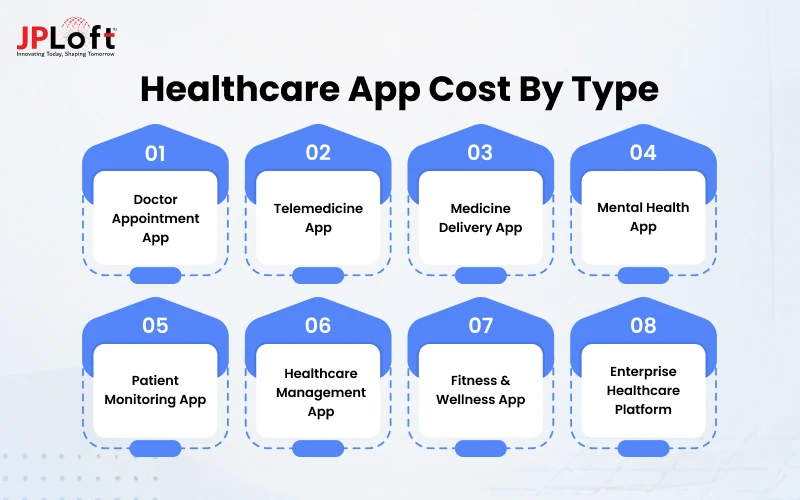
Let’s have an overview of the cost involved in building different types of healthcare apps.
Type 1: Doctor Appointment App
Estimated cost: $25,000–$70,000
Doctor appointment apps typically include patient and provider profiles, doctor search, availability management, appointment scheduling, reminders, and notifications.
Costs increase when businesses add online payments, video consultations, EHR integration, or advanced provider management features.
Type 2: Telemedicine App
Estimated cost: $40,000–$150,000+
Telemedicine apps are one of the most common healthcare app types that entrepreneurs plan to invest in. The app type requires more advanced functionality to support remote consultations.
Video and voice calling, secure messaging, digital prescriptions, payments, appointment management, patient records, and provider dashboards can increase the overall investment.
Type 3: Medicine Delivery App
Estimated cost: $30,000–$150,000
Medicine delivery apps typically combine healthcare services with e-commerce and logistics functionality.
Product catalogs, prescription uploads, order management, payments, delivery tracking, pharmacy dashboards, and notifications can all contribute to the final medicine app development cost.
Type 4: Mental Health App
Estimated cost: $30,000–$100,000
Mental health apps can range from simple wellness platforms to applications connecting users with licensed professionals.
The mental health app development cost depends on features such as therapist profiles, appointment scheduling, secure communication, video sessions, mood tracking, assessments, and personalized recommendations.
Type 5: Patient Monitoring App
Estimated cost: $50,000–$200,000+
Patient monitoring applications often require integration with wearable devices, connected medical equipment, or health data platforms.
Real-time data collection, alerts, dashboards, analytics, and secure data transmission can make these applications more expensive than basic healthcare apps.
Type 6: Healthcare Management App
Estimated cost: $60,000–$300,000+
Another app type to focus on is the “healthcare management apps” that support complex administrative and operational workflows.
They may include patient records, staff management, scheduling, billing, reporting, analytics, role-based access, and integrations with existing healthcare systems, increasing both development and infrastructure costs.
Type 7: Fitness & Wellness App
Estimated cost: $20,000–$80,000+
Fitness and wellness apps generally cost less when they focus on basic features such as workout plans, nutrition tracking, progress monitoring, and notifications.
Costs can increase with wearable integrations, AI-powered recommendations, live classes, personalized plans, and subscription functionality.
Type 8: Enterprise Healthcare Platform
Estimated cost: $150,000–$450,000+
Enterprise healthcare platforms involve complex workflows, multiple user roles, extensive integrations, advanced analytics, AI capabilities, medical device connectivity, and stringent security requirements.
Large-scale deployments may also require high availability, interoperability with multiple healthcare systems, and infrastructure designed for significant user volumes.
What Factors Affect Healthcare App Development Cost?
The overall cost to make a healthcare app depends on several factors beyond its basic type.
Features, complexity, platforms, integrations, security, AI capabilities, and development team location can all significantly influence the final budget.
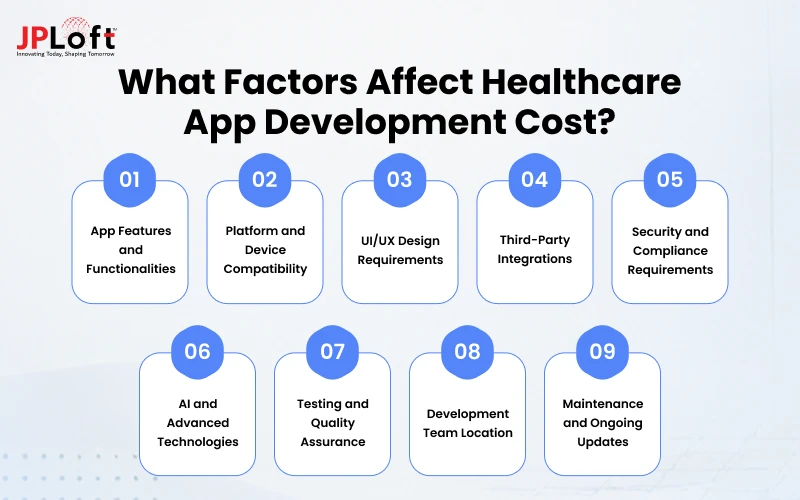
Below are some of the key factors that impact the custom healthcare app development cost.
Factor 1. App Features and Functionalities
The number and customization of features or the app functionality directly affect the development cost of a healthcare app.
Basic functionality such as profiles, appointments, and notifications requires less effort, while teleconsultation, EHR access, e-prescriptions, AI capabilities, and real-time monitoring require additional development and infrastructure.
|
Scope |
Features Included |
Estimated Cost Impact |
|
Basic |
Patient profiles, appointment booking, notifications, basic healthcare services |
$10,000 – $35,000 |
|
Medium |
Telemedicine, payments, prescriptions, dashboards, chat, third-party integrations |
$35,000 – $65,000 |
|
Advanced |
EHR/EMR, remote monitoring, AI features, advanced analytics, multiple user roles |
$65,000 – $250,000+ |
Factor 2. Platform and Device Compatibility
Building a mobile app for a single platform can help control costs, while supporting both iOS and Android increases the overall scope.
Additional compatibility requirements for tablets, wearables, connected medical devices, or web-based dashboards can further increase the budget.
|
Platform Scope |
Platforms & Devices |
Estimated Cost Impact |
|
Dual Platform |
iOS & Android |
$250,000 – $400,000 |
|
Cross-Platform |
iOS + Android (Single Code) |
$180,000 – $350,000 |
|
Multi-Device |
iOS + Android + web + wearables or medical devices |
$200,000 – $450,000+ |
Factor 3. UI/UX Design Requirements
The mobile app design effort also contributes to the overall cost of app development for healthcare.
A straightforward interface with standard components requires less investment than a highly customized experience involving multiple user journeys, accessibility requirements, interactive dashboards, and personalized interfaces for patients, doctors, and administrators.
|
Design Scope |
Design Requirements |
Estimated Cost Impact |
|
Standard UI |
Basic screens, standard components, simple navigation |
$3,000 – $8,000 |
|
Customized Experience |
Custom interfaces, multiple user journeys, interactive dashboards |
$8,000 – $20,000 |
|
Advanced UX |
Personalized experiences, complex dashboards, accessibility-focused design |
$20,000 – $40,000+ |
Factor 4. Third-Party Integrations
Integrations can add substantially to the healthcare application development cost, particularly when the application needs to exchange data with external healthcare or business systems.
EHR/EMR platforms, payment gateways, video consultation services, wearable devices, healthcare APIs, and other third-party services may involve both integration work and recurring API fees.
|
Integration Type |
What It Includes |
Estimated Cost Impact |
|
EHR/EMR Integrations |
Patient records, clinical data, medical histories, provider information |
$10,000 – $30,000+ |
|
HL7 & FHIR Integrations |
Healthcare data exchange, interoperability, clinical information systems |
$10,000 – $35,000+ |
|
Payment Gateways |
Patient payments, subscriptions, refunds, invoices, transaction processing |
$2,000 – $8,000 |
|
Video Consultation APIs |
Secure video calls, virtual consultations, appointment-based sessions |
$3,000 – $10,000 |
|
Wearable & IoT Integrations |
Health trackers, smart devices, vital signs, real-time health data |
$8,000 – $25,000+ |
|
Healthcare Data APIs |
Medical databases, drug information, clinical data, healthcare services |
$5,000 – $20,000+ |
|
AI & Machine Learning APIs |
AI assistants, predictive insights, recommendations, automated analysis |
$5,000 – $25,000+ |
Factor 5. Security and Compliance Requirements
Healthcare applications handle sensitive patient and medical information, making mobile app security and regulatory requirements an important cost consideration.
Implementing encryption, secure authentication, access controls, audit trails, compliance measures, and security testing can increase the initial investment but are essential for protecting healthcare data.
|
Compliance Scope |
Security & Compliance Requirements |
Estimated Cost Impact |
|
Standard Security |
Encryption, secure authentication, role-based access |
$3,000 – $10,000 |
|
Healthcare Compliance |
HIPAA/GDPR measures, audit trails, access controls, security testing |
$10,000 – $30,000 |
|
Enterprise Compliance |
Multiple regulations, extensive audits, penetration testing, advanced security |
$30,000 – $75,000+ |
Factor 6. AI and Advanced Technologies
Integrating AI, machine learning, predictive analytics, conversational assistants, or automated recommendations can increase the cost to create a healthcare app.
The investment depends on the complexity of the AI functionality, data requirements, model integration, infrastructure, ongoing monitoring, and the cost to hire AI developers.
|
Technology Scope |
Technology Included |
Estimated Cost Impact |
|
AI API Integration |
AI chatbot, basic recommendations, third-party AI services |
$5,000 – $20,000 |
|
AI-Powered Features |
AI assistant, predictive analytics, personalization, automated insights |
$20,000 – $50,000 |
|
Custom AI |
Custom ML models, advanced analytics, real-time AI workflows |
$50,000 – $100,000+ |
Factor 7. Testing and Quality Assurance
Healthcare applications require extensive mobile app testing to ensure reliable performance and protect sensitive data.
Functional, compatibility, security, performance, usability, and integration testing can increase the project budget, particularly when the application supports multiple platforms and complex healthcare workflows.
|
Testing Scope |
Testing Requirements |
Estimated Cost Impact |
|
Standard Testing |
Functional, usability, and basic device testing |
$3,000 – $8,000 |
|
Comprehensive Testing |
Cross-platform, performance, integration, and security testing |
$8,000 – $20,000 |
|
Regulatory Testing |
Extensive security, interoperability, compliance, and device testing |
$20,000 – $40,000+ |
Factor 8. Development Team Location
Developer rates vary considerably by location, which can have a direct impact on the total project cost. The healthcare app development cost in the USA varies from the cost in Europe or Asian countries.
Teams from a mobile app development company in the USA generally charge higher hourly rates than teams in regions such as Eastern Europe or Asia. However, businesses should consider technical expertise, healthcare experience, communication, and project quality alongside hourly rates.
|
Development Region |
Typical Hourly Rate |
Estimated Project Cost Impact |
|
North America |
$80–$100+ |
$75,000 – $350,000+ |
|
Western Europe |
$70–$150 |
$65,000 – $250,000+ |
|
UAE |
$55–$80 |
$40,000 – $200,000+ |
|
Asia |
$25–$60 |
$20,000 – $150,000+ |
Factor 9. Maintenance and Ongoing Updates
The initial development cost is a one-time expense, but it is not the only cost to consider. Healthcare apps must invest in ongoing app maintenance services for bug fixes, security updates, infrastructure management, feature enhancements, and regulatory compliance.
These recurring expenses should be included when calculating the total healthcare application development cost.
|
Support Level |
Maintenance Scope |
Estimated Annual Cost |
|
Basic Support |
Bug fixes, minor updates, basic security patches |
$3,000 – $12,000 /year |
|
Regular Maintenance |
OS updates, infrastructure, integrations, security updates |
$12,000 – $30,000 /year |
|
Continuous Support |
Feature enhancements, compliance updates, enterprise support |
$30,000 – $75,000+ /year |
Hidden Costs of Building a Healthcare App
The initial app development cost estimate does not always reflect the total investment required to launch and operate a healthcare app. Expenses related to legal requirements, licensing, marketing, onboarding, and business operations can add to the overall budget.
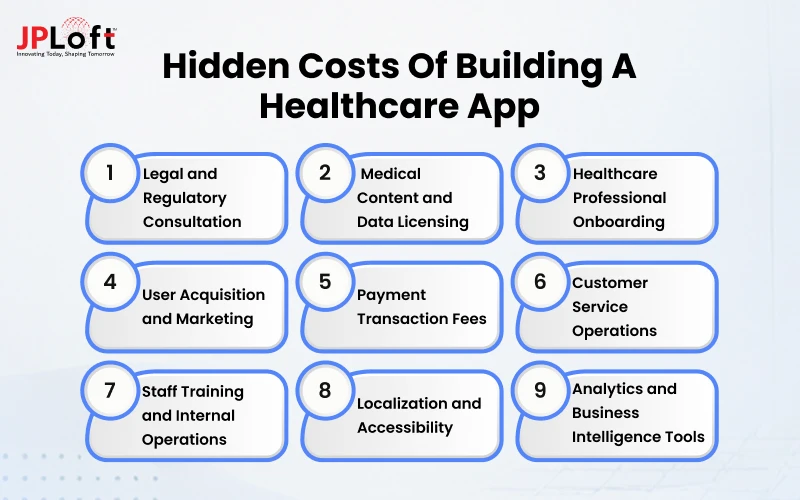
So, along with the upfront cost to develop a healthcare mobile app, it is also important to look for hidden costs associated with it and plan accordingly.
1. Legal and Regulatory Consultation
Healthcare businesses may require legal guidance to review privacy policies, terms of service, consent mechanisms, data-sharing agreements, and other regulatory documentation. The cost can vary based on the markets served and the nature of the healthcare services offered.
2. Medical Content and Data Licensing
Apps that provide medical information, drug databases, clinical content, educational resources, or specialized healthcare datasets may need to license content from external providers. These licensing fees can become recurring expenses depending on the provider and usage requirements.
3. Healthcare Professional Onboarding
Platforms that connect patients with doctors, therapists, specialists, or other healthcare professionals may incur costs related to provider verification, credential checks, onboarding, training, and account management.
4. User Acquisition and Marketing
Building the app does not guarantee adoption. Businesses may need to budget for search marketing, paid advertising, social media campaigns, content marketing, referral programs, and other customer acquisition activities after launch.
5. Payment Transaction Fees
While payment gateway integration is part of the development cost, every transaction processed through a payment provider may incur a separate processing fee. Subscription-based healthcare apps and platforms handling frequent payments should account for these recurring charges.
6. Customer Service Operations
A healthcare app may require dedicated resources to handle patient queries, appointment issues, account concerns, refunds, or provider-related requests. Support costs can increase as the user base grows and more services are introduced.
7. Staff Training and Internal Operations
Healthcare organizations adopting a new app may need to train doctors, administrative teams, pharmacists, or other staff members. Internal onboarding, process changes, training materials, and operational adjustments can add to the overall implementation budget.
8. Localization and Accessibility
Launching an app across different regions may require language translation, localized content, region-specific workflows, accessibility improvements, and adjustments to meet local user expectations. These expenses become more relevant when expanding into multiple markets.
9. Analytics and Business Intelligence Tools
Businesses may invest in specialized analytics platforms to understand user behavior, appointment patterns, retention, conversion rates, and operational performance. Advanced reporting and business intelligence tools may involve separate subscription or licensing expenses.
How to Reduce the Cost to Develop A Healthcare App?
The approach to reduce or control healthcare app development costs starts with making the right decisions about features, technology, and project scope.
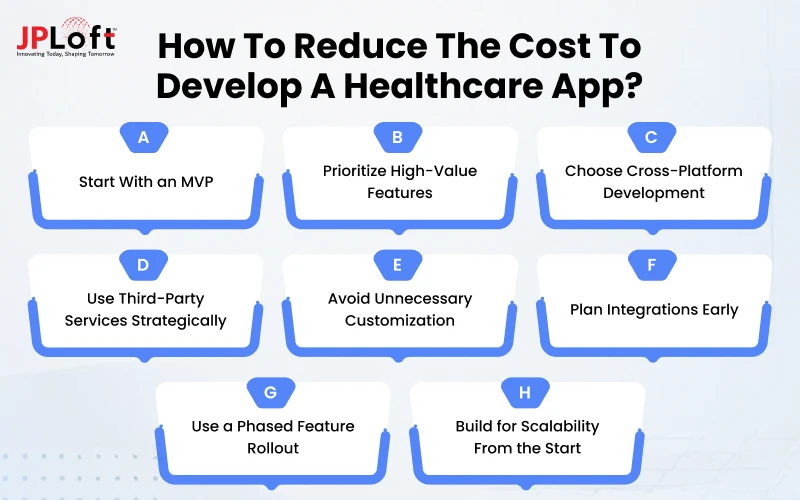
The following strategies can help businesses control their initial investment while keeping the app scalable and commercially viable.
1. Start With an MVP
Launch with essential features that support the app’s primary purpose. This reduces the initial investment, allows businesses to validate demand, and creates an opportunity to add advanced functionality based on user feedback.
2. Prioritize High-Value Features
Focus the initial budget on app features that directly support patient engagement, provider operations, or revenue generation. Deferring lower-priority functionality prevents unnecessary spending while keeping the first release focused and commercially viable.
3. Choose Cross-Platform Development
Using cross-platform development can reduce the effort required to create separate iOS and Android applications. This approach can lower development expenses while allowing businesses to reach users across multiple mobile platforms.
4. Use Third-Party Services Strategically
Established third-party services can reduce the cost of building common capabilities from scratch. Payment gateways, video APIs, notifications, and AI services can accelerate implementation when their pricing and long-term suitability are carefully evaluated.
5. Avoid Unnecessary Customization
Highly customized functionality can increase design, development, and testing expenses. Using proven workflows and standard components where appropriate helps control costs while reserving customization for features that deliver meaningful business or user value.
6. Plan Integrations Early
Identifying required EHR/EMR systems, healthcare APIs, payment services, and connected devices early helps create a more accurate budget. Early planning also reduces unexpected technical changes and additional development expenses later.
7. Use a Phased Feature Rollout
Advanced capabilities such as AI, remote monitoring, and complex analytics do not always need to launch immediately. Introducing them in phases spreads investment over time and allows spending to follow demonstrated user demand.
8. Build for Scalability From the Start
A scalable foundation can accommodate increasing users, features, and integrations without requiring major architectural changes. Making appropriate technology and infrastructure decisions early can help prevent expensive redevelopment as the platform grows.
How Do Healthcare Apps Make Money?
Understanding healthcare app monetization helps businesses assess the potential return on their technology investment.
Depending on the app type and target users, businesses can generate revenue through subscriptions, commissions, premium features, partnerships, and licensing models.
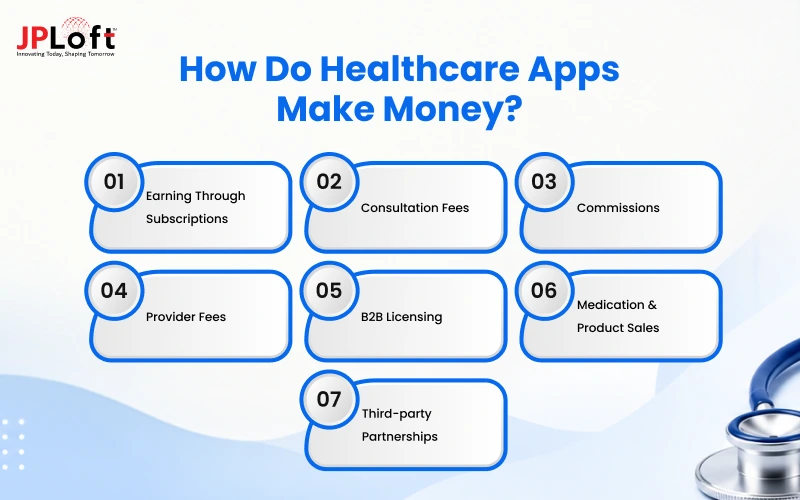
Here are the key mobile app monetization strategies that healthcare apps can leverage to generate consistent revenue.
1. Subscription Plans
Businesses can charge users recurring monthly or annual fees to access healthcare services, personalized programs, advanced features, or unlimited consultations. Subscription models provide predictable recurring revenue when the app delivers consistent value.
2. Consultation Commissions
Telemedicine and healthcare marketplace apps can charge a commission on consultations booked through the platform. The app earns a percentage of each transaction while healthcare professionals gain access to a broader patient base.
3. Freemium Approach
Businesses can offer core functionality for free while charging for advanced capabilities such as personalized health insights, detailed reports, priority consultations, advanced analytics, or additional storage. This freemium approach can help attract users before converting them into paying customers.
4. Commissions on Sales
Medicine delivery, wellness, and healthcare marketplace apps can earn commissions from transactions completed through the platform. Revenue may come from pharmacies, healthcare providers, laboratories, wellness brands, or other participating businesses.
5. Provider Partnerships
Healthcare apps can establish partnerships with hospitals, clinics, pharmacies, laboratories, insurance companies, or healthcare professionals. These partnerships can generate revenue through referral fees, service agreements, featured listings, or platform access.
6. Ads and Sponsored Listings
Apps with a substantial user base can generate revenue by displaying relevant advertisements or sponsored listings. Healthcare businesses should ensure that advertising practices remain transparent and comply with applicable privacy and healthcare regulations.
7. B2B Licensing
Healthcare technology providers can license their platform or specific functionalities to hospitals, clinics, pharmacies, employers, or other organizations. This model can generate recurring revenue through licensing fees, enterprise subscriptions, or usage-based contracts.
Why Partner With JPLoft To Build a Cost-Efficient Healthcare App?
Partnering with JPLoft can help businesses optimize their healthcare app investment from the initial planning stage.
The team focuses on identifying essential features, avoiding unnecessary customization, selecting cost-efficient technologies, and planning integrations according to the available budget.
As a leading healthcare software development services provider, JPLoft offers businesses flexible engagement models based on their project scope and resource requirements.
By adopting a phased approach, organizations can launch core functionality within a controlled budget and gradually invest in advanced features as the app gains traction.
JPLoft also considers scalability during planning, helping reduce the risk of expensive redevelopment as user demand increases.
With experience across healthcare solutions and technologies, JPLoft helps businesses balance development costs, functionality, security, and long-term operational expenses to build a healthcare app that delivers sustainable value.
Conclusion
The cost to build a healthcare app can range from $20,000 to $450,000+, depending on the app type, features, complexity, integrations, security requirements, technology choices, and development team location.
Beyond the initial investment, businesses should also account for hidden operational expenses and ongoing costs when planning their budget. Starting with an MVP, prioritizing high-value features, using suitable third-party services, and introducing advanced functionality in phases can help control the overall investment.
A realistic cost estimate should balance immediate business needs with long-term scalability and revenue potential. By understanding these cost factors early, businesses can set a practical budget and make informed decisions about their healthcare app investment.
FAQs
The cost typically ranges from $20,000 to $450,000+, depending on the app’s complexity, features, integrations, security requirements, technology, and development team location.
Key cost factors include app complexity, features, supported platforms, UI/UX requirements, third-party integrations, security and compliance, AI capabilities, testing, and the development team’s location.
The telemedicine app development cost ranges from $40,000–$150,000+, depending on features such as video consultations, appointments, payments, prescriptions, messaging, dashboards, and healthcare integrations.
Hidden expenses can include legal and regulatory consultation, medical content licensing, provider onboarding, marketing, payment transaction fees, staff training, localization, accessibility, and analytics tools.
Businesses can reduce costs by starting with an MVP, prioritizing high-value features, choosing cross-platform development, using third-party services strategically, avoiding unnecessary customization, planning integrations early, and rolling out advanced features in phases.

Rahul Sukhwal is the CEO and Founder of JPLoft, with 18+ years of experience in software engineering, emerging technologies, and digital product development. His expertise spans artificial intelligence, including AI agents, generative AI, LLMs, chatbots, computer vision, and machine learning, as well as blockchain, IoT, AR/VR, mobile, web, and enterprise software. He focuses on applying these technologies to real business challenges across industries such as healthcare, education, mobility, finance, real estate, and on-demand services.




Share this blog