


Key Takeaways
Building a forex trading app requires clear planning, the right tech stack, and a structured development process.
The cost to create a forex trading app ranges from $20,000 to $250,000+, depending on features, complexity, and integrations.
Essential features like real-time data, security, and dashboards ensure better user experience and engagement.
Multiple revenue models like commissions and subscriptions make forex apps a profitable business opportunity.
Partnering with experts like JPLoft can help you build a scalable and high-performing trading platform.
The global forex market is one of the largest and most active financial spaces today. Hence, this creates a strong opportunity for digital businesses.
As more users shift to mobile trading, startups and enterprises are looking to build powerful platforms that offer speed, security, and real-time insights.
This is where the need to build a forex trading app becomes a smart and future-ready investment. However, entering this space is not just about launching an app.
It requires a clear strategy, the right features, and a well-planned development process to stay competitive. From user experience to backend systems, every decision plays a key role in success.
In this forex trading app development guide, you will learn how to build a forex trading app step by step. We will also discuss key features and explore the cost factors involved in building a scalable trading solution.
What is a Forex Trading App?
A forex trading app is a mobile platform that allows users to buy and sell currency pairs in real time. It connects users to global forex markets, provides live price updates, and offers tools for analysis, trading, and portfolio management from anywhere at any time.
How Forex Trading App Work?
A forex trading app follows a simple step-by-step flow that connects users to the market and executes trades in real time.
-
Users sign up and complete KYC verification to create a secure trading account.
-
The app connects to liquidity providers to fetch real-time currency exchange rates.
-
Users analyze charts, trends, and indicators before placing trades.
-
Buy or sell orders are executed instantly through the trading engine.
-
The system updates balances, profits, and losses in real time.
-
Users can withdraw funds directly to their linked bank accounts or wallets.
Why Invest in a Forex Trading App in 2026?
The forex market continues to grow at a rapid pace, making it a strong opportunity for businesses in 2026. It is the largest financial market in the world, with massive daily activity and global participation.
-
The global forex market was valued at $917.9 billion in 2025 and is expected to reach $1,592.1 by 2034.
-
According to recent data, the global forex market is expected to reach nearly $9.8 trillion in daily trading volume by the end of 2026.
-
Another important trend is the rise of mobile trading. Around 65% of forex trades now happen through mobile apps, showing a clear shift toward digital platforms.
-
The number of traders is also increasing fast. There are over 13.9 million active retail forex traders globally, and this number continues to grow each year.
For businesses, this creates a strong reason for developing a forex trading app. You get access to a large user base, high trading activity, and recurring revenue opportunities.
In simple terms, 2026 is the right time to invest, as demand, technology, and user behavior are all aligned for growth.
Key Features to Include in a Forex Trading App
To create a forex trading app that attracts and retains users, you must focus on features that improve security and user experience. A well-planned forex trading mobile app development process always includes both basic and advanced app features.
Let’s discuss some top features with a table below:
|
Feature |
Description |
|
User Registration & KYC |
Allows users to sign up and verify their identity securely before starting trading. |
|
Real-Time Market Data |
Shows live currency rates and updates instantly for better trading decisions. |
|
Trading Dashboard |
Provides a simple interface to view charts, trades, and account details in one place. |
|
Advanced Charts & Tools |
Helps users analyze trends using indicators, graphs, and historical data. |
|
Order Execution System |
Executes buy and sell orders quickly with minimal delay for better performance. |
|
Secure Payment Integration |
Enables easy deposits and withdrawals through safe payment gateways. |
|
Push Notifications |
Sends alerts for price changes, trade updates, and important market news. |
|
Multi-Language Support |
Helps reach a global audience by offering different language options. |
|
Portfolio Management |
Let's users track profits, losses, and overall trading performance easily. |
|
High-Level Security |
Protects user data with encryption, two-factor authentication, and secure login systems. |
How a Forex Trading App Operates in Real Time?
Behind every forex trading app, there is a powerful system that handles data, trades, and user actions in real time. When you build a mobile app for forex trading, understanding this backend flow helps you create a faster and more reliable platform.

1. Role of Liquidity Providers & Brokers
Liquidity providers are large financial institutions that ensure resource availability in the market. They ensure there is always someone ready to trade in the market.
Brokers act as a bridge between users and these liquidity providers. They connect your app to the market and allow users to place trades easily.
In a forex app development process, choosing the right broker and liquidity partner ensures better pricing, faster execution, and a smooth trading experience for users.
2. Real-Time Data Feeds & APIs Integration
Forex trading depends heavily on live data, so apps must stay updated every second. This is done using APIs and data feeds.
APIs connect your app to external systems that provide real-time currency prices, charts, and market updates. Data feeds ensure users always see accurate and up-to-date information.
During the development process, integrating reliable APIs helps improve speed, accuracy, and user trust. It also ensures your app performs well during high trading activity.
Step-by-Step Process to Build a Forex Trading App
Building a trading platform requires clear planning, strong technology, and user-focused design. This forex trading app development process helps businesses understand how to develop a forex trading app step by step.
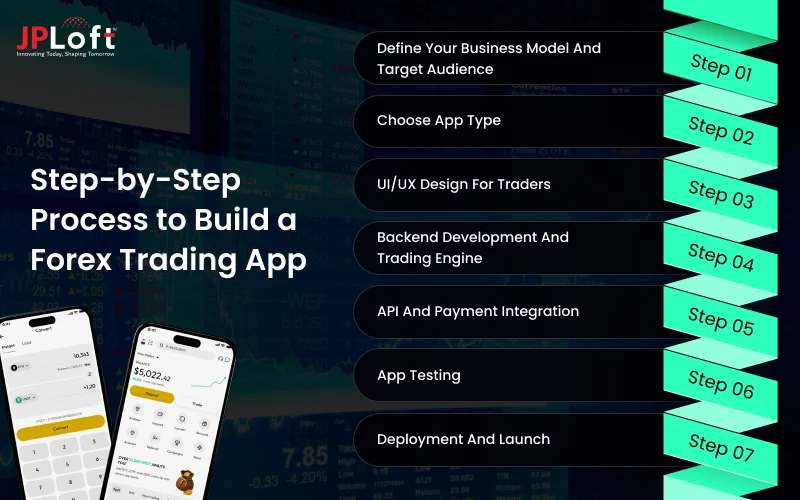
Step 1: Define Your Business Model And Target Audience
Before you make a forex trading app, define your business goals and perform market reseach. This step ensures your platform delivers value and supports long-term growth.
► Identify And Segment Your Traders
Identify your target users, such as beginners, experienced traders, or institutions. Segmenting users helps you design features that match their needs and improve engagement across your forex trading app platform.
► Map Core Features And Value Proposition
List the essential features your app will offer to users. Focus on solving real problems, improving trading experience, and creating a strong value proposition that differentiates your forex trading app.
► Clarify Your Revenue Model
Define how your app will earn revenue through spreads, commissions, or subscriptions. A clear revenue model helps you plan pricing strategies and ensures steady income while scaling your forex trading app.
Step 2: Choose App Type
Selecting the right app type is important when planning how to develop a forex trading app effectively. It impacts cost, flexibility, and time to launch.
► Evaluate Varied App Models
Forex trading apps come in different models, i.e., proprietary broker apps offer full control, while third-party platforms provide advanced tools and wider adoption. Choosing the right model helps define your app’s functionality, scalability, and market positioning.
► Assess White-label And Broker-SDK Options
White-label solutions allow faster launch using ready-made platforms with limited customization. Broker SDKs help integrate trading features quickly, making them suitable for startups entering the forex trading app market.
► Decide On Platform Scope
Choose whether to launch on mobile, web, or desktop platforms. Mobile-first approach works best today, while adding web and desktop later helps expand reach and improve accessibility for forex trading app users.
Step 3: UI/UX Design For Traders
A simple and intuitive design improves user experience and retention. Good UI/ UX design services play a key role in the success of any forex trading app.
► Design Intuitive Trading Dashboard
Create a clean and simple dashboard where users can access charts, trades, and balances easily. A well-designed app wireframe improves navigation and helps users make faster decisions while using the app.
► Create Mobile-first Charts And Tools
Design charts and tools optimized for mobile screens with smooth interaction. Easy-to-read charts and responsive tools help users analyze data quickly and improve their overall trading experience within the app.
► Prioritize Accessibility And Multilingual UX
Ensure your app supports multiple languages and easy navigation for all users. Accessibility features like simple layouts and readable fonts help reach a global audience and improve usability across your platform.
Step 4: Backend Development And Trading Engine
A strong backend using top app development frameworks ensures smooth performance, secure transactions, and fast execution. This step is critical when you develop a forex trading app.
► Build Secure User And Account Management
Develop a secure system to manage user accounts, profiles, and transactions. Strong authentication and data protection ensure safety, build trust, and prevent unauthorized access within your forex trading app system.
► Develop The Trading Engine And Order-matching Logic
Build a powerful trading engine that processes orders quickly and accurately. Efficient order-matching logic ensures trades are executed without delay, providing users with a reliable and smooth trading experience.
► Integrate With Liquidity Providers And Market Data
Connect your app with liquidity providers and real-time market data sources. This integration ensures accurate pricing, smooth trade execution, and a seamless experience for users interacting with your trading platform.
Step 5: API And Payment Integration
Integrations connect your app with external systems and ensure smooth transactions. This is a key part of the forex app development process.
► Connect To Forex Broker Or Liquidity APIs
Integrate APIs from brokers or liquidity providers to enable real-time trading. These APIs allow your app to fetch live data, execute trades, and provide accurate market information to users.
► Integrate Payment Gateways And Wallets
Add secure payment gateways to support deposits and withdrawals. Multiple payment options improve user convenience and help build trust while managing financial transactions within your forex trading app platform.
► Add Analytics And Webhooks
Integrate analytics tools to track user activity and app performance. Webhooks help connect with external services, enabling automation and better communication between systems in your forex trading ecosystem.
Step 6: App Testing
App testing ensures your platform works smoothly and delivers a reliable experience. It helps identify issues before launching your forex trading app.
► Conduct Functional And Regression Testing
Test all features to ensure they work correctly and consistently. Functional and regression testing help identify bugs, maintain performance, and ensure your forex trading app operates smoothly after every update.
► Perform Stress And Performance Testing
Check how your app performs under heavy traffic and high trading volumes. Performance testing ensures stability, speed, and reliability, which are essential for handling real-time trading activities efficiently.
► Run Security Audits And Penetration Tests
Perform app security testing to identify vulnerabilities and protect user data. Penetration tests help detect threats, improve system security, and ensure your forex trading app meets industry safety standards.
Step 7: Deployment And Launch
Launching your app requires proper setup and ongoing app maintenance services. This final step completes the process to create a forex trading app.
► Deploy Staging And Production Environments
Set up staging and production environments to test and launch your app. This ensures smooth deployment, reduces risks, and helps maintain stability during the initial release of your platform.
► Submit To App Stores
Publish your app on the Play Store or submit your app to the App Store. Proper submission and hosting ensure accessibility, visibility, and smooth performance for users accessing your forex trading app.
► Plan Post-launch Support And Updates
After launch, focus on updates, bug fixes, and new features regularly. Continuous improvement helps retain users, improve performance, and keep your forex trading app competitive in the market.
Forex Trading App Development Cost Breakdown
The cost to develop a forex trading app usually ranges from $20,000 to $250,000+, depending on features, complexity, and integrations.
A basic mobile app development cost is less, while advanced platforms with real-time trading, analytics, and security require a higher investment during the app development process.
|
App Type |
Features Included |
Estimated Cost |
|
Basic App |
User login, simple dashboard, basic charts, manual trading |
$20,000 – $50,000 |
|
Mid-Level App |
Real-time data, advanced charts, payment integration, notifications |
$50,000 – $120,000 |
|
Advanced App |
AI tools, automated trading, multi-language, high security, analytics |
$120,000 – $250,000+ |
Hidden Factors Affecting Development Cost
Once you understand the required budget, it is important to discuss the factors affecting the cost to build a stock trading app or a forex trading app. Let’s dig deeper into it:
-
Third-party APIs for real-time data and trading often require monthly or yearly subscription fees.
-
Regulatory compliance, licensing, and legal approvals can increase the overall project cost significantly.
-
Ongoing maintenance, updates, and bug fixes add continuous expenses after the app launch.
-
Server infrastructure and cloud hosting costs depend on user traffic and data usage.
-
Security upgrades and monitoring tools may require additional investment over time.
How Forex Trading Apps Make Money?
A forex trading app can generate revenue in multiple ways, depending on its business model and target audience. However, choosing the right monetization strategies helps ensure long-term growth and consistent income.
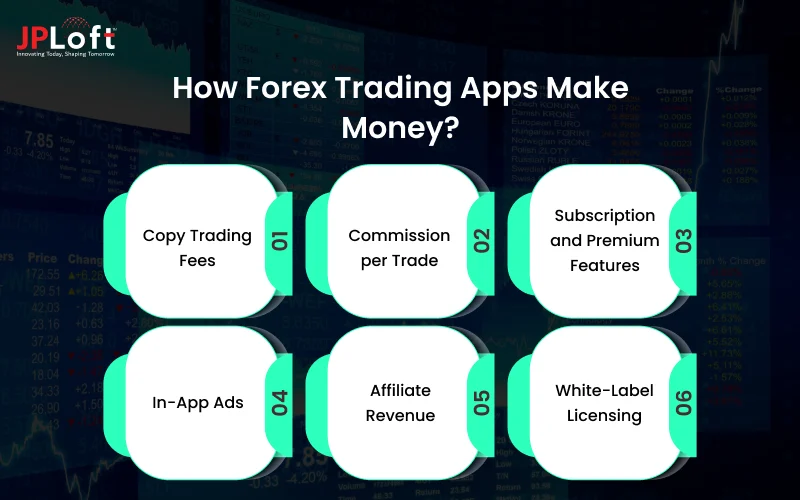
1. Copy Trading Fees
Copy trading allows beginners to follow and copy expert traders automatically. Platforms charge a small fee or percentage on profits earned through copied trades, creating a steady revenue stream.
2. Commission per Trade
Many apps charge a fixed fee or percentage on every trade executed. This is one of the most common models used to generate consistent income from active traders.
3. Subscription and Premium Features
Apps offer premium plans with advanced tools, analytics, and insights. Users pay monthly or yearly fees to access these exclusive features, increasing recurring revenue.
4. In-App Ads
Displaying ads within the app can generate additional income. This model works best for apps with a large user base and high daily activity.
5. Affiliate Revenue
Forex apps partner with brokers or financial services and earn commissions by referring users. Each successful signup or trade through referral links generates revenue.
6. White-Label Licensing
Businesses can license their platform to other companies as a ready-made solution. This allows them to expand their reach and earn revenue without building new products from scratch.
Forex Trading App vs Stock Trading App: Key Differences
Forex and stock trading apps may look similar, but they work in very different ways. Understanding these differences helps businesses choose the right direction when planning to create a forex trading app or a stock trading platform.
|
Aspect |
Forex Trading App |
Stock Trading App |
|
Market Structure Differences |
Forex market is decentralized and runs 24 hours across global markets. Trading happens through brokers and liquidity providers without a central exchange. |
Stock market is centralized and operates during fixed hours through exchanges like the Nasdaq or the NYSE with strict regulations. |
|
Features Comparison |
Focuses on currency pairs, real-time exchange rates, leverage trading, and advanced charting tools for fast decision-making. |
Includes stock listings, company data, dividends, portfolio tracking, and long-term investment tools for users. |
|
Revenue Model Comparison |
Earns through spreads, commissions, copy trading fees, and liquidity-based pricing models within the forex trading app. |
Generates revenue through brokerage fees, account charges, premium tools, and advisory or investment services. |
Future Trends to Consider in Forex Trading App
The forex market is evolving quickly with new technologies and smarter user expectations. Following these trends helps businesses get a forex trading app that stays competitive and delivers a better user experience.
► AI-powered Trading Assistants
Used for market analysis, trade suggestions, and risk management. It also aligns with AI in stock trading and forex trading to deliver smarter insights across financial platforms.
-
Smarter trading decisions
-
Reduced manual effort
-
Better prediction accuracy
► Blockchain in Forex Trading
Used for secure transactions and smart contracts. Businesses often rely on blockchain development services to build transparent and secure trading systems.
-
Improved transparency
-
Strong data security
-
Faster transaction processing
► Automation and Algorithmic Trading
Applied through trading bots, automated strategies, and algorithm-based systems to enhance speed and efficiency in trading operations.
-
Saves time for users
-
Faster trade execution
-
Reduces human errors
Why Build Your Forex Trading App With JPLoft?
If you are looking for reliable development services, choosing the right partner becomes critical for long-term success. When you plan to build a forex trading app, working with an experienced company like JPLoft ensures better results and faster growth.
JPLoft offers end-to-end forex and stock trading app development services customized for fintech businesses. Their team focuses on building secure, scalable, and high-performance trading platforms that meet modern user expectations.
They follow a proven forex trading app development guide, covering planning, design, development, and deployment. This structured approach ensures your app is stable, user-friendly, and ready for market competition.
JPLoft also provides flexible and customized solutions based on your business needs. Whether you want a simple app or a feature-rich trading platform, they can scale it as your business grows.
With strong technical expertise and industry knowledge, JPLoft helps you create a forex trading app that stands out in a competitive market.
Final Words
The forex market is moving fast, and businesses that act early can gain a strong competitive advantage. Now is the right time to make a forex trading app that meets growing user demand and delivers real-time trading experiences.
Success in this space depends on how well you plan, design, and execute your idea. From choosing the right features to following a structured forex trading mobile app development process, every step directly impacts your app’s performance and growth.
Understanding cost factors, user needs, and future trends helps you make smarter decisions before development begins. It also ensures your platform remains scalable and ready for market changes.
In the end, a well-developed app is not just a product but a long-term business asset. With the right strategy and expert support, you can create a forex trading app that drives user trust, engagement, and consistent revenue in a competitive market.
FAQs
To make a forex trading app, you need to define your business model, choose the right tech stack, design UI/UX, develop backend systems, integrate APIs, and test the app before launch.
The cost to develop a forex trading app usually ranges from $20,000 to $250,000+, depending on features, complexity, integrations, and security requirements.
A forex trading app should include real-time data, trading dashboard, secure payments, advanced charts, notifications, and strong security features for a better user experience.
Forex apps earn through commissions per trade, subscriptions, copy trading fees, affiliate partnerships, and white-label licensing.
Yes, forex trading app development is profitable due to high trading volume, recurring revenue models, and increasing global demand for mobile trading platforms.

Savannah is a passionate tech enthusiast with a sharp understanding of client needs across diverse digital domains. With expertise spanning financial platforms, on-demand solutions, and emerging technologies, she brings a unique blend of analytical insight and interpersonal skills, helping businesses decode complexities and make informed decisions in today's rapidly evolving digital world.



Share this blog