


Key Takeaways:
To develop a train ticket app like Trenitalia, focus on UK regulations, smart UX, reliable APIs, and a strong booking engine.
Real-time rail APIs help travelers plan better by showing accurate schedules, fares, and platform updates instantly.
QR e-tickets and secure payments remove ticket counter hassles and make booking fast and reliable.
Fare comparison, seat selection, and loyalty tools boost user satisfaction and repeat bookings.
AI, IoT, and cloud tech keep the app fast, scalable, and dependable during peak UK travel hours.
Commission fees, subscriptions, and affiliate partnerships create steady revenue and improve traveler convenience.
JPLoft builds UK-ready train ticketing apps with modern tech, smooth UX, and real-time rail integrations
The UK rail industry recorded 451 million passenger journeys between April and June 2025, generating £3.1 billion in revenue, a 6% increase from the previous year.
With 49% of UK rail passengers now using e-tickets, up from 20% just four years ago, the shift to digital ticketing is undeniable.
This raises a crucial question: What is the Cost to develop an app like Trenitalia?
On average, if you are planning to develop such an engaging and custom app, the cost might go from $20,000 to $80,000+, depending on what you want in your app, the design you choose, the location of your developers & many more.
This comprehensive guide to creating an app like Trenitalia is designed specifically for entrepreneurs and investors looking to enter the digital travel market and capitalize on the growing demand for seamless rail booking solutions.
Let’s begin.
Overview of the Trenitalia App
One of the questions that lies before making an app like Trenitalia UK is to know “what is a Trenitalia App?”
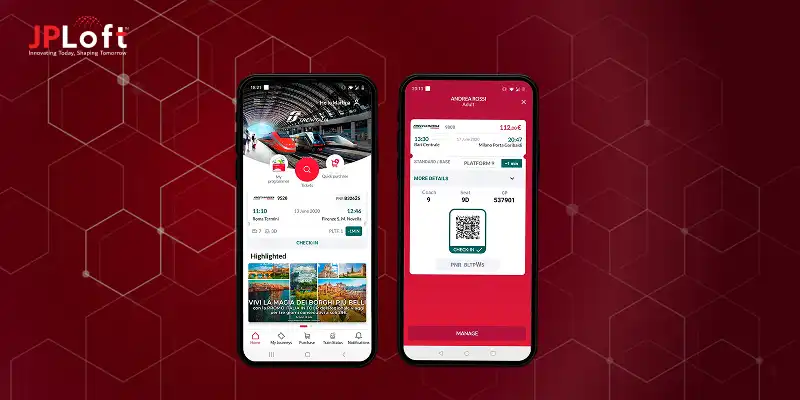
The Trenitalia app is designed to make rail travel simpler, faster, and far more convenient for everyday commuters and long-distance travelers. It brings real-time train schedules, mobile ticket booking, digital payments, and instant service updates into one easy interface.
While many users in the UK refer to it as Trenitalia UK, it operates as part of the broader Trenitalia network, a subsidiary of Italy's national railway operator. This connection allows the app to provide a reliable experience, backed by years of expertise in rail management.
The app smooths out common pain points such as queuing for tickets, working with paper passes, or missing platform changes. Everything-from route searching to displaying QR-based e-tickets-happens on the user's phone.
For frequent travelers, the app also helps manage loyalty programs, travel history, and personalized route suggestions, making it a robust example of how a modern railway app should work in 2025.
Let’s check out some of the related stats of Trains and apps similar to Trenitalia.
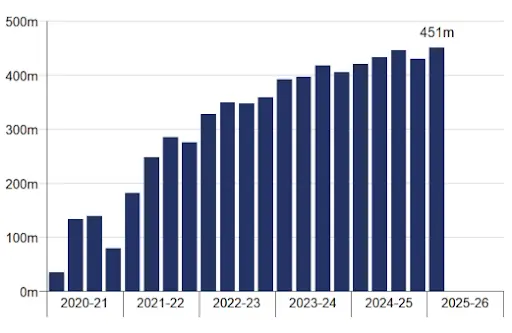 In the quarter April-June 2025, there were 451 million passenger rail journeys, where 7% of the journeys were from the same quarter.
 -
The total passenger revenue was £3.1 billion in the latest quarter. This revenue is 6% more than the £2.9 billion generated in the same quarter of the previous year.
-
Additionally, as of recent surveys, 49% of the UK rail passengers use e-tickets, up from 20% over the past four years.
-
When it comes to the Trenitalia app, it has almost 10M+ downloads.
Do you know that these train apps are leading because there is a completely dedicated team of the best mobile app development company, helping to reach the users and address their concerns with the app’s features.
Now, let’s discuss the working procedure of an app like Trenitalia in the following section.
Working Process of an App like Trenitalia
When you make a mobile app, one of the important elements to know is the working process of the complete app.
A Workflow of the app helps you to design and plan the complete steps of the app subsequently. Let’s check out the list of working processes below.
1. App Registration and Login
The user opens the app, logs in, or continues as a guest. They then immediately fill in their travel details: the departure station, destination, date of travel, and number of passengers.
For building a train-style app like Trenitalia, the interface is built to keep this stage quick, with returning users having saved routes, recent searches, and stored preferences that make setting up a journey feel like second nature.
2. Real-Time Train Options and Filtering
Once the search initiates, it connects to various live railway APIs, showing all the trains available on that route. The user sees timings, duration, seat availability, delays, and information related to platforms within one clean view.
When you create an app like Trenitalia, a real-time feature helps them narrow down the best option instantly without endlessly scrolling through results, by employing filters like fastest route, cheapest fare, and preferred train type.
3. Fare and Seat Selection
After selecting a train, the app offers fare categories, such as Economy, Premium, or Business, listing the relevant information about each category: flexibility, rules about refunds, and comfort.
On eligible routes, the application will also show an interactive seat map that allows users to select their favorite seats or click to automatically select the best one for them, further personalizing the booking experience.
4. Passenger Details and Secure Payment
Now, on checkout, the user has to fill in or confirm passenger names, ID details, or loyalty card numbers. This is one of the important steps in the workflow, while considering developing an app like Trenitalia.
On the same stage, it goes to payment methods that can be cards, PayPal, Apple Pay, or Google Pay. A secure payment gateway will process this transaction in a matter of seconds. It ensures seamless and encrypted handling of sensitive data.
5. Ticket Generation and Management
Upon successful payment, the app immediately provides the QR-based e-ticket under “My Trips.” They also send confirmation emails and make tickets accessible offline anytime.
The user gets the option to edit the date of travel, check refund status, or even read fare rules in this section, thus completely controlling their booking without being involved with any ticket counter. You can create an app like Trenitalia in Italy by learning about its ticket generation management system.
6. Real-Time Alerts, Boarding, and Post-Trip Features
It sends real-time updates to clients of the app in case of delays, platform changes, or disruptions, right before the trip.
At the station, one simply reveals their QR code, which is quickly inspected or scanned at the gates. After having traveled, loyalty points can be added automatically, and users can see past tickets, download invoices, or receive tailored suggestions for future travel.
With learning about the process, if you are still wondering why you should build a train ticket app like Trenitalia, and not others.
Yes, the answer is that the Trenitalia app is popular, but what makes it so popular? Let’s learn it in the following section.
Why are Train Ticketing Apps like Trenitalia Popular?
There are many reasons that make the train ticketing apps like Trenitalia so popular. These reasons can be real-time updates, a faster booking landscape, the digital tickets are convenient, have transparent pricing, secure payments, and easy modifications.
In the given list, you can learn all the reasons in detail. Let’s proceed.
1. They Make Booking Faster and Hassle-Free
Gone are the days when people had to stand in long queues at the ticket counters and at the ticket machines.
Simply tap through, and a user can see routes, compare trains, and confirm their bookings. The speed and simplicity have made mobile rail apps the preferred option for daily and long-distance travelers.
2. Real-Time Updates Improve Trip Planning
The app sends instant alerts for delays, platform changes, or disruptions. This enables passengers to be clear of confusion at busy stations and make informed, timely decisions.
Real-time tracking builds trust because users always know what's happening with their train. One of the reasons to convert your mobile app idea related to trains into success is real-time updates.
3. Digital Tickets Are Convenient and Always Accessible
QR-based e-tickets eliminate the need for printed copies. Travelers can open their ticket even without internet and show it at inspections.
This reduces the risk of losing a ticket and keeps everything organized inside the app. It is one of the important reasons for considering to make a train ticketing app like Trenitalia.
4. Pricing Transparency and Varied Fare Options
The application shows all types of fares, including their benefits, from flexible tickets to budget-friendly options.
Comparing prices instantly, users can choose what fits their journey. This level of clarity is hardly provided by offline counters. Hence, if you build an app like Trenitalia in Italy, the prices can vary.
5. Easy Modifications, Refunds, and Seat Selection
Moreover, in-app options for date modification, seat changes, or refunds make changing travel plans a lot easier.
Seat selection maps are also there to help users identify preferred spots on the train. This is one major reason people prefer digital booking. When you create an app like Trenitalia, it becomes easy to proceed with easy modifications and refund options.
6. Secure Payments and Personalized Features
Apps like Trenitalia support cards, wallets, Apple Pay, Google Pay, and more, making checkout smooth and secure.
Over time, they also learn user behavior and make smart suggestions or offers. This combination of safety and personalization keeps users coming back.
Now, as you are clear with the different types of reasons related to why train ticketing apps like Trenitalia are popular, you are ready to start with their complete development process.
Features to Include in an App like Trenitalia
If you are wondering how to create a train ticketing app like Trenitalia, features act as the lifeblood of the app. Without learning about the right features, you cannot proceed with the development process.
Hence, here is the list of the top features that you can include to develop an app like Trenitalia.
|
Feature |
Description |
|
Easy User Registration & Profiles |
Let's users create accounts, save personal details, manage preferences, and access trip history across devices. |
|
Advanced Journey Search |
Allows users to select departure, destination, travel dates, and passenger count, showing accurate route options instantly. |
|
Real-Time Train Schedules |
Displays live arrivals, departures, delays, cancellations, and platform changes using railway API data. |
|
Fare Categories & Price Comparison |
Shows multiple fare types (Economy, Premium, Business) with clear benefits and restrictions for transparent decision-making. |
|
Interactive Seat Selection |
Provides a seat map for users to choose their preferred seats, including window/aisle and quiet zones. |
|
Secure Multi-Option Payments |
Supports cards, PayPal, Apple Pay, Google Pay, and digital wallets with encrypted checkout. |
|
QR-Based E-Ticketing |
Generates digital tickets with QR codes that can be scanned at gates or by inspectors, available even offline. |
|
Booking Management |
Allows users to view upcoming trips, rebook journeys, access booking history, and download invoices. |
|
Easy Cancellations & Modifications |
Let's users change dates, upgrade seats, or request refunds according to fare rules—all from the app. |
|
Real-Time Push Notifications |
Sends alerts about delays, platform changes, service disruptions, and reminders before departure. |
|
Live Train Tracking |
Shows the real-time location of the train, estimated arrival times, and route progress for better travel planning. |
|
In-App Customer Support |
Offers chat support, FAQs, and contact options to help users solve ticket or travel-related issues quickly. |
With this list, now let's learn about the complete Trenitalia-like app development in the following section.
How to Develop a Train Ticket App like Trenitalia UK?
Well, you can develop a train ticket app like Trenitalia UK by starting with understanding the rail ecosystem, its working process, current market demands, designing the app, selecting the tech stack, and launching it on the specified platform.
Let’s check out the complete list of Trenitalia-like app development below.
1. Understand UK Rail Ecosystem and Regulations
First and foremost, you need clarity on how rail in the UK actually works before you even write a line of code. This step is all about identifying the market’s demand, knowing the exact demands of the users, what they actually prefer, along with the competitive market leaders.
You're dealing with multiple train operating companies, fare rules, and data sources.
► Key things to map:
-
Who provides timetable and fares data - National Rail / Third Party Aggregators / Direct TOC APIs
-
Refund, cancellation, and compensation rules for UK routes.
-
Data protection and PCI-DSS for payments, along with any local consumer rights obligations.
To build a train ticket app like Trenitalia, it is essential to know the purpose of the app, along with the current market demands. This defines your approach to integrations, your business model, and the legal boundaries for your app.
2. Define Product Scope, Use Cases, and User Roles
When the ecosystem is clear, it's time to lock down what this app will do for the audiences and who it will serve. It is essential to define the complete plan for your app.
For example, to make an app like Trenitalia, it is essential to know what difference you can make with your project to stand out among the popular apps.
► Define Product:
-
Primary users include daily commuters, occasional travelers, tourists, and business travelers.
-
Core use cases search for trains, compare fares, book tickets, manage journeys, and view live updates.
-
Admin roles operators, support staff, finance/reports, marketing.
Turn these into user stories: e.g., “As a commuter, I want to rebook my usual route in 2 taps, so I don’t redo the search every day”.
Along with this, you should proceed with learning what the users actually want, such as they want to rebook their usual route in 2 taps, so that they don’t need to redo this search task every day.
Hence, for this, you can make a train ticket app like Trenitalia that helps to address such user issues.
3. Design UX Flows and Information Architecture
With UI/UX design services, you can make the architecture simple and engaging. The structure should be as per the current design guidelines. It is the first impression of the users, hence, you should plan the design after considering current market demands.
This all starts by defining the complete app’s purpose, as well as being based on the target audiences via research. The next step is to map out the design by building mobile wireframes and a mobile app prototype. It will help you select a suitable design effectively.
Now, you'll design how users move through the application from launch to boarding.
► Key UX flows:
-
First-time experience onboarding or straight to search.
-
Journey search, then results to fare selection, to seat selection, to payment, and then to ticket screen.
-
Post-booking flows View tickets, change trip, cancel, refund, live updates.
► Wireframe each of the screens:
-
Home screen
-
Search form
-
Results list
-
Fare & seat selection
-
Payment
-
My Trips / Tickets
-
Settings & support
This is where you make booking feel "three taps, no headache” in the Trenitalia-like app development process.
4. Choose Tech Stack and System Architecture
What you need for a Trenitalia-style app is a scalable, API-driven architecture. You should select a prompt mobile app tech stack to decide the languages, database, and different types of data.
For selecting the mobile application technology stack, it's essential to know the right project requirements, scalability, performance, security, and cost.
► Frontend:
-
Mobile: Native (Swift/Kotlin), Flutter, or React Native.
-
Web: React / Next.js if you also want a web version.
► Backend
Node.js:
-
Great for real-time features like live train updates and instant notifications.
-
Non-blocking architecture handles heavy user traffic smoothly.
-
Ideal for building fast, scalable APIs for booking and ticketing.
Java (Spring Boot):
-
Reliable and secure, perfect for enterprise-level travel and payment systems.
-
Handles complex workflows with consistent performance.
-
Scales easily for nationwide train services.
.NET:
-
Strong performance and built-in security for sensitive travel data.
-
Suitable for large, multi-module railway applications.
-
Integrates well with Microsoft tools used by many UK operators.
Python (FastAPI / Django):
-
Fast to develop and iterate, ideal for evolving travel apps.
-
Great for adding AI-driven route suggestions or analytics.
► Database
-
Relational DB - PostgreSQL/MySQL for bookings, users, and payments.
-
Redis or similar for caching schedules and frequent searches.
Infrastructure:
-
Cloud AWS/Azure/GCP, Containerized Services: CI/CD, Monitoring
Design core modules for authentication, search, booking engine, payments, ticketing, and notifications as separate services so that you can scale them independently.
5. Integrate Rail Data, Timetables, and Fare Engines
This is the heart of any train-ticketing app. To create a train ticket app like Trenitalia, it is essential to add the rail data related to the train's name, numbers, as well as their timings of arrival as well as departure.
You should also include the platforms that will cross, or even the platform number of every station. Even if you create an app like Trenitalia in Italy, it is essential to include the fare charges to make the users’ journey smooth and convenient.
In this step, you should mention the fares of the journeys and the price of the tickets based on the seating, such as AC 1, AC 2, and more.
► Key integrations:
-
Timetable data Live and scheduled train times.
-
Fares & availability fare classes, restrictions, seat inventory
-
Disruption info delays, cancellations, platform changes.
► Need to Implement:
-
Implement data ingestion services that regularly pull schedules.
-
Set up the caching to avoid overloading external APIs.
-
Build a search engine layer that stitches together routes, connections, and fares.
This is what makes the app feel reliable and “official” to UK travelers.
6. Core Booking, Payment, and Ticketing Modules' Development
Here, with the help of dedicated developers for hire, you can include the algorithms related to core bookings, as well as ticketing modules.
Now you implement the main transactional backbone. When you make a train ticket app like Trenitalia, it is important to know how users perform booking, opt for payment, and eventually develop ticketing modules.
► Search and Results:
-
Return trains, fares, and journey details using your rail data layer.
-
Add filters fastest, cheapest, earliest, direct only.
► Booking Engine:
-
Temporarily lock seat/booking options during checkout.
-
Apply fare rules and calculate the final price.
-
Make reservations with the operator's system, where appropriate.
► Payment Integration:
-
Integrate payment gateways like Stripe, Adyen, etc.
-
Support cards, wallets, Apple Pay / Google Pay.
-
Store tokens, not raw card data.
► E-Ticket Generation:
-
Generate a unique ticket ID and QR code.
-
Store the details of the ticket in your DB and make it available offline in the app.
-
This step converts "just browsing" into real revenue.
7. User Account Management, Loyalty, and Journey Management
Now, it's time to adopt the user account management, loyalty, and to evaluate the journey of the users from the search, bookings, to payments. Once booking works, you need features that keep users coming back.
► Core modules:
User accounts & profiles: saved passengers, saved payment methods, preferences.
-
My Trips upcoming trips, past trips, invoices, quick rebook.
-
Refunds & modifications date changes, cancellations, and fare upgrades according to rules.
-
Loyalty & Passes Integrate railcards, discount passes, points, or custom loyalty rewards.
It's also a critical layer if you want the app to feel like "their train companion," not just another utility.
8. Add Real-Time Updates, Notifications, and Live Tracking
Now you make the app truly useful on the travel day. Adding real-time updates, live tracking, and features can help users stay updated about the train schedules and even about the vacant seats in the train.
To develop an app like Trenitalia, it is essential to include features like real-time updates not only for the users, but also for the train staff to have current updates on the trains, coaches, and bookings.
► Features here:
-
Real-time status delays, new ETA, platform changes.
-
Notifications "your train is delayed by 10 minutes", "Platform changed to 5".
-
Live tracking approximate train position on the map, or at least updated location/ETA information.
► Technically, this means:
-
WebSockets or polling for real-time feeds.
-
Background jobs to fetch updates.
-
Notification service - FCM / APNs: can send topic-based or user-specific messages.
This is the part that users feel the most once they're at the station.
9. Security, Compliance, and Quality Assurance
Mobile app security practices, along with evaluating the compliance regulations, are one of the key steps that are useful to follow successfully.
You're dealing with money, identity, and travel details. Security is not optional. To make an app like Trenitalia, security and compliance are crucial measures to note.
► Security & compliance work:
-
JWT/OAuth for authentication and session management.
-
Role-based access control for admin panels.
-
Encryption in transit (HTTPS) and at rest (sensitive fields).
-
PCI-DSS compliance for payment flows GDPR for handling UK/EU user data.
► Testing layers:
-
Unit and integration tests for backend services.
-
End-to-end flows search to book to pay to ticket.
-
Edge cases failed payments, interrupted bookings, partial cancellations.
-
Load testing to ensure the app survives peak commutes.
Only then can you, with a straight face, declare the product "production-ready".
10. Deployment, Monitoring, and Continuous Improvement
You need to decide whether to launch your app on the App Store, or submit your app on the Play Store, or launch it on the cross, platform can help you reach the target audiences or not.
It is significant to check the complete guidelines related to submitting an iOS App to the App Store, and even on Android. Even if you make an app like Trenitalia in Italy, it is essential to know the launch guidelines of that place.
Finally, you launch, but development doesn't stop there.
► Deployment:
-
Establish CI/CD pipelines for the building of backend and mobile apps.
-
Use different environments: dev, staging, production.
► Monitoring:
-
Track backend performance with APM, errors, and uptime.
-
Use analytics to see funnel drop-offs: search to view results, to booking, to payment.
Continuous improvement:
Roll out A/B tests on flows such as search, booking, and upsell prompts. Add new features like multi-leg trips, subscriptions, or AI-based recommendations.
Use user feedback and support tickets to refine UX and performance. This is how you move from "MVP" to a polished Trenitalia-level experience designed for the UK market.
Use of Varied And Advanced Technologies for Building an App like Trenitalia
When it's about building an AI app, it is essential to evaluate the latest technologies, as these will be helpful to analyze what’s happening in the current world.
Here is the list of technologies that can be used for creating a train-ticketing app like Trenitalia.
1. Artificial Intelligence (AI) & Machine Learning
AI will help the app analyze travel patterns, suggest the best routes, predict crowd levels, and offer personalized fare recommendations.
Machine Learning improves search accuracy over time and enhances features such as dynamic pricing or journey predictions. AI works to deliver smart notifications through the anticipation of delays or disruptions to travel.
2. Internet of Things (IoT) for Real-Time Tracking
IoT sensors deployed on trains and stations send the live operational data like the time of arrival, speed, delay, and location.
This data is utilized by the app to showcase real-time tracking along with platform updates to users. This technology keeps travelers informed throughout their journey without manual input.
3. Big Data & Advanced Analytics
A train ticketing application handles enormous volumes of both historical and real-time data. Big Data tools assist in processing schedules, passenger trends, peak hours, pricing models, and seat availability.
Analytics enhances decision-making for users in terms of best route suggestions and for operators through demand forecasting.
4. Cloud Computing (AWS, Azure, Google Cloud)
Cloud infrastructure ensures the app stays fast, stable, and scalable even during peak hours of travel. Connecting with the leading Google Cloud development services can help you in dealing with data storage and even protecting the user’s data.
It handles high-traffic search queries, real-time feeds, and large booking volumes without crashing. Cloud services also support secure storage, automated backups, and continuous deployment.
5. Real-Time Railway API Integrations
Train operators rely on official APIs that deliver live timetables, fare structures, disruptions, and platform changes.
These refresh every few seconds to help the app stay up-to-date. Strong integration ensures reliability and trust, two things users depend on when traveling.
6. Secure Payment Technologies
With the modern gateway providers, Stripe, Adyen, Apple Pay, and Google Pay included, all transactions are truly rapid and secure. Sensitive data at the checkout is safeguarded through encryption standards, such as the standard for PCI-DSS.
These systems support instant refunds, stored cards, and multi-currency payments for travelers in and out of the UK.
7. WebSockets & Push Notification Systems
Applications like Trenitalia require real-time communications, which can provide immediate updates. WebSockets maintain constant connections for live data, such as delay alerts or changes in ETAs.
All these help in immediate notification through push notification services-FCM and APNs-and increase the overall travel experience.
You can connect with the AI app development company and build your app using these technologies to enhance the overall user experience.
What’s the Cost to Make an App like Trenitalia?
The cost to develop a train ticket app like Trenitalia $20,000 to $80,000+. This cost depends on diversified factors such as the complexity of features, design of the app, technology stack, and many others.
Here is the breakdown of the multiple factors impacting the complete mobile app development cost in the table.
|
Development Component |
Description |
Estimated Cost (USD) |
|
Market Research & Planning |
Requirement gathering, UK rail ecosystem analysis, user flow planning, feature documentation. |
$2,000 – $5,000 |
|
UI/UX Design |
Wireframes, user journeys, mobile app design, seat maps, ticket and screens, and branding. |
$3,000 – $8,000 |
|
Frontend App Development |
iOS/Android development using Flutter, React Native, Swift, or Kotlin. |
$6,000 – $18,000 |
|
Backend Development |
APIs, booking engine, fare processing, database setup, authentication, admin panel. |
$7,000 – $20,000 |
|
Railway API Integrations |
Real-time schedules, fares, delays, platform changes, seat availand ability integration. |
$3,000 – $10,000 |
|
Payment Gateway Integration |
Stripe/PayPal/Apple Pay/Google Pay setup, secure transactions, refunds. |
$1,000 – $4,000 |
|
QR E-Ticketing System |
Ticket generation, offline access, ticket validation logic. |
$2,000 – $6000 |
|
Real-Time Notifications |
Push alerts for delays, platform changes, cancellations, and reminders. |
$1,000 – $3,000 |
|
Live Train Tracking Module |
IoT/API-based location tracking, ETA updates, route progress. |
$2,000 – $6,000 |
|
Testing & QA |
Functional testing, usability testing, load testing, security checks. |
$2,000 – $5,000 |
|
Deployment & DevOps |
App Store/Play Store publishing, cloud setup, monitoring tools. |
$1,000 – $3,000 |
|
Post-Launch Support (Optional) |
Bug fixes, enhancements, monthly maintenance. |
$500 – $2,000 |
Now, proceeding with the cost, let's evaluate the monetization estimates. Because and and investing is not all, learning about the diversified business models is essential to overcome the investment cost.
Let’s proceed with the following section on how an app like Trenitalia can earn money.
How to Monetize an App like Trenitalia?
You can monetize a mobile app by following the right strategies. It will help to identify the right pattern of the business model.
This is crucial to learn about the right strategies not only to overcome the complete cost, but also to understand the type of audiences who are ready to spend money for such features.
1. Commission-Based Model (Transaction Fees)
Charge a commission of 2-5% on each ticket sold through the app. This popular model scales directly with booking volume.
You can set different rates based on the class of a ticket, the type of train, or booking frequency to maximize revenue while remaining competitive.
2. Premium Subscription Model
Offer multiple tiers of membership, such as Basic at $4.99/month with no booking fees, Premium at $9.99/month with flexible cancellations and seat selection, and Elite at $19.99/month with lounge access and travel insurance.
This creates predictable recurring revenue from loyal travelers. You can include this model while making a train ticket app like Trenitalia, as it will help facilitate the users to have continuous access to the service via recurring payments.
4. Affiliate Marketing & Partnerships
Monetize through hotel affiliations at 10-25%, car rentals at 5-15%, travel insurance at 20-40%, and local tour operators at 10-20%.
Integrate these as add-ons during checkout to create multiple revenue streams with no operational overhead.
5. Ancillary Services & Value-Added Features
Offer ancillary services like baggage handling, meal preordering, station parking reservations, onboard Wi-Fi packages, and travel insurance.
These convenience features build additional micro-revenue streams while expanding the overall travel experience of users.

Connect with the JPLoft and Build Your App Like Trenitalia
Building a reliable train-ticketing app requires more than just good design; it demands real-time systems, secure payments, smooth booking flows, and a user experience people can trust every day.
Companies today look for development partners who understand how rail data works, how to integrate live APIs, and how to create an app that stays fast even during peak travel hours. That’s where choosing the right team makes all the difference.
If you’re planning to build an app like Trenitalia, JPLoft can help you turn that vision into a polished, scalable product. As a leading Mobile App Development Company in the UK, JPLoft brings deep expertise in travel tech, advanced integrations, and modern backend architectures.
Our team builds apps that feel intuitive, load quickly, and deliver real value to everyday commuters. If you want a dependable tech partner who can guide you from concept to launch, we’re here to support your journey.
Conclusion
Building a train ticket app like Trenitalia is one of the smartest moves for anyone aiming to enter the UK’s fast-growing digital travel space. With real-time updates, secure payments, QR-based e-tickets, and advanced technologies like AI and IoT, apps like these solve real commuter challenges and create long-term value.
When you follow a structured development process, right from understanding the UK rail ecosystem to integrating live APIs, you end up with an app that feels reliable from the first search to the final ticket scan. If you want to develop a modern, scalable, and commuter-friendly Trenitalia-style mobile app, now is the right time to begin.
FAQs
Start with market research, integrate real-time railway APIs, build secure booking and payment modules, design a smooth UI, add QR e-tickets, and ensure reliable backend performance with continuous updates.
Building a full-featured train ticketing app typically takes 4 to 8 months, depending on features, integrations, and complexity. Real-time APIs, secure payments, user profiles, and live tracking need extensive testing. The timeline also increases if you include advanced features like loyalty systems, AI recommendations, or multi-operator support.
Yes. Access to live schedules, fares, disruptions, and platform updates is essential for accuracy. You can integrate data from National Rail, TOCs, or authorized third-party aggregators. Without reliable APIs, the app cannot offer real-time updates, and users won’t trust the travel information provided in the app.
The cost usually ranges from $20,000 to $80,000+, depending on design complexity, backend architecture, real-time features, and API integrations. Apps with advanced modules like IoT-based tracking, dynamic pricing, or subscription models may cost more. Expenses increase if you choose native development for both iOS and Android platforms.
Absolutely. You can monetize through commissions on bookings, premium subscriptions, in-app ads, affiliate partnerships, or add-on services like meals, Wi-Fi, and parking. The best strategy depends on your target users. Most apps use a combination of commissions and subscriptions to build predictable and scalable revenue streams.
Real-time alerts give passengers instant information about delays, platform changes, ETA updates, and disruptions. This reduces confusion at stations, helps users plan better, and builds trust in your app. Smooth, timely notifications are one of the main reasons users prefer digital rail apps over traditional ticket counters.

Priyanka Sukhwal is the Managing Director and Business Head of JPLoft, a results-driven leader with 10+ years of experience steering technology ventures and business growth. Her strategic acumen and deep understanding of digital markets and on-demand solutions have consistently translated into innovations that help businesses scale, evolve, and lead in competitive landscapes.




Share this blog