


Key Takeaways
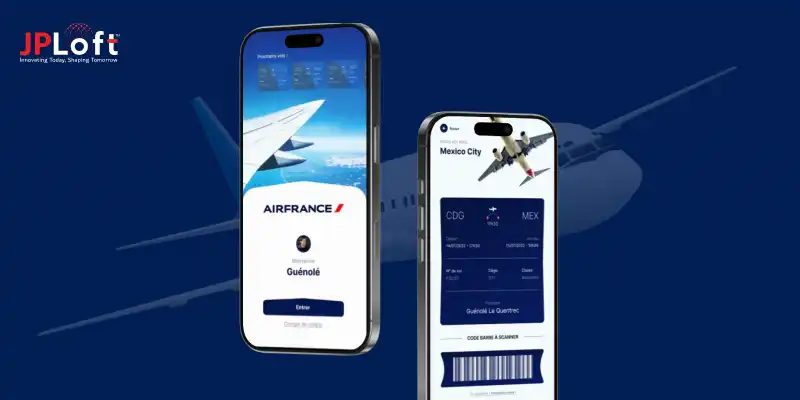
The Air France app combines flight booking, check-in, loyalty management, and personalization to deliver a seamless end-to-end travel experience.
What’s the cost to create an app like Air France? It typically ranges between $20,000 and $130,000+ (€18,500–€120,000+), based on features, scalability and other factors.
App development costs are influenced by scope, platform choice, integrations, AI-driven features, and long-term maintenance requirements.
Smart planning, phased development, and prioritizing essential features help reduce initial investment without sacrificing app quality.
Monetization options such as upgrades, subscriptions, and personalized offers play a key role in improving ROI for airline apps.
Partnering with an experienced team like JPLoft ensures secure architecture, scalable performance, and a user-centric airline app built for long-term growth.
Building a modern airline app today is no longer just about flight bookings; it’s about delivering a seamless, AI-powered travel experience that keeps users engaged before, during, and after their journey.
From real-time flight updates and mobile boarding passes to personalized offers and loyalty program integration, airline apps like Air France have set a high benchmark for digital travel experiences.
But for startups and enterprises planning a similar solution, one question naturally comes up: How much does it cost to build an App like Air France?
The development cost typically ranges between $20,000 and $130,000+ (approximately €18,500 to €120,000+), depending on features, technology stack, AI integrations, security standards, and scalability requirements.
In this guide, we break down the real cost, key factors, and smart ways to optimize your investment, clearly and practically.
About Air France App
The Air France app is built to manage the entire travel lifecycle, not just flight bookings. From discovering flights to boarding and post-trip engagement, it acts as a digital travel assistant for millions of users worldwide.
Travelers can search and book flights, manage itineraries, access mobile boarding passes, track loyalty points, and receive real-time alerts, all from one interface.
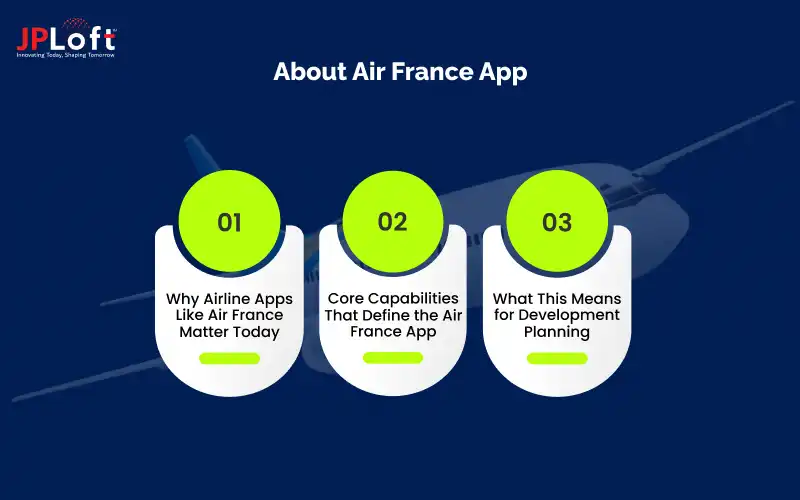
1. Why Airline Apps Like Air France Matter Today
To understand the value of such an app, it helps to look at industry data:
-
54% of travelers now prefer dealing directly with airlines through mobile apps for booking and related services.
-
78% of passengers want to use a smartphone that integrates travel credentials (digital wallet, passport, loyalty cards) for booking, payment, and airport navigation.
-
The global mobile travel app market was valued at approximately US$1 trillion in 2025 and is forecast to grow substantially by 2033.
-
Mobile app push notifications can significantly boost engagement (up to ~88% in broad app categories).
These trends explain why airline apps rank among the best travel apps when it comes to repeat usage and customer trust.
2. Core Capabilities That Define the Air France App
At its core, the app combines functionality and personalization:
-
Flight booking & reservation management
-
Digital check-in and mobile boarding passes
-
Real-time flight status and airport notifications
-
Flying Blue loyalty program integration
-
Personalized offers and upgrades
If you plan to create a clone like Air France, these features form the foundation. On top of that, AI-driven elements such as predictive alerts, smart recommendations, and multilingual support, enhance user experience and operational efficiency.
3. What This Means for Development Planning
For founders evaluating how to build an app like Air France?, it’s important to understand that each feature layer adds technical complexity. Secure payment systems, CRM integrations, airline inventory APIs, and personalization engines all contribute directly to the Air France like app development Cost.
In short, the Air France app succeeds because it blends robust engineering with user-centric design, delivering a seamless experience built around the top travel app features modern travelers now expect.
Average Cost to Develop an App like Air France
For airlines, startups, and travel enterprises, budgeting is often the first major checkpoint. In simple terms, the average cost to develop an app like Air France ranges from $20,000 to $130,000+ (€18,500 to €120,000+), depending on how feature-rich and scalable the app is intended to be.
A common question decision-makers ask is: what’s the cost to create an app like Air France? The answer depends largely on whether you’re launching a basic version to validate the idea or a full-scale airline app designed for long-term growth.
At a high level, the cost to develop an app like Air France follows a pricing pattern similar to the broader cost to develop a travel app, especially when bookings, payments, and real-time data are involved.
Cost Breakdown by App Scope
Most airline apps fall into one of the following categories:
-
Basic Airline App (MVP): Focuses on essential functionality such as flight search, booking, user profiles, and payments.
-
Mid-Level Airline App: Expands into real-time flight updates, mobile boarding passes, loyalty program access, and multilingual support.
-
Advanced Air France-Style App: Designed for high traffic, premium user experience, personalization, and operational scalability.
This structure helps explain why the cost to build an app like Air France varies so widely across projects. Since flight booking is the core use case, understanding how to create a flight booking app also clarifies why airline apps require a higher investment than basic travel planners.
Estimated Cost Summary Table
|
App Scope |
Estimated Cost (USD) |
Estimated Cost (EUR) |
|
Basic Airline App (MVP) |
$20,000 – $35,000 |
€18,500 – €32,000 |
|
Mid-Level Airline App |
$40,000 – $75,000 |
€37,000 – €69,000 |
|
Advanced Air France-Style App |
$80,000 – $130,000+ |
€74,000 – €120,000+ |
This table provides a quick snapshot for anyone evaluating how much does it cost to build an App like Air France?, before diving deeper into the factors that influence the final budget.
Factors Impacting the Complete Cost to Make an App like Air France
The complete cost to create an app like Air France depends on several key factors. Each factor contributes directly to development effort, complexity, and final investment. Understanding these helps businesses plan and optimize their budget effectively.
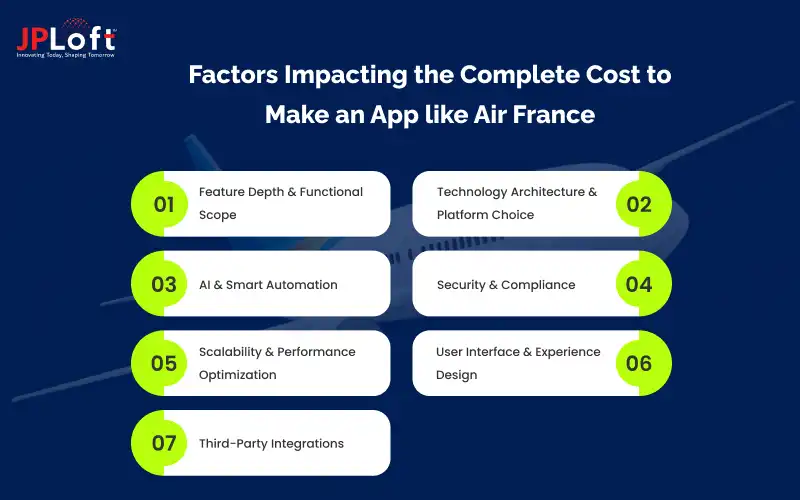
1. Feature Depth & Functional Scope
The number and complexity of features directly affect the Air France like app development Cost.
Advanced functionalities like seat selection, loyalty programs, and multi-language support require additional design and development.
Prioritizing top travel app ideas can help implement essential features first while controlling costs.
2. Technology Architecture & Platform Choice
The choice of platform and backend architecture impacts the cost to build a clone like Air France.
Native development or cross-platform frameworks, along with cloud and API integrations, define performance and scalability.
Selecting an optimal travel app tech stack reduces unnecessary complexity and budget overruns.
3. AI & Smart Automation
Integrating AI-powered personalization and predictive notifications enhances user engagement but increases the cost to make an app like Air France.
Features like smart travel suggestions or dynamic updates require specialized development.
Incorporating how to build an AI travel agent functionality can streamline operations while providing advanced experiences.
4. Security & Compliance
Airline apps handle sensitive user and payment data, which increases the cost to make a clone like Air France.
Security measures include encryption, secure authentication, and regulatory compliance.
Leveraging travel app security approaches ensures robust protection while minimizing risks.
5. Scalability & Performance Optimization
Designing for high traffic and smooth performance affects the overall cost to make an app like Air France.
Efficient infrastructure, load balancing, and optimization are key for long-term usability.
Considering a 360 VR app for tourism strategies can help future-proof the app while keeping performance costs predictable.
6. User Interface & Experience Design
An intuitive UI/UX improves engagement but influences the cost to build an app like Air France.
Multi-language support, easy navigation, and accessibility require careful design planning.
Following how to build a tour guide app principles ensures a user-friendly interface without inflating costs.
7. Third-Party Integrations
Integrations with payment gateways, loyalty programs, and analytics platforms add to the cost to develop an app like Air France.
Smooth integration ensures seamless booking and operational efficiency.
Using how to develop a travel planner app like Tripit as a reference helps estimate integration complexity accurately.
Cost Impact Table by Factors
|
Factor |
Impact on Cost (USD) |
Impact on Cost (EUR) |
|
Feature Depth & Functional Scope |
$8,000 – $35,000 |
€7,400 – €32,000 |
|
Technology Architecture & Platform Choice |
$5,000 – $20,000 |
€4,600 – €18,500 |
|
AI & Smart Automation |
$10,000 – $25,000 |
€9,200 – €23,000 |
|
Security & Compliance |
$5,000 – $15,000 |
€4,600 – €13,800 |
|
Scalability & Performance Optimization |
$7,000 – $20,000 |
€6,500 – €18,500 |
|
User Interface & Experience Design |
$3,000 – $12,000 |
€2,800 – €11,000 |
|
Third-Party Integrations |
$5,000 – $18,000 |
€4,600 – €16,500 |
How to Reduce the Cost to Make an App like Air France?
Reducing the cost to make an app like Air France doesn’t mean compromising on quality or user experience. With careful planning, prioritization, and smart technology choices, businesses can optimize investment while building a scalable and functional airline app.
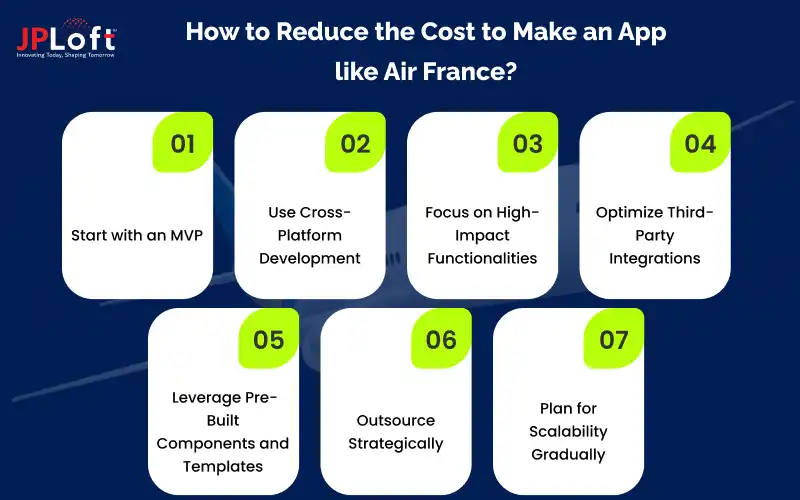
This section explores practical strategies to lower development costs while keeping the app competitive.
► Start with an MVP
Launching a minimum viable product helps validate the concept without investing in every feature upfront.
Focus on core functionalities such as flight search, booking, payment, and basic notifications.
This approach reduces the cost to build an app like Air France while allowing incremental updates based on user feedback and market response.
► Use Cross-Platform Development
Developing simultaneously for iOS and Android using frameworks like Flutter or React Native can significantly lower expenses.
Cross-platform apps require less development time compared to separate native builds.
Choosing a mobile app tech stack optimized for cross-platform efficiency ensures consistent performance and reduces overall costs.
► Focus on High-Impact Functionalities
Not every functionality adds the same value to users or revenue.
Identify the core elements that truly matter to ensure a smooth, engaging experience from the start.
Avoid adding complex modules like advanced AI or VR too early, as they can unnecessarily inflate the cost to create an app like Air France.
► Optimize Third-Party Integrations
While integrations with payment gateways, loyalty programs, and analytics platforms are important, selective integration can control costs.
Using ready-made APIs or modular plugins reduces custom development.
For instance, following how to develop a travel booking app like Wego can help estimate which integrations are essential versus optional.
► Leverage Pre-Built Components and Templates
Reusing design templates, UI kits, and backend modules saves time and reduces development hours.
For example, implementing reusable booking forms, search filters, and notification modules can lower engineering effort.
This approach directly impacts the cost to develop an app like Air France without sacrificing user experience.
► Outsource Strategically
Outsourcing development to experienced teams with a proven track record can reduce labor costs and speed up timelines.
Choosing a reliable best mobile app development company in the US or offshore partner ensures quality work while optimizing budget.
Clear specifications and milestone-based contracts prevent scope creep and unexpected expenses.
► Plan for Scalability Gradually
Instead of building infrastructure to handle millions of users from day one, plan for gradual scalability.
Cloud-based solutions and modular architecture allow scaling without upfront heavy investment.
This method lowers the cost to make an app like Air France while preparing the app for future growth.
Cost Reduction Strategies Table
|
Strategy |
How It Reduces Cost |
|
MVP Approach |
Focus on essentials, reduce initial development |
|
Cross-Platform Development |
Single codebase for iOS & Android |
|
Feature Prioritization |
Avoid unnecessary complexity |
|
Optimized Integrations |
Use pre-built APIs, reduce custom work |
|
Pre-Built Components |
Reusable UI/UX modules save time |
|
Strategic Outsourcing |
Leverage experienced teams, reduce labor costs |
|
Gradual Scalability |
Scale infrastructure as user base grows |
Monetization Strategies to Include in an App like Air France
Building an airline app is not just about creating a seamless travel experience, it’s also about generating sustainable revenue.
The cost to create a travel app like Air France can be high, so implementing smart travel app monetization strategies ensures a faster return on investment.
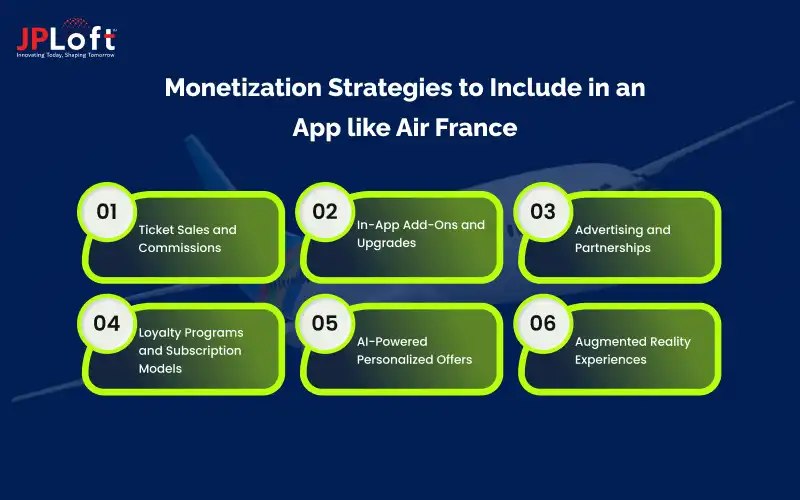
Here are the most effective ways to monetize an Air France-style app while enhancing user engagement.
1. Ticket Sales and Commissions
The primary revenue source for airline apps is direct ticket sales.
Apps can also earn commissions by integrating flights from partner airlines or OTA platforms.
This monetization approach ensures consistent revenue streams while keeping the app relevant for travelers seeking convenience.
2. In-App Add-Ons and Upgrades
Offering premium add-ons, such as extra baggage, seat selection, lounge access, or priority boarding, creates additional income.
Personalized suggestions for upgrades increase the likelihood of purchases.
Optimizing upselling opportunities and providing relevant add-ons can maximize revenue per user without disrupting the travel experience.
3. Advertising and Partnerships
Airline apps can collaborate with hotels, car rentals, or local attractions for in-app advertisements and affiliate partnerships.
Sponsored content, banners, or personalized offers from trusted partners generate incremental revenue.
Integrating these carefully ensures the user experience remains smooth without intrusive ads.
4. Loyalty Programs and Subscription Models
Apps can encourage users to join loyalty programs or subscription-based services for exclusive perks.
Features like priority booking, additional miles, or access to premium deals increase engagement.
Subscription models contribute to recurring revenue while improving retention.
5. AI-Powered Personalized Offers
Integrating AI-driven recommendations allows the app to suggest relevant trips, upgrades, or add-ons based on user behavior.
Choosing to build an AI itinerary app can enhance upselling efficiency while maintaining a seamless experience.
Personalized offers increase conversion rates and revenue potential.
6. Augmented Reality Experiences
Airline apps can use AR features to showcase airport navigation, seat previews, or travel destinations.
These features enhance engagement and open monetization avenues through premium experiences.
Considering AR in travel apps can turn interactive content into an additional revenue source.
Table: Monetization vs Revenue Impact
|
Strategy |
Revenue Potential |
|
Ticket Sales & Commissions |
High, primary revenue source |
|
In-App Add-Ons & Upgrades |
Medium, increases revenue per user |
|
Advertising & Partnerships |
Medium, incremental revenue |
|
Loyalty Programs & Subscriptions |
Medium-High, recurring revenue |
|
AI-Powered Personalized Offers |
Medium-High, boosts conversions |
|
Augmented Reality Experiences |
Low-Medium, enhances engagement |
Implementing these monetization strategies ensures the cost to make a travel app like Air France is balanced with strong revenue potential.
Properly planned, the app not only covers its investment but also becomes a sustainable platform for traveler engagement and growth.
Partner with JPLoft and Build an App Like Air France
If you’re planning to develop a clone like Air France, choosing the right technology partner is critical to success. Airline apps demand secure architecture, real-time integrations, and scalable performance, areas where experience truly matters. That’s where JPLoft stands out.
As a trusted Travel app development company, JPLoft helps businesses design and develop airline-grade mobile applications tailored to their goals. From flight booking systems and payment integrations to AI-driven personalization and post-launch support, our team focuses on building apps that are reliable, user-centric, and future-ready.
Are you exploring how to build an app like Air France? or looking to optimize cost without compromising quality, JPLoft delivers end-to-end development expertise to turn your vision into a high-performing travel app that scales with your business.
Conclusion
Building an airline app is a strategic investment that goes beyond design and development. As this guide shows, the complete cost to create an app like Air France depends on factors such as app scope, feature depth, integrations, and scalability requirements.
Understanding these elements helps businesses make informed decisions and plan budgets more effectively. Whether you’re evaluating what’s the cost to create an app like Air France? or exploring how to build an app like Air France?, the key lies in balancing functionality, user experience, and long-term growth.
With the right approach and development partner, you can create a robust airline app that delivers seamless journeys, strong engagement, and sustainable business value.
FAQs
The cost to build an app like Air France, typically depends on app complexity, features, integrations, and scalability. In most cases, it ranges between $20,000 and $130,000+ (€18,500–€120,000+), depending on whether you build a basic MVP or a full-featured airline app with AI-powered personalization and real-time integrations.
Core features such as flight search, booking, secure payments, check-in, and push notifications form the base. Advanced features like AI-driven recommendations, loyalty programs, and real-time flight updates significantly increase the cost to create an app like Air France due to added development and integration efforts.
Development timelines usually range from a few months to over a year. The duration depends on app scope, team size, and whether the focus is on rapid MVP development or a fully scalable airline solution, which directly affects the cost to develop an app like Air France.
To manage costs effectively, start with essential features, choose cross-platform development where possible, and plan for phased enhancements. A clear roadmap helps control the overall cost to make an app like Air France while ensuring quality and scalability.
Yes, airline apps can be highly profitable when combined with smart monetization models such as in-app upgrades, loyalty programs, and personalized offers. While the cost to create a travel app like Air France can be substantial, long-term revenue potential and customer retention make it a strong digital investment.

Kris Jacobs brings 20+ years of experience solving complex digital product challenges through strategic thinking and user-centric design. With deep exposure to on-demand services, entertainment, travel, and interactive platforms, she collaborates across teams to shape scalable, engaging solutions that align business goals with intuitive user experiences across evolving digital landscapes.


Share this blog