



Key Takeaways
Mobile app development cost in Australia ranges from AUD 20,000 to 250,000+, depending on scale, security, integrations, and future goals.
App features, design, backend, and compliance are the core development costs, while hidden costs are updates, security, and API service.
Clear scope definition, MVP development, smart feature prioritization, and experienced partners help Australian founders reduce overspending.
App complexity, choice of platforms, and tech stack directly affect development time, speed, and total app development cost Australia.
Developer rates vary across various cities of Australia, like Sydney, Melbourne, Brisbane, and Perth, influencing budget decisions.
App revenue models include subscriptions, in-app purchases, ads, and transaction fees, which impact development complexity and budget.
Different app types require different investments, like ecommerce, on-demand, fintech, social, and gaming app increases app costs in Australia.
JPLoft builds reliable apps with clear planning, transparent processes, a strong compliance focus, and long-term support with affordable costs.
Knowing the cost to develop a mobile app in Australia is a key step for businesses planning digital growth. Australia has a strong tech market, skilled developers, and high-quality standards. These factors influence how much you invest in mobile app development. For startups and enterprises, knowing the cost early helps avoid budget gaps and delays.
The total expense depends on many practical elements. App type, feature set, platform choice, and design needs play a role in the overall cost to create a mobile app in Australia. The experience level of the development team choice also affects the pricing. Simple apps cost less, while complex apps with advanced features need a higher investment.
The location within Australia and the chosen engagement model can further impact the overall cost. This blog provides a clear explanation of how much does it cost to develop an app in Australia. It breaks down key cost factors, average pricing ranges, budget planning, and hidden expenses businesses often miss.
Australian App Market Overview
The Australian app market has evolved significantly in the last few years. Driven by high smartphone penetration, increasing reliance on digital tools, and consumer demand for innovative and engaging mobile experiences.
Below are the Australian app market statistics for getting a brief idea before we look at how much does it cost to create an app in Australia:
-
According to Statista, the total revenue for the Australian app market is expected to reach USD 7.42 billion in 2022 and grow at an annual CAGR of 6.74% until 2029.
-
The Expert Market Research estimated that the mobile payment sector alone reached USD 21.35 billion in 2024 and is forecasted to grow at a 16.9% CAGR from 2025 to 2034.
-
In research by 42Matters, there are currently 2,574 active Australian app developers on Google Play, with 7,833 apps built by them alone.
-
42Matters also stated that Australian mobile apps average over 323,830 downloads and earn revenue through various monetization strategies, such as in-app purchases (16%) and advertising (18%).
-
The rise of super apps in Australia, as estimated by Lucintel, encompassing services like financial, transportation, and e-commerce, is also a notable trend forecasted to grow at a CAGR of 25.5% through 2031.
These statistics show strong market growth, rising competition, and increasing user expectations in Australia. They help businesses plan budgets for mobile app development services in Australia with realistic expectations. Revenue and monetization data guide feature planning, while fast-growing sectors like payments and building super apps signal higher complexity, compliance needs, and larger budgets for scalable app development.
The next step is to know the investment required, which makes planning the cost of mobile app development Australia a critical part of the discussion.

How Much Does it Cost to Develop A Mobile App in Australia?
The cost to develop a mobile app in Australia typically ranges between AUD 20,000 to AUD 250,000+. There is no fixed price, but most app development in Australia will fall within this bracket. This wide range exists because the cost of developing an app in Australia depends on the app’s complexity, features, platform, and long-term goals.
Cost Ranges by App Complexity (Basic, Standard, Advanced, Enterprise)
When budgeting, it is crucial to understand how the complexity of the app impacts the overall cost to build an app in Australia. Below is the detailed breakdown of the mobile app development cost ranges by app complexity:
|
App Complexity |
Cost Range (AUD) |
Description |
|
Basic App |
$20,000 – $40,000 |
Includes simple screens, limited features, and minimal backend work. Suitable for small businesses or new app ideas needing quick development and basic functionality. |
|
Standard App |
$40,000 – $80,000 |
Offers moderate features like user authentication, APIs, basic integrations, and custom UI. |
|
Advanced App |
$80,000 – $150,000 |
Supports real-time data, payment systems, third-party integrations, and higher security. |
|
Enterprise App |
$150,000 – $250,000+ |
Built for scale, security, and performance with role-based access, analytics, workflows, and compliance features. |
The complexity of your app will highly impact how much does it cost to create an app in Australia, ongoing maintenance, support, and potential feature updates.
Cost by Platform and Tech Stack
When estimating the average cost to develop an app in Australia, the platform you choose (iOS, Android, or both) and the app tech stack behind it play a major role in determining the final cost.
|
Category |
Type |
Cost Range (AUD) |
Description |
|
Based on the Platform |
iOS App Development |
$20,000 – $120,000+ |
Built using Swift and Apple frameworks. Costs depend on feature complexity and design needs. |
|
Android App Development |
$20,000 – $120,000+ |
Developed using Kotlin or Java. Costs vary due to device fragmentation and screen size testing. |
|
|
Based on Tech Stack |
Native Tech Stack |
$60,000 – $200,000+ |
Uses platform-specific languages like Swift and Kotlin with separate codebases. |
|
Cross-Platform Frameworks |
$30,000 – $120,000 |
Uses a single codebase with frameworks like React Native or Flutter. |
|
|
Backend Tech Stack |
$20,000 – $80,000+ |
Covers APIs, databases, user management, and business logic. |
|
|
Third Party Integrations |
$5,000 – $40,000+ |
Includes payment gateways, maps, analytics, messaging, and CRM tools. |
By aligning your technical choices with your business goals and budget, you can control the costs of mobile app development services in Australia while building an app that is scalable.
City-Level Cost Nuances (Sydney, Melbourne, Brisbane, Perth)
When considering city-level nuances for app costs in Australia, the price to hire mobile app developers and business operations can vary significantly between major cities. Let's break it down by the key IT cities of Australia:
|
City |
Development Cost Level |
Key Characteristics |
Best Suited For |
|
Sydney |
High |
Strong demand, access to senior talent, advanced design expertise, and enterprise-level delivery. |
Enterprise apps and large-scale, high complexity projects |
|
Melbourne |
Medium to High |
Slightly lower costs than Sydney, strong startup ecosystem, creative talent, and solid UI and UX capabilities with balanced pricing. |
Startups and growing businesses seeking quality and reliability |
|
Brisbane |
Medium |
More affordable developer rates, good quality output, and suitable for cost-conscious businesses. |
Startups and SMEs with moderate app requirements |
|
Perth |
Low to Medium |
Smaller tech market, competitive pricing, and lower demand. |
Simple to mid-level apps and budget-focused projects |
Understanding how much does it cost to build an app in Australia requires looking beyond a single price range. App complexity, platform choice, tech stack, and even city-based development rates all influence the final budget. After knowing the overall cost to develop a mobile app in Australia ranges for developing a mobile app in Australia, the next step is to see what actually shapes that price.
Key Factors That Affect App Development Costs in Australia
The cost to build an app in Australia varies widely depending on multiple technical, business, and market-driven factors. Given Australia’s labor cost and strong regulatory environment, understanding these cost drivers is essential for accurate budgeting and avoiding overruns.
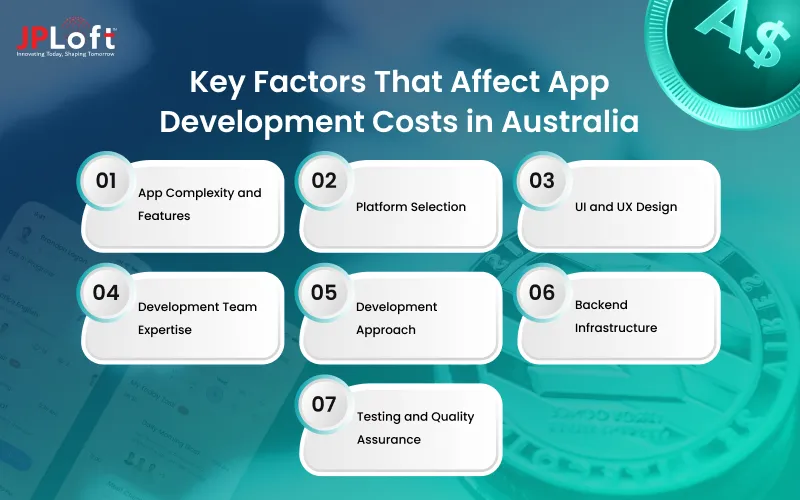
Here are the key factors that affect the cost of mobile app development Australia:
1. App Complexity and Features
App complexity directly impacts development time and cost to create a mobile app in Australia. A simple app with basic screens and functions needs fewer resources. Complex apps with advanced features also increase backend work, integration effort, and future maintenance responsibilities for the business.
2. Platform Selection
Building for Android, iOS, or both affects pricing. Single platform mobile app development cost in Australia are a lot less. Multi-platform apps need extra development effort, testing, and maintenance, which increases time, cost, and ongoing support requirements. Cross-platform apps may reduce costs compared to separate native apps.
3. UI and UX Design
Design quality plays a major role in app development cost Australia. Custom UI and UX design needs research, app wireframes, app prototypes, and testing. Apps focused on user experience require more design cost but help improve engagement, retention, and overall business value.
4. Development Team Expertise
Experienced developers in Australia charge higher rates but deliver stable and secure apps. Skilled teams reduce errors, improve performance, and meet quality standards. Choosing less experienced developers may reduce initial app development Australia cost but increase long-term risk and rework.
5. Development Approach
The chosen development approach affects cost and timeline. Native apps offer better performance but cost more. Cross-platform or hybrid apps reduce initial app development pricing Australia, but may need extra optimization to meet performance and user experience expectations.
6. Backend Infrastructure
Apps that require servers, databases, and APIs result in a higher cost of developing an app in Australia due to setup, security, and ongoing support needs. Scalability planning, data storage, and system monitoring further increase backend development expenses.
7. Testing and Quality Assurance
Thorough testing improves app stability. Increasing the number of devices and test cases increases the overall development cost. Manual and automated mobile app testing help prevent crashes, security flaws, and poor user experiences.
While the main cost factors explain most of the app development budget, they do not show the full picture. Many expenses appear after development begins or once the app is live, making it important to understand the hidden costs involved.
Hidden Cost To Develop An App In Australia
When planning an app development budget, many businesses focus only on the initial build cost. They overlook several hidden expenses that arise during and after development. When you develop an app in Australia, these hidden costs can quickly add up and become surprise expenses.
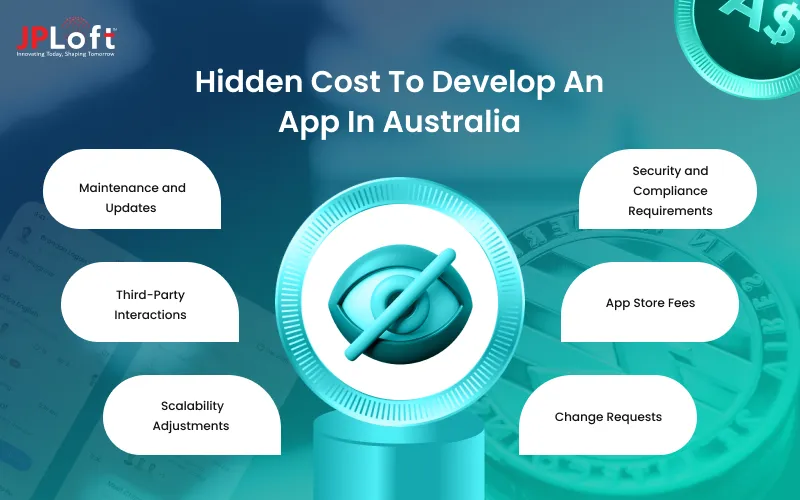
Here are the hidden costs to develop a mobile app in Australia that are often overlooked:
1. Maintenance and Updates
Post-launch updates, bug fixes, and feature improvements add to the long-term app development budget. Operating system updates, security patches, and user feedback-driven changes require ongoing investment. Handling these issues and improving performance requires hiring app maintenance service providers, which adds in post launch cost.
2. Security and Compliance Requirements
Apps handling user data must follow Australian privacy and mobile app security standards. Implementing encryption, secure authentication, and compliance measures adds development effort. These steps increase the cost to build an app in Australia but protect businesses from data breaches and legal risks.
3. Third-Party Interactions
Many apps rely on paid APIs, analytics tools, payment services, and cloud platforms. These services often charge monthly or usage-based fees. Such recurring expenses increase long-term app ownership cost beyond initial development.
4. App Store Fees
The process to submit iOS app to App Store involves developer account fees of USD 99/year and a commission on in-app purchases. These costs may vary if you publish your app on Play Store, to USD 25 one-time fee. These fees may seem small initially, but they impact long-term revenue. Businesses must consider platform policies and ongoing store-related expenses in their budget.
5. Scalability Adjustments
As user numbers grow, apps may need server upgrades and performance optimization. Scaling infrastructure increases cloud and cost to create a mobile app in Australia. Planning scalability early helps control expenses, but still adds hidden costs over the app lifecycle.
6. Change Requests
Business needs often change during development. New features or mobile app design changes require extra development time. Frequent change requests increase app development cost Australia and delay timelines, making clear planning and scope definition important from the start.
By identifying and preparing for these hidden parts of how much does it cost to develop an app in Australia early, businesses can make more informed decisions and protect their investment. Factoring in maintenance, infrastructure, compliance, and post-launch improvements allows for realistic budgeting. Now, looking at the breakdown of the cost of mobile app development Australia based on various app types will show how different business models and use cases shape overall development investment.

Cost Breakdown by App Type: Real-World Scenarios for Australian Businesses
The cost structure of mobile app development services in Australia significantly varies based on the type of app you want to develop in Australia. Below is a detailed breakdown of the costs for different app types:
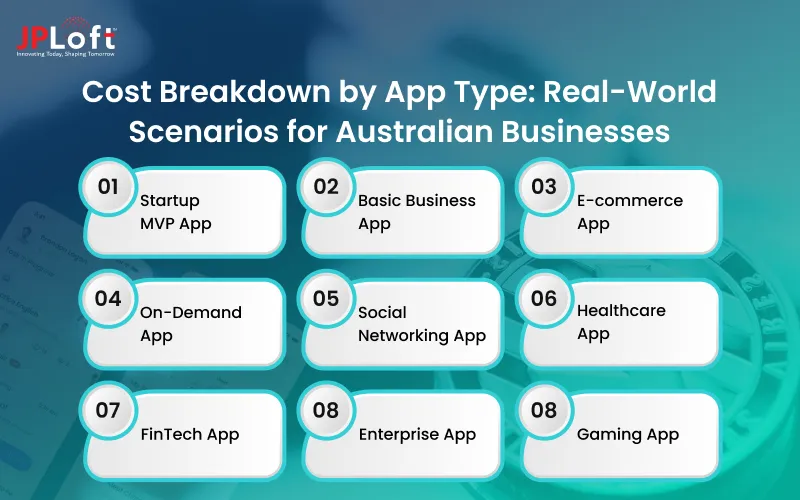
1. Startup MVP App
Estimated Cost: AUD 10,000 – 60,000
Timeline: ~3 – 6 months
Feature Scope: Core functionality only, focusing on key user value to test market demand. Minimal UI, essential features, and early feedback planning help keep costs down. MVPs are useful for validating ideas before full-scale development.
2. Basic Business App
Estimated Cost: AUD 15,000 – 30,000
Timeline: ~2 – 4 months
Feature Scope: Simple informational screens, contact form, basic navigation, and minimal backend needs. Ideal for small businesses and service providers wanting a digital presence without complex features. Basic apps are faster and cheaper to build because they require limited design and development effort.
3. E-commerce App
Estimated Cost: AUD 40,000 – 120,000
Timeline: ~4 – 10 months
Features Scope: Product catalog, shopping cart, secure payments, order tracking, and user accounts. Australian retailers often include inventory sync and tax settings, which add to the cost of mobile app development Australia and development time. To build an app like Ozsale, you need strong backend support and thorough testing across payment workflows.
4. On-Demand App
Estimated Cost: AUD 70,000 – 150,000
Timeline: ~5 – 9 months
Feature Scope: Real-time booking, user profiles, geolocation tracking, in-app messaging, and payment integration. The cost to develop on-demand apps is generally high in Australia as it ties users to service providers, requiring complex backend logic and integrations.
5. Social Networking App
Estimated Cost: AUD 50,000 – 160,000
Timeline: ~4 – 9 months
Feature Scope: User profiles, social feeds, media sharing, messaging, push notifications, and moderation tools. Popular apps like Instagram demand scalable servers and real-time interactions, influencing the cost to develop an app like Instagram.
6. Healthcare App
Estimated Cost: AUD 50,000 – 150,000+
Timeline: ~4 – 10 months
Feature Scope: User profiles, appointment scheduling, telehealth features, data storage, and secure messaging. Healthcare apps must follow strict data privacy standards, support secure access controls, and integrate with medical systems, which increases development complexity and overall cost.
7. FinTech App
Estimated Cost: AUD 45,000 – 120,000+
Timeline: ~4 – 9 months
Feature Scope: Secure user authentication, payment processing, digital wallets, transaction tracking, and real-time notifications. These industries require strong security, encryption, and compliance features, increasing the cost of fintech app development in Australia.
8. Enterprise App
Estimated Cost: AUD 100,000 – 250,000+
Timeline: ~6 – 12 months
Feature Scope: Role-based access, analytics dashboards, workflow automation, and large-scale integrations. Enterprise apps must support high performance, security, and scalability, which increases cost and delivery time.
9. Gaming App
Estimated Cost: AUD 60,000 – 200,000+
Timeline: ~4 – 12 months
Feature Scope: Graphics, animations, physics engines, multiplayer support, monetization features, and leaderboards. High-end games demand specialized design and development, making them among the costlier app types.
The cost of developing an app in Australia can vary greatly depending on the type of app, its complexity, and the specific requirements of your business. The next decision that impacts the cost to build an app in Australia or another global agency. Choosing between an Australian team and a global agency can significantly influence cost control, quality, and long-term project success.
Australia vs Global Agency: Which Hiring Model Makes Sense?
Choosing between an Australian app development agency and a global agency directly impacts cost, quality, and long-term success. While global agencies may appear cheaper upfront, Australian developers offer stronger alignment with local business needs, regulations, and quality standards.
Australian agencies follow strict development practices, clear communication, and transparent pricing. They understand local requirements, data privacy laws, and user expectations. Time zone alignment also reduces delays, speeds decision-making, and improves collaboration. These factors help control hidden app costs in Australia that often arise with offshore teams.
Global agencies can reduce initial development cost, but challenges like time zone gaps, communication delays, quality inconsistencies, and rework can increase total project cost. Hiring dedicated developers in Australia often results in smoother delivery and better ROI.
|
Key Cost Factor |
Australian Agency |
Global Agency |
|
Hourly Developer Rates |
Higher but transparent and stable |
Lower upfront, but varies by region |
|
Project Management |
Included with clear accountability |
Often limited or billed separately |
|
Communication & Time Zone |
Real-time collaboration |
Delays due to time differences |
|
Quality Standards |
High-quality code and testing |
Quality may vary by team |
|
Compliance & Security |
Strong understanding of Australian laws |
Requires extra guidance and reviews |
|
Rework & Maintenance Costs |
Lower due to better planning |
Higher risk of rework |
|
Long-Term Scalability |
Planned from the early stages |
Often added later at extra cost |
|
Overall Cost Efficiency |
Higher value over the project lifecycle |
Lower initial cost, higher long-term risk |
For many Australian businesses, especially those targeting the local market, local development experts deliver better value over time. While the initial investment may be higher, businesses benefit from fewer delays, reduced rework, better compliance, and smoother scalability.
Applying practical cost control strategies helps Australian founders maximize value, reduce risk, and stay within budget during development and beyond.
Tips for Reducing Development Cost in Australia
Controlling how much does it cost to develop an app in Australia is crucial for Australian founders who want to ensure their startup or business doesn't face unexpected financial strain during the project. Here are practical tips for Australian founders to control app development costs:
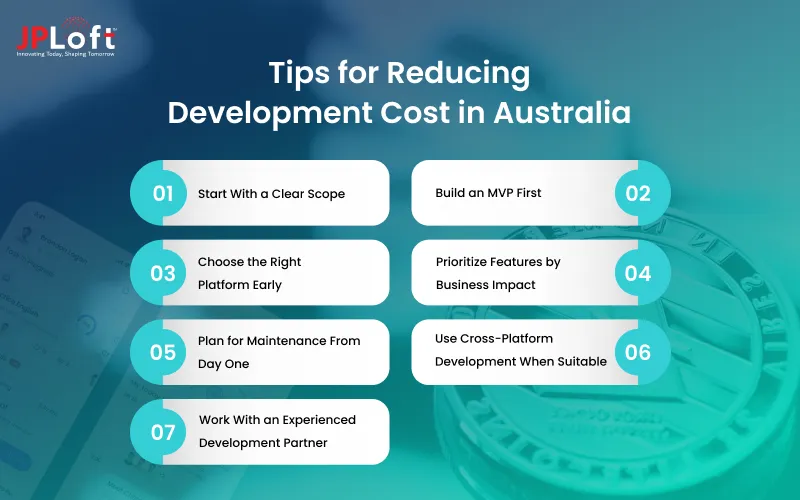
1] Start With a Clear Scope
Define app goals, core features, and target users before development begins. A clear scope prevents confusion, reduces rework, and limits change requests. This approach helps founders manage timelines, avoid budget creep, and keep development focused on real business needs.
2] Build an MVP First
Launch with only essential features to test market demand. An MVP reduces initial development cost and speeds up time to market. Founders can collect user feedback early and invest further only in features that deliver measurable business value.
3] Choose the Right Platform Early
Decide whether your app needs iOS, Android, or both from the start. Building for one platform lowers the average cost to develop an app in Australia. Expanding later becomes easier once the product proves value, helping founders control investment at the early stage and reduce risk.
4] Prioritize Features by Business Impact
Not every feature needs to be built at launch. Rank features based on revenue impact and user value. This method helps founders invest only in what matters most and postpone nonessential features to future development phases.
5] Plan for Maintenance From Day One
Ongoing maintenance is unavoidable. Budget for updates, bug fixes, and OS changes early. Planning maintenance costs upfront avoids surprises later and helps founders manage long-term app ownership expenses more effectively.
6] Use Cross-Platform Development When Suitable
Cross-platform frameworks allow one codebase for multiple platforms. This approach cuts development time and mobile app development cost in Australia. It works well for many business apps, especially when heavy performance features or specific device functions are not critical.
7] Work With an Experienced Development Partner
Experienced Australian teams may charge more initially but reduce costly mistakes. They offer better planning, accurate estimates, and smoother execution. This lowers rework, speeds delivery, and helps founders stay within budget over the full project lifecycle.
Controlling how much does it cost to build an app in Australia requires a combination of careful planning, smart decision-making, and the right partnerships. The next step is understanding how your app will generate returns. Exploring common mobile app monetization models helps founders plan revenue strategies that support long-term growth and sustainability.
How Do Mobile Apps in Australia Make Money?
Mobile apps can generate revenue in various ways, depending on their business model, target audience, and the value they offer. The right mobile app monetization model is crucial for the long-term success of the app.
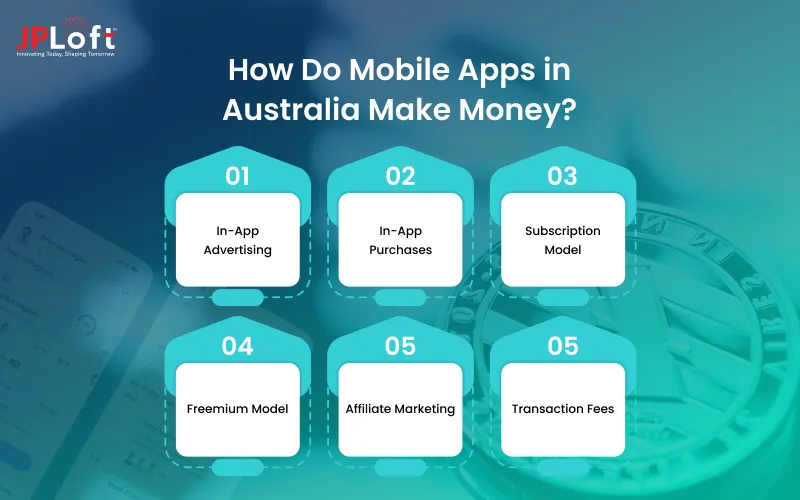
Here is a list of the top ways mobile apps make money to cover up the cost of developing an app in Australia:
1. In-App Advertising
- About: Apps earn money by showing ads to users inside the app.
- How It Works: Ads appear as banners, videos, or native placements during app usage.
- Revenue Source: Payment from advertisers based on clicks, views, or installs.
2. In-App Purchases
- About: Users buy digital items or features within the app.
- How It Works: The app offers add-ons like credits, filters, or premium tools.
- Revenue Source: One-time or repeat purchases made by users
3. Subscription Model
- About: Users pay a recurring fee for ongoing access.
- How It Works: Monthly or yearly plans unlock premium features or content.
- Revenue Source: Regular subscription payments from active users.
4. Freemium Model
- About: The app is free with optional paid upgrades.
- How It Works: Basic features are free, while advanced features require payment.
- Revenue Source: Paid upgrades or premium feature unlocks.
5. Affiliate Marketing
- About: The app promotes third-party products or services.
- How It Works: Users click links or complete actions through the app.
- Revenue Source: Commission from affiliate partners.
6. Transaction Fees
- About: The app charges a fee per transaction.
- How It Works: A small percentage is deducted from each payment.
- Revenue Source: Fees from bookings, payments, or marketplace transactions.
There are numerous ways mobile apps make money, and the right monetization strategy depends on the app’s type, user base, and the value it offers. Choosing the right model requires understanding your target audience and aligning the revenue strategy with user expectations.

Why Australian Businesses Choose JPLoft for Mobile App Development?
Australian businesses choose JPLoft because we focus on clarity, quality, and long-term value. We help companies plan the right app functionality before development starts. Our team works closely with stakeholders to define scope, features, and budget early. This approach reduces risk and avoids cost surprises during development.
JPLoft, the best mobile app development company in Australia, builds mobile apps that match real business goals. We design solutions for startups, growing companies, and enterprises across industries. From MVPs to large-scale platforms, we follow structured processes that keep projects on track. Our focus on clean design and stable performance helps businesses launch apps that users trust and adopt.
We understand the expectations of the Australian market. Our experience with compliance, security standards, and scalability helps businesses build apps ready for growth. Clear communication and regular updates ensure full transparency at every stage.
JPLoft also supports businesses beyond launch. We provide ongoing maintenance, performance improvements, and feature upgrades to protect long-term app value. By combining technical expertise with practical planning, JPLoft helps Australian businesses control costs while delivering reliable mobile app solutions that support growth and digital transformation.
Conclusion
Knowing how much does it cost to build an app in Australia helps businesses plan smarter and avoid unexpected expenses. With cost ranges starting from AUD $20,000 to AUD $250,000+, pricing depends on app complexity, platform choice, tech stack, and the development team you hire. Factors like city-based rates, feature scope, and long-term maintenance also shape the final budget.
Australian development teams offer strong advantages through clear communication, local compliance knowledge, and high-quality standards. While the upfront cost may be higher than global agencies, the long-term value often outweighs the difference by reducing rework and delays.
By defining your scope early, prioritizing features, and choosing the right hiring team, you can control costs without compromising quality. Whether you are building a startup MVP or an enterprise solution, informed planning ensures your app investment delivers real business results and long-term growth.
FAQs
Mobile app development costs in Australia usually fall between AUD 20,000 and AUD 250,000 or more. The final price depends on the complexity, features, platforms, design needs, and long-term scalability requirements of the business.
Major cost drivers include app complexity, platform selection, feature scope, UI and UX design, backend infrastructure, security requirements, and ongoing maintenance. Location of the development team and level of expertise also significantly influence the overall budget.
Simple apps require fewer features and less backend work, reducing time and cost. Advanced and enterprise apps involve real-time data, integrations, and security layers, which increase development hours, testing effort, and overall project duration.
Post-launch expenses include app updates, bug fixes, server costs, third-party services, app store fees, security updates, and user support. These ongoing costs are essential to maintain performance and ensure long-term app success.
Startups can control costs by building an MVP, defining a clear scope, prioritizing essential features, choosing the right platform early, and planning maintenance. Working with experienced teams also helps avoid costly mistakes.

Priyanka Sukhwal is the Managing Director and Business Head of JPLoft, with 10+ years of experience in technology, digital product strategy, and business growth. She has worked closely with businesses building mobile applications, custom software, marketplaces, and on-demand platforms across mobility, automotive, consumer services, and startup ecosystems. At JPLoft, she focuses on understanding business models, identifying product opportunities, and helping companies plan digital solutions that can scale with changing market needs.




Share this blog