


Key Takeaways:
Cost to develop an app in Chicago ranges from $7,000 to $200,000+, depending on complexity, while offering a middle-ground development market between expensive US technology hubs and lower-cost offshore teams.
Factors impacting the cost to build a mobile app in Chicago are app complexity, platform, design, backend, security, maintenance, and advanced technologies.
Hidden expenses include APIs, services, scaling, marketing, and ongoing operations, which can significantly increase total app investment.
Native platforms, complex backends, AI, compliance, integrations, and custom experiences increase app development budgets.
MVP development, cross-platform frameworks, clear requirements, existing tools, and phased features help reduce mobile app development cost in Chicago.
Subscriptions, transaction fees, in-app purchases, enterprise licensing, and advertising provide ways to recover development investments.
JPLoft manages Chicago app development cost through discovery, MVP planning, scalable architecture, modern frameworks, and agile practices.
A mobile app can be a growth engine for your business in Chicago business, but incorrect budget planning can turn development into an expensive gamble.
From startup launching MVPs to established companies, businesses across Chicago are investing in mobile apps to improve customer engagement, streamline operations, and create new revenue channels.
This development cost ranges from USD 7,000 to USD 200,000+, depending on the complexity, features, tech stack, design requirements, and development team.
A simple app may require a modest investment, while advanced platforms with AI, real-time functionality, complex backend systems, and third party integrations can require a much larger budget.
This guide breaks down Chicago app development costs by process, app type, and major cost factors to help businesses plan their investment and make informed development decisions.
|
App Complexity |
Estimated Cost Range |
Typical Features |
|
Basic Mobile App |
$7,000 – $50,000 |
User login, profile management, simple UI, basic backend |
|
Mid-Level Mobile App |
$50,000 – $100,000 |
Payment gateways, APIs, push notifications, and analytics dashboards |
|
Complex / Enterprise App |
$100,000 – $200,000+ |
AI features, real-time data processing, advanced security, scalable infrastructure |
Cost Breakdown Based on App Development Process in Chicago
The mobile app development cost in Chicago typically ranges from USD 7,000 to USD 200,000+, depending on the features, technology, and development requirements.
Businesses should understand how the budget is distributed across each stage of the app development process. Planning, UI/UX design, development, testing, deployment, and post-launch support each contribute to the final investment.
A basic MVP with core features like user registration, simple UI, and limited backend functions costs around USD 7,000 to USD 50,000.
Advanced apps, like fintech platforms, on-demand marketplaces, or enterprise solutions with AI and robust backend systems, can reach USD 100,000 to USD 200,000+.
The following table provides a stage-wise cost breakdown of app development in Chicago:
|
Development Stages |
Estimated Cost Range |
Typical Budget Share |
|
Discovery & Business Analysis |
$750–$15,000 |
5–10% |
|
UI/UX Design |
$1,500–$37,500+ |
10–15% |
|
Frontend App Development |
$3,750–$87,500+ |
25–35% |
|
Backend Development & APIs |
$3,000–$75,000+ |
20–30% |
|
Testing & Quality Assurance |
$1,500–$37,500+ |
10–15% |
|
Deployment & App Store Launch |
$750–$15,000 |
5–10% |
Chicago app developer hourly rate alone does not decide the final cost. Poor planning, weak architecture, unclear scope, and rework can make a cheaper team more expensive in the long run. With Chicago rates generally higher than many offshore markets, controlling scope early can make a significant difference.
Why App Development Costs Differ in Chicago?
The custom mobile app development cost in Chicago depends on the team, features, industry, and technical requirements. Chicago offers a middle ground between expensive US technology hubs and lower-cost offshore development markets.
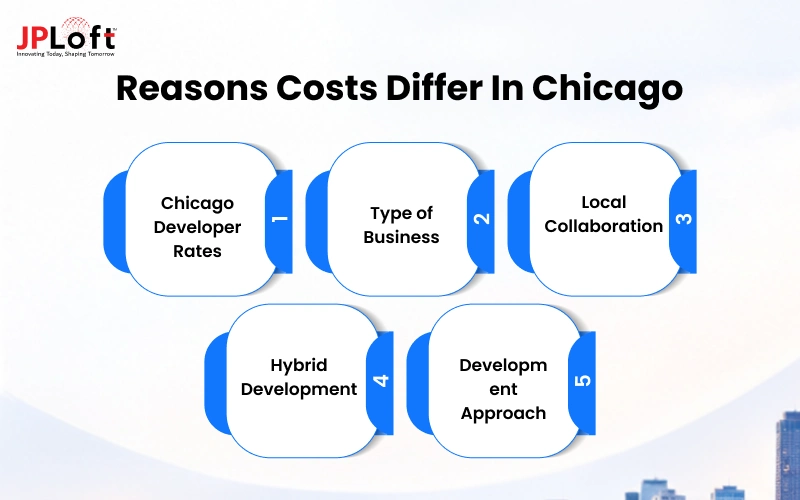
1. Chicago Developer Rates
Local agencies and experienced developers in Chicago typically charge more than offshore teams because of higher salaries, office expenses, and operating costs in the U.S. The seniority and specialization of the development team can significantly change the project budget.
2. Type of Business
Chicago has strong demand for apps across healthcare, fintech, logistics, restaurants, retail, and on-demand services. Apps in regulated industries can cost more because they often require compliance, stronger security, specialized integrations, and additional testing.
3. Local Collaboration
Chicago-based teams can increase costs compared with remote offshore teams, but they provide advantages for businesses that need in-person meetings, local market knowledge, and better project coordination.
4. Hybrid Development
Many Chicago businesses reduce costs by combining local product leadership with remote development resources. This approach can maintain U.S.-based communication while reducing overall engineering expenses.
5. Development Approach
Building separate native iOS and Android applications can increase costs compared with cross-platform development. Starting with an MVP can also help Chicago businesses control initial investment and validate the product before funding advanced features.
Mobile App Development Cost in Chicago by App Type
App complexity influences both the cost and timeline to build a mobile app. However, complexity varies based on the industry, required functionality, and level of technology integration.
An enterprise-level application with limited integrations may cost less to develop than a mid-scale app that requires advanced security, real-time processing, or compliance frameworks.
The technical requirements behind the features often impact the cost to develop an app more than the app category itself. Varying requirements are the reason the mobile app development cost estimate differs widely.
Below are some common app types and their estimated development costs.
|
App Type |
Estimated Cost Range (Mid to Enterprise Level) |
Key Features |
|
eCommerce Apps |
$60,000 – $180,000+ |
Product catalog, payment gateway, order tracking, and user profiles |
|
On-Demand Service Apps |
$70,000 – $200,000+ |
Real-time booking, location tracking, push notifications, in-app payments |
|
Healthcare Apps |
$90,000 – $200,000+ |
Telemedicine, appointment scheduling, patient records, HIPAA compliance |
|
Social Media Apps |
$100,000 – $200,000+ |
User feeds, messaging, media sharing, notifications |
|
AI-Powered Apps (Apps completely running on AI) |
$150,000 – $200,000+ |
AI recommendations, predictive analytics, automation, and real-time insights |
|
Restaurant ordering MVP |
$25,000–$70,000+ |
Menu, order placement, payment, admin panel |
|
Local service booking app |
$40,000–$120,000+ |
User booking, provider panel, notifications, payments |
|
Healthcare appointment app |
$80,000–$200,000+ |
Patient profiles, appointment booking, reminders, HIPAA-aware security |
|
Fintech dashboard app |
$120,000–$200,000+ |
Secure transactions, KYC verification, financial dashboards, encryption |
|
Logistics/delivery app |
$100,000–$200,000+ |
GPS tracking, driver app, dispatch panel, route optimization |
Factors Impacting the Cost to Build a Mobile App in Chicago
When you plan to build a mobile app, you need to be aware of key factors that impact the cost and define where the budget will be spent between the app planning and final launch.
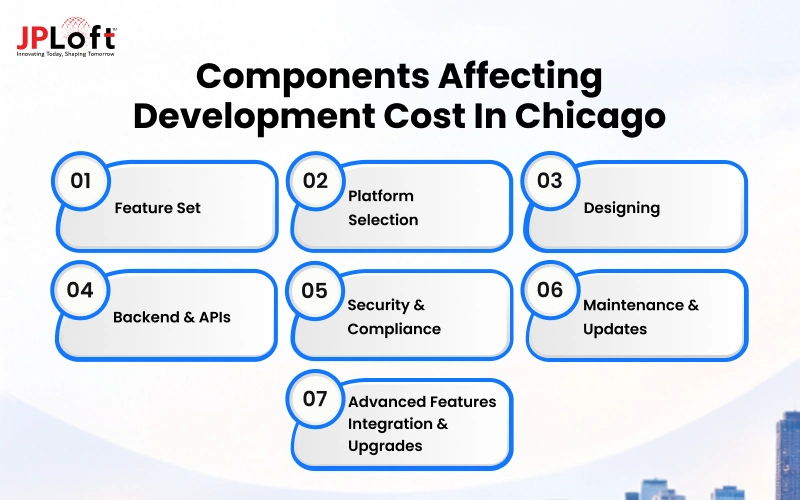
Several factors influence the Chicago app development cost. Knowing about these factors helps you estimate costs more accurately and make informed development decisions:
1. Feature Set
In Chicago, development costs can vary significantly based on the features your business needs and the complexity of the underlying technology. Apps with basic mobile app features such as user registration, profile management, and simple navigation require less development effort and hence cost less.
Platforms that include real-time chat, payment systems, AI-powered suggestions, or advanced analytics dashboards require additional engineering and testing, resulting in increased cost.
|
Feature Set |
Estimated Cost Range |
Typical Features |
|
Basic Features |
$7,000 – $50,000 |
Login, profiles, location, search, booking, basic backend |
|
Mid-Level Features |
$50,000 – $100,000 |
Payment gateways, APIs, push notifications, and analytics dashboards |
|
Complex / AI Features |
$100,000 – $200,000+ |
Real-time GPS tracking & data processing, AI recommendations, live chat, multi-role dashboards, advanced payment systems, high-level security, scalable cloud infrastructure |
2. Platform Selection
The platform you choose to launch also affects the app development cost Chicago. Building native iOS and Android apps requires different codebases and testing environments, which increases the total development effort.
However, businesses comparing cross-platform frameworks such as Flutter vs React Native, which work more efficiently across platforms for their app, are able to maintain cost efficiency.
|
Platform Strategy |
Development Scope |
Estimated Cost Impact |
|
Single platform (iOS or Android) |
One codebase |
$7,000 – $50,000 |
|
Cross-platform development |
Shared codebase |
$50,000 – $150,000 |
|
Native iOS + Android apps |
Two separate codebases |
$150,000 – $200,000+ |
3. UI/UX Design Requirements
Another factor affecting mobile app development cost Chicago is the user experience offered.
Apps with custom animations, interactive design elements, and advanced user journeys require more design and development time compared to simple interface layouts.
Partnering with an expert UI/UX design service provider can increase the overall development cost but can also ensure better UI/UX engagement.
|
Design Complexity |
Design Scope |
Estimated Cost Impact |
|
Basic UI templates |
Simple layouts |
$3,000 – $12,000 |
|
Custom UI/UX design |
Unique design components |
$12,000 – $35,000 |
|
Advanced interactive design |
Animations and complex flows |
$35,000 – $70,000 |
4. Backend Infrastructure and APIs
Modern-day apps offer advanced capabilities integrated into a single platform, including AI features. These depend on strong backend systems for data storage, authentication, and real-time functionality.
Apps that require cloud infrastructure, API integrations, scalable databases, and AI app development cost in Chicago are higher than apps with limited backend requirements.
|
Backend Complexity |
Infrastructure Requirements |
Estimated Cost Impact |
|
Basic backend |
Limited database usage |
$10,000 – $25,000 |
|
Moderate backend |
APIs and cloud services |
$25,000 – $60,000 |
|
Enterprise backend |
Scalable cloud infrastructure |
$60,000 – $120,000+ |
5. Security and Compliance Requirements
Estimating how much does it cost to build a mobile app in Chicago also includes the app security requirements. Applications that handle sensitive user data, such as fintech or healthcare apps, require additional security layers, data encryption, and compliance with regulations.
Implementing these security frameworks increases both development and testing costs. Hence, it is important to plan for mobile app security requirements early so that you can plan your budget accordingly.
|
Security Level |
Implementation Scope |
Estimated Cost Impact |
|
Basic security |
SSL encryption, authentication |
$5,000 – $15,000 |
|
Advanced security |
Multi-factor authentication |
$15,000 – $40,000 |
|
Compliance-based security |
HIPAA, PCI DSS, and financial compliance |
$40,000 – $100,000+ |
6. Maintenance and Post-Launch Updates
Chicago mobile app development cost also include the cost of maintenance and post-launch updates. Regular updates, performance optimization, bug fixes, and feature improvements are necessary to keep the application secure and competitive.
Businesses typically allocate 15–20% of the initial development cost annually for app maintenance services and updates.
|
Maintenance Type |
Scope |
Estimated Annual Cost |
|
Basic maintenance |
Bug fixes and minor updates |
10% – 15% of the development cost |
|
Regular updates |
Performance optimization and feature improvements |
15% – 20% of the development cost |
|
Full lifecycle support |
Continuous updates and scaling |
20% – 25% of the development cost |
7. Advanced Features Integration and Technology Upgrades
Integrating advanced technologies can significantly increase the cost to build a mobile app in Chicago but can add to app competitiveness.
Mobile app features powered by AI, Generative AI, IoT, or blockchain require specialized development, additional infrastructure, and more extensive testing.
|
Technology Integration |
Implementation Scope |
Estimated Cost Impact |
|
AI & Generative AI |
Chatbots, recommendations, predictive insights |
$30,000 – $120,000 |
|
IoT Integration |
Device connectivity, real-time sensor data |
$40,000 – $130,000 |
|
Blockchain |
Smart contracts, secure transactions, decentralized systems |
$50,000 – $150,000+ |
Hidden Factors Affecting The Cost To Create an App in Chicago
When estimating the cost to make a mobile app in Chicago, most businesses focus only on visible expenses such as design, development, and feature implementation.
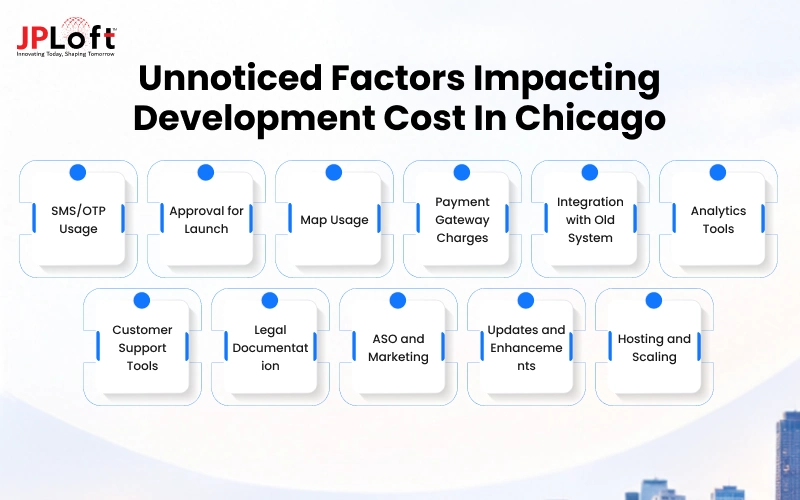
But real app costs often show up during deployment, scaling, or post-launch operations. Knowing these hidden costs of mobile app development early helps create a more accurate budget and avoid unexpected financial challenges:
[A] SMS/OTP Usage
Login verification, password resets, and transaction alerts often rely on SMS providers. Costs increase with the number of users and verification requests. For a Chicago app serving a growing customer base, high OTP volumes can become a recurring operational expense after launch.
[B] Cost of Getting App Approved for Launch
Before launch, you need to publish your app to the Google Play Store or submit your app to the App Store. Meeting platform guidelines may require additional testing or development changes if your app is rejected, increasing the overall cost to make a mobile app in Chicago.
[C] Map API Usage
Apps involving delivery, transportation, real estate, or local services may use Google Maps or similar APIs. Higher location and routing requests increase monthly expenses. An app serving multiple Chicago neighborhoods may generate more map, geocoding, and route requests as local usage grows.
[D] Payment Gateway Charges
Payment providers typically charge transaction fees. Your Chicago app budget should account for these separately from payment gateway integration and development costs. Apps processing frequent transactions should factor these recurring fees into their overall operating budget from the beginning.
[E] Integration with Existing Business Systems
Connecting your app with CRM, ERP, payment processors, or internal databases requires custom APIs, data synchronization, and testing. These integrations increase development complexity and may require hiring app developers with specialized experience.
[F] Analytics Tools
Advanced product analytics, reporting, and user behavior tracking may require paid plans as data volume increases. Chicago businesses expecting rapid user growth should account for higher analytics costs as events, users, and data points increase.
[G] Customer Support Tools
Hiring a mobile app development company to add live chat, ticketing, chatbots, and a help desk adds extra subscription costs after launch. These expenses may rise as your Chicago app attracts more customers and requires dedicated support workflows.
[H] Legal and Privacy Documentation
Chicago businesses may need professional support for privacy policies, terms of service, data handling policies, and industry-specific requirements. Legal costs may also increase when the app collects sensitive information or serves customers across multiple states.
[I] ASO and Launch Marketing
App Store Optimization, paid campaigns, creative assets, and launch activities are marketing expenses rather than core development costs, but they affect the total investment needed to bring the app to market. For a Chicago-focused launch, businesses may also need a dedicated budget for local campaigns, audience targeting, and market-specific promotional activities.
[J] Continuous Updates and Feature Enhancements
Mobile apps require ongoing updates to support new operating systems, security requirements, user expectations, and emerging technologies. Businesses may also adopt new mobile app development trends, adding new features and increasing long-term maintenance costs.
[K] Cloud Hosting and Infrastructure Scaling
Cloud infrastructure supports data storage, authentication, APIs, and server operations. As app traffic grows, businesses may need additional storage, computing capacity, and load balancing. This makes cloud scaling an important ongoing expense beyond the initial app development cost in Chicago.
Over time, these improvements contribute to the long-term cost of maintaining and scaling the application.
What Increases Development Cost vs. What Reduces It in Chicago?
Estimating the cost of building a mobile app in Chicago requires more than estimating developer hours.
Managing the cost needs careful planning and strategic decision-making throughout the development lifecycle.
Instead of reducing development quality to save money, you should focus on strategic practices that optimize budgets while maintaining scalability, performance, and user experience.
What Increases Development Cost vs. What Reduces It in Chicago?
Estimating the cost of building a mobile app in Chicago requires more than estimating developer hours.
Managing the cost needs careful planning and strategic decision-making throughout the development lifecycle.
Instead of reducing development quality to save money, you should focus on strategic practices that optimize budgets while maintaining scalability, performance, and user experience.
Here is a table of factors that increase and reduce the development cost in Chicago:
|
Increases App Development Cost |
Reduces App Development Cost |
|
Native iOS + Android: Separate apps increase development, testing, and maintenance costs. |
MVP-First Scope: Focus on core features to reduce initial development costs. |
|
Complex Backend: Custom databases, APIs, security, and cloud systems require more development time. |
Cross-Platform Development: Use Flutter or React Native for a shared codebase. |
|
Real-Time Tracking: GPS, live locations, and status updates add technical complexity. |
Limited First-Version Features: Move advanced features to future releases. |
|
Payment Systems: Multiple payment options, refunds, wallets, and billing increase development work. |
Existing APIs/Tools: Use ready-made payment, mapping, authentication, and analytics tools. |
|
AI Features: AI chatbots, recommendations, and personalization require additional technology and expertise. |
Clear Requirements: Detailed specifications reduce revisions and scope changes. |
|
HIPAA/PCI/KYC Compliance: Compliance requires additional security, encryption, and audit measures. |
One Launch Market First: Start in Chicago before expanding to other markets. |
|
Admin Dashboards: Custom dashboards require additional design, development, and testing. |
Post-Launch Feature Roadmap: Spread advanced development costs across future releases. |
|
Multi-User Roles: Multiple user types increase authentication and permission complexity. |
– |
Chicago businesses should strategically invest in features that directly support revenue, compliance, or user experience by hiring dedicated developers with relevant experience.

How Do Chicago Businesses Recover Development Costs?
Once a mobile app launches, the next step is generating revenue. Businesses developing apps in Chicago adopt various mobile app monetization strategies depending on their industry, target audience, and app functionality.
Choosing the right app monetization model helps companies recover development costs and build sustainable revenue streams over time.
Let’s discuss some of the most commonly adopted monetization models:
|
Revenue Model |
Best For |
Cost Recovery Logic |
|
Subscription |
SaaS, fitness, education, content apps |
Recurring revenue |
|
Transaction fee |
Delivery, booking, marketplace apps |
Earn from every order/booking |
|
In-app purchases |
Gaming, wellness, creator/content apps |
Monetize premium features |
|
Enterprise licensing |
B2B/enterprise apps |
High-value contracts |
|
Ads |
High-traffic consumer apps |
Works only when user volume is high |
How Can JPLoft Help Manage Development Costs in Chicago?
Managing mobile app development costs in Chicago requires the right strategy, development approach, and experienced technical guidance.
JPLoft helps businesses control development budgets of Chicago software startups by focusing on efficient planning, scalable architecture, and optimized technology choices.
As a trusted mobile app development company in Chicago, JPLoft begins projects with a structured discovery phase to define the feature roadmap, technology stack, and development scope.
The developers also follow an MVP-first approach, allowing businesses to launch faster with essential features while gradually expanding the app based on user feedback.
By using modern frameworks, scalable cloud infrastructure, and agile development practices, JPLoft ensures businesses can build high-quality mobile apps while maintaining better control over development costs and long-term scalability.
Conclusion
Building a mobile application requires careful planning, the right technology choices, and a clear understanding of development costs.
The cost to build a mobile app in Chicago ranges from $7,000 to $200,000+. The final cost estimate varies depending on factors such as app complexity, industry requirements, integrations, and long-term scalability.
Beyond development costs, factors such as infrastructure, third-party services, compliance requirements, and AI feature planning also influence the overall investment.
Understanding these elements helps businesses create a realistic budget and avoid unexpected expenses during the development process. With the right strategy and technical expertise, businesses can transform their ideas into scalable digital products that deliver long-term value and growth.
FAQs
The cost to build an app in Chicago typically ranges between $7,000 and $200,000 or more, depending on factors such as app complexity, features, platform (iOS or Android), and third-party integrations. Basic apps with limited functionality cost less, while enterprise apps with AI, real-time processing, or advanced security require a higher investment.
Several factors influence mobile app development costs, including app complexity, UI/UX design, platform selection, backend infrastructure, third-party integrations, and security requirements. Advanced technologies such as AI, IoT, or blockchain can also increase development costs due to additional engineering and infrastructure needs.
The development timeline depends on the app’s complexity. A basic mobile app may take 2–4 months, while mid-level apps with integrations may take 4–7 months. Complex enterprise applications with advanced features can require 8–12 months or more to design, develop, and launch.
Businesses can reduce development costs by starting with an MVP, prioritizing essential features, choosing cross-platform development frameworks, and working with an experienced development partner. Proper project planning and scalable architecture also help avoid costly redesigns in the future.
Yes. Building an MVP (Minimum Viable Product) allows businesses to launch with core features, test the app idea in the market, and gather user feedback before investing in full-scale development. This approach helps reduce initial development costs and minimizes financial risks.

Priyanka Sukhwal is the Managing Director and Business Head of JPLoft, a results-driven leader with 10+ years of experience steering technology ventures and business growth. Her strategic acumen and deep understanding of digital markets and on-demand solutions have consistently translated into innovations that help businesses scale, evolve, and lead in competitive landscapes.





Share this blog