


Key Takeaways:
The cost to build a classified app is between $8,000 to $100,000+, depending on features, complexity, tech choices, and scalability.
Key factors impacting the cost to develop a classified app are platform choice, design quality, extra integrations, and team expertise.
Hidden costs such as hosting, APIs, maintenance, and marketing add ongoing expenses that go beyond initial development investment.
Effective strategies to control the cost to make a classified app are MVP development, pre-built integration, optimized design, and agile development.
Monetization strategies include subscription models, promotions, in-app advertising, data monetization, and affiliate marketing.
JPLoft offers scalable, cost-effective development of a classified app with modern technologies, optimizing long-term growth.
Buying and selling things have shifted fast from physical marketplaces to digital platforms. Classified apps now connect users in real time, making it easier to list products, find deals, and close transactions quickly.
For businesses building classified apps, it is beyond just entering into the trend. It is about creating a scalable revenue channel and improving user reach. However, one key question often arises early in the planning stage: how much does it cost to create a classified app?
The cost can vary based on features, design, technology stack, and development approach. From basic listing platforms to advanced apps with AI-driven recommendations, each choice impacts the final budget.
In this guide to classified app development cost, we will break down the key cost factors to help you understand where to invest and how to plan your budget wisely for long-term success.

Key Factors That Affect the Cost of Classified App Development
Understanding what drives the cost to create a classified app is essential for smart planning. From features to technology choices, several factors influence the final development budget.
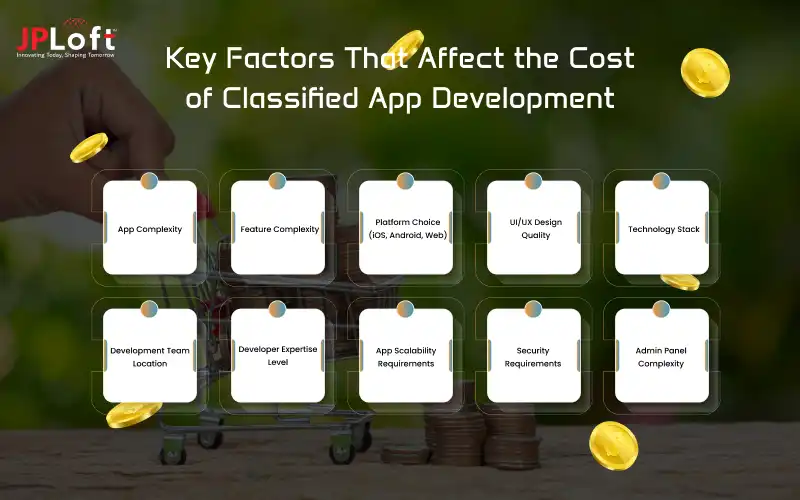
Knowing the key elements impacting what is the cost to develop a classified app helps businesses control expenses and make better decisions:
Factor 1: App Complexity
App complexity directly impacts the overall cost to build a classified app.
Simple apps with basic features cost less, while advanced apps with AI and analytics require more time, resources, and skilled developers, increasing both development expenses and development time.
The overall final breakdown of classified app development cost depends on your business goals, feature set, and the development team you choose.
|
Model Type |
Features |
Estimated Cost (in USD) |
Timeline |
|
Basic/MVP App |
user registration, ad posting, category management, and simple search filters. |
$8,000 – $25,000 |
2-3 months |
|
Mid-Level App |
In-app chat, push notifications, payment integration, and improved UI design. |
$25,000 – $60,000 |
3-5 months |
|
Advanced App |
AI-based recommendations, real-time analytics, multi-language support, and high-end security. |
$60,000 – $100,000+ |
5-8+ months |
Factor 2: Feature Complexity
In a classified app, features like buyer-seller chat, instant notifications for new listings, and location-based search increase costs due to constant data syncing.
These require advanced backend systems, real-time servers, and higher infrastructure support, leading to increased development, hosting, and hiring experienced mobile app development services in USA.
|
Feature Level |
Estimated Cost (in USD) |
Timeline |
|
Basic Notifications |
$1,000 – $3,000 |
1 – 2 weeks |
|
Chat & Live Updates |
$3,000 – $10,000 |
2 – 4 weeks |
|
Full Real-Time System |
$10,000 – $25,000+ |
1 – 2 months |
Factor 3: Platform Choice (iOS, Android, Web)
Choosing multiple platforms for a classified app helps you reach a wider audience, but it also increases development cost.
Native classified apps cost more, but they deliver better performance, smoother browsing, and faster listing interactions.
When you build for all platforms together, the budget rises due to longer development time, additional testing, and the need to ensure a consistent user experience across devices.
|
Platforms |
Estimated Cost (in USD) |
Timeline |
|
Single Platform |
$3,000 – $15,000 |
1 – 3 months |
|
Cross-Platform |
$8,000 – $30,000 |
2 – 4 months |
|
Multi-Platform (All) |
$20,000 – $60,000+ |
3 – 6+ months |
Factor 4: UI/UX Design Quality
High-quality UI/UX design for a classified app increases cost, as it involves detailed research, wireframing, and custom visuals tailored for listings and user journeys.
A simple classified app design is more affordable, while advanced interfaces with smooth search, filters, and seller communication require more design effort.
Hiring UI/UX design service providers to make continuous improvements further raises the overall development cost to create a classified app.
|
Level |
Estimated Cost (in USD) |
Timeline |
|
Basic Design |
$1,000 – $3,000 |
1 – 2 weeks |
|
Standard Design |
$3,000 – $7,000 |
2 – 4 weeks |
|
Advanced Custom UI/UX |
$7,000 – $15,000+ |
4 – 8 weeks |
Factor 5: Technology Stack
For a classified app, the choice of programming languages, frameworks, and tools directly impacts development cost.
An advanced mobile app tech stack often requires skilled developers, increasing expenses.
However, using scalable and secure technologies ensures smooth listing management, better performance, and reduced long-term operational costs.
|
Stack Type |
Estimated Cost (in USD) |
Timeline |
|
Basic (Open Source) |
$2,000 – $8,000 |
2 – 4 weeks |
|
Standard Stack |
$8,000 – $20,000 |
1 – 2 months |
|
Advanced/Scalable |
$20,000 – $40,000+ |
2 – 4 months |
Factor 6: Development Team Location
Hiring developers from different regions directly impacts the cost of classified app development due to varying hourly rates.
The cost to hire a mobile app developer in the USA or Europe is higher, while Asian developers offer cost advantages.
Offshore development reduces expenses, but communication gaps, time zones, and quality control can influence the overall classified app development cost.
|
Region |
Hourly Rate (in USD) |
Estimated Cost Range |
|
Asia |
15 – $40/hour |
$8,000 – $40,000 |
|
Eastern Europe |
$40 – $80/hour |
$20,000 – $70,000 |
|
North America/Europe |
$80 – $150+/hour |
$50,000 – $100,000+ |
Factor 7: Developer Expertise Level
In the development process, highly experienced developers increase upfront costs but deliver better performance, scalability, and faster execution.
The cost to hire dedicated developers may lower initial expenses. But if the developers are not experienced enough, that can lead to higher costs later due to bugs, rework, poor optimization, and delays in launching the platform.
|
Level |
Hourly Rate (in USD) |
Cost Impact |
|
Junior Developers |
$10 – $25/hour |
Lower upfront cost |
|
Mid-Level Developers |
$25 – $60/hour |
Balanced cost |
|
Senior Developers |
$60 – $120+/hour |
Higher but efficient |
Factor 8: App Scalability Requirements
Building a scalable classified app increases initial cost, as it requires strong architecture and reliable cloud infrastructure.
Top competitive apps handle large volumes of listings, and users need advanced backend systems, which demand more development effort, raising both upfront investment and long-term operational expenses.
|
Level |
Estimated Cost (in USD) |
Timeline |
|
Low Scalability |
$2,000 – $8,000 |
2 – 4 weeks |
|
Medium Scalability |
$8,000 – $25,000 |
1 - 2 months |
|
High Scalability |
$25,000 – $50,000+ |
2 - 4 months |
Factor 9: Security Requirements
Advanced mobile app security features in a classified app, such as data encryption, secure user authentication, and fraud detection systems, increase development cost.
These measures require skilled developers and extra tools, but they are essential to protect user transactions, prevent scams, and ensure platform trust and compliance.
|
Level |
Estimated Cost (in USD) |
Timeline |
|
Basic Security |
$1,000 – $3,000 |
1 – 2 weeks |
|
Standard Security |
$3,000 – $8,000 |
2 – 4 weeks |
|
Advanced Security |
$8,000 – $20,000+ |
1 – 2 months |
Factor 10: Admin Panel Complexity
A basic admin panel in a classified app costs less, but advanced dashboards with listing analytics, user management, ad moderation, and reporting increase expenses.
More features require stronger backend systems, raising development time, complexity, and overall cost to build a classified app and manage the platform.
|
Level |
Estimated Cost (in USD) |
Timeline |
|
Basic Panel |
$1,500 – $4,000 |
2 – 3 weeks |
|
Moderate Panel |
$4,000 – $10,000 |
1 – 2 months |
|
Advanced Dashboard |
$10,000 – $25,000+ |
2 – 3 months |
This classified app development cost breakdown helps you clearly estimate how each factor contributes to the overall price.
Hidden Expenses to Build a Classified App
Beyond the cost to make a classified app, there are hidden costs that can impact your overall budget. From maintenance to third-party services, these expenses often go unnoticed during planning.
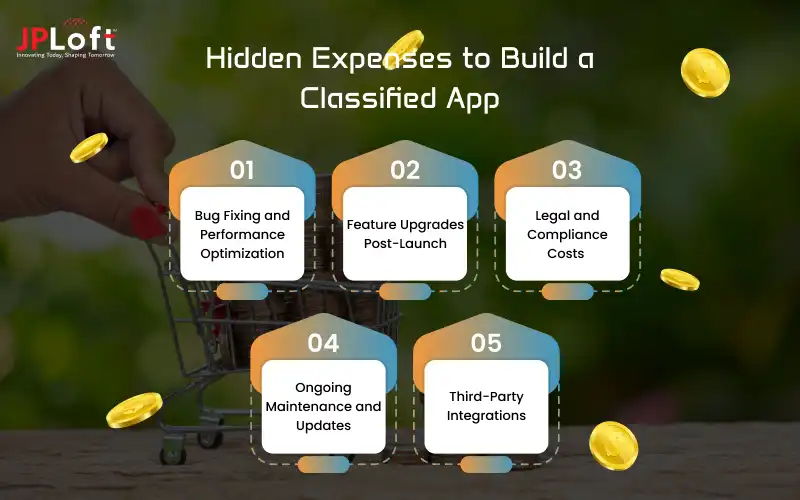
Knowing these hidden cost factors early helps businesses avoid surprises and manage long-term investment more effectively:
1. Bug Fixing and Performance Optimization
Post-launch bug fixing and optimization require continuous developer involvement, increasing costs over time.
Fixing issues, improving speed, and ensuring smooth performance demand regular updates, making this an ongoing app maintenance cost that impacts the overall cost to make a classified app.
2. Feature Upgrades Post-Launch
Adding new features after launch increases development costs. Knowing how often you should upgrade your app is important to stay competitive and meet user expectations.
Each update requires design, development, and testing efforts, making it a recurring investment beyond the initial app build.
3. Legal and Compliance Costs
Legal requirements such as data protection laws, privacy policies, and regional regulations add to costs. Businesses may need legal consultations and compliance tools.
These expenses are essential to avoid penalties but increase both initial and ongoing financial commitments.
4. Ongoing Maintenance and Updates
Post-launch maintenance in a classified app includes fixing listing issues, improving search performance, updating categories, and enhancing user experience.
These ongoing app maintenance services can add to recurring costs. Regular updates are essential to ensure smooth transactions, data security, and platform reliability, making maintenance a long-term financial commitment.
5. Third-Party Integrations
Integrating features like payment gateways for secure transactions, maps for location-based listings, and chat APIs for buyer-seller communication increases classified app development cost.
Each integration requires setup, testing, and often subscription fees, raising complexity, development time, and ongoing operational expenses.
How to Reduce the Cost of Making a Classified App?
Reducing the cost to develop a classified app is possible with the right planning and smart execution. Instead of cutting essential features, the focus should be on optimizing resources and avoiding unnecessary expenses.
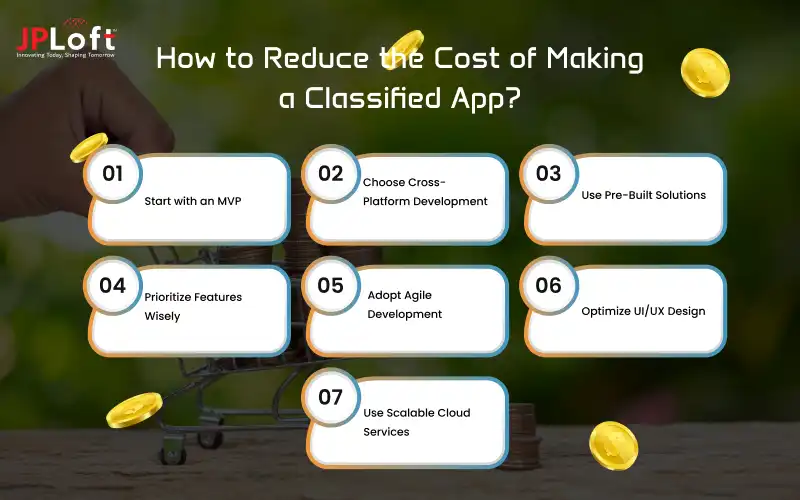
Follow the strategies below to reduce how much does it cost to create a classified app:
A. Start with an MVP
Build a minimum viable product with only core features like ad posting, search, and user profiles. This reduces initial cost and helps you test the market before investing in advanced functionalities.
B. Choose Cross-Platform Development
Hire an on-demand app development company that uses frameworks like Flutter or React Native, which allows you to build one app for both iOS and Android. This avoids separate development costs and reduces time to market.
C. Use Pre-Built Solutions
Leverage ready-made templates, APIs, and third-party tools instead of building everything from scratch. This significantly cuts development time and cost.
D. Prioritize Features Wisely
Focus only on features that add real business value. Avoid adding complex functionalities in the early stage, as they increase both cost and timeline.
E. Adopt Agile Development
Build the app in phases. This allows better budget control, quick changes, and avoids spending on features that may not be needed later.
F. Optimize UI/UX Design
Keep the design simple and functional in the beginning. Advanced animations and custom designs can be added later when the app grows.
G. Use Scalable Cloud Services
Start with basic hosting plans and scale as your user base grows. This prevents unnecessary upfront infrastructure costs.
Monetization Strategies for Classified Apps
Choosing the right mobile app monetization strategy is key to turning your classified app into a profitable platform. These proven revenue models help you generate consistent income while delivering real value.
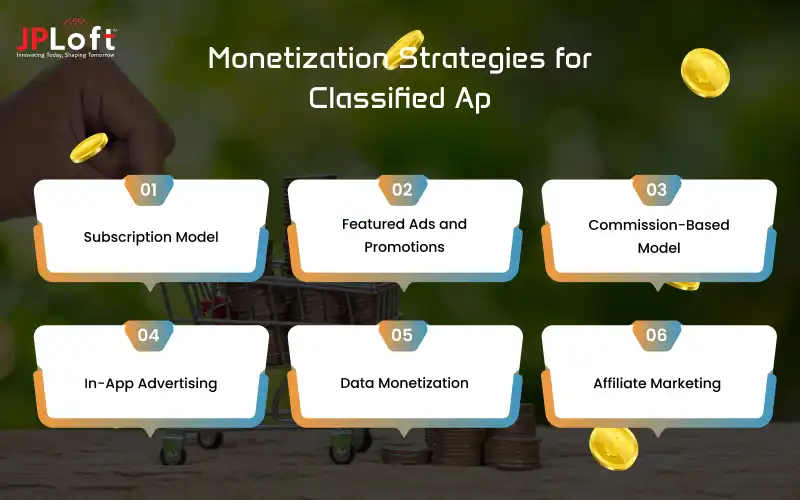
Here are the most effective monetization strategies to cover the cost to create a classified app:
Strategy 1: Subscription Model
Users or businesses pay a recurring fee to access advanced features and benefits. The app offers monthly or yearly plans with added perks like unlimited listings, analytics, or priority support.
Strategy 2: Featured Ads and Promotions
Users pay to promote their listings for higher visibility within the app. Listings appear at the top of search results or in highlighted sections for a limited time.
Strategy 3: Commission-Based Model
The platform earns a percentage from each successful transaction made through the app. When a deal is completed using in-app payments, the platform deducts a fixed or percentage-based commission.
Strategy 4: In-App Advertising
The app displays ads from third-party advertisers to generate revenue. Banner ads, video ads, or native ads are shown to users based on their activity and preferences.
Strategy 5: Data Monetization
The platform uses aggregated user data to generate insights for businesses. User behavior, trends, and preferences are analyzed and sold to other businesses in a compliant way.
Strategy 6: Affiliate Marketing
The app earns commissions by promoting third-party products or services. Affiliate links are integrated into listings or recommendations. The app earns when users make purchases through those links.
Build Scalable, Cost-Effective Classified Apps with JPLoft
Building a successful classified app requires the right balance of performance, scalability, and cost control. At JPLoft, an experienced classified app development company, we help businesses turn ideas into powerful digital platforms without overspending.
Our team focuses on creating solutions that are feature-rich and optimized for long-term growth and efficiency. We follow a structured development approach that starts with understanding your business goals and target audience.
This helps us design apps that deliver real value while avoiding unnecessary costs. From MVP development to full-scale platforms, we ensure every feature aligns with your budget and growth strategy.
Our developers use modern technologies and scalable architectures to build apps that can handle increasing users and data without performance issues. We also integrate essential features like advanced search, secure payments, and real-time communication to enhance user experience.
With a strong focus on quality, transparency, and timely delivery, JPLoft ensures you get a reliable classified app that meets market demands. Partner with us to build a cost-effective solution that grows with your business and maximizes your return on investment.
Conclusion
This guide to classified app development cost shows the balance between cost, features, and long-term value. From understanding development expenses to analyzing key cost factors and hidden charges, every decision affects your budget and business growth.
A well-planned approach helps you avoid overspending while still delivering a strong user experience. Starting with the right strategy, such as launching an MVP, choosing the right tech stack, and focusing on essential features, can keep costs under control.
At the same time, planning for scalability, maintenance, and monetization ensures your app remains profitable in the long run. The key is to invest wisely based on your goals and market demand.
FAQs
The cost to develop a classified app ranges from USD 8,000 to USD 100,000+. Pricing depends on features, design, platform choice, and development complexity. Advanced apps with scalable infrastructure and integrations require higher investment compared to basic versions.
Several factors influence development cost, including platform selection, UI/UX design, technology stack, third-party integrations, and developer expertise. Additional elements like scalability, security, and real-time features also increase complexity, impacting both initial development expenses and long-term operational costs.
Hidden costs include app store fees, payment gateway charges, cloud hosting, data storage, and ongoing maintenance. Marketing, customer support, legal compliance, and feature upgrades also add recurring expenses, significantly affecting the total cost beyond initial development.
Businesses can reduce costs by starting with an MVP, using cross-platform development, and prioritizing essential features. Leveraging pre-built solutions, outsourcing to cost-effective regions, and adopting agile development also help optimize the budget while maintaining quality and scalability.
Common monetization strategies include freemium models, subscriptions, featured listings, commissions, and in-app ads. Businesses also earn through lead generation, listing fees, affiliate marketing, and data insights, helping create multiple revenue streams while keeping the platform accessible to users.

Priyanka Sukhwal is the Managing Director and Business Head of JPLoft, with 10+ years of experience in technology, digital product strategy, and business growth. She has worked closely with businesses building mobile applications, custom software, marketplaces, and on-demand platforms across mobility, automotive, consumer services, and startup ecosystems. At JPLoft, she focuses on understanding business models, identifying product opportunities, and helping companies plan digital solutions that can scale with changing market needs.


Share this blog